Whether a Cockapoo’s Coat Settles After Two
Oh, the age-old question that many Cockapoo owners find themselves asking as their adorable, fluffy puppy morphs into a gangly adolescent and then, eventually, a more mature dog: "Will this coat ever just… settle down?" It's a common misconception, often fueled by hopeful whispers from other doodle owners or perhaps a misinterpretation of coat development, that once a Cockapoo hits the magical two-year mark, their coat suddenly becomes predictable, easy-to-manage, and miraculously mat-free. The reality, as many of us have discovered, is often quite different, and this guide is here to shed some light on what you can truly expect from your Cockapoo's magnificent, albeit sometimes challenging, coat journey.
The Myth of the "Settled" Cockapoo Coat
Many Cockapoo owners enter into ownership with the understanding that the intense "puppy coat change" period, usually between 8 and 18 months, is the peak of coat chaos. They envision a future where, once that phase is over, the adult coat emerges, settles into its rhythm, and requires less vigilant grooming. This hopeful expectation, while understandable, often leads to disappointment because a Cockapoo's coat is rarely a static entity, even well past its second birthday.
Why Owners Expect a Settled Coat
It's a natural assumption, isn't it? Most mammals, humans included, go through a distinct transition from baby hair or fur to a more stable adult coat. We see it in many dog breeds too – a Golden Retriever puppy's soft fluff gives way to a predictable double coat, or a Poodle puppy's fine curls thicken into a denser adult coat. Owners are often told that the first year is the hardest, or that once the puppy coat sheds out, things will become easier. This can create an expectation that "settling" means less work, less matting, and a more uniform texture.
However, the Cockapoo, being a crossbreed, inherits a complex genetic lottery from both the Cocker Spaniel and the Poodle. This blend means their coat can defy typical breed development patterns. Owners might anticipate a clear-cut end to the "fleece" or "wool" development, only to find new challenges arising. The idea of a predictable coat that simply is after a certain age is appealing, but for our Cockapoos, it's often more of an ongoing evolution than a fixed destination.
The Reality of Continuous Growth and Change
The truth is, a Cockapoo's coat continues to grow, change, and present grooming challenges long after their second birthday. It's not a finish line; it's a marathon. While the most dramatic texture shift often happens during the puppy coat change, the density, oiliness, and shedding patterns can still evolve. For instance, some Cockapoos might develop a thicker undercoat as they mature, especially if they lean more towards the Cocker Spaniel side. Others might find their Poodle-like curls becoming even tighter and more prone to felting if not brushed meticulously.
Environmental factors also play a significant role. Seasonal changes, diet, hormones (especially if intact), and overall health can all influence the coat's condition. A perfectly managed coat at two years old might start developing dry patches or become more prone to static in a different climate or during a particularly harsh winter. This continuous interplay means that "settled" isn't really a word that applies to the dynamic nature of a Cockapoo's coat; "evolving" or "demanding consistent attention" are far more accurate descriptors.
Understanding the Cockapoo Coat's Genetics
To truly grasp why a Cockapoo's coat never really "settles," we need to delve into the fascinating world of genetics. The Cockapoo's coat is a direct result of the specific genes inherited from its Cocker Spaniel and Poodle parents, and this blend is what makes it so unique and, at times, perplexing.
The Influence of Poodle and Cocker Spaniel Genes
On one side, you have the Poodle, renowned for its continuously growing, dense, curly, non-shedding (or very low-shedding) coat. This coat type requires regular grooming to prevent matting but is often a draw for allergy sufferers. On the other side, the Cocker Spaniel typically has a silky, medium-length coat with feathering, and it does shed, though not excessively. It can also be prone to an oily skin type that impacts coat health. The combination of these two very different coat types means a Cockapoo can inherit a wide spectrum of characteristics, from a relatively flat, shedding coat to a tight, curly, low-shedding one, and everything in between.
The particular generation (F1, F1b, F2, Multigen) also heavily influences the genetic lottery. An F1 Cockapoo, a direct cross between a Poodle and a Cocker Spaniel, has a 50/50 chance of inheriting various traits, making their coat often the most unpredictable in terms of texture and shedding. As you move into F1b or Multigen generations, breeders often aim to select for specific coat traits, like the desired "doodle coat," but even then, variability remains. This genetic melting pot ensures that no two Cockapoos are exactly alike, and their coats will continue to be a testament to this unique blend.
The Impact of Furnishings and Curl Genes
Two key genetic markers primarily dictate a Cockapoo's coat type: the Furnishings gene (known as the RSPO2 gene) and the Curl gene (KRT71). The Furnishings Gene That Decides a Cockapoo's Face is responsible for the characteristic mustache, beard, and eyebrows that give most doodles their teddy bear look and, crucially, contribute to their low-shedding qualities. A Cockapoo needs at least one copy of the dominant F (furnished) allele to have furnishings and typically be low-shedding. If a Cockapoo inherits two copies of the recessive 'ic' (improper coat) allele, they will have an "improper coat" or "flat coat," resembling more of a Cocker Spaniel, and will shed.
Then there's The Curl Gene and Where a Cockapoo's Coat Lands. The KRT71 gene determines the degree of curl, ranging from straight to wavy to tightly curled. A Cockapoo can inherit anything from two copies of the straight gene (Cu/Cu), resulting in a straight coat, to two copies of the curly gene (Cuc/Cuc), giving them a very tight curl. Most Cockapoos fall somewhere in the middle with a wavy or loose curly coat (Cu/Cuc). The interplay of these genes means that even if a dog has furnishings, the texture and therefore grooming needs, will differ significantly based on its curl type. This genetic blueprint ensures that "settling" isn't a single endpoint, but rather a dynamic expression of inherited traits that continue to develop.
The Stages of Coat Development
Understanding that your Cockapoo's coat journey is ongoing rather than a fixed state means appreciating the distinct, and sometimes frustrating, stages it passes through. While the most dramatic shifts occur early on, the coat continues its subtle evolution even into maturity.
Puppy Coat vs. Adult Coat
Every Cockapoo starts with that irresistible, soft, fluffy puppy coat. It's usually quite fine, doesn't mat much, and is a joy to bury your face in. This initial coat is deceptive, lulling new owners into a false sense of security about future grooming. However, this is just a temporary phase. As your puppy grows, typically between 6 to 12 months, the adult coat begins to emerge. This new coat is usually coarser, denser, and takes on the true texture and curl pattern that will define your dog's adult look.
The transition isn't always smooth; it's less like flipping a switch and more like a gradual, often messy, takeover. You might notice areas of coarser hair appearing first, particularly around the muzzle and legs, before spreading across the body. The color might also darken or lighten significantly during this period. Many owners describe it as a time when their dog's coat feels like two different textures in one, which is exactly what's happening.
The Dreaded "Coat Change" (Around 8-18 Months)
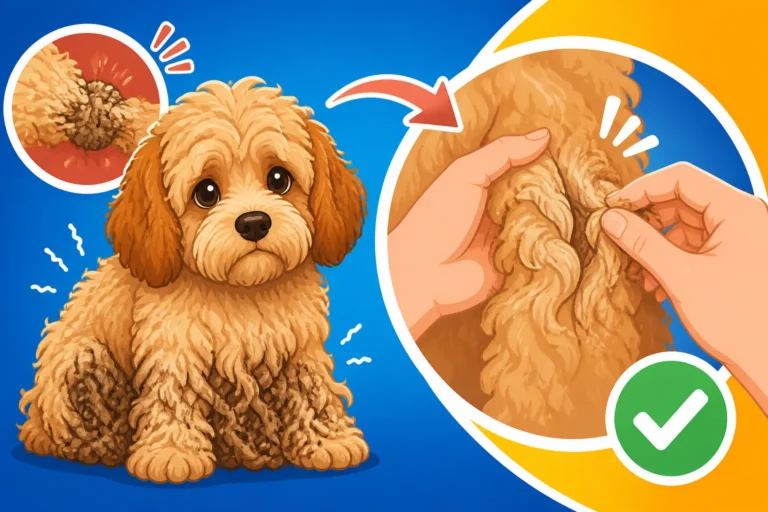
This is the period that truly tests a Cockapoo owner's patience and commitment to grooming. The Coat Change That Ambushes a Cockapoo Owner at Ten Months is real, and it often feels like an ambush. During this phase, the fine puppy hair starts to shed out, and the adult hair grows in. The real problem isn't just the shedding, but how the two types of hair intermingle and intertwine. The soft puppy fur gets trapped within the denser, often curlier, adult coat. This creates a perfect storm for matting.
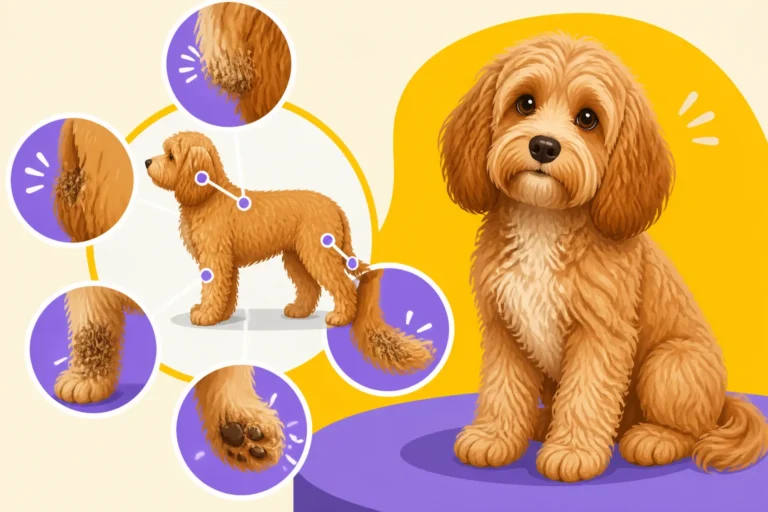
You'll find mats appearing seemingly overnight, in places you've just brushed. Behind the ears, in the armpits, on the insides of the legs, and under the collar are notorious hotspots. This is the period when many owners, overwhelmed by the constant battle with tangles, resort to a very short shave. While this provides immediate relief, it's crucial to understand that it doesn't solve the underlying issue of ongoing coat management. It's a temporary reset button, not an end to the maintenance. Regular, thorough line brushing becomes absolutely non-negotiable during these months.
Post-Two-Year Evolution
So, does it ever settle after two years? While the intense, rapid changes of the puppy coat phase and the coat change typically subside, a Cockapoo's coat continues to mature and evolve. For many, the coat may become denser, the curls might tighten further, or the wave might become more pronounced. This isn't necessarily a "bad" thing, but it does mean that your grooming routine needs to remain consistent and adaptable. Some owners report that while the frequency of matting might lessen after two, the type of matting can become more challenging, as the adult hair is often stronger and more tenacious.
You might also notice subtle shifts in texture due to hormonal changes, especially if your dog is spayed or neutered later in life. Some dogs develop a softer, "cottony" texture post-spay/neuter, which can be even more prone to matting. Others might find their coat becoming slightly drier or oilier depending on internal health factors. So, while the chaotic shedding of puppy fur is largely over, the need for attentive, regular care and professional grooming remains a constant throughout your Cockapoo's life. Think of it less as settling, and more as maturing into its full, glorious, and complex form.
Grooming Challenges Beyond Two Years
Just because your Cockapoo has passed the two-year mark doesn't mean you can put away your brushes or cancel the groomer. In fact, many owners discover that while the coat change itself might be over, new and ongoing grooming challenges arise that require consistent attention.
Matting Doesn't Magically Disappear
This is probably the biggest misconception. Owners hope that once the puppy coat is gone, mats will become a thing of the past. Unfortunately, that's rarely the case. While the intensity of the matting may decrease compared to the peak coat change, a Cockapoo's adult coat is still prone to matting, especially if it has a dense, curly, or wavy texture. Mats form when loose hairs get tangled with the growing hair, creating knots that can quickly tighten into painful pelts if not addressed promptly. Activities like swimming, playing in the rain, rolling in the grass, or even just wearing a harness can contribute to mat formation.
Areas like behind the ears, under the chin, in the armpits, and around the tail base remain high-risk zones. Where a Curly Cockapoo Mats First often includes these areas, but also the legs and belly, where friction is common. Regular, thorough line brushing is your best defense. This means brushing in sections, all the way down to the skin, to ensure you're removing all loose hair and preventing it from becoming embedded. A slicker brush followed by a good metal comb, like one you might find on Amazon, is indispensable. Skipping even a few days can lead to significant problems, turning a 15-minute brush session into an hour-long de-matting ordeal, or worse, a trip to the groomer for a shave-down.
Maintaining Different Coat Types
The specific grooming routine you adopt will largely depend on your Cockapoo's individual coat type, which becomes more apparent after two years. The Three Cockapoo Coat Types and Their Upkeep each present their own set of challenges:
- Straight/Flat Coat: These Cockapoos resemble more of their Cocker Spaniel parent. They shed more than their curly counterparts, but their coats are generally easier to brush and less prone to severe matting. Regular brushing helps manage shedding, and occasional trims keep the coat tidy.
- Wavy/Fleece Coat: This is the most common and often sought-after Cockapoo coat, offering a good balance of low shedding and soft texture. However, this wavy texture is highly prone to matting, particularly during and after the coat change. Daily or every-other-day brushing is crucial, along with professional grooming every 6-8 weeks to maintain length and prevent tangles. How Many Minutes a Wavy Cockapoo Takes for daily grooming can quickly add up if not consistent.
- Curly/Wool Coat: These Cockapoos lean heavily towards their Poodle parent. While they shed the least, their dense, tight curls are the most high-maintenance. They act like Velcro, catching debris and matting quickly if not brushed daily. These coats require the most frequent professional grooming, often every 4-6 weeks, and often benefit from a shorter cut to make at-home maintenance manageable. How Many Minutes a Curly Cockapoo Takes can be substantial if you want to keep any length, and proper tools are key.
Each type demands a different approach, but consistency is the common denominator. Neglect any of them, and you'll quickly discover that the coat hasn't settled into an easy routine.
The Role of Nutrition in Coat Health
Beyond brushing and trimming, your Cockapoo's diet plays a vital, often overlooked, role in the health and manageability of their coat, even after two years. A healthy coat starts from within. Poor nutrition can manifest as a dull, dry, brittle coat that's more prone to breakage and matting, or an overly oily coat that collects dirt and smells quickly. Think of it like your own hair – what you eat impacts its shine and strength.
High-quality dog food, rich in essential fatty acids (like Omega-3s and Omega-6s), vitamins, and minerals, can significantly improve coat condition. Many owners explore options beyond standard kibble, such as fresh food diets from companies like Ollie, which can offer highly digestible nutrients. These nutrients contribute to healthy skin, strong hair follicles, and a natural sheen. If your Cockapoo suffers from a dry, flaky coat or excessive oiliness, consulting your vet about dietary changes or supplements like fish oil can make a noticeable difference. Hydration is also key; a well-hydrated dog will have healthier skin and a more resilient coat. Don't underestimate the power of good food in supporting a happy, healthy coat.
Managing the Ever-Changing Coat
Since we now understand that a Cockapoo's coat is a living, breathing entity that continues to evolve, the focus shifts from hoping it "settles" to actively managing its continuous changes. This means establishing robust grooming routines and being proactive.
Essential Grooming Tools and Techniques
Having the right tools is half the battle. Invest in quality over quantity, and learn how to use them correctly. You'll need:
- Slicker Brush: This is your primary weapon against mats. Look for one with fine, bent wire bristles. Use it to gently brush through sections of your dog's coat, lifting loose hair and teasing out minor tangles. Always brush with the direction of hair growth.
- Metal Comb: A good sturdy metal comb, often called a Greyhound comb, with both wide and narrow teeth, is crucial. After using the slicker, run the comb through the same section. If the comb glides smoothly, that section is mat-free. If it catches, go back with the slicker brush. This is key to Line Brushing a Cockapoo and Why the Top Coat Lies. The top coat might look fine, but mats often hide closer to the skin, and a comb will find them.
- De-matting Comb/Rake: For those stubborn tangles, a de-matting comb can be a lifesaver, but use it with extreme caution to avoid skin irritation. These tools have sharp blades designed to cut through mats without pulling excessively.
- Scissors with Blunt Tips: Essential for safely trimming hair around the eyes (preventing irritation and tear staining) and paw pads (for traction). Trimming a Cockapoo's Face Without Cutting an Eye requires steady hands and patience.
- Nail Clippers/Grinder: Regular nail trims prevent discomfort and promote good paw health.
- Ear Cleaner and Cotton Balls: Cockapoos are prone to ear infections due to their floppy ears and often hairy ear canals. Regular cleaning is vital. You can find excellent ear cleaning solutions at pet stores like Chewy.
Developing a consistent routine is paramount. For wavy and curly coats, aim for daily brushing. Even straight-coated Cockapoos benefit from a few times a week. Make it a positive experience with treats and praise, starting early in puppyhood.
Professional Grooming Frequency
Even with diligent at-home grooming, professional grooming is a necessity for most Cockapoos, especially those with wavy or curly coats. A professional groomer has the tools, skills, and experience to handle challenging coats, perform intricate trims, and catch issues you might miss. After two years, you might find that you can slightly extend the time between full grooms, perhaps every 8-10 weeks instead of 6-8 weeks, if your at-home maintenance is impeccable and your dog's coat isn't particularly dense or curly. However, for those with tight, woolly curls, maintaining a 4-6 week schedule is often still advisable.
Discuss your preferences and your dog's lifestyle with your groomer. Do you prefer a longer, shaggier look that requires more home brushing, or a shorter, more manageable "puppy cut" that reduces daily effort? They can recommend the best schedule and style to keep your Cockapoo comfortable and mat-free. Remember, Whether a Matted Cockapoo Has to Be Shaved is often the unfortunate reality if mats are too severe, so prevention is always better than cure.
Recognizing Coat Issues
Beyond routine grooming, it's important to be vigilant for signs of coat and skin issues that might arise or persist even after your Cockapoo is fully mature. These can sometimes indicate underlying health problems.
- Excessive Shedding (beyond normal seasonal changes): While Cockapoos are generally low-shedding, an unusual increase in shedding might point to dietary deficiencies, stress, allergies, or hormonal imbalances.
- Dry, Flaky Skin or Dandruff: This could be a sign of dry climate, insufficient humidity, a diet lacking in healthy fats, or even skin conditions like seborrhea. Whether a Cockapoo's Skin Dries Out From Washing is a common concern if harsh shampoos are used too frequently.
- Oily Skin and Greasy Coat: Some Cockapoos, particularly those inheriting more from their Cocker side, can have oily skin. This leads to a greasy-feeling coat and a distinctive "doggy" smell. What a Cockapoo's Skin Smell Means can sometimes point to yeast infections or underlying skin issues, especially if accompanied by itching.
- Redness, Bumps, or Hot Spots: These can indicate allergies, insect bites, or bacterial infections, often exacerbated by licking or scratching.
- Changes in Coat Texture or Color: While subtle color fading can be normal, significant changes, or a sudden change in texture to become brittle or extremely soft, could warrant a vet visit.
Regularly running your hands through your dog's coat and feeling their skin helps you detect any abnormalities early. Your veterinarian can help diagnose and treat any skin or coat conditions, often recommending specific shampoos, dietary changes, or medications to restore coat health.
Disclaimer
This article is for general informational purposes only and does not constitute professional advice. Laws, prices and regulations vary by location and change over time. Consult a qualified professional for guidance on your specific situation.