The Curl Gene and Where a Cockapoo’s Coat Lands
One of the biggest mysteries and sources of both joy and frustration for Cockapoo owners is often their dog's coat. You might have envisioned a fluffy, non-shedding companion, only to find yourself wrestling with unexpected mats or sweeping up more hair than you anticipated. This guide is here to unravel the fascinating world of your Cockapoo's coat, diving deep into the genetics that dictate its curl, texture, and how much grooming dedication it will truly demand from you.
Understanding the Genetics Behind Your Cockapoo's Curl
It's easy to look at a Cockapoo and assume its coat is simply a blend of its Cocker Spaniel and Poodle parents. While that's true on a fundamental level, the type of coat—straight, wavy, or curly—is determined by some very specific genetic markers. Understanding these can feel a bit like learning a new language, but it demystifies a lot of the unknowns that come with this wonderful mixed breed.
The KRT71 Gene: The Curly Culprit
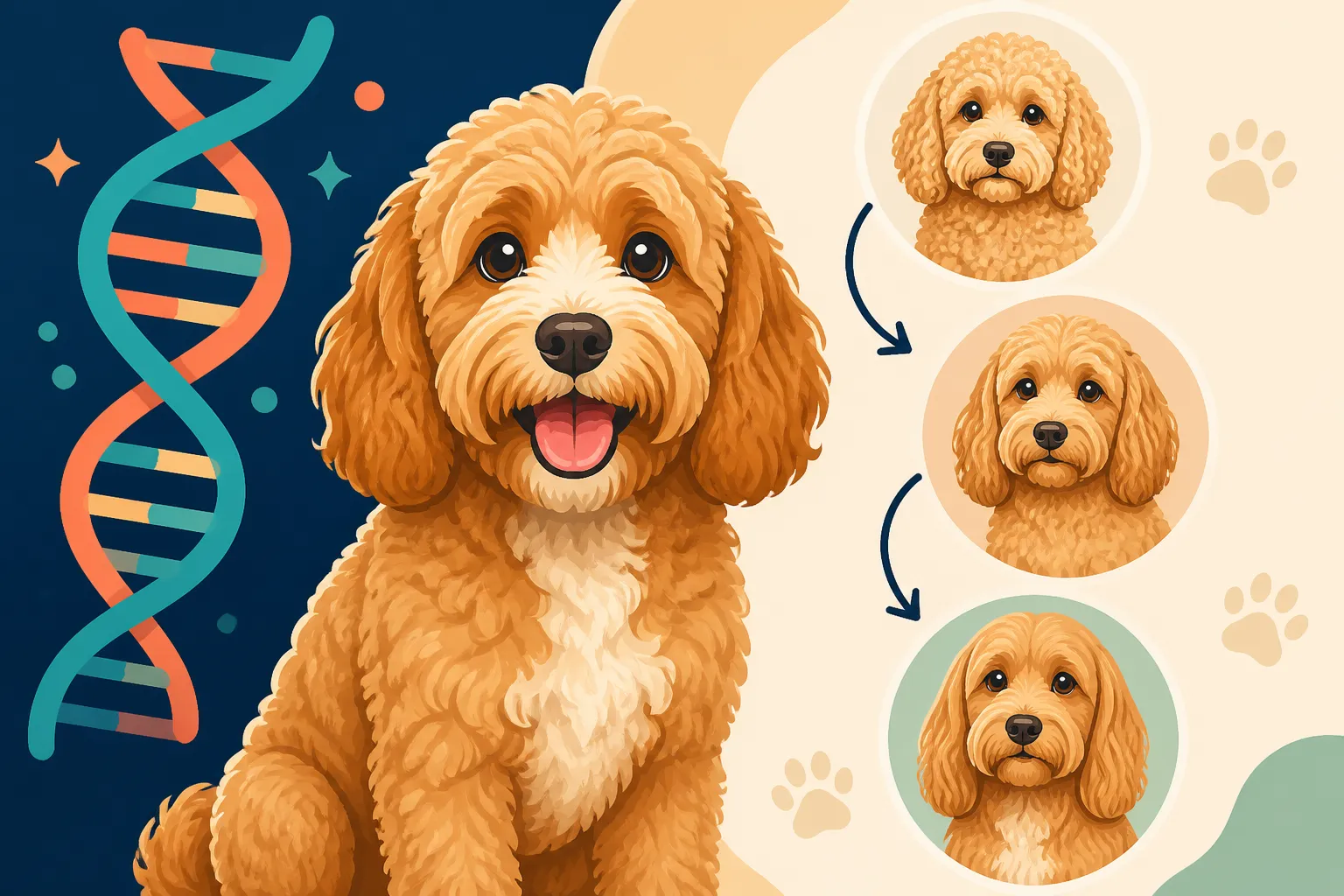
At the heart of your Cockapoo's curl lies a fascinating gene called KRT71, specifically a variant known as KRT71 R151W. This gene is responsible for producing a protein called keratin, which is a key component of hair. In simpler terms, KRT71 is like the architect of your dog's hair shaft, dictating its shape.
Think of it this way: a straight hair shaft is typically round, while a curly hair shaft is more oval or flattened. The specific mutation in KRT71 R151W causes the hair shaft to grow in that more flattened, elliptical shape, leading to the characteristic curl we adore in Poodles and, by extension, many Cockapoos. Each dog inherits two copies of this gene, one from each parent. The presence of just one "curly" allele (let's call it 'K') is enough to produce some degree of curl. If a dog inherits two 'K' alleles (K/K), the curl will be more pronounced. If they inherit one 'K' and one 'straight' allele (K/+), they'll likely be wavy. If they get two 'straight' alleles (+/+), they'll have a straight coat. This inheritance pattern is why you can see such a wide variety of coats, even within the same litter!
Decoding Your Cockapoo's Coat Report
Many responsible breeders today utilize genetic testing to better understand the potential coats their puppies might inherit. This isn't just about aesthetics; it's about giving prospective owners a clearer picture of future grooming needs and potential allergen considerations. When a breeder mentions a "coat panel" or talks about DNA results, they're likely referring to tests that identify these specific genetic markers.
A common report might show results like "K/K," "K/+," or "+/+" for the KRT71 gene. As we discussed, "K/K" indicates two copies of the curl gene, meaning a very curly coat. "K/+" points to one copy, typically resulting in a wavy coat, and "+/+" signifies no copies of the curl variant, leading to a straight coat. These reports also often include information about furnishings, which we’ll touch on next, and even color genes. Understanding these abbreviations can empower you to ask informed questions when speaking with a breeder and help you choose a puppy that aligns with your lifestyle and expectations. Asking for a breeder for The Five Certificates a Cockapoo Breeder Should Show is a smart move, and this includes coat testing results.
The Furnishings Factor: More Than Just Curl
While the KRT71 gene determines the curl of your Cockapoo's coat, another crucial gene, RSPO2, is responsible for what are called "furnishings." Furnishings are the longer hair on the face (beard, mustache, eyebrows) and legs, and they are largely responsible for the classic low-shedding, allergy-friendly "doodle look." A Cockapoo without furnishings (often called an "improper coat" or "IC") will have a smooth face and legs, resembling more of a Cocker Spaniel, and will shed significantly more, regardless of how curly its body coat is.
The RSPO2 gene has a dominant inheritance pattern. If a Cockapoo inherits even one copy of the furnishing gene (F), it will have furnishings. If it inherits two copies (F/F), it will also have furnishings. Only if it inherits two copies of the non-furnishing gene (f/f) will it lack furnishings. So, a Cockapoo could have a very curly body coat due to KRT71, but if it doesn't have the furnishing gene, it will still shed. For a truly low-shedding Cockapoo, both the curl gene (KRT71) and the furnishing gene (RSPO2) need to be present and expressed correctly. Breeders who run an RSPO2 Testing Tells a Cockapoo Breeder can tell you if their puppies are likely to have these desirable traits, which is key for those seeking an allergy-friendly companion.
The Three Main Cockapoo Coat Types
When you picture a Cockapoo, you probably have a certain image in mind, likely a fluffy, wavy-haired dog. But the reality is, thanks to the genetic lottery from their Cocker Spaniel and Poodle heritage, Cockapoos can exhibit a surprisingly diverse range of coat types. Each type comes with its own unique charm and, crucially, its own set of grooming demands.
The Straight Coated Cockapoo
This coat type is often the most unexpected for new Cockapoo owners, and sometimes, it's a bit of a surprise to the breeders too, especially in first-generation (F1) crosses. A straight-coated Cockapoo generally lacks the significant curl of its Poodle parent, instead presenting a coat that is soft, perhaps slightly wavy, but largely lies flat against the body. Visually, they often strongly resemble a Cocker Spaniel, complete with feathering on the legs, chest, and ears.
While beautiful, the straight coat typically comes with a trade-off: shedding. These dogs are more likely to shed hair, sometimes quite a bit, making them less ideal for homes with severe allergy concerns. Grooming, however, tends to be less intensive on a daily basis compared to their curlier counterparts. They might not mat as easily in their body coat, but the longer feathering can still tangle. You'll still need regular brushing to remove loose hair and prevent minor knots, but the demanding daily de-matting often associated with the classic 'doodle' look is usually not a concern. The Straight Coated Cockapoo is indeed a Cockapoo, just one that shows more of its Cocker heritage in its locks.
The Wavy Coated Cockapoo
Ah, the wavy coat – this is often what people imagine when they think of a Cockapoo, and it's perhaps the most common and sought-after type. It strikes a lovely balance, offering a soft, flowing wave without the tight springs of a Poodle's curl. These coats usually have the desirable furnishings, giving them that adorable teddy bear face and a generally shaggy, lovable appearance. They typically fall into the low-shedding category, making them a popular choice for families looking for a companion that won't leave a carpet of fur.
However, don't let the "low-shedding" label fool you into thinking it's low-maintenance. The wavy texture, combined with the dense undercoat that often develops, creates prime conditions for matting. These knots can form quickly and tighten painfully, especially in areas like behind the ears, armpits, and where harnesses rub. Daily or every-other-day brushing with the right tools—a good slicker brush and a metal comb—is absolutely essential to prevent matting. Regular professional grooming every 6-8 weeks is also a must to keep their coat manageable and healthy. The Wavy Coated Cockapoo is beautiful, but requires commitment.
The Curly Coated Cockapoo
At the other end of the spectrum lies the curly-coated Cockapoo, whose Poodle genetics shine through prominently. These dogs boast tight, springy curls all over their body, often giving them a distinctively Poodle-like appearance. If you're looking for a truly non-shedding dog, this is typically the coat type that delivers the most on that promise, making it the top choice for individuals or families with severe allergies.
While the lack of shedding is a huge plus, the grooming demands of a curly coat are the most intensive. These tight curls act like Velcro, trapping loose hair and environmental debris, which quickly leads to mats if not addressed diligently. Daily brushing, often in sections down to the skin, is not just recommended but practically mandatory for a curly-coated Cockapoo to prevent painful matting. Professional grooming every 4-6 weeks is often necessary to keep their coat trimmed short and healthy. Trying to stretch grooming appointments or skimp on home care will inevitably lead to a pelted coat that requires shaving down, which can be stressful for the dog and costly for the owner. Understanding The Weekly Hours Each Cockapoo Coat Type Takes can help you prepare.
| Coat Type | KRT71 Genes | RSPO2 Genes | Shedding Level | Grooming Frequency | Typical Appearance | Allergy Friendliness |
|---|---|---|---|---|---|---|
| Straight | +/+ | F/F or F/f | Moderate | Moderate | Resembles Cocker, some feathering, soft | Low |
| Wavy | K/+ | F/F or F/f | Low | High | Classic 'Doodle' look, soft waves, teddy bear face | Moderate-High |
| Curly | K/K | F/F or F/f | Very Low-None | Very High | Poodle-like, tight curls, dense | High |
Note: Furnishings (RSPO2 F/F or F/f) are assumed for low/no shedding claims. Without furnishings, any coat type will shed more.
Predicting Your Puppy's Future Coat: Is it Even Possible?
Bringing home a Cockapoo puppy is an incredibly exciting time, and naturally, you might have certain expectations about what your future furry family member will look like. Will they have those soft waves you adore? Will they be truly non-shedding for your sensitive nose? While genetics offer clues, predicting a Cockapoo puppy's adult coat with 100% certainty is a nuanced challenge, especially in certain generations.
The F1 Generation: A Genetic Lottery
The F1 generation is where the magic (and sometimes the mystery!) of the Cockapoo truly begins, as it's a direct cross between a purebred Cocker Spaniel and a purebred Poodle. Since Cocker Spaniels typically have straight coats (genetically speaking, ++ for KRT71 and ff for RSPO2), and Poodles are generally curly (KK for KRT71 and FF for RSPO2), the F1 generation is a mash-up of these traits.
The result? An F1 litter can be a bit of a genetic lottery, exhibiting the widest variety of coat types. You might find puppies with straight coats, wavy coats, or even quite curly coats all in the same litter. This is because each puppy receives one copy of the KRT71 gene and one copy of the RSPO2 gene from each parent. The Poodle parent typically passes on 'K' (curl) and 'F' (furnishings), while the Cocker parent passes on '+' (straight) and 'f' (no furnishings). This means an F1 Cockapoo will always have at least one 'K' and one 'F' allele, leading to wavy or curly coats with furnishings. However, the exact expression can still vary significantly. It really shows Whether an F1 Cockapoo's Coat Is a Coin Flip.
F1b and Multigen Cockapoos: Aiming for Predictability
For those seeking more predictability, especially regarding the desired wavy or curly, low-shedding coat, breeders often turn to F1b or multi-generational (multigen) breeding. An F1b Cockapoo is the result of breeding an F1 Cockapoo back to a purebred Poodle. This practice significantly increases the likelihood of a curlier, lower-shedding coat, as the puppy receives an even stronger genetic influence from the Poodle.
With F1b Cockapoos, you're much more likely to see wavy to curly coats, and the chances of a truly non-shedding outcome are higher. Multigen Cockapoos take this a step further, involving the breeding of two Cockapoos from later generations (e.g., F1b x F1b, or F2 x F2). The goal with multigen breeding is to stabilize the desired traits, leading to more consistent coat types and temperaments across litters. While it's still not an absolute guarantee, particularly with genes that have complex expressions, multigen breeding offers the highest degree of predictability for coat type. This is why Whether a Multigen Cockapoo Is Predictable is often desired by those with specific coat preferences or allergy concerns.
Early Puppy Clues and Limitations
Even with genetic testing, there are some visual clues breeders (and savvy buyers!) look for in young puppies, though these are never foolproof. Around eight weeks, when puppies are typically ready for their new homes, you can often get a sense of their future coat. Puppies with very smooth, short facial hair and sleek legs are more likely to develop a straighter, shedding coat. Those with noticeably longer hair around their muzzle, eyebrows, and paws (the "furnishings") are more likely to have the classic wavy or curly doodle coat.
The texture of the puppy coat at A Cockapoo's Coat at Eight Weeks can also offer hints. A soft, wispy coat often suggests a wavy adult coat, while a denser, slightly coarser texture might indicate a curlier outcome. However, it's vital to remember that a puppy's coat is just that – a puppy coat. It's softer and less dense than the adult coat. Most Cockapoos go through a significant "coat change" or "uglies" phase later on, where their adult coat starts to grow in, often making them look scruffy and prone to matting as the two coat types tangle. This transition period often surprises new owners.
Navigating the Dreaded "Coat Change" (Usually Around 10-18 Months)
You've brought home your adorable Cockapoo puppy, marveling at their soft, fluffy coat, which seems easy enough to brush. Then, sometime between their first birthday and 18 months, things start to get… complicated. This is when many Cockapoo owners encounter the infamous "coat change," a period that can be both bewildering and frustrating. It’s a completely normal part of their development, but it requires a serious shift in your grooming routine.
What Exactly Happens During Coat Change
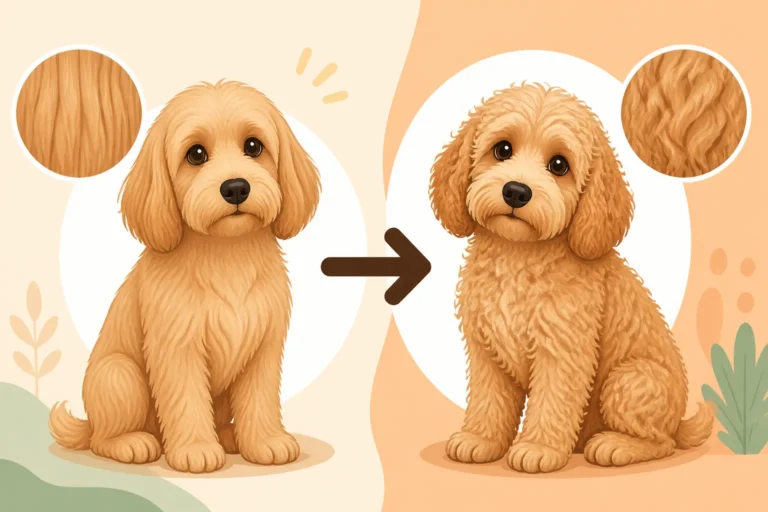
The coat change, sometimes affectionately (or perhaps exasperatedly) called the "uglies," is the transition from your Cockapoo's soft, wispy puppy coat to their more dense, adult coat. Imagine growing thick, coarse adult hair over your baby-fine childhood hair – it's a similar principle. The differing textures and lengths of the two coats create a perfect storm for tangles and mats. The puppy hair starts to loosen and shed, but instead of falling out, it gets caught in the developing adult coat, especially if that adult coat is wavy or curly.
This isn't a quick process; it can last for several months, often starting around 8-10 months of age and sometimes extending past 18 months. During this time, your Cockapoo’s coat might look uneven, feel different, and become incredibly prone to matting seemingly overnight. Areas like the armpits, behind the ears, the groin, and the tail are particularly vulnerable. Many owners are caught off guard by the intensity of this change, going from brushing once a week to needing daily sessions. This significant shift often comes as a surprise, but it’s a well-known phenomenon, as highlighted in The Coat Change That Ambushes a Cockapoo Owner at Ten Months.
Grooming Strategies for the Coat Change Period
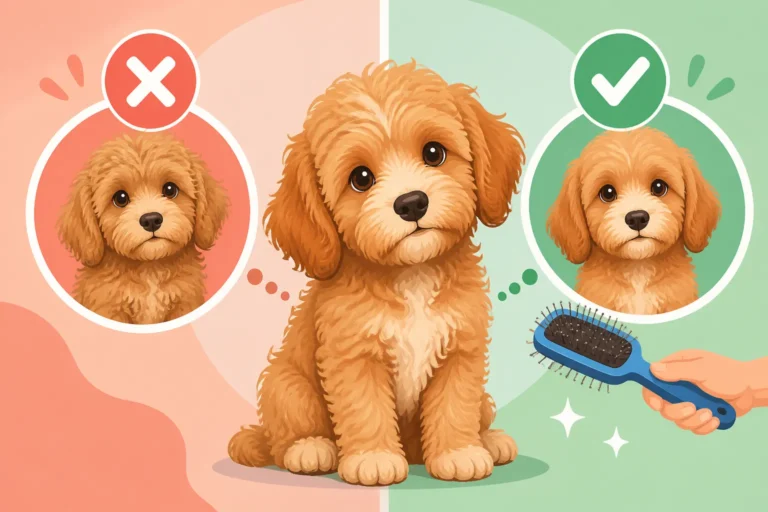
Successfully navigating the coat change demands increased vigilance and a consistent grooming strategy. This is not the time to slack on brushing, even if your pup is protesting! The key is to commit to daily brushing, even if it's just for 10-15 minutes, making sure you get all the way down to the skin. Simply skimming the top of the coat will only leave mats to form closer to the skin, where they can become painful and require professional intervention.
You'll need the right tools: a high-quality slicker brush (many groomers recommend brands known for their dense, flexible pins) and a sturdy metal comb are indispensable. The slicker brush will help detangle the bulk of the coat, while the metal comb is critical for "line brushing" – parting the hair in small sections and combing from the skin outwards to ensure no mats are lurking. Investing in a good detangling spray can also make the process smoother and more comfortable for your dog. You can find excellent options for both brushes and detangling sprays on platforms like Amazon or Chewy. Don't be afraid to keep their coat a little shorter during this period to make maintenance easier.
When the Coat Finally Settles
The good news is that the coat change doesn't last forever! Most Cockapoos' adult coats will largely settle by around 18 months to two years of age. This doesn't mean grooming becomes entirely effortless, especially for wavy or curly coats, but the frantic, constant battle against rapidly forming mats usually subsides. Once the adult coat is fully in, it tends to be more consistent in texture and density.
After this period, you'll have a much clearer understanding of your dog's true adult coat type and its ongoing grooming requirements. While the coat might still require frequent brushing (daily for tight curls, every 2-3 days for waves) and regular professional grooming appointments, it will be a more predictable routine. The matting will still occur if neglected, but it typically won't be the relentless, all-encompassing challenge of the coat change phase. Understanding Whether a Cockapoo's Coat Settles After Two is crucial for setting realistic long-term grooming expectations.
Essential Grooming for Every Curl Type
Regardless of whether your Cockapoo sports a straight, wavy, or tightly curled coat, one thing is certain: they all require consistent grooming. Neglecting a Cockapoo's coat can quickly lead to painful mats, skin issues, and costly trips to the professional groomer for a complete shave-down. Establishing a routine early on is key, not just for aesthetics, but for your dog's comfort and health.
Daily Maintenance Routines
For many Cockapoo owners, especially those with wavy or curly dogs, daily maintenance isn't a suggestion—it's a necessity. This is about preventing problems before they start. The core of a good daily routine involves thorough brushing, ideally using a method called "line brushing." This means parting the hair in small sections and systematically brushing from the skin out, ensuring you're not just skimming the surface. Pay extra attention to common trouble spots like behind the ears, under the chin, in the armpits, the groin area, and anywhere a harness or collar rubs.
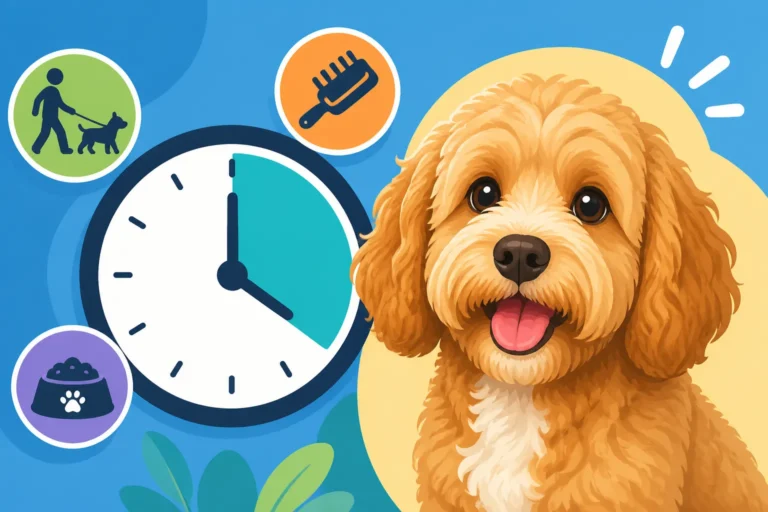
Beyond brushing, a daily check for tangles or small mats is crucial. It's much easier to gently work out a tiny knot than to tackle a large, painful mat. Don't forget ear and eye care; Cockapoos often have hair that grows into their ear canals, which needs plucking, and hair around their eyes that can cause irritation or tear staining, which needs regular cleaning or careful trimming. Depending on the coat type, this daily routine can take anywhere from 10 to 30 minutes, or even more for a very curly, long coat. For a deeper dive, check out The Weekly Hours Each Cockapoo Coat Type Takes to understand the time commitment.
Professional Grooming: Frequency and Expectations
While at-home brushing is vital, professional grooming is equally important for most Cockapoos. Think of your groomer as a partner in maintaining your dog's health and comfort. The frequency of professional appointments will largely depend on your Cockapoo's coat type and your preferred length.
- Straight Coats: May get away with professional grooming every 8-12 weeks, mainly for trims, tidying feathering, and nail care.
- Wavy Coats: Typically require professional grooming every 6-8 weeks to keep mats at bay and maintain a manageable length.
- Curly Coats: Often need professional grooming every 4-6 weeks due to their intense matting potential. Keeping them in a shorter "puppy cut" can make maintenance easier for both you and the groomer.
When you take your Cockapoo to the groomer, be very clear about what you want. Show pictures if possible. Also, be realistic; if your dog is heavily matted, a groomer's priority will be their comfort and health, which often means a short shave to remove painful mats. A good groomer will also be able to advise you on at-home care and suitable products.
Tools of the Trade for At-Home Grooming
Having the right tools is half the battle when it comes to Cockapoo grooming. Skimping on quality here will only lead to more frustration and potentially more painful grooming sessions for your dog.
- Slicker Brush: This is your primary tool for detangling and removing loose hair. Look for one with good quality, flexible pins that won't scratch your dog's skin. Brands available on Chewy or Amazon often have a range of options.
- Metal Comb: Essential for checking your work and finding hidden mats. A good comb will have both wide and narrow-set teeth. This is crucial for "line brushing."
- Detangling Spray: Use this before and during brushing, especially on dry spots or tangles, to help lubricate the hair and prevent breakage.
- Blunt-nosed Scissors: Useful for carefully trimming hair around the eyes and paws, but only if you feel confident and your dog is cooperative.
- Nail Clippers or Grinder: Regular nail trims are a must to prevent discomfort and splayed feet.
- Ear Cleaner and Cotton Balls: For routine ear cleaning, especially important for Cockapoos with their floppy ears.
- High-Velocity Dryer (optional but highly recommended): For curly and wavy coats, fully drying your dog after a bath is crucial to prevent matting and hot spots. A pet-specific dryer is much more effective than a human hairdryer.
Investing in these tools will make your grooming routine far more effective and less stressful for both you and your Cockapoo. For a more detailed look at what you need, check out The Kit Needed to Groom a Cockapoo at Home.
Beyond the Curl: Other Coat Considerations
While curl and shedding are often the primary concerns for Cockapoo owners, there's more to your dog's coat than just its texture. The health of their skin, the reality of "hypoallergenic" claims, and even how their coat color might change over time are all important aspects of care and ownership.
Skin Health and Coat Condition
Your Cockapoo's coat is a direct reflection of their overall health, and underlying skin conditions can manifest in the coat. Because Cockapoos are a mix of two breeds, they can inherit sensitivities from both sides. Cocker Spaniels can sometimes be prone to oily skin and sebaceous adenitis, while Poodles can have drier skin. This blend means your Cockapoo might present with either, or a combination of, issues.
Signs of skin issues can include excessive scratching, redness, dandruff, a greasy or dull coat, or even a persistent "doggy" smell even after bathing. Diet plays a significant role here. A high-quality diet rich in omega fatty acids can do wonders for skin and coat health. Some owners opt for fresh food diets, like those offered by Ollie, which can sometimes help alleviate skin sensitivities and improve coat luster. If you notice your Cockapoo’s coat feeling unusually oily or dry, or if they're itching excessively, it's always best to consult your veterinarian to rule out allergies, infections, or other underlying health problems. Keep an eye out for Whether a Cockapoo's Coat Sits Greasy or Dry.
Hypoallergenic Claims and Shedding Realities
The term "hypoallergenic" is often thrown around when discussing doodle breeds, but it's a bit of a misnomer. No dog is 100% hypoallergenic; people with allergies are typically reacting to dander (dead skin flakes) and saliva, not just hair. However, dogs that shed less hair tend to release less dander into the environment, making them more allergy-friendly.
Cockapoos, especially those with wavy or curly coats and proper furnishings, are generally considered low-shedding. The curly hair traps any shed hair and dander, preventing it from floating freely around your home. This is why consistent brushing is so important – you're essentially brushing out the trapped hair and dander, which then gets disposed of, rather than settling on your furniture. Straight-coated Cockapoos, lacking these furnishings and the tight curl, will shed more. It's important to have realistic expectations; even a low-shedding Cockapoo will still produce some allergens. For truly sensitive individuals, spending time with a specific Cockapoo beforehand is the best way to assess their individual reaction. The claim Whether Any Cockapoo Is Truly Non Shedding is often a point of debate, and understanding the nuances is key.
Coat Color and Texture Changes Over Time
Prepare yourself for a little bit of a surprise with your Cockapoo's coat color – it might not stay exactly the same as they age! Many Cockapoos, particularly those with red, apricot, or black coats, are known to "fade" or "clear" over time. A vibrant red puppy might mature into a beautiful apricot or even cream, and a jet-black puppy might develop silvering or a blue tint. This is due to various genetic factors that influence pigment production throughout a dog's life.
Beyond color, the texture of your Cockapoo's coat can also evolve. While the main curl type (straight, wavy, curly) will remain, the density and exact feel can change from their puppy coat to their adult coat, and sometimes even into their senior years. An elderly Cockapoo's coat might become a bit thinner or coarser, requiring slight adjustments to their grooming routine. These changes are a natural part of aging and genetics, adding another layer of individuality to your cherished companion. Learning Whether a Cockapoo's Color Fades With Age means appreciating the beautiful transformations.
Disclaimer
This article is for general informational purposes only and does not constitute professional advice. Laws, prices and regulations vary by location and change over time. Consult a qualified professional for guidance on your specific situation.