What an Improper Coated Cockapoo Looks Like
One of the trickiest things about bringing a Cockapoo into your home is trying to predict what their coat will actually be like. You might be dreaming of that fluffy, non-shedding teddy bear look, only to find yourself sweeping up tumbleweeds of dog hair a few months later. This guide is going to walk you through exactly what an "improper coat" in a Cockapoo looks like, why it happens, and what it means for you and your furry companion, dispelling some myths along the way.
Understanding the Cockapoo Coat Genetics
Before we dive into what an improper coat looks like, it's really helpful to understand the genetic ingredients that make up a Cockapoo's distinctive fleece or curly coat. It's not just random; specific genes inherited from their Cocker Spaniel and Poodle parents dictate everything from texture to shedding. This understanding is key to unlocking the mystery of why some Cockapoos shed like crazy, even when their owners were promised a "non-shedding" dog.
The Furnishings Gene RSPO2 and Its Role
The superstar of the low-shedding, fluffy look in doodles is largely due to what we call "furnishings." This isn't just a fancy term; it refers to the longer hair on a dog's face, including eyebrows, mustache, and beard, which typically accompanies longer hair on the legs. It’s controlled by a specific gene, RSPO2. Without furnishings, a Cockapoo's face would look much more like a Cocker Spaniel’s – smooth and short-haired around the muzzle and eyes.
Think about the classic Poodle look – long facial hair, thick overall coat. That's furnishings in action. When a Poodle is bred with a Cocker Spaniel, the goal is often to get that Poodle-like hair that is less likely to shed, but still with the Cocker's sweet temperament. The RSPO2 gene, often abbreviated to F (for furnished) or IC (for improper coat) when we're talking about the absence of furnishings, is what breeders test for to determine if a puppy will have this desirable trait. A dog needs at least one copy of the dominant 'F' allele to be furnished. If they inherit two copies of the recessive 'IC' allele (IC/IC), they will have an improper coat. You can learn more about What RSPO2 Testing Tells a Cockapoo Breeder.
The Curl Gene KRT71 and Its Influence
Beyond furnishings, there's the curl! The degree of curl in a Cockapoo's coat is influenced by another gene, KRT71. This gene can produce anything from straight, wavy, to very tight curls. While furnishings are what primarily determine whether a dog will have that classic "doodle look" and be low-shedding, the KRT71 gene dictates the texture and overall appearance of that furnished coat. A wavy coat often requires a different grooming approach than a tightly curled one, for instance.
A Cockapoo with furnishings might have a wavy coat (often seen as the "fleece" coat) or a tight curl, depending on the KRT71 alleles inherited. A dog needs two copies of the dominant allele for curl (KRT71-CC) to have a very curly coat, while one copy (KRT71-CT) usually results in a wavy coat, and two recessive copies (KRT71-TT) mean a straight coat. So, while you might get a low-shedding dog because of furnishings, the texture of that coat, and thus its grooming demands, will still vary greatly. Understanding What KRT71 Says About a Cockapoo's Curl can really help set expectations.
What an F1 Cockapoo Coat Means for Genetics
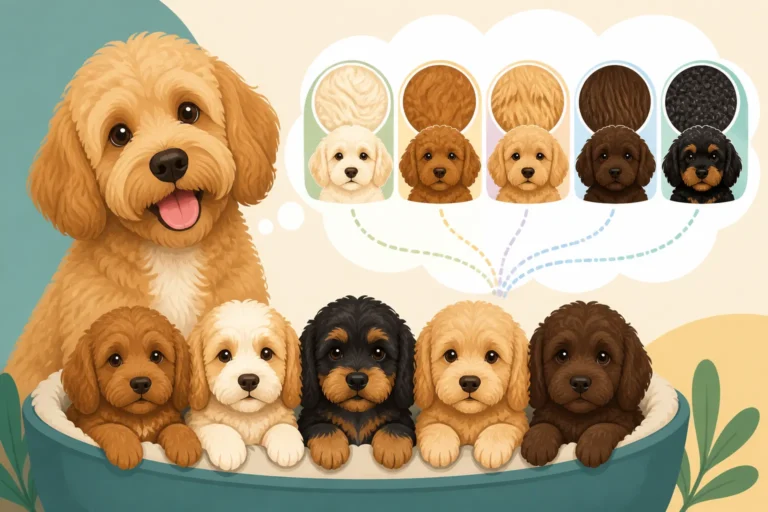
When we talk about generations, an F1 Cockapoo is a first-generation cross – a purebred Cocker Spaniel bred with a purebred Poodle. This is where the genetic roulette truly begins for coat type. Both parents contribute one copy of each gene to their offspring. A Poodle almost always contributes the dominant furnishing gene (F) and usually genes for curl. A Cocker Spaniel, however, typically contributes two copies of the improper coat gene (IC/IC) and often genes for a straight or wavy coat.
Therefore, an F1 Cockapoo will always inherit one furnishing gene (F) from the Poodle and one improper coat gene (IC) from the Cocker. This means all F1 Cockapoos should be furnished (F/IC), making them low-shedding. However, the degree of curl can still be a bit of a coin flip, as the Cocker might contribute genes for straighter hair. This is why you see such variety in F1 coats – from shaggy and wavy to more Poodle-like curls, but generally, they should all have furnishings. Sometimes, however, a Poodle parent might unexpectedly carry an IC gene, or a Cocker might carry an F gene, making predicting an F1 coat slightly more complex than a simple 50/50. Whether an F1 Cockapoo's Coat Is a Coin Flip dives deeper into this fascinating genetic lottery.
What Defines an Improper Coat in a Cockapoo
So, if all that genetic talk about furnishings and curl is a bit much, let's get to the heart of the matter: what does an improper coat actually look like on a Cockapoo? It’s not just about shedding; it’s about a fundamentally different hair growth pattern that distinguishes it from the classic "doodle" appearance many owners expect.
The Lack of Furnishings: A Key Indicator
The most striking characteristic of an improper coat is the absence of furnishings. This means no long hair on the face. Instead of that fluffy, teddy bear muzzle, you'll see a smooth, shorter coat around the eyes and mouth, much like a typical Cocker Spaniel. This lack of facial hair growth is the most obvious visual cue that a Cockapoo has an improper coat. It doesn't mean the dog isn't adorable; it just means they won't have that distinctive "doodle beard."
The hair on the body of an improperly coated Cockapoo tends to be shorter overall, too. It won't grow out indefinitely like a Poodle's or a furnished Cockapoo's coat. Instead, it will reach a certain length and stop, similar to a Cocker Spaniel's coat, though it might retain some of the Poodle's softness. This can be a huge surprise for owners who were expecting a shaggy, low-shedding dog and suddenly find their Cockapoo looks much more like one of its parent breeds.
Visual Characteristics of an Improper Coat
Imagine a Cocker Spaniel, but perhaps with a slightly wavier or coarser texture than a purebred Cocker, and often without the extreme length of ear feathering. That's a good mental picture of an improperly coated Cockapoo. Their body hair will be shorter, flatter, and often smoother. While a furnished Cockapoo might have hair that constantly grows and requires regular trimming, an improperly coated one's hair will have a terminal length, meaning it grows to a certain point and then stops, much like human hair or a purebred dog's coat.
The coat can still be soft, but it lacks that thick, dense feel that helps prevent shedding in furnished dogs. You might notice areas where the coat is particularly sleek, perhaps over the back or head. The "furnishings" are the game-changer, and without them, the whole appearance shifts. This can be particularly noticeable if you see an improperly coated Cockapoo next to a properly furnished one – the difference in facial hair alone is unmistakable.
Why it's Not Just About Shedding
While shedding is the most common concern associated with an improper coat, it's crucial to understand that an improper coat isn't just about the hair left on your couch. It fundamentally changes the grooming needs, the dog's appearance, and even how people with allergies might react. A furnished coat is often described as "hair" that grows continuously, much like human hair, and sheds minimally, if at all. An improper coat is more like "fur," which grows to a certain length and then cycles, leading to regular shedding.
This distinction means that owners of improperly coated Cockapoos need to prepare for hair management similar to owning a purebred Cocker Spaniel. Regular brushing, frequent vacuuming, and accepting that shedding will be a part of life are all considerations. It's not a flaw in the dog, but rather a different genetic outcome than what many people associate with the "doodle" descriptor. For some, this might even be preferable, as it can mean less professional grooming, though more home cleanup. Why an Improper Coated Cockapoo Sheds delves into the specifics of this hair cycle.
The Difference Between Proper and Improper Coats
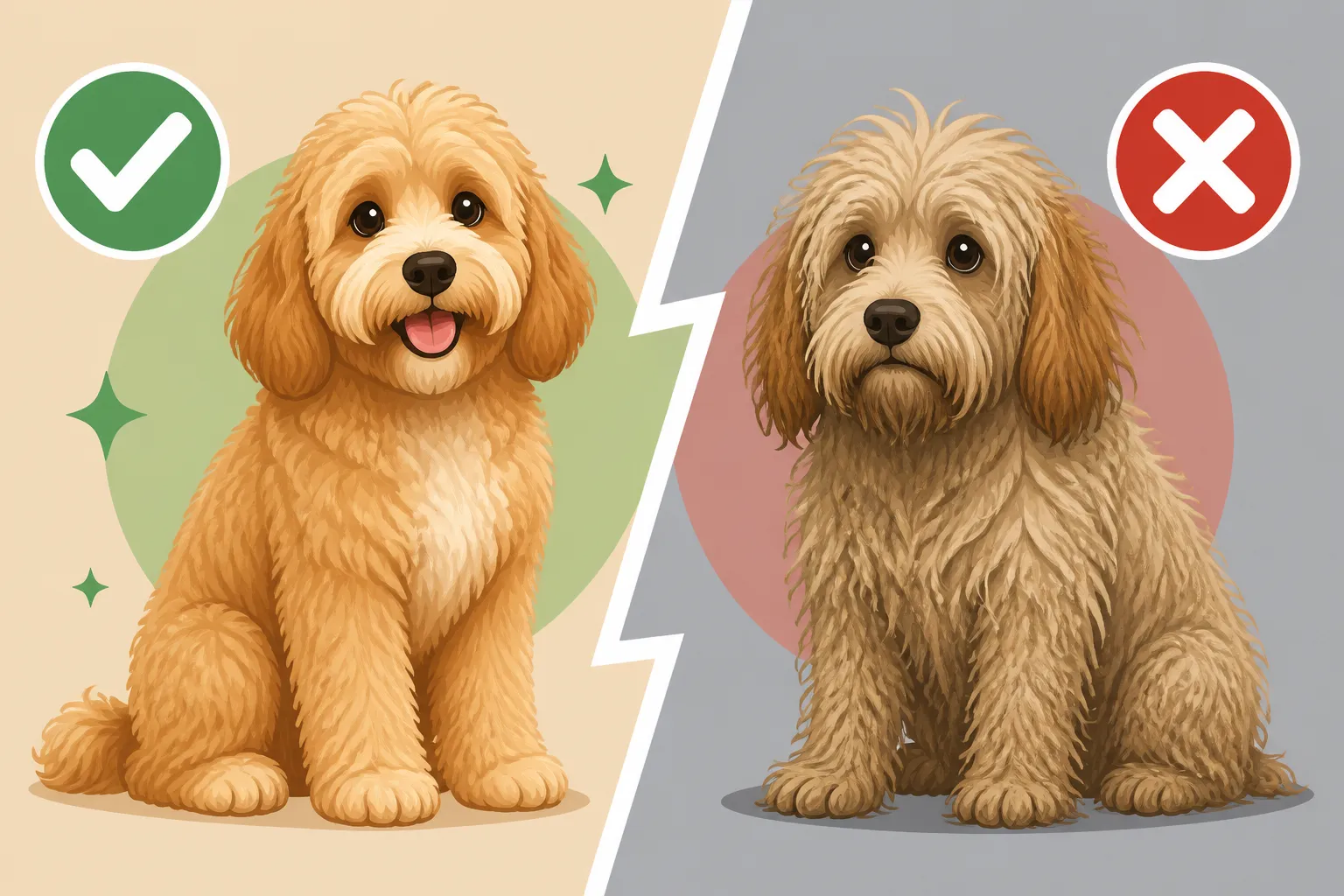
Let's really zoom in on the distinctions between a properly furnished Cockapoo and one with an improper coat. These differences go beyond just a cute beard; they impact everything from daily grooming to how much you'll be running your vacuum. Understanding these key areas can help you set realistic expectations or even inform your choice when looking for a puppy.
Comparing Hair Length and Texture
A Cockapoo with a proper, furnished coat will have hair that grows continuously, much like a Poodle's. This hair is often described as feeling like wool or fleece – soft, sometimes quite dense, and varying from wavy to tightly curled. Because it grows continuously, it needs regular trimming by a groomer to maintain a manageable length and prevent matting. Think of it as needing a haircut every 6-8 weeks, just like we do. The length can be maintained quite long if desired, as long as the owner commits to diligent daily brushing.
In stark contrast, an improperly coated Cockapoo has hair that grows to a certain length and then stops, similar to a Cocker Spaniel. This hair is typically shorter, straighter, and often coarser in texture. It might still have some waviness from the Poodle side, but it won't have the dense, woolly feel of a furnished coat. The facial hair will be short, giving the dog a more "spaniel-like" or "terrier-like" face rather than the fluffy "teddy bear" look. This means less need for professional haircuts for length, but different maintenance for shedding. For an example of a furnished coat, you might consider The Wavy Coated Cockapoo or The Tight Curled Cockapoo.
Shedding Tendencies and Allergy Implications
Here's where the rubber meets the road for many potential Cockapoo owners. The primary reason most people choose a Cockapoo is the promise of a low-shedding, often hypoallergenic, companion. A properly furnished Cockapoo, with at least one copy of the dominant F gene, will typically shed minimally. Their hair holds onto dead strands, requiring brushing to remove them, but they don't release a constant flurry of hair into the environment. This is why they are often suitable for people with mild dog allergies.
An improperly coated Cockapoo, however, will shed. They shed more like a Cocker Spaniel, which is to say, moderately to heavily, depending on the individual dog and season. This is because their coat cycles differently, releasing dead hair regularly. For allergy sufferers, this means an improperly coated Cockapoo is highly unlikely to be hypoallergenic. The dander, which is often attached to shed hair, will be more prevalent in the home. This can be a significant disappointment and even a health issue for families who specifically sought out a doodle for its low-allergen qualities. You can explore Whether a Furnished Cockapoo Suits an Allergic Home to understand the nuances.
Grooming Needs: A Practical Comparison
The grooming requirements for proper vs. improper coats are vastly different. A furnished Cockapoo requires consistent, diligent grooming. This includes daily or every-other-day brushing to prevent mats, especially during coat change periods, and professional grooming appointments every 6-8 weeks for a full clip, bath, and tidy. Without this, their continuously growing hair will quickly become a matted mess, leading to painful skin issues and requiring complete shave-downs. The investment in time and money for grooming a furnished Cockapoo is substantial.
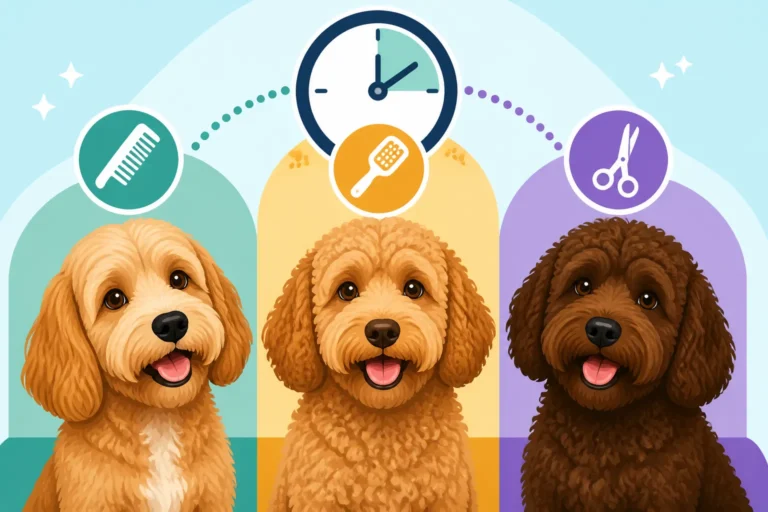
For an improperly coated Cockapoo, the grooming routine shifts. While they don't need regular professional haircuts for length, they do need regular brushing, sometimes daily, to manage shedding and prevent their shorter coat from becoming dull or tangled. Baths are still necessary, and some owners might opt for professional deshedding treatments. However, the risk of severe matting is much lower, and the overall grooming bill for cuts is reduced or eliminated. Instead, your investment might shift to a good quality vacuum cleaner and lint rollers. You'll definitely want to know The Three Cockapoo Coat Types and Their Upkeep to get a full picture.
Here's a quick comparison table:
| Feature | Properly Furnished Coat | Improper Coat |
|---|---|---|
| Facial Hair | Long beard, mustache, eyebrows | Short, smooth facial hair (Spaniel-like) |
| Body Hair Growth | Continuously growing (requires regular trimming) | Grows to a terminal length, then stops (like a Spaniel) |
| Texture | Woolly, fleece-like, wavy to curly | Shorter, straighter, often coarser |
| Shedding | Minimal to none (low-shedding) | Moderate to heavy (sheds like a Spaniel) |
| Allergy Friendly? | Often suitable for mild allergies | Unlikely to be suitable for allergies due to shedding & dander |
| Grooming Needs | Daily brushing, professional grooming every 6-8 weeks | Regular brushing (to manage shedding), less frequent professional cuts |
Recognizing an Improper Coat in a Puppy
One of the biggest heartbreaks for a new Cockapoo owner is realizing, months down the line, that their "non-shedding" puppy is actually shedding quite a bit. Recognizing an improper coat early on can save a lot of disappointment, especially if allergies are a concern in your household. It's not always immediately obvious, but there are definite signs to look for, even in a tiny puppy.
Early Signs: The "Smooth Face" Puppy
The most reliable indicator of an improper coat in a Cockapoo puppy is its face. From as young as 6-8 weeks, a furnished puppy will show signs of longer hair around its muzzle and eyebrows – even if it's just a subtle fluff. This is the beginning of their "beard" and "mustache." An improperly coated puppy, however, will have a smooth face. Their muzzle, forehead, and around their eyes will be covered in short, sleek hair, much like a Cocker Spaniel puppy. This distinction becomes more pronounced as they grow, but it's often visible early on.
Sometimes, new owners might confuse this smooth face with a "flat coat" or a "straight coat," but these are different genetic traits. A straight-coated Cockapoo can still be furnished and low-shedding, just with a straighter texture. An improperly coated puppy simply lacks the gene for those long facial furnishings. Pay close attention to the hair right around the nose and mouth. If it's short and flat, you're likely looking at an improper coat. Telling a Furnished Cockapoo Puppy by Its Muzzle offers specific visual cues.
How Coat Changes Over Time
While the "smooth face" is a strong indicator, a puppy's coat can still undergo some transformations. A properly furnished Cockapoo will go through a significant "coat change" between 6 and 18 months, where their soft puppy fur is replaced by a denser adult coat. This period is notorious for matting and requires increased grooming vigilance. However, the fundamental characteristic of continuous growth and furnishings remains. A Cockapoo's Coat Through the Ten Month Change details this transition.
For an improperly coated Cockapoo, the coat change is less dramatic in terms of texture and length. They won't suddenly develop furnishings. Their hair might become slightly denser or coarser, but it will continue to grow to a terminal length and then shed. Owners often report noticing the shedding become more pronounced around the same age that furnished puppies are going through their coat change. The key is that the initial smooth face will persist, and the coat will never develop that long, flowing facial hair.
The Importance of a DNA Coat Panel
If you are absolutely set on a low-shedding, furnished Cockapoo, or if severe allergies are a concern, asking your breeder about DNA coat panel testing is paramount. Reputable breeders will test their breeding dogs for the RSPO2 gene (furnishings) to ensure they are producing puppies with the desired coat type. A simple DNA test can determine if a dog is FF (two copies of furnishings, will pass one to all offspring), F/IC (one copy of furnishings and one improper coat, can produce improper coats if bred with another F/IC or an IC/IC dog), or IC/IC (two copies of improper coat, will pass one to all offspring).
By knowing the genetic makeup of both parent dogs, a breeder can predict the likelihood of improper coats in a litter with high accuracy. For example, if both parents are F/IC, there's a 25% chance of producing an IC/IC puppy. If a breeder shows you certificates from a reputable lab like Paw Print Genetics or Embark, confirming the parents' coat genetics, it gives you much more peace of mind. Reading a Cockapoo Coat Report Before You Choose can help you interpret these results. Never rely solely on visual inspection, as some coats can be deceiving, especially in young puppies.
Living with an Improper Coated Cockapoo
So, you've either chosen or ended up with an improperly coated Cockapoo. First off, congratulations! You have a wonderful, loving dog, regardless of its coat type. While it might not be what you initially pictured, living with an improperly coated Cockapoo is absolutely manageable. It just requires a slightly different approach to grooming and managing expectations, especially regarding shedding.
Grooming Routine for a Shedding Cockapoo
The good news is that grooming an improperly coated Cockapoo can be less demanding in some ways than a heavily furnished, curly one. You won't be battling severe matting that requires hourly brushing or frequent professional shave-downs. However, you will be dealing with shedding, so your grooming routine will focus on managing loose hair. Invest in a good quality slicker brush and a deshedding tool. Products from brands like Chewy can offer a wide range of brushes and shampoos designed for shedding coats.
Aim for brushing your improperly coated Cockapoo at least 2-3 times a week, or even daily during heavy shedding seasons (typically spring and fall). Regular brushing not only helps remove dead hair before it lands on your furniture but also stimulates the skin and distributes natural oils, keeping the coat healthy and shiny. Routine baths, perhaps every 4-6 weeks with a good deshedding shampoo, can also help minimize loose hair. Remember, this coat still needs care to look its best, even if it doesn't grow endlessly. You might find that The Kit Needed to Groom a Cockapoo at Home is a slightly different list for an improperly coated dog.
Managing Allergies in a Home with an IC Dog
If you or a family member has dog allergies, an improperly coated Cockapoo can pose a challenge. Since they shed more dander and hair, they are not considered hypoallergenic. However, there are still steps you can take to manage allergies if your heart is set on keeping your beloved companion. Frequent vacuuming with a HEPA filter, using air purifiers, and regular washing of dog beds and blankets are crucial. You might need to adjust your living arrangements, perhaps designating certain "dog-free" zones in the house, like bedrooms.
Consider using special shampoos and wipes designed to reduce dander on your dog. Regular grooming, as mentioned above, will also help by removing much of the dander-laden hair before it spreads. It's a commitment, and it might not eliminate allergies entirely, but many families successfully manage mild allergies with these strategies. Remember to consult with an allergist if symptoms are severe, as a change in pet might be necessary for serious health reasons.
Embracing the Unique Look
An improperly coated Cockapoo has a charm all their own! They often look more like a classic Cocker Spaniel, perhaps with a slightly shaggier or wavier coat than a purebred. This gives them a distinct and beautiful appearance that stands out from the typical "doodle" crowd. Many owners find themselves falling in love with this look, which often comes with less intensive professional grooming needs.
Instead of trying to make them look like something they're not, embrace their natural beauty. Their smooth face and shorter coat can highlight their expressive eyes and sweet spaniel features. They are still 100% Cockapoo in personality – playful, intelligent, and affectionate. The coat is just one aspect of their identity, and it doesn't diminish their wonderful companionship one bit. After all, love for a dog transcends superficial appearances!
Common Misconceptions About Improper Coats
There's a lot of misinformation swirling around about improper coats, especially in the doodle community. It's easy to jump to conclusions or feel misled, but let's clear up some of the common myths and misunderstandings.
Is an Improper Coat "Bad Breeding"?
This is a really common and often unfair accusation. While ethical breeders strive to produce dogs that meet specific expectations, the presence of an improper coat isn't necessarily a sign of "bad breeding." It primarily happens when a breeder isn't fully aware of the genetic makeup of their parent dogs, or they take a chance on an F1b (a Cockapoo bred back to a Poodle) or multigen litter without proper DNA testing for furnishings.
For instance, if two F1 Cockapoos (who are both F/IC, meaning they carry one proper and one improper coat gene) are bred together, there's a 25% statistical chance that some puppies in the litter will inherit two IC genes (IC/IC) and thus have an improper coat. An ethical breeder using DNA testing would know this risk and might choose to avoid such pairings if their goal is 100% furnished puppies. However, sometimes these things happen even with good intentions, especially if breeders are new to genetic testing or relying on visual assessments alone. You can delve into Whether an Improper Coated Cockapoo Is a Fault for a deeper discussion.
Does an IC Cockapoo Cost Less?
Sometimes, an improperly coated Cockapoo might be offered at a lower price, especially if the breeder recognizes the coat type and knows it might not align with typical buyer expectations for a "doodle." However, this isn't universally true. Many breeders price their puppies based on health testing, temperament, and overall breeding quality, not solely on coat type. If a breeder is responsible and has invested in health clearances for the parents and early socialization for the puppies, the price might still reflect that effort, regardless of the coat.
Moreover, if the lower price is because the breeder didn't conduct proper health or coat genetic testing, it could end up costing you more in the long run through potential veterinary bills or unexpected challenges. Always prioritize a breeder who is transparent about health testing, including coat genetics, and who can provide documentation, regardless of the initial purchase price. Price shouldn't be the only determining factor. For more on pricing, look at Whether an Improper Coated Cockapoo Costs Less.
Health Implications of an Improper Coat
It's important to clarify that an improper coat itself does not carry any inherent health implications for the dog. It is purely a cosmetic and grooming trait. An improperly coated Cockapoo is just as healthy as a properly furnished one, assuming both come from health-tested parents and receive proper care. The genes that control furnishings and curl are separate from those that cause genetic diseases like Progressive Retinal Atrophy or Familial Nephropathy.
Some people mistakenly believe that an improper coat indicates poor health, but this is simply not true. Your improperly coated Cockapoo will be just as vibrant, playful, and long-lived as any other, provided they are healthy in all other aspects. The focus should always be on the overall health clearances of the parent dogs, appropriate socialization, and responsible breeding practices, rather than solely on coat aesthetics. For broader health considerations, refer to The Kidney and Eye Checks a Cockapoo Needs Yearly.
Advice for Prospective Cockapoo Owners
If you're in the market for a Cockapoo, especially if you have specific coat expectations, a little bit of proactive research and direct communication with breeders can save you a lot of disappointment later on. Don't be afraid to ask tough questions and seek clarification.
Questions to Ask Your Breeder
When you're speaking with a potential breeder, be prepared with a list of questions, especially regarding coat type. Here are some essential ones:
- "Have both parent dogs been DNA tested for the RSPO2 furnishing gene?" Ask for proof of these results from a reputable lab. You want to see results like FF for a furnished parent, or at least F/IC, and understand the implications of the pairing.
- "Can you explain the coat genetics of this particular litter?" A knowledgeable breeder should be able to tell you the likely coat types in their puppies based on parent genetics.
- "What are the typical coat types you see in your puppies?" This gives you an idea of their breeding program's history.
- "What happens if my puppy develops an improper coat and I was expecting a furnished one?" Discuss their policy. Do they offer any form of recourse or support?
A good breeder will welcome these questions and be transparent with their answers and documentation. If a breeder seems hesitant, defensive, or dismissive of your concerns about coat type, that could be a red flag. Always remember that Asking a Cockapoo Breeder for the FN Certificate and other health clearances are just as crucial as coat genetics.
Understanding Coat Guarantees and Contracts
Some breeders offer "coat guarantees" in their contracts, especially if they are confidently breeding for specific low-shedding traits. These guarantees might state that the puppy will be furnished and low-shedding. Read any contract carefully to understand what, if any, recourse you have if the puppy's coat doesn't meet the guarantee. Is it a partial refund, a replacement puppy, or something else?
However, many breeders, especially those producing F1 generation Cockapoos where coat variability can be slightly less predictable, might not offer an explicit coat guarantee, particularly if they are simply crossing a Cocker and Poodle with known, good temperaments and health clearances. This is where your own due diligence and understanding of genetics become even more important. A clear, well-written contract should outline all aspects of the purchase, including health guarantees, but coat specifics might vary. For broader protection, also look into Whether a Cockapoo Guarantee Covers Familial Nephropathy.
Making an Informed Choice
Ultimately, choosing a Cockapoo, whether furnished or improperly coated, is a personal decision. If allergies are a critical factor, or if you simply cannot live with shedding, then prioritizing a properly furnished puppy, verified by DNA testing, is essential. Be prepared to pay a premium for a breeder who can guarantee this through documented genetic testing. If you are less concerned about shedding and more focused on temperament and health, then an improperly coated Cockapoo could be a wonderful, albeit slightly different, companion for you.
Visit the puppies, interact with the parents if possible, and observe their coats in person. Don't let photos online be your only guide, as lighting and grooming can sometimes be misleading. A puppy's true coat often becomes clearer as they approach 8-10 weeks. An informed choice means understanding the possibilities and being prepared for the realities of the dog you bring home, regardless of its coat type.
Disclaimer
This article is for general informational purposes only and does not constitute professional advice. Laws, prices and regulations vary by location and change over time. Consult a qualified professional for guidance on your specific situation.