Telling a Furnished Cockapoo Puppy by Its Muzzle
One of the most common worries I hear from prospective Cockapoo parents is about shedding. You dream of that adorable, fluffy, low-shedding companion, but when you look at a litter of puppies, they all look so similar! How on earth are you supposed to know which one will grow up to have that classic Cockapoo look, and more importantly, less shedding? This guide is going to walk you through exactly what to look for on a Cockapoo puppy's muzzle to help you predict its future coat type and whether it will shed, giving you the confidence to make an informed choice.
Understanding the "Furnishings" Gene in Cockapoos
Let's start by demystifying a term you'll hear a lot in Cockapoo circles: "furnishings." This isn't just a fancy word; it's a specific genetic trait that makes all the difference when it comes to the Cockapoo's signature low-shedding, fluffy appearance. Essentially, furnishings are what give a dog facial hair like eyebrows, a mustache, and a beard. Without them, a dog has a "clean" face, similar to a Labrador or a Cocker Spaniel.
The Genetic Blueprint for a Fluffy Face
The presence of furnishings is controlled by a single gene, known as the RSPO2 gene. It's a dominant trait, meaning a puppy only needs to inherit one copy of the gene from either parent to have furnishings. If a puppy inherits two copies, it will also have furnishings. However, if it inherits two copies of the non-furnished gene, it will have what's called an "improper coat" or "flat coat." This is why a thorough breeder will perform RSPO2 Testing Tells a Cockapoo Breeder to ensure they understand their breeding dogs' genetic makeup.
Think of it like this: the Poodle parent always carries two copies of the furnishing gene (FF), which is why Poodles have those characteristic fluffy faces and don't shed much. Cocker Spaniels, on the other hand, typically carry two copies of the non-furnishing gene (IC). When you cross a Poodle (FF) with a Cocker Spaniel (IC) to create an F1 Cockapoo, every single puppy in that litter will inherit one furnishing gene from the Poodle and one non-furnishing gene from the Cocker. This means all F1 Cockapoos will have furnishings (Ff genotype) and, generally speaking, be low-shedding. This is a common misconception, as many believe Whether an F1 Cockapoo's Coat Is a Coin Flip.
Why Furnishings Matter for Shedding
The furnishings gene is intrinsically linked to the hair growth cycle. Dogs with furnishings have a longer growth phase for their hair, which means less shedding. Their hair doesn't fall out as frequently, leading to that lovely, thick, and often curly or wavy coat that traps any shed hair rather than letting it fall all over your furniture. This is why many people seek out doodles, including Cockapoos, for their hypoallergenic-like qualities, though no dog is truly 100% hypoallergenic.
Conversely, a Cockapoo without furnishings – a "flat-coated" or "improper-coated" Cockapoo – will shed significantly more, often as much as a Cocker Spaniel. Their hair cycle is shorter, and their coat lacks the texture to hold onto shed hairs. While still a delightful dog, they won't fit the low-shedding expectation that many Cockapoo hopefuls have. Understanding this gene is paramount when considering Whether Any Cockapoo Is Truly Non Shedding.
What to Look For: The Muzzle Clues
Now, to the exciting part! You're looking at a litter of Cockapoo puppies, and you want to know which ones have furnishings. While a definitive answer usually requires a DNA test, there are very strong visual indicators on a young puppy's muzzle that can guide you.
The "Clean" Muzzle Versus the "Scruffy" Muzzle
The most obvious sign is the texture and length of the hair on the puppy's muzzle and around its eyes.
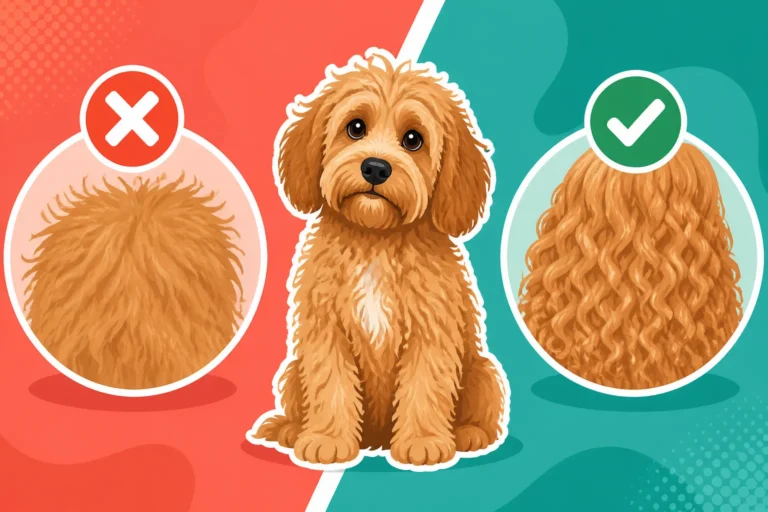
- Clean Muzzle: A puppy without furnishings will have a smooth, short coat on its muzzle, similar to a Labrador puppy or a purebred Cocker Spaniel puppy. The hair around their eyes will also be short and tidy, not growing into distinct eyebrows. You won't see any hint of a developing mustache or beard. Their face often looks very "neat" or "clean-cut." These puppies are genetically IC/IC for furnishings. They will shed.
- Scruffy Muzzle: A puppy with furnishings, even at a very young age (as early as 6-8 weeks), will show signs of longer, slightly scruffier hair on its muzzle. You'll often notice the hair around their eyes is longer, perhaps already forming the beginnings of what will become eyebrows. There might be a subtle, longer wispy growth around their chin, hinting at a future beard. This "scruffy" appearance is the tell-tale sign of the furnishing gene at work. These puppies are genetically Ff or FF for furnishings, meaning they will be low-shedding.
It’s important to remember that these are subtle differences in very young puppies, but they become more apparent as the weeks go by. A good breeder will be able to point these out to you, and some even provide Whether a Breeder Should Publish Cockapoo Coat Results from DNA testing.
Hair Around the Eyes and Chin
Beyond the general scruffiness of the muzzle, pay close attention to specific areas:
- Eyebrows: Look for hair that appears to be growing longer and pointing away from the face just above the eyes. On a non-furnished puppy, this area will be flat and smooth. On a furnished puppy, you'll see a slight "sprout" of hair.
- Beard/Mustache Area: Feel the hair under the chin and on the sides of the muzzle. On a furnished puppy, this hair will feel slightly coarser and longer than the hair on top of their head or cheeks, even if it's still very soft puppy fur. It will have a discernible texture and length difference compared to the surrounding coat. For a flat-coated puppy, the muzzle hair will blend seamlessly with the rest of the coat in terms of length and texture.
This visual assessment becomes easier around 8-10 weeks of age. If you're picking a puppy younger than that, it can be a bit more of a guessing game, though experienced breeders can often tell even earlier.
Here's a quick comparison table to help visualize the differences:
| Feature | Furnished Cockapoo Puppy (Ff or FF) | Improper Coated Cockapoo Puppy (IC/IC) |
|---|---|---|
| Muzzle Hair | Longer, slightly scruffy, wispy growth | Short, smooth, clean-cut |
| Eyebrows | Noticeable longer hair above eyes, often sticking out | Smooth, short hair that lies flat |
| Chin/Beard | Hint of longer, slightly coarser hair under the chin | Short, fine hair, blends with face coat |
| Overall Face | "Teddy bear" or "scruffy" appearance | "Cocker Spaniel" or "Poodle with short muzzle" look |
| Shedding | Generally low-shedding | Higher shedding, similar to a Cocker Spaniel |
The Development of the Furnished Coat
It's not just about what you see at eight weeks; it's also about how that coat will develop. The initial "scruffy" look on a furnished puppy's muzzle is just the beginning.
From Puppy Fluff to Adult Furnishings
As a furnished Cockapoo puppy grows, the hair on its muzzle, eyebrows, and chin will continue to lengthen and thicken. This is what creates that classic "teddy bear" look that Cockapoos are so famous for. The furnishings essentially frame their face, giving them a distinct and endearing expression. This hair also contributes to the curly or wavy appearance of their overall coat, which is why What Furnishings Look Like on a Cockapoo is such a crucial factor.
Without furnishings, the facial hair remains short, and the overall coat often appears straighter and flatter. These puppies might look adorable as young pups, but their adult appearance will be quite different from the typical Cockapoo image, and they will shed more. If you're looking for a low-shedding dog, seeing those early signs of furnishings is incredibly reassuring.
The Impact on Grooming and Maintenance
Furnishings mean more hair, and more hair means more grooming! That beautiful, low-shedding coat needs regular attention to prevent matting. The longer facial hair, in particular, will need to be trimmed around the eyes and mouth to keep it clean and prevent it from bothering your dog. You'll be spending a fair bit of time brushing, combing, and likely visiting a professional groomer every 6-8 weeks. Brands like Chewy and Amazon offer a huge range of grooming supplies, from slicker brushes to detangling sprays, that become staples for a furnished Cockapoo owner.
If your Cockapoo has an improper coat (no furnishings), while they will shed more, their grooming needs might be slightly less intensive in terms of preventing mats, though regular brushing will still be necessary to manage shedding. They might still need face trims for hygiene, but the dense, curly growth that catches debris and food won't be as pronounced. You might be interested in The Three Cockapoo Coat Types and Their Upkeep to get a full picture of what to expect.
When DNA Testing Comes Into Play
While visual assessment is a strong indicator, especially for F1 Cockapoos where all puppies should be furnished, sometimes a breeder will conduct DNA testing for the furnishing gene. This is particularly valuable in multi-generational Cockapoos (F2, F1b, etc.) where the genetics can be a bit more complex. If a breeder is breeding two furnished Cockapoos (Ff x Ff), there's a 25% chance of producing an improper-coated puppy (IC/IC). A DNA test provides a 100% accurate answer, taking the guesswork out of it. You can explore What a Cockapoo Coat Panel Actually Reports to understand the insights these tests provide.
If a breeder offers this testing, it shows a commitment to providing puppies that meet their owners' expectations regarding coat type. Always ask to see the parent dogs' DNA certificates, especially for the RSPO2 gene. This diligence helps you avoid the disappointment of a high-shedding Cockapoo when you were expecting a low-shedding one. It’s also important to differentiate this from other health tests, as discussed in The Five Certificates a Cockapoo Breeder Should Show.
Beyond the Muzzle: Other Coat Indicators
While the muzzle is your primary visual clue, it's not the only thing that can give you hints about a Cockapoo puppy's future coat. Looking at the overall texture and appearance of the puppy's coat, even at a young age, can provide additional information.
General Coat Texture and Body Hair
Take a moment to feel the puppy's coat over its body.
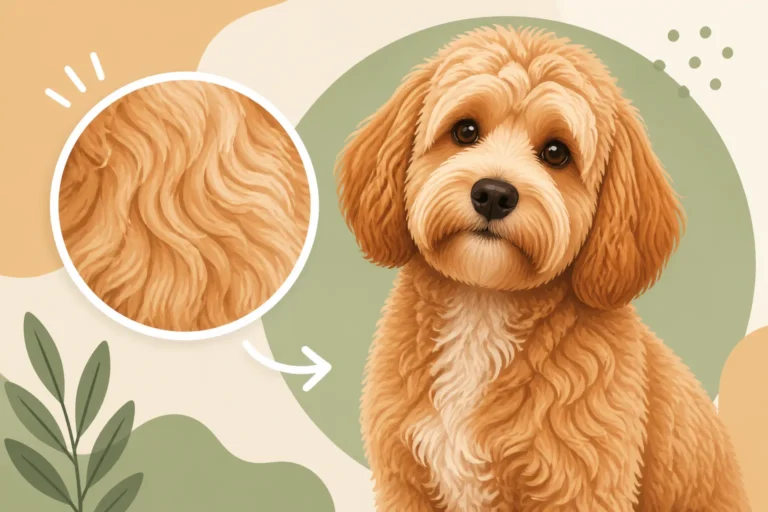
- Soft, Wavy, or Curly Fluff: Furnished puppies, especially those with more Poodle genetics, will often have a softer, fluffier, or already slightly wavy/curly coat texture on their bodies. It feels plush and has some "loft" to it. This indicates the longer hair growth cycle associated with furnishings.
- Straighter, Denser Hair: Improper-coated puppies might have a coat that feels a bit coarser, lies flatter, and appears straighter across their body. It might feel more like a smooth-coated dog's fur, rather than fluffy hair. This is due to the shorter hair growth cycle.
It's important to remember that all puppies are incredibly soft, but there can be subtle differences in density and 'springiness' that hint at their adult coat. This initial feel gives you a sense of What a Cockapoo Puppy's Coat Feels Like at Eight Weeks.
The F1 vs. F1b vs. Multigen Difference
The generation of the Cockapoo can also give you some clues, or at least set expectations for what to look for.
- F1 Cockapoo (Cocker Spaniel x Poodle): As mentioned, an F1 Cockapoo should always be furnished. Both parents typically contribute the necessary genes. So, if you see an F1 Cockapoo puppy with a truly "clean" muzzle, it might raise questions about the parentage or genetic testing.
- F1b Cockapoo (F1 Cockapoo x Poodle): An F1b Cockapoo is bred back to a Poodle. This cross is often done to increase the chances of a very low-shedding, furnished coat. Almost all F1b Cockapoos will have furnishings, and many will have two copies of the furnishing gene (FF), making them even less likely to shed. If you're hoping for minimal shedding, this generation is often preferred. You can often predict Whether an F1b Cockapoo Is Guaranteed Furnished.
- Multigenerational Cockapoo (Cockapoo x Cockapoo): This is where things can get a bit more varied. If both Cockapoo parents are Ff (meaning they carry one furnishing gene and one non-furnishing gene), there's a 25% chance in each litter that a puppy will inherit two copies of the non-furnishing gene (IC/IC), resulting in an improper coat. This is why DNA testing is crucial for breeders of multi-gen Cockapoos to ensure puppies meet the desired coat type.
Understanding the generation can help you gauge the likelihood of seeing furnishings, but always double-check with visual cues and, ideally, genetic testing certificates. Reputable breeders understand the desire for specific coat types and will be transparent about their breeding practices and testing. Many excellent brands, like Ollie for fresh dog food, ensure that the healthy diet contributes to a shiny coat, regardless of its type. You can find their products on platforms like Chewy or Amazon.
Conclusion
Choosing a Cockapoo puppy is an incredibly exciting journey, and predicting their adult coat is often a top priority for families hoping for a low-shedding companion. By understanding the critical role of the furnishings gene and knowing what subtle signs to look for on a young puppy's muzzle—that adorable "scruffy" look, the hint of eyebrows, and a developing beard—you can significantly increase your chances of finding the Cockapoo of your dreams. Always engage with a reputable breeder who prioritizes genetic health testing and transparency, as they will be your best resource for accurate information about your puppy's lineage and coat potential. With a keen eye and the right questions, you'll be well on your way to bringing home a furry friend with that quintessential Cockapoo charm.
Disclaimer
This article is for general informational purposes only and does not constitute professional advice. Laws, prices and regulations vary by location and change over time. Consult a qualified professional for guidance on your specific situation.