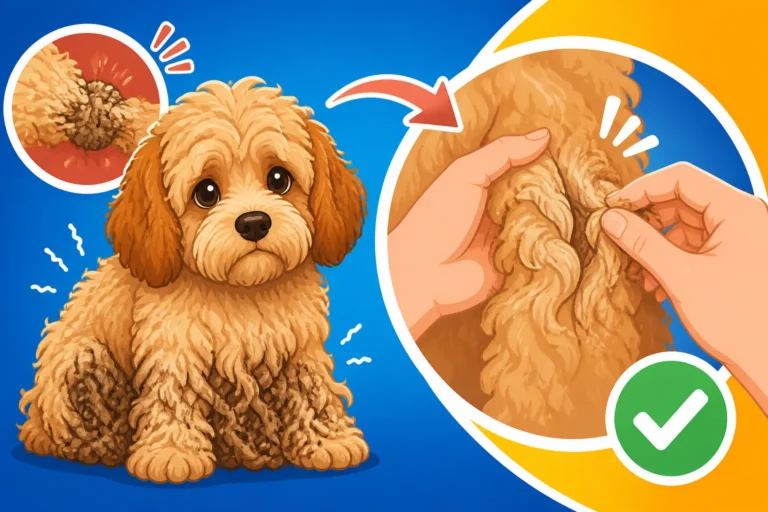
Reading a Cockapoo Coat Report Before You Choose
Bringing a Cockapoo puppy home is an incredibly exciting time, full of dreams of cuddles and adventures. But one of the biggest unknowns, and a source of real anxiety for many prospective owners, is what their adorable fluffball's adult coat will actually be like. Will it be curly and non-shedding, or more wavy and prone to shedding? This comprehensive guide will walk you through how to read a Cockapoo coat report, giving you the power to make an informed decision and prepare for your new family member's grooming needs.
Why a Coat Report is Your Crystal Ball (and Why You Need One)
It's a common story: you fall in love with a Cockapoo puppy, imagining it will remain a teddy bear forever, only to discover a year later that its coat is a matting nightmare or sheds more than you anticipated. The truth is, predicting a Cockapoo's adult coat can feel like guesswork without the right information. That's where a genetic coat report comes in—it’s not just fancy science; it’s a practical tool for your peace of mind and your future dog's well-being.
The Unpredictable Nature of the Cockapoo Coat
Unlike purebred dogs where coat type is largely uniform, the Cockapoo, being a hybrid, inherits a mix of genes from both the Poodle and the Cocker Spaniel. This genetic lottery means you can see a huge range of coat textures and shedding levels, even within the same litter. Some puppies might grow up with a sleek, flat coat that sheds, while their siblings could develop a tight, curly, low-shedding Poodle-like coat. This unpredictability is a significant frustration for families, especially those with allergy concerns, who are hoping for a specific outcome. You want to know what you’re signing up for, not just hoping for the best.
Beyond the "Hypoallergenic" Myth
The term "hypoallergenic" is often thrown around with doodles, but it's largely a misconception. No dog is truly 100% hypoallergenic; rather, some breeds are simply less allergenic because they shed less dander, which is often attached to shed hair. For a Cockapoo, whether it sheds minimally or significantly comes down to specific genes, primarily the furnishings gene. Without understanding these genetic markers, a breeder might promise a non-shedding dog, only for you to discover months later that your sniffles are back, and your sofa is covered in dog hair. A coat report helps cut through the marketing hype and provides objective data about a puppy's likely shedding potential. Whether a Furnished Cockapoo Suits an Allergic Home is a question many people have, and the report is key to the answer.
The Value of Genetic Testing for Future You
Investing in a Cockapoo is a long-term commitment, and knowing their coat type upfront can save you considerable time, money, and emotional stress down the line. Imagine budgeting for minimal grooming, only to find you need professional dematting every six weeks. Or, worse, discovering a family member has unexpected allergic reactions. A coat report empowers you to choose a puppy that truly fits your lifestyle and needs, not just your initial visual preference. It also helps you prepare for the right grooming tools and routines from day one, setting both you and your puppy up for success.
Deciphering the Furnishings Gene (RSPO2)
The furnishings gene, scientifically known as RSPO2, is arguably the most critical gene to understand when reading a Cockapoo coat report. This gene dictates whether your Cockapoo will have that classic "teddy bear" look with facial hair (a beard, mustache, and eyebrows) and, crucially, whether it will be low-shedding.
What are Furnishings and Why They Matter
Think of furnishings as the defining characteristic of a Poodle's coat, giving them their distinctive facial hair and continuous hair growth, which leads to minimal shedding. Cocker Spaniels, on the other hand, lack furnishings, resulting in a smooth face and a shedding coat. When these two breeds mix, the presence or absence of furnishings in the Cockapoo directly impacts how much they will shed. Without furnishings, a Cockapoo will have a smooth face like a Cocker and will shed more. With furnishings, they’ll have that adorable shaggy beard and significantly less shedding. The Furnishings Gene That Decides a Cockapoo's Face is what determines this defining trait.
Understanding the F/IC/Poodle Alleles
Genetic coat reports for furnishings will typically show results related to the RSPO2 gene. The two main alleles (gene variants) are 'F' (for furnished) and 'IC' (for improper coat, or unfurnished). Since dogs inherit one copy from each parent, a puppy will have one of three possible combinations:
- F/F (or sometimes referred to as "Furnished/Furnished"): This means the puppy has inherited two copies of the furnishings gene. This puppy will be fully furnished, displaying facial hair, and will be very low-shedding. They are also guaranteed to pass on a furnished gene to any offspring.
- F/IC (or "Furnished/Improper Coat" or "Carrier"): This puppy has inherited one copy of the furnishings gene and one copy of the improper coat gene. They will still be fully furnished and low-shedding, as the 'F' gene is dominant. However, they carry the 'IC' gene and could pass it on to their offspring if bred.
- IC/IC (or "Improper Coat/Improper Coat" or "Unfurnished"): This puppy has inherited two copies of the improper coat gene. They will not have furnishings, meaning they will have a smooth face and will shed significantly, much like a Cocker Spaniel. What an Improper Coated Cockapoo Looks Like often surprises owners who expected a "doodle" coat.
Here’s a simple table to help you interpret these results:
| Genetic Result | Phenotype (Appearance) | Shedding Level | Implications for Breeding |
|---|---|---|---|
| F/F | Fully Furnished | Very Low | Will always pass 'F' gene |
| F/IC | Fully Furnished | Very Low | Carries 'IC', can pass it |
| IC/IC | Unfurnished (Smooth Face) | Moderate to High | Will always pass 'IC' gene |
Real-World Impact: What Different Results Mean for Your Home
If you have allergies or simply prefer less dog hair around the house, an F/F or F/IC result is what you're looking for. These dogs will have that classic shaggy Cockapoo look and require regular grooming to prevent matting, but they won't typically leave tumbleweeds of hair in your living room. An IC/IC Cockapoo, however, will shed. This doesn't make them less of a Cockapoo or less loving, but it does mean your cleaning routine will need to account for shed hair. While some people might prefer the smooth-faced look and don't mind shedding, it's a crucial distinction for others. Whether a Cockapoo Carrying One Improper Copy Sheds is a common question, and the answer is typically no, if they have at least one F.
Unraveling the Curl Gene (KRT71)
Beyond whether your Cockapoo will shed, the type of coat texture is another important factor, especially for grooming. This is primarily influenced by the KRT71 gene, which determines the degree of curl in a dog's coat.
From Straight to Tight Curl: The KRT71 Spectrum
The KRT71 gene impacts the hair follicle itself, influencing how much the hair kinks and curls. A Cockapoo can have anything from a flat, straight coat (more like a Cocker) to a tight, spiraling curl (more like a Poodle), or anywhere in between. The curl isn't just about aesthetics; it significantly affects how prone the coat is to matting and how often it needs brushing. The Curl Gene and Where a Cockapoo's Coat Lands is a fascinating look into this genetic lottery.
Interpreting the Curl Alleles
Similar to furnishings, the KRT71 gene has different alleles that combine to determine curl. Common notations you might see include 'C' (for curly) and 'T' (for straight).
- C/C (Curly/Curly): A dog with two copies of the 'C' allele will likely have a very curly, dense coat, much like a Poodle. This coat type is usually very low-shedding but highly prone to matting if not groomed diligently.
- C/T (Curly/Straight): This combination typically results in a wavy coat, which is the most common and often sought-after Cockapoo coat type. It's still low-shedding (assuming furnishings are also present) but requires regular brushing to prevent tangles and mats.
- T/T (Straight/Straight): A dog with two copies of the 'T' allele will have a straight or very slightly wavy coat, resembling a Cocker Spaniel's coat more closely. This coat type will shed more (again, assuming furnishings are absent, but even with furnishings, a straight coat can still shed more than a curly one due to texture) and may be less prone to matting than a curly coat, but it can still get tangled.
What KRT71 Says About a Cockapoo's Curl is a direct indicator of the grooming commitment you'll face.
Grooming Implications for Each Curl Type
Understanding your Cockapoo's curl genetics is crucial for preparing for their grooming needs.
- Tight Curl (C/C): These coats are adorable but demand serious attention. They mat easily, often right down to the skin, and require daily brushing with a slicker brush and a metal comb to prevent painful knots. Professional grooming every 4-6 weeks is typically essential to keep the coat manageable. Why a Tight Curl Doubles a Cockapoo Owner's Week in grooming is no exaggeration!
- Wavy Coat (C/T): The wavy coat is often considered the ideal "doodle" coat. It's beautiful and generally low-shedding, but still requires consistent grooming. Brushing every other day, with particular attention to areas prone to matting like behind the ears, armpits, and tail, is usually necessary. Professional grooming every 6-8 weeks is typical.
- Straight Coat (T/T): While less common for Cockapoos marketed as "non-shedding," a straight coat is still lovely. It will shed more than the curly or wavy types, and while it might mat less, it can still develop tangles. Regular brushing a few times a week and professional trims as needed will keep it neat.
Remember, regardless of curl, The Three Cockapoo Coat Types and Their Upkeep all require care.
The Importance of Improper Coat (IC) and Shedding
The term "improper coat" can sound alarming, but it simply refers to the absence of furnishings. For Cockapoo owners, understanding the IC gene is vital because it directly correlates with whether your dog will shed a lot or a little.
The "Improper Coat" Conundrum
An "improper coat" isn't a fault in a dog, but rather a genetic trait that results in a smooth face and a coat that sheds. In the context of Poodle mixes like Cockapoos, many people seek the "doodle" look and low-shedding qualities, which come from the Poodle's furnished coat. When a Cockapoo inherits two copies of the "improper coat" gene (IC/IC), they will lack these furnishings and have a coat much more akin to a Cocker Spaniel, including their shedding characteristics. What an Improper Coated Cockapoo Looks Like is not less charming, just different.
Identifying IC in a Coat Report
As discussed with the furnishings gene (RSPO2), an IC/IC result on a coat report means your puppy will be unfurnished and will shed. If a puppy has an F/IC result, they will have furnishings and be low-shedding because the 'F' allele is dominant. However, they carry the 'IC' allele, which means if they were bred with another F/IC dog, some of their puppies could be IC/IC and therefore shed. For pet owners, the key takeaway is simply whether your specific puppy is F/F, F/IC (both low-shedding and furnished), or IC/IC (shedding and unfurnished).
Managing a Shedding Cockapoo
If you find that your chosen Cockapoo puppy has an IC/IC result and is likely to shed, don't despair! Many wonderful Cockapoos have these coats. Your approach to care will simply need to adapt.
- Regular Brushing: Even shedding coats benefit from regular brushing to remove loose hair before it ends up on your furniture. A good slicker brush and a de-shedding tool can be invaluable. You can find a wide range of these tools on Amazon or Chewy.
- Frequent Vacuuming: Be prepared for more frequent vacuuming and lint rolling to keep your home tidy.
- Bathing: Regular baths can help loosen and remove dead hair, reducing shedding. Choose shampoos formulated for shedding coats.
- Professional Grooming: While they might not mat as easily as curly coats, a professional groomer can still help manage shedding by giving your dog a good bath, blow-out, and trim.
Remember, a shedding Cockapoo is still a loving companion, just one that requires a slightly different grooming routine than its low-shedding counterparts.
Beyond Genes: Other Factors Influencing Coat Appearance
While genetic reports are incredibly powerful tools for predicting coat type, it's important to remember that they don't tell the whole story. Other factors, from age to diet, also play a significant role in how your Cockapoo's coat looks and feels.
The Enigmatic Coat Change
One of the biggest surprises for new Cockapoo owners is "the coat change." Around 6 to 10 months of age, your puppy's soft, easy-to-manage puppy fluff begins to transition into its adult coat. This period can be incredibly challenging. The new adult hair grows in, intertwining with the remaining puppy coat, creating a perfect storm for matting. It's like a teenager going through an awkward growth spurt! During this time, even a low-shedding, furnished Cockapoo can become a matting nightmare if not brushed religiously, sometimes daily. Many owners are ambushed by this, thinking they’ve failed at grooming. The Coat Change That Ambushes a Cockapoo Owner at Ten Months is a real phenomenon that every Cockapoo owner needs to be ready for.
The Role of Nutrition and Health in Coat Quality
A healthy coat isn't just about genes; it's a reflection of your dog's overall health and nutrition. A diet rich in high-quality protein, essential fatty acids (especially Omega-3s and Omega-6s), and vitamins can make a dramatic difference in coat luster, strength, and skin health. If your Cockapoo's coat seems dull, brittle, or their skin is dry and flaky, it could be a sign that their diet needs an upgrade. Brands like Ollie, which offer fresh, human-grade food, often highlight how their diets contribute to better coat health and shine, in addition to general well-being. Always choose a food appropriate for your dog's life stage and size, and consult your vet if you have concerns about their skin or coat condition.
Breeder Transparency and Your Questions
The best way to feel confident about your Cockapoo puppy's future coat is to choose a responsible breeder who is transparent about genetic testing. Don't be shy about asking questions! A reputable breeder should be able to provide you with the genetic coat reports for both parent dogs, and ideally, for the puppy itself if available. They should also be able to explain what these reports mean in plain language. If a breeder is vague, dismisses your concerns about coat type, or claims their dogs are "100% hypoallergenic" without genetic proof, these are red flags. Ask them specifically about the RSPO2 and KRT71 results. Whether a Breeder Can Guarantee a Cockapoo's Coat is something a good breeder can speak to with the aid of genetic testing. Understanding What a Cockapoo Coat Panel Actually Reports will allow you to confidently review the documents provided. Whether a Coat DNA Test Is Worth the Money for breeders is a resounding yes, as it provides invaluable information to prospective owners.
Disclaimer
This article is for general informational purposes only and does not constitute professional advice. Laws, prices and regulations vary by location and change over time. Consult a qualified professional for guidance on your specific situation.