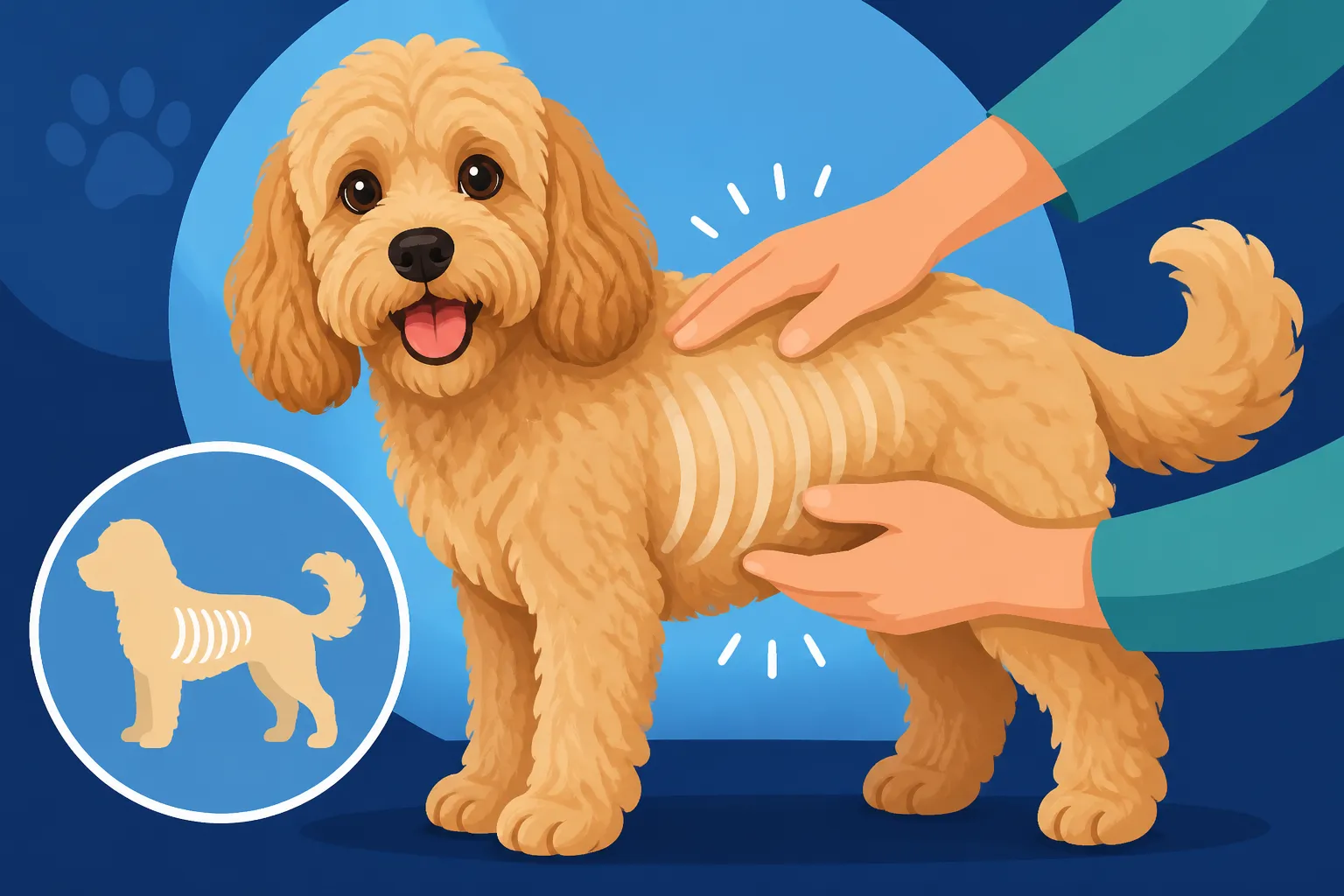
Feeling for a Cockapoo’s Ribs Under the Coat
It's a familiar scenario for any Cockapoo parent: you look at your adorable, fluffy companion, and wonder if they're carrying a little extra weight or perhaps are a touch too lean. Their luscious, often curly or wavy coats are a huge part of their charm, but they're also masters of disguise, making it incredibly tricky to gauge their physical condition just by looking. This guide is all about cutting through the fluff, literally, and teaching you hands-on ways to accurately assess your Cockapoo's ideal body condition, ensuring they stay happy and healthy for years to come.
The Challenge of the Cockapoo Coat
Let's face it, one of the biggest joys (and sometimes frustrations!) of owning a Cockapoo is their incredible coat. Whether it's a loose wave, a tight curl, or something in between, that dense fur creates a wonderful visual illusion. You might think your dog looks perfectly plump and healthy, only to discover a different story once they're soaking wet after a bath. This fluffy camouflage makes traditional visual assessments, often used for short-haired breeds, nearly impossible to rely on.
Many Cockapoo owners find themselves guessing or relying on the scale alone, which doesn't always tell the full story about body composition. A Cockapoo with a heavily furnished coat can look significantly larger than they actually are, leading owners to inadvertently underfeed them if they're trying to achieve a perceived slimmer silhouette. Conversely, a dog who is truly overweight can hide rolls of fat under their ample fluff, delaying intervention until the problem is more advanced.
Why Their Fluff Hides Everything
The Cockapoo's distinctive coat is a result of the "furnishings" gene, often inherited from their Poodle parent. This gene gives them those adorable eyebrows, beard, and overall shaggy or curly appearance, and it's what makes them typically low-shedding. However, it also creates a plush layer that can obscure their true body shape. Think of it like wearing a very thick, oversized sweater – it's hard to tell what's going on underneath! This isn't just about aesthetics; it has real implications for their health.
This visual challenge means that simply looking at your Cockapoo can be misleading. A dog might appear lean and athletic from a distance, but once you get your hands on them, you might discover a surprising amount of padding. This is particularly true for those with very dense, wool-like curls, which can stand away from the body, adding inches to their perceived girth. Without regular, hands-on checks, you might only notice significant weight gain or loss when it's already quite pronounced. You can learn more about how their unique coat develops in The Curl Gene and Where a Cockapoo's Coat Lands and The Three Cockapoo Coat Types and Their Upkeep.
The Dangers of Misjudging Weight
Misjudging your Cockapoo's weight can have serious consequences for their long-term health. An overweight Cockapoo is at higher risk for a whole host of problems, including joint issues like arthritis and patellar luxation (especially in smaller Cockapoos), diabetes, heart disease, and even certain types of cancer. The extra strain on their joints, which may already be prone to issues from either the Cocker Spaniel or Poodle side, can accelerate degenerative conditions.
On the flip side, an underweight Cockapoo might not be getting enough nutrients, leading to a weakened immune system, poor coat quality, and a lack of energy. While less common than obesity in companion dogs, being too thin can indicate underlying health problems or an inadequate diet. Both extremes can significantly shorten their lifespan and diminish their quality of life. Regular, accurate weight assessment is a proactive step in preventing these issues and ensuring your Cockapoo enjoys a vibrant, healthy existence.
Mastering the Rib Check Technique
Since visual cues are often unreliable with a Cockapoo, the most effective way to assess their body condition is by getting hands-on. This method is often called "palpation" – simply feeling for their bony landmarks, particularly their ribs. It's a quick, easy check that you can do regularly at home, and it gives you a much clearer picture than your eyes ever could. Don't be shy; your Cockapoo will probably enjoy the extra petting!
This technique allows you to bypass the insulating layer of fluff and directly feel what's happening underneath. It's a skill that improves with practice, but once you get the hang of it, you'll feel much more confident in understanding your dog's true physical state. It's all about learning to interpret the sensations under your fingertips, distinguishing between fat, muscle, and bone.
The "Goldilocks" Method: Step-by-Step
To perform the rib check, start by gently running your open palms along your Cockapoo's sides, just behind their front legs. You're aiming for the area where their ribs are located. Use light pressure, similar to how you'd feel for a pulse on your own wrist, not a deep massage.
- Locate the Ribs: Place both hands on either side of your Cockapoo's chest, just behind their shoulder blades.
- Gentle Sweep: Lightly sweep your fingertips across their ribs. You shouldn't have to press hard.
- Assess the Feel:
- Ideal: You should be able to easily feel each individual rib bone with minimal pressure, almost like feeling the knuckles on the back of your hand. There should be a slight layer of fat covering them, but they shouldn't feel prominent or sharply defined.
- Overweight: If you have to press firmly to feel the ribs, or if they feel like they're covered by a thick cushion, your Cockapoo is likely carrying too much weight. It might feel like the back of your palm – soft and cushioned.
- Underweight: If the ribs feel very prominent, sharp, and easy to see without much effort, with little to no fat covering, your Cockapoo might be too thin. This would be like feeling your own knuckles with very little flesh covering them.
It's crucial to be consistent with the pressure you apply each time you perform this check, so you can accurately track any changes. This isn't about being perfectly precise every single day, but rather building a habit of regular assessment.
What You're Feeling For (And What You're Not)
When you're doing the rib check, you're primarily evaluating the amount of fat cover over the ribs. You're not trying to count each rib, but rather get a general sense of the cushioning.
- Ideal Condition: Imagine gently running your fingers over a thin blanket draped over a set of pencils. You can feel the distinct shape of each pencil, but they're not poking through. This is what you want for your Cockapoo's ribs. There's a soft, supple feel, but no deep cushioning.
- Overweight Condition: If your Cockapoo is overweight, it will feel like those pencils are under a thick comforter. You'll have to press down quite a bit to discern the individual ribs. Your fingertips might slide over a general softness rather than distinct ridges. This excess fat isn't just on the ribs; it's distributed throughout their body, impacting organs and joints.
- Underweight Condition: For an underweight Cockapoo, those "pencils" (ribs) will feel like they're barely covered at all. They'll be very sharp, distinct, and perhaps even visible through the coat if it's not too dense. There's almost no soft tissue between your fingers and the bone. In severe cases, the skin might even feel a bit loose over the bony structures.
Remember, the goal isn't to feel every single rib like a skeleton model, but to assess the ease with which you can feel them and the amount of padding over them. This simple tactile check is invaluable for maintaining your Cockapoo's health.
Beyond the Ribs: Other Indicators of Healthy Weight
While the rib check is your primary tool, it's not the only one. There are other physical indicators and behavioral cues that can help you round out your assessment of your Cockapoo's body condition. Especially if your Cockapoo has a particularly dense or fluffy coat, these additional checks become even more important. Combining different methods gives you the most comprehensive picture.
These supplementary checks can also help you confirm what your hands are telling you, or provide early warning signs if their weight is trending in the wrong direction. A holistic approach to assessing their condition is always best.
Checking the Waist and Tuck
After you've checked the ribs, move your hands to your Cockapoo's waist and abdomen. This can be tricky with a thick coat, but it's still worth trying.
- The Waist: Stand above your Cockapoo and look down. If you have a curly or wavy-coated dog, their fluff might make them look like a furry barrel. However, when you press your hands gently inward from their sides, just behind the rib cage, you should feel a slight indentation – their waist. It should narrow slightly from the ribs to the hips. If you can't feel any narrowing, or if it feels broad and cushioned, they might be overweight. When your Cockapoo is wet after a bath, this becomes much easier to see.
- The Abdominal Tuck: From the side, look for an "abdominal tuck." This means their belly should tuck up slightly from their chest to their hind legs, not hang low or be parallel to the ground. Again, the coat can hide this. Use your hands to feel the area. There should be a gentle upward curve. If it's a straight line or even convex, it's another sign of excess weight.
An ideal Cockapoo, even a fluffy one, should have a discernable waist and a slight abdominal tuck. These features indicate a healthy body composition rather than a round, over-padded form. Just like with the ribs, practice makes perfect in feeling these areas.
Observing Energy Levels and Movement
A Cockapoo's energy levels and how they move can be strong indicators of their weight and overall health. A healthy weight supports agile movement and sustained energy.
- Lively and Playful: An ideal-weight Cockapoo should be energetic and eager to play, whether it's chasing a ball, zipping around the park, or enjoying a brisk walk. They shouldn't tire easily during appropriate exercise. If your typically active Cockapoo seems lethargic, less enthusiastic about walks, or opts out of play sessions, it could be a sign that extra weight is making them uncomfortable or that they're generally feeling unwell. Many Cockapoos have a surprising amount of drive, as discussed in The Flushing Drive Still Alive in a Cockapoo and The Miles a Cockapoo Wants Every Day.
- Ease of Movement: Observe how they walk, run, and jump. Do they move freely and easily? Are they able to jump onto the sofa or into the car without struggle? Stiffness, reluctance to jump, or a waddling gait can all be signs of joint strain from excess weight. Even small amounts of extra weight can exacerbate joint problems or cause discomfort, especially as they get older. If you notice a change in their mobility, it's always a good idea to consult your veterinarian.
These behavioral observations, combined with your physical checks, provide a holistic view of your Cockapoo's condition.
Grooming as an Opportunity for Assessment
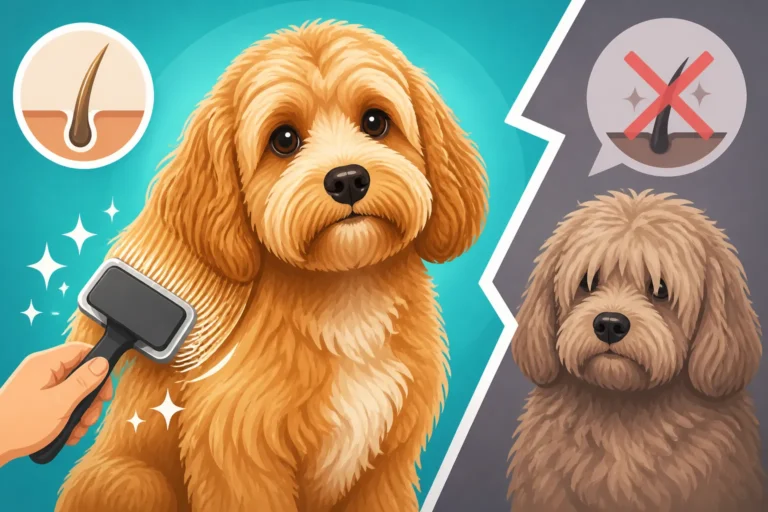
Regular grooming isn't just about keeping your Cockapoo looking fabulous; it's also a fantastic opportunity for a thorough health check, including assessing their weight. When you're brushing, combing, or even bathing them, you have direct contact with their entire body, allowing you to feel for changes you might otherwise miss.
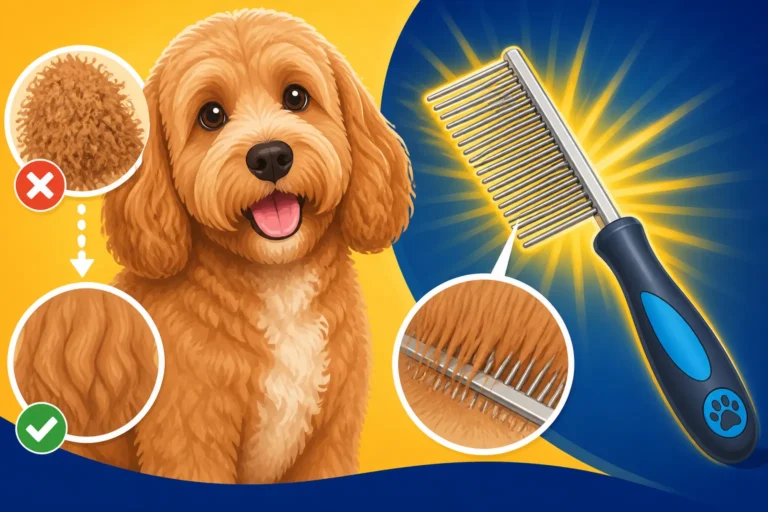
- Hands-on During Brushing: As you line brush your Cockapoo, you're running your hands over their body, which naturally lends itself to feeling their ribs, spine, and hip bones. This frequent contact can help you notice subtle changes in their body condition over time. If you suddenly find it harder to feel their ribs during your daily groom, it's a good cue to pay closer attention.
- Post-Bath Clarity: The best time for a visual assessment of their body shape is immediately after a bath, when their coat is wet and plastered to their body. This removes the "fluff factor" and allows you to clearly see their waist, abdominal tuck, and how much definition their ribs and spine have. This wet-dog observation can be quite enlightening and often confirms what your hands are telling you.
- Feeling for Lumps and Bumps: Beyond weight, regular grooming also helps you check for any new lumps, bumps, or skin irritations that could be hiding under their thick coat. Early detection of any anomalies is always beneficial for your dog's health.
Making grooming a health-check ritual transforms a routine task into a vital part of proactive care for your Cockapoo.
Here's a quick reference table to summarize the key indicators:
| Body Area | Ideal Condition | Underweight Condition | Overweight Condition |
|---|---|---|---|
| Ribs (feel) | Easily palpable with slight pressure; thin fat layer. | Very easily palpable, often visible; no fat cover, sharp. | Difficult to feel, requires firm pressure; thick fat layer. |
| Waist (visual) | Clearly discernible tuck behind the ribs when viewed from above (easier when wet). | Pronounced hourglass shape; very narrow waist. | Little to no waist definition; body appears as one block. |
| Abdominal Tuck (visual) | Slight upward slope from chest to pelvis when viewed from side (easier when wet). | Very distinct, sharp upward tuck. | No tuck, or even bulging/hanging abdomen. |
| Energy/Activity | Energetic, eager to play, moves freely. | May be lethargic, weak, easily fatigued. | Reluctant to move, tires quickly, labored movement. |
| Overall Feel | Muscular, firm, with a smooth, thin layer of fat. | Bony, little muscle mass, skin may feel loose. | Soft, rolls of fat evident, heavy. |
When to Adjust Diet and Exercise
Knowing how to assess your Cockapoo's weight is only half the battle. The other half is knowing when and how to make adjustments to their diet and exercise routine to help them achieve or maintain an ideal body condition. It's a balance, and sometimes it requires patience and a bit of trial and error.
Remember that any significant changes to diet or exercise, especially if your dog is already showing signs of being very overweight or underweight, should always be discussed with your veterinarian first. They can rule out underlying health issues and help you create a safe, effective plan.
Recognizing Signs Your Cockapoo Needs a Change
Beyond the physical examination, there are other signs that your Cockapoo might need a dietary or exercise adjustment:
- Changes in Appetite: Is your Cockapoo suddenly ravenous, or are they leaving food in their bowl? While some Cockapoos are natural foodies, a persistent increase in appetite could indicate they're not getting enough, or it could be a sign of boredom if they're not exercising enough. Conversely, a loss of appetite, coupled with weight loss, is always a red flag.
- Coat Condition: While not directly about weight, a dull, dry, or greasy coat can sometimes indicate nutritional imbalances or a diet that isn't optimal for your Cockapoo's specific needs. For some Cockapoos, particularly those who inherit more of the Cocker's oily skin, diet plays a huge role in skin and coat health.
- Struggling During Exercise: If your Cockapoo, who used to happily walk for miles, now struggles to keep up, pants excessively, or wants to cut walks short, it could be due to excess weight or lack of fitness. Even minor changes in activity tolerance are worth noting.
- Breathing Difficulties: Heavily overweight dogs may pant even at rest or struggle more in warmer weather due to the insulating layer of fat. Listen to their breathing after exertion. Is it labored?
Observing these subtle changes can help you act quickly before a minor issue becomes a major health concern. This is especially true as they age, as discussed in What Changes in a Cockapoo After Ten.
Consulting Your Vet
Your veterinarian is your best partner in managing your Cockapoo's weight. They can offer objective advice, conduct thorough examinations, and recommend appropriate strategies.
- Professional Assessment: Vets use a standardized Body Condition Score (BCS) chart, which uses both visual and tactile cues, often on a 5- or 9-point scale. They can help you accurately score your dog and understand what an ideal score looks and feels like for your individual Cockapoo.
- Rule Out Underlying Health Issues: Before making drastic changes, a vet can perform blood tests or other diagnostics to rule out conditions like hypothyroidism, Cushing's disease, or other metabolic disorders that can affect weight. This is particularly important if your Cockapoo's weight changes are sudden or unexplained.
- Personalized Recommendations: Your vet can recommend specific dietary changes, portion sizes, or exercise routines tailored to your Cockapoo's age, size (e.g., Feeding a Miniature Cockapoo), activity level, and any pre-existing health conditions. They can also advise on safe weight loss or gain targets.
Never hesitate to reach out to your vet if you have concerns about your Cockapoo's weight. Prevention and early intervention are key.
Dietary Considerations for Weight Management
Once you've determined your Cockapoo's weight needs (in consultation with your vet), adjusting their diet is usually the first step.
- Portion Control: This is often the simplest and most effective change. Many owners inadvertently overfeed by not accurately measuring food. Use a measuring cup, or even a kitchen scale, to ensure precise portions. Remember, the feeding guidelines on dog food bags are just a starting point; every dog is an individual. You can find many types of food on platforms like Chewy or Amazon.
- Calorie-Reduced Diets: For overweight Cockapoos, your vet might recommend a specific weight-management or reduced-calorie dog food. These foods are designed to provide essential nutrients while controlling calorie intake. Alternatively, you might just need to reduce portions of their current high-quality food.
- High-Quality Ingredients: Opt for dog food with high-quality protein sources and appropriate fat levels. Some owners find that fresh food diets, like those offered by Ollie, provide excellent nutrition and help with weight management due to their controlled ingredients and portioning.
- Limit Treats and Table Scraps: Treats should be given sparingly and factored into their daily calorie intake. Choose low-calorie, healthy options. Avoid feeding table scraps, as many human foods are too rich, fatty, or even toxic for dogs.
- Increase Exercise: Alongside diet, increasing physical activity is vital. Regular walks, playtime, and mental stimulation will help burn calories, build muscle, and improve overall fitness. Remember that even short bursts of activity can add up.
Keeping a Cockapoo's Weight in Range is a long-term commitment. Regular checks, appropriate feeding, and consistent exercise will help your Cockapoo maintain their ideal weight and live their healthiest, happiest life.
Disclaimer
This article is for general informational purposes only and does not constitute professional advice. Laws, prices and regulations vary by location and change over time. Consult a qualified professional for guidance on your specific situation.