Whether a Cockapoo Litter Can Contain Every Coat Type
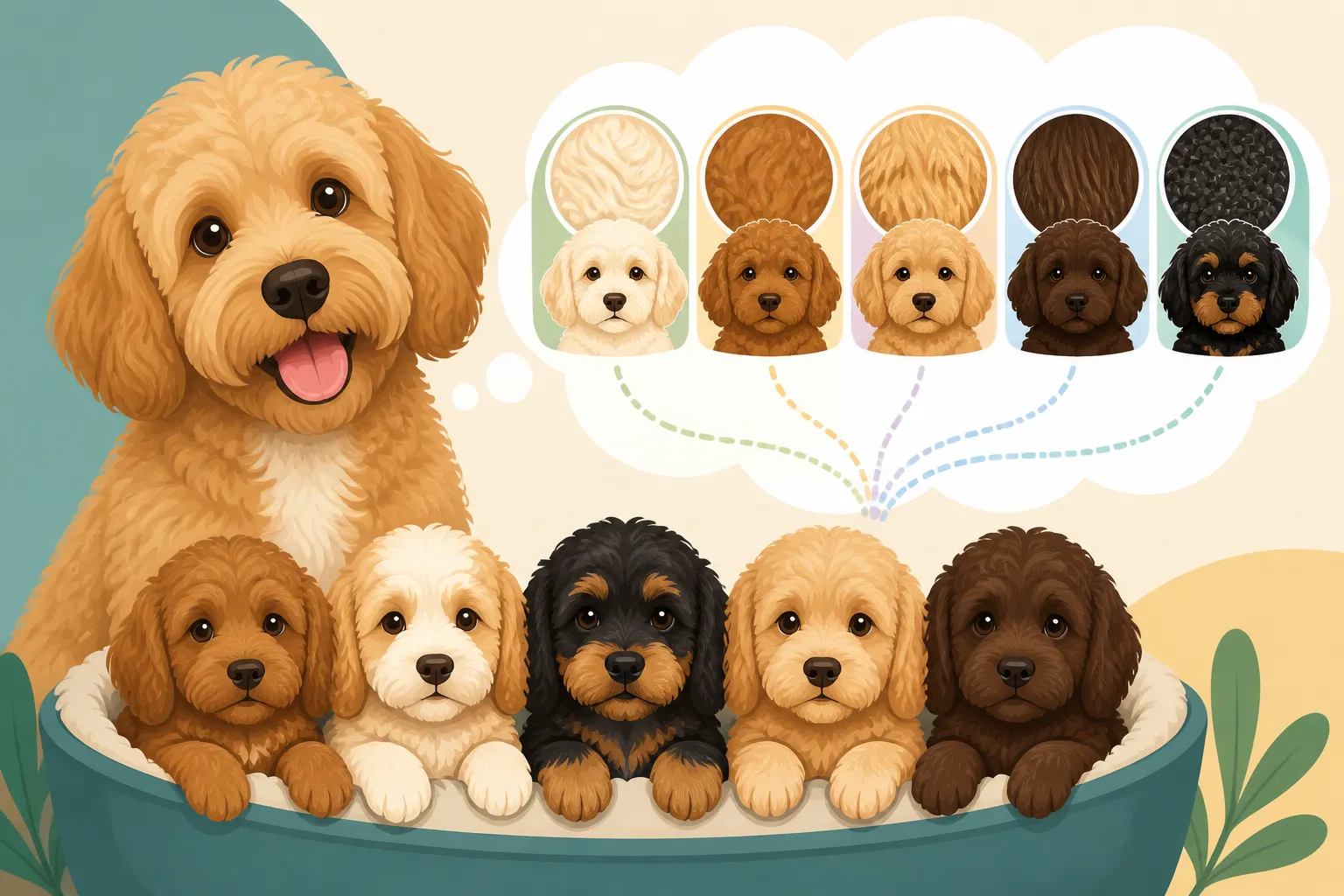
It’s a common dream for aspiring Cockapoo owners: you envision a specific fluffy, low-shedding companion, perhaps a wavy wonder or a tightly curled teddy bear. You look at a litter of adorable puppies and wonder if you can just pick out the one that perfectly matches your vision. What many people don't realize is that a single Cockapoo litter can, in fact, be a fascinating genetic melting pot, producing puppies with a surprising range of coat types. This guide is here to unravel the complexities of Cockapoo coat genetics, explaining why you might see such diversity in one litter and what that means for you as a future owner.
The Genetic Lottery Behind Cockapoo Coats
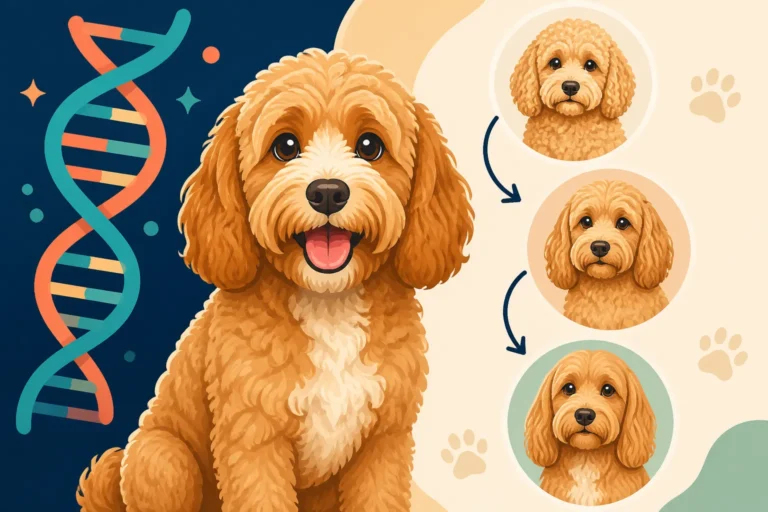
The beauty and, frankly, the challenge of the Cockapoo's coat lie deep within its genetic makeup, inherited from both the Cocker Spaniel and the Poodle sides of its family tree. It's not a simple case of one gene determining everything; rather, it's a combination of several key genes that interact to produce the incredible variety we see. Understanding these genetic blueprints is like peeking behind the curtain of inheritance, revealing why sometimes a litter of puppies can look so incredibly different from each other and even from their parents.
Understanding the Furnishings (F) Gene
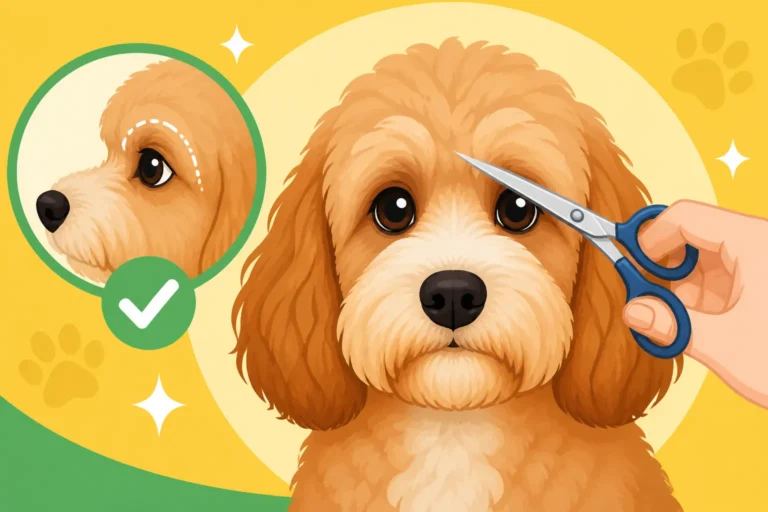
One of the most talked-about genetic traits in the Cockapoo world is "furnishings," often referred to by its scientific name, the RSPO2 gene. This gene is responsible for the growth of longer hair on a dog's face, eyebrows, and legs – essentially, what gives many Cockapoos their signature teddy bear look and, crucially, contributes to their low-shedding quality. A dog with furnishings has that adorable bearded, whiskery face that just screams "doodle."
When we talk about the RSPO2 gene, there are typically two main alleles (versions): 'F' for furnished and 'f' for unfurnished (sometimes called improper coat or IC). A dog needs at least one 'F' allele to express furnishings. So, you might see genetic reports showing 'F/F' (two copies of the furnished gene), 'F/f' (one furnished, one unfurnished), or 'f/f' (two copies of the unfurnished gene). A dog that is 'F/F' or 'F/f' will have furnishings and is generally considered low-shedding. However, a dog that is 'f/f' will lack furnishings, often having a smoother face, and will shed more like a Cocker Spaniel, despite being a Cockapoo. This can be a real point of frustration for owners who were expecting a non-shedding dog and end up with a pup that requires daily vacuuming! Whether an Improper Coated Cockapoo Is a Fault delves deeper into this often misunderstood coat type.
Imagine a scenario where both Cockapoo parents carry one copy of the furnished gene ('F/f'). Neither parent sheds heavily, and they both have lovely furnished faces. However, because both are carriers of the 'f' gene, there's a statistical chance that some puppies in their litter could inherit 'f' from both parents, resulting in an 'f/f' puppy with an improper coat. These pups might look quite different from their siblings, with a sleek, less "doodley" appearance, and they will almost certainly shed. This is why looking at the parents isn't always enough to guarantee a specific coat outcome in every single puppy.
Decoding the Curl (K) Gene
Beyond furnishings, the level of curl in a Cockapoo's coat is another highly variable and visually striking trait. This is largely influenced by another gene, KRT71, often referred to as the 'K' or 'Curl' gene. Just like with furnishings, there are different versions of this gene that determine whether a Cockapoo will have a straight, wavy, or tightly curled coat.
The KRT71 gene works on a spectrum, with different alleles influencing the degree of curl. A dog might inherit genes that lean towards a straight coat, a gentle wave, or a tight ringlet. If both parents contribute genes for a very curly coat, you're likely to get highly curled puppies. However, if one parent contributes a gene for less curl, or if both are carriers for different curl types, then the litter can again show a wide range. What KRT71 Says About a Cockapoo's Curl offers a detailed breakdown of how this genetic marker functions.
It's not uncommon for prospective owners to fall in love with a picture of a very curly Cockapoo, only to find that the puppies in a specific litter are mostly wavy or even straight-coated. This can be disappointing if you had your heart set on a specific look. For instance, if you have two wavy-coated Cockapoo parents, you might still find straight or tightly curled puppies in the litter if those parents are genetically carrying the recessive traits for those other coat types. The combinations are more complex than simply "curly + curly = curly."
The Importance of Parental Genotypes
When breeders talk about predictable coats, they're often referring to the combined genetic profiles – the genotypes – of both parent dogs. It's not just about what you see in the parents' coats, but what genes they carry. A parent might outwardly appear wavy-coated but carry a recessive gene for straight hair. If paired with another parent who also carries that recessive straight hair gene, suddenly you can have straight-coated puppies appearing in the litter.
This is why reputable breeders often use genetic testing to understand the full coat profile of their breeding dogs. They want to know if their dogs are 'F/F' or 'F/f' for furnishings, and what alleles they carry for curl, shedding, and other traits. Without this knowledge, breeding becomes a roll of the dice, and the resulting litter can be incredibly diverse. Whether Testing Both Parents Predicts the Litter explains why this dual testing is so crucial for more predictable outcomes.
For example, if you breed an F1 Cockapoo (Cocker Spaniel x Poodle) to another F1 Cockapoo, you might see huge variation because both F1 parents are likely 'F/f' and carry a mix of curl genes. This means each puppy has a 25% chance of being 'f/f' (improper coat and shedding) and a high chance of varied curl. On the other hand, if you breed two multigen Cockapoos who have both been genetically tested and are 'F/F' for furnishings and 'K/K' for curl, then you'll have a much more uniform litter of low-shedding, curly-coated puppies. It's truly a testament to Mendelian genetics playing out right before your eyes in a litter of fluffy pups!
Navigating the Spectrum of Cockapoo Coat Types
The array of coat types you can find within the Cockapoo breed is one of its most charming, yet sometimes confusing, characteristics. From sleek and smooth to wonderfully curly, each type brings its own aesthetic and, importantly, its own grooming requirements. Understanding these differences is key to knowing what you're getting into and how to best care for your furry friend.
Straight, Wavy, and Curly Varieties
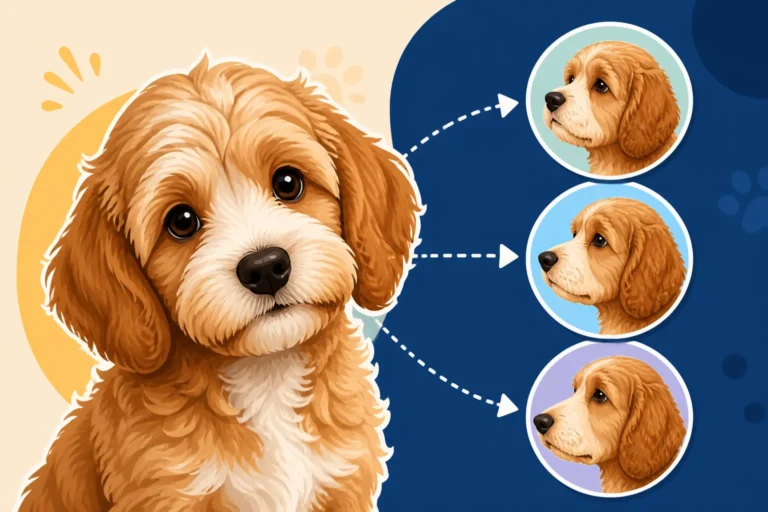
When looking at a Cockapoo litter, you'll primarily notice variations in curl, which broadly fall into three categories:
-
The Straight Coated Cockapoo: This coat type is often quite soft and fine, resembling more of the Cocker Spaniel parent. It might have a slight wave, but it mostly lies flat. While beautiful, these coats are generally the most prone to shedding among Cockapoos. Owners might mistakenly believe that because it's a "doodle," it won't shed, leading to surprises when their straight-coated pup leaves fur on the furniture. The upside is that these coats usually require less intensive daily brushing than their curlier counterparts, though regular grooming to prevent matting is still essential. The Straight Coated Cockapoo offers a dedicated look at this particular coat type.
-
The Wavy Coated Cockapoo: This is perhaps the most iconic and sought-after Cockapoo coat, often described as a "fleece" or "shaggy" texture. It has a beautiful, loose wave that can range from a gentle ripple to a more defined curl. These coats are typically low-shedding, making them a popular choice for families with mild allergies. However, their lovely waves are prone to matting, especially behind the ears, under the legs, and around the collar area. Daily brushing with a good slicker brush and a metal comb is non-negotiable to keep them knot-free. Many owners use detangling sprays found on Chewy or Amazon to help with their brushing routine. For a deeper dive, check out The Wavy Coated Cockapoo.
-
The Tight Curled Cockapoo: Bearing a strong resemblance to the Poodle parent, these Cockapoos have dense, tight curls that can feel woolly. They are generally considered the most hypoallergenic option among Cockapoos because their curls trap loose hair, preventing it from shedding into the environment. While fantastic for allergy sufferers, this coat type demands the most rigorous grooming. Without diligent daily brushing and regular professional trims, tight curls will quickly become a matted mess, sometimes necessitating a full shave-down. It's a commitment, but the reward is a truly non-shedding, adorable companion. Learn more about the specific needs of this coat in The Tight Curled Cockapoo.
The Role of 'Improper Coats' in a Litter
Even if you have parents that appear to be furnished and low-shedding, there's always a possibility of an "improper coat" (IC) puppy in the litter if both parents carry the recessive 'f' allele for unfurnished. As we discussed earlier, an improper coat lacks the furnishings that prevent shedding. These puppies will typically have smooth faces, like a purebred Cocker Spaniel, and their coats will shed more.
It's not that an improper coat is "bad" or unhealthy; it just means the dog will shed. For families seeking a hypoallergenic dog, an IC Cockapoo would not be suitable. The presence of IC pups in a litter highlights the complex nature of genetics. A breeder might have two wonderful, furnished parent dogs, but if both are genetically 'F/f' (meaning they carry one copy of the unfurnished gene), then statistically, 25% of their puppies could be 'f/f' and lack furnishings entirely. This is why it's vital to discuss genetic testing with a breeder to understand the likelihood of such a coat type appearing. Why an Improper Coated Cockapoo Sheds goes into more detail about the mechanics of this.
Predicting Coat Types in Puppies: A Breeder's Challenge
Even for experienced breeders, predicting the exact coat type of every puppy in a litter without genetic testing can be challenging, especially in earlier generations like F1 or F1b. While you can make educated guesses based on the parents' visible coats, the hidden recessive genes can always surprise you.
For instance, at eight weeks old, a puppy's coat might look fairly straight, only to develop significant curl during the dreaded The Coat Change That Ambushes a Cockapoo Owner at Ten Months phase. What feels soft and manageable at two months can become a matting nightmare at eight months if the curl tightens. This unpredictability is part of why thorough genetic testing of the parent dogs is so valued among responsible breeders. It allows them to give prospective owners a more accurate expectation of what their puppy's adult coat might be like.
A breeder who has done their homework and invested in genetic testing can often tell you not just what generation a puppy is, but also its likely coat genetics for furnishings and curl. This transparency helps manage expectations and ensures you're prepared for the grooming commitment your specific Cockapoo will require. Asking for these test results, or reviewing a Reading a Cockapoo Coat Report Before You Choose, is a smart step for any potential owner.
Why a Litter Can Be a Mixed Bag
The sheer variety within a single Cockapoo litter can sometimes feel like magic, but it's really just the wonders of basic genetics at play. You might picture a perfectly uniform litter, like a cookie-cutter assembly line, but nature rarely works that way, especially with a crossbreed like the Cockapoo.
Mendelian Genetics in Action
Remember those Punnett Squares from biology class? While we don't need to draw them out, the principle of Mendelian inheritance is exactly what's happening when a Cockapoo litter emerges with varied coats. Each parent passes on one copy of each gene to their offspring. If both parents carry different versions (alleles) of a particular gene, then there are multiple possibilities for what combinations their puppies might inherit.
Take the curl gene, for example. Let's say one parent has a genotype that predisposes them to wavy coats, but they also carry a recessive gene for straight hair. The other parent might also be wavy but carries a recessive gene for tight curls. When these two parents breed, their puppies can randomly inherit a mix of these genes. Some might get two copies for wavy, some might get the straight gene from both parents, and others might get the tight curl gene from both. This isn't just theory; it's a visible reality in many Cockapoo litters, where you can literally see straight, wavy, and curly pups all nestled together. It’s like a genetic buffet, and each puppy gets a different plate.
Beyond the Core Genes: Other Influences
While the furnishings and curl genes are the primary drivers of coat type, there are other genetic modifiers and environmental factors that can subtly influence a Cockapoo's coat. These might affect texture, density, or even the eventual shade of their coat. For instance, some genes might influence how coarse or soft the hair feels, or how quickly it grows.
Then there's the coat change. Many Cockapoo owners are caught off guard when their puppy's soft, easy-to-manage fluff at eight weeks transforms into a dense, mat-prone adult coat around 6-10 months of age. This coat change can make a wavy puppy's coat appear curlier or denser, or a straight coat might gain a little more body. It's not a change in genetic type, but rather the maturation of the hair follicles and the growth of the adult coat. This period, which can last several months, demands extra grooming diligence, often requiring specialized brushes you might find on Amazon or at Chewy, such as a good pin brush and a steel comb. Understanding The Coat Change That Ambushes a Cockapoo Owner at Ten Months is crucial for new owners.
What This Means for Prospective Owners
For anyone dreaming of bringing a Cockapoo into their home, the genetic diversity within a litter isn't something to fear, but rather something to understand and appreciate. It means that while you might have a preference, being open to the natural variety can lead you to the perfect companion.
Asking the Right Questions to a Breeder
When you're looking for a Cockapoo puppy, don't be shy about asking your breeder about the genetic background of their dogs. A responsible breeder will be transparent about the coat genetics of their breeding pair. They should be able to tell you if their dogs have been tested for furnishings (RSPO2) and curl (KRT71) and what those results were. This information can give you a much clearer picture of what coat types are likely to appear in their litters.
Ask to see the parents, and if possible, photos of previous litters. This can offer visual evidence of the coat diversity they produce. If a breeder is vague about genetic testing or promises "all hypoallergenic, non-shedding" puppies without providing documentation, it might be a red flag. Look for breeders who are knowledgeable and willing to educate you on the potential range of outcomes. Reading a Cockapoo Coat Report Before You Choose is a valuable skill to develop before making a commitment.
Embracing Coat Diversity
Ultimately, regardless of whether your Cockapoo puppy ends up with a straight, wavy, or curly coat, each type is beautiful in its own right and comes with its unique charm. The most important thing is that you prepare yourself for the grooming commitment that comes with owning a Cockapoo. Even straight-coated Cockapoos need regular brushing to minimize shedding and maintain coat health, while wavy and curly coats require diligent daily attention to prevent painful matting.
You'll need a toolkit of brushes, combs, and possibly detangling sprays. Brands like Chewy and Amazon offer a vast selection of grooming tools, from slicker brushes and metal combs to puppy shampoos and conditioners. Investing in these early and establishing a regular grooming routine is key to keeping your Cockapoo comfortable and looking its best. The Kit Needed to Groom a Cockapoo at Home outlines essential items.
Embrace the uniqueness of your Cockapoo's coat. Whether it's a flowing wave or a tight curl, it's part of what makes your dog special. Focus on finding a healthy, well-socialized puppy from a responsible breeder, and be ready to provide the love and care its particular coat type demands. Understanding The Three Cockapoo Coat Types and Their Upkeep will help you choose the right tools and schedule for your pup's specific needs.
Disclaimer
This article is for general informational purposes only and does not constitute professional advice. Laws, prices and regulations vary by location and change over time. Consult a qualified professional for guidance on your specific situation.