Why an Improper Coated Cockapoo Sheds
One of the most disheartening experiences for a new Cockapoo owner is bringing home their fluffy companion, often with the promise of low shedding, only to discover their furniture, clothes, and floors are consistently covered in dog hair. This guide aims to thoroughly explain why some Cockapoos shed despite popular belief, focusing on the genetic reasons behind what's often called an "improper coat," and how to manage the reality of a shedding Cockapoo.
Understanding the Cockapoo Coat: The Genetic Blueprint
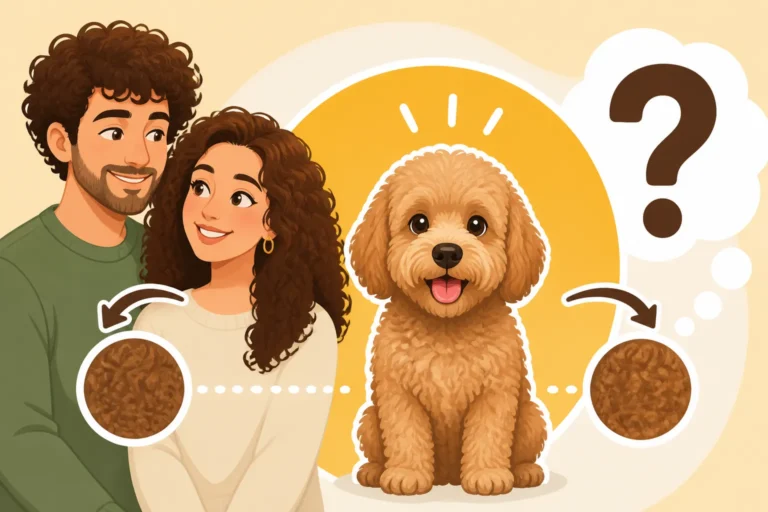
The allure of the Cockapoo often comes from its charming, teddy bear appearance and the widespread belief that, like their Poodle parent, they are low-shedding or even hypoallergenic. However, the genetic reality of coat types is a bit more complex, and understanding these underlying factors is crucial to grasping why some Cockapoos shed like traditional dogs. It's not about being "improper" in terms of health or lovability, but rather a coat type that diverges from the expected Poodle-like, non-shedding characteristics.
The Furnishings Gene (Rspo2) and Its Role
The primary genetic factor dictating whether a Cockapoo will have that classic "doodle" look – with facial hair, eyebrows, and a mustache, rather than a smooth face like a Cocker Spaniel – is called the furnishings gene, scientifically known as Rspo2. This gene is responsible for the growth of longer hair on the face and legs, and crucially, it's strongly linked to the low-shedding trait. A dog with two copies of the "furnished" allele (FF) or one copy (Ff) will typically have furnishings and be low-shedding.
Without at least one copy of the dominant "F" allele, the Cockapoo will lack furnishings. This means they will have a smoother face, often looking more like their Cocker Spaniel parent. This lack of furnishings is directly correlated with a higher likelihood of shedding, as the genetic mechanism that prevents continuous hair growth (and thus shedding) isn't fully present. Think of it as the foundational piece of the low-shedding puzzle; without it, the puzzle can't be completed in the way many expect. The Furnishings Gene That Decides a Cockapoo's Face goes into more depth on this.
The Curl Gene (KRT71) and Its Impact on Texture
Beyond furnishings, the texture of a Cockapoo's coat – whether it's straight, wavy, or tightly curled – is primarily influenced by the KRT71 gene. This gene dictates the shape of the hair follicle, which in turn determines the degree of curl. A dog can be furnished (low-shedding) and still have a straight coat if they inherit two copies of the straight hair allele, or a very curly coat if they inherit two copies of the curly allele.
It's a common misconception that curl equals non-shedding. While many tightly curled Cockapoos are indeed low-shedding, it's the furnishings gene, not the curl gene, that is the true arbiter of shedding. A straight-coated Cockapoo can be just as low-shedding as a curly one, provided they both carry the furnishings gene. Conversely, a Cockapoo with a slightly wavy coat might still shed significantly if it lacks the proper furnishings gene. The curl gene mostly affects how much grooming effort is required to prevent matting, not necessarily how much hair ends up on your floor.
The "Improper Coat" Gene: What It Is (IC allele)
When we talk about an "improper coat" in a Cockapoo, we're essentially referring to a dog that has inherited two copies of the recessive "ic" allele (sometimes denoted as "N" for normal coat or "I" for improper, but "ic" is clearer) for the furnishings gene. This genetic combination (ic/ic) means the dog will not have furnishings, despite potentially having Poodle ancestry. Because the Cocker Spaniel parent naturally carries the ic/ic genotype (as purebred Cocker Spaniels don't have furnishings), and the Poodle parent carries the F/F genotype (as they do have furnishings), their offspring (F1 Cockapoos) typically inherit one F from the Poodle and one ic from the Cocker, resulting in an F/ic genotype. These F1 Cockapoos are usually furnished and low-shedding.
However, if an F1 Cockapoo (F/ic) is bred to another F1 Cockapoo (F/ic), or to a Poodle carrier of the ic gene (which is rare but possible if the Poodle has IC ancestry itself), or to another ic/ic dog, there's a 25% chance in an F1 x F1 cross that the puppies will inherit two copies of the recessive ic allele (ic/ic). This is what creates an "improper coat," leading to shedding. It’s a completely natural genetic variation, but it does mean the dog won't fit the typical low-shedding profile people often expect. What an Improper Coated Cockapoo Looks Like will give you a clearer picture.
What Defines an Improper Coated Cockapoo?
An improper coated Cockapoo, often lovingly referred to as a "flat-coated" Cockapoo, isn't a lesser version of the breed, but simply one that expresses a different set of genetic traits. The key difference lies in the growth pattern and texture of their fur, which in turn dictates their shedding behavior. It’s important to understand these characteristics so you know what to expect and how to care for them.
Visual Characteristics: The Flat Face and Wispy Fur
The most telling visual sign of an improper coated Cockapoo is the lack of "furnishings" on their face. Instead of the abundant beard, mustache, and eyebrow hair that gives many Cockapoos their signature teddy bear look, an improper coated Cockapoo will typically have a smoother, flatter face, more akin to a traditional Cocker Spaniel. Their muzzle might appear shorter because there isn't extra hair obscuring it. The hair around their eyes will be less pronounced, and they won't have the distinctive wispy "eyebrows" we often associate with doodles.
Beyond the face, their body coat might also appear straighter and lie closer to the body, often with a finer texture than the thick, often wavy or curly coat of a furnished Cockapoo. While some improper coats can still have a slight wave, they generally lack the density and volume that traps shedding hair. This means that instead of shedding hair getting caught in the dense undercoat and needing to be brushed out, it falls directly off the dog and onto your home.
The Shedding Reality: More Than Just a Little Hair
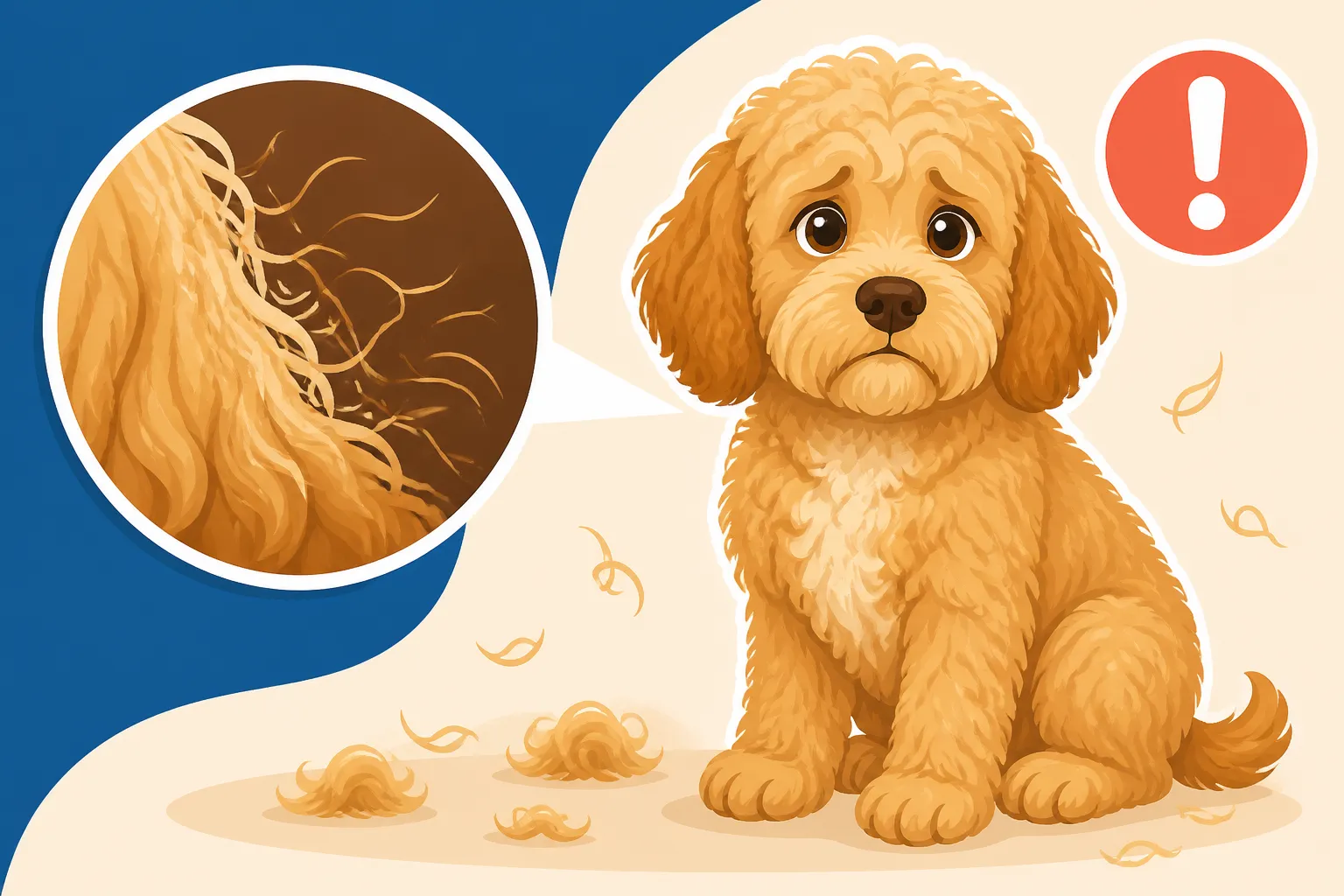
This is where the rubber meets the road for many owners. An improper coated Cockapoo will shed. Not just a little, occasional hair, but often as much as a purebred Cocker Spaniel or other shedding breeds. This can be a shock for owners who were explicitly told their Cockapoo wouldn't shed, or who chose the breed specifically for its perceived hypoallergenic qualities. The hair isn't caught by the furnishings or dense curl; it simply releases from the follicle and lands wherever gravity takes it.
You might find dog hair on your clothes, upholstery, carpets, and even floating through the air. For individuals with mild allergies, this increased shedding can definitely trigger symptoms, debunking the myth that all Cockapoos are hypoallergenic. It’s a fundamental difference in how their coat functions: instead of holding onto old hairs until grooming, it releases them continuously. Regular vacuuming and diligent grooming become much more critical in these households.
Health and Comfort: Is an IC Coat Different?
From a health perspective, an improper coat isn't inherently better or worse than a furnished coat. It doesn't predispose your dog to specific diseases, nor does it necessarily offer different levels of comfort. The primary differences are aesthetic and related to grooming and shedding. In some ways, an improper coat can be easier to manage than a heavily furnished, curly coat. For example, they might be less prone to matting since their hair is often straighter and less dense. This can mean fewer trips to the professional groomer or less intensive home grooming sessions.
However, the lack of facial hair can sometimes mean their eyes are more exposed, potentially requiring more frequent wiping to prevent tear staining or irritation. Their smoother coat also might offer slightly less protection in harsh weather compared to a dense, insulating Poodle-like coat, though this is usually a minor consideration for most house-dwelling pets. Overall, an improper coat is a variation, not a defect, and an improperly coated Cockapoo is just as healthy and happy as its furnished counterparts, provided it receives appropriate care for its specific coat type. Whether an Improper Coated Cockapoo Is a Fault explores this further.
How the Improper Coat is Inherited
Understanding the genetics behind the improper coat is key to appreciating why some Cockapoos look and shed differently than others. It’s not a random occurrence, but a predictable outcome of specific genetic combinations inherited from the parent breeds. This knowledge is empowering for prospective owners and helps to clarify common misconceptions.
Parental Genes: The F/f and IC/ic Combinations
Let's simplify the genetics a bit. The furnishings gene has two main alleles: "F" for furnished (dominant, meaning only one copy is needed to express furnishings) and "ic" for improper coat (recessive, meaning two copies are needed to express an improper coat).
- Poodle: Typically carries two copies of the furnished gene (FF). They have furnishings and are low-shedding.
- Cocker Spaniel: Carries two copies of the improper coat gene (ic/ic). They lack furnishings and shed.
When these two breeds are crossed to create an F1 (first generation) Cockapoo, each puppy inherits one gene from each parent. So, an F1 Cockapoo will inherit an "F" from the Poodle and an "ic" from the Cocker Spaniel, making their genotype F/ic. Because "F" is dominant, these F1 Cockapoos will express furnishings and generally be low-shedding. This is why F1 Cockapoos are so popular, as they usually deliver on the low-shedding promise.
The improper coat appears when a puppy inherits two "ic" genes (ic/ic). This can happen in several scenarios:
- F1 x F1 Cross: If two F1 Cockapoos (both F/ic) are bred, there is a 25% chance that their offspring will inherit an "ic" from each parent, resulting in an ic/ic genotype and an improper coat. There's also a 50% chance of F/ic (furnished, low-shedding) and a 25% chance of F/F (furnished, low-shedding).
- F1 x Cocker Spaniel Backcross: If an F1 Cockapoo (F/ic) is bred back to a Cocker Spaniel (ic/ic), there's a 50% chance of puppies being F/ic (furnished, low-shedding) and a 50% chance of being ic/ic (improper coat, shedding).
- Backcross to an Improper Coated Cockapoo: If an F1 (F/ic) is bred to an already improper coated Cockapoo (ic/ic), again, a 50% chance of ic/ic puppies.
This table illustrates the possible outcomes of breeding:
| Parent 1 Genotype | Parent 2 Genotype | Offspring Genotypes & Phenotypes | Shedding Likelihood |
|---|---|---|---|
| FF (Poodle) | ic/ic (Cocker) | 100% F/ic (Furnished) | Low-shedding |
| F/ic (F1 Cockapoo) | F/ic (F1 Cockapoo) | 25% FF, 50% F/ic, 25% ic/ic | 75% Low-shedding, 25% Shedding |
| F/ic (F1 Cockapoo) | ic/ic (Cocker) | 50% F/ic, 50% ic/ic | 50% Low-shedding, 50% Shedding |
| FF (Poodle) | F/ic (F1 Cockapoo) | 50% FF, 50% F/ic | 100% Low-shedding |
F1, F1b, and Multigenerational Considerations
The "generation" of a Cockapoo refers to its parentage and can give clues about the likelihood of an improper coat.
- F1 Cockapoo: As discussed, this is a first-generation cross between a purebred Poodle and a purebred Cocker Spaniel. Nearly all F1 Cockapoos are F/ic, meaning they have furnishings and are low-shedding. This is why many breeders recommend F1s for allergy sufferers.
- F1b Cockapoo: This is an F1 Cockapoo (F/ic) bred back to a purebred Poodle (FF). The offspring will be either FF or F/ic, meaning they will all be furnished and typically low-shedding. This generation is often marketed as "even more hypoallergenic" because it doubles down on the Poodle's furnished genes. Whether an F1b Cockapoo Is Guaranteed Furnished delves into this guarantee.
- Multigenerational (F2, F3, etc.) Cockapoos: These are Cockapoos bred from two Cockapoo parents (e.g., F1 x F1 for an F2, or F2 x F2 for an F3). This is where the chance of an improper coat significantly increases. If a breeder is not carefully testing their breeding stock for the furnishings gene, they can easily produce litters with a mix of furnished and improper coated puppies. An F2 litter from two F1 parents will, on average, have 25% improper coats. This means that while some multigenerational Cockapoos are indeed low-shedding, there's no guarantee without genetic testing of the parents. Whether a Multigen Cockapoo Is Predictable is a useful resource here.
Whether an F1 Cockapoo's Coat Is a Coin Flip
Many people wonder if an F1 Cockapoo's coat is truly a "coin flip" in terms of shedding. In most cases, for the shedding aspect, it's not. Since nearly all purebred Poodles are FF (furnished) and purebred Cocker Spaniels are ic/ic (improper coat), an F1 cross results in 100% F/ic offspring. This means 100% of F1 Cockapoos will have at least one dominant "F" gene, giving them furnishings and making them low-shedding.
The "coin flip" aspect often refers more to the curl or texture of the coat. An F1 can inherit various combinations of curl genes (KRT71) from its parents, leading to anything from a straighter, wavier, or curlier coat. However, regardless of the curl, the presence of the furnishings gene means they will still be low-shedding and have that facial hair that traps loose fur. The real "coin flip" regarding shedding comes into play with F2 and subsequent generations, where the possibility of inheriting two recessive ic genes becomes a significant factor if parents aren't tested.
Spotting an Improper Coat: From Puppy to Adult
Distinguishing an improper coat from a furnished coat isn't always obvious in a tiny puppy, which can be part of the challenge for prospective owners. The coat changes dramatically during a puppy's first year, so what you see at eight weeks might not be what you get as an adult. Knowing what to look for and when can help manage expectations.
Early Indicators in a Young Cockapoo Puppy
At just a few weeks old, all Cockapoo puppies tend to look like adorable, fluffy balls. It can be surprisingly difficult to tell which ones will grow up to have full furnishings and which will develop an improper coat. However, there are subtle clues, particularly if you know what to look for:
- Muzzle Hair: The most reliable early indicator is the hair on the muzzle. Furnished puppies will typically start to show denser, slightly longer hair around their snout, chin, and eyebrows, even at 6-8 weeks. This hair might feel a bit coarser or more wiry than the softer body fur. Improper coated puppies, on the other hand, will have a smoother, shorter, and often softer coat on their face, much like a Cocker Spaniel puppy. Their muzzle will look cleaner and less "bearded."
- Eyebrows: Look for budding eyebrows. Furnished puppies often have slightly more prominent hair growth above their eyes, giving them a hint of future bushy brows. Improper coats will have flatter, smoother hair in this area.
- Texture: While not foolproof, sometimes the overall body coat of an improper coated puppy might feel noticeably softer and silkier, lying flatter against the body, compared to the slightly denser or more cottony feel of a furnished puppy's coat.
Remember, these are subtle differences, and a breeder with experience in Cockapoo genetics and coat types will be much better equipped to identify an improper coat in a young puppy. This is where genetic testing of the parents becomes invaluable, as it removes all guesswork. Telling a Furnished Cockapoo Puppy by Its Muzzle offers more detail on visual cues.
The "Coat Change" and When It Becomes Clear
If you're unsure about a puppy's coat type, the "coat change" that typically occurs between 6 and 18 months of age is when things become undeniably clear. For furnished Cockapoos, this is when their soft puppy coat transitions into a denser, more adult coat, often requiring intensive grooming to prevent matting. For improper coated Cockapoos, this period solidifies their appearance.
By around 4-6 months, the lack of furnishings will be much more evident. The face will remain smooth, and the body coat will continue to grow out without developing the characteristic thick, dense undercoat that traps shedding hair in furnished doodles. By 10-12 months, there will be no doubt. An improper coated Cockapoo will have a distinct, often sleeker, shedding coat, and the absence of the "doodle beard" will be quite obvious. A Cockapoo's Coat Through the Ten Month Change discusses how much a Cockapoo's coat evolves.
Whether Shedding Can Be Seen in a Cockapoo Puppy
Yes, shedding can absolutely be seen in a Cockapoo puppy, especially an improper coated one. While puppies don't typically "blow" their coat in the same dramatic way adult dogs might, if a Cockapoo puppy has an improper coat, you will start to notice loose hairs around your home relatively early on. This might be small amounts at first, but it will become more pronounced as they grow and their puppy coat transitions.
If you bring home a Cockapoo puppy that is regularly leaving hairs on your clothes or furniture before its first birthday, it's a strong indicator that it has an improper coat. In contrast, a properly furnished, low-shedding Cockapoo puppy will produce very little, if any, visible shed hair, even during the coat change, because the furnishings prevent the hair from falling out easily. Instead, their loose hair gets trapped in their coat and needs to be brushed out. If you're seeing shed hair, it's almost certainly an improper coat.
Living with an Improper Coated Cockapoo
Bringing home any dog requires a commitment to their care, and an improper coated Cockapoo is no different. While their grooming needs might differ from their furnished cousins, they are still wonderful, loving companions who deserve the best. The key is to adapt your care routine to their specific coat type.
Grooming Essentials for Managing Shedding
While you won't be battling mats in the same way as with a curly, furnished Cockapoo, managing shedding is paramount for an improper coat.
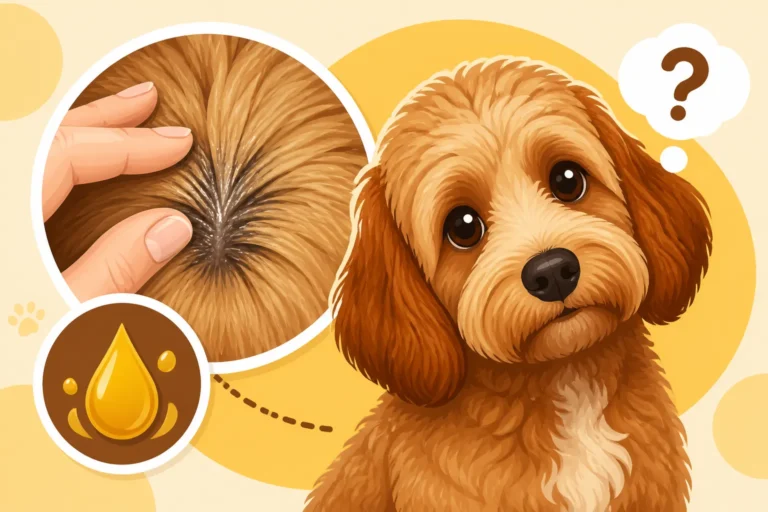
- Regular Brushing: This is your first line of defense. Aim for at least 2-3 times a week, if not daily, especially during seasonal shedding periods. Use a slicker brush and a de-shedding tool (like a deshedding rake or a furminator-style brush, carefully, as they can cut hair if misused) to remove loose undercoat before it has a chance to fall off onto your floor. Regular brushing not only reduces shedding but also distributes natural oils, keeping their coat healthy and shiny.
- Bathing: Regular baths, perhaps every 4-6 weeks, can help remove dead hair and dander. Use a good quality shampoo and conditioner designed for shedding coats. A blast of high-velocity air from a dog dryer after a bath can also help force out loose hair. However, be mindful not to over-bathe, as this can dry out their skin.
- Professional Grooming: Even with a shedding coat, a professional groomer can be a huge asset. They have specialized tools and techniques for de-shedding that can be more effective than what you can achieve at home. They can also provide a trim to keep the coat tidy and manage any stray hairs.
Remember, while an improper coat sheds, it often requires less intensive daily grooming to prevent painful mats, which is a big plus for some owners. It's more about removing shedding hair than preventing tangles.
Addressing Allergies with a Shedding Cockapoo
If you or a family member chose a Cockapoo specifically for its supposed hypoallergenic qualities, an improper coated, shedding Cockapoo can be a real challenge. Unfortunately, there's no way to stop a dog from shedding if it's genetically predisposed to do so. However, you can implement strategies to minimize the impact on allergy sufferers:
- Air Purification: High-efficiency particulate air (HEPA) filters in vacuums and standalone air purifiers can significantly reduce airborne dander and hair.
- Designated Dog Zones: Try to keep your dog out of bedrooms or off specific furniture if allergies are severe.
- Regular Cleaning: Frequent vacuuming with a HEPA filter vacuum, dusting, and washing bedding (both human and dog) in hot water can help.
- Wiping Down: Regularly wiping your dog with a damp cloth or specialized pet wipes can remove some dander before it becomes airborne.
- Diet: A healthy diet rich in omega fatty acids can promote skin and coat health, potentially reducing excessive shedding caused by dryness or poor nutrition. Brands like Ollie, known for fresh, human-grade food, or high-quality kibble available on Chewy, often include these beneficial ingredients. However, it won't stop genetic shedding.
It's important to be realistic: a shedding dog will always produce dander and shed hair. While these measures can help, they may not entirely alleviate severe allergy symptoms.
Feeding for Coat Health and Reducing Fallout
A healthy coat starts from within. While diet won't change the genetic propensity to shed, it can certainly impact the quality of the coat and minimize shedding that's due to poor health, dryness, or irritation.
- High-Quality Diet: Feed a well-balanced, high-quality dog food appropriate for your Cockapoo's age, size, and activity level. Look for foods with real meat as the first ingredient and a good balance of fats, proteins, and carbohydrates. Brands like Ollie offer fresh food options, or you can find a wide variety of premium kibbles and wet foods on Chewy.
- Omega Fatty Acids: Ensure their diet is rich in Omega-3 and Omega-6 fatty acids. These are crucial for skin health and a shiny coat. Many quality dog foods include them, but you can also add supplements like fish oil (available on Amazon or Chewy) if recommended by your vet.
- Hydration: Always ensure your Cockapoo has access to fresh, clean water. Dehydration can lead to dry, brittle hair and increased shedding.
By providing excellent nutrition, you're giving your improper coated Cockapoo the best chance for a healthy, vibrant coat, even if it still sheds.
Empowering Yourself: Questions for Breeders
Discovering your Cockapoo sheds when you expected a low-shedding companion can be frustrating. The best way to avoid this surprise is to be proactive and informed before bringing a puppy home. Knowledge is power, especially when it comes to genetics.
The Five Certificates a Cockapoo Breeder Should Show
A responsible Cockapoo breeder should be transparent about the health and genetic background of their breeding dogs. While the "five certificates" often refer to general health clearances for common conditions, when it comes to coat type, specific genetic testing is paramount. Beyond standard health checks, a breeder should be able to provide:
- Parent Health Clearances: Certificates for conditions like hip and elbow dysplasia, eye diseases (like PRA and glaucoma from the Cocker side, as explored in Glaucoma From the Cocker Side of a Cockapoo), and heart health, relevant to both Cocker Spaniels and Poodles.
- DNA Panel Results for Genetic Diseases: Proof that both parents have been tested for common genetic diseases found in both parent breeds, such as Familial Nephropathy (FN) and Progressive Retinal Atrophy (prcd-PRA). The FN DNA Test a Cockapoo Breeder Runs and Whether Both Cockapoo Parents Must Be prcd-PRA Clear are vital checks.
- DNA Coat Panel Results: Crucially, a responsible breeder of multigenerational Cockapoos should provide DNA test results for the furnishings gene (Rspo2) for both parent dogs. This is the only way to guarantee a puppy will be furnished and low-shedding. They should also be able to explain what these results mean.
If a breeder seems hesitant or unable to provide these specific DNA coat panel results, especially for F2 or later generations, it's a significant red flag if you are looking for a guaranteed low-shedding dog.
Understanding DNA Coat Panel Results
When a breeder provides DNA coat panel results for the furnishings gene, you'll typically see one of three possible genotypes for each parent:
- FF (Furnished/Furnished): This dog has two copies of the furnishings gene and will have furnishings. They are considered "clear" for improper coat and will pass on an "F" gene to all their offspring.
- F/ic (Furnished/Improper Coat Carrier): This dog has one copy of the furnishings gene and one copy of the improper coat gene. They will have furnishings themselves (because F is dominant) and be low-shedding, but they are a "carrier" of the improper coat gene. If bred to another F/ic dog or an ic/ic dog, they can produce improper coated puppies.
- ic/ic (Improper Coat/Improper Coat): This dog has two copies of the improper coat gene. They will not have furnishings and will shed. All purebred Cocker Spaniels have this genotype. If a Cockapoo has this genotype, it will be an improper coated, shedding dog.
For a breeder to reliably produce low-shedding puppies in F2 or later generations, at least one parent must be FF. If both parents are F/ic, there's a 25% chance of ic/ic puppies in the litter. Asking for and understanding these results empowers you to make an informed decision. Reading a Cockapoo Coat Report Before You Choose offers more insight into these reports.
Whether a Coat DNA Test Is Worth the Money
For a breeder, running a coat DNA test for furnishings (Rspo2) is absolutely worth the money, particularly if they are breeding F2 or later generation Cockapoos and marketing them as low-shedding or hypoallergenic. It's the only way to accurately predict the coat type of a litter and ensure they meet the expectations of potential buyers. Without it, breeders are simply guessing, and the consequences (disappointed owners, returned dogs, frustrated allergy sufferers) can be significant.
For a prospective owner, while you won't be running the test yourself, the breeder's willingness to perform and share these tests is a direct indicator of their commitment to ethical breeding practices and transparency. If a breeder has tested, they can definitively tell you the likelihood of your puppy being furnished and low-shedding. This small investment on the breeder's part provides immense peace of mind and significantly reduces the chance of an unexpected shedding surprise for new families. It allows them to genuinely Whether a Breeder Can Guarantee a Cockapoo's Coat.
Disclaimer
This article is for general informational purposes only and does not constitute professional advice. Laws, prices and regulations vary by location and change over time. Consult a qualified professional for guidance on your specific situation.