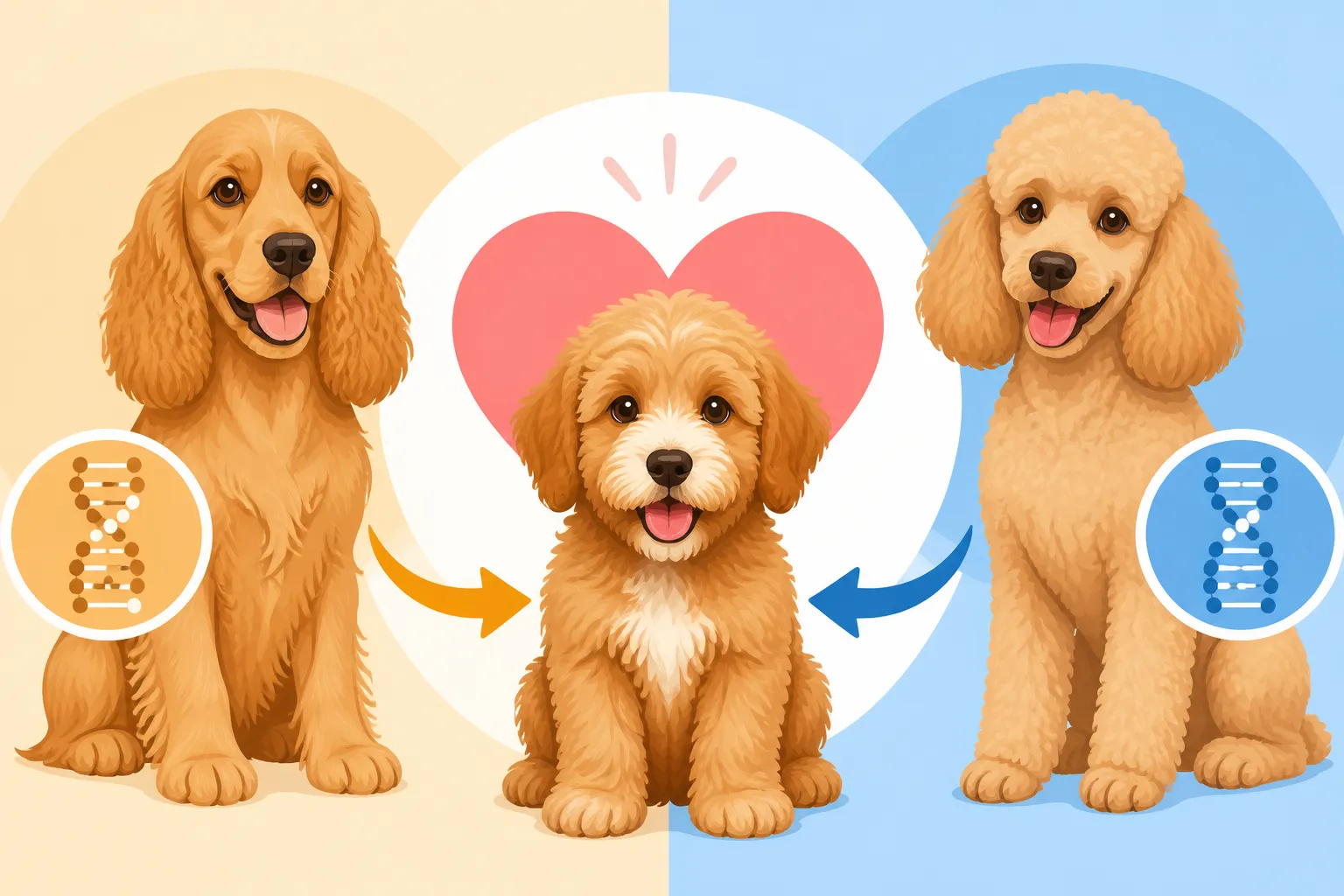
What a Cockapoo Inherits From Each Parent
Bringing a Cockapoo into your life is an absolute joy, but it can also come with a fair bit of head-scratching. Many new owners find themselves wondering, "Just what exactly did my furry friend inherit from its Cocker Spaniel and Poodle parents?" The truth is, predicting these traits can feel like a game of genetic roulette, leading to unexpected coat types, energy levels, and even health considerations. This comprehensive guide will delve deep into the fascinating world of Cockapoo genetics, exploring the typical contributions from each parent breed, how these traits can blend or surprise you, and what you can do to prepare for the wonderful, unique dog you’re bringing home.
The Great Genetic Mystery: Why Cockapoo Inheritance Isn't 50/50
When you bring home a Cockapoo, it’s natural to assume you’re getting a perfect 50/50 split of Cocker Spaniel and Poodle traits. After all, mathematically, that’s what a first-generation (F1) cross suggests. However, genetics, particularly in hybrid dogs, are rarely that straightforward. Instead of a neat half-and-half, you're looking at a much more complex interplay where some genes are dominant, some are recessive, and how they express themselves can vary wildly even within the same litter. This unpredictability is both the charm and the challenge of the Cockapoo.
The "Genetic Lottery" of a Hybrid Dog
Imagine a giant bingo card of traits, with all the possible characteristics from the Cocker Spaniel on one side and the Poodle on the other. Your Cockapoo puppy essentially gets a random draw from this card, and it’s not guaranteed to be an even mix. One puppy might inherit the Cocker's long, silky ears and merry disposition, but the Poodle's dense, curly coat. Another might have the Poodle's lean build and keen intelligence, paired with the Spaniel's strong scent drive. This means that two Cockapoos from the same litter can look and act quite differently. It's a true genetic lottery, making each Cockapoo a delightful individual, but also requiring prospective owners to be prepared for a range of possibilities rather than expecting a cookie-cutter outcome. This inherent variability is why it's so important to understand the parent breeds thoroughly.
Understanding F1, F1b, and Multigenerational Cockapoos
The complexity of inheritance deepens when we consider the different generations of Cockapoos. An F1 Cockapoo is a direct cross between a purebred Cocker Spaniel and a purebred Poodle. This is where the most genetic variability tends to occur, as it's the first mixing of distinct gene pools. Then you have the F1b, which is an F1 Cockapoo bred back to a purebred Poodle (or sometimes a Cocker Spaniel). The "b" stands for backcross. This is often done to increase the Poodle traits, particularly the non-shedding coat, which is highly sought after by allergy sufferers. Whether an F1b Cockapoo Looks More Poodle is a common question, and generally, the answer is yes, they often do.
Beyond these, there are multigenerational Cockapoos (F2, F3, etc.), where two Cockapoos are bred together, or an F1b is bred to another F1b or Poodle, and so on. While breeders of multigenerational Cockapoos aim for more consistency in traits like coat type and temperament, the genetic lottery still plays a role. It’s a bit like shuffling the deck repeatedly – you might get more predictable combinations, but individual variations will always be present. Understanding these generations helps you manage your expectations about what your future Cockapoo might inherit.
From the Cocker Spaniel Side: The Heart, Soul, and Scent
The Cocker Spaniel, whether American or English, brings a significant and often delightful set of characteristics to the Cockapoo. These are dogs known for their cheerful dispositions, boundless energy, and an inherent drive that speaks to their hunting heritage. Understanding these traits is key to appreciating the "Cocker" in your Cockapoo.
Temperament and Drive: The Merry Hunter Within
One of the most defining traits inherited from the Cocker Spaniel is their incredibly happy and social nature. They are often described as "merry" dogs, full of enthusiasm and eager to please their human companions. This means your Cockapoo is likely to be an affectionate, people-oriented dog who thrives on companionship and interaction. They often form strong bonds with their families and love being involved in all household activities. However, the Cocker Spaniel also carries a strong hunting drive – specifically, a "flushing" drive, where they would push birds out of cover for hunters. The Flushing Drive Still Alive in a Cockapoo is very real. This means your Cockapoo might be easily distracted by interesting scents, small critters, or birds, suddenly becoming deaf to your calls as their ancestral instincts kick in.
This innate drive gives them a strong desire to explore with their noses to the ground and an almost unstoppable energy when on a scent. Without proper training and outlets for this drive, a Cockapoo can become prone to darting off on walks, making recall a significant training challenge. They need consistent, positive reinforcement training from an early age, along with plenty of mental and physical stimulation to keep that intelligent, driven mind engaged. Long walks where they can sniff and explore, or even structured scent games, can be incredibly satisfying for them.
Physical Traits: Those Sweet Eyes and Silky Ears
From a physical standpoint, the Cocker Spaniel contributes several beloved traits to the Cockapoo. Perhaps most iconic are those expressive, soulful eyes that can melt anyone’s heart, often framed by soft, floppy ears. These ears, while undeniably cute, do come with their own set of care requirements. They can trap moisture and debris, making Cockapoos prone to ear infections, a trait often inherited from the Cocker side. Regular cleaning and careful drying after baths or swims are essential. Whether the Poodle Ear Canal Helps a Cockapoo is a pertinent question, and while the Poodle's ears are typically carried higher, the length and floppiness often prevail in the Cockapoo, requiring diligence.
The Cocker also contributes to the potential variety in coat types. While many people seek the Poodle's curly, low-shedding coat, some Cockapoos inherit a coat closer to the Cocker Spaniel's, which can be silky, wavy, and may shed more. This can be quite a surprise for owners expecting a "hypoallergenic" dog. Their sturdy, compact build and lively gait also often come from the Cocker parent. And let’s not forget the "furnishings" – the longer hair on the face, eyebrows, and mustache that gives many Cockapoos their signature teddy bear look. While the Poodle also has furnishings, the Cocker's softer facial hair blends beautifully to create this appealing feature.
Health Concerns: A Look at Cocker Predispositions
No breed is without its potential health challenges, and the Cocker Spaniel lineage brings certain predispositions that prospective Cockapoo owners should be aware of. One of the most talked-about is Familial Nephropathy (FN), a severe inherited kidney disease. Familial Nephropathy and the Kidneys a Cockapoo Can Inherit is a critical topic for Cockapoo breeders and owners alike. Reputable breeders should always screen their Cocker Spaniel breeding stock for this condition. Other concerns include certain eye conditions like Progressive Retinal Atrophy (PRA), which can lead to blindness, and glaucoma. Glaucoma From the Cocker Side of a Cockapoo is a possibility, and regular eye checks are important throughout your Cockapoo's life.
Another area of concern can be certain autoimmune conditions. The Cocker Spaniel lines have been known for conditions such as autoimmune hemolytic anemia (AIHA) and immune-mediated thrombocytopenia (IMT). While a Cockapoo's mixed heritage might dilute the risk somewhat, these remain possibilities. A Cockapoo's Autoimmune Anemia and the Cocker Line highlights how these predispositions can carry over. Being aware of these potential issues doesn't mean your Cockapoo will develop them, but it empowers you to choose a breeder who performs proper health testing and to recognize early signs should they arise.
From the Poodle Side: Brains, Brawn, and That Iconic Coat
The Poodle, in its various sizes (Toy, Miniature, and Standard), is far more than just a fancy haircut. It’s an incredibly intelligent, athletic, and elegant breed that contributes immensely to the Cockapoo's appeal and unique characteristics. Understanding the Poodle's genetic input helps unravel the other half of your Cockapoo's delightful personality and physical makeup.
Intelligence and Trainability: The Clever Companion
One of the most celebrated traits the Poodle passes on is its remarkable intelligence. Poodles are consistently ranked among the smartest dog breeds, known for their quick wit, problem-solving abilities, and eagerness to learn. This means your Cockapoo is likely to be a highly trainable dog, often picking up commands and tricks with surprising speed. This intelligence, however, is a double-edged sword: a bored Poodle-mix can easily become a destructive Poodle-mix. They thrive on mental stimulation and enjoy learning new things, whether it's obedience, agility, or complex puzzle toys.
Their keen intelligence also often comes with a sensitive nature. Poodles are very attuned to their owners' moods and can be quite empathetic companions. This sensitivity means they respond best to positive reinforcement training methods, thriving on praise and rewards rather than harsh corrections. Whether a Sharp Word Shuts a Cockapoo Down is a question many owners ask, and indeed, a sensitive Cockapoo can be quite easily discouraged by harshness. Embracing this inherent cleverness and sensitivity will lead to a wonderfully responsive and well-mannered Cockapoo.
Physical Traits: The Allergy-Friendly Potential
Perhaps the most famous physical contribution from the Poodle is its distinctive coat. Poodles have a single, dense, curly coat that sheds minimally, if at all. This trait is a major reason for the Cockapoo's popularity, especially among individuals with allergies, as it often translates to a low-shedding or "hypoallergenic" coat. However, as discussed, the inheritance isn't always straightforward. Some Cockapoos end up with a wavier, more Spaniel-like coat that might shed more. The Curl Gene and Where a Cockapoo's Coat Lands is fascinating to explore, as the Poodle's strong curl gene is what gives most Cockapoos their signature fleece or curly look.
Beyond the coat, Poodles contribute to the Cockapoo's overall build. Depending on the size of the Poodle parent (Toy, Miniature, or Standard), your Cockapoo might inherit a more athletic, graceful frame compared to the sturdier Cocker. Poodles have elegant, often long necks and a well-proportioned body, which can lend a refined appearance to the Cockapoo. Their typically upright, docked tail (though tail docking practices vary by region and breeder) also influences the Cockapoo's tail set and carriage.
Health Concerns: What the Poodle Brings to the Table
Just like Cocker Spaniels, Poodles have their own set of genetic health predispositions that can be passed down to their Cockapoo offspring. One significant concern is Progressive Retinal Atrophy (PRA), a degenerative eye disease that leads to blindness. Reputable breeders will test their Poodle breeding stock for prcd-PRA to minimize the risk. Whether Both Cockapoo Parents Must Be prcd-PRA Clear is a crucial question, and ideally, at least one parent should be clear to avoid producing affected puppies.
Other conditions associated with Poodles include patellar luxation (slipping kneecaps), which is more common in smaller Poodle varieties, and hip dysplasia, particularly in the larger ones. Addison's disease, an autoimmune disorder affecting the adrenal glands, is also seen in Poodles and can be passed to Cockapoos. A Cockapoo's Addison's and the Poodle Line offers more insight into this condition. Again, good breeders perform screenings for these conditions, and being aware of the signs allows you to be proactive with your Cockapoo's veterinary care.
The Blended Beast: How Cocker and Poodle Traits Combine in Your Cockapoo
The true magic, and sometimes the mystery, of the Cockapoo lies in how these two distinct genetic legacies intertwine. You rarely get two separate dogs in one; instead, you get a unique blend where traits from both sides emerge in unpredictable and wonderful ways. This blending is what makes each Cockapoo truly individual and fascinating.
Unpredictable Coats: The Furnishings and Curl Genes
Ah, the coat! This is probably the most talked-about and often least predictable trait in a Cockapoo. Everyone wants that soft, wavy, low-shedding fleece coat, but it's not a guarantee. The key players here are the "furnishings" gene (which gives them the beard and eyebrows, and is linked to low shedding) and the "curl" gene. Poodles have two copies of both, making them consistently furnished and curly. Cocker Spaniels typically have no furnishings and a flat or wavy coat.
When these combine, you can get a wide spectrum:
- Straight Coat: Some Cockapoos, especially F1s, can inherit a coat very similar to a Cocker Spaniel, with minimal furnishings and more shedding. This often surprises owners. What an Improper Coated Cockapoo Looks Like delves into this.
- Wavy/Fleece Coat: This is the most common and sought-after Cockapoo coat, often a lovely balance between the two parents, with soft waves and minimal shedding.
- Curly Coat: Some Cockapoos will take strongly after their Poodle parent, developing a dense, tight curl that is virtually non-shedding but requires significant grooming. The Three Cockapoo Coat Types and Their Upkeep outlines the commitment involved.
The amount of shedding can also vary. While many are low-shedding, none are truly "non-shedding." Even the curliest Cockapoo will shed some dander and hair. The "coat change" around 8-12 months is also a common surprise, where their soft puppy coat transitions to their adult coat, often resulting in matting nightmares if not brushed daily. Products like grooming sprays and detanglers, easily found on sites like Chewy, become invaluable during this phase.
Temperament Spectrum: From Mellow to Mischievous
Just like their coats, a Cockapoo's temperament is a blend, resulting in a fascinating spectrum of personalities. You might get a calm, cuddly lap dog one day, and a boisterous, mischievous adventurer the next. Generally, Cockapoos inherit the Poodle's intelligence and desire to please, combined with the Cocker's cheerful, outgoing nature. This often results in a highly adaptable, friendly, and affectionate dog. They love being part of the family and generally get along well with children and other pets. A Cockapoo With Children is usually a very positive experience due to their gentle nature, but supervision is always key.
However, the hunting drive from the Cocker can emerge strongly, leading to a dog with a keen nose and a desire to chase. They might quarter your yard like a miniature hunting dog, sniffing out every interesting scent. On the other hand, the Poodle's sensitivity can also be a dominant trait, meaning some Cockapoos are prone to separation anxiety if left alone for too long. A Cockapoo That Cannot Be Left is a real concern for some owners, and it's vital to address this early with training and enrichment. The key is to recognize that your Cockapoo's personality is a unique tapestry woven from these two threads.
Health Complexities: Navigating Dual Predispositions
When it comes to health, a Cockapoo isn't just prone to Cocker ailments or Poodle ailments; they can potentially inherit predispositions from both sides. This is why thorough health testing of both parent breeds by a reputable breeder is paramount. For example, a Cockapoo could be at risk for both FN (from the Cocker) and PRA (from either parent). This dual risk highlights the importance of asking a breeder for transparent health clearances. The Five Certificates a Cockapoo Breeder Should Show is an excellent resource for knowing what to look for.
A genetic health panel can screen for common hereditary conditions across both breeds, giving you a clearer picture of your puppy's potential risks. While hybrid vigor (the idea that mixed breeds are healthier) can sometimes reduce the incidence of certain single-gene recessive disorders, it doesn't eliminate the risk entirely, especially for polygenic conditions or those where both parent breeds carry a predisposition. Regular veterinary check-ups, a high-quality diet (easily sourced from retailers like Chewy), and an active lifestyle are crucial for supporting your Cockapoo's overall health and longevity.
Navigating the Unpredictability: What to Expect and How to Prepare
The delightful unpredictability of a Cockapoo is part of their charm, but it also means that as an owner, you need to be prepared for a range of possibilities. This isn't a "one size fits all" breed, and embracing their individuality is key to a happy and harmonious life together. Being proactive in their training, grooming, and health care will set you and your Cockapoo up for success.
Early Socialization and Training: Shaping Your Cockapoo's Future
Regardless of which parent's temperament genes shine through most, all Cockapoos benefit immensely from early and consistent socialization and training. Their Poodle intelligence means they are eager to learn, and their Cocker sociability makes them generally amenable to new experiences and people. Start puppy classes as soon as your veterinarian gives the go-ahead, exposing your Cockapoo to a variety of sights, sounds, people, and other well-socialized dogs. This helps them develop into confident, well-adjusted adults. What a Cockapoo Puppy Should Learn First should include basic obedience, house-training, and polite leash manners.
Because of the potential for a strong scent drive from the Cocker side, recall training is absolutely critical. Practice it relentlessly in safe, enclosed spaces, making yourself the most rewarding thing in their world. A reliable whistle recall can be incredibly effective. Consider engaging in activities that tap into their natural instincts, such as scent work or even a structured "find it" game in your backyard. Mental stimulation is just as important as physical exercise for these clever dogs, preventing boredom-related destructive behaviors.
Grooming Realities: Preparing for Any Coat Type
The Cockapoo's coat, perhaps more than any other trait, demands foresight and preparation. Assuming a low-maintenance, non-shedding coat can lead to serious matting issues, often requiring a professional groomer to shave your dog down. This is heartbreaking for owners and uncomfortable for the dog. Even seemingly "wavy" coats can mat surprisingly quickly, especially during the coat change phase.
Here's a reality check:
- Daily Brushing: Regardless of curl type, plan for daily brushing, focusing on line brushing to get down to the skin and prevent mats.
- Quality Tools: Invest in a good slicker brush, a metal comb, and a detangling spray. Chewy offers a fantastic selection of grooming tools to suit every coat type.
- Professional Grooming: Expect regular appointments with a professional groomer every 6-8 weeks, starting with puppy trims around 16 weeks to get them accustomed to the process. How Early a Cockapoo Should Meet a Groomer is crucial for building positive associations.
- Ear Care: Their floppy ears need regular cleaning and checking for signs of infection.
Preparing for a full grooming regimen, even for a supposedly "low-shedding" dog, is essential for keeping your Cockapoo comfortable and healthy.
Proactive Health Management: Being Prepared for Anything
Given the dual genetic heritage, proactive health management is vital for a Cockapoo. This starts with choosing a breeder who openly shares health clearances for both parent breeds for conditions common to Cockers and Poodles. Don't be shy about asking to see certifications for OFA (Orthopedic Foundation for Animals) for hips and elbows, CERF/OFA Eye Certifications for eye health, and DNA test results for conditions like prcd-PRA and Familial Nephropathy.
Once you bring your Cockapoo home, establish a good relationship with your veterinarian. Regular check-ups, vaccinations, and parasite prevention are standard. However, also discuss a preventative health strategy that considers their genetic background. Be vigilant for any changes in behavior, appetite, or energy levels that could signal an underlying health issue. Pet insurance can also be a valuable investment, as it can help mitigate the costs associated with treating unexpected conditions that may arise. Insuring a Cockapoo Against Two Parent Breeds is a smart choice for many owners, providing peace of mind against potential health surprises from either side of their family tree.
The Joy and Challenge of a Cockapoo: Embracing the Best of Both Worlds
Ultimately, welcoming a Cockapoo into your home means embracing a dog that is truly more than the sum of its parts. They embody the best qualities of two beloved breeds – the merry spirit of the Cocker Spaniel and the intelligence and elegance of the Poodle. While the genetic lottery can throw up a few surprises, the fundamental outcome is almost always a devoted, joyful, and utterly charming companion.
Why the Cockapoo Steals Hearts
Cockapoos have stolen the hearts of countless families for very good reason. They are often described as endlessly cheerful, adaptable, and incredibly affectionate dogs who thrive on human companionship. Their playful nature, combined with their sharp intelligence, makes them a joy to train and interact with. They tend to be good-natured with children and other pets, making them fantastic family dogs. That ever-wagging tail, that curious nose, and those soulful eyes – they all add up to a dog that's hard not to adore.
Furthermore, their moderate exercise needs and ability to adapt to various living situations (from apartments to houses with yards, provided they get sufficient mental and physical enrichment) make them a versatile choice for many different households. Whether you're looking for a hiking buddy, a cuddle partner for movie night, or a clever student for obedience class, a Cockapoo generally aims to please and loves being by your side. They truly are the embodiment of a loving, loyal family member.
Responsible Ownership: A Lifelong Commitment
Embracing a Cockapoo, with all its delightful quirks and potential challenges, is a lifelong commitment. It means committing to consistent training and socialization to harness their intelligence and manage their instincts. It means committing to a rigorous grooming schedule, whether you do it yourself or rely on a professional, to keep their unique coat healthy and mat-free. And it means committing to proactive health care, including thorough research into breeders and ongoing veterinary vigilance, to ensure they live the longest, healthiest, happiest life possible.
The beauty of the Cockapoo lies in their individuality. No two are exactly alike, and that's a gift. By understanding the rich genetic tapestry woven from their Cocker Spaniel and Poodle parents, you're not just preparing for a dog; you're preparing for a unique, intelligent, and deeply loving companion who will fill your life with joy, laughter, and maybe a few unexpected adventures.
Disclaimer
This article is for general informational purposes only and does not constitute professional advice. Laws, prices and regulations vary by location and change over time. Consult a qualified professional for guidance on your specific situation.