Glaucoma From the Cocker Side of a Cockapoo
Few things are as terrifying for a dog owner as waking up to find your beloved Cockapoo’s eye suddenly red, cloudy, and bulging. That knot of panic in your stomach is completely justified when it comes to eye health, especially when we talk about a condition as serious and rapidly destructive as glaucoma. This isn't just about a bit of irritation; it’s a painful, sight-threatening emergency, and sadly, our adorable Cockapoos are at a higher risk of inheriting certain forms of it directly from their Cocker Spaniel lineage. This guide aims to pull back the curtain on glaucoma, helping you understand what it is, how to spot it, and what you can do to protect your furry family member.
Understanding Glaucoma in Dogs: More Than Just "Bad Eyes"
When we talk about glaucoma, many people think of it as just a general eye problem, maybe something like cataracts. But it's far more insidious and urgent. Glaucoma is not merely "bad eyes"; it's a specific, often painful, and potentially blinding condition characterized by increased pressure within the eye. Imagine the pressure inside your car tire getting too high – that's essentially what happens inside your dog's eye, but with devastating consequences for delicate structures like the optic nerve.
What Exactly Is Glaucoma?
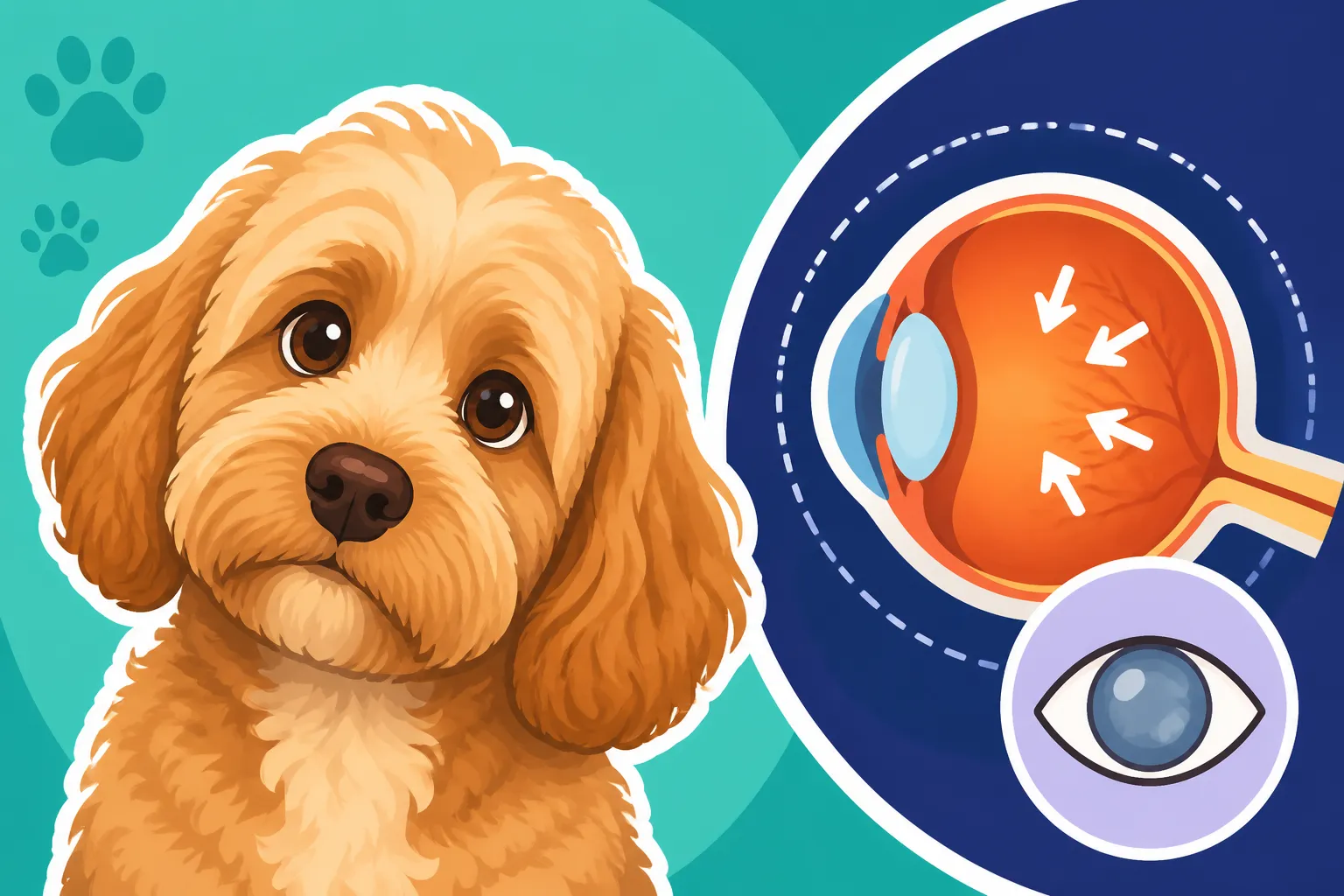
At its core, glaucoma is a disease where the fluid pressure inside the eye, known as intraocular pressure (IOP), becomes abnormally elevated. This pressure buildup isn't just uncomfortable; it directly damages the optic nerve, which is essentially the cable connecting the eye to the brain. This nerve is responsible for transmitting visual information, and when it's damaged, vision is compromised, often irreversibly. The process can be incredibly rapid, leading to complete blindness in a matter of hours or days if not treated immediately. It’s truly one of those conditions where every minute counts.
There are primarily two types of glaucoma we see in dogs: primary and secondary. Primary glaucoma is inherited and develops without any other underlying eye disease causing it. This is the type that is particularly relevant to Cockapoos due to their genetic makeup. Secondary glaucoma, on the other hand, occurs as a result of another existing eye condition, such as inflammation (uveitis), trauma, tumors, or lens luxation (where the lens shifts out of place). While secondary glaucoma can affect any dog, it's the inherited, primary forms that give us the most concern when discussing breeds like the Cocker Spaniel and, by extension, the Cockapoo.
The Importance of Aqueous Humor Dynamics
To truly understand glaucoma, we need to talk about "aqueous humor." Don't worry, it's not as gross as it sounds! Aqueous humor is a clear, watery fluid that continuously circulates within the front part of your dog's eye. It’s produced by a structure called the ciliary body and then drains out through a specialized meshwork located in the angle between the iris (the colored part of the eye) and the cornea (the clear outer layer). This constant production and drainage maintain a healthy, consistent pressure within the eye, much like a perfectly regulated faucet and drain system.
The problem arises when this delicate balance is disrupted. If the eye produces too much aqueous humor, or more commonly, if the drainage system becomes blocked or inefficient, the fluid starts to back up. This leads to an increase in intraocular pressure. Think of it like a sink with a clogged drain – the water keeps running, but it has nowhere to go, so the basin fills up. In the eye, this buildup of pressure compresses the delicate structures, particularly the optic nerve and the retina, leading to irreversible damage and, ultimately, vision loss. The rapid progression of this damage is why an acute glaucoma attack is such a dire emergency; the optic nerve cells simply cannot withstand prolonged high pressure.
The Cocker Spaniel's Legacy: Primary Glaucoma in Cockapoos
One of the less delightful "gifts" a Cockapoo can inherit from its Cocker Spaniel parentage is a predisposition to certain forms of primary glaucoma. While the Poodle side is generally robust in terms of eye health, the Cocker Spaniel brings with it a well-documented genetic risk for this debilitating condition. It's crucial for any Cockapoo owner or prospective owner to be aware of this inherited risk.
Types of Primary Glaucoma Inherited from the Cocker Spaniel
The Cocker Spaniel breed is particularly prone to two main types of primary glaucoma: Primary Open Angle Glaucoma (POAG) and Primary Angle Closure Glaucoma (PACG). While the names sound similar, their underlying mechanisms, and sometimes their presentation, are a bit different.
Primary Open Angle Glaucoma (POAG): This form is often insidious because it develops slowly and progressively. In POAG, the drainage angle of the eye initially appears normal and "open" on examination, but there's a microscopic defect in the drainage meshwork that prevents the aqueous humor from exiting efficiently. This leads to a gradual, chronic rise in intraocular pressure. The tricky part is that because the increase is slow, dogs often don't show obvious signs of pain or acute distress until significant vision loss has already occurred. By the time an owner notices a problem, it might be too late to save the affected eye's vision. A key genetic marker, the ADAMTS17 gene, has been identified in some breeds for POAG, and research continues into its role across various lines, including American Cocker Spaniels.
Primary Angle Closure Glaucoma (PACG): This is often the more dramatic and acutely painful form. In PACG, the drainage angle of the eye becomes physically obstructed, usually due to a developmental abnormality that causes the iris or ciliary body to block the outflow pathway. This blockage can happen suddenly, leading to a rapid and severe spike in intraocular pressure. This is typically the type that causes the sudden red, swollen, and extremely painful eye that sends owners rushing to the emergency vet. PACG often manifests first in one eye, with the other eye almost certainly developing the condition later, sometimes within months or a year. The typical age of onset for PACG in Cocker Spaniels, and thus Cockapoos, is usually between 3 and 7 years old, though it can occur earlier or later.
How Genetics Play a Role in Your Cockapoo's Risk
Understanding the genetic underpinnings of glaucoma is vital for responsible breeding and ownership. These primary forms of glaucoma are inherited, meaning they are passed down through a dog's genes from its parents. For POAG, specific genetic mutations have been identified in some breeds, allowing for DNA testing. For PACG, the inheritance pattern is often more complex, believed to be polygenic (involving multiple genes) or recessive, making it harder to predict solely through simple DNA tests.
This genetic predisposition means that if a Cockapoo has a Cocker Spaniel parent (or grandparents) with a history of glaucoma, or if that parent carries the genes for it, the Cockapoo puppy is at an elevated risk. The challenge for breeders lies in the late-onset nature of these conditions. A breeding dog might appear perfectly healthy with clear eyes at a young age, but then develop glaucoma later in life, after it has already produced several litters. This is why thorough health screening and careful pedigree research are absolutely non-negotiable for any reputable breeder. They should be transparent about the health history of their breeding stock, especially concerning conditions like glaucoma. The goal is always to reduce the likelihood of passing on these devastating conditions to future generations.
Recognizing the Red Flags: Signs and Symptoms of Glaucoma
Early detection is paramount with glaucoma, as the damage it causes is irreversible. Unfortunately, dogs are incredibly stoic and often hide pain until it becomes severe. This means owners need to be particularly vigilant and attuned to both subtle and obvious changes in their Cockapoo’s behavior and eyes. Don't assume a minor redness will just clear up on its own.
Subtle Early Warning Signs You Might Miss
Before the full-blown crisis hits, there can be subtle clues that your Cockapoo is experiencing increased intraocular pressure. These are easy to dismiss or attribute to other things, which is why it’s so important to be observant.
One of the earliest indicators can be behavioral changes. Your usually playful Cockapoo might seem a bit more withdrawn, less enthusiastic about walks or games, or simply sleep more. They might rub their eyes more frequently with a paw or against furniture, which could be a sign of discomfort or a mild headache from the pressure. Sometimes, there might be a decreased appetite or a general lethargy that seems uncharacteristic. These general signs, especially if coupled with even slight eye changes, warrant a closer look.
Subtle eye changes might include a very slight redness in the white part of one eye that seems to come and go, or a pupil that looks just a little bit more dilated than the other. You might notice a faint haziness or cloudiness in the cornea, sometimes described as a "smoky" appearance, especially when looking at the eye from certain angles. It’s not always the dramatic blue haze of a full-blown attack, but a subtle change that makes the eye look less sparkling and clear than usual. Because these signs can be so slight, regular, routine eye checks by your veterinarian are essential. They have the tools and expertise to spot issues long before you might. Don't wait until it's an emergency.
Acute Glaucoma: When Every Second Counts
When glaucoma progresses rapidly into an acute attack, the signs become much more dramatic and impossible to ignore. This is a true veterinary emergency, and immediate action is critical to try and preserve vision. You’ll want to get your Cockapoo to an emergency vet as quickly as possible. The Red Eye That Means a Cockapoo Needs a Vet Tonight
The hallmark of acute glaucoma is intense pain. Your Cockapoo will likely be squinting severely, holding the affected eye shut, and may even paw at it or try to rub their face constantly. The eye itself will often appear bulging or enlarged, a condition called buphthalmia, due to the extreme pressure. The cornea will typically develop a distinct cloudy or bluish-white haze, a direct result of the pressure forcing fluid into the corneal layers. You might also notice that the pupil in the affected eye is widely dilated and doesn't respond to light, appearing fixed and unresponsive. The white parts of the eye (sclera) will be noticeably red and inflamed, often with prominent blood vessels.
This constellation of symptoms – extreme pain, a bulging, cloudy, red eye with a fixed, dilated pupil – screams glaucoma. It's a condition that can cause irreversible blindness within 24-48 hours, or even less, if not addressed. This isn't a situation where you can "wait and see" or try home remedies. Time is truly of the essence, and immediate veterinary attention is the only course of action. Every minute counts when the delicate optic nerve is under such immense pressure.
Diagnosis and Management: Getting Ahead of Vision Loss
Once you suspect glaucoma, getting an accurate and timely diagnosis is the critical next step. This isn't something that can be guessed at; it requires specialized equipment and expertise. Your veterinarian will typically start with a thorough ophthalmic exam and then move on to more specific tests to confirm the diagnosis and determine the type of glaucoma.
The Diagnostic Process: From Tonometry to Gonioscopy
The primary diagnostic tool for glaucoma is tonometry, which is the measurement of the intraocular pressure (IOP). This is a quick and painless procedure that involves gently touching a specialized device, called a tonometer, to the surface of your dog’s eye after a numbing drop has been applied. Normal IOP in dogs typically ranges from 10-20 mmHg. Anything consistently above this, especially with correlating symptoms, strongly indicates glaucoma. This test is crucial for confirming the presence of high pressure and is often used for screening in at-risk breeds during routine check-ups.
Once high IOP is confirmed, your vet will likely recommend a referral to a board-certified veterinary ophthalmologist for further evaluation. The ophthalmologist will often perform gonioscopy. This procedure involves placing a special contact lens with mirrors directly onto the eye (again, with numbing drops) to visualize the drainage angle, the area where the aqueous humor flows out. Gonioscopy is essential for differentiating between Primary Open Angle Glaucoma (where the angle appears open but is dysfunctional) and Primary Angle Closure Glaucoma (where the angle is physically obstructed). This distinction is critical because it dictates the long-term management strategy.
Other diagnostic tests might include ophthalmoscopy, where the vet examines the back of the eye, including the optic nerve, for signs of damage. Ocular ultrasound might also be used to look for other underlying causes of secondary glaucoma or to assess the internal structures of the eye if the cornea is too cloudy to see through. The costs associated with these specialized diagnostics and ongoing monitoring can really add up, so having a good pet insurance plan like one from Healthy Paws can make a world of difference, helping you focus on your Cockapoo’s health rather than worrying about the bills.
Treatment Approaches: Medical, Surgical, and Supportive Care
Treating glaucoma is about reducing intraocular pressure as quickly and effectively as possible to prevent further damage to the optic nerve. The approach chosen depends on the type of glaucoma, how advanced it is, and whether the vision is still salvageable.
Medical Management: For acute glaucoma, the initial goal is to rapidly reduce the pressure. This often involves a combination of topical eye drops and sometimes oral medications. Common topical medications include:
- Prostaglandin analogues (e.g., latanoprost): These are often the first line of defense, as they dramatically increase the outflow of aqueous humor. They are potent and fast-acting.
- Carbonic anhydrase inhibitors (e.g., dorzolamide, brinzolamide): These drops work by decreasing the production of aqueous humor.
- Beta-blockers (e.g., timolol): These also help reduce aqueous humor production.
In severe, acute cases, an osmotic diuretic like mannitol might be given intravenously to rapidly draw fluid out of the eye, but this is usually done in an emergency setting. The key with medical management is strict adherence to the prescribed schedule; skipping doses can lead to rapid pressure spikes.
Surgical Options: When medical management isn't enough, or if the glaucoma is advanced, surgical intervention may be necessary.
- Laser Cyclophotocoagulation: This procedure uses a laser to destroy part of the ciliary body, thereby reducing the production of aqueous humor. It's often performed on eyes that still have some vision.
- Gonioimplantation (Shunt Surgery): A tiny drainage device (shunt) can be surgically implanted to create a new pathway for aqueous humor to drain out of the eye.
- Enucleation (Eye Removal): This is typically a last resort, usually performed when the eye is blind, painful, and unresponsive to other treatments. While it sounds drastic, removing a chronically painful, non-visual eye can vastly improve a dog's quality of life. The Price of Removing a Cockapoo's Eye
- Intraocular Prosthesis: In some cases, after enucleation, an artificial eye can be implanted for cosmetic purposes, though it doesn't restore vision.
Supportive Care: Beyond direct treatment, supportive care is crucial, especially if vision is lost. This includes vigilant pain management, often with oral anti-inflammatory drugs, and creating a safe, consistent home environment for a dog learning to navigate with impaired vision. Regular check-ups with your vet or ophthalmologist are essential for ongoing monitoring, adjusting medications, and managing any complications.
Prevention and Breeding Practices for a Healthier Cockapoo Future
The heartbreak of glaucoma is undeniable, but there are proactive steps that responsible breeders and dedicated owners can take to minimize the risk and improve outcomes for Cockapoos. The key lies in understanding the genetic components and acting on that knowledge.
The Role of Responsible Breeding and Health Testing
For any breed susceptible to inherited conditions, the cornerstone of prevention is responsible breeding practices. This means that both parent breeds of a Cockapoo – the Cocker Spaniel and the Poodle – should undergo comprehensive health screening, particularly for eye conditions like glaucoma.
Reputable Cocker Spaniel breeders, and by extension, Cockapoo breeders, should ensure that their breeding stock undergoes annual eye examinations by a board-certified veterinary ophthalmologist. These examinations are often part of a CAER (Canine Eye Registry Foundation) or OFA Eye Certification Registry program. The ophthalmologist will examine the eyes for any signs of inherited eye diseases, including abnormalities in the drainage angle that could predispose a dog to glaucoma. Whether a Cockapoo Needs a Yearly CAER Exam While an annual clear exam doesn't guarantee a dog will never develop glaucoma (especially if it's a late-onset condition), it does indicate a healthy eye at the time of examination.
Furthermore, responsible breeders will meticulously research the pedigrees of their breeding dogs, looking for any history of glaucoma in previous generations. Transparency is key here. Don't be shy about asking a Cockapoo breeder for documentation of these eye certifications for both the Cocker Spaniel and Poodle parents. Asking for a Cockapoo's Eye Certificates While having two "clear" parents significantly reduces the risk, it's important to remember that some inherited conditions, especially those with complex polygenic inheritance, might still appear even in offspring from apparently clear parents. However, choosing a puppy from a breeder who performs these rigorous health checks drastically improves your Cockapoo's chances of a healthier life.
Proactive Steps for Cockapoo Owners
Even if you've done your due diligence and chosen a puppy from health-tested parents, being a proactive owner is still incredibly important. Glaucoma can be insidious, and early detection is truly your Cockapoo's best defense against vision loss.
Make sure your Cockapoo receives regular veterinary check-ups, and specifically request that their eyes be thoroughly examined as part of their annual wellness visit. This includes a visual inspection and, ideally, a tonometry screening to measure intraocular pressure, especially as they enter adulthood and middle age. These routine checks are also crucial for other general health issues. The Kidney and Eye Checks a Cockapoo Needs Yearly
Beyond veterinary exams, get into the habit of performing quick, informal eye checks at home. Look at your dog's eyes daily. Do they look clear and bright? Are both pupils the same size and responsive to light? Is there any redness, cloudiness, or discharge? Does your dog seem comfortable, or are they squinting or pawing at an eye? Noticing even subtle changes immediately and contacting your vet can be the difference between saving and losing an eye.
Given the potential for expensive emergency treatments and ongoing medication for glaucoma, enrolling your Cockapoo in a good pet insurance plan when they are young and healthy is a smart financial decision. Providers like Healthy Paws offer comprehensive coverage that can help offset the significant costs of diagnosing and managing conditions like glaucoma, allowing you to prioritize your pet's health without undue financial stress. Early enrollment ensures that any future hereditary conditions are covered, whereas waiting until symptoms appear usually means it's considered a pre-existing condition and won't be covered.
Living with a Cockapoo Affected by Glaucoma
Receiving a glaucoma diagnosis for your Cockapoo can be devastating, especially if it leads to vision loss. However, it’s important to remember that blindness does not have to mean a poor quality of life. Dogs are incredibly adaptable, and with some adjustments, many blind Cockapoos continue to live happy, fulfilling lives.
Adapting Your Home for a Visually Impaired Dog
The most significant adjustment you'll need to make is to your home environment. Dogs rely heavily on their sense of smell and their memory for navigation.
- Consistency is Key: Once your Cockapoo's vision is compromised, try to keep furniture and belongings in consistent places. Moving things around can disorient them and lead to bumps and falls. Create clear, consistent pathways.
- Safety First: Install baby gates at the top and bottom of stairs to prevent falls. Cushion sharp corners on furniture to prevent injuries. Block off any areas that might pose a danger, such as open fireplaces or pools. Consider soft rugs or runners over slippery floors to give them better traction and tactile cues.
- Scent Markers: Some owners find success with scent markers – a different scent applied to specific areas or objects (e.g., vanilla extract near their water bowl, a different essential oil near their bed) can help them identify important locations.
- Verbal Cues: Start using clear verbal cues for direction ("stop," "step up," "left," "right"). Your voice becomes their guiding light.
- Outdoor Safety: Always keep a blind dog on a leash when outside your secure yard. Even in a familiar yard, supervise them closely to prevent them from falling into pools, running into obstacles, or escaping. Whether a Blind Cockapoo Manages at Home
Patience and empathy are your greatest tools during this transition. Your Cockapoo will be relying on you more than ever, and a calm, reassuring presence will help them adjust.
Maintaining Quality of Life and Emotional Well-being
A blind Cockapoo still has a vibrant personality and needs engagement. While their sight may be gone, their other senses, particularly smell and hearing, are often heightened.
- Enrichment through Scent and Sound: Engage them in scent-work games. Hide treats around the house, use puzzle toys that dispense food, or play "find it" with their favorite toy. Many Cockapoos excel at these activities. Scent Games a Cockapoo Never Tires Of Use toys that make noise, like squeakers or crinkly toys, to engage their hearing during playtime.
- Routine and Predictability: Dogs thrive on routine, and for a visually impaired dog, predictability provides immense comfort and security. Stick to consistent feeding times, walk schedules, and bedtime routines.
- Physical Contact: Maintain plenty of gentle physical contact – petting, cuddling, and reassuring touches can help your Cockapoo feel safe and loved. Talk to them frequently, using a calm and happy tone of voice.
- Ongoing Veterinary Care: Regular check-ups are still crucial. Even a blind eye can develop complications or pain, so continuous monitoring by your vet or ophthalmologist is important. This is where pet insurance, like Healthy Paws, continues to be an invaluable resource, covering the ongoing costs of pain management, medication, and specialized check-ups, ensuring your Cockapoo receives the best possible care throughout their life.
Losing vision is a huge adjustment for both dog and owner, and it's okay to grieve. But remember, your Cockapoo is still the same loving companion, and with your help, they can continue to enjoy a happy and fulfilling life.
Differentiating Glaucoma from Other Eye Conditions
The eye is a complex organ, and many conditions can cause redness, cloudiness, or discomfort. While glaucoma is an emergency, it's important to understand how it differs from other common eye problems to ensure the correct diagnosis and treatment. Mistaking one condition for another can have serious consequences.
Glaucoma vs. Cataracts: Cloudy Eyes, Different Causes
Perhaps the most common confusion arises between glaucoma and cataracts, mainly because both can cause a cloudy appearance in the eye. However, their underlying causes, symptoms, and treatments are fundamentally different.
Cataracts involve the opacity or clouding of the lens inside the eye. The lens is normally clear and focuses light onto the retina. When a cataract develops, it becomes opaque, blocking light and leading to blurry vision or blindness. While cataracts can sometimes develop as a secondary complication of severe glaucoma, they do not cause the painful increase in intraocular pressure that is the hallmark of glaucoma. A dog with cataracts typically doesn't experience acute pain unless the cataract is causing secondary inflammation. The eye with a cataract will look cloudy, but usually won't be red, bulging, or intensely painful. The pupil will also remain responsive to light. Whether a Cockapoo's Cataracts Are Worth Operating On
It's also worth noting nuclear sclerosis, a normal aging change in dogs where the lens appears grayish or bluish. This often gets mistaken for cataracts by owners, but it rarely significantly impairs vision and requires no treatment. The distinction between nuclear sclerosis and cataracts, and indeed from glaucoma, is best made by a veterinarian. Telling Nuclear Sclerosis From Cataracts in a Cockapoo
Other Eye Emergencies to Be Aware Of
While glaucoma is a top-tier emergency, several other eye conditions also require immediate veterinary attention to prevent permanent damage or vision loss:
- Corneal Ulcers: These are open sores on the surface of the cornea. They are extremely painful, causing squinting, tearing, and pawing at the eye. The eye might appear red, and sometimes you can see a divot or hazy spot on the cornea. Unlike glaucoma, corneal ulcers typically do not cause elevated intraocular pressure, though severe, deep ulcers are also an emergency.
- Uveitis: This is an inflammation of the uvea, the middle layer of the eye. It can be caused by infection, trauma, immune-mediated disease, or systemic illness. Uveitis often causes pain, redness, squinting, and a small pupil. Interestingly, uveitis can initially cause low intraocular pressure, but chronic or severe uveitis can lead to secondary glaucoma.
- Lens Luxation: This occurs when the lens of the eye shifts out of its normal position. Depending on whether it shifts forward (anterior luxation) or backward (posterior luxation), it can cause severe pain and can quickly lead to secondary glaucoma by blocking the drainage angle. Breeds related to terriers and some spaniels are predisposed to primary lens luxation.
- Proptosis: This is when the eyeball actually pops out of its socket, often due to trauma. It's an incredibly distressing and painful emergency requiring immediate repositioning by a vet.
- Cherry Eye: While less immediately sight-threatening, "cherry eye" (prolapse of the nictitating membrane gland) can lead to dry eye and discomfort if not addressed. It appears as a red, swollen mass in the inner corner of the eye. Cherry Eye in a Cockapoo Puppy
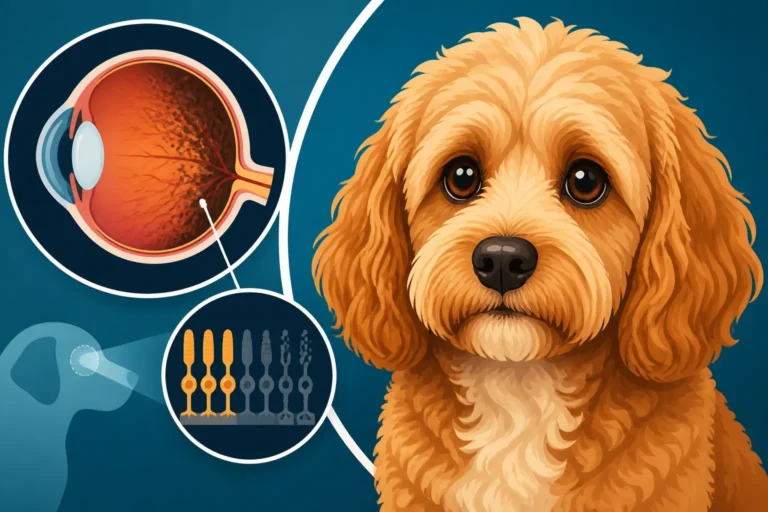
The key takeaway is this: any sudden change in your Cockapoo's eye, particularly if accompanied by pain, redness, cloudiness, or visual impairment, should be treated as an emergency. Don't try to self-diagnose or wait it out. Seek veterinary care immediately. Whether Glaucoma in a Cockapoo Is an Emergency Your quick action could save your Cockapoo’s vision and prevent unnecessary suffering. For other inherited eye conditions that Cockapoos can face, such as Progressive Retinal Atrophy in a Cockapoo, regular screening and awareness are also crucial for your dog's long-term eye health.
| Feature | Glaucoma (Acute) | Cataracts | Corneal Ulcer | Uveitis |
|---|---|---|---|---|
| Primary Issue | High Intraocular Pressure (IOP) | Lens opacity | Open sore on cornea | Inflammation of uvea |
| Pain Level | Severe, acute pain | Usually none (unless secondary issues) | Severe, acute pain | Moderate to severe pain |
| Eye Appearance | Red, cloudy, bulging, dilated fixed pupil, vascular | Cloudy lens (inside eye), usually no redness/pain | Red, tearing, squinting, visible defect/haze | Redness, small pupil, tearing, cloudy fluid |
| Pupil Size | Dilated, fixed | Normal or slightly dilated | Normal | Small, constricted |
| IOP | High | Normal | Normal | Often low initially, can lead to high later |
| Urgency | Extreme Emergency | Not an emergency (but needs vet attention) | Emergency | Emergency |
| Vision Impact | Rapid, irreversible vision loss | Gradual vision impairment/loss | Can cause vision loss if severe/untreated | Can cause vision loss/secondary glaucoma |
Disclaimer
This information is intended for educational purposes only and is not a substitute for professional veterinary advice. Always consult with your veterinarian or a board-certified veterinary ophthalmologist for any health concerns or before making any decisions about your Cockapoo's care. Eye conditions are often emergencies, and prompt professional medical attention is crucial.