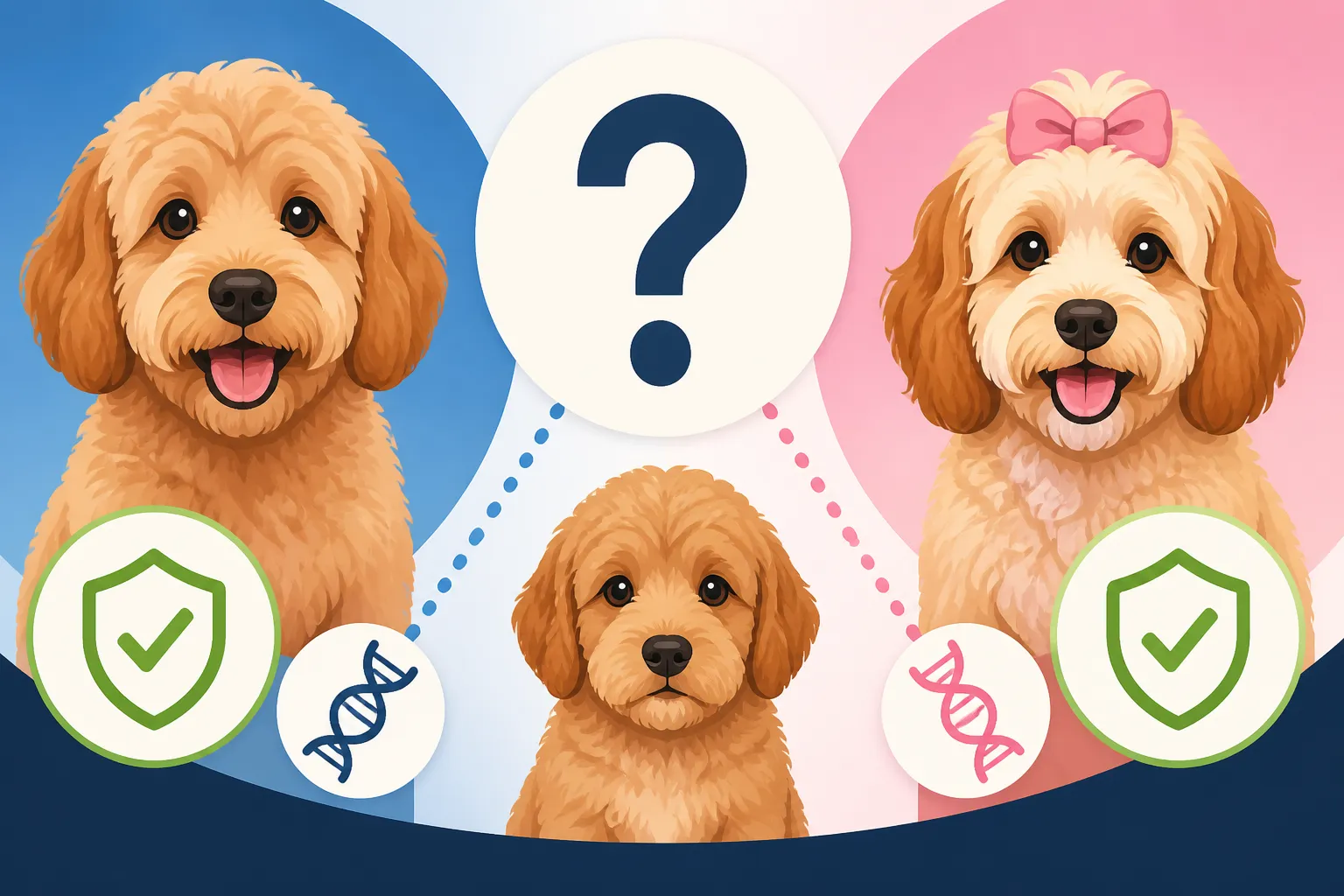
Whether Both Cockapoo Parents Must Be prcd-PRA Clear
It's incredibly disheartening when you fall in love with a Cockapoo puppy, only to later discover that they might be at risk for serious genetic health issues. Many hopeful owners, completely understandable, assume that a "designer dog" like the Cockapoo comes with certain health assurances, especially given the rising prices. However, the truth is that without proper screening of both parents, your sweet Cockapoo could inherit a devastating eye condition called progressive retinal atrophy (prcd-PRA), leading to blindness. This guide is here to shed light on why checking both parents for prcd-PRA clearance isn't just a suggestion—it's an absolute necessity for safeguarding your future furry family member's vision.
Understanding Progressive Retinal Atrophy in Cockapoos
Progressive Retinal Atrophy, often referred to as prcd-PRA, is a group of inherited degenerative diseases that affect the retina of the eye. Think of the retina as the film in a camera; it's responsible for capturing light and sending images to the brain. When prcd-PRA strikes, the photoreceptor cells in the retina—the rods and cones—gradually deteriorate over time. This isn't a sudden event, but rather a slow, relentless process that ultimately leads to complete blindness. It’s a truly heartbreaking condition to witness your beloved companion go through, and one that often catches owners by surprise if they weren't aware of the genetic risks.
How prcd-PRA Progresses in Affected Dogs
The progression of prcd-PRA isn't uniform across all affected dogs, but a typical pattern emerges. The first noticeable sign is often night blindness. Imagine your Cockapoo, usually so confident in the dark, suddenly becoming hesitant, bumping into furniture, or struggling to navigate dimly lit rooms. This happens because the rod cells, which are responsible for vision in low light, degenerate first. As the disease advances, the cone cells, which handle daytime vision and color perception, also start to fail. This means that over months or even a few years, your dog's vision will deteriorate further, leading to complete blindness even in daylight.
It's a gradual loss, which can be both a blessing and a curse. On one hand, dogs are incredibly resilient and can adapt remarkably well to their diminishing sight. On the other hand, it's a constant worry for owners, watching their lively companion slowly lose one of their most vital senses. The age at which The Age prcd-PRA Takes a Cockapoo's Sight can vary, but it often becomes evident in young to middle-aged dogs, typically between 3 and 5 years old, although it can manifest earlier or later depending on the specific genetic mutation.
The Impact on a Cockapoo's Quality of Life
While dogs are adaptable, losing their sight undoubtedly impacts their quality of life. A Cockapoo is an intelligent, active, and curious breed, often eager to explore and engage with their environment. Vision plays a huge role in this. Initially, a dog with prcd-PRA might struggle with navigating new places, become more reliant on their owner, and may even show increased anxiety in unfamiliar settings. As the disease progresses, even their own home can become challenging if furniture is moved or routines are disrupted.
However, it's crucial to remember that Whether a Blind Cockapoo Manages at Home is often a resounding yes with the right support. Owners of affected dogs learn to make adjustments: keeping furniture in consistent locations, using scent cues, and relying more on verbal commands. They develop a deeper bond with their dogs, becoming their eyes in the world. Yet, preventing this journey altogether, if possible, is always the preferred path. This is why understanding the genetic component and ensuring responsible breeding practices are so incredibly vital.
The Genetics of prcd-PRA Inheritance
Understanding prcd-PRA means diving a little into genetics. Don't worry, it's not as complicated as it sounds! prcd-PRA is an autosomal recessive inherited disease. This fancy term simply means two very important things: first, the gene responsible for the disease is not linked to sex (autosomal), so it affects males and females equally. Second, a dog must inherit two copies of the defective gene – one from its mother and one from its father – to actually develop the disease (recessive). If a dog only inherits one copy of the defective gene, it won't show symptoms of prcd-PRA, but it will be a "carrier."
Decoding Carrier, Clear, and Affected Statuses
When we talk about genetic testing for prcd-PRA, breeders receive results indicating one of three possible statuses for their dogs:
- Clear: A dog that is "clear" has inherited two normal copies of the gene from its parents. This dog will not develop prcd-PRA, and it cannot pass the defective gene on to its offspring. This is the ideal status for any breeding dog.
- Carrier: A "carrier" dog has inherited one normal copy of the gene and one defective copy. This dog will not develop prcd-PRA itself because the normal gene is dominant and compensates for the defective one. However, it can pass the defective gene on to 50% of its offspring, on average. This is where many of the complexities in breeding decisions arise. Whether a prcd Carrier Cockapoo Ever Goes Blind is a firm no; they remain unaffected themselves.
- Affected: An "affected" dog has inherited two copies of the defective gene, one from each parent. This dog will develop prcd-PRA and will eventually go blind. This is the outcome we are desperately trying to avoid through responsible breeding.
It's a simple concept, but the implications for breeding programs are profound. Without knowing the genetic status of both prospective parents, you're essentially breeding blindfolded, hoping for the best but risking the worst.
The Punnett Square and Genetic Probabilities
To truly grasp Why Two Carrier Parents Produce an Affected Cockapoo, we can use a basic genetic tool called a Punnett square. It visually represents the probability of offspring inheriting certain genetic traits. Let's use 'N' for the normal gene and 'P' for the prcd-PRA defective gene.
Here's how different pairings break down:
Scenario 1: Clear (NN) x Clear (NN)
| N | N | |
|---|---|---|
| N | NN (Clear) | NN (Clear) |
| N | NN (Clear) | NN (Clear) |
| Result: 100% of puppies will be Clear. No puppies will be carriers or affected. This is the safest pairing. |
Scenario 2: Clear (NN) x Carrier (NP)
| N | N | |
|---|---|---|
| N | NN (Clear) | NN (Clear) |
| P | NP (Carrier) | NP (Carrier) |
| Result: 50% of puppies will be Clear, and 50% will be Carriers. No puppies will be affected. This pairing is acceptable, but those carrier puppies should not be bred to other carriers. |
Scenario 3: Carrier (NP) x Carrier (NP)
| N | P | |
|---|---|---|
| N | NN (Clear) | NP (Carrier) |
| P | NP (Carrier) | PP (Affected) |
| Result: 25% of puppies will be Clear, 50% will be Carriers, and 25% will be Affected. This is the pairing that creates puppies destined to go blind. This is why breeding two carriers together is considered highly irresponsible. |
Scenario 4: Clear (NN) x Affected (PP)
| P | P | |
|---|---|---|
| N | NP (Carrier) | NP (Carrier) |
| N | NP (Carrier) | NP (Carrier) |
| Result: 100% of puppies will be Carriers. No puppies will be affected, but all will carry the gene. |
Scenario 5: Carrier (NP) x Affected (PP)
| N | P | |
|---|---|---|
| P | NP (Carrier) | PP (Affected) |
| P | NP (Carrier) | PP (Affected) |
| Result: 50% of puppies will be Carriers, and 50% will be Affected. This pairing is also highly irresponsible. |
This table clearly illustrates the critical importance of knowing the genetic status of both parents. Even if one parent appears healthy (because they're a carrier), breeding them with another carrier can result in affected puppies, bringing immense sorrow and medical costs to their future families. Pet insurance providers like Healthy Paws, while invaluable for unexpected veterinary emergencies, may have limitations or exclusions for hereditary conditions that could have been prevented through responsible breeding. Always check the fine print of any policy.
Why Both Parents Must Be prcd-PRA Clear
This is the core question, and the answer is unequivocal: for a Cockapoo litter to be guaranteed free of prcd-PRA, both parents absolutely must be genetically clear. Anything less introduces a risk, and in the case of a carrier-to-carrier breeding, a 25% certainty of producing affected puppies. The idea that if just one parent is clear, the puppies are safe is a dangerous misconception that unfortunately still circulates among less scrupulous or uneducated breeders.
Debunking the "Clear by Parentage" Fallacy
The "clear by parentage" concept is one of the most misunderstood and misused terms in dog breeding, especially concerning recessive genetic conditions like prcd-PRA. Some breeders might claim a puppy is "clear by parentage" if one of its parents (or even grandparents) was tested clear. While it's true that a puppy cannot be affected if at least one parent is genuinely clear (because an affected puppy needs two copies of the defective gene), this doesn't mean all puppies from such a pairing are clear themselves.
For example, if you breed a Carrier (NP) dog with a Clear (NN) dog, all the puppies will be either Clear or Carriers. None will be Affected. In this specific sense, you could say the puppies are "clear by parentage" of the disease itself. However, half of those puppies will still be carriers! If one of those carrier puppies is later bred to another carrier, you're right back to the 25% risk of affected offspring. Responsible breeders aim to eliminate the defective gene from their lines, not just avoid affected puppies for one generation. The gold standard is to breed only clear dogs to clear dogs, or clear dogs to carrier dogs, with the understanding that carrier offspring from the latter pairing should not be used for breeding unless bred back to a clear dog again, and ideally, removed from the breeding program to reduce the incidence of the gene.
The Irresponsibility of Breeding a Carrier to a Carrier
As we saw in the Punnett square, breeding two prcd-PRA carriers together is a genetic gamble with dire consequences. One out of every four puppies in such a litter will inherit two copies of the defective gene and will eventually go blind due to Progressive Retinal Atrophy in a Cockapoo. This isn't just a statistical possibility; it's a cold, hard fact of genetic inheritance.
A responsible breeder, one who truly cares about the long-term health and welfare of the Cockapoo breed, would never intentionally make such a pairing. To do so demonstrates a severe lack of understanding of canine genetics or, worse, a callous disregard for the health and future of the puppies they produce. Imagine the emotional toll on a family who brings home a seemingly healthy Cockapoo puppy, only to discover a few years later that their beloved pet is slowly losing its sight, a condition that could have been completely prevented by ethical breeding practices. It's a preventable tragedy that Whether a Cockapoo Needs a Yearly CAER Exam becomes crucial for early detection or proper management of any eye issues, but ideally, you want to avoid the genetic predisposition altogether.
Testing for prcd-PRA in Cockapoos
Knowing the genetic status of your Cockapoo's parents is the cornerstone of preventing prcd-PRA. Fortunately, advances in veterinary genetics have made testing straightforward and highly reliable. A simple DNA test can definitively determine whether a dog is clear, a carrier, or affected by prcd-PRA. This is one of The Five Certificates a Cockapoo Breeder Should Show when you are considering a puppy.
The Role of DNA Testing
DNA tests for prcd-PRA involve collecting a small sample of cells, usually through a cheek swab or a blood draw. This sample is then sent to a specialized laboratory that analyzes the dog's genetic material for the specific mutation associated with prcd-PRA. The results are typically unambiguous, providing a clear "Clear," "Carrier," or "Affected" status. This information is absolutely invaluable for breeders to make informed decisions about mating pairs.
There are several reputable genetic testing laboratories that offer prcd-PRA panels for Cockapoos and their parent breeds (Cocker Spaniels and Poodles). These labs employ stringent quality controls to ensure accurate results. When you're looking at a breeder's paperwork, make sure the test results come from a recognized laboratory, not just an in-house report, to ensure credibility and accuracy. It's also important that these tests are recent and apply to the specific dog being bred, not just an ancestor.
Interpreting and Verifying Test Certificates
When a breeder tells you their dogs are health tested, that's a good start, but it's not enough. You need to actually see the certificates and understand what they mean. For prcd-PRA, you'll be looking for a certificate that clearly states the dog's registered name, microchip or tattoo number (to verify it's indeed that dog), the date of the test, the laboratory that performed it, and the genetic status (Clear, Carrier, or Affected).
If a breeder claims their dog is "clear by parentage," politely ask to see the certificates for both parents of the dog in question, not just one. If only one parent was tested clear, then the dog you're looking at could still be a carrier. A truly transparent and responsible breeder will have no hesitation in showing you all relevant health clearances, including those for the parent breeds. In fact, Asking a Cockapoo Breeder for the FN Certificate is also a critical step, as familial nephropathy is another severe genetic condition to screen for. These certificates should be provided willingly and allow for verification directly with the issuing lab. Never accept verbal assurances or blurry photocopies as proof.
The Risks of Untested Breeding Practices
The allure of a fluffy, cute Cockapoo puppy can sometimes overshadow the critical importance of responsible breeding. When breeders skip genetic testing for prcd-PRA, they aren't just cutting corners; they're gambling with the health and future of their puppies and, by extension, the families who will love them. The consequences of such practices are far-reaching and deeply regrettable.
Heartbreak and Financial Burden for Owners
Imagine bringing home your sweet Cockapoo, full of joy and anticipation, only to be confronted with The Age prcd-PRA Takes a Cockapoo's Sight a few years down the line. It's an agonizing experience for owners to watch their vibrant dog slowly lose its ability to see the world around it. The emotional toll of caring for a dog with a progressive, incurable condition like prcd-PRA is immense. It transforms daily life, requiring significant adjustments, constant vigilance, and deep empathy.
Beyond the emotional impact, there's a substantial financial burden. While prcd-PRA itself is not usually painful, the diagnostic process can involve specialist veterinary ophthalmologist visits, which aren't inexpensive. Managing a blind dog may also incur costs for specialized equipment, home modifications, and potentially increased vet visits for other age-related issues as the dog navigates its world without sight. If you've invested in pet insurance, a good policy from a provider like Healthy Paws can certainly help mitigate unforeseen costs for accidents or illnesses, but as mentioned, hereditary conditions often have specific clauses, so it's always best to prevent them if possible through responsible breeding. These costs are a heavy price to pay for what could have been a preventable condition.
Contributing to the Spread of Genetic Diseases
When untested carriers are bred, the defective prcd-PRA gene continues to be passed down through generations, silently spreading within the Cockapoo gene pool. This undermines all the efforts of responsible breeders who are meticulously screening their dogs and making informed breeding choices to produce healthier puppies. Every time an affected puppy is born, or a carrier puppy is bred without proper screening, it perpetuates the cycle of genetic disease.
This isn't just about individual dogs; it's about the health of the entire Cockapoo population. Without a collective commitment to genetic health testing, the incidence of prcd-PRA could become more widespread, leading to more blind dogs and more heartbreak. It's a fundamental ethical responsibility for every breeder to not only avoid producing affected puppies but also to actively work towards reducing the prevalence of such detrimental genes in their lines.
Finding a Reputable Cockapoo Breeder
The best defense against genetic conditions like prcd-PRA is to choose a breeder who prioritizes health and transparency above all else. Finding such a breeder requires diligence, research, and a clear understanding of what questions to ask and what documentation to demand. Don't let your excitement for a puppy overshadow the need for careful investigation.
Key Questions to Ask About prcd-PRA Testing
When you contact a potential Cockapoo breeder, be prepared with a list of specific questions related to prcd-PRA:
- "Have both parent dogs been genetically tested for prcd-PRA?" Don't just ask if they've been 'tested'; ask specifically about both parents.
- "Can I see the official DNA test certificates for both the mother and father of the litter?" Insist on seeing the actual certificates, not just a verbal confirmation. These should show a "Clear" result for both parents.
- "Which genetic testing laboratory was used, and can I verify the results directly with them?" Reputable labs provide ways to verify results.
- "Are your breeding dogs also cleared for other eye conditions?" Beyond prcd-PRA, responsible breeders often screen for other inherited eye diseases, such as those that might lead to Glaucoma From the Cocker Side of a Cockapoo. A comprehensive eye exam by a veterinary ophthalmologist (CAER exam) is often part of good practice.
- "What is your health guarantee for genetic conditions, and how is it documented?" A good breeder will offer a written health guarantee that specifies what happens if a puppy develops an inherited disease.
A breeder who is genuinely proud of their health testing practices will welcome these questions and be happy to provide documentation. Any hesitation or defensiveness should be a major red flag.
What to Look For in Breeder Practices and Documentation
Beyond specific questions about prcd-PRA, observe the breeder's overall practices. A reputable breeder will:
- Be transparent: They will openly discuss health issues, their breeding philosophy, and be willing to show you where their puppies are raised.
- Show you the parents: Or at least the mother. You should be able to observe the mother's temperament and general health.
- Provide a contract: A detailed contract should outline the health guarantee, spay/neuter agreements, and what happens if the puppy needs to be rehomed.
- Not rush you: They'll encourage you to take your time, ask questions, and educate you about the breed.
- Screen potential owners: A good breeder will interview you to ensure their puppies are going to suitable, loving homes.
- Focus on health clearances: Beyond prcd-PRA, look for clearances for hip and elbow dysplasia, patellar luxation, and other breed-specific genetic conditions common in both Cocker Spaniels and Poodles. For instance, testing for Phosphofructokinase Deficiency in a Cockapoo or Familial Nephropathy and the Kidneys a Cockapoo Can Inherit would also be indicators of a truly dedicated breeder.
Remember, a higher price tag doesn't automatically equate to a responsible breeder. It's the commitment to thorough health testing and transparency that truly defines an ethical breeding program. The Five Certificates a Cockapoo Breeder Should Show should cover the essential genetic and health screenings relevant to the breed.
Living with a prcd-PRA Affected Cockapoo
Discovering that your Cockapoo has prcd-PRA and is facing gradual blindness can be devastating. However, it's not a death sentence for your dog's happiness or your bond. Dogs are incredibly resilient and adaptable, and with your help, a blind Cockapoo can still lead a full and joyful life. It requires patience, consistency, and a willingness to adapt your environment and routines.
Supporting a Dog with Vision Loss
The most important thing you can do for a dog losing its sight is to provide a consistent and predictable environment. Dogs thrive on routine, and for a blind dog, this is even more critical.
- Maintain furniture placement: Avoid moving furniture, especially large items, as this can disorient and frustrate your dog. Their mental map of the home is their new guide.
- Create safe zones: Ensure areas are free of clutter and hazards. Block off stairs if necessary, or use baby gates to secure dangerous spots.
- Use scent markers: Apply distinct scents (like essential oils diluted in water, used safely) to important areas such as their food bowl, water dish, or bed to help them locate these spots easily.
- Establish verbal cues: Teach specific verbal commands like "step up," "step down," "wait," or "obstacle" to guide them through their environment. Consistent repetition is key.
- Keep playtime familiar: Continue to play with your dog, but adapt games to their new reality. Squeaky toys, balls with bells inside, or scent-based games become invaluable. Scent Work That Satisfies a Cockapoo can become an incredibly rewarding activity, engaging their powerful nose.
- Outdoor adventures: Don't stop walks! Keep them on a leash in unfamiliar areas, but explore familiar, safe routes. Let them sniff and explore. Their sense of smell will become their primary way of experiencing the world. Whether a Blind Cockapoo Manages at Home is often a testament to their owners' dedication and the dog's innate resilience.
Consistency and positive reinforcement will help your Cockapoo adjust and regain confidence. They'll look to you for guidance and reassurance more than ever.
Environmental Adaptations and Training Tips
Adapting your home environment for a blind Cockapoo doesn't have to be complicated or expensive. Small changes can make a huge difference in their safety and comfort.
- Door and wall protectors: Consider padding sharp corners of furniture or installing child-safety gates at the top and bottom of stairs until your dog masters them.
- Rugs and texture changes: Use different textured rugs to define different areas or signal approaching obstacles. For instance, a mat by the door could indicate an exit.
- Halo vests: For dogs that frequently bump into things, a "halo" vest can provide a physical barrier that helps them detect objects before impact, protecting their head and giving them confidence.
- Sound cues: Consider wearing a bell on your shoe or gently talking as you move around the house so your dog always knows where you are.
- Leash training: Even if your Cockapoo was great off-leash, a leash becomes essential in public. Work on gentle leash handling to guide them without pulling.
- Touch cues: Teach them to respond to gentle taps or nudges on different parts of their body to indicate direction or action. For example, a tap on the left side might mean "turn left."
Remember, their sense of smell and hearing will sharpen significantly. Praise them frequently for navigating successfully and reassure them when they seem hesitant. Whether a Cockapoo Goes Blind Slowly often allows time for both the dog and owner to adapt, making the transition smoother than a sudden loss of sight. With your love and support, your Cockapoo can continue to be a happy, cherished member of your family.
Protecting Your Cockapoo's Vision Beyond PRA
While prcd-PRA is a critical genetic condition to be aware of and test for, it's important to remember that it's not the only eye issue that can affect Cockapoos. Just like with humans, dogs can develop a range of eye problems throughout their lives, some of which are also hereditary, while others are acquired due to injury, age, or other health conditions. A holistic approach to eye health is essential for ensuring your Cockapoo enjoys good vision for as long as possible.
Other Common Eye Conditions in Cockapoos
Because Cockapoos inherit traits from both Cocker Spaniels and Poodles, they can be predisposed to a mix of conditions:
- Cataracts: This is a clouding of the eye's lens, leading to blurry vision and, if severe, blindness. While some cataracts are age-related (nuclear sclerosis is often confused with cataracts), others are inherited and can appear in younger dogs. Whether a Cockapoo's Lenses Cloud Before Ten can sometimes be a sign of inherited cataracts.
- Glaucoma: This is a painful condition caused by increased pressure within the eye. It can lead to rapid vision loss and permanent damage if not treated immediately. Cocker Spaniels, in particular, are prone to primary glaucoma. The Glaucoma a Cockapoo Inherits From the Cocker is a serious concern, often requiring emergency veterinary attention.
- Progressive Retinal Atrophy (other forms): While prcd-PRA is the most common form, other specific types of PRA can also exist. Genetic testing typically covers the most prevalent forms.
- Retinal Dysplasia: An abnormal development of the retina. This can range from mild (folds in the retina, often not affecting vision) to severe (retinal detachment, causing blindness).
- Distichiasis/Ectopic Cilia: Extra eyelashes growing from abnormal spots, which can rub against the cornea and cause irritation or ulcers.
- Entropion/Ectropion: Eyelids rolling inward (entropion) or outward (ectropion), causing irritation or exposure. Whether a Cockapoo's Eyelids Roll Inward is a specific concern that can be quite uncomfortable for your dog.
- Cherry Eye: Prolapse of the third eyelid gland, appearing as a red mass in the corner of the eye. This is more common in younger dogs. Cherry Eye in a Cockapoo Puppy is a condition that, while not affecting vision long-term, requires surgical correction.
Each of these conditions can impact your dog's vision and comfort, emphasizing the need for regular veterinary oversight.
The Importance of Regular Veterinary Eye Examinations
Beyond initial breeder health clearances, ongoing veterinary care plays a crucial role in maintaining your Cockapoo's eye health. Routine check-ups with your general veterinarian will always include a basic eye examination. However, for a more thorough assessment, especially if there's any concern or a family history of eye issues, a visit to a board-certified veterinary ophthalmologist is highly recommended.
An ophthalmologist can perform specialized tests, such as tonometry (to measure eye pressure for glaucoma), ophthalmoscopy (to examine the retina and optic nerve), and biomicroscopy (slit-lamp examination of the front of the eye). These regular screenings can catch problems early, allowing for timely intervention and potentially saving your dog's sight. The Kidney and Eye Checks a Cockapoo Needs Yearly are just as important as their general wellness exams, especially as they get older. Early detection can make a significant difference in managing conditions like glaucoma or cataracts, ensuring your Cockapoo remains comfortable and sees clearly for as long as possible. A pet insurance plan from a provider like Healthy Paws can be particularly beneficial here, helping to cover the costs of these specialized diagnostics and treatments if unexpected eye issues arise.
Disclaimer
This article is for general informational purposes only and does not constitute professional advice. Laws, prices and regulations vary by location and change over time. Consult a qualified professional for guidance on your specific situation.