The Flushing Drive Still Alive in a Cockapoo
It's easy to look at a Cockapoo's adorable, fluffy face and assume they're just a cuddly lapdog, perfectly content with quiet domestic life. Many owners are surprised, and sometimes frustrated, when their sweet companion suddenly transforms into a focused hunter, nose glued to the ground, darting off after an invisible scent. This guide will help you understand, manage, and even celebrate the inherent flushing drive that's very much alive in your Cockapoo, passed down from their tenacious Cocker Spaniel heritage.
Understanding the Flushing Drive: What It Means for Your Cockapoo
When we talk about a "flushing drive" in a Cockapoo, we're really digging into the ancestral roots of one of their parent breeds: the Cocker Spaniel. It's a deeply ingrained instinct that has served a specific purpose for centuries, and it continues to influence your Cockapoo's behaviors, often in surprising ways.
The Instinctive Role of a Flushing Spaniel
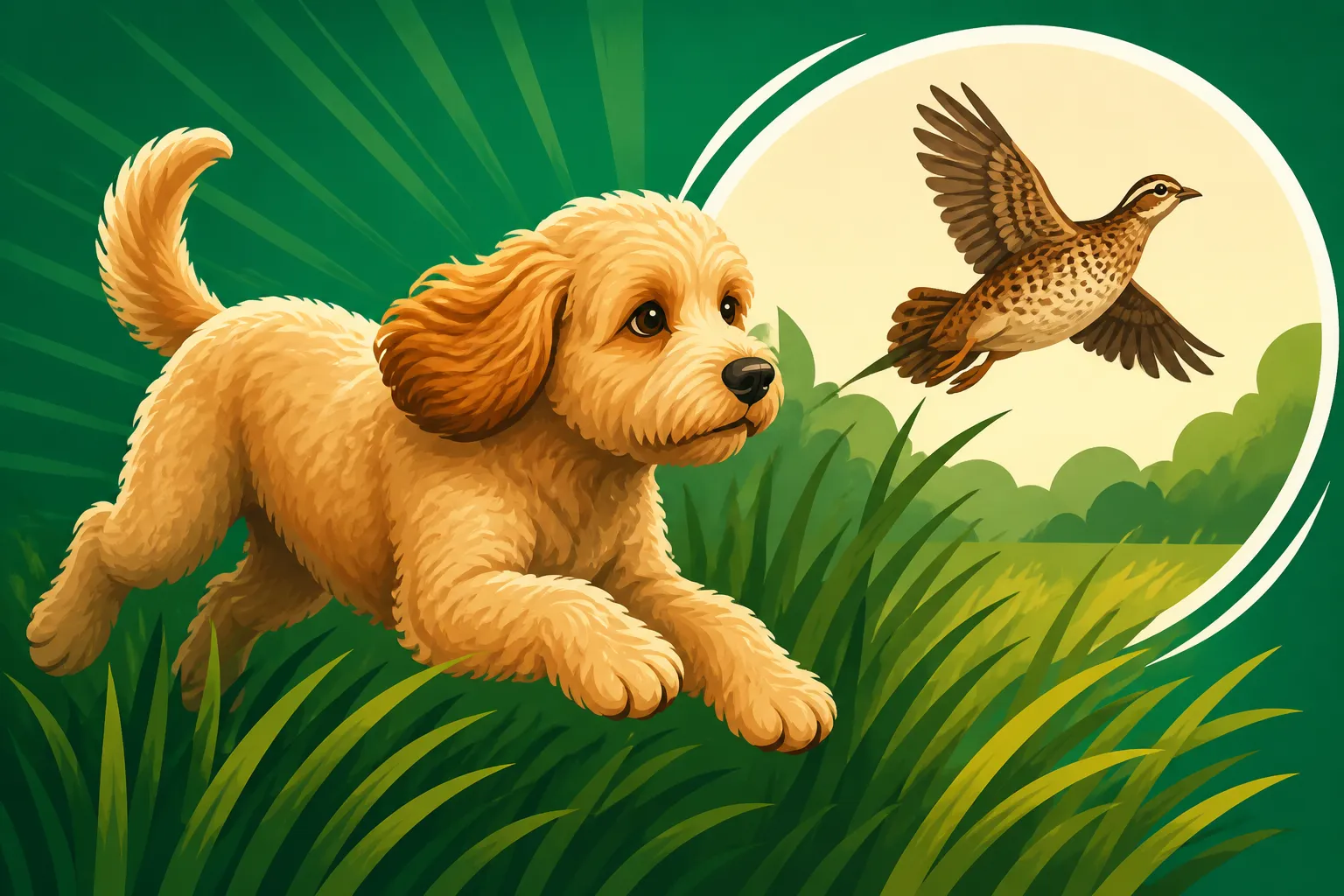
Imagine a time before modern firearms, when hunters needed dogs to help them find and "flush" game birds from dense cover. This is where the Cocker Spaniel shone. Their job wasn't to point at birds like a Setter, nor was it to retrieve massive ducks from icy water like a Labrador. Instead, the Cocker's role was to work within gun range, systematically searching bushes, tall grass, and thickets. When they found a bird, they'd startle it into flight – "flush" it – so the hunter could then shoot it. After the shot, the Spaniel would often retrieve the fallen bird.
This required a very specific set of traits: an incredible nose for scent, an innate desire to search, boundless energy, a keen interest in birds and small critters, and often, a merry, wagging tail that announced their discoveries. These dogs were bred for endurance, independence in the field, and a strong prey drive, all while staying connected enough to their handler to remain within an effective hunting range. They had to be persistent, bold, and unfazed by dense cover.
How This Drive Manifests in a Modern Cockapoo
Now, fast forward to your living room or local park. Your Cockapoo might not be hunting pheasants, but those same instincts are bubbling just beneath the surface of their fluffy exterior. What does this look like in day-to-day life? It's the sudden lunge towards a rustling bush, the intense focus on a patch of grass where a squirrel might have been, or the way their nose seems perpetually glued to the ground during walks. They might follow an invisible scent trail with an unwavering determination that makes you wonder if they've suddenly gone deaf.
Owners often describe these behaviors as their Cockapoo being "stubborn," "distracted," or even "naughty." But from your dog's perspective, they're simply doing what generations of their ancestors were bred to do: search, find, and investigate. They're engaging with the world through their most powerful sense – smell – and acting on an inherent drive to explore. Understanding this isn't about excusing challenging behaviors, but about reframing them as a natural part of who your Cockapoo is, allowing you to approach training and management with empathy and effectiveness. It's not a flaw; it's a feature of their rich genetic tapestry.
Recognizing the Signs: Is Your Cockapoo Driven to Flush?
Sometimes, as Cockapoo owners, we might not immediately connect certain behaviors with the flushing drive. We just see a dog that's easily distracted, or perhaps a bit too interested in every rustle and sniff. But once you know what to look for, the signs of that inherent spaniel hunting instinct become incredibly clear.
The Nose Knows: Scent-Driven Behaviors
The most undeniable sign of a strong flushing drive is your Cockapoo's incredible nose and their dedication to using it. You'll observe them on walks, head down, taking in every single scent. It's not just a casual sniff; it's an intense, focused exploration. They might lock onto a scent and pull you vigorously in a specific direction, completely oblivious to your attempts to redirect them. That unseen trail left by a rabbit, a bird, or even another dog becomes a captivating mystery they must solve.
This isn't just about big game; even the scent of a discarded snack wrapper or an interesting patch of leaves can trigger this behavior. They might try to dig into the base of a tree where a squirrel once scampered or spend an inordinate amount of time investigating a fire hydrant. These are all manifestations of that powerful olfactory sense inherited from their Cocker Spaniel lineage. For them, a walk isn't just about exercise; it's a rich, sensory journey, and their nose is leading the way, often making your "brisk stroll" feel more like a series of unexpected stops and starts. This deep focus on scent is a fundamental aspect of their drive.
The "Zigzag" or "Quartering" Pattern
Another fascinating behavior you might notice, especially if you let your Cockapoo off-leash in a safe, open area, is a distinct "zigzag" or "quartering" pattern. This isn't random wandering; it's a systematic search technique. Picture a dog moving back and forth across a field, nose to the ground, covering the area thoroughly. Instead of running in a straight line, they'll crisscross, ensuring they don't miss any potential scent trails. This methodical sweeping of an area is exactly what a flushing spaniel would do to find hidden game.
You might see your Cockapoo doing this in your own backyard, meticulously investigating every corner, shrub, and fence line. They're not just playing; they're actively searching. It’s a purposeful movement, an ancient dance of detection. When they hit a strong scent, that zigzag might pause, and they’ll pinpoint the exact location with intense concentration. Whether a Cockapoo Zigzags on a Walk delves deeper into understanding this specific gait, but suffice to say, if your Cockapoo exhibits this pattern, it's a clear indicator of that strong ancestral hunting instinct.
The "Flush" Itself: Startling and Chasing
The culmination of the flushing drive is, well, the flush! This is when your Cockapoo actively "finds" something and then, true to their nature, startles it. This often manifests as a sudden burst of speed, sometimes accompanied by an excited bark or a focused, silent chase. It could be a bird taking flight from a bush, a squirrel scrambling up a tree, or even a leaf blown by the wind that catches their eye and triggers that ancient impulse to pursue.
You'll see them dart, pounce, and chase with incredible agility and enthusiasm. For many owners, this is where the flushing drive becomes most challenging, especially if their Cockapoo chases small animals, bicycles, or even joggers. Whether a Cockapoo Chases Squirrels is a common concern for many owners, and it's a direct result of this instinct. Their focus during this "flush" can be so intense that they seem to block out everything else, including your voice. It's an adrenaline-fueled moment for them, and it requires careful management and training to ensure their safety and the peace of mind of those around them.
Managing the Instinct: Training and Enrichment Strategies
Living with a Cockapoo's natural flushing drive doesn't mean you're doomed to chaotic walks and endless frustration. It means you have a unique opportunity to engage your dog's intelligence and instincts in positive, constructive ways. Training becomes less about "stopping" a behavior and more about "redirecting" and "channeling" it.
Building a Rock-Solid Recall
For any dog with a strong prey or flushing drive, a reliable recall isn't just a convenience; it's absolutely paramount for their safety. Imagine your Cockapoo, nose to the ground, suddenly catching a compelling scent and bolting towards a busy road. This is every owner's nightmare. Building a recall needs to be a primary focus, and it requires consistency, high-value rewards, and practice in various environments.
Start in a distraction-free environment, like your living room or a securely fenced yard. Use a happy, enthusiastic tone and a distinct recall word ("Come!" or "Here!"). When they respond, reward them immediately with something truly special – a piece of cooked chicken, cheese, or a favorite squeaky toy. Practice often, making it a fun game. As they get better, gradually introduce mild distractions, always setting them up for success. Using a long line, perhaps 30 feet or more, is invaluable for practicing recall in open, yet still safe, areas. This allows them to explore safely while you maintain control. Working a Cockapoo on a Long Line explains how this tool can be a game-changer. Remember, the goal is for "come" to be more exciting and rewarding than whatever they're sniffing or chasing. You might even consider integrating a whistle into your recall training. Whether a Whistle Works on a Cockapoo can offer insights into this effective alternative, as a whistle's consistent tone cuts through distractions more effectively than a human voice.
Channeling the Drive: Scent Work and Games
Instead of fighting the flushing drive, harness it! Scent work is an incredible outlet for your Cockapoo's natural talents. It taps directly into their powerful nose and their innate desire to search, providing mental stimulation that can be just as tiring as physical exercise. This is a fantastic way to satisfy their instincts in a controlled and rewarding environment.
Simple at-home scent games can be a great starting point. Hide high-value treats around your living room and encourage your Cockapoo to "find it!" You can start with easy hides and gradually increase the difficulty, moving to different rooms or even hiding treats under objects. Another popular option is using a snuffle mat, which is a fabric mat with many folds and pockets where you can hide kibble or treats, forcing your dog to sniff them out. For something more structured, consider investing in a basic scent work kit. These often include specific scents (like birch or anise) and containers, allowing you to train your dog to identify and indicate a target odor. You can find excellent options on Amazon or through specialized pet training supply stores. Scent Work That Satisfies a Cockapoo details many fun activities. For more advanced setups, Setting Up Scent Boxes for a Cockapoo at Home provides a step-by-step guide to creating your own search challenges.
Teaching "Leave It" and "Look at Me"
These two commands are indispensable for managing a Cockapoo with a flushing drive, providing you with crucial tools for redirection and impulse control. "Leave It" teaches your dog to disengage from something tempting, while "Look at Me" (or "Watch Me") helps them focus their attention back on you, even amidst distractions.
Start training "Leave It" indoors with a low-value item. Place a treat on the floor and cover it with your hand. When your dog tries to get it, say "Leave It." The moment they look away from your hand, even for a second, mark that behavior (with a "yes!" or a clicker) and immediately reward them with a different, higher-value treat from your other hand. Gradually increase the difficulty by uncovering the treat, then placing it on the floor without your hand, and eventually using more tempting items and adding distractions. For "Look at Me," hold a treat near your nose and say "Look at Me." When your dog makes eye contact, immediately reward. Practice this frequently, gradually increasing the duration of eye contact and introducing distractions. These commands become your lifeline during walks when your Cockapoo suddenly catches a fascinating scent or spots a bird. They empower you to interrupt the instinctive drive and regain their focus, preventing an uncontrolled chase.
Equipment and Safety Considerations for a Flushing Cockapoo
When you have a Cockapoo with a strong flushing drive, the right equipment isn't just about comfort; it's about safety. Knowing how to keep them secure and under control, especially when those instincts kick in, is crucial for both your peace of mind and their well-being.
The Role of Long Lines and GPS Trackers
Long lines are an absolute game-changer for Cockapoos who need to run and explore but can't yet be trusted off-leash. These are essentially very long leashes (ranging from 15 to 50 feet or even more) that allow your dog the freedom to roam and sniff safely while you maintain control. They can practice recall, explore dense thickets, and satisfy their urge to quarter a field without the risk of disappearing over the horizon or into traffic. Choose a line that's comfortable to hold and appropriate for your dog's size – a thin, lightweight line for a smaller Cockapoo, and something more durable for a larger or stronger one. Always attach it to a harness, not a collar, to prevent neck injury if they hit the end of the line quickly.
For an added layer of security, especially if your Cockapoo has a tendency to bolt or you spend time in areas where they might get disoriented, a GPS tracker is an excellent investment. These small devices attach to their collar and allow you to track their location in real-time via an app on your phone. While they don't replace training or responsible management, they can be an invaluable tool for peace of mind if your dog ever does get loose. Whether a Cockapoo Needs a GPS Collar explores the benefits and considerations of these devices. Think of it as insurance against that powerful, instinct-driven dash.
Leash Etiquette and Harnesses
Walking a Cockapoo with a strong flushing drive can feel like being dragged on a scavenger hunt. Their nose leads the way, and they often pull with surprising strength to investigate every scent. This is where good leash etiquette and the right equipment make a huge difference. Traditional flat collars can put pressure on your dog's trachea if they pull excessively, which is uncomfortable and can cause injury.
Instead, consider a well-fitting front-clip harness. These harnesses clip at the front of your dog's chest, which gently redirects their forward momentum when they pull, making it much harder for them to drag you. Another option, for dogs who need more guidance, is a head halter, which gives you excellent control over their head, and therefore, their direction. Consistent leash training, even with the right equipment, is still vital. Practice loose-leash walking in low-distraction environments first, rewarding generously for keeping a slack leash. When your Cockapoo starts pulling towards a scent, stop moving entirely until the leash slackens, then continue. This teaches them that pulling gets them nowhere, while a loose leash gets them to their destination.
Secure Environments for Off-Leash Play
While the dream of an off-leash hike in the wilderness is appealing, for many Cockapoos with a strong flushing drive, it's simply not safe or realistic without years of dedicated training. Their instinct to chase can override even the best recall, putting them in danger from cars, other animals, or getting lost. This means being incredibly selective about where you allow off-leash freedom.
Fully fenced areas are your best friend. This could be your own backyard, a friend's securely fenced property, or a designated dog park. However, even in dog parks, be mindful of your Cockapoo's interactions with other dogs and their potential to become overly focused on scents or small critters. Always check fences for gaps or escape routes. For a truly safe and stimulating experience, consider renting private, enclosed dog fields that are becoming increasingly popular. These often offer ample space for running and sniffing without the distraction of other dogs or the danger of traffic. Whether a Cockapoo Is Safe Off Leash on Open Ground emphasizes the serious risks involved in letting a highly driven dog off-leash in unsecured areas. Prioritizing safety means recognizing and respecting their inherent drives.
Living with a Cockapoo's Flushing Instinct: Everyday Realities
Embracing the flushing drive in your Cockapoo means accepting that life with them will sometimes involve unique challenges. It's about learning to navigate those instincts in a way that keeps everyone happy, healthy, and safe.
Walks Aren't Always "Relaxing Strolls"
Let's be real: those idyllic walks you see in dog food commercials, with a perfectly trotting dog by their owner's side, aren't always the reality for a Cockapoo owner. Your dog's nose is a powerful tool, and a simple neighborhood walk is an olfactory wonderland. This means your walks might be less about covering distance and more about exploring scents. You might find yourself stopping every few feet as your Cockapoo meticulously sniffs a patch of grass or a lamppost.
It can be frustrating when you're trying to get somewhere or enjoy a brisk walk. But here's the shift in perspective: try to view it through their eyes (or rather, their nose). This is their way of experiencing the world, reading the "neighborhood newspaper" through scent. Instead of constantly pulling them away, try to designate specific "sniffing zones" where you allow them to indulge fully. Balance your need for movement with their need for exploration. A longer leash, like a 6-foot standard leash or even a retractable one (used carefully and only when appropriate), can give them a bit more slack to investigate without pulling you off your feet. Embracing these "sniffaris" can actually enrich their lives and, surprisingly, exhaust them mentally almost as much as physical exercise.
Protecting Small Household Pets
One of the more serious concerns for owners of Cockapoos with a strong flushing drive is how it might impact smaller, more vulnerable household pets. That instinct to chase and flush can extend to cats, rabbits, guinea pigs, or even small birds within the home. It’s not necessarily aggression; it's often a manifestation of that deep-seated prey drive.
If you have other small pets, introductions must be slow, controlled, and constantly supervised. Never leave a Cockapoo alone with a smaller pet, especially initially. Use physical barriers like crates, baby gates, or separate rooms to ensure safety. Train a very strong "Leave It" and "Stay" command, and reward your Cockapoo heavily for calm behavior around other animals. Teach your children (if applicable) never to leave small pets unsupervised with the Cockapoo. Whether a Cockapoo Is Safe With the House Cat outlines detailed strategies for managing this specific dynamic, emphasizing careful management and early training. The key is proactive management and understanding that while your Cockapoo might love its "sibling," the instinct to chase can be incredibly powerful.
Preventing Counter Surfing and Scavenging
That inherent drive to search and find isn't limited to the great outdoors. A Cockapoo with a strong flushing instinct will apply those same skills to your home environment. This often translates into counter surfing and scavenging from bins, tables, or even guests' plates. For them, your kitchen counter or your trash can is just another "cover" that might hide interesting "game" – in this case, delicious food scraps! Whether a Cockapoo Raids the Trash is a common headache for many Cockapoo owners.
Prevention is key. Keep your counters clear of tempting items. Secure your trash cans with lids or place them in cabinets your dog can't access. Train a strong "Leave It" command indoors, practicing with food on the floor or counter that you don't want them to have. When cooking, keep your Cockapoo out of the kitchen or on a leash near you so you can supervise. Reward them for staying on their mat or in their bed while you prepare meals. Remember, they're not being malicious; they're simply following their nose and acting on their deeply wired instinct to forage and find. By managing their environment and providing clear boundaries, you can minimize these behaviors and keep your home (and your Cockapoo's tummy) safe.
Advanced Training and Activities
Once you've got the basics down – a solid recall, reliable "leave it," and a good understanding of your Cockapoo's drives – you can start exploring advanced training and canine sports. These activities are fantastic for providing mental and physical stimulation, deeply satisfying your Cockapoo's natural instincts, and strengthening your bond.
Exploring Canine Sports: Scent Work, Agility, and More
Canine sports offer a structured and incredibly rewarding way to channel your Cockapoo's energy and intelligence. Given their strong flushing drive and excellent noses, scent work is often a natural fit. Disciplines like K9 Nose Work or Barn Hunt allow your dog to use their powerful sense of smell to locate specific target odors or "rats" (safely enclosed) in various environments. These activities are hugely engaging for them and can be incredibly fulfilling for you as an owner, watching your dog "work." Scent Work That Satisfies a Cockapoo is definitely worth revisiting for ideas.
Agility is another popular sport that appeals to the Cockapoo's intelligence, athleticism, and eagerness to please. It involves navigating an obstacle course with jumps, tunnels, weaves, and contact obstacles, all guided by your verbal cues and body language. While their spaniel heritage might give them a bit more "zoom" and independent thought than some breeds, their Poodle intelligence makes them quick learners. Whether Scent Work Suits a Cockapoo Better Than Agility explores which might be a better fit for your individual dog, but many Cockapoos excel at both! Other options might include Rally Obedience, which tests their ability to perform a series of obedience exercises, or even canine freestyle (dog dancing), which taps into their joyful spirit. For those interested in more specialized scent work, Whether a Cockapoo Can Do Detection Work delves into possibilities that go beyond basic games. Many training organizations, like BAXTER & Bella online training programs, offer resources and courses that can guide you through the initial steps of various canine sports.
Introducing Your Cockapoo to Feathers or Game (Ethically)
For some Cockapoo owners, there's a desire to explore the retrieving aspect of their dog's spaniel heritage, perhaps by introducing them to bird dummies or feathers. This can be a wonderful way to engage their natural instincts, but it must be done ethically, safely, and in a controlled environment. The goal is never to encourage hunting live animals, but to channel their retrieve drive using appropriate tools.
You can start by simply playing fetch with a small, soft, feather-covered dummy. Make it exciting, praising them enthusiastically when they bring it back. Gradually introduce the dummy to different environments, like tall grass, encouraging them to use their nose to find it. Some trainers use bird wings (often purchased from hunting supply stores, not from live birds) to attach to dummies for an authentic scent experience. Always keep these sessions positive and focused on retrieve, not chase. Never allow your Cockapoo to chase live birds or other wildlife. This is about nurturing a natural inclination in a way that is safe and respectful of wildlife. Introducing a Cockapoo to Feathers offers more guidance on how to begin this kind of specialized play.
The Never-Ending Learning Journey
One of the most important things to remember when living with a Cockapoo's flushing drive is that training is an ongoing journey, not a destination. Your Cockapoo isn't a robot, and their instincts won't simply disappear after a few training classes. Life will present new challenges, new distractions, and new opportunities for those instincts to kick in.
This means continuous reinforcement of commands, exploring new enrichment activities, and always being prepared to manage their environment. It’s about being a lifelong learner yourself, observing your dog, and adapting your strategies as they grow and change. This ongoing engagement actually deepens your relationship, as you learn to communicate effectively and understand each other's needs. The bond you build through this shared work and understanding is incredibly rewarding, transforming potential frustrations into opportunities for connection and fun. You're not just an owner; you're a partner in helping your Cockapoo thrive as their authentic, instinct-driven self.
Common Misconceptions and Reassurances
It's easy to fall into traps of frustration or misunderstanding when dealing with a Cockapoo's flushing drive. Let's debunk some common myths and offer some reassurances that can help you maintain a positive outlook.
It's Not "Disobedience," It's Instinct
This is perhaps the biggest misconception owners grapple with. When your Cockapoo puts their nose down, ignores your calls, and darts after a rabbit, it's easy to feel like they're being deliberately disobedient, even defiant. You might get frustrated, raise your voice, or even feel a pang of betrayal. But it's crucial to understand that in that moment, your Cockapoo isn't actively choosing to disrespect you. They are responding to a primal, deeply wired instinct that is incredibly difficult to override.
Imagine trying to ignore the most delicious smell in the world when you're incredibly hungry, especially if you've been bred for generations to follow that smell. That's what it's like for your Cockapoo. Their brain is screaming "chase!" and their body is simply following suit. Yelling, scolding, or punishing them in this state is not only ineffective but can also damage your bond. It teaches them to fear you, especially when they're engaging in a natural behavior, which can lead to them hiding their actions from you or becoming less likely to return. Instead, focus on redirection and positive reinforcement, making you the most rewarding thing in their environment. Whether a Sharp Word Shuts a Cockapoo Down underscores the sensitivity of these dogs and why harsh corrections are counterproductive.
Can a Cockapoo "Switch Off" This Drive?
No, not completely. The flushing drive is an inherent part of their genetic makeup, a trait passed down from their Spaniel ancestors. It's like asking a Border Collie to stop herding, or a Greyhound to stop running. You can't simply "switch it off" or train it out of them entirely. It's a fundamental aspect of who they are.
What you can do, however, is manage it, understand it, and channel it into appropriate outlets. By providing opportunities for scent work, engaging play, and consistent training, you can satisfy that underlying drive in a controlled way. When their instincts are appropriately met, they are less likely to manifest in undesirable ways, like bolting after squirrels in unsafe environments. A fulfilled Cockapoo is a happy and well-behaved Cockapoo. The goal isn't eradication, but integration – teaching them when and where it's appropriate to engage those instincts. Whether a Cockapoo Needs a Sport to Be Manageable provides a great perspective on how channeling their drive through activities can make them more settled overall.
Embracing the "Spaniel" Side of Your Cockapoo
Ultimately, learning about and managing your Cockapoo's flushing drive is about embracing their full personality, including the parts that might initially seem challenging. This isn't just a fluffy, cute companion; it's a dog with a rich history and a fascinating set of instincts. When you see your Cockapoo's nose working furiously, or watch them quartering a field with purpose, try to appreciate the incredible heritage you're witnessing.
This drive is a testament to their intelligence, their energy, and their zest for life. It means they are often highly motivated, eager to learn, and incredibly engaged when given a "job" to do. Instead of viewing these behaviors as problems, see them as opportunities. Opportunities to explore new training methods, to discover canine sports, and to deepen your understanding and bond with your unique companion. By respecting and working with their natural instincts, rather than against them, you can help your Cockapoo lead a richer, more fulfilled life, and you'll find immense joy in watching them thrive.
Flushing Drive in Cockapoos: A Quick Comparison
To further clarify what a strong flushing drive might mean for your daily life with a Cockapoo, here's a simplified comparison:
| Characteristic | Cockapoo with Strong Flushing Drive | Cockapoo with Lower Flushing Drive (or well-managed drive) |
|---|---|---|
| Walks | Head often down, intense sniffing, prone to pulling towards scents, sudden darting/lunging at critters. | More responsive on leash, curious sniffing but less obsessive, less likely to bolt. |
| Recall | Requires exceptional, consistent training; prone to "selective deafness" when a scent or chase is on. | Generally more reliable recall; may still be distracted by strong scents but easier to redirect. |
| Backyard Behavior | Systematically quarters the yard, digs at bases of trees, highly alert to birds/squirrels, frequent barking at movement. | Explores but less intensely; might chase a squirrel but typically returns quickly when called. |
| Indoor Focus | May seek out hidden food, counter surf, investigate trash bins with determination. | Less inclined to "hunt" for food indoors; respects boundaries more easily. |
| Energy Levels | Requires significant mental and physical stimulation to prevent boredom and destructive behaviors. | Still energetic, but less intense drive; may be satisfied with regular walks and play. |
| Training Approach | Needs positive reinforcement, high-value rewards, structured games, and consistent, patient guidance. | Responds well to standard positive reinforcement; can tolerate slightly less intensive training. |
| Ideal Activities | Excels at scent work, tracking, some agility, and retrieving games. | Enjoys agility, obedience, and various types of play; may still enjoy casual scent games. |
This table isn't about classifying your dog as "good" or "bad" but helping you identify how prominent this instinct is and adjust your approach accordingly. Every Cockapoo is an individual, and their unique blend of Cocker Spaniel and Poodle traits will influence their specific manifestation of the flushing drive.
Disclaimer
This article is for general informational purposes only and does not constitute professional advice. Laws, prices and regulations vary by location and change over time. Consult a qualified professional for guidance on your specific situation.