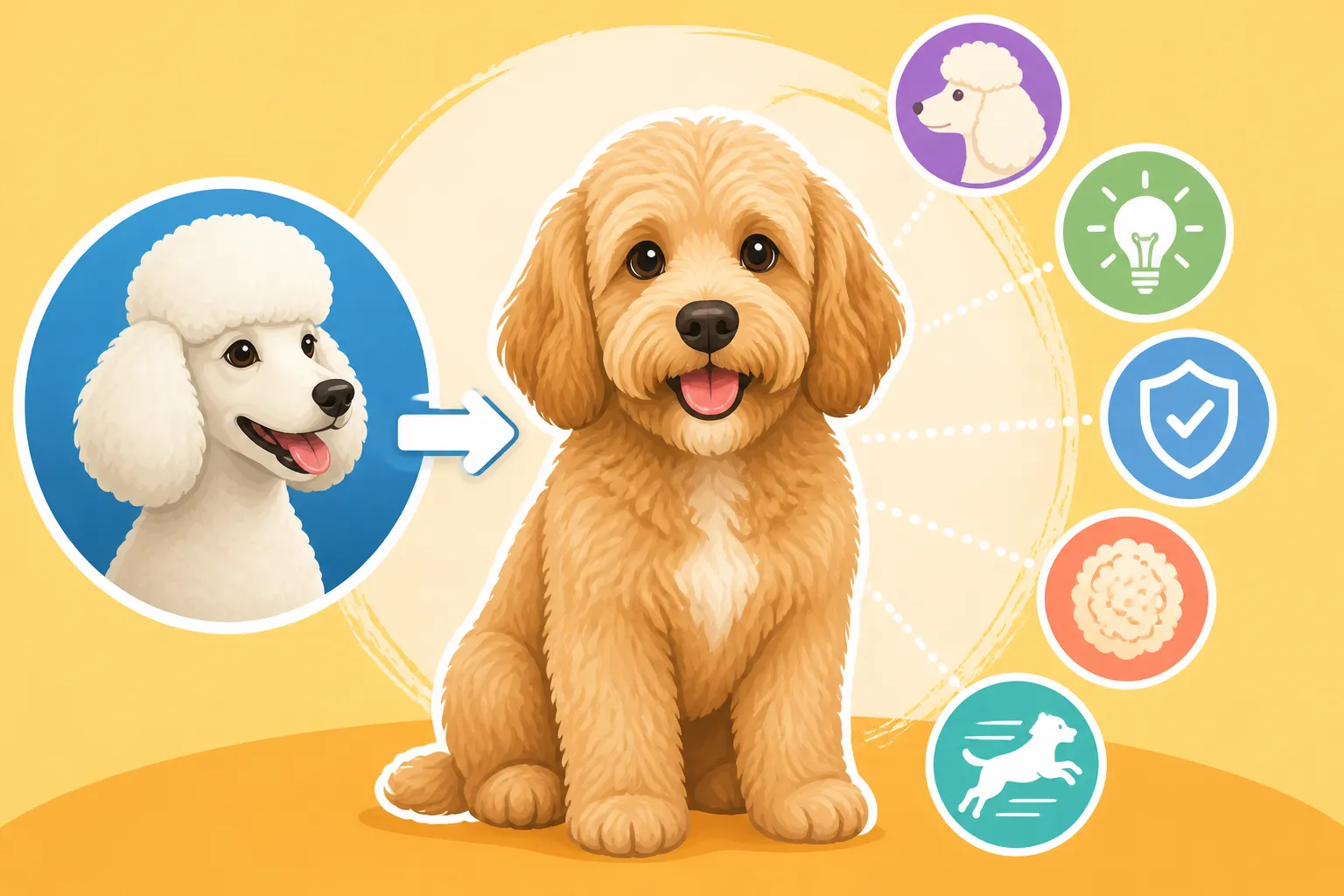
Which Cockapoo Traits Come From the Poodle
Bringing a Cockapoo into your life is an adventure, often filled with questions about what makes them tick. Many prospective and current owners wonder which parent breed, the Cocker Spaniel or the Poodle, contributes certain traits. Understanding the Poodle's specific genetic and behavioral gifts to your Cockapoo can shed a lot of light on their unique personality, their grooming needs, and even some important health considerations. This guide will explore the distinct characteristics that flow from the Poodle side, helping you appreciate the intricate blend that makes your Cockapoo so special.
The Poodle's Enduring Influence on Cockapoo Temperament
When you look at a Cockapoo's vibrant personality, it's easy to see the joyful spirit of the Cocker Spaniel, but don't underestimate the profound impact of their Poodle lineage. Poodles are much more than just fancy haircuts; they are highly intelligent, deeply affectionate, and surprisingly athletic dogs, and these traits often shine brightly in their Cockapoo offspring.
Intelligence and Trainability
One of the most defining characteristics inherited from the Poodle is intelligence. Poodles consistently rank among the smartest dog breeds, renowned for their problem-solving abilities and eagerness to please. This high intelligence translates directly into the Cockapoo, making them incredibly trainable and quick to pick up new commands and routines. Owners often find their Cockapoos excel in obedience classes, mastering basic cues like sit, stay, and come with remarkable speed, sometimes even surprising their trainers.
This isn't just about simple commands, though. The Poodle's brainpower means a Cockapoo can often learn more complex sequences and tasks. They thrive on mental stimulation, enjoying puzzle toys that challenge their minds or even advanced dog sports. Many Cockapoos demonstrate a natural aptitude for learning tricks, often delighting their families with their cleverness. This eagerness to engage mentally can be a huge asset in training, but it also means a bored Cockapoo can get into mischief if not given enough to do. They love having a "job," even if that job is simply fetching the remote control or showing off their latest trick. If you're wondering if your clever companion can go further, you might enjoy exploring Whether a Cockapoo Passes an Obedience Title.
In real-life scenarios, this Poodle-derived intelligence is a double-edged sword. While it makes training a joy, it also means your Cockapoo might figure out how to open cabinets, escape enclosures, or manipulate you with their puppy-dog eyes for an extra treat. They're thinkers, and they're often several steps ahead if you're not consistent. This makes early and ongoing training crucial, not just for good manners but for their mental well-being. A well-trained and mentally stimulated Cockapoo is a happy Cockapoo, eager to learn and participate in family activities.
Affectionate and People-Oriented Nature
Beyond their brains, Poodles are known for being incredibly affectionate and devoted companions. They bond very strongly with their families and thrive on interaction. This deeply loving nature is a hallmark trait that Poodles pass on to their Cockapoo offspring. Many Cockapoo owners describe their dogs as "velcro dogs" – always by their side, following them from room to room, and seeking out cuddles on the sofa. They genuinely adore their people and consider themselves integral members of the family unit.
This strong desire for companionship means that Cockapoos often do not do well when left alone for extended periods. While they might tolerate a few hours, consistent loneliness can lead to separation anxiety, barking, or destructive behaviors. If you find your Cockapoo struggling when you leave, you might be dealing with A Cockapoo That Cannot Be Left, and understanding its Poodle roots can help you address it. They crave attention and validation, responding best to positive reinforcement and a strong sense of belonging. Their loyalty is unwavering, and they make fantastic companions for individuals and families who can provide them with ample interaction and affection.
Imagine settling down for an evening and finding your Cockapoo gently nudging your hand for a petting session, or resting their head on your lap, sighing contentedly. This is the Poodle's gift of profound attachment at play. They are not typically aloof dogs; rather, they are deeply engaged with their human counterparts, often seeming to read your moods and offer comfort when you need it most. This empathetic quality, combined with their playful demeanor, makes them wonderfully intuitive and loving pets.
Energetic Playfulness and Drive
Poodles, regardless of their size, are active and athletic dogs. The smaller Toy and Miniature Poodles are surprisingly robust, and Standard Poodles are renowned for their stamina and agility. This inherent energy and zest for life are often inherited by Cockapoos, giving them a delightful playfulness and a generally robust constitution. While the Cocker Spaniel side contributes a strong 'flushing drive' and an interest in scent, the Poodle contributes a general athleticism and enthusiasm for physical activity.
This means your Cockapoo likely isn't content to be a couch potato all day. They need regular exercise to keep them happy and healthy, which could include brisk walks, enthusiastic games of fetch, or even more structured activities like agility courses. They often enjoy retrieving toys, engaging in playful wrestling with family members, and exploring new environments with boundless curiosity. This Poodle-derived energy is more about general athleticism and the joy of movement rather than a specific hunting instinct, though it blends seamlessly with the Cocker's working background. If you're curious about their athletic potential, you might wonder Whether a Cockapoo Has the Frame for Agility.
A typical day for a Poodle-influenced Cockapoo might involve an energetic morning walk, several play sessions throughout the day, and mental games to keep their minds sharp. They love to run and jump and can often keep up with active families. This energy isn't hyperactivity, but rather a healthy enthusiasm for life and interaction. Providing them with outlets for this energy is key to preventing boredom and channeling their lively spirit into positive behaviors. Many Cockapoo owners find that their dogs thrive with a balanced routine of physical exercise and mental engagement.
Unpacking the Poodle's Contribution to the Cockapoo Coat
The coat is often the first thing people think about when considering a Cockapoo, and rightly so, as the Poodle's influence here is monumental. The Poodle's distinctive coat is behind the Cockapoo's signature look and their often-touted low-shedding qualities.
The Low-Shedding Trait and Furnishings
One of the most sought-after traits in Cockapoos, often mistakenly generalized as "hypoallergenic," is their reduced shedding, which comes directly from the Poodle. Poodles possess a single coat that grows continuously, much like human hair, and sheds minimally. This is largely due to the presence of the furnishings gene (RSPO2), which gives dogs longer hair on their face, eyebrows, and legs. This gene is dominant, meaning a Cockapoo needs only one copy from either parent to have furnishings.
When a Cockapoo inherits this gene from its Poodle parent, it typically results in the characteristic shaggy or curly "doodle" coat that sheds significantly less than a Cocker Spaniel's coat. This is a huge draw for people with mild allergies or those who simply prefer less dog hair around the house. However, it's crucial to remember that no dog is truly 100% non-allergenic, as allergies are often to dander and saliva, not just hair. Still, the Poodle's coat significantly reduces the amount of loose hair and dander in the environment. For more information on this, you can check out Whether Any Cockapoo Is Truly Non Shedding.
Responsible breeders often use genetic testing to confirm the presence of the furnishings gene in their breeding Poodles, as this helps them predict the likelihood of low-shedding puppies in a litter. Knowing What RSPO2 Testing Tells a Cockapoo Breeder can offer peace of mind if you're looking for this specific trait. This is why you'll often see F1b or multigen Cockapoos advertised as having an even lower shedding potential, as they have a higher percentage of Poodle genetics, maximizing the chances of inheriting two copies of the furnishings gene. While shedding is reduced, the trade-off is often higher grooming demands.
Curl and Texture Variations
The Poodle's tight, dense curl is another defining feature that greatly impacts the Cockapoo's coat. While Cockapoos can have a range of coat types – from straighter, wavier coats to very tight curls – the Poodle's KRT71 gene, responsible for curl, plays a central role. An F1 Cockapoo (first-generation cross) might have a wavy coat that's a blend of both parents, but as Poodle genetics become more prominent in later generations (F1b, F2, Multigen), the curl tends to tighten.
A Cockapoo with a significant Poodle influence will often sport a wavy or curly coat that can range from loose, flowing waves to tight, springy curls. This texture is beautiful but demands diligent care. The Curl Gene and Where a Cockapoo's Coat Lands is a fascinating read on this topic. The curl traps shed hairs, preventing them from falling out, which is great for allergies but can quickly lead to mats if not brushed regularly. The texture itself can vary too; some Poodle-derived coats are soft and cottony, while others are more coarse.
Consider a practical example: a Cockapoo with a very curly Poodle-like coat might look adorable, but those curls can easily tangle and felt together, especially behind the ears, in the armpits, and on the legs, simply from daily activity. Even running through tall grass or getting wet can cause mats to form rapidly. Owners need to be prepared for the commitment that comes with these beautiful, Poodle-inspired curls, as neglect can quickly lead to painful matting and necessitate a complete shave-down.
Coat Maintenance Demands
With the Poodle's low-shedding and often curly coat comes a significant increase in grooming requirements compared to many other breeds. This is perhaps the biggest surprise for new Cockapoo owners who weren't fully prepared for the daily commitment. The continuous growth and dense nature of the Poodle-derived coat mean that regular brushing, combing, and professional grooming are non-negotiable.
For a Cockapoo with a wavy or curly coat, daily brushing is often recommended to prevent mats from forming. This involves using a slicker brush and a metal comb to work through the coat, ensuring you reach down to the skin. Missing a spot, even for a day or two, can allow small tangles to tighten into larger mats that are difficult and painful to remove. Beyond daily brushing, professional grooming every 6-8 weeks is essential to keep the coat in good condition, trimmed to a manageable length, and free of mats. Many owners opt for a "puppy cut" or "teddy bear cut" to keep the coat shorter and easier to maintain. You can find many grooming tools, like various brushes and combs, on sites like Chewy that cater to these specific coat types. Understanding The Three Cockapoo Coat Types and Their Upkeep is really helpful for setting your expectations.
Imagine trying to comb through a Cockapoo's curly fur after a romp in the woods, only to discover a dozen tiny burrs embedded deep in their coat, or finding a tight mat behind their ear that formed overnight. This is the reality of owning a Poodle-coated Cockapoo. It’s a labor of love, but it’s labor nonetheless. Without this dedicated maintenance, the coat can become matted and painful for the dog, potentially leading to skin infections and discomfort. Owners must factor in not only the time but also the financial cost of regular professional grooming when bringing a Poodle-influenced Cockapoo into their home.
Poodle Influence on Physical Attributes Beyond the Coat
While the coat and temperament are often the most discussed Poodle contributions, their physical structure and other distinct features also play a significant role in shaping the overall look and health of a Cockapoo.
Size and Structure
The size of a Cockapoo is largely determined by the size of the Poodle parent used in the cross. Poodles come in four distinct sizes: Toy, Miniature, and Standard, and some breeders even refer to Teacup Poodles, though this is a size within the Toy category. This versatility allows Cockapoo breeders to create a range of sizes to suit different living situations and preferences. The graceful, well-proportioned body of the Poodle, regardless of its size, contributes to a balanced and athletic build in the Cockapoo.
For example, a Toy Poodle parent will typically result in a Toy Cockapoo, while a Miniature Poodle will produce Miniature Cockapoos. A Standard Poodle, though less common in Cockapoo breeding, would yield a Maxi Cockapoo, a larger variant. This Poodle-derived sizing is a key reason Cockapoos offer such variety in their stature. It's not just about height and weight; it's also about the Poodle's elegant bone structure and confident carriage that can be seen in their offspring. You can learn more about this by reading Which Poodle Size Sires Most Cockapoos.
When observing a Cockapoo, you might notice the Poodle's characteristic deep chest, well-sprung ribs, and strong, straight legs. These features contribute to a dog that is agile and capable of sustained activity. While the Cocker Spaniel lends a slightly more compact, sturdy frame, the Poodle ensures that even the smallest Cockapoo is built for athleticism, not just fragility. This balance creates a dog that is both sturdy enough for family life and elegant enough to turn heads.
Ear and Eye Features
The Poodle also influences the shape and set of a Cockapoo's ears and eyes. Poodles typically have medium-sized ears that hang close to the head, often set a bit higher than a Cocker Spaniel's famously long, heavy ears. In a Cockapoo, the ears can be a blend, often longer and floppier than a purebred Poodle's but not quite as heavy or low-set as a Cocker's. This hybrid ear structure still requires careful attention, as the dense Poodle-like hair can grow inside the ear canal, trapping moisture and debris, making them prone to infections. Regular cleaning and plucking or trimming of ear hair are essential.
Regarding the eyes, Poodles have dark, intelligent, oval-shaped eyes that give them an alert and expressive look. This eye shape often contributes to the Cockapoo's charming, bright-eyed appearance. However, Poodles can also carry genetic predispositions to certain eye conditions, such as Progressive Retinal Atrophy (prcd-PRA), which is why health screening of the Poodle parent is so vital. If a Poodle parent is a carrier or affected by prcd-PRA, a Cockapoo could also inherit this condition, which can lead to blindness. Understanding Progressive Retinal Atrophy in a Cockapoo is important for any Cockapoo owner.
Observing your Cockapoo, you'll likely see a charming blend of both parents in their facial features. The Poodle's influence contributes to those bright, intelligent eyes that seem to watch your every move, full of curiosity and affection. The ears, while still needing care, often strike a balance, being less prone to the extreme warmth and moisture traps that can plague a purebred Cocker Spaniel. However, the presence of hair in the ear canal means that even a Poodle-influenced Cockapoo's ears aren't entirely free from the need for diligent maintenance.
Overall Conformation and Gait
The Poodle's elegant and athletic conformation significantly impacts a Cockapoo's overall body shape and movement. Poodles are known for their proud, upright posture and a light, springy gait that speaks to their agility and athleticism. This contrasts with the more ground-covering, merry gait of the Cocker Spaniel. In a Cockapoo, you often see a delightful blend of both.
Many Cockapoos inherit a more refined, balanced body structure from their Poodle parent. They tend to have a slightly longer leg and neck, giving them a more elegant silhouette than a purebred Cocker. Their movement often reflects this, showcasing a confident and agile stride. This Poodle influence means Cockapoos are typically well-suited for activities requiring quick turns and bursts of speed, as opposed to solely scent-driven, steady tracking.
Imagine watching a Cockapoo run across a field; you might see the Poodle's influence in their light-footed, almost dancing movement, with a good reach and drive. They carry themselves with an alert grace that comes from their Poodle lineage, rather than the lower-slung, compact profile of a Cocker Spaniel. This contributes to their reputation as adaptable and versatile companions, equally at home on a brisk hike as they are curled up by your feet. This structural balance is part of what makes the Cockapoo such a visually appealing and functionally capable crossbreed.
Health Considerations Carried Over from the Poodle Line
While Cockapoos often benefit from hybrid vigor, which can sometimes reduce the incidence of certain breed-specific diseases, they are still susceptible to conditions found in both parent breeds. The Poodle side brings its own set of genetic health considerations that responsible breeders screen for.
Genetic Health Screenings and Inherited Conditions
Poodles are prone to several genetic health conditions, and conscientious breeders screen their Poodle breeding stock to minimize the risk of passing these on to Cockapoo puppies. One of the most critical is Progressive Retinal Atrophy (prcd-PRA), an inherited eye disease that causes the photoreceptor cells in the retina to degenerate, leading to progressive vision loss and eventual blindness. A Cockapoo puppy can only be affected if both parents are carriers or one is affected and one is a carrier.
Another important condition is Von Willebrand's Disease (vWD), a common inherited bleeding disorder that can range from mild to severe. Poodles can also be susceptible to Patellar Luxation, where the kneecap slips out of place, causing pain and lameness. Hip Dysplasia is also a concern, particularly in larger Poodles. Reputable Cockapoo breeders will have their Poodle parents screened for these conditions, using DNA tests and veterinary evaluations. They should be transparent about these results and be able to provide documentation. Always ask to see The Five Certificates a Cockapoo Breeder Should Show to ensure they are prioritizing health.
For potential owners, understanding these Poodle-linked health risks means knowing what questions to ask a breeder and what signs to watch for in your own Cockapoo. If you're getting a puppy, asking for the health clearances of the Poodle parent for conditions like prcd-PRA, vWD, and patellar luxation is crucial. For an adult Cockapoo, being aware of the symptoms can lead to early diagnosis and better management, ensuring a higher quality of life.
Autoimmune and Endocrine Disorders
Poodles, particularly Miniature and Standard Poodles, have a known predisposition to certain autoimmune and endocrine disorders. These conditions, where the body's immune system mistakenly attacks its own tissues or hormone production is disrupted, can be passed down to Cockapoos. Two notable examples are Addison's Disease and Hypothyroidism.
Addison's Disease (hypoadrenocorticism) occurs when the adrenal glands don't produce enough hormones. Symptoms can be vague, like lethargy, vomiting, diarrhea, and weakness, often waxing and waning, making it difficult to diagnose. However, it can lead to a life-threatening "Addisonian crisis." The Poodle's genetic link means that Cockapoos can also be affected. If you notice these signs, early veterinary intervention is vital. You can find more details on this topic by exploring A Cockapoo's Addison's and the Poodle Line. Similarly, Hypothyroidism, a common condition where the thyroid gland doesn't produce enough thyroid hormone, can manifest in middle-aged Cockapoos, leading to weight gain, lethargy, and coat issues. For those with a slowing Cockapoo, understanding Hypothyroidism in a Middle Aged Cockapoo can be very insightful.
Sebaceous Adenitis, an autoimmune skin condition that targets the sebaceous glands, is another Poodle-linked concern. It results in dry, scaly skin, hair loss, and sometimes secondary infections. While less common, it’s a condition that Cockapoo owners should be aware of, especially if their dog develops unexplained skin issues. Managing these conditions often involves lifelong medication and careful monitoring, underscoring the importance of responsible breeding practices that aim to reduce their prevalence.
Dental Health and Crowding
The Poodle's influence also extends to dental health, particularly in smaller Poodle varieties which can pass on a predisposition to dental crowding to their Cockapoo offspring. Smaller dogs, generally, tend to have more dental problems than larger breeds because they have the same number of teeth packed into a smaller jaw. This can lead to teeth growing too close together, misalignments, and increased susceptibility to plaque and tartar buildup.
When teeth are crowded, food particles and bacteria can easily get trapped, leading to periodontal disease, gum inflammation, and eventually tooth loss. This issue is often exacerbated in Toy and Miniature Poodles, and consequently, in Toy and Miniature Cockapoos. Owners might notice bad breath, difficulty eating, or discolored teeth as signs of dental problems. A thorough discussion on this can be found in Dental Crowding in a Small Cockapoo.
Preventative dental care is paramount for Cockapoos with Poodle-influenced dental conformation. This includes regular tooth brushing at home, dental chews recommended by your vet (you can find a wide selection on Chewy), and professional dental cleanings under anesthesia when recommended by your veterinarian. Ignoring dental health can lead to significant pain for your dog and expensive veterinary bills down the line. It's a subtle but important Poodle trait that requires proactive management from puppyhood.
Balancing the Poodle and Cocker Influence in Your Cockapoo
Ultimately, the Cockapoo is a delightful tapestry woven from the best (and sometimes the challenging) threads of both the Cocker Spaniel and the Poodle. Understanding this genetic dance is key to appreciating your dog and being a responsible owner.
Understanding the Hybrid Vigor
The concept of hybrid vigor, or heterosis, suggests that the offspring of two distinct purebred lines can sometimes be healthier and more robust than either parent breed due to increased genetic diversity. When a Poodle is crossed with a Cocker Spaniel, the Cockapoo gains a broader genetic pool, which can theoretically reduce the expression of recessive genes responsible for certain breed-specific diseases. For instance, if a specific genetic illness is common in Poodles but rare in Cocker Spaniels, a first-generation Cockapoo is less likely to inherit two copies of the problematic gene.
However, hybrid vigor is not a magic shield against all health problems. It primarily reduces the likelihood of recessive genetic diseases, not eliminates them entirely, nor does it prevent polygenic diseases (those caused by multiple genes) or environmental factors from impacting health. A Cockapoo is still susceptible to any health conditions common to both parent breeds or those for which both parents carry the genes. It's not accurate to say a Cockapoo is inherently "healthier" than a purebred, but rather that it benefits from a wider genetic foundation. You might find it interesting to read Whether a Cockapoo Is Healthier Than a Cocker to delve deeper into this.
What this means for Cockapoo owners is that while you might avoid some of the more niche, single-gene issues prevalent in one purebred parent, you still need to be diligent about health screenings and overall care. Hybrid vigor provides a potential advantage, but it never replaces the need for responsible breeding and proactive veterinary care. Your Cockapoo is a unique genetic blend, and understanding this blend helps you anticipate their needs.
The Importance of Responsible Breeding
Given the array of traits and potential health considerations from both the Poodle and Cocker Spaniel sides, the importance of responsible breeding cannot be overstated. A truly dedicated breeder understands the genetic contributions of both parent breeds and actively works to produce healthy, well-tempered puppies. This involves rigorous health testing, not just for the Poodle parent, but for the Cocker Spaniel parent as well.
A responsible breeder will openly share the health clearances for both parents, including certifications for eyes (like OFA CAER exams for Poodles and Cocker Spaniels), hips, elbows, patellas, and DNA tests for conditions like prcd-PRA, vWD, and Familial Nephropathy (which comes from the Cocker side, but is equally important). They will explain the results and how they inform their breeding decisions. You should always feel comfortable asking questions about the health history of the Poodle lines used. For example, if you're concerned about kidney health, you'd want to be Asking a Cockapoo Breeder for the FN Certificate for the Cocker parent.
Choosing a Cockapoo from a breeder who prioritizes health and ethical practices ensures you're getting a puppy that has the best possible start in life, benefiting from the strengths of both its Poodle and Cocker heritage. This commitment on the breeder's part directly impacts the long-term health, temperament, and overall well-being of your Cockapoo, making the initial investment in a well-bred puppy a sound decision for years to come.
Embracing the Unique Blend
Ultimately, a Cockapoo is more than just the sum of its Poodle and Cocker parts; it is a unique individual that embodies a delightful blend of characteristics. From the Poodle, they inherit intelligence, trainability, a loving devotion to their family, and that distinct low-shedding (but high-maintenance) coat. These traits, combined with the Cocker Spaniel's merry disposition, enthusiasm for life, and gentle nature, create a companion animal truly unlike any other.
Every Cockapoo is a testament to the fascinating complexity of canine genetics, with each puppy expressing a slightly different balance of their parental legacies. One Cockapoo might lean more heavily into the Poodle's athletic grace, while another might showcase the Cocker's more pronounced scent drive. This individuality is part of their charm and what makes them such beloved family members.
Embracing your Cockapoo means celebrating this unique blend. It means being prepared for their grooming needs, channeling their intelligence into engaging activities, and cherishing their boundless affection. By understanding the specific gifts the Poodle brings to the Cockapoo, you can better meet their needs, strengthen your bond, and enjoy many happy years with your wonderfully complex and loving companion.
Poodle Traits in Cockapoos: A Quick Look
Here's a simplified overview of common Poodle traits you might see in your Cockapoo, alongside where the Cocker Spaniel often differs:
| Trait Category | Poodle Contribution | Cocker Spaniel Contribution | Cockapoo Manifestation (Poodle Influence) |
|---|---|---|---|
| Temperament | High intelligence, eager to please, very affectionate, active | Merry, gentle, eager to please, strong scent drive, sometimes sensitive | Highly intelligent, trainable, deeply bonded to family, active & playful, reduced separation anxiety with management |
| Coat | Single coat, non-shedding, tightly curled (furnishings) | Double coat, shedding, silky, often wavy/flat | Reduced shedding (furnishings), wavy to curly coat, requires intensive grooming, prone to matting |
| Physical | Elegant, athletic build, deep chest, oval eyes, higher-set ears | Sturdy, compact build, rounder eyes, very long/low-set ears | Balanced, athletic frame, bright expressive eyes, ears often blend but still need care (hair inside) |
| Health | prcd-PRA, vWD, Patellar Luxation, Addison's, Hypothyroidism, dental crowding | Familial Nephropathy, hip/elbow dysplasia, glaucoma, ear infections, sensitivities | Susceptible to Poodle-linked conditions (e.g., PRA, Addison's), diligent screening is crucial |
| Exercise | Needs mental & physical stimulation, agile, loves retrieving | Needs regular walks, loves exploring with nose, merry gait | Requires regular, varied exercise (walks, play, mental games), enjoys varied activities |
Disclaimer
This article is for general informational purposes only and does not constitute professional advice. Laws, prices and regulations vary by location and change over time. Consult a qualified professional for guidance on your specific situation.