Progressive Retinal Atrophy in a Cockapoo
The thought of your cheerful, playful Cockapoo facing progressive vision loss is a truly heartbreaking one. It’s a reality many dog owners fear, especially when dealing with inherited conditions that can slowly steal away their beloved companion's sight. This comprehensive guide is here to shed light on Progressive Retinal Atrophy (PRA) in Cockapoos, particularly the prevalent prcd-PRA form, offering in-depth information on its genetics, how to spot the subtle signs, the importance of early diagnosis, and practical ways to ensure a full, happy life for an affected dog. We'll also dive into how responsible breeding practices are absolutely crucial in preventing this challenging condition, empowering you to make informed decisions for your furry family member.
Understanding Progressive Retinal Atrophy in Cockapoos
Progressive Retinal Atrophy, often simply called PRA, isn't just one single disease but rather a group of inherited eye disorders that ultimately lead to blindness. For our beloved Cockapoos, the most common form we talk about is called progressive rod-cone degeneration (prcd-PRA). It's a tricky condition because it develops gradually, often going unnoticed in its earliest stages, which is precisely why understanding it is so vital for Cockapoo owners.
What is prcd-PRA?
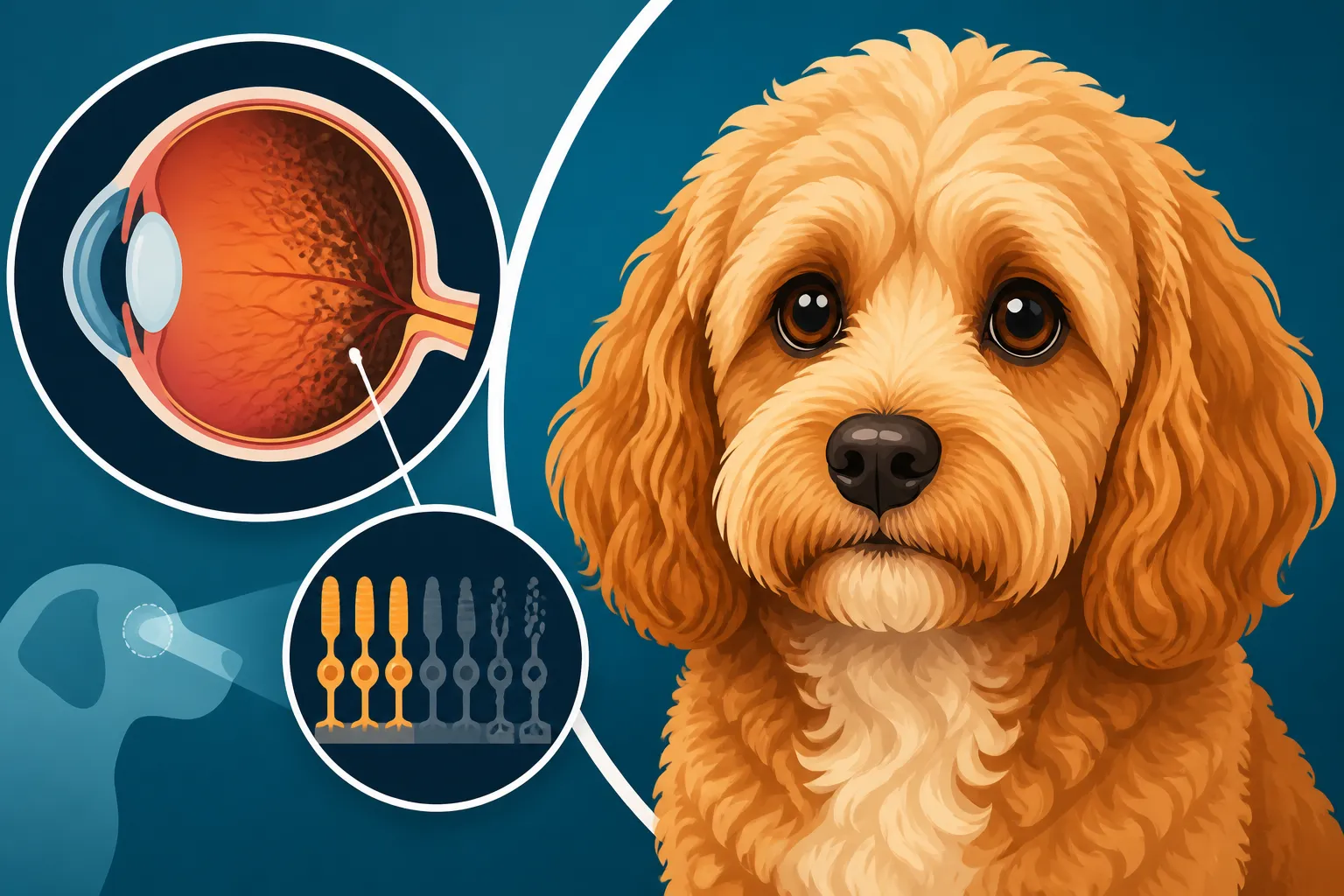
At its core, prcd-PRA is a degenerative condition affecting the photoreceptor cells in the retina, which is the light-sensitive layer at the back of your dog's eye. Think of the retina as the "film" in an old-fashioned camera, converting light into signals that the brain interprets as images. In dogs with prcd-PRA, these photoreceptor cells – specifically the rods (responsible for vision in dim light and detecting motion) and then the cones (responsible for daytime vision and color perception) – begin to deteriorate over time.
This deterioration doesn't happen overnight; it’s a slow, progressive process. Initially, the rod cells are most affected, leading to difficulties in low-light conditions. As the disease advances, the cone cells also begin to fail, eventually resulting in complete blindness. The term "progressive" truly captures the gradual, worsening nature of this condition, making it particularly challenging for owners to pinpoint exactly when their dog's vision started to decline. It's a silent progression that can leave you wondering if you missed something crucial.
The Genetic Link from Parent Breeds
When we talk about prcd-PRA in Cockapoos, it's essential to understand its genetic roots, which lie squarely with their parent breeds: the Cocker Spaniel and the Poodle. Both of these breeds are known to carry the gene responsible for prcd-PRA, which is inherited in an autosomal recessive pattern. This means a Cockapoo puppy must inherit two copies of the affected gene – one from each parent – to actually develop the disease.
If a Cockapoo inherits only one copy of the affected gene from one parent and one normal gene from the other, they are considered a "carrier." A carrier dog will not develop prcd-PRA themselves, meaning they will never get sick from the condition. However, they can pass that single affected gene copy on to their offspring. This is why understanding Whether prcd-PRA Comes From Both Cockapoo Parents is so important for breeders. If two carriers are bred together, there's a 25% chance of producing an affected puppy, a 50% chance of producing a carrier puppy, and a 25% chance of producing a clear puppy. This complex genetic lottery is precisely why responsible breeding relies so heavily on genetic testing.
For Cockapoo generations like F1 (first generation, Cocker x Poodle), F1b (F1 Cockapoo x Poodle), or F2 (F1 Cockapoo x F1 Cockapoo), the risk profile changes depending on the genetic status of the parents. An F1 Cockapoo, for example, could be a carrier if one parent was a carrier or affected. The complexity of these generations means that simply knowing the "generation" of your Cockapoo isn't enough; you need to know the genetic status of the individual dog's parents to truly assess the risk of prcd-PRA.
Recognizing the Early Signs of Vision Loss
One of the most frustrating aspects of prcd-PRA is its insidious onset. The early signs can be incredibly subtle, easily mistaken for a dog being a bit clumsy, tired, or just "getting older." However, knowing what to look for can make a world of difference in catching the condition early and making proactive changes to support your Cockapoo.
Subtle Changes in Night Vision
The very first noticeable symptom of prcd-PRA in many Cockapoos is often a decline in night vision, a condition known as nyctalopia. This happens because the rod photoreceptor cells, which are crucial for seeing in dim light, are the first to degenerate. You might start to notice your Cockapoo hesitating more when going outside at dusk or during nighttime potty breaks. They might seem less confident navigating familiar spaces in low light, bumping into furniture or doorframes that they would normally avoid effortlessly. This can be particularly pronounced when entering a dimly lit room from a brightly lit one.
You might find your once-daring pup suddenly reluctant to go down stairs in the evening or seeming disoriented if you turn off the lights. While it’s natural for dogs to slow down with age, a marked change in their ability to see in the dark, especially in an otherwise healthy and energetic Cockapoo, should raise a red flag. Owners often report their dogs becoming more clingy or cautious at night. This initial phase of vision loss can happen quite gradually, making it easy to overlook or attribute to other factors. Many Cockapoos begin to show these signs around 3-5 years of age, but it can vary. Understanding The Age prcd-PRA Takes a Cockapoo's Sight can help set realistic expectations and prompt earlier vigilance.
Daytime Adaptation and Progression
As prcd-PRA progresses, your Cockapoo will start to lose their daytime vision as well, affecting the cone cells. Dogs are incredibly adaptive creatures, and they can compensate for quite a long time by relying more on their other highly developed senses – their sense of smell and hearing. You might not notice significant issues during the day until a substantial amount of vision is already gone, especially if your home environment remains consistent. However, eventually, even in bright light, their vision will worsen.
You might observe your Cockapoo bumping into familiar objects during the day, struggling to find dropped treats, or becoming startled more easily if approached from a side they can't see. Their pupils might appear more dilated than usual, especially in normal lighting, as their eyes try to gather as much light as possible to compensate for the diminishing photoreceptors. Sometimes, you might notice a distinct "glow" or increased reflectivity from their eyes when light catches them, known as tapetal reflection, as the retina becomes thinner. This happens because the light is reflecting off the underlying tapetum lucidum more intensely due to less retinal tissue absorbing it. While Whether a Cockapoo Goes Blind Slowly is generally true for prcd-PRA, the pace of that progression can still feel sudden to owners who are suddenly confronted with their dog's profound vision loss.
Diagnosing PRA and Genetic Testing
If you suspect your Cockapoo is experiencing vision problems, getting an accurate diagnosis is the critical next step. Early diagnosis can help you plan and adapt your home environment, and it's absolutely essential for breeders to prevent passing the condition on.
Veterinary Eye Exams
The first step in diagnosing any suspected eye condition, including PRA, is a comprehensive examination by your general veterinarian, who may then refer you to a veterinary ophthalmologist. These specialists have advanced training and equipment to examine the intricate structures of the eye. They will typically perform an ophthalmoscopy, where they use a special instrument to look at the back of your dog's eye, specifically the retina and optic nerve. In cases of PRA, the ophthalmologist might observe subtle changes in the retina, such as thinning or changes in the blood vessels, even before obvious vision loss is apparent to you.
For a definitive diagnosis of PRA, especially in its early stages, an electroretinography (ERG) test might be recommended. This specialized test measures the electrical responses of the photoreceptor cells in the retina to light. It's a non-invasive procedure, usually done under light sedation, that can detect rod and cone dysfunction long before a dog shows overt signs of blindness. An ERG can confirm the presence of PRA and help differentiate it from other eye conditions that might mimic its symptoms. Early diagnosis through these methods allows you to begin adapting your home and routines sooner, making the transition to vision loss smoother for your Cockapoo. For general eye health and monitoring, many vets recommend regular check-ups. You might find this information useful for understanding Whether a Cockapoo Needs a Yearly CAER Exam to maintain comprehensive eye health monitoring.
The Importance of DNA Testing
While a veterinary ophthalmologist can diagnose PRA, the most definitive and proactive way to identify prcd-PRA in Cockapoos, particularly for breeding purposes, is through a specific DNA test. This test identifies whether a dog is "Clear," a "Carrier," or "Affected" by the prcd-PRA gene mutation. It's a simple, non-invasive cheek swab or blood test that can be performed at any age.
For breeders, this DNA test is an absolute non-negotiable. Ethical breeders will test all their breeding stock and readily provide you with certificates proving their dogs are clear of the prcd-PRA gene. Knowing the genetic status of both parents can predict the likelihood of their offspring being affected. For example, two "Clear" parents will only ever produce "Clear" puppies. If you’re a prospective puppy owner, asking a Cockapoo breeder for these health certificates, including those for eyes, is crucial. You might also want to ask for Asking a Cockapoo Breeder for the FN Certificate to ensure comprehensive health screening for other genetic conditions.
Several reputable laboratories offer this specific prcd-PRA DNA test, such as OptiGen, which pioneered the test, and Paw Print Genetics. When choosing an insurer for your Cockapoo, especially if you're concerned about inherited conditions, it’s worth looking into plans that cover these types of conditions. Companies like Healthy Paws often highlight their comprehensive coverage for hereditary and congenital conditions, which can be a lifeline if your dog is diagnosed with something like prcd-PRA down the line. It's important to understand the test results clearly:
| Result Type | Genetic Makeup | Implications for Dog | Implications for Breeding |
|---|---|---|---|
| Clear | two normal genes | Will not develop prcd-PRA | Can be bred with any dog without risk of affected puppies |
| Carrier | one normal, one affected gene | Will not develop prcd-PRA; may have normal vision throughout life | Should only be bred with a "Clear" dog to avoid producing affected puppies |
| Affected | two affected genes | Will develop prcd-PRA and eventually go blind | Should not be used for breeding |
Remember, a "Carrier" Cockapoo will not develop the disease themselves, so don't confuse their status with an "Affected" dog. Whether a prcd Carrier Cockapoo Ever Goes Blind is a common question, and the answer is no, carriers lead normal, sighted lives.
Living with a PRA-Affected Cockapoo
A diagnosis of PRA can be devastating, but it's important to remember that blindness is not a death sentence for a dog. Dogs adapt remarkably well to vision loss, especially if it's a gradual process, and with your help, they can continue to live full, happy, and confident lives. It requires patience, consistency, and a little creative thinking on your part.
Adapting Your Home Environment
The key to helping a blind or visually impaired Cockapoo is consistency and creating a safe, navigable environment. The very first step is to avoid moving furniture unnecessarily. Dogs with vision loss create a mental map of their surroundings, and frequent changes can be incredibly disorienting and stressful. If you absolutely must move something, do it gradually and guide your dog around the new obstacle repeatedly until they've updated their internal map.
Consider placing different textured mats or rugs near doorways, stairs, or food bowls to create tactile cues. Some owners even use diffused essential oils (safe for pets, of course, and diluted appropriately) near specific areas, like a lavender scent near their bed or a citrus scent near the doggy door, to help their Cockapoo locate important spots using their powerful sense of smell. Ensure pathways are clear of clutter, sharp objects, or anything they could trip over. For stairs, consider blocking access with baby gates, or if they must use them, supervise closely and perhaps add non-slip treads. This thoughtful approach can truly help Whether a Blind Cockapoo Manages at Home with grace and confidence, reducing anxiety for both of you.
Daily Routines and Enrichment
Maintaining a predictable daily routine is paramount for a Cockapoo with vision loss. Consistent feeding times, potty breaks, and walk schedules provide structure and reassurance. When going for walks, always keep your Cockapoo on a leash, even in seemingly safe, fenced areas, as their other senses might lead them into unfamiliar or dangerous situations. Using a longer leash, such as a 6-foot lead, can give them a little more room to explore safely while you maintain control.
To keep their minds engaged and prevent boredom, focus on activities that utilize their superb senses of smell and hearing. Scent games are fantastic! Hide treats around the house and encourage them to "find it," or use puzzle toys that dispense kibble. These activities build confidence and provide mental stimulation. Talking to your Cockapoo frequently, using a happy and reassuring tone, helps them locate you and understand what's happening. Many owners attach small bells to other pets in the household so their visually impaired Cockapoo can hear where their companions are. Remember, their world is now largely defined by scent and sound, and embracing this will unlock new ways to play and bond. When your Cockapoo reaches those later years, it's also a good idea to ensure they continue to get The Kidney and Eye Checks a Cockapoo Needs Yearly to monitor for any other age-related health issues that might arise.
Prevention Through Responsible Breeding
While living with a PRA-affected Cockapoo is certainly manageable, the ideal scenario is to prevent the condition altogether. This is where responsible breeding practices become not just important, but absolutely critical for the future health of the Cockapoo breed.
The Role of Ethical Breeders
Ethical Cockapoo breeders are the frontline defense against inherited diseases like prcd-PRA. They understand the genetic risks inherent in their breeding lines and take proactive steps to minimize them. This means that every single dog used for breeding purposes – both the Cocker Spaniel and the Poodle parents, as well as any Cockapoos used in multigenerational breeding programs – should be genetically tested for prcd-PRA and certified "Clear."
A truly responsible breeder will never breed a dog that is "Affected" by prcd-PRA. They will also be very cautious about breeding "Carrier" dogs, and if they do, they will only breed them to a "Clear" mate to ensure no affected puppies are produced. They should be transparent about their testing protocols and readily provide potential puppy buyers with verifiable health certificates for both parents. Don't be afraid to ask for these documents; a good breeder will be proud to show them. If a breeder hesitates, claims tests aren't necessary, or offers "untested" puppies at a lower price, walk away. That lower price upfront could lead to astronomical veterinary bills and heartache down the road. Understanding Whether Both Cockapoo Parents Must Be prcd-PRA Clear is key to ensuring a healthy litter, and any breeder should be able to confirm this.
Navigating Breeder Claims and Guarantees
When you're looking for a Cockapoo puppy, you'll encounter various claims and health guarantees. It's vital to read these carefully and understand what they actually cover. Many health guarantees for inherited conditions like PRA might offer a replacement puppy or a partial refund if the condition is diagnosed within a specific timeframe, often two years. However, these guarantees usually don't cover the emotional toll or the significant veterinary costs associated with managing a chronic condition. For instance, diagnosing and managing Glaucoma From the Cocker Side of a Cockapoo can also be quite costly, highlighting the importance of comprehensive health screening.
Beyond the genetic testing for prcd-PRA, a responsible breeder should also be able to discuss the general eye health history of their breeding lines, including any incidence of other inherited eye conditions. They should be registered with or adhere to the guidelines of reputable organizations that promote health testing. While organizations like the Cockapoo Club of America and the American Cockapoo Club exist, it's important to verify their specific health testing requirements for breeders. While it might seem like Whether Two Registries Have Made Cockapoos Healthier is a straightforward question, the reality is that the individual breeder's commitment to health testing, regardless of club affiliation, is what truly matters most for a puppy's well-being. Always prioritize a breeder who is open, honest, and proactive about preventing inherited diseases, rather than just reacting to them after they appear.
Disclaimer
The information provided in this article is for educational purposes only and is not intended to be a substitute for professional veterinary advice, diagnosis, or treatment. Always seek the advice of your veterinarian or other qualified health provider with any questions you may have regarding a medical condition.