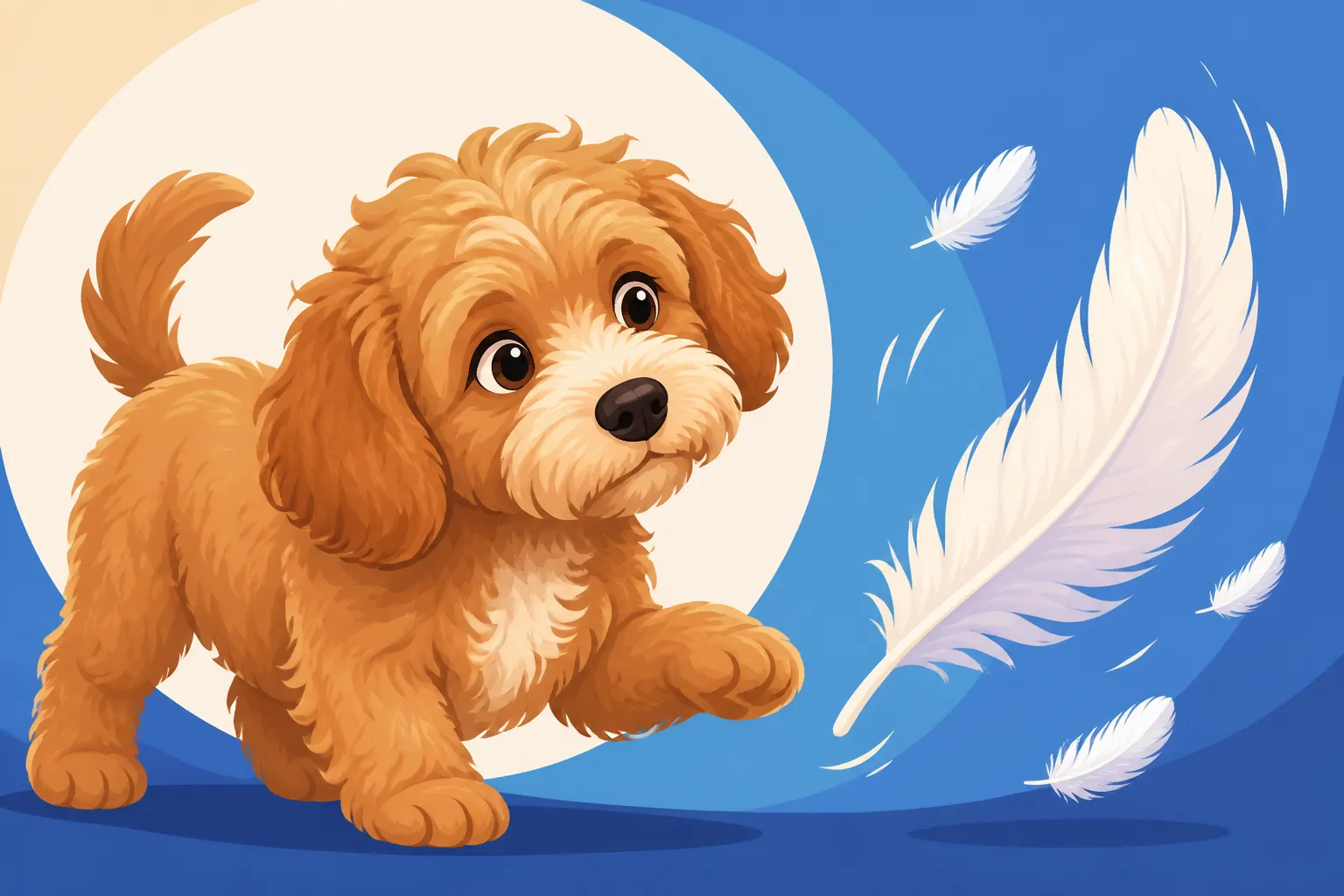
Introducing a Cockapoo to Feathers
Many Cockapoo owners find themselves in a delightful conundrum: they adore their dog's energetic spirit and keen intelligence, but sometimes those instincts kick in, and something as simple as a feather fluttering past can send them into a high-octane chase. Whether you dream of a calm companion who can walk past a pigeon without a second glance or you're hoping to channel that natural drive into a fun, controlled retrieving game, understanding how to properly introduce your Cockapoo to feathers is key. This guide will walk you through gentle, effective strategies to help your Cockapoo develop a healthy relationship with feathers, turning potential chaos into a joyful, managed interaction.
Understanding Your Cockapoo's Instincts with Feathers
It’s easy to look at a fluffy, adorable Cockapoo and forget the rich tapestry of working dog instincts woven into their DNA. Both parent breeds, the Cocker Spaniel and the Poodle, bring a strong heritage that absolutely influences how your Cockapoo perceives and reacts to something as seemingly innocuous as a feather. Dismissing these deep-seated drives can lead to frustration for both you and your dog, so let's delve into what's going on under that curly coat.
The Spaniel's Flushing and Retrieving Drive
Ah, the Cocker Spaniel side of your Cockapoo! This is where a significant portion of their feathered fascination comes from. Cocker Spaniels, whether American or English, were bred for generations to be excellent bird dogs. Their job involved "flushing" game birds from cover, meaning they'd zig-zag through fields and bushes, using their incredible noses to find birds hiding on the ground, making them fly up for the hunter. Once the bird was downed, the Spaniel was also expected to retrieve it gently.
This means your Cockapoo likely possesses an inherent desire to hunt with their nose, to quarter an area in search of scent, and to chase anything that moves suddenly and erratically, much like a bird taking flight. When they see a feather, their brain might instantly register it as a piece of a bird, triggering that ancient hunting sequence. They might pounce, mouth it, or even try to carry it. This isn't naughtiness; it's simply their breeding shining through. This instinct can be incredibly strong, making recall difficult if a real bird flushes nearby, as discussed in The Flushing Drive Still Alive in a Cockapoo. Understanding this makes it easier to approach training with patience and empathy, rather than just trying to suppress a natural behavior.
The Poodle's Often Overlooked Prey Drive
Many people think of Poodles as elegant show dogs, perhaps even a bit dainty. But let's not forget their origins! Poodles were originally bred in Germany as water retrievers, specifically for hunting ducks and other waterfowl. Their name even comes from the German word "Pudel," meaning "to splash in the water." This means they too have a strong prey drive and a desire to retrieve, often with a soft mouth.
While a Poodle's prey drive might manifest differently than a Spaniel's – perhaps less focused on flushing and more on retrieving from water – it's still very much present. They are intelligent, agile, and possess excellent senses, all traits that are highly advantageous for hunting. So, when your Cockapoo spots a feather, that Poodle intelligence might kick in, prompting them to investigate, pick it up, and bring it to you, or simply engage with it in a playful, pouncing manner. The combination of these two heritage drives means your Cockapoo isn't just seeing a feather; they're seeing an echo of centuries of selective breeding, designed to interact with birds and their remnants.
Early Introduction: Building Positive Associations
The way you introduce new objects and experiences to your Cockapoo, especially when they're young, can profoundly shape their reactions throughout their life. When it comes to feathers, you want to cultivate curiosity and calm interest, not overexcitement or fear. The goal is to build positive associations, so feathers become something interesting to investigate or retrieve on command, rather than something to frantically chase or ignore. Starting early is often easier, but patience can prevail at any age.
Making Feathers a Fun, Not Frightening, Experience
Imagine a tiny Cockapoo puppy, exploring the world. Everything is new! A sudden, large feather floating down, or a loud flapping sound, could be genuinely startling. Our aim is to make their first interactions with feathers gentle, quiet, and under their control. Don't just toss a huge goose feather at them and expect a perfect retrieve. Instead, think small and subtle.
Start with a single, small, soft feather. You could even use a craft feather purchased from a store – perhaps one from a mixed bag you can find on Amazon – ensuring it's non-toxic and clean. Place it on the floor a little distance from your puppy when they are calm and relaxed. Let them approach it at their own pace. If they sniff it, reward them with a quiet "good!" and a small, tasty treat. If they nudge it with their nose, same thing. The key here is not to force interaction. If they seem hesitant, simply leave the feather there for a bit and let them observe it. You can even pick it up yourself, show them you’re not scared, and then place it back down. The idea is to create an atmosphere where feathers are interesting, safe, and sometimes lead to delicious rewards. This slow, positive exposure helps to prevent a fearful reaction, which can be much harder to overcome later.
Using Controlled Environments for First Encounters
The environment where you introduce feathers is just as important as the method. For those first few encounters, you want somewhere quiet, free from distractions, and where your Cockapoo feels safe and comfortable. This is usually inside your home, perhaps in a familiar room or a puppy playpen. Avoid busy parks, bustling streets, or areas with other animals initially.
Think of it like this: if you're trying to teach a child to read, you don't take them to a rock concert. You find a quiet corner with good lighting. Similarly, your Cockapoo needs a calm space to process this new stimulus. Once they’re comfortable with a stationary feather indoors, you can gradually introduce a feather tied to a string or a flirt pole, allowing for gentle movement that mimics a bird in flight but remains under your control. This controlled movement can tap into their natural play drive without overwhelming their prey drive into an uncontrollable chase. For more structured guidance, online training programs like those offered by BAXTER & Bella often provide modules on desensitization and controlled play in various environments, which can be really helpful for introducing novel objects like feathers in a structured way. This way, you're guiding their experience, not throwing them into the deep end.
Gradual Exposure and Desensitization Techniques
Once your Cockapoo is comfortable with the idea of a feather and isn't showing fear or extreme overexcitement, it's time to slowly increase the complexity of the interaction. This isn't about rushing; it's about systematically building their tolerance and teaching them appropriate responses. The aim is for them to see a feather, acknowledge it, and then look to you for guidance, rather than acting purely on instinct.
From Stationary Feathers to Gentle Movement
We started with stationary feathers, right? The next step is to introduce movement, but very, very gently. Think of it as a subtle dance, not a wild chase.
Start by holding a feather and wiggling it slightly. If your Cockapoo remains calm or shows mild, curious interest (a head tilt, a sniff), reward that calm behavior. If they lunge or get too excited, freeze the feather. Wait until they calm down before moving it again. This teaches them that calm equals movement and fun, while over-excitement makes the fun stop. You can also drag a feather slowly across the floor, making it appear to "scurry" away like small prey. Again, observe their reaction. If they stalk it or pounce, that's natural, but the goal is to keep it controlled. Consider using a fishing pole toy with feathers attached – readily available on Amazon – as this allows you to control the movement and distance, mimicking the erratic flight of a bird without actually putting a real bird in harm's way. This gives you valuable practice in managing their response. The idea is to build up to faster, more unpredictable movements only once they are consistently responding calmly and looking to you for cues.
Integrating Feathers into Playtime
Once your Cockapoo is comfortable with gentle movement, you can start integrating feathers into more structured playtime. This is where you can begin to channel their natural instincts into acceptable outlets.
Instead of allowing free-for-all chasing, use feathered toys as part of a retrieve game. Toss a small, soft feathered toy (not a real feather they could ingest) a short distance. When they pick it up, encourage them to bring it back. Reward them heavily for bringing it to you, perhaps with a treat or another toss. This reinforces the idea that bringing the "prey" back to the "pack leader" (you!) is the most rewarding outcome. If they prefer to run off with it, use a long line in a secure area. This allows them to feel the thrill of the chase and capture, but you maintain control and can gently reel them back in to practice the retrieve. Programs from BAXTER & Bella often emphasize play as a key training tool, and incorporating feathered toys into structured games is an excellent way to harness your Cockapoo's energy and instincts in a positive manner. Remember, the goal isn't to eliminate their prey drive entirely – that's impossible and unfair to their nature – but to provide a constructive outlet for it. For more on positive reinforcement, you might want to read Whether a Marker Word Beats a Clicker on a Cockapoo.
The Role of 'Leave It' and 'Drop It' Commands
These two commands are absolute gold when introducing your Cockapoo to anything that might trigger their prey drive, including feathers. They are about impulse control and respecting your boundaries.
'Leave It': This command teaches your Cockapoo to ignore an object, even if it's highly tempting. Start practicing 'leave it' with low-value items (like a regular toy) and gradually work up to more exciting things, like a feather. Place a feather on the ground. As your Cockapoo moves toward it, say "leave it" and cover the feather with your hand or step in front of it. When they disengage and look at you, reward them with a treat from your other hand. Repeat this many, many times. The aim is for them to associate "leave it" with a reward for not touching the tempting item. This is critical for preventing them from snatching feathers (or real birds) that you don't want them to interact with. For situations where a real bird might be involved, Teaching a Cockapoo to Ignore Birds delves deeper into these specific challenges.
'Drop It': This command is crucial for when your Cockapoo does pick up a feather or feathered toy. You want them to release it willingly. Practice this by offering a less exciting toy. Once they have it in their mouth, offer a high-value treat right next to their nose. As they open their mouth to take the treat, say "drop it." When they drop the toy, immediately give them the treat. Eventually, they'll learn that "drop it" means something even better is coming. This ensures that if they do grab a feather, you can retrieve it safely without having to wrestle it from them. Both of these commands are life skills, not just feather-specific ones, and they empower you to manage your Cockapoo's interactions with the world more effectively.
Feathered Training Aids and Their Uses
When you're working on introducing your Cockapoo to feathers, it's not just about finding a random feather in the yard. There's a whole world of tools designed to help you simulate the experience in a controlled, safe, and effective way. These training aids are invaluable for tapping into their natural instincts without putting actual wildlife at risk or exposing your dog to harmful bacteria or parasites that wild feathers might carry.
| Training Aid Type | Description | Primary Use | Benefits | Considerations |
|---|---|---|---|---|
| Craft Feathers | Small, clean, non-toxic feathers sold for art projects (often synthetic or dyed natural feathers). | Initial desensitization, curiosity building. | Safe, readily available, less "real" than wild feathers, easy to control. | Not durable for strong chewers, small size can be a choking hazard if left unsupervised. |
| Feathered Flirt Poles | A long pole with a rope and a feathered lure attached to the end. | Channeling prey drive into controlled chase, practicing 'leave it' and 'drop it'. | Provides a fantastic outlet for chase instinct, keeps dog at a distance, good exercise. | Requires space, can over-excite some dogs if not managed properly, lure can be destroyed quickly. |
| Feathered Dummies/Toys | Weighted, fabric or rubber toys designed to resemble birds, often covered in real or synthetic feathers. | Controlled retrieve training, carrying without crushing. | Durable, designed for retrieving, can be scented for advanced scent work, teaches a soft mouth. | Can be expensive, some dogs might try to "kill" the dummy if not properly trained for retrieval. |
| Scented Feather Wipes/Sprays | Products that carry the scent of game birds, to be applied to training dummies or cotton balls. | Enhancing scent work, mimicking real game scent. | Adds realism to training, helps develop nose work skills, engages a different set of instincts. | Ensure dog doesn't ingest the wipe/spray directly, can be messy. |
Teaching a Controlled Retrieve with Feathered Dummies
For many Cockapoo owners, the dream isn't just for their dog to ignore feathers, but to embrace a controlled retrieve, perhaps even in a field. This is where feathered dummies truly shine. These aren't just toys; they're purpose-built training tools. You can find excellent quality feathered dummies on Amazon, ranging from canvas models with real pheasant feathers to durable plastic ones designed to float for water retrieves.
Start by making the dummy incredibly appealing. Rub it with a game bird scent (you can buy these commercially) or even carry it in your pocket for a while so it smells like you. Begin in a quiet, confined space. Toss the dummy a very short distance, say a foot or two. As your Cockapoo shows interest, encourage them to pick it up with an enthusiastic "get it!" When they do, immediately call them back with a happy voice. The moment they bring it even close, reward them lavishly with praise, a high-value treat, or a quick game of tug (if they like it, and then release). The key is to make bringing the dummy back to you the most rewarding part of the experience. Many Cockapoos, thanks to their Spaniel and Poodle heritage, have a natural desire to retrieve, and often possess a "soft mouth," meaning they can carry objects gently without crushing them. If your Cockapoo struggles with holding or releasing, you can work on Whether a Cockapoo Carries Without Crushing. This type of controlled retrieve, done repeatedly and positively, builds a strong foundation for more advanced work and can even become a fantastic way to bond and provide mental stimulation. For a deeper dive into retrieving, check out Whether a Cockapoo Retrieves Naturally.
Managing an Overly Excited Cockapoo Around Feathers
Sometimes, your Cockapoo might be too excited by feathers. This isn't aggression; it's an overwhelming burst of their natural prey drive, which can lead to frantic chasing, nipping at the feather, or even consuming it. This is where management and careful training come in.
First, identify the triggers. Is it the sight of any feather, or just moving ones? Does it happen indoors or only outdoors? Once you understand the trigger, you can begin to desensitize them. Start with very brief, controlled exposures to feathers at a distance where your Cockapoo notices but doesn't become overstimulated. As they remain calm, mark and reward that calmness. Slowly, gradually decrease the distance or increase the movement of the feather, always staying below their threshold for over-excitement.
This is also where a solid 'leave it' and 'drop it' command, as discussed earlier, becomes paramount. If they lunge for a feather, a firm "leave it" and redirecting their attention to you for a reward can be incredibly effective. If they snatch one, a reliable "drop it" is essential. It might also be beneficial to practice these skills on a long line in a secure area. This way, if they bolt after a feather (or a bird!), you have a safety net to prevent them from truly getting away. Working a Cockapoo on a Long Line provides excellent guidance on this. The goal isn't to squash their spirit, but to teach them impulse control and that you are the source of all good things, even when a tempting feather is present. This helps build a reliable recall, crucial for their safety when out and about. For a broader perspective on meeting your Cockapoo's activity needs, consider Whether a Cockapoo Needs a Sport to Be Manageable.
Disclaimer
This article is for general informational purposes only and does not constitute professional advice. Laws, prices and regulations vary by location and change over time. Consult a qualified professional for guidance on your specific situation.