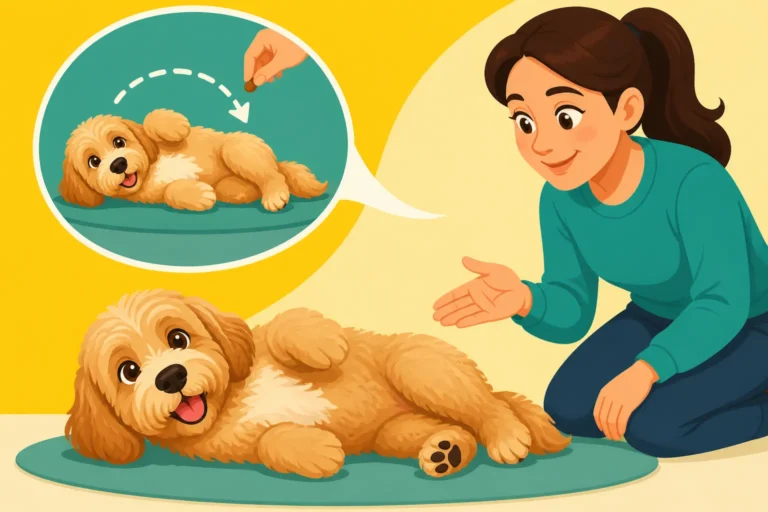
Whether a Marker Word Beats a Clicker on a Cockapoo
Bringing a Cockapoo into your home is an absolute joy, but it also comes with the delightful challenge of training a clever, spirited little dog. Many of us find ourselves scratching our heads, wondering if a simple clicker or a well-chosen marker word is the secret sauce to effective communication. This guide is here to walk you through the nuances of both methods, helping you decide which approach, or perhaps a combination, will best help your Cockapoo shine and truly understand what you're asking of them.
Understanding the Fundamentals: Clickers and Marker Words
Before we dive into the specifics of how these tools interact with a Cockapoo's unique personality, let's lay a solid foundation. Both clickers and marker words serve the same primary purpose in positive reinforcement training: to precisely mark the exact moment your dog performs a desired behavior. This clarity helps your dog understand why they are being rewarded.
The Power of the Clicker
A clicker is a small device that makes a distinct, consistent sound. It’s a neutral, emotionless sound that doesn't vary based on your mood or tone of voice, which is a huge advantage. Imagine trying to consistently say "good dog!" with the exact same pitch and enthusiasm every single time—it's nearly impossible for us humans! The clicker removes that variable, making it incredibly precise.
To introduce a clicker, you first "charge" it. This means associating the sound with something positive. You'd click, then immediately give your Cockapoo a tiny, high-value treat. Repeat this 10-20 times in a quiet environment, and soon, the click itself becomes a predictor of good things. Your Cockapoo learns that the click means "Yes! That's exactly what I wanted, and a reward is coming!" The precision is key; if your Cockapoo is sitting, and the click happens precisely when their rear touches the floor, they quickly connect the sit with the click and the subsequent reward. This makes shaping new behaviors incredibly efficient. Many trainers find that clickers, readily available on platforms like Amazon, offer an undeniable advantage in consistency.
The Simplicity of a Marker Word
A marker word works on the same principle as a clicker, but it uses a verbal cue instead of a mechanical sound. Common marker words include "Yes!", "Good!", or even a short, distinct sound like a tongue click. The critical aspect here is that, just like the clicker, this word must be consistently delivered at the exact moment the desired behavior occurs, and it must always be followed by a reward.
The benefit of a marker word is its accessibility. You always have your voice with you, meaning you don't need to remember to grab a clicker. This can be particularly useful when you're out and about, perhaps on a walk where your Cockapoo suddenly offers a perfect loose-leash moment, or when they manage to Recall on a Cockapoo That Has Found a Scent. Charging a marker word follows the same process: say "Yes!", immediately give a treat, and repeat until the word itself brings an excited response from your pup. The challenge, as mentioned, is maintaining absolute consistency in tone and timing, but with practice, it's definitely achievable.
Cockapoo Temperament and Learning Styles
When considering training tools, it's vital to think about the individual dog breed. Cockapoos, being a cross between Cocker Spaniels and Poodles, inherit a fascinating blend of traits that influence how they learn and respond to different training methods.
The Intelligent and Sensitive Poodle Influence
From their Poodle lineage, Cockapoos often inherit sharp intelligence and a keen desire to please. Poodles are known for being highly trainable and sensitive to their handler's cues. This sensitivity means they often respond very well to the clear, unambiguous signal of a clicker. The consistent, neutral sound can prevent misinterpretations that might arise from varying vocal tones. A Poodle-brained Cockapoo might find a clicker incredibly helpful for understanding complex chains of behavior or quickly grasping new tricks, as the feedback is so instant and precise.
However, this sensitivity can also mean that a harsh tone or inconsistent verbal marker might be more detrimental to a Poodle-influenced Cockapoo than it would be to a dog with a more robust temperament. They can be quite tuned into human emotions, and if your "Good!" sounds different when you're tired versus excited, it might be confusing. For these sensitive souls, the sheer objectivity of the clicker can be a real asset. Programs like those offered by BAXTER & Bella often highlight the importance of clear, consistent communication for breeds with Poodle intelligence.
The Biddable and Busy Cocker Spaniel Traits
The Cocker Spaniel side of a Cockapoo brings a different set of characteristics to the table. Cockers are typically very biddable, eager to work alongside their human companions, and possess a strong The Flushing Drive Still Alive in a Cockapoo. This drive means they can be easily distracted by scents, movement, and the exciting world around them. While their desire to please is strong, their instinct to explore can sometimes override it.
For a Cockapoo leaning more into its Cocker heritage, a marker word might feel more natural and fluid in fast-paced training scenarios, such as when you're working on quick retrieves or trying to get their attention amidst tempting distractions. You don't have to fiddle with a clicker; your voice is always ready. However, the exact timing of that verbal marker becomes even more crucial. If you're a fraction of a second late, your Cockapoo might associate the reward with the squirrel they just spotted, rather than the quick check-in they offered. It’s a fine balance between fluidity and precision. Some Cockapoos might even find the sudden sound of a clicker startling at first, though most quickly adapt and learn to love it.
Finding the Balance for Your Cockapoo
Ultimately, your Cockapoo is a unique individual, a delightful mix of these two wonderful breeds. Some will lean more Poodle, some more Cocker, and many will be a perfect blend. The key is observing your dog's responses. Do they seem to grasp new concepts quickly with a clicker? Or do they respond better to the warmth and familiarity of your voice?
One approach is to start with a clicker for initial training, especially for shaping new behaviors where precision is paramount. Once the behavior is solid, you can gradually transition to a verbal marker, or even use both depending on the situation. For example, a clicker might be your go-to for intricate trick training at home, while "Yes!" is perfect for reinforcing good behavior on a walk. What works best for What a Cockapoo Puppy Should Learn First might evolve as they grow and mature.
Practical Application and Choosing Your Tool
Deciding between a clicker and a marker word isn't about one being inherently "better," but rather which tool best suits your Cockapoo, your training goals, and your personal comfort level. Many trainers find success by leveraging the strengths of both.
Integrating a Clicker into Your Routine
When you choose to use a clicker, consistency is your best friend. Always have it handy during training sessions. You can find simple, ergonomic clickers on platforms like Amazon that are easy to hold and operate.
Here’s how you might integrate it:
- Shaping new behaviors: If you're teaching your Cockapoo to "touch" a target with their nose, click the instant their nose makes contact. This tiny window of time is where the clicker truly excels.
- Proofing behaviors: Once your Cockapoo knows a cue like "sit," use the clicker to reinforce sits in new environments or with increasing distractions. The click helps cut through the noise.
- Distance and duration: When asking for a "stay" from a distance, clicking at the exact moment they hold still, before you return to them, clearly communicates what you want.
Remember, the click is the reward signal. Don't click and then praise, just click and then treat. The click itself becomes the highest form of praise because it's so clear.
Maximizing the Effectiveness of a Marker Word
If you opt primarily for a marker word, dedicate time to making that word as powerful and consistent as a clicker. This takes practice for the human!
- Choose a distinct word: "Yes!" is popular because it's short, positive, and you don't use it casually in daily conversation as much as "good."
- Practice timing: Enlist a friend to toss a treat while you practice saying your marker word the instant it hits the floor. This improves your timing for your Cockapoo's actual behaviors.
- Vary your rewards: While the marker word should be consistent, the type of treat can vary to keep your Cockapoo engaged. Sometimes it's a piece of kibble, sometimes a sliver of cheese. This keeps them guessing and excited.
- Fluidity in action: For an active Cockapoo, a marker word allows for more fluid training, especially if you're doing something like Scent Work That Satisfies a Cockapoo where you might be moving and need your hands free.
The key with a marker word is to imbue it with the same precision and positive association as a clicker. It becomes a verbal snapshot of success.
When to Consider Both
Many experienced trainers advocate for using both tools. A clicker offers unparalleled precision for initial teaching, while a well-charged marker word provides flexibility and can feel more personal.
Consider this table for a quick comparison:
| Feature | Clicker | Marker Word ("Yes!") |
|---|---|---|
| Consistency | Always the same sound | Varies with human tone, pitch, and emotion |
| Precision | Excellent for pinpointing exact moment | Good, but requires more human practice to perfect |
| Accessibility | Requires carrying a device | Always available (your voice) |
| Initial Learning | Often faster for clear communication | Can be effective, but requires careful charging |
| Distraction | Cuts through environmental noise effectively | Can be harder to hear/distinguish in noisy areas |
| Shaping Behavior | Ideal for breaking down complex actions | Effective for reinforcing existing behaviors |
| Perceived Warmth | Neutral, purely informational | Can convey warmth and enthusiasm from owner |
Ultimately, the best tool is the one you use consistently and effectively. Some online training platforms, such as BAXTER & Bella, often integrate both methods into their curricula, demonstrating how they can complement each other for a well-rounded training approach. Whether a Cockapoo Concentrates in a Class can often depend on the clarity of the signals they receive.
Troubleshooting and Common Training Pitfalls
Even with the best intentions and the right tools, training a Cockapoo can sometimes feel like a puzzle. Understanding common pitfalls can help you avoid frustration and ensure your training progresses smoothly.
The Timing Trap: Why Precision Matters Most
The biggest mistake, whether you're using a clicker or a marker word, is incorrect timing. If you click or say "Yes!" even a second too late, your Cockapoo might associate the reward with whatever they were doing after the desired behavior. For example, if you ask for a "down" and click after they start to stand back up, you're inadvertently reinforcing the standing, not the lying down.
To refine your timing:
- Practice, practice, practice: Use mundane activities around the house. Mark when a family member walks through a doorway, or when your cat jumps onto the couch. This builds your reflex.
- Short sessions: Keep training sessions brief, especially for puppies. Five minutes of focused, well-timed repetition is far more effective than 20 minutes of sloppy cues.
- Watch for precursor behaviors: Instead of waiting for the full "sit," click or mark the intent to sit, like when their head starts to go up, signaling their backend will soon drop. This is called "shaping" and is where precision truly shines.
Inconsistent timing is a surefire way to slow down learning and confuse your clever Cockapoo. If you're finding it difficult, consider joining an online course or working with a local trainer who can provide real-time feedback on your timing.
Over-Reliance and Fading the Lure
Another common pitfall is becoming too reliant on lures (like holding a treat to guide your Cockapoo into a sit) or not "fading" the clicker or marker word properly. While lures and markers are excellent for teaching a behavior, the goal is for your Cockapoo to perform the action purely in response to your verbal cue, without needing a click or a visible treat every single time.
- Fade the lure: Once your Cockapoo understands the behavior, gradually reduce your reliance on the lure. Instead of holding the treat to their nose to guide them into a sit, make the motion smaller and eventually just use your hand signal.
- Vary the reinforcement schedule: Once a behavior is solid, you don't need to click/mark and treat every single time. Move to an intermittent reinforcement schedule. Reward every 2-3 times, then every 3-5 times, and so on. This actually makes the behavior stronger and more resistant to extinction, as your Cockapoo learns to keep trying because a reward might be coming. This is especially useful for behaviors like Whether a Cockapoo Comes Back From a Rabbit.
- Introduce life rewards: Beyond treats, use "life rewards" for marking. If your Cockapoo sits politely before going out the door, mark it and then open the door (the life reward). If they sit to greet a person, mark it and allow gentle pets. These are powerful motivators.
Remember, the clicker or marker word is a bridge to communication, not the destination itself. The end goal is a Cockapoo who responds reliably to your voice and body language because they understand and enjoy the interaction. If you notice your Cockapoo is only performing a trick when the clicker is visible, or you're constantly saying "Yes!" with no actual treat, it might be time to reassess your fading strategy. Whether a Sharp Word Shuts a Cockapoo Down emphasizes the importance of keeping training positive and rewarding, so avoiding these pitfalls helps maintain that joyful connection.
Conclusion
Ultimately, whether a marker word beats a clicker on a Cockapoo isn't about one being definitively superior, but about finding the most effective and clear way to communicate with your individual dog. Both tools are incredibly powerful in positive reinforcement training, offering distinct advantages. The clicker provides unparalleled precision and consistency, cutting through ambiguity, which can be fantastic for the intelligent and sometimes sensitive Poodle side of your Cockapoo. A well-charged marker word offers fluidity and the convenience of always having your "tool" with you, which can be invaluable for the active, biddable Cocker side, especially in dynamic environments.
Many owners and trainers find that a combination of both methods offers the best of all worlds: using the clicker for teaching new, precise behaviors, and a verbal marker for reinforcing known behaviors in everyday situations. The most crucial factor, regardless of your chosen tool, is your consistency, timing, and dedication to positive reinforcement. Pay attention to your Cockapoo's responses, adapt your approach as needed, and always strive to make training a fun, rewarding experience for both of you. Happy training!
Disclaimer
This article is for general informational purposes only and does not constitute professional advice. Laws, prices and regulations vary by location and change over time. Consult a qualified professional for guidance on your specific situation.