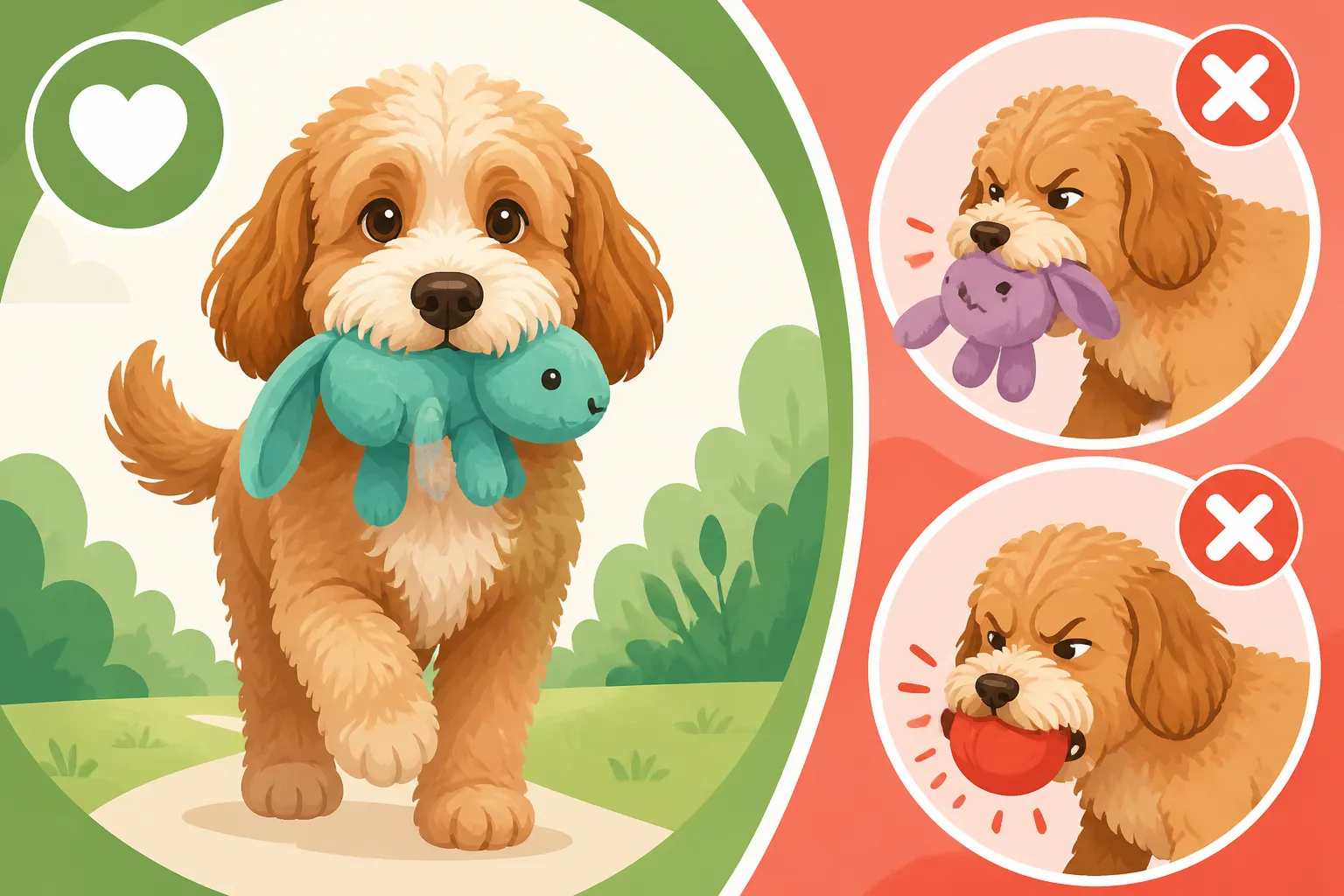
Whether a Cockapoo Carries Without Crushing
It's such a joy to see your Cockapoo trot proudly towards you, an object held gently in their mouth, eager to present their "prize." But oh, the frustration when that prize turns out to be a crumpled newspaper, a slobber-soaked slipper, or even worse, a partially crushed pair of reading glasses! Many Cockapoo owners wonder if their furry friend can truly learn to carry things without a destructive "death grip." This guide is here to reassure you that with understanding and consistent training, your Cockapoo absolutely can develop a gentle mouth, turning potential disasters into delightful deliveries.
Understanding Your Cockapoo's Natural Carrying Instincts
To truly grasp whether your Cockapoo can carry without crushing, we need to look at the rich tapestry of their ancestry. The Cockapoo, a charming blend of the Cocker Spaniel and the Poodle, inherits traits from both sides, and luckily for us, both parent breeds have a strong history of retrieving. This means the inherent drive to pick things up and bring them back is often deeply embedded in their DNA.
The Cocker Spaniel Influence on Retrieve
The Cocker Spaniel, whether American or English, was originally bred as a gun dog, specifically a flushing spaniel. Their role was to flush game birds from dense cover and then, crucially, to retrieve them once they had fallen. Imagine a hunter's prize pheasant being brought back with broken bones or torn skin – that wouldn't do at all! Therefore, Cockers were selectively bred for a "soft mouth." This means they were trained and often naturally inclined to carry game gently, without biting down hard or damaging it. This soft mouth trait is a cornerstone of good gundog work, and it's a wonderful attribute that many Cockapoos inherit.
Think about it from your Cocker's perspective: a delicate bird needs to be held securely enough not to drop, but lightly enough not to crush. It's a fine balance. This instinct for a gentle, yet firm, hold is what we hope to foster in our Cockapoos. If your Cockapoo has a strong retrieve drive, it’s often a testament to this spaniel heritage. The Flushing Drive Still Alive in a Cockapoo can give you even more insight into this fascinating aspect of their temperament.
The Poodle's Water Retriever Heritage
Now, let's talk about the Poodle side of your Cockapoo. While many people think of Poodles as aristocratic show dogs with elaborate haircuts, their origins are far more rugged. "Poodle" actually comes from the German word "Pudel," meaning "to splash in water." Poodles were, in fact, keen water retrievers, used to fetch waterfowl for hunters. Like the Cocker, they needed to bring back their quarry undamaged. This required swimming through cold water, navigating reeds, and then delivering the bird with a soft, careful grip.
So, when you combine the Cocker's flushing and retrieving abilities with the Poodle's strong water-retrieving background, you often get a Cockapoo with a robust, enthusiastic desire to pick things up and carry them. The genetic predisposition for a gentle mouth is present from both sides, making them excellent candidates for learning to carry items without applying too much pressure. It's a fantastic foundation to build upon for any training goals you have.
Why the Mix Matters for a Soft Mouth
The unique blend of Cocker Spaniel and Poodle traits means that while many Cockapoos have an innate drive to retrieve, the gentleness of that retrieve can vary. Some Cockapoos might naturally have a super soft mouth from day one, never crushing anything. Others, perhaps due to a stronger Poodle prey drive or simply individual personality, might be a little more enthusiastic, leading to those squashed items. It's important to validate this frustration – you're not imagining it if your Cockapoo is a bit too "grippy"!
The good news is that even if your Cockapoo isn't naturally delicate, the genetic blueprint for a soft mouth is there. This means that with the right training, patience, and positive reinforcement, you can guide them to develop a consistently gentle hold. It’s about channeling that natural drive into the desired behavior, rather than trying to create something entirely new. Understanding their lineage helps us set realistic expectations and choose effective training methods.
Training for a Gentle Mouth and Soft Retrieve
Developing a gentle mouth in your Cockapoo is a process that benefits greatly from starting early, but it's never too late to teach an old dog new tricks! The key is consistency, positive reinforcement, and making the training a fun, rewarding experience for your dog.
Starting Early: Puppyhood Fundamentals
The best time to start cultivating a gentle mouth is when your Cockapoo is a puppy. Their minds are like sponges, and they're often highly motivated by play and treats.
Begin with teaching basic commands like "take it" and "leave it." When you offer a soft toy, say "take it." If they gently take it, praise them lavishly and maybe even offer a tiny, high-value treat from your hand. If they try to mouth too hard, a gentle "ah-ah" and a re-offer might be necessary, but avoid scolding, which can make them anxious about interacting with objects.
Start with items that are naturally soft and easy to carry, like a plush toy or a rolled-up sock. Avoid anything hard or squeaky initially, as these can encourage a more forceful grip or chewing. As they get comfortable, you can gradually introduce items with different textures, always rewarding the gentle hold. Think about how many things a puppy chews through in those early months – What a Cockapoo Puppy Chews Through in Six Months highlights the importance of guiding their mouthing behavior early on. For comprehensive online training that covers these foundational commands, many owners find programs like those offered by BAXTER & Bella incredibly helpful. Their structured approach can guide you through these early stages with clear, step-by-step instructions.
The "Hold" Command and Its Importance
Once your Cockapoo understands "take it" and has a generally soft mouth, the "hold" command is your next big step. This teaches them to maintain a gentle grip on an object for a specified duration without chewing or dropping it.
To teach "hold," start with your dog sitting calmly. Offer them a soft toy, say "take it." Once they have it gently in their mouth, immediately say "hold" and hold a treat right in front of their nose. The goal is for them to focus on the treat, thus keeping the toy still in their mouth. After just a second or two, say "release" or "give," take the toy (or trade it for the treat if they're reluctant), and give them the treat. Repeat this many times, gradually increasing the duration they hold the item before you say "release" and reward.
As they progress, you can start introducing minor distractions. Practice in different rooms, with you moving a few steps away, or with other family members present. The key is to build up gradually. If they drop or chew, simply restart the process. Remember, patience is paramount. This command is crucial for any future "retrieving without crushing" endeavors, as it instills control over their mouth.
Preventing the "Death Grip"
Sometimes, despite our best efforts, a Cockapoo might develop a "death grip" – holding objects so tightly that they get damaged. This can happen for several reasons:
- Over-excitement: An overly stimulated dog might clench down without meaning to.
- Anxiety or insecurity: If they fear you'll take the item away, they might hold on tighter.
- Lack of early training: Without proper guidance, they might not understand the concept of a gentle hold.
- Perceived competition: If other dogs are around, they might guard the item more intensely.
To discourage a rough hold, never pull an item out of your dog's mouth. This can escalate the problem and teach them to hold on even tighter. Instead, always aim for a trade. If they have an item you want, offer a higher-value treat in exchange. When they open their mouth to take the treat, gently take the item. Praise them for the trade.
Another technique is to make the item "boring" if they start crushing it. If they are chewing on something they shouldn't, simply walk away. Often, the desire for your attention is stronger than the desire to chew, and the item loses its appeal. When they stop, you can re-engage with appropriate items and gentle play. If you're struggling, a skilled dog trainer can help you identify the root cause of the "death grip" and develop a tailored plan.
Addressing Common Carrying Challenges and "Crushing" Behavior
Even with the best intentions and consistent training, you might encounter situations where your Cockapoo still struggles with carrying items gently. It's important to understand the underlying reasons for this behavior to effectively address it.
Over-Excitement and Chewing on the Retrieve
One of the most common reasons a Cockapoo might accidentally "crush" an item is simply over-excitement. Your Cockapoo is a joyful, energetic breed, and sometimes that enthusiasm can override their intention to be gentle. Imagine you've just thrown their favorite fetch toy. They race to get it, full of adrenaline, and in their eagerness to bring it back to you, they might chomp down harder than intended. This isn't malice; it's just exuberant energy manifesting in their grip.
To manage this, introduce a short moment of calm before the retrieve. Ask your Cockapoo for a quick "sit" or "down" command before you throw or offer the item. This brief pause helps them regulate their excitement. When they return with the item, ask for another "sit" before taking it. This reinforces a calm demeanor throughout the entire retrieving process. You might also find that using specific retrieval toys designed to withstand enthusiastic chewing, but still be comfortable to carry, can help. Online retailers like Amazon offer a vast selection, from durable rubber toys to reinforced fabric ones, allowing you to experiment and find what works best for your Cockapoo's level of excitement.
Resource Guarding vs. Hard Mouth
It’s crucial to distinguish between a "hard mouth" and "resource guarding." A hard mouth typically refers to a dog who, often unintentionally, applies too much pressure or chews on items they are carrying or retrieving. Resource guarding, on the other hand, is when a dog exhibits protective behaviors over items, food, or even people, often by growling, snapping, or refusing to give up the item.
While both can result in you not getting an item back in one piece, their motivations and training approaches differ significantly:
- Hard Mouth: The dog isn't trying to keep the item from you; they're just not being gentle enough. Training focuses on teaching control over jaw pressure and holding.
- Resource Guarding: The dog fears you taking the item away. Training focuses on building trust, teaching them that your approach means good things (like trades or treats), and that you don't want to steal their possessions.
If you suspect resource guarding, never try to physically force an item from your dog. This can escalate aggression. Instead, focus on trades, dropping high-value treats near them, and desensitization. If you're unsure, consult a professional positive reinforcement trainer or a veterinary behaviorist. A soft mouth is about how they hold, whereas overcoming resource guarding is about trust and willingness to release.
The Impact of Toy Selection
The type of toy or object you use for training can significantly impact your Cockapoo's ability to carry without crushing.
Initially, as mentioned, soft, lightweight items are best. These are easy for a puppy to hold gently and less likely to encourage a hard bite. As your Cockapoo masters the "hold" command and consistently demonstrates a soft mouth, you can gradually introduce items of different textures and "values."
- Delicate Items: For example, you might introduce a crinkly paper, an empty plastic bottle, or even your mail (under strict supervision, of course!). These require true delicacy.
- Varied Textures: A smooth wooden dowel, a textured rubber ball, or a fabric disc each present a different challenge. The goal is for your Cockapoo to generalize their soft mouth behavior across all sorts of objects.
- Avoidance: If your Cockapoo is prone to rough handling, avoid toys specifically designed for vigorous shaking or ripping, such as rope toys or plush toys with a lot of stuffing that can be easily torn out. These toys can inadvertently reinforce a destructive grip.
Choosing the right training props helps your Cockapoo understand the expectation for different items. It's a progressive journey, building from easy, low-stakes items to more challenging ones.
Real-World Scenarios and Advanced Carrying Skills
Once your Cockapoo has a solid foundation in gentle carrying and retrieving, it's time to put those skills to the test in real-world scenarios. This is where the true joy of having a well-trained Cockapoo shines through – helping around the house and behaving beautifully outdoors.
Fetching Household Items
Imagine your Cockapoo bringing you your slippers or retrieving the TV remote you've dropped! This isn't just a party trick; it's a practical skill that strengthens your bond and provides mental stimulation for your dog.
To train for this, start with items your Cockapoo already carries gently. Place the item a short distance away, point to it, and use a command like "get [item name]" or "fetch." When they pick it up and bring it back, immediately reward them. Gradually increase the distance, introduce new items, and make the retrieve a fun game. Always ensure the items are safe for your dog to mouth and carry – nothing toxic, sharp, or easily ingested. For instance, if you want them to retrieve keys, ensure they are securely attached to a large, dog-safe keyring so there's no risk of accidental swallowing. You can even find specialized "retrieving dummies" on Amazon that are designed for safe and consistent carrying practice.
Outdoor Retrieves and "Leave It" in Action
The outdoors presents a whole new set of challenges and temptations for a retrieving dog. Squirrels darting up trees, tempting smells, and fallen leaves can all divert your Cockapoo's attention. This is where your "leave it" command becomes invaluable.
Practice retrieving designated toys in a variety of outdoor environments, starting with less distracting areas like your backyard, and gradually moving to parks or trails. When your Cockapoo encounters something they shouldn't pick up (like a discarded wrapper or a tempting squirrel), a firm "leave it" should prompt them to ignore it and continue with their intended retrieve. Whether a Cockapoo Chases Squirrels touches on this natural instinct and how to manage it. Reinforcing a strong recall is also vital here, ensuring they come back to you even when distracted by a scent or a potential retrieve. Building a Recall a Cockapoo Answers can provide strategies for this. Always carry high-value treats to reward successful "leave it" and "come" responses, especially in challenging environments.
Building Confidence and Consistency
Like any training, consistency is the key to mastering gentle carrying. Short, frequent training sessions (5-10 minutes, several times a day) are far more effective than one long, grueling session. This keeps your Cockapoo engaged and prevents them from getting bored or frustrated.
Celebrate every success with enthusiastic praise and rewards. Whether it's a perfectly gentle retrieve of a delicate item or a well-executed "leave it" in the face of temptation, let your Cockapoo know they've done a fantastic job. This positive reinforcement builds their confidence and reinforces the desired behavior. Remember, every Cockapoo is an individual, and some may take longer to master these skills than others. Be patient, stay consistent, and enjoy the journey of teaching your clever Cockapoo to carry without crushing.
Here's a quick overview of common training scenarios and how to approach them:
| Scenario | Common Challenge | Training Approach | Key Takeaway |
|---|---|---|---|
| New Puppy | Mouthing too hard, destructive chewing | Start with soft toys, "Take It/Leave It," gentle trades. Use a program like BAXTER & Bella. | Early positive reinforcement is vital. |
| Over-Excited Retrieve | Clenching item in excitement, accidental crushing | Introduce a "Sit" or "Stay" before retrieve. Reward calm behavior. | Calm before and during the retrieve. |
| Chewing on Item While Holding | Lack of focus, boredom, habit | Teach "Hold" command, reward stillness. Redirect to appropriate chew toys after successful hold/release. | Holding is different from chewing. |
| Outdoor Temptations | Dropping intended item for distracting smells/objects | Strong "Leave It" command. Practice in various environments. Reward high-value treats for focus on you. | Your focus is more rewarding than distractions. |
| Resource Guarding | Growling, refusing to give up items | Never force. Focus on trades (item for higher-value treat). Build trust. Seek professional help if severe. | Build trust, do not challenge. |
| Retrieving Delicate Items | Fear of damaging | Gradually introduce delicate items after mastering "Hold" with durable objects. Supervise closely. | Gradual progression with supervision. |
Remember that your Cockapoo's intelligence and desire to please mean they are highly trainable. With the right guidance, they can become a gentle and reliable retriever for all sorts of items.
Disclaimer
This article is for general informational purposes only and does not constitute professional advice. Laws, prices and regulations vary by location and change over time. Consult a qualified professional for guidance on your specific situation.