Teaching a Cockapoo to Lie on Its Side
It can be incredibly frustrating when you need to perform a routine health check or a quick grooming task, like cleaning ears or trimming nails, and your beloved Cockapoo turns into a furry, squirming octopus. That constant wriggle isn't just annoying; it can make essential care tasks stressful for both of you, sometimes even leading to accidental nicks or missed spots. This guide is here to walk you through a gentle, positive reinforcement method to teach your Cockapoo to comfortably lie on their side, transforming these moments into cooperative, calm experiences.
Why "Lie on Your Side" is a Game Changer for Your Cockapoo
Teaching your Cockapoo to lie calmly on their side isn't just a party trick; it's a foundational behavior that can dramatically improve their quality of life and your shared bond. It moves many potentially stressful interactions from a battle of wills to a cooperative effort, fostering a sense of partnership rather than conflict. You're not just teaching a trick; you're teaching them how to be comfortable and relaxed during necessary handling.
Easing Grooming Routines
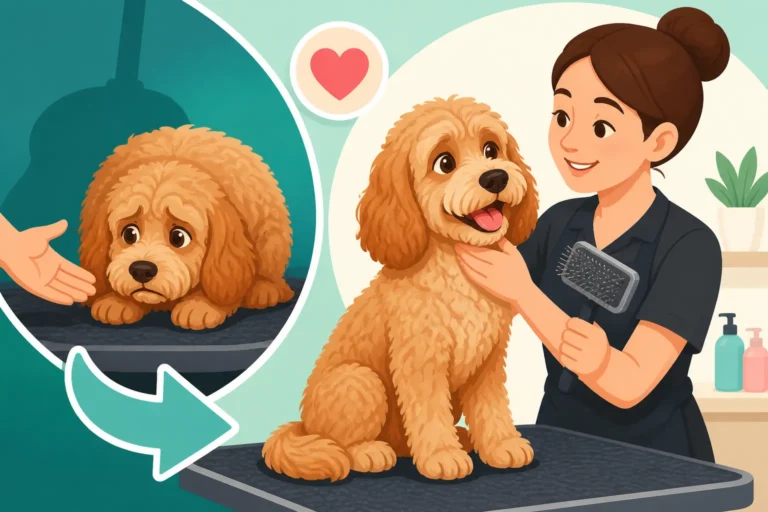
Anyone with a Cockapoo knows the grooming demands are real. That gorgeous, often curly coat can become a mat magnet in what feels like mere minutes. When it comes to brushing, dematting, or even just checking for tangles, having your dog lie still on their side makes all the difference. Instead of chasing a moving target or wrestling them into an awkward position, you can systematically work through one side of their body, getting right down to the skin where mats often start. This also helps you comfortably tackle those often-neglected areas like armpits, bellies, and the insides of their legs, which are notorious for tangling.
Imagine trying to brush out a stubborn knot near their tail while they're standing, constantly shifting their weight. It's nearly impossible to get a good angle or maintain steady pressure. Now picture them stretched out, relaxed on a soft mat, allowing you to carefully work through that knot without fear of a sudden jump or protest. This position is also invaluable for things like checking paws, trimming nails, or carefully addressing A Cockapoo That Will Not Sit Still to Be Combed. It transforms a frantic struggle into a calm, methodical process, making the entire grooming experience far more pleasant for both of you and less likely to result in a trip to the emergency groomer because of severe matting.
Less Stressful Vet Visits and Health Checks
The vet's office can be a high-stress environment for many dogs. Strange smells, unfamiliar people, and sometimes painful procedures can make them anxious and uncooperative. Teaching your Cockapoo to lie calmly on their side at home translates directly to better behavior during vet visits. When the vet needs to palpate their abdomen, check their hips, examine their ears, or draw blood, a dog that willingly lies down and stays relaxed is a far easier patient. This reduces the need for restraint, which in turn lowers their stress levels and makes the vet's job much safer and more efficient.
Think about how much easier it is for a vet to administer an injection or check a potentially sore joint if your dog is calmly presented, rather than thrashing around. This command can also be a lifesaver for at-home health checks, such as examining paws for thorns, checking for ticks, or inspecting a suspicious lump under their fur. Having that voluntary cooperation means you can perform these necessary checks without causing undue fear or discomfort, reinforcing their trust in you as their caregiver. It's not just about compliance; it's about minimizing fear and creating a positive association with being handled for medical reasons, which is crucial throughout their The Fourteen to Eighteen Years a Cockapoo Lives.
Building Trust and Cooperation
At its core, training is about communication and building a stronger relationship with your dog. When you teach a complex behavior like "lie on your side" using positive reinforcement, you're building a deeper level of trust and cooperation. Your Cockapoo learns that cooperating with you leads to good things – tasty treats, praise, and gentle handling. This positive cycle strengthens your bond, making them more willing to engage in other training or to accept handling in general. It teaches them that they can trust you, even when you're asking them to do something that might initially feel a bit vulnerable.
This cooperative spirit extends beyond just lying on their side. A dog that understands and trusts the training process is generally more confident and adaptable. They learn that unfamiliar requests from you are usually safe and rewarding. This command specifically asks your dog to be still and exposed, which can be an instinctively vulnerable position. By making this a positive experience, you're teaching them profound lessons in confidence and submission to gentle guidance, which can translate into better behavior in all sorts of situations, from meeting new people to confidently navigating new environments.
Getting Started: Prerequisites and Positive Reinforcement
Before you dive into teaching your Cockapoo to lie on their side, setting yourself up for success is key. This isn't about brute force or intimidation; it's entirely about making the experience rewarding and comfortable for your dog. Remember, Cockapoos are smart and sensitive, and they respond best to patience and positive reinforcement. Whether a Cockapoo Is Too Soft for Correction is a real concern; gentle methods are always best.
Essential Tools and Treats
First things first, you'll need the right equipment. High-value treats are non-negotiable. These aren't their everyday kibble; we're talking about small, soft, incredibly delicious morsels that your Cockapoo absolutely adores. Think tiny pieces of cooked chicken, cheese, or specialized training treats. You might even find a great selection of these on Amazon, making it easy to stock up. The goal is to have something so enticing that your dog is eager to work for it. Make sure they are small enough to be swallowed quickly, so you can deliver rapid-fire rewards.
Beyond treats, a comfortable, non-slip surface is important. A soft dog bed, a yoga mat, or even a plush rug will do. This provides traction and comfort, making it a more inviting place for your dog to lie down. If they're slipping on a hard floor, they'll be less likely to relax. Having a clicker can also be incredibly helpful for precise timing, marking the exact moment your dog performs the desired action. While not strictly necessary, many trainers find it invaluable for clear communication. And don't forget your calm, encouraging voice – that's a tool too!
The Power of a Calm Environment
Just like humans trying to learn something new, dogs focus best when distractions are minimized. Choose a quiet time of day when your Cockapoo isn't overly energetic or tired, and when there won't be a lot of commotion in your home. Turn off the TV, silence your phone, and ask family members to give you a few minutes of uninterrupted training time. A calm environment helps your dog concentrate on you and the task at hand, making them more receptive to learning.
If you have a particularly busy household, perhaps an early morning session before everyone wakes up, or a quiet evening after dinner, would be ideal. Some dogs might feel more secure in a smaller, enclosed space away from windows or high-traffic areas. The less external stimulation, the more quickly your Cockapoo can understand what you're asking of them and offer the desired behavior. This foundation of calm is crucial for building good habits and positive associations.
Introducing the Command and Lure
Before you even attempt the full "lie on your side" command, it's beneficial to have a solid "down" command in place. This gives you a starting point. Your Cockapoo should be comfortable and reliable when asked to lie down. We'll be using a technique called luring, which involves using a treat to guide your dog into the desired position. This is a gentle, non-physical method that encourages voluntary movement, rather than forcing them.
The lure acts as a visual guide, showing your dog exactly what movement you want them to make. For a comprehensive online training resource that uses these kinds of positive methods, you might explore programs like those offered by BAXTER & Bella. They often emphasize teaching complex behaviors through a series of small, achievable steps, which is exactly what we're going for here. The key is to make each step so easy that your Cockapoo can't help but succeed, earning a reward and building their confidence with every correct move.
Step-by-Step: Teaching the "Lie on Your Side" Command
Now for the nitty-gritty! Teaching this particular command requires patience and breaking it down into tiny, manageable pieces. Your Cockapoo isn't going to roll over perfectly on the first try, and that's absolutely fine. Celebrate every little movement in the right direction.
Luring into Position
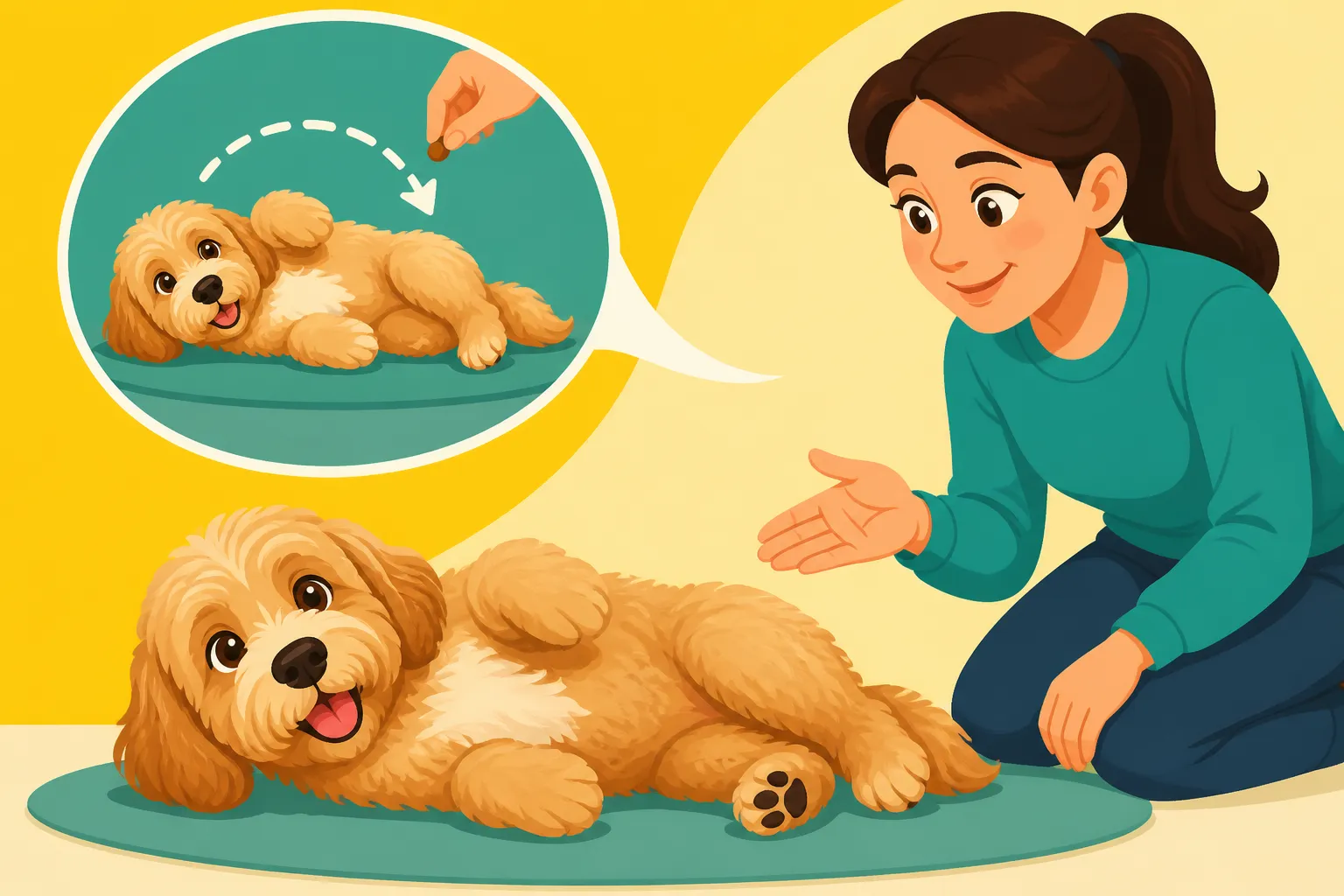
Start with your Cockapoo in a comfortable "down" position. Hold a high-value treat close to their nose. Slowly move the treat in an arc, from their nose towards their shoulder, then sweeping it down towards their hip. As the treat moves past their shoulder and towards their side, their head will naturally follow it, causing their body to shift and eventually roll onto one hip. The moment their hip touches the ground and they begin to shift onto their side, mark it with a clicker or a verbal "yes!" and immediately give them the treat.
Practice this several times, always starting from the "down" position. You're looking for that initial shift onto their hip, not necessarily a full, flat-on-the-side position yet. Gradually, as they get the hang of shifting onto their hip, extend the lure's path slightly, guiding the treat further back along their body and slightly upwards, encouraging them to roll further onto their side. The treat should be almost touching their shoulder or ear as they roll. Be patient, some Cockapoos are more flexible than others, and it might take a few sessions for them to understand the motion. Whether a Cockapoo Needs a Yearly CAER Exam often involves holding them on their side, so getting them comfortable with this position is invaluable.
Adding the Verbal Cue
Once your Cockapoo is consistently following the treat lure and rolling onto their side with relative ease, it's time to introduce the verbal cue. Just before you start the luring motion, say your chosen command clearly – something like "Side," "Roll Over," or "Relax." Use a calm, encouraging tone. Then immediately perform the lure and reward them when they get into position. The timing here is crucial: the word comes just before the action, so they associate the sound with the movement.
Repeat this process many times. Soon, your Cockapoo will start to anticipate the movement after hearing the word. You're effectively pairing the verbal cue with the physical action. Keep your sessions short and positive, ending on a high note. Five to ten minutes, several times a day, is far more effective than one long, drawn-out session where frustration can build. This command is a great way to help them settle, for example when you are doing something like Getting a Cockapoo Used to Ear Handling.
Gradually Fading the Lure
This is where many people get stuck, so pay close attention! Once your Cockapoo is responding to the verbal cue and the hand lure, you want to start making the lure smaller and less obvious. Begin by making your hand motion smaller – just a subtle gesture towards their shoulder and hip, rather than a full sweep. Eventually, you'll want to reduce it to a simple finger point or even just a slight hand motion. The goal is for your Cockapoo to respond primarily to the verbal command.
As you fade the lure, if your Cockapoo hesitates, don't worry. Just go back to a slightly more pronounced lure, help them succeed, and then try fading again. It's a dance of taking a step back to move forward. The ultimate aim is to have them lie on their side simply by hearing "Side" (or your chosen cue), without needing to see the treat in your hand guiding them. You can still reward them with a treat from your pocket or a nearby container after they perform the action, reinforcing their good behavior. This fading is a key step in ensuring they understand the command, not just the lure.
| Training Stage | Description | Key Goal | Reward Strategy |
|---|---|---|---|
| Stage 1: Luring | Use a high-value treat to physically guide your dog's head and body into the side-lying position. | Dog consistently follows treat to shift onto side. | Treat immediately upon any correct movement. |
| Stage 2: Adding Cue | Introduce the verbal command ("Side") just before performing the lure. | Dog associates verbal cue with the luring motion. | Treat immediately after successful side-lie. |
| Stage 3: Fading Lure | Gradually reduce the size and prominence of your hand motion with the treat. | Dog responds to verbal cue with minimal or no hand lure. | Treat still delivered, but from a pocket/container. |
| Stage 4: Generalizing | Practice in different locations, with different people, and for varying durations. | Dog performs command reliably in various contexts. | Intermittent treats, praise, and gentle rubs. |
Troubleshooting Common Cockapoo Challenges
Even with the best intentions and methods, you might run into some bumps in the road. Every Cockapoo is an individual, and what works seamlessly for one might take a little more finessing for another. Don't get discouraged! Patience and consistency are your greatest allies.
The Wiggly Wonder
Some Cockapoos, especially younger ones or those with a very playful disposition, can be incredibly wiggly. You start the lure, and they roll over, then immediately pop back up, or they try to mouth your hand for the treat before getting into position. This is where those short, frequent training sessions and immediate rewards really shine. If your Cockapoo is too excited, they might struggle to focus. Take a short break, engage in a quick calm play session, and then try again.
If they keep bouncing up, try holding the treat just out of reach during the lure, releasing it only when their body settles into the desired side position for even a second. Increase the duration they stay in position gradually. Start by rewarding them for just a split second on their side, then two seconds, then three. Use a release cue like "Okay!" or "Free!" so they know when they can get up. This also helps with issues like A Cockapoo That Will Not Sit Still to Be Combed because it teaches them to hold a position. Remember, consistency is key, and every little bit of stillness is a step in the right direction.
Fear of Being on Their Side
For some Cockapoos, particularly those who haven't had much handling, being asked to lie on their side can feel vulnerable or even a bit scary. They might resist, pull away, or show signs of anxiety like lip licking, yawning, or avoiding eye contact. If you notice these signs, immediately stop and reassess. You've pushed too fast. Go back to basics and make the experience even more positive.
Instead of aiming for a full side-lie, reward them for simply shifting their weight onto one hip. Then for slightly more. Keep the treats coming, and your voice calm and reassuring. You might even introduce a comfort item, like their favorite blanket, to the training area. The goal is to associate the position with extreme comfort and high rewards. Never force them; this will only create a negative association and make future training much harder. This is especially true for sensitive breeds; Whether a Sharp Word Shuts a Cockapoo Down emphasizes the importance of a gentle approach.
Maintaining the Behavior Over Time
Once your Cockapoo has mastered "lie on your side" in a controlled environment, the work isn't quite over. You'll want to generalize the behavior, meaning they can perform it reliably in various locations and situations. Practice in different rooms of your house, then in the yard, then perhaps in a quiet park. Introduce gentle distractions gradually. The more places and scenarios you practice in, the more solid the command will become.
Don't forget to periodically "proof" the behavior by asking for it even when you don't necessarily need it for grooming or health checks. This keeps the command fresh in their mind. Also, vary your rewards. While treats are excellent for initial learning, eventually you can mix in verbal praise, gentle scratches, or a quick game of fetch as rewards. This helps keep them motivated and prevents them from performing only when the highest-value treats are present. Remember that regular practice, even just a minute or two each day, is far more effective than sporadic, long sessions for maintaining any learned behavior. This will help them, for example, be calm enough to allow you to address concerns like Whether a Cockapoo's Ears Are Better Than a Cocker's through regular cleaning.
Teaching your Cockapoo to lie calmly on their side is an investment in their comfort, your sanity, and the strength of your bond. It transforms potentially stressful interactions into moments of cooperation and trust. Be patient, be consistent, and always lead with kindness and positive reinforcement. You'll be amazed at how this seemingly simple command can make a world of difference in your daily life together.
Disclaimer
This article is for general informational purposes only and does not constitute professional advice. Laws, prices and regulations vary by location and change over time. Consult a qualified professional for guidance on your specific situation.