Recall on a Cockapoo That Has Found a Scent
There's nothing quite as heart-stopping as watching your sweet, obedient Cockapoo suddenly go "deaf" to your calls, nose glued to the ground, as they disappear after an irresistible scent. It's a common, incredibly frustrating scenario for so many Cockapoo owners, leaving you feeling helpless and worried sick. This comprehensive guide is dedicated to helping you understand why your Cockapoo's recall crumbles in the face of a captivating smell and, more importantly, how to build a reliable, scent-proof recall that keeps them safe and sound.
Understanding the Cockapoo's Scent-Driven Nature
To truly tackle the recall challenge, we first need to appreciate the rich tapestry of instincts that make up our beloved Cockapoos. They're not just cute, fluffy companions; they carry generations of purposeful breeding in their genes.
The Enduring Spaniel Flushing Drive
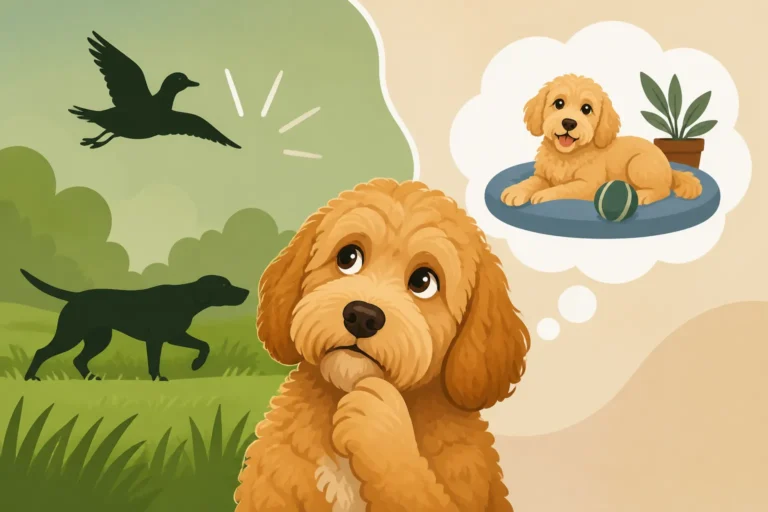
At the core of many a Cockapoo's scent-obsessed behavior is the inherent "flushing" drive passed down from their Cocker Spaniel heritage. Both American and English Cocker Spaniels were bred for centuries to be active hunting companions, working diligently in the field to find hidden game birds and "flush" them out for the hunter. This wasn't a passive job; it required an incredible amount of focus, stamina, and an exceptionally keen nose.
This powerful instinct doesn't just vanish when you cross a Cocker with a Poodle. Instead, it often manifests in a modern Cockapoo as an intense desire to explore every interesting smell, tirelessly following a trail wherever it may lead. It's a drive that can be utterly captivating for them, overriding everything else in that moment. You might see your Cockapoo suddenly drop their head, their tail wagging furiously, and then they're off, completely absorbed in the invisible world of scent. It's not disobedience; it's instinct in full bloom. You can learn more about this drive in The Flushing Drive Still Alive in a Cockapoo.
Poodle Intelligence and Curiosity
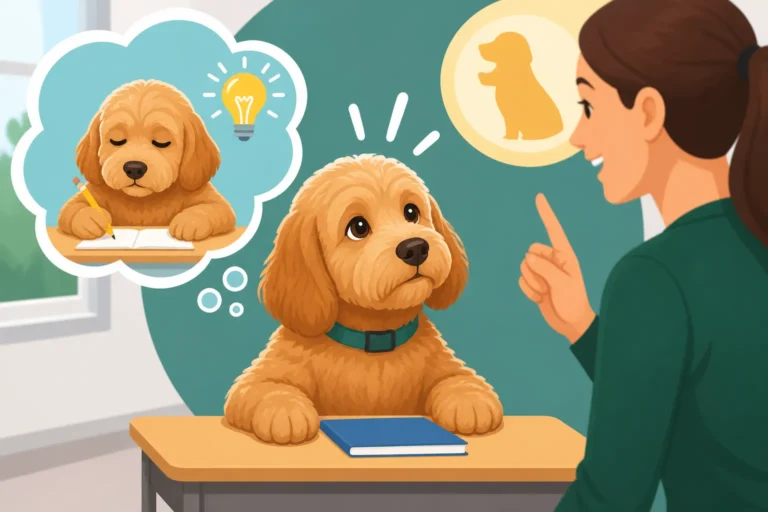
While the Cocker brings the strong scent drive, the Poodle parent contributes an incredible amount of intelligence, athleticism, and a history of working alongside humans. Poodles, too, were originally water retrievers, tasks that required sharp minds and a willingness to cooperate. This means your Cockapoo often possesses a natural eagerness to please and a quick grasp of new commands – in ideal circumstances.
However, Poodle intelligence also comes with a healthy dose of curiosity and problem-solving skills. A smart Cockapoo can quickly learn what they can get away with, and if ignoring your recall has previously led to a fantastic sniffing adventure, they'll weigh the pros and cons in their favor. Their quick wit means they need consistent, engaging training to keep them mentally stimulated and focused on you, especially when tantalizing scents are competing for their attention. It's a double-edged sword: they can learn quickly, but they can also learn to ignore you effectively if the rewards aren't compelling enough.
Why Scent is the Ultimate Distraction
Imagine trying to concentrate on a conversation when someone has just put a freshly baked pie right under your nose. Now multiply that sensation by a thousand, and you're getting close to what a dog experiences with scent. A dog's sense of smell is astronomically more powerful than ours, allowing them to detect odors at concentrations we can't even fathom. For a Cockapoo, particularly one with a strong spaniel influence, the world is an ever-unfolding story told through smell.
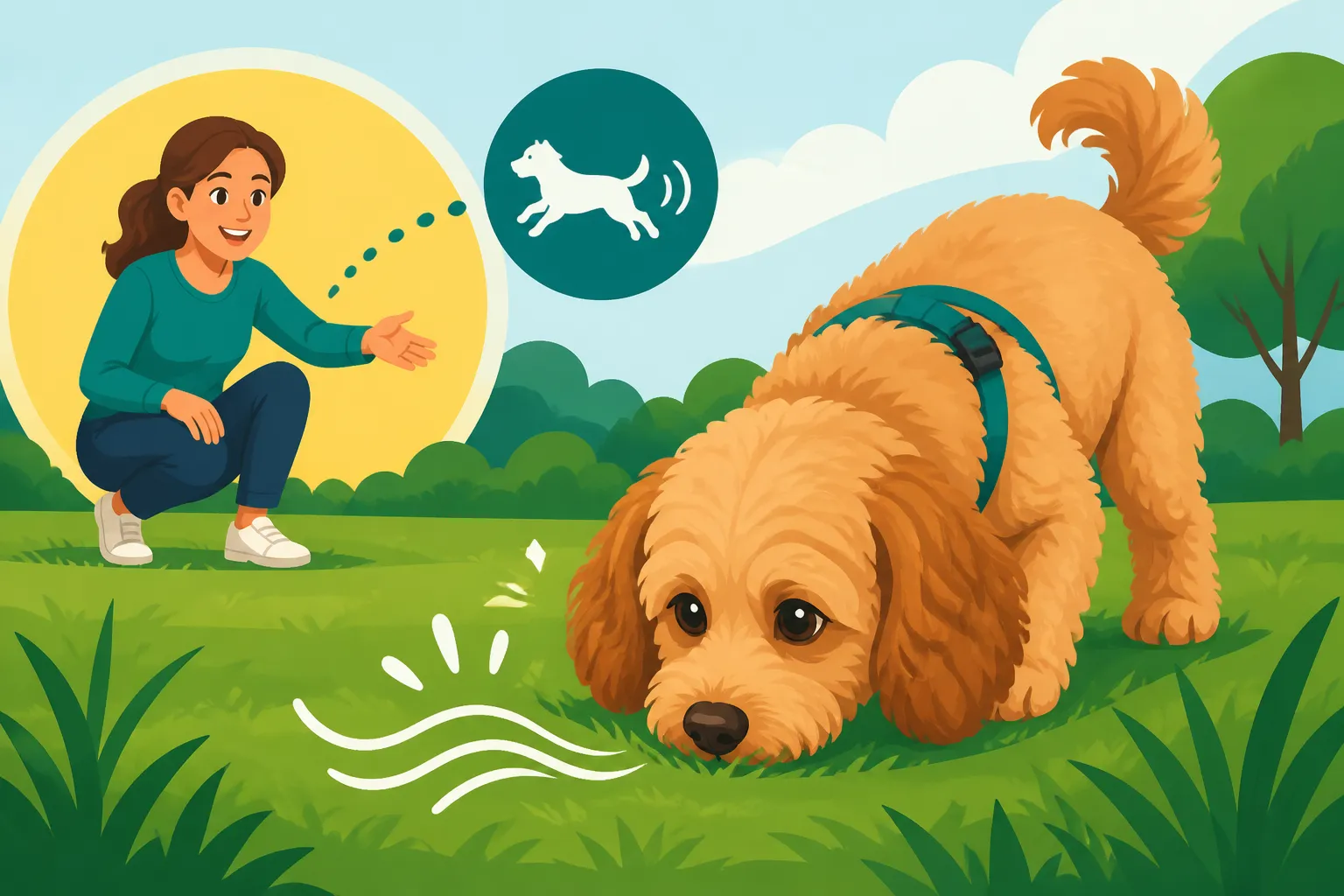
When your Cockapoo catches a compelling scent – perhaps a rabbit that passed by hours ago, or a deer trail, or even the faint odor of another dog – it's like an alarm bell goes off. That scent tells a vivid story, and their instinct dictates they must investigate. In that moment, your voice can become just background noise, completely drowned out by the overwhelming sensory input from their nose. It's not personal; it's biological. This profound connection to scent is why building a reliable recall requires more than just teaching the word "come"; it requires understanding and working with this powerful natural inclination. For more insights into how your Cockapoo's ancestors behaved, check out The Flushing Job Behind a Cockapoo's Spaniel Half.
Foundations of a Rock-Solid Recall
Building a recall that stands up to the allure of a captivating scent requires a strong foundation, built on trust, clear communication, and irresistible motivation. It’s not about wishing your Cockapoo would just listen; it’s about making listening the most rewarding choice every single time.
Starting with High-Value Rewards
When we talk about "high-value rewards," we're not just talking about any old kibble. For a Cockapoo who has just caught the scent of a squirrel or a fresh rabbit trail, you're competing with one of the most primal, exhilarating experiences a dog can have. Your reward needs to be more exciting, more desirable, than that fleeting thrill. This means figuring out what truly makes your individual Cockapoo tick.
For some, it might be tiny pieces of cooked chicken, cheese, or hot dogs. For others, it could be a squeaky toy they adore, or a super-fast game of tug. The key is to keep these "jackpot" rewards exclusive to recall training, so they never lose their special appeal. If you only offer these amazing treats when they come back to you, the value skyrockets. Varying the rewards also keeps things interesting – sometimes it's a treat, sometimes a toy, sometimes enthusiastic praise and a belly rub. This unpredictability makes your call even more exciting, because they never know what fantastic thing they're coming back for.
The "Come" Command: Making It Always Positive
This is perhaps the most crucial rule of recall: your "come" command should never be associated with anything negative or unpleasant. Ever. If your Cockapoo learns that "come" means the end of fun, going into the crate, getting a nail trim, or being scolded, why on earth would they choose to return to you when they've found something fascinating?
From the moment you start training your Raising a Cockapoo Puppy, "come" should be a joyful, exciting word. Practice it frequently in a low-distraction environment, like your living room or a securely fenced yard. Call them, cheer them on, and when they reach you, throw a party! Shower them with praise, treats, and their favorite toy. Make it the absolute best part of their day. Avoid using "come" when you know they won't obey, as this just teaches them to ignore it. Instead, go get them, and then re-engage in a positive recall game. This consistency builds a powerful, positive association that becomes ingrained.
Consistency and Family Involvement
A Cockapoo is smart, and they'll quickly learn if different people in the household have different rules or use different words. If one family member lets them get away with ignoring "come," while another is super strict, it creates confusion and weakens the command for everyone. Consistency is truly your best friend here.
Ensure everyone in your home uses the exact same recall word, the same hand signal (if you use one), and the same high-value rewards. It’s a team effort! Hold mini-training sessions together, making it a fun game for the whole family. Even children can be taught how to call the Cockapoo, reward them, and make it a positive experience. Just be sure to supervise to ensure the rewards are high-value and delivered enthusiastically. The more consistent the message, the faster your Cockapoo will understand that coming to you is always worth it, no matter who calls. Every interaction is a training opportunity, and your Cockapoo is constantly learning, for better or worse.
Gradually Introducing Distractions
Once your Cockapoo has a strong, enthusiastic recall in a calm, controlled environment, it's time to slowly and carefully introduce distractions. This is where many owners go wrong, jumping straight from the living room to a bustling park. The key is gradual progression, setting your Cockapoo up for success at every step.
The Controlled Environment First
Think of recall training like building muscle. You wouldn't go straight to lifting the heaviest weights; you start with lighter ones and gradually increase the load. Similarly, your Cockapoo needs to master recall in increasingly challenging situations. Begin in a completely distraction-free area, like your living room or a quiet, securely fenced backyard. Here, you are the most exciting thing, and there's nothing else to capture their attention.
Practice short-distance recalls, making it a game. Call your Cockapoo, reward them heavily, and then release them to play again. Do this several times in short bursts. Once they're consistently running to you with gusto, you can introduce very mild distractions. This might mean having a family member walk quietly across the yard, or a distant sound from a neighbor's house. The goal is to ensure your Cockapoo still prioritizes your call over these minor distractions before moving on to anything more intense. If they fail, you've moved too quickly; go back a step.
Mastering the Long Line
The long line is an indispensable tool for bridging the gap between a fenced yard and true off-leash freedom. It allows your Cockapoo to experience the thrill of more space and distant scents, while still giving you control and the ability to reinforce recall. Long lines typically come in lengths from 15 to 50 feet and are available from retailers like Amazon.
Start by attaching the long line to a comfortable harness (never just a collar, as a sudden stop could injure their neck). Let your Cockapoo explore a slightly larger, yet still relatively safe, area. Periodically, call their name and give your recall command. If they hesitate or seem engrossed in a scent, gently reel them in while continuing to give the command in a cheerful voice. The moment they turn towards you, release tension and reward them lavishly when they reach you. The long line prevents them from fully "practicing" ignoring you. The goal isn't to drag them in, but to guide them back to you if they waver. For more detailed advice on choosing and using this tool, see How Long a Long Line a Cockapoo Needs.
Moving to Higher-Scent Areas
This is where the rubber meets the road for a scent-driven Cockapoo. Once they are reliably responding to recall on the long line in moderately distracting environments, you can start to introduce areas known for their natural animal scents – but with extreme caution. Choose quieter times of day when there are fewer people and dogs around.
When your Cockapoo's nose hits the ground and they start to follow a fascinating trail, you'll need to be ready. Give your recall command with an enthusiastic, high-pitched voice, and immediately present your highest-value treat or toy. If they respond, praise and reward them immensely. If they hesitate, give a gentle tug on the long line to interrupt their focus, but the instant they turn towards you, release pressure and reward. The key is to be more exciting and rewarding than the scent itself. Always keep training sessions short and positive, ending on a high note. Remember, it's a marathon, not a sprint, and your Cockapoo will have good days and bad days. Don't get discouraged if they seem to "forget" their training sometimes, especially when that tantalizing scent just seems too good to pass up. You can also explore Whether a Cockapoo Hunts With Its Nose Down to understand their instinct further.
Specialized Strategies for Scent-Driven Recall
Because Cockapoos often have such a profound connection to scent, conventional recall training might not always be enough. You might need some extra tools in your training belt to truly overcome that powerful drive.
The Emergency Recall Word
Think of your regular "come" command as your everyday recall – reliable, but perhaps not foolproof in the face of a deer dashing across a field. An emergency recall word is your nuclear option, reserved for truly critical situations. This word should be completely different from any other command you use, unique and almost sacred. It could be something like "ATTENTION!" or "QUICK!" or even a distinct whistle.
To train it, find the absolute highest-value, most mind-blowing reward your Cockapoo could ever imagine. This is not just chicken; this is a whole grilled steak, or a dollop of peanut butter, or a ten-minute game of their favorite tug-of-war. In a calm environment, say your emergency word once, immediately followed by the super-jackpot reward. Repeat this only a few times, then stop. The goal is to create an instant, non-negotiable association: Emergency Word = Best Thing Ever. Crucially, never use this word unless you absolutely need your Cockapoo to return, and you are prepared to deliver that ultimate reward. If you use it casually, it loses its power.
Scent Work as an Outlet
Sometimes, the best way to manage a strong instinct is to give it a legitimate, structured outlet. For a scent-driven Cockapoo, engaging in scent work can be incredibly fulfilling, mentally stimulating, and can actually improve their general obedience and recall by channeling their natural abilities.
Activities like "nose work" or "scent detection" allow your Cockapoo to use their powerful nose on command, searching for specific odors (like essential oils) in a controlled environment. This is far from traditional obedience; it’s about letting them be a dog, using their greatest gift. There are many simple Scent Work That Satisfies a Cockapoo games you can play at home, such as hiding treats around the house and encouraging them to find them on cue. Teaching them Setting Up Scent Boxes for a Cockapoo at Home can also be a fantastic way to engage their nose. By giving them appropriate opportunities to follow their nose, you satisfy that deep-seated instinct, which can, in turn, make them less likely to ignore you when an unexpected scent appears during a walk. It’s like letting off steam in a constructive way.
Teaching "Leave It" and "Look at Me"
These two commands are invaluable for any dog, but especially for a Cockapoo prone to scent-driven distractions. "Leave It" teaches your dog to disengage from something tempting, while "Look at Me" redirects their attention squarely back to you.
"Leave It": Start with a low-value treat on the floor or in your hand. Cover it with your hand and say "Leave It." The moment your Cockapoo looks away from the treat, even for a second, praise them and reward them with a different, higher-value treat from your other hand. Slowly increase the challenge, moving to more enticing items and eventually practicing with things you find on walks. The key is that they never get the "leave it" item.
"Look at Me": Hold a high-value treat near your eye. When your Cockapoo makes eye contact, say "Yes!" or use a clicker, and give them the treat. Repeat this many times. Gradually move the treat further away from your eye, so they have to actively look for your gaze. This command builds vital eye contact and focus, which is essential for recall. If your Cockapoo is locked onto a scent, a strong "Look at Me" can be the vital circuit breaker you need to regain their attention before giving your recall command.
Common Challenges and Troubleshooting
Even with the best intentions and consistent training, you're bound to hit some bumps in the road when training a scent-driven Cockapoo. It's perfectly normal to feel frustrated, but remember, every challenge is an opportunity to refine your approach.
When Your Cockapoo Goes Deaf to "Come"
It's one of the most maddening experiences: you call your Cockapoo, and they might as well be on another planet, utterly oblivious to your existence, nose firmly planted in a captivating patch of grass. This phenomenon, where your Cockapoo seems to "go deaf," usually means one of a few things: either you've pushed too far too fast in your training, your rewards aren't high-value enough to compete with the distraction, or they've learned that ignoring you sometimes pays off with an interesting adventure.
The solution is almost always to go back to basics. Re-evaluate your reward system: are you using the absolute best treats or toys? Are they varied and exciting? Then, return to a completely distraction-free environment – your living room, a quiet, securely fenced yard – and rebuild that positive association with "come" from scratch. Make it so consistently rewarding that there's no question in their mind that returning to you is the best possible choice. Only once this foundation is rock-solid again should you slowly reintroduce distractions, one tiny step at a time, always setting your Cockapoo up for success rather than failure. Remember, if Whether a Cockapoo Ignores You Once It Scents Something, it's a sign to re-evaluate your approach.
Overcoming Breed-Specific Stubbornness
While Cockapoos are generally eager to please, both Cocker Spaniels and Poodles can have a streak of stubborn independence, especially when their instincts kick in. The Cocker's focus on scent can make them single-minded, and the Poodle's intelligence can mean they're good at making their own decisions if they feel your offer isn't strong enough. This isn't true stubbornness in the malicious sense; it's often a dog making a rational choice based on what's most rewarding to them in that moment.
To overcome this, you must consistently make yourself and your recall command the most exciting, rewarding, and predictable part of their environment. Vary your rewards, making coming back an engaging surprise. Play quick, fun games of hide-and-seek recall. Don't just stand there and call; squat down, open your arms, use an excited voice, and make yourself irresistible. Sometimes, running away from them can trigger their chase instinct and bring them back. The goal is to continuously reinforce that returning to you is not just an obligation, but a genuinely fun and rewarding experience that always pays off.
Seeking Professional Help
If you've diligently worked through these steps and still find your Cockapoo's recall unreliable, especially around strong scents, it might be time to enlist the help of a certified professional dog trainer. A good trainer can observe your Cockapoo's behavior, identify specific triggers or gaps in your training, and provide tailored, hands-on guidance. They can help you refine your techniques, suggest new strategies, and most importantly, help you understand your individual dog better.
Look for trainers who use positive reinforcement methods and have experience with scent hounds or spaniel breeds. They can help you with specific exercises, like proofing recall around high-value distractions in a controlled setting, or even guiding you into appropriate scent work activities that channel your Cockapoo's natural abilities. Online resources and programs, such as those offered by BAXTER & Bella, can also provide structured lessons and support if in-person training isn't immediately accessible. Don't view seeking professional help as a failure; view it as an investment in your Cockapoo's safety and your peace of mind.
Safety First: Preventing Runaways
A strong recall is your best defense against a runaway Cockapoo, but even the most well-trained dog can have an off day or encounter an unexpected, overwhelming distraction. Layering safety measures is paramount, especially for a breed with such a powerful scent drive.
The Importance of Secure Environments
Before you even consider off-leash exercise, ensure your home and immediate surroundings are secure. This means a securely fenced yard with no gaps or escape routes that your curious Cockapoo could exploit. Regularly check gates to make sure they latch properly and can't be pushed open.
On walks, always keep your Cockapoo on a leash unless you are in a designated, securely fenced off-leash area and have a rock-solid recall established. Even in seemingly safe open spaces, an unexpected scent or sudden movement of wildlife can trigger that powerful Whether a Cockapoo Ignores You Once It Scents Something, sending them off into potentially dangerous situations like roads or dense woods. Microchipping your Cockapoo is non-negotiable – it's a permanent form of identification that greatly increases the chances of reunion if they do get lost. Make sure your contact information is always up to date with the microchip registry. Always ensure they wear an ID tag with your current phone number, even if microchipped.
Tools for Off-Leash Safety
While training is key, certain tools can provide an extra layer of safety and peace of mind, especially as you work towards reliable off-leash recall or explore new environments.
A GPS tracking collar, for example, can be an invaluable investment for a scent-driven Cockapoo. These devices allow you to track your dog's location in real-time via a smartphone app, which can be a lifesaver if they do manage to slip away. They are not a substitute for training, but rather a safety net. Consider which Whether a Cockapoo Needs a GPS Collar best suits your Cockapoo's size and your outdoor activities. When it comes to everyday walks, ensure your Cockapoo wears a well-fitting harness rather than just a collar. A harness distributes pressure across their chest and shoulders, preventing injury if they pull or if you need to quickly grab them. It also makes it much harder for them to slip out compared to a traditional flat collar.
| Training Stage | Environment | Key Focus | Recommended Tools |
|---|---|---|---|
| Foundation | Home, quiet room | Positive association with "come" | High-value treats, favorite toys |
| Low Distraction | Fenced yard, quiet park | Short-distance recalls, gentle distractions | Long Line a Cockapoo Needs, variety of treats, marker word |
| Moderate Distraction | Public park (quiet times) | Increasing distance, varied distractions | Long line, emergency recall word, focused games |
| High Distraction | Busy park, nature trail (controlled) | Proofing recall with strong scents/sights | GPS collar (optional), consistent rewards |
What to Do If Your Cockapoo Bolts
Despite all your efforts, sometimes a Cockapoo will still bolt after a scent. When this happens, your immediate reaction is critical. The absolute worst thing you can do is chase them. For a dog, being chased often turns into a game of "keep away," or worse, can instill fear.
Instead, resist the urge to panic. Turn and run the other way, calling their name enthusiastically in a high-pitched, happy voice as if something amazing is happening. Often, this unexpected move will pique their curiosity and trigger their chase instinct, causing them to turn and follow you. If you have your emergency recall word, this is the time to use it, followed by the promise of their jackpot reward. Keep a small "recall emergency kit" in your car or backpack – a super special, smelly treat (like sardines or string cheese) or a highly-prized, squeaky toy they only get in these situations. If you manage to get them back, even after a frightening chase, praise and reward them immediately, then calmly put them back on the leash. Avoid scolding; the important thing is they returned to you. Understanding The Thing Cockapoo Buyers Find Out Too Late often involves this very scenario, emphasizing the importance of proactive recall training.
Disclaimer
This article is for general informational purposes only and does not constitute professional advice. Laws, prices and regulations vary by location and change over time. Consult a qualified professional for guidance on your specific situation.