Whether a Straight Coated Cockapoo Turns Wavy
It's a common and totally understandable question to wonder if your Cockapoo puppy's straighter coat will eventually "fluff out" or develop those lovely waves you might have envisioned. Many of us fall in love with the idea of that quintessential wavy, low-shedding Cockapoo coat, only to find our puppy's fur looking a bit flatter than expected. This can be really disheartening, making you wonder if you've done something wrong or if the coat will change with time. Let's dive deep into how Cockapoo coats develop and what you can realistically expect.
Understanding Cockapoo Coat Genetics: The Foundation of Curl and Furnishings
When we talk about a Cockapoo's coat, we're not just looking at one thing; it's a fascinating blend of several genetic factors inherited from both the Cocker Spaniel and the Poodle side. These genes work together to determine whether your furry friend will have that iconic wavy look, a tight curl, or something straighter that might surprise you. Understanding these basic building blocks is key to managing expectations and recognizing what a coat can, and cannot, do.
The 'Furnishings' Gene (RSPO2): More Than Just a Beard
One of the most critical genes for the Cockapoo's appearance, especially for that desirable low-shedding quality, is the RSPO2 gene, often referred to as the "furnishings" gene. Furnishings are the longer hairs on a dog's face – think of the mustache, beard, and eyebrows that give many doodles their characteristic endearing, shaggy look. Without furnishings, a dog typically has a smoother face, more like a traditional Cocker Spaniel or Poodle (depending on the cut).
If a Cockapoo inherits at least one copy of the dominant furnishing gene (F/F or F/ic), they will have furnishings. This gene is incredibly important because it's linked to the low-shedding trait. A dog without furnishings, meaning they inherited two copies of the recessive "improper coat" gene (ic/ic), will shed significantly more, regardless of how curly their body coat is. These "improper coated" Cockapoos often have very straight, flat hair on their body and face, resembling more of a smooth-coated Spaniel than the fluffy doodle we expect. It's a common point of confusion because many assume "straight" automatically means low-shedding if it's a Cockapoo, but that's not always the case without those furnishings. This is why you often hear people talking about What an Improper Coated Cockapoo Looks Like – it's a distinct look that sheds.
The 'Curl' Gene (KRT71): The Wavy or Curly Factor
Beyond furnishings, there's the KRT71 gene, which specifically dictates the degree of curl or waviness in a dog's coat. This gene has different variants that lead to different expressions of curl. A dog can have two copies of the "curl" allele (Ct/Ct) resulting in a very tight, Poodle-like curl. If they have one copy (Ct/+), they'll typically have a wavy coat. If they have no copies of the curl allele (+/+), their coat will be straight, assuming they also have furnishings.
So, while the furnishings gene gives the coat its texture and low-shedding potential, the curl gene refines it into waves or tight curls. A Cockapoo with furnishings but only one or no copies of the curl gene will have a wavy or even somewhat straight, but still low-shedding, coat. If your Cockapoo has a straight coat now, the question of whether it will turn wavy largely depends on the presence of these two genes. If your Cockapoo has furnishings but its body coat is straight, it may have the genetic makeup for a straight coat, or it might be in an early developmental stage. We'll explore What KRT71 Says About a Cockapoo's Curl in more detail soon, but for now, remember that curl is genetically determined and not something that simply appears out of thin air later on.
The Reality of Coat Development: When Changes Happen (and When They Don't)
It’s easy to look at a fluffy Cockapoo puppy and imagine it will grow into a perfectly wavy adult. But canine coat development is a dynamic process, and understanding its stages can help you manage your expectations. While some changes are normal and expected, others are simply not genetically possible.
Puppy Coat vs. Adult Coat: The "Fluffball" Phase
When you first bring home your Cockapoo puppy, their coat is often soft, fine, and relatively easy to manage. This "puppy coat" can be quite misleading. Many puppies, even those destined for tight curls, might have a much straighter or only slightly wavy coat at eight weeks old. This makes sense when you consider A Cockapoo's Coat at Eight Weeks. It's immature, hasn't fully developed its texture, and lacks the density it will eventually acquire.
Think of it like human baby hair – often fine and light, completely different from adult hair. For Cockapoos, this puppy fluff will gradually be replaced by their adult coat. During this transition, which often starts around 4-6 months and can continue for quite some time, you might notice changes in texture, density, and even color. This is a very normal part of a dog's development and is often where the coat truly begins to show its genetic predispositions. However, this transition is about the maturation of existing genes, not the acquisition of new ones.
The Great Coat Change: Expectations vs. Reality
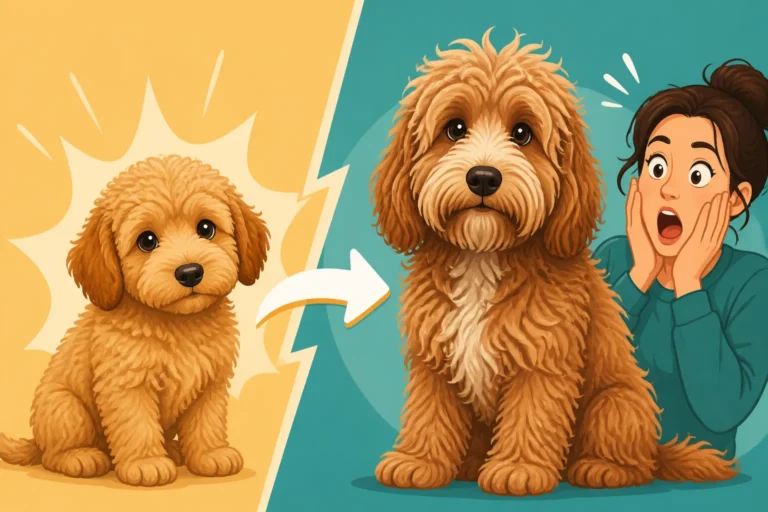
The most significant period of coat transformation for a Cockapoo typically occurs between 6 and 18 months of age. This is what many owners refer to as "the coat change," and let me tell you, it can be quite the experience! During this time, the soft puppy fur starts to shed out, making way for the denser, coarser adult coat. For Cockapoos with the appropriate genetics for waviness or curl, this is when those textures will truly start to emerge and become more defined. You might find yourself saying, "My dog's coat is suddenly a tangled mess!" and that's usually because the different textures of puppy and adult coat are weaving together. This is a major reason why The Coat Change That Ambushes a Cockapoo Owner at Ten Months is such a common topic of conversation among Cockapoo parents.
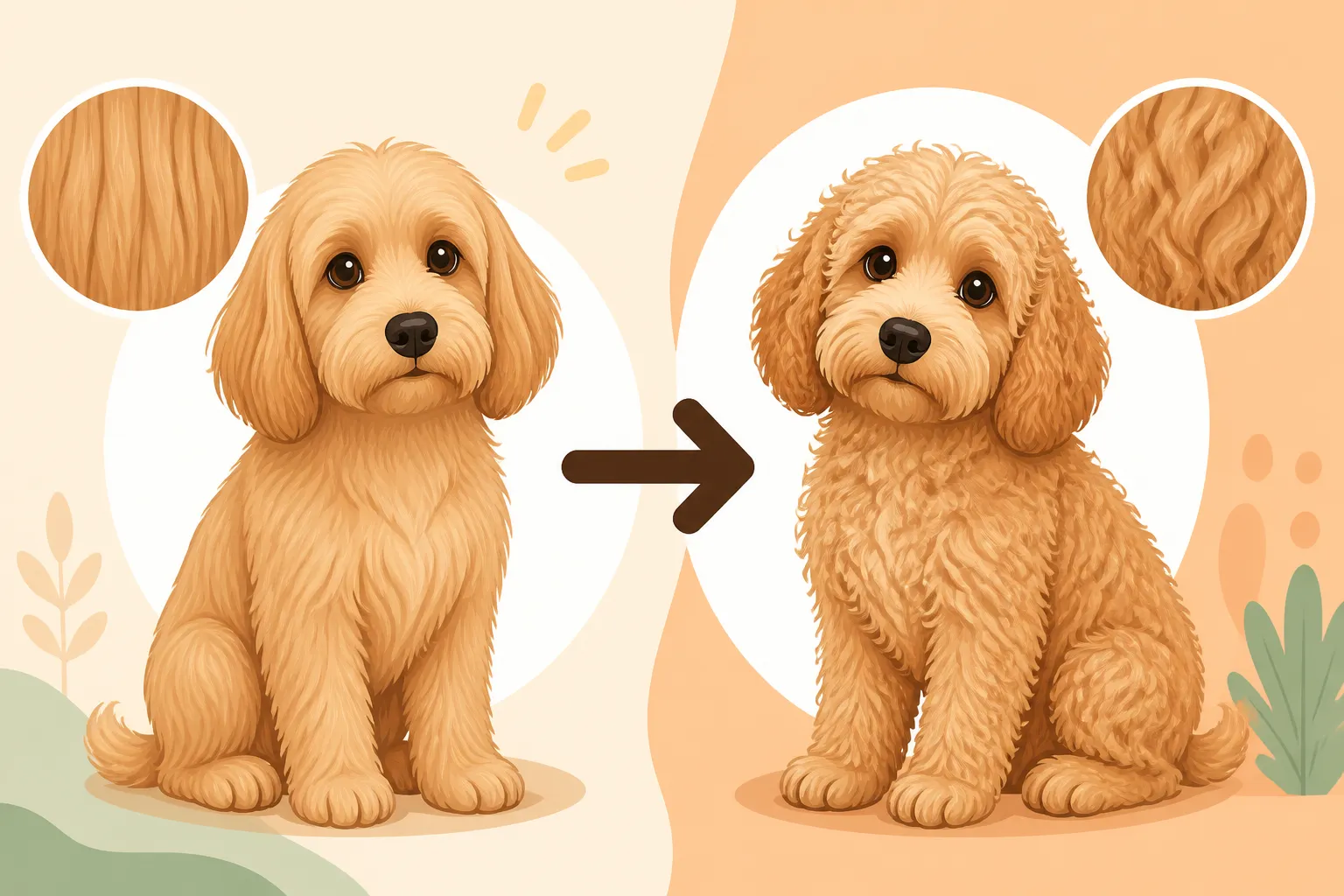
So, if your Cockapoo puppy has a slightly wavy coat at 3-4 months, it’s entirely possible that those waves will tighten and become more pronounced during this coat change phase. However, if your puppy has a genuinely straight, flat coat with little to no indication of furnishings (that longer facial hair), it is highly unlikely to spontaneously develop significant waves or curls simply because of age. The coat change will certainly affect the texture and density, but it won't fundamentally alter its genetic structure. It’s more about the existing genetic blueprint finally being expressed, rather than a magical transformation. The duration and intensity of this change can vary, but generally, you'll be navigating it for several months. How Long a Cockapoo's Coat Change Runs depends on the individual dog and its specific genetics. To help manage tangles and matting during this time, many owners find a good detangling spray and a sturdy brush, available from places like Chewy or Amazon, to be absolute lifesavers.
Straight Coats That Stay Straight: The Unfurnished Cockapoo
Here's the honest truth: if your Cockapoo possesses the genetic markers for an "improper coat" (often referred to as IC or "unfurnished"), it's not going to suddenly develop waves or curls. An improper coat is characterized by a smoother, often shorter coat that lacks the longer facial hair (beard, mustache, eyebrows) that defines the typical Poodle or Doodle look. These dogs will shed, much like their Cocker Spaniel ancestors.
Sometimes, a Cockapoo might have furnishings but still have a relatively straight body coat. This happens when they inherit the furnishings gene but lack the full "curl" gene variants. In these cases, the coat will still be low-shedding, but it will remain straight or very subtly wavy. It won't suddenly become tightly curled. This is important to understand because a straight coat, whether furnished or unfurnished, isn't necessarily a "bad" coat, it's just different. It often requires less intensive daily grooming than a very curly coat, though regular brushing is still crucial to prevent matting, especially for furnished straight coats. The main difference lies in shedding and the characteristic "doodle" look. Why an Improper Coated Cockapoo Sheds is directly tied to the absence of those furnishings. If you're hoping for a coat that will truly curl, genetic testing is the only way to be certain of the potential.
What to Look For and What to Ask Your Breeder
Navigating the world of Cockapoo coats can feel like a puzzle, especially when you're trying to anticipate what your puppy will look like as an adult. However, there are proactive steps you can take, both when choosing a puppy and as they grow, to get a clearer picture.
Identifying Coat Type in a Puppy
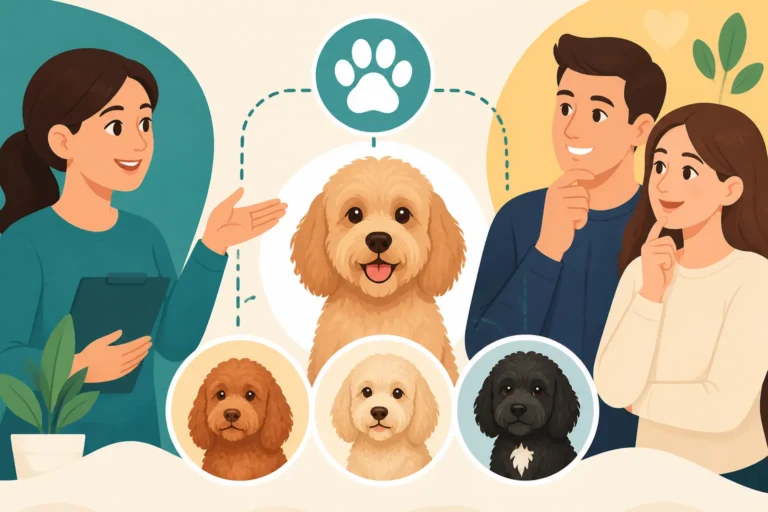
While a puppy's coat at 8 weeks is still developing, there are some indicators that can give you clues about its future texture. The most crucial visual cue is the presence of "furnishings." Look closely at the puppy's muzzle, eyebrows, and legs. Does it have noticeably longer, coarser hair in these areas, forming the start of a beard or shaggy brows? This is the clearest sign of furnishings. Even if the body coat is soft and relatively straight, prominent furnishings suggest a low-shedding coat that will likely develop some degree of wave or curl as it matures. Conversely, a puppy with a smooth face, short hair around the muzzle, and a flat body coat is very likely to be an improper coat and will remain straight and shed. Telling a Furnished Cockapoo Puppy by Its Muzzle is an excellent skill for prospective owners to develop.
The texture of the body coat can also offer hints. A puppy destined for a wavy or curly coat might have a slightly coarser, springier feel to its fur, even if it's not overtly curly yet. A truly straight, unfurnished coat will feel much smoother and silkier, almost like a Spaniel's coat. However, visual assessment alone is never 100% foolproof, especially with the wide variation in Cockapoo genetics.
The Value of Genetic Testing
For anyone wanting to be absolutely certain about their Cockapoo's adult coat type, genetic testing is the gold standard. Breeders, particularly responsible ones, often perform genetic health and coat panels on their breeding dogs to ensure they are making informed choices. These tests can identify whether a dog carries the furnishings gene (RSPO2) and the curl gene (KRT71), as well as other coat characteristics.
A DNA coat panel provides clear results, typically indicating if a dog has two copies of furnishings (F/F), one copy (F/ic), or is improper coated (ic/ic). It also indicates the number of curl genes (Ct/Ct for curly, Ct/+ for wavy, +/+ for straight). These results take the guesswork out of coat prediction. For instance, if a puppy is genetically identified as F/F Ct/Ct, it's highly likely to develop a tightly curled, low-shedding coat. If it's F/F +/+, it will be a low-shedding, furnished dog but with a straight coat. And if it's ic/ic, regardless of its curl genes, it will be an improper coat and shed.
If your breeder has done these tests, they should be able to share the results with you and explain what they mean for your puppy's potential coat type. Asking a breeder for these certificates is a great way to ensure transparency and responsible breeding practices. What a Cockapoo Coat Panel Actually Reports can be a bit technical, but a good breeder will walk you through it. If you already have your Cockapoo and are curious, there are several reputable genetic testing companies that offer coat panels directly to owners. You can order a kit, swab your dog's cheek, and send it in for analysis. This can be particularly useful if you're managing a coat that behaves differently than you expected, allowing you to tailor your grooming routine effectively. Even if your Cockapoo has a straight coat, understanding its genetic makeup can inform your grooming choices and help you provide the best care. Also, thinking holistically about your dog's well-being, brands like Ollie offer personalized nutrition plans that can support overall health, including skin and coat condition, which is always beneficial regardless of genetic predispositions.
| Coat Type Characteristic | Genetic Markers (Simplified) | Grooming Needs | Shedding Potential | Typical Appearance |
|---|---|---|---|---|
| Straight (Improper Coat) | ic/ic (no furnishings) | Moderate; brushes through easily | High | Smooth, flat coat on body and face; resembles a Spaniel. |
| Straight (Furnished) | F/F or F/ic (+/+) | Moderate to High; prone to matting if long | Low | Longer hair on face/legs, straight body coat; needs regular brushing. |
| Wavy (Furnished) | F/F or F/ic (Ct/+) | High; needs frequent brushing to prevent mats | Low to Moderate | Characteristic loose waves; requires diligent grooming. |
| Curly (Furnished) | F/F or F/ic (Ct/Ct) | Very High; daily brushing essential | Very Low | Tight, Poodle-like curls; most prone to matting. |
Disclaimer
This article is for general informational purposes only and does not constitute professional advice. Laws, prices and regulations vary by location and change over time. Consult a qualified professional for guidance on your specific situation.