Whether Two Registries Have Made Cockapoos Healthier
Bringing a Cockapoo into your life is a joyful, hopeful experience, but the journey to finding a truly healthy puppy can feel like navigating a maze. With so many breeders and so much conflicting information out there, it's natural to wonder if the various Cockapoo registries actually make a difference to the health and longevity of these beloved dogs. This guide will dive deep into the role of these organizations, what they aim to achieve, and whether their existence truly helps in ensuring your Cockapoo lives the healthiest life possible.
The Promise and Peril of Designer Dogs
When you first hear about a Cockapoo, the idea of a "designer dog" often conjures images of the best of both worlds – the intelligence of a Poodle combined with the sweet nature of a Cocker Spaniel, all wrapped up in a low-shedding package. Many people, quite understandably, assume that by mixing two different purebred dogs, you automatically eliminate the health issues common to each parent breed. This is where the concept of "hybrid vigor" comes into play, a term that has both hope and misconception woven into its very fabric.
The Initial Vision for Hybrid Vigor
The initial excitement around hybrid vigor was based on a perfectly logical premise: purebred dogs, through generations of selective breeding within a closed gene pool, can sometimes accumulate a higher incidence of specific genetic health problems. Think of a family tree where a certain condition keeps popping up. By introducing new genetic material from an unrelated breed, the theory suggests you dilute the chances of inheriting those specific problematic genes. For the Cockapoo, the hope was that crossing the American Cocker Spaniel with the Poodle would create a healthier dog, less prone to the distinct ailments of either. It sounded like a win-win, offering a dog with fantastic traits and robust health. Many early Cockapoo owners genuinely believed they were getting a dog that would naturally sidestep the various health hurdles their purebred counterparts often faced. This promise was a huge draw, and it's easy to see why.
However, this concept isn't a guarantee. Hybrid vigor only truly works its magic when the parent breeds are genuinely healthy and genetically diverse for the specific traits in question. It’s not a magic shield against all genetic conditions, but rather a reduction in the likelihood of conditions that require two copies of a recessive gene to express themselves, assuming the other parent doesn't carry that same gene. The dream was a Cockapoo that lived a long, healthy life with fewer vet visits, a dog that somehow transcended the historical baggage of its ancestors. And for many lucky owners, this has absolutely been their experience. But for others, the reality has been far more complicated.
When "Designer" Went Wrong
Unfortunately, the surging popularity of "designer dogs," including the adorable Cockapoo, also attracted less scrupulous individuals looking to cash in on the trend. When a breed becomes highly sought after, prices soar, and suddenly, everyone wants to be a "breeder." This is where the initial promise of hybrid vigor often took a sharp turn for the worse. Instead of thoughtful, health-focused pairings, many operations prioritized quantity over quality, breeding dogs without any regard for their genetic health history. These breeders, often running large-scale commercial breeding facilities known as puppy mills, or even smaller-scale "backyard breeders" who simply weren't educated enough, neglected crucial health screenings for the parent dogs.
The result? Pups were born with inherited conditions that good breeding practices could have prevented. Instead of diluting health problems, these uncontrolled pairings often compounded them, bringing together two parents who, unknowingly or uncaringly, carried the same genetic risks. For instance, a Cocker Spaniel parent might have predispositions to certain eye issues, and a Poodle parent might have others. Without proper testing, a Cockapoo could end up inheriting a double whammy, suffering from a combination of problems. This led to a heartbreaking situation where many families, after falling in love with their new Cockapoo puppy, found themselves facing substantial vet bills and emotional distress due to preventable illnesses. It became clear that simply mixing two breeds wasn't enough; responsible breeding, backed by transparency and health protocols, was absolutely essential.
The Emergence of Cockapoo Registries
Recognizing the growing issues within the unregulated Cockapoo market, dedicated enthusiasts and ethical breeders understood that something needed to be done. They saw the potential for the Cockapoo to be a truly wonderful companion dog, but only if its development was guided by principles of health, temperament, and responsible breeding. This collective concern paved the way for the formation of breed-specific clubs and registries, aiming to bring order, accountability, and a focus on health to the world of Cockapoos. These organizations stepped in to fill a crucial gap, providing a framework that individual breeders could (and hopefully would) adhere to.
The American Cockapoo Club (ACC) and Its Goals
One of the prominent organizations that emerged to champion the Cockapoo was the American Cockapoo Club (ACC). Formed with a clear vision, the ACC aimed to elevate the breed beyond the "designer dog" label and move towards a recognized, standardized identity. Their primary goals revolved around promoting ethical breeding practices, encouraging responsible pet ownership, and, critically, advocating for the health and welfare of the Cockapoo. They understood that for the breed to flourish, breeders needed clear guidelines.
The ACC developed a breeder code of ethics that emphasizes comprehensive health testing for the parent Poodles and Cocker Spaniels. This isn't just a suggestion; it's a foundational pillar of their philosophy. They require members to screen for common inherited conditions such as Progressive Retinal Atrophy (PRA), hip and elbow dysplasia, patellar luxation, and certain cardiac conditions. Beyond physical health, they also champion sound temperament, recognizing that a well-adjusted Cockapoo is just as important as a physically healthy one. Their registry serves not only as a record of lineage but also as a tool to track health information, allowing prospective puppy buyers to verify that a breeder is indeed following recommended health protocols. This effort provides a much-needed layer of accountability in an otherwise fragmented landscape, giving buyers a place to start when looking for a responsible breeder.
The Cockapoo Club of America (CCA) and Its Approach
Another significant player in the effort to standardize and safeguard the Cockapoo is the Cockapoo Club of America (CCA). Like the ACC, the CCA was founded out of a shared passion for the breed and a desire to see Cockapoos bred responsibly and ethically. They, too, recognize the critical importance of health testing and temperamental soundness, striving to guide breeders toward practices that prioritize the long-term well-being of their puppies. While there might be subtle differences in their specific guidelines or focus areas, both clubs essentially share the overarching goal of fostering a healthier Cockapoo population.
The CCA also provides a framework for breeders, including recommendations for health screening. They encourage breeders to obtain certifications from organizations like the Orthopedic Foundation for Animals (OFA) for orthopedic issues, and the Canine Eye Registry Foundation (CERF, now part of OFA's Eye Certification Registry) for eye health. They also place an emphasis on documenting the parentage and generations of Cockapoos, which is vital for understanding genetic health trends over time. This kind of diligent record-keeping helps to ensure that breeders aren't just making claims about their dogs' health but can actually back them up with verifiable documentation. Both clubs offer resources, education, and community support for breeders and owners alike, all working towards the common good of the Cockapoo. They act as guiding lights in an industry that, for a long time, was largely left to its own devices, leaving many dog owners vulnerable to irresponsible practices.
How Registries Aim to Improve Health
So, how exactly do these registries intend to make Cockapoos healthier? It's not just about having a name and a website; it's about setting tangible standards and encouraging their adoption. The core idea is to move from a chaotic, unregulated environment to one where predictable health outcomes are a priority. This involves a multi-faceted approach, focusing on everything from the genetic makeup of the parent dogs to the overall well-being of the puppies. They really try to cover all the bases, which is a huge relief for hopeful owners.
Mandated Health Testing for Parent Breeds
One of the most significant ways registries aim to improve Cockapoo health is by requiring or strongly recommending specific health tests for the parent breeds: the American Cocker Spaniel and the Poodle. This isn't just a casual vet check-up; these are specialized genetic and physical examinations designed to detect predispositions to inherited diseases. For instance, reputable breeders registered with organizations like the ACC or CCA will submit their breeding dogs for evaluations for hip dysplasia and patellar luxation (slipping kneecaps), both of which can cause significant mobility issues and pain. This is especially important when considering the different sizes of Cockapoos, as a Toy Cockapoo might be more prone to patellar issues. The results of these tests, often graded by the Orthopedic Foundation for Animals (OFA), provide crucial insight into a dog's orthopedic health.
Furthermore, eye health is a major focus. Both Poodles and Cocker Spaniels are susceptible to various ocular conditions. Registries push for regular eye examinations by board-certified veterinary ophthalmologists, often through the OFA's Eye Certification Registry. This screens for issues like cataracts, glaucoma, and Progressive Retinal Atrophy in a Cockapoo, a degenerative eye disease that can lead to blindness. Understanding whether Both Cockapoo Parents Must Be prcd-PRA Clear is vital, as this genetic condition requires specific testing. Moreover, there are genetic DNA tests available for certain conditions, such as Von Willebrand's disease (a bleeding disorder) in Poodles, and Familial Nephropathy in Cocker Spaniels. Registries often require breeders to utilize these DNA tests to ensure that they are not pairing two carriers of a recessive gene, which could result in affected offspring. The goal is to provide transparency, allowing potential owners to see the health certifications for both parents, giving them peace of mind that their puppy has the best possible start. It's about proactive prevention, rather than reactive treatment down the line.
Promoting Ethical Breeding Practices
Beyond just health testing, these registries work hard to promote a broader spectrum of ethical breeding practices. It's not enough to just test the parents; how they are bred, raised, and cared for also makes a profound difference to the health and temperament of the puppies. Registries often establish guidelines regarding the age at which a dog can be bred, typically recommending that dogs be mature enough to undergo full health screening before entering a breeding program. This helps prevent breeding from dogs who haven't fully developed or whose health issues might not yet be apparent.
They also provide recommendations on litter frequency and the overall health and condition of the breeding dogs. Over-breeding or breeding from unhealthy parents can severely impact the welfare of both the dam and her puppies. By discouraging such practices, registries aim to ensure that breeding dogs lead healthy, fulfilling lives and that puppies are born to well-cared-for mothers. Furthermore, they stress the importance of proper socialization for puppies during their critical early weeks, ensuring they are exposed to various sights, sounds, and experiences to develop into confident, well-adjusted adults. Some registries even outline standards for kennel environments, emphasizing cleanliness, adequate space, and proper nutrition for all dogs. This holistic approach to breeding aims to produce not just healthy puppies, but well-rounded, stable companions, reducing the likelihood of behavioral issues that can be just as challenging as physical ailments for new owners.
Maintaining Pedigrees and Lineage
Another crucial, though often overlooked, aspect of how registries aim to improve health is through the meticulous maintenance of pedigrees and lineage records. While the Cockapoo isn't yet a fully recognized breed like a purebred Cocker Spaniel or Poodle, these registries endeavor to create a structured record-keeping system that tracks the ancestry of registered Cockapoos. This might sound like a formality, but it's incredibly important for understanding genetic health. By knowing the lineage, breeders and the registry can identify patterns of health issues that might emerge in certain lines. If a specific genetic condition, even one not routinely tested for, starts appearing in several related Cockapoos, the registry can then alert breeders and recommend additional screening.
This genealogical tracking allows for informed breeding decisions, helping to prevent the inadvertent doubling up of undesirable genes. For example, if a particular line shows a higher incidence of Familial Nephropathy and the Kidneys a Cockapoo Can Inherit, breeders can be advised to avoid certain pairings or to conduct more rigorous testing. It’s a proactive way to safeguard future generations. While Cockapoo pedigrees might not be as extensive or uniform as those for AKC-registered purebreds, the effort by these clubs to document ancestry is a significant step towards creating a healthier, more predictable breed. It provides a historical context that helps breeders avoid pitfalls and allows for a more scientific approach to improving the Cockapoo's genetic health pool over time.
The Reality: Challenges and Limitations
Despite the admirable goals and diligent efforts of Cockapoo registries, the reality on the ground is often more complex and fraught with challenges. While these organizations provide an invaluable framework for responsible breeding, they operate within a larger, often unregulated market, which limits their overall impact. It's not a silver bullet, and understanding these limitations is crucial for any prospective Cockapoo owner. The intention is there, the guidelines are there, but getting everyone on board is the tricky part.
Voluntary Nature and Enforcement Difficulties
Perhaps the biggest hurdle these Cockapoo registries face is their voluntary nature. Unlike well-established purebred registries like the American Kennel Club (AKC) for Poodles and Cocker Spaniels, Cockapoo clubs do not have universal authority over all Cockapoo breeders. Anyone can breed a Cockapoo and sell the puppies without ever engaging with a registry, following their guidelines, or performing any health testing whatsoever. This means that a significant portion, if not the majority, of Cockapoos bred and sold in the United States might come from sources entirely outside the purview of these health-focused clubs.
Enforcing their standards, even among their own members, can also be challenging. While they provide codes of ethics and recommend protocols, they often lack the robust inspection and disciplinary mechanisms of larger, more established breed clubs. If a member breeder falls short, the consequences might be limited to expulsion from the club, which, while a deterrent, doesn't prevent them from continuing to breed and sell puppies. This creates a situation where dedicated, ethical breeders strive to meet high standards, but they are often overshadowed by a vast number of breeders who simply do not care to join or adhere to any external guidelines. For a puppy buyer, this means that simply seeing "registered" in an advertisement isn't enough; you still have to do your due diligence to ensure the breeder actually follows through on the spirit of the registry's mission.
The Influence of the Untested Market
The existence of a vast, largely untested market for Cockapoos profoundly impacts the overall health trajectory of the breed. For every conscientious breeder who meticulously screens their dogs for genetic health conditions, there are countless others who breed without any testing at all. These breeders often sell their puppies at lower prices, which can be incredibly tempting for families on a budget, even if it comes with the hidden cost of potential health problems down the road. This competition from the untested market makes it harder for ethical breeders to stand out and educate the public about the true value of health screening.
The unchecked breeding of untested dogs continuously introduces genetic predispositions into the Cockapoo gene pool, regardless of the efforts of registered breeders. For example, a severe condition like Familial Nephropathy and the Kidneys a Cockapoo Can Inherit, if not screened for universally, will persist. This means that even if a registry mandates the FN DNA Test a Cockapoo Breeder Runs for its members, the broader population of Cockapoos might still carry a high percentage of affected individuals or carriers. The sheer volume of untestable or unverified Cockapoos makes it difficult to make significant, widespread improvements in the breed's health. It's a bit like trying to clean a small pond when there's a much larger, polluted river feeding into it.
Understanding "Clear by Parentage" Limitations
A common phrase you might encounter when looking for a puppy, particularly in the realm of mixed breeds, is "clear by parentage." This means that a puppy hasn't been individually tested for a genetic condition because both of its parents were tested and found to be clear. On the surface, this sounds perfectly logical and reassuring. If both parents are clear of a recessive gene that causes a disease, then their offspring cannot inherit two copies of that gene and therefore cannot be affected. And for many conditions, this is absolutely true and a valid way to ensure a puppy is healthy.
However, "clear by parentage" isn't entirely foolproof, and relying solely on it can sometimes lead to issues. First, it only applies to genetic conditions for which the parents were actually tested. If there are other genetic conditions relevant to the breed that weren't part of the parents' panel, the puppy won't be "clear" of those. Second, mistakes can happen. Laboratory errors, mislabeling of samples, or even, sadly, fraudulent paperwork from unethical breeders can undermine the validity of parentage claims. More rarely, non-paternity can be an issue if a different male sired the litter than the one claimed. For some serious conditions, such as Progressive Retinal Atrophy in a Cockapoo, or for specific orthopedic issues, many reputable breeders still choose to run individual tests on their breeding stock, even if they are technically "clear by parentage" for previous generations. This extra step provides an additional layer of verification and peace of mind. While "clear by parentage" can be a good indicator, it's always worth asking a Cockapoo breeder for the FN certificate and other health clearances directly, and understanding exactly what conditions those clearances cover.
Specific Health Concerns and Registry Impact
The Cockapoo, being a hybrid of the American Cocker Spaniel and the Poodle, can inherit a range of health concerns common to both parent breeds. This is where the efforts of registries become particularly important, as they attempt to mitigate these risks through targeted health testing and responsible breeding guidelines. Let's look at some of the most prominent health challenges and how registries try to make a difference. It's a careful dance between genetic legacy and proactive prevention.
Familial Nephropathy and the Role of Testing
Familial Nephropathy (FN) is a particularly devastating kidney disease that is often inherited from the Cocker Spaniel side of a Cockapoo's lineage. It's a progressive, fatal condition that typically manifests in young dogs, often before two years of age, leading to kidney failure. Symptoms can include increased thirst, frequent urination, weight loss, and lethargy. The heartbreak of watching a young, otherwise vibrant dog succumb to such an illness is immense, and it highlights the critical importance of genetic testing.
This is where Cockapoo registries, through their health guidelines, aim to make a significant impact. They strongly recommend, and often require, that breeding Cocker Spaniels (and by extension, any Cockapoo used in breeding programs) be DNA tested for Familial Nephropathy. The FN DNA Test a Cockapoo Breeder Runs can definitively identify whether a dog is clear, a carrier, or affected. By only breeding clear dogs, or by carefully pairing a clear dog with a carrier (never two carriers, which would produce affected puppies), breeders can eliminate the risk of producing puppies that will develop FN. This focus on testing is a direct response to the suffering caused by this disease. While it’s true that whether a Cockapoo gets nephropathy only from the Cocker is largely the case, understanding the specific genetic predisposition from that parent breed is paramount. Registries provide a crucial framework to ensure breeders are aware of this risk and take the necessary steps to prevent its transmission, offering a glimmer of hope for a future with fewer FN-affected Cockapoos.
Eye Health: PRA and Glaucoma
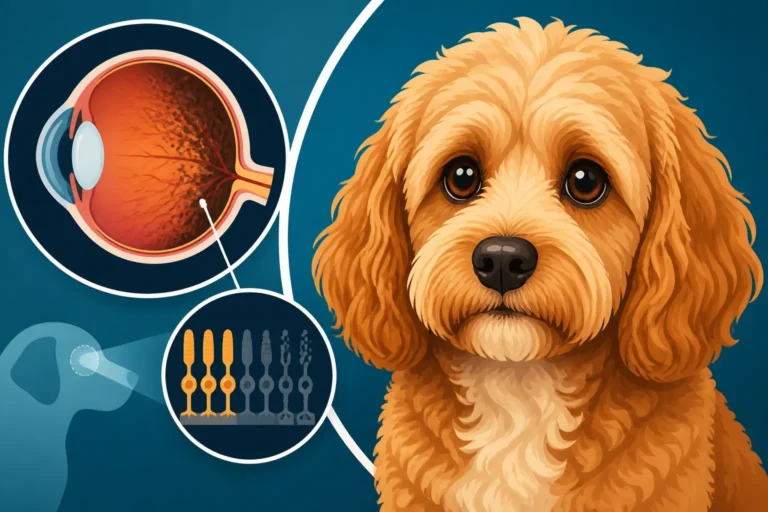
Eye health is another major area of concern for Cockapoos, inheriting predispositions from both parent breeds. On the Poodle side, Progressive Retinal Atrophy (PRA) is a group of genetic diseases that cause the retina to degenerate over time, eventually leading to blindness. The most common form in Poodles, and therefore Cockapoos, is progressive rod-cone degeneration (prcd-PRA). This condition is usually late-onset, meaning vision can begin to deteriorate in middle age. On the Cocker Spaniel side, glaucoma is a serious condition characterized by increased pressure within the eye, which can cause pain and rapid vision loss if not treated promptly. Glaucoma From the Cocker Side of a Cockapoo is an emergency, and early detection or prevention through careful breeding is essential.
Cockapoo registries address these issues by recommending comprehensive eye examinations and genetic testing for breeding dogs. For prcd-PRA, a DNA test is readily available, allowing breeders to identify carriers and affected dogs. Registries typically advise that at least one parent be genetically clear for prcd-PRA to ensure no affected puppies are produced. Regular examinations by a board-certified veterinary ophthalmologist are also recommended to screen for other eye conditions like cataracts, retinal dysplasia, and, importantly, signs of glaucoma. These annual check-ups, often referred to as the Kidney and Eye Checks a Cockapoo Needs Yearly, are essential to catch problems early. By promoting these screenings, registries strive to reduce the incidence of painful and blinding eye diseases in Cockapoos, helping to ensure they have good vision throughout their lives. It's a proactive measure that goes a long way in safeguarding the quality of life for these wonderful companions.
Orthopedic Issues: Hips and Knees
Orthopedic health is a significant consideration for any dog breed, and Cockapoos are no exception, with potential issues stemming from both their Cocker Spaniel and Poodle heritage. Hip dysplasia, a genetic condition where the hip joint doesn't form correctly, can lead to arthritis and pain, often requiring costly surgical interventions. Patellar luxation, more commonly known as "slipping kneecaps," is particularly prevalent in smaller breeds like Toy Poodles and Cocker Spaniels, making slipping kneecaps in a Toy Cockapoo a distinct possibility. This condition can range from mild, causing an occasional skip in gait, to severe, leading to lameness and pain.
Cockapoo registries actively encourage or mandate orthopedic evaluations for breeding dogs. This usually involves X-rays of the hips and elbows, which are then evaluated by veterinary radiologists affiliated with organizations like the Orthopedic Foundation for Animals (OFA). The dogs receive a rating (e.g., excellent, good, fair) that indicates the quality of their joints. For patellar luxation, veterinarians perform a physical examination to grade the severity of any instability. By using these tools, breeders can select parents with sound orthopedic health, significantly reducing the likelihood of passing on genes that predispose their offspring to these debilitating conditions. While genetic factors play a large role, environmental factors like diet and exercise during puppyhood also contribute to orthopedic development, a holistic approach championed by responsible breeders. The aim is to give every Cockapoo the best chance at a life free from the discomfort and limitations that come with poor joint health, allowing them to run, jump, and play to their heart's content.
What an Engaged Owner Can Do
While Cockapoo registries are working to improve the breed's health, ultimately, a significant part of the responsibility falls on prospective owners. In an unregulated market, your active engagement and informed choices are your strongest tools to ensure you bring home a healthy, well-adjusted Cockapoo. Don't leave it all to chance; be an advocate for your future furry family member.
Vetting Breeders Beyond Registry Affiliation
Simply knowing that a breeder is affiliated with a Cockapoo registry is a good starting point, but it should never be the only criterion for choosing a puppy. You need to dig deeper and ask a lot of questions. A reputable breeder, whether registered or not, will be transparent, knowledgeable, and genuinely invested in the health and welfare of their dogs. Start by thoroughly interviewing prospective breeders. Ask about their breeding philosophy, how long they’ve been breeding Cockapoos, and what steps they take to ensure the health and temperament of their puppies. Don't be shy; these are important questions.
Crucially, request to see the health clearances for both parent dogs. This means actual certificates, not just verbal assurances. You want to see results from DNA tests for conditions like Familial Nephropathy (FN) and Progressive Retinal Atrophy (prcd-PRA), as well as orthopedic evaluations for hips and patellas. For instance, the Five Certificates a Cockapoo Breeder Should Show typically include these critical screenings. A truly transparent breeder will be happy to share these with you and explain what they mean. If possible, visit the breeder's facility to observe the living conditions of the parent dogs and the puppies. Are they clean, well-socialized, and healthy-looking? Do the adult dogs appear to have good temperaments? These firsthand observations are invaluable. Be wary of breeders who refuse visits, can't provide verifiable health clearances, or seem overly focused on just selling a puppy quickly. Remember, choosing a puppy is a big commitment, and thorough vetting of the breeder is your first line of defense against potential heartbreak.
Understanding Health Guarantees and Contracts
Once you've found a breeder you feel good about, it's essential to understand their health guarantee and the terms of their contract. A reputable breeder will always provide a written contract that outlines the responsibilities of both parties. This contract should detail what happens if a puppy develops an unforeseen health issue shortly after coming home. Most good breeders will offer a guarantee for genetic health issues for a certain period, often one to two years. This might mean a full refund, a replacement puppy, or assistance with veterinary costs if a specified inherited condition arises.
Pay close attention to the specifics of the guarantee. Does it cover serious conditions like Familial Nephropathy and the Kidneys a Cockapoo Can Inherit? Many breeders explicitly state that their guarantee covers such genetic diseases, which is a strong indicator of their confidence in their breeding program. For instance, knowing whether a Cockapoo guarantee covers Familial Nephropathy can be a crucial point of discussion. The contract should also detail expectations for the puppy's care, such as regular veterinary check-ups, appropriate diet, and sometimes even spaying/neutering agreements. Don't hesitate to ask for clarification on any clause you don't understand. A good contract protects both you and the breeder and underscores their commitment to the health of their puppies. It’s an investment in your peace of mind and the long-term well-being of your new family member.
Lifelong Veterinary Care and Insurance
Even with the most reputable breeder and the most comprehensive health clearances, it's vital to remember that dogs are living beings, and just like humans, they can develop health issues throughout their lives. Lifelong veterinary care is non-negotiable for a Cockapoo. This starts with regular preventative check-ups, vaccinations, parasite control, and dental care. Your veterinarian will become your most trusted partner in monitoring your Cockapoo's health, catching potential problems early, and providing advice on nutrition, exercise, and overall well-being. Don't skip those yearly wellness exams; they are crucial for maintaining optimal health.
Given the potential for unexpected health events, even with the best genetic background, many Cockapoo owners find that investing in pet insurance is a wise decision. Companies like Healthy Paws offer various plans that can help cover the costs of accidents, illnesses, and even some hereditary conditions. Imagine the stress of facing a sudden emergency or a chronic illness diagnosis; having pet insurance can alleviate the financial burden, allowing you to focus on getting your beloved Cockapoo the best possible care without worrying about astronomical vet bills. While it might seem like an added expense, the peace of mind it provides can be invaluable. It's about being prepared for the unpredictable nature of life with a pet, ensuring you can provide for them no matter what health challenges may arise.
The Future of Cockapoo Health and Recognition
The Cockapoo has carved out a special place in many hearts, becoming one of the most beloved "designer dogs." However, its journey towards consistent health and wider recognition is an ongoing one. The efforts of dedicated registries and breeders are paving the way, but the ultimate future of Cockapoo health will depend on sustained commitment and a collective vision. It's a marathon, not a sprint, towards a truly thriving and healthy breed.
Moving Towards a Recognized Breed Standard
For many years, the lack of a universally recognized breed standard for the Cockapoo has been both a blessing and a curse. On one hand, it allowed for flexibility in breeding, catering to diverse preferences. On the other, it contributed to inconsistency in appearance, temperament, and, most importantly, health outcomes. The existence of multiple Cockapoo registries, each with its own guidelines, is a testament to the desire for standardization within the community. These registries are, in essence, trying to write the "rulebook" for the Cockapoo, detailing ideal traits, acceptable sizes, and mandatory health screenings.
The hope for many advocates is that the Cockapoo will one day achieve formal recognition from major kennel clubs, much like some other developing breeds have. This process is long and arduous, requiring generations of consistent breeding to a defined standard, meticulous record-keeping, and demonstrated genetic health stability. It would also require a strong, unified breed club. The idea that a Cockapoo could follow the Cobberdog route – moving from a crossbreed to a recognized breed with specific health and temperament goals – is a powerful motivator for many dedicated breeders. Such recognition would bring greater accountability, more uniform health testing requirements, and potentially a more stable and predictable genetic future for the Cockapoo. It would signify a maturation of the breed, moving beyond the "fad" status to a respected companion animal with a clear identity.
The Role of Owner Education and Demand
Ultimately, one of the most powerful forces shaping the future health of the Cockapoo lies in the hands of prospective owners. An educated and discerning public can drive significant change within the breeding community. When buyers consistently demand verifiable health clearances, transparent breeding practices, and ethical treatment of breeding dogs, it creates a market incentive for breeders to meet those standards. Conversely, if buyers are willing to purchase puppies from any source, regardless of health testing or breeding practices, irresponsible breeders will continue to flourish.
This means doing your homework, asking probing questions, and being prepared to walk away from a breeder who doesn't meet high standards. It's about valuing the health and welfare of a puppy over a lower price point or immediate gratification. By actively seeking out breeders affiliated with organizations like the American Cockapoo Club or the Cockapoo Club of America, and then diligently verifying their claims and certifications, you're not just ensuring a healthier puppy for yourself; you're contributing to a broader movement that encourages responsible breeding across the entire Cockapoo landscape. Your demand for a Cockapoo Club Registered Puppy costs might be higher, but it's an investment in a healthier future for the breed. The more informed and demanding owners become, the greater the pressure on all breeders to prioritize health, temperament, and ethical practices, thereby elevating the entire Cockapoo breed.
Disclaimer
This article is for general informational purposes only and does not constitute professional advice. Laws, prices and regulations vary by location and change over time. Consult a qualified professional for guidance on your specific situation.