Whether a Cockapoo Copes in a Loud House
Bringing a Cockapoo into a bustling home, especially one with kids, frequent guests, or just a lot of everyday noise, can bring a unique set of worries. You might wonder if your sweet, sensitive Cockapoo will truly cope with the constant hustle and bustle, or if it will lead to an anxious, stressed-out pup. This guide aims to explore the Cockapoo's typical temperament regarding noise and offer practical, empathetic strategies to help your furry family member not just tolerate, but truly thrive in a lively environment.
Understanding the Cockapoo's Temperament and Noise Sensitivity
Cockapoos are a wonderful blend of two intelligent and often affectionate breeds, the Cocker Spaniel and the Poodle. This mix gives them many desirable qualities, but it also means they can inherit a range of sensitivities, especially when it comes to their environment. Understanding these foundational traits is the first step in knowing how your Cockapoo might react to a loud home.
The Influence of Cocker Spaniel Traits
The Cocker Spaniel side of your Cockapoo brings a deeply loving, people-oriented nature. They thrive on companionship and can be quite sensitive to the mood and energy of their human family. This sensitivity, while making them incredibly devoted pets, can also translate into an aversion to sudden, loud, or chaotic noises. A Cocker Spaniel often prefers a calmer, more predictable environment, and sharp sounds or boisterous activity can startle them. Think about a sudden shout, a dropped pot, or an unexpected burst of laughter from a child – these can be quite jarring for a dog with a Cocker's nervous system. They might react by cowering, trying to hide, or showing signs of discomfort. It's not about being "badly behaved"; it's often a genuine response to an overwhelming sensory input. What the Cocker Puts Into a Cockapoo delves into more detail about these inherited traits.
The Poodle's Contribution to Temperament
Poodles, the other half of the Cockapoo equation, are known for their sharp intelligence and often their zest for life. They are highly trainable and generally quite adaptable, but they can also be prone to nervousness if not properly socialized or if they find themselves in overly stimulating situations. Some Poodles can be quite vocal, using barks to alert their owners to anything they perceive as unusual or threatening, which can include loud, unexpected noises. This means your Cockapoo might inherit a Poodle's intelligence that helps them learn to cope, but also a Poodle's potential for being a bit high-strung or reactive to environmental stimuli. The combination can lead to a dog that's smart enough to pick up on cues but also sensitive enough to be genuinely bothered by high decibel levels. You can learn more about their Poodle heritage in Which Cockapoo Traits Come From the Poodle.
Individual Variation is Key
While we can talk generally about breed traits, it’s absolutely crucial to remember that every single Cockapoo is an individual. Just like siblings in a human family, two Cockapoos from the same litter can have vastly different personalities and tolerances. One might be a laid-back soul who sleeps through a rock concert, while another might be genuinely terrified by the vacuum cleaner. Factors like early socialization, genetics from specific parent lines, and their experiences during critical developmental periods all play a huge role. A Cockapoo puppy raised in a quiet, secluded environment might find a noisy home far more challenging than one exposed to a variety of sounds and experiences from a young age. This is why understanding your individual dog's personality, rather than relying solely on breed generalizations, is so important.
Common Sources of Loudness in a Household
When we talk about a "loud house," it's not always just about the volume of sound, but also the unpredictability and constancy of it. For a dog, especially one potentially sensitive like a Cockapoo, these can be just as impactful as pure decibels.
Children and Their Activities
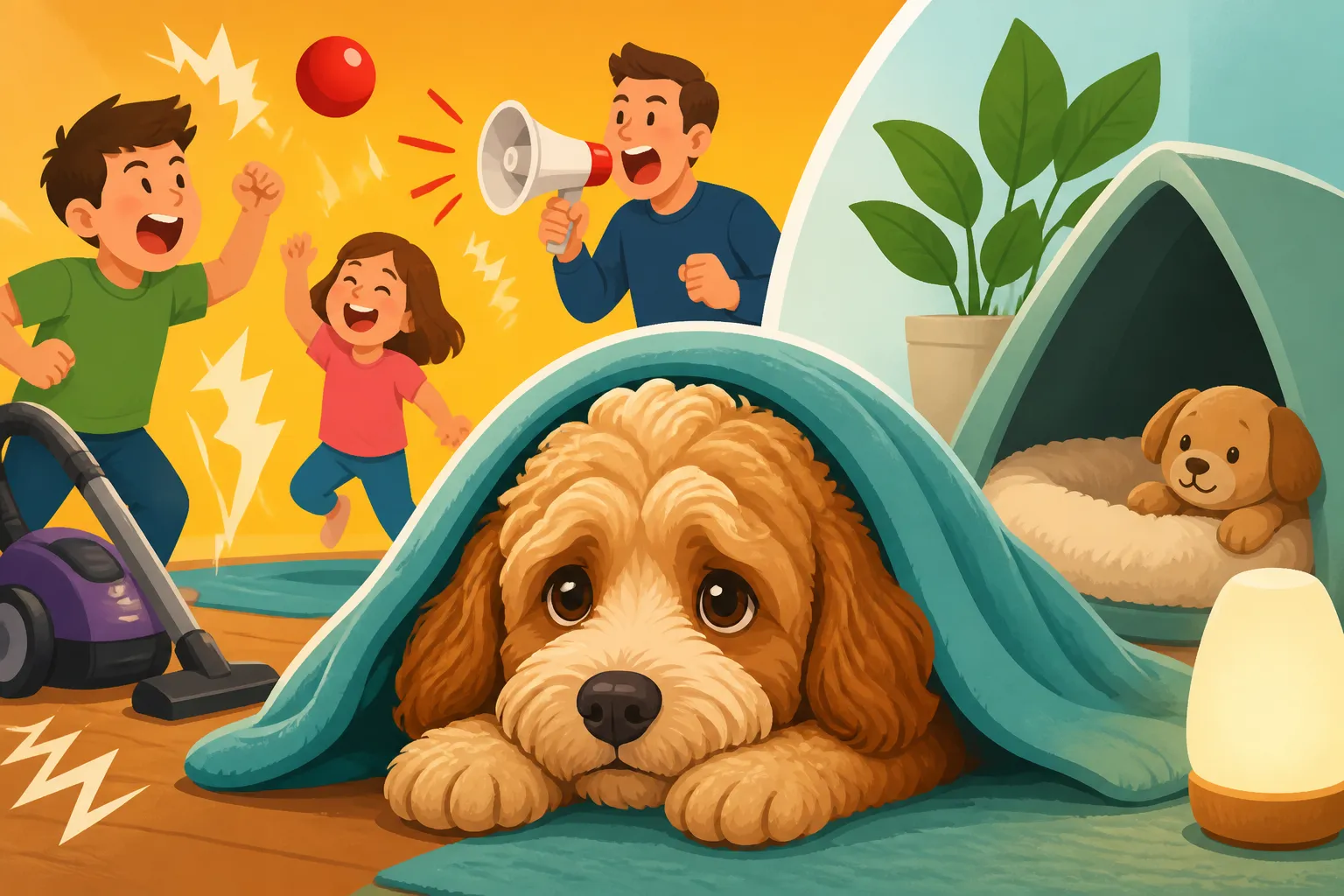
Let's be real, children are often the primary source of joyful, albeit loud, chaos in a home! From squeals of delight to frustrated yells, the clatter of toys being dumped out, the sudden crash of blocks, or the constant patter of running feet – these sounds are often unpredictable and intense. Small children, in particular, move quickly and can make sudden, high-pitched noises that a dog might perceive as startling or even threatening. Imagine being a small dog on the floor and suddenly a toddler rushes by, shrieking, or drops a heavy toy right next to you. This isn't malicious, but it's undoubtedly overwhelming for a sensitive pup. It's a common concern for families asking, Whether a Cockapoo Is Too Busy for Small Children.
Guests, Parties, and Busy Social Lives
A house that frequently hosts gatherings, has a revolving door of friends, or throws lively parties presents another challenge. The doorbell ringing constantly, multiple voices talking over each other, laughter, music, and the general buzz of human activity can be a lot for a dog to process. For a Cockapoo, who thrives on a consistent routine and a close bond with their immediate family, a house full of strangers can be stressful. The unpredictability of new people, new smells, and the sheer volume of sound can lead to anxiety, pacing, or excessive barking. They might announce every visitor, which can become tiresome quickly. Whether a Cockapoo Announces Every Visitor explores this in more detail.
Everyday Household Noises
Beyond the human element, our homes are full of mechanical sounds that we often tune out but can be quite prominent for our dogs. The whir of the vacuum cleaner, the rumble of the washing machine, the sudden beep of the microwave, the loud flush of a toilet, or the distinct clatter of dishes being put away – these are all part of daily life. Even the television or radio playing constantly can contribute to a background level of noise that some dogs find overstimulating. If you live in an apartment, you also have to contend with neighbor noise: doors slamming, footsteps upstairs, or conversations through thin walls. These sounds, while routine for us, can sometimes be sources of agitation for a Cockapoo, especially if they are heard unexpectedly or if the dog is left alone to deal with them.
Strategies for Helping Your Cockapoo Thrive in a Busy Home
The good news is that with understanding, patience, and some proactive strategies, most Cockapoos can learn to cope admirably in a lively household. It's about setting them up for success and teaching them how to navigate their environment.
Creating a Safe Haven
One of the most effective strategies is to provide your Cockapoo with a designated "safe haven" – a quiet, private space where they can retreat when the house gets too loud or busy. This could be a crate in a quiet corner of a room, a cozy bed under a desk, or a small dog-proofed room. The key is that this space is consistently available and understood by everyone in the household as the dog's personal sanctuary. Make it comfortable with soft bedding, a favorite toy, and perhaps a long-lasting chew.
Teach your Cockapoo that this space is positive by feeding them treats there and never disturbing them when they are in it. This is especially important for multi-dog households or those with children. Children need to understand that when the dog is in their safe space, they are off-limits. You can use calming products, too. Many pet stores and online retailers like Amazon offer things like calming diffusers, essential oil sprays (dog-safe ones, of course!), or even special beds designed to create a sense of security. Sound machines or a quiet radio can also help mask jarring household noises, creating a more consistent soundscape for your dog in their retreat. Whether Crate Time Settles a Cockapoo offers more insights into making a crate a positive place.
Gradual Exposure and Desensitization
For many dogs, it's not just the loudness itself, but the suddenness and unpredictability of it that's unsettling. Gradual exposure, often paired with positive reinforcement, can help your Cockapoo build resilience. Start by identifying the noises that bother them most. Then, play recordings of those sounds at a very low volume, slowly increasing it over days or weeks, while consistently rewarding your dog with high-value treats and praise for remaining calm.
For real-life noises, like the vacuum, start with it off in another room, reward calm behavior, then gradually move closer, or even turn it on for a second while rewarding. The goal is to change their emotional response from fear or anxiety to a neutral or even positive association. This process takes time and consistency, but it can be incredibly effective. Never force your dog into a loud situation they're clearly uncomfortable with; that can backfire and worsen their fear.
Management and Training Techniques
Training plays a huge role in helping your Cockapoo manage a loud environment. Teaching a "place" command, for instance, allows you to direct your dog to their safe haven when guests arrive or during particularly boisterous family time. Reward them generously for staying on their "place" even amidst the commotion.
Management is also crucial. When children are playing loudly, consider putting your Cockapoo in their crate with a chew toy or separating them with a baby gate. During parties, you might confine them to a quiet room with a Kong filled with peanut butter or a puzzle toy to keep their mind occupied. For guests, instead of letting your dog greet every person at the door in a frenzy, teach them a polite greeting or have them go to their "place" until the initial excitement dies down. You can find excellent, humane online training resources through platforms like BAXTER & Bella, which offer comprehensive programs that emphasize positive reinforcement and help you navigate common behavioral challenges, including reactions to noise and visitors. What a Cockapoo Puppy Should Learn First is a good starting point for foundational training.
When a Loud Environment Becomes Too Much: Recognizing Stress Signals
Even with the best intentions and strategies, some Cockapoos may still struggle with living in a loud household. It’s vital for owners to be attuned to their dog’s signals and recognize when the environment is genuinely overwhelming them. Ignoring these signs can lead to chronic stress, which impacts a dog's overall health and well-being.
Behavioral Indicators of Anxiety
A Cockapoo experiencing stress from noise might exhibit a range of behavioral changes. You might notice them:
- Hiding or retreating: Seeking out secluded spots under furniture, behind doors, or in their crate, even when you aren't sending them there. Whether a Cockapoo Hides From Visitors covers this common behavior.
- Excessive licking or chewing: This can be directed at themselves (paws, legs) or at household objects (furniture, shoes) as a self-soothing or displacement behavior. What a Bored Cockapoo Chews Through might also be linked to anxiety.
- Pacing or restlessness: Unable to settle down, constantly moving, or appearing agitated.
- Increased barking or whining: Barking at sounds they might normally ignore, or whining inconsolably. Whether a Cockapoo Barks Enough to Annoy Neighbors is a real concern for many owners.
- Changes in appetite or house-training accidents: Stress can manifest physically, leading to loss of appetite or accidents even in a fully house-trained dog.
- Increased clinginess or avoidance: Some dogs become overly attached and seek constant reassurance, while others might actively avoid interaction when stressed.
- Destructive behaviors: Chewing inappropriate items, digging, or scratching at doors or walls, especially when left alone. This isn't just boredom; it can be an outward manifestation of internal stress.
Physical Signs of Stress
Beyond behavioral cues, Cockapoos can also show physical signs that they are overwhelmed:
- Panting, even when not hot or exercising: Rapid, shallow breathing can be a sign of anxiety.
- Trembling or shaking: This is a clear indicator of fear or stress.
- Yawning or lip-licking: While sometimes normal, these can be stress signals when displayed out of context (e.g., when not sleepy or having just eaten).
- Dilated pupils: Their eyes might appear wider than usual.
- Ears flattened back: A common sign of fear or submission.
- Digestive upset: Diarrhea or vomiting can be stress-induced.
- Excessive drooling: Another physical manifestation of anxiety.
Observing these signs means it's time to re-evaluate your dog's environment and make adjustments. Sometimes, the sum of small, consistent stressors can be just as impactful as one large, traumatic event.
Seeking Professional Help
If you've implemented strategies, provided a safe space, and tried desensitization, but your Cockapoo consistently shows significant signs of stress or fear related to noise or a busy household, it's time to reach out to a professional. This isn't a sign of failure on your part, but rather an acknowledgment that your dog needs specialized support.
Start with your veterinarian to rule out any underlying medical conditions that might be contributing to their anxiety. They can also discuss potential calming supplements or, in some cases, anxiety medication if the stress is severe and impacting their quality of life.
Beyond that, consult with a certified professional dog trainer or a veterinary behaviorist. These experts can assess your dog's specific triggers and reactions, develop a tailored behavior modification plan, and provide guidance on advanced desensitization and counter-conditioning techniques. They can help you implement strategies that might be beyond what a typical owner can manage alone, providing invaluable tools and support for both you and your Cockapoo. Remember, The Thing Cockapoo Buyers Find Out Too Late is often about these unexpected behavioral nuances, so don't hesitate to seek help when needed.
| Strategy | Description | Benefits for a Loud Home |
|---|---|---|
| Safe Haven | Designated quiet space (crate, room) with comfort items. | Provides a consistent, predictable retreat from noise and activity. Reduces overstimulation and allows for decompression. |
| Gradual Exposure | Slowly introducing triggers at low intensity, with positive associations. | Helps the dog build positive associations with previously scary sounds/situations, gradually increasing their tolerance rather than overwhelming them. |
| "Place" Command | Training the dog to go to and stay on a specific spot (mat, bed). | Gives the owner a tool to manage the dog during high-traffic or noisy periods, keeping them safely out of the fray and reinforcing calm behavior. |
| Calming Aids | Diffusers, supplements, sound machines, puzzle toys (from Amazon, pet stores). | Reduces overall anxiety, provides mental stimulation to distract from noise, and masks jarring sounds, creating a more soothing environment. |
| Consistent Routine | Regular feeding, exercise, and potty breaks. | Predictability helps reduce general stress and anxiety, making the dog more resilient to unexpected loud moments. |
| Early Socialization | Exposing puppies to varied sounds, sights, and people from a young age. | Crucial for developing a resilient, well-adjusted adult dog less likely to be fearful of novel noises or situations. Raising a Cockapoo Puppy highlights this importance. |
| Professional Training | Working with a certified trainer or behaviorist (e.g., BAXTER & Bella programs). | Provides tailored strategies, addresses specific fear responses, and offers expert guidance on behavior modification, which is especially helpful for complex or severe anxiety issues. Enables consistent application of positive training methods to build confidence. |
Disclaimer
This article is for general informational purposes only and does not constitute professional advice. Laws, prices and regulations vary by location and change over time. Consult a qualified professional for guidance on your specific situation.