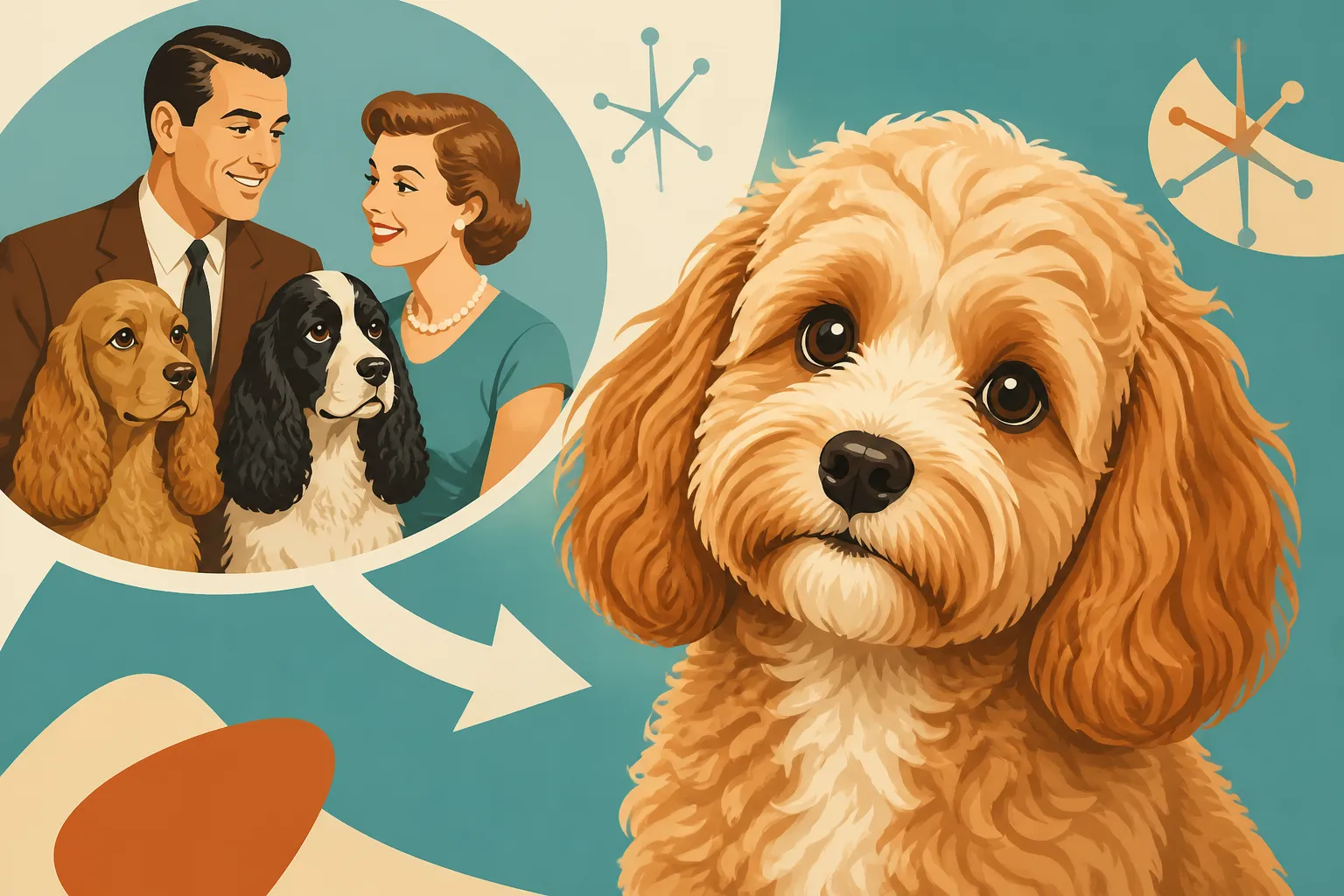
The 1950s American Litters Behind the Cockapoo
It’s easy to think of the Cockapoo as a relatively new kid on the block, one of the many "designer dogs" that have popped up in recent decades. But for those of us who adore these intelligent, loving companions, it's fascinating to discover their story goes back much further than most realize. This guide will take you on a journey back to post-World War II America, exploring the genuine historical origins of the Cockapoo and shedding light on how these delightful dogs first came into being in the 1950s, long before the term "doodle" even existed.
The Mid-Century Emergence Setting the Scene in Post-War America
The 1950s in America was a time of significant change, with families settling into suburban homes, a booming economy, and a growing desire for companionship that fit a changing lifestyle. It was in this unique cultural landscape that the Cockapoo quietly began to make its debut, not as a trend or a marketing ploy, but as a genuinely sought-after companion animal. People weren't just looking for any dog; they were looking for a specific blend of traits that the Cockapoo, almost by accident, seemed to embody perfectly.
Post-War Pet Ownership Trends
After the austerity and uncertainty of World War II, many American families yearned for stability, comfort, and the joy of home life. This era saw a significant rise in pet ownership, with dogs becoming increasingly integrated into the family unit rather than just working animals. Families moved into smaller homes with yards, leading to a demand for dogs that were adaptable to suburban living – not too large, good with children, and generally pleasant to have around. There was a burgeoning interest in breeds known for their good temperaments and manageable sizes, and this desire paved the way for crossbreeding to meet these evolving needs. People wanted a dog that was more than just a guard or a hunter; they wanted a true family member.
The Rise of the Cocker Spaniel and Poodle
During this time, both the Cocker Spaniel and the Poodle were incredibly popular breeds in America. The Cocker Spaniel, particularly the American Cocker Spaniel, was cherished for its sweet disposition, affectionate nature, and charming looks. They were often seen as ideal family pets, known for being playful and gentle with kids. However, they did have a reputation for needing significant grooming to prevent matting and could sometimes be prone to certain health issues or a more sensitive stomach. On the other hand, the Poodle, whether Miniature or Toy, was celebrated for its intelligence, elegance, and, crucially for many, its low-shedding coat. This made Poodles a fantastic option for families dealing with allergies or simply wanting less dog hair around the house. Yet, some found their refined appearance and sometimes aloof nature a little intimidating or perceived them as being "high-strung." It was the combination of these two popular, yet distinct, breeds that held the promise of something truly special.
The "Happy Accident" vs. Deliberate Cross Early Breeding Motivations
When we talk about the very first Cockapoos, it wasn't a grand, publicized breeding program. Instead, their origins are a delightful mix of serendipity and thoughtful experimentation. The term "designer dog" implies a calculated commercial venture, but the initial Cockapoos often emerged from much more organic circumstances, driven by individual desires for a specific type of companion.
Accidental Crosses on Farms and in Homes
Believe it or not, some of the very first Cockapoo litters likely happened without much human intervention at all. Picture a rural American setting in the 1950s where neighbors owned different breeds. Perhaps a charming male Poodle from one household found his way to a lovely female Cocker Spaniel next door, or vice-versa. These unplanned matings, often referred to as "happy accidents," would have produced litters of puppies that quickly charmed their way into local families' hearts. People would have noticed that these mixed-breed puppies seemed to possess the best qualities of both parents – the friendly nature of the Cocker combined with the intelligence and potentially lower-shedding coat of the Poodle. These informal beginnings were crucial, showing early adopters the potential of this particular cross without any official 'marketing' whatsoever.
Early Breeder Intentions
As these "accidental" crosses started to gain local appreciation, it wasn't long before some individuals began to think more deliberately about the combination. These weren't necessarily professional, high-volume breeders in the modern sense; often, they were passionate dog lovers or small-scale hobby breeders who saw the immense potential in the Cockapoo cross. Their motivation was often to create a healthier, more temperamentally balanced companion dog that could offer the low-shedding qualities of the Poodle, but with the softer, more eager-to-please nature of the Cocker. They were, in essence, trying to combine the strengths of two beloved breeds while mitigating some of their individual drawbacks. This intentional, though still informal, crossbreeding was driven by a genuine desire to produce ideal family pets that were robust, friendly, and easier to live with in a domestic setting.
Which Cocker Spaniel and Poodle Led the Way American vs. English Lines
Understanding the specific parent breeds used in those formative 1950s litters is key to appreciating the original Cockapoo. While today we see both American and English Cocker Spaniel crosses, the initial American Cockapoo almost exclusively featured one distinct type of Cocker Spaniel, paired with Poodles of specific sizes that were readily available and popular at the time.
The American Cocker's Influence
In the 1950s, the American Cocker Spaniel was immensely popular across the United States. Its distinctive domed head, large expressive eyes, and luxuriant coat made it a darling of the show ring and a beloved family pet. Crucially, the American Cocker Spaniel's temperament was generally known for being incredibly sweet, gentle, and eager to please, though sometimes a bit more sensitive than its English counterpart. This affectionate nature was a major draw for families seeking a loving companion. When crossed with a Poodle, the goal was often to retain that quintessential "Cocker charm" – that warm, friendly, tail-wagging personality that made them such delightful pets. The American Cocker's moderate size also meant that crossing it with a Miniature or Toy Poodle would result in a manageable, apartment-friendly dog. Whether a Cockapoo is as Soft as a Cocker is a common question, and early breeders were hoping to retain that softness.
The Poodle's Contribution
The Poodle, particularly the Miniature Poodle and Toy Poodle, brought a different, yet equally valuable, set of traits to the Cockapoo mix. Poodles were renowned for their sharp intelligence, trainability, and, perhaps most importantly for the burgeoning mixed-breed movement, their low-shedding and often hypoallergenic coats. This was a game-changer for many families, especially those with allergy sufferers, who previously might have been unable to own a dog. The Poodle's active mind also contributed to the Cockapoo's eagerness to learn and participate in family activities. While some Poodles could be perceived as a bit more reserved or "fancy," their intelligence and clean-shedding coats were highly desirable. The combination sought to balance the Cocker's effusiveness with the Poodle's cleverness and practical coat benefits. Whether a Miniature Poodle Sired the First Cockapoos is a question many people have, and indeed, Miniature and Toy Poodles were the most common Poodle sizes used in these early crosses due to size compatibility.
From Regional Curiosity to Budding Popularity Spreading the Word
The Cockapoo didn't burst onto the national scene overnight. Like many grassroots phenomena, its initial spread was slow and steady, relying more on satisfied owners sharing their experiences than on widespread advertising campaigns. It was a testament to the dog's intrinsic appeal that it gained traction the way it did.
Word-of-Mouth and Local Markets
In the 1950s, advertising for specific "designer" crosses wasn't really a thing. Instead, if you wanted to find a good dog, you relied heavily on local connections and word-of-mouth. A family might acquire a Cockapoo puppy from a neighbor or a small ad in a local paper, and then rave about their new companion to friends, family, and colleagues. "You wouldn't believe how smart and sweet Fido is, and he hardly sheds!" This kind of organic endorsement was incredibly powerful. People saw these charming, well-behaved, and relatively low-maintenance dogs in their communities, and they wanted one for themselves. The positive experiences of early Cockapoo owners became the most effective marketing tool, driving demand within local communities and gradually expanding their reach beyond single towns or counties. It was a genuine testament to the appeal of The Doodle That Predates the Word that it spread so naturally.
Early Media Mentions
While not splashed across national magazines or television shows, the Cockapoo did start to garner some attention in niche publications and local news. Perhaps a human-interest story in a regional newspaper would feature a family whose child's allergies miraculously disappeared after getting a "Cocker-Poo." These small mentions, often highlighting the unique blend of traits and the dog's adaptability, helped to solidify its growing reputation. The focus was always on the practical benefits: a friendly dog that was good with kids and didn't shed excessively. There wasn't a concerted effort to brand or market them on a large scale; rather, their story was told through the lens of happy owners and the positive impact these dogs had on their lives. These early positive portrayals set the stage for the Cockapoo to be seen as a desirable pet for modern American families, a reputation that still holds strong today.
The Characteristics That Captured Hearts Why the Cockapoo Stood Out
What was it about these early Cockapoos that made them so appealing? It wasn't just a novelty; there was a genuine desire for the specific combination of traits they offered. These dogs quickly became beloved family members, proving that the cross was indeed a successful venture.
The "Best of Both Worlds" Appeal
The most significant draw of the early Cockapoo was its ability to bring together the most desirable traits of both the Cocker Spaniel and the Poodle. Owners quickly realized they were getting the affectionate, loyal, and often goofy personality of the Cocker, perfectly blended with the sharp intelligence, trainability, and low-shedding coat of the Poodle. This meant a dog that was not only incredibly loving and engaging but also relatively easy to train and maintain in terms of shedding. It truly felt like getting the "best of both worlds," without having to compromise significantly on temperament or practical home living. For many families, this combination was nothing short of revolutionary, solving common pet ownership dilemmas with one adorable, fluffy package. What a Cockapoo Inherits From Each Parent is a complex dance, but often the early crosses landed on some truly wonderful traits.
Temperament: Affectionate and Intelligent
From the very beginning, Cockapoos gained a reputation for their wonderful temperaments. They were known to be exceptionally affectionate, thriving on human companionship and often forming strong bonds with their families. This made them excellent choices for homes with children, as they were generally patient and playful. Coupled with this loving nature was the inherent intelligence inherited from the Poodle. This meant early Cockapoos were often quick learners, eager to please, and highly responsive to training, which was a huge bonus for first-time dog owners or busy families. They were dogs that wanted to be involved in family life, whether it was a game of fetch in the backyard or snuggling on the couch for an evening of television. This combination of affection and intelligence made them incredibly adaptable and a joy to live with. A Cockapoo With Children has always been one of its strong suits.
Coat: The Initial Draw of a Low-Shedding Option
While the temperament was a huge factor, the coat was undoubtedly one of the primary reasons for the Cockapoo's initial popularity, especially for families with allergies. The Poodle's genetic contribution meant that many Cockapoos possessed a low-shedding coat, ranging from wavy to curly. This was a revelation for people who loved dogs but struggled with the constant hair, dander, and allergic reactions associated with many other breeds. Even if not entirely "hypoallergenic" for every individual, the reduced shedding was a significant improvement. This feature meant less vacuuming, fewer sneezes, and the possibility of dog ownership for a wider range of families. It was the practical benefit that often got people interested, while the wonderful temperament sealed the deal. Many early owners were delighted to find Whether Any Cockapoo Is Truly Non Shedding was a question they could largely answer with a contented sigh of relief.
Early Challenges and the Path to Stability Health and Consistency
Despite their immediate charm and popularity, the journey of the early Cockapoo wasn't without its bumps. As with any crossbreed in its nascent stages, there were inherent challenges related to consistency in appearance and temperament, as well as managing the potential health concerns inherited from the parent breeds.
Inconsistent Results
One of the biggest hurdles for early Cockapoo breeders and owners was the inherent variability in first-generation (F1) crosses. When you breed two purebred dogs of different breeds, the genetic lottery can produce a wide range of outcomes in the offspring. Some puppies might lean more heavily towards the Cocker Spaniel side in terms of coat type and facial structure, while others might strongly resemble the Poodle. This meant that while all Cockapoos were delightful, finding two that looked exactly alike, or even behaved in precisely the same manner, was rare. This inconsistency, while part of the charm for some, could also be a challenge for those looking for a predictable outcome, unlike buying a purebred with a well-established breed standard. It took time and dedicated breeding efforts to start achieving more consistent results, something that still plays into questions like Whether a Breeder Can Guarantee a Cockapoo's Coat.
Health Concerns Inherited from Parent Breeds
Another crucial aspect that early breeders had to grapple with was the health profile of the parent breeds. While crossbreeding can sometimes introduce "hybrid vigor" and potentially reduce the incidence of certain breed-specific ailments, it doesn't eliminate the risk entirely. Early Cockapoos could still inherit conditions common to American Cocker Spaniels and Poodles, such as certain eye conditions like Progressive Retinal Atrophy (PRA), patellar luxation (slipping kneecaps), or hip dysplasia. Responsible early breeders quickly understood the importance of selecting healthy parent stock and being aware of these potential genetic predispositions. This early recognition of potential health issues was a significant factor in the eventual push towards health testing, which modern reputable breeders prioritize to ensure the longevity and well-being of their puppies. Questions like Familial Nephropathy and the Kidneys a Cockapoo Can Inherit and Progressive Retinal Atrophy in a Cockapoo were likely on the minds of the most dedicated early breeders, even if testing wasn't as advanced then.
Laying the Groundwork for Modern Cockapoos The Lasting Legacy
The efforts of those early, often unsung, breeders in the 1950s laid critical groundwork. Their dedication to creating a wonderful companion animal set the stage for the Cockapoo's enduring popularity and the subsequent development of more formalized breeding practices.
Establishing Early Lines
As word spread and demand grew, some committed individuals moved beyond accidental crosses to intentionally breed Cockapoos, often focusing on producing healthier, more consistent litters. These early lines were not extensive, formalized programs as you might see in established purebred kennels, but rather careful pairings by individuals who truly loved the cross. They observed which combinations produced the most desirable traits – stable temperaments, appealing coats, and good health – and tried to replicate those successes. This careful selection, even without the advanced genetic tools we have today, was fundamental in establishing a foundation for the Cockapoo. It’s thanks to these pioneers that the Cockapoo maintained its reputation as a charming and robust companion. It's truly The 1950s American Litters Behind the Cockapoo that shaped everything that came after.
The Genesis of Breed Clubs
As the Cockapoo's popularity solidified through the 1960s and beyond, it became clear that some form of organization was needed to help guide responsible breeding and maintain standards for temperament and health. This eventually led to the formation of early Cockapoo clubs in America. These clubs, like the Cockapoo Club of America and the American Cockapoo Club, didn't emerge immediately in the 1950s, but the burgeoning interest and the informal nature of the breed's origins certainly highlighted the need for them in the subsequent decades. These organizations sought to bring together like-minded enthusiasts and breeders, create a consensus on what a Cockapoo "should be," and promote health testing. Their formation was a direct response to the successful, yet unstructured, beginnings of the breed in the mid-century, aiming to preserve and improve upon the delightful qualities that first captured American hearts. Why the Two Cockapoo Clubs Split and their differing approaches are a later chapter in this ongoing story.
Distinguishing the Early Cockapoo from Today's "Doodles"
It's easy to lump the Cockapoo in with the myriad of "doodle" mixes that have gained massive popularity more recently. However, there's a crucial distinction that often gets overlooked: the Cockapoo's history predates the modern "doodle craze" by decades, and its origins were driven by different motivations and circumstances.
The "Original" Doodle Distinction
The term "doodle" and the widespread commercial breeding of Poodle crosses truly took off in the late 20th and early 21st centuries, largely sparked by the Labradoodle. But the Cockapoo was already a well-established and beloved companion by then, having quietly thrived for decades. This means the Cockapoo holds the unique distinction of being arguably the "original doodle," even if it wasn't called that at the time. Its emergence was not a response to a global trend, but a localized, organic development stemming from American families' desire for a specific kind of pet. When people talk about The Doodle That Predates the Word, they are almost certainly talking about the Cockapoo. Its longevity speaks volumes about its inherent appeal, proving it's more than just a passing fad.
Why Early Cockapoos Were Different
The initial motivations behind breeding Cockapoos were primarily focused on creating a wonderful family companion, combining desirable traits for pet owners. There was less emphasis on marketing them as "hypoallergenic" or on creating specific generations (like F1b or F2) for commercial purposes. The early breeders were often hobbyists or individuals genuinely trying to produce happy, healthy pets for themselves and their communities. This contrasts sharply with some of the later doodle breeding, which sometimes became more commercially driven, with less emphasis on health and temperament consistency in the rush to meet demand. The early Cockapoo's development was a slower, more considered process, leading to a reputation for geniality and robustness that endures to this day. This is a point of pride for many Cockapoo aficionados who recognize the genuine passion behind their breed's humble beginnings. Whether the Cockapoo came before the Labradoodle is a definitive yes, showcasing its unique place in canine history.
The Cockapoo's Enduring Appeal What We Still Love Today
The fact that Cockapoos are still so popular today, decades after their initial emergence in the 1950s, is a testament to the success of those early breeding endeavors. The core qualities that made them beloved back then continue to define their appeal now.
Consistent Temperament and Intelligence
One of the greatest legacies of the early Cockapoo breeders is the generally consistent and delightful temperament that many Cockapoos still exhibit. Their friendly, outgoing nature, combined with their sharp minds, makes them incredibly adaptable pets for a wide range of households. They're often described as perpetually happy, eager to please, and devoted companions who love to be at the center of family life. This consistent temperament, refined over generations, means that when you welcome a Cockapoo into your home, you can generally expect a loving, intelligent, and cheerful dog that integrates beautifully into your lifestyle. It's a testament to the careful selection and dedication that went into those formative years. What a Cockapoo Asks of a First Time Owner is often less demanding than other breeds, thanks to this solid foundation.
Coat Variety and Management
While the initial appeal of the low-shedding coat remains, the journey from the 1950s has also seen a deeper understanding of the Cockapoo's coat genetics. Today, owners are more aware of the different coat types – straight, wavy, and curly – and what each means for grooming. While early owners might have simply been grateful for less shedding, modern owners understand the varying grooming demands. Regardless of the specific curl pattern, the general low-shedding quality is still a massive draw, offering a solution for allergy sufferers or those who simply prefer a cleaner home. Reputable breeders now often test for coat traits, helping prospective owners choose a puppy that aligns with their grooming preferences and allergy needs. The Curl Gene and Where a Cockapoo's Coat Lands is a topic of much discussion and scientific understanding today.
Health Screening and Responsible Breeding Practices
The awareness of potential health issues that emerged in the early days has evolved into comprehensive health screening protocols for responsible Cockapoo breeders today. Whereas early breeders relied more on observation and knowledge of parent lines, modern breeders utilize DNA tests and veterinary screenings for conditions like patellar luxation, hip dysplasia, and various eye diseases. This proactive approach ensures that the Cockapoo continues to be a healthy and robust breed, building upon the foundational health of those initial 1950s litters. The long-term health and well-being of these dogs is a shared priority for ethical breeders and owners alike, demonstrating how far the breed has come from its informal beginnings. Many organizations recommend The Five Certificates a Cockapoo Breeder Should Show as proof of these efforts.
The Enduring Companion
Ultimately, the reason the Cockapoo has lasted is simple: it works. The blend of a Cocker Spaniel's heart and a Poodle's brains and practical coat has proven to be an incredibly successful formula for a family pet. They are adaptable, joyful, and deeply connected to their human families. Whether they're living in a city apartment or a sprawling suburban home, they thrive on companionship and active engagement. This enduring appeal isn't just about their cute looks; it's about the genuine, loving relationship they offer, a relationship that began to form in American homes over 70 years ago and continues to enrich lives today.
Here's a look at some of the contributing traits from the parent breeds that early Cockapoo owners appreciated:
| Trait Category | American Cocker Spaniel Contribution | Poodle Contribution | Early Cockapoo Result |
|---|---|---|---|
| Temperament | Affectionate, gentle, eager to please | Intelligent, active, trainable | Loyal, smart, friendly, adaptable family pet |
| Coat | Soft, often shedding, prone to mats | Low-shedding, curly, dense | Varied low-shedding coats (wavy to curly) |
| Size | Small to medium | Toy to Miniature | Small to medium, suitable for many homes |
| Trainability | Responsive, desires to please | Highly intelligent, quick learner | Eager to learn, enjoys mental stimulation |
| Energy Level | Moderate, playful | Moderate to high, athletic | Active but settles indoors, enjoys walks and play |
| Grooming Needs | High (for long show coats) | High (for intricate clips) | Moderate to high, depending on coat type and length |
| Potential Health Concerns | Eye issues, hip dysplasia | Eye issues, patellar luxation | Risk of issues from both lines, emphasis on screening |
The Cockapoo's Place in History A Breed For All Seasons
The Cockapoo's story, starting in the 1950s in America, is a beautiful example of how a crossbreed can genuinely meet a societal need and evolve into a beloved companion over decades. It wasn't a product of aggressive marketing or fleeting trends, but rather a natural progression born from the desire for a well-rounded, adaptable family dog. From its early days as an accidental charm to its current status as a highly sought-after breed, the Cockapoo has consistently proven its worth.
The casual nature of its beginnings, often through word-of-mouth and local connections, speaks to an authenticity that resonates deeply with owners even today. People weren't looking for a "designer" label; they were looking for a dog that would fit seamlessly into their lives, offering companionship, joy, and fewer household messes. The blend of the Cocker Spaniel's warmth and the Poodle's cleverness and low-shedding coat was simply irresistible.
Today, when we see a Cockapoo romping in the park, cuddling on the sofa, or deftly navigating an agility course, we're witnessing the continuation of a legacy that began with those pioneering litters over half a century ago. They remind us that sometimes, the best things truly do come from unexpected pairings, and that a dog's inherent ability to enrich our lives is what truly stands the test of time. While we now have access to incredible resources like Chewy for all our Cockapoo's needs, from specialized food to grooming tools, the fundamental joy these dogs bring remains unchanged from the very first families who welcomed them home in the post-war era. It's a reminder that their journey is long and storied, distinguishing them from the newer mixes and cementing their place as a truly original American classic.
Disclaimer
This article is for general informational purposes only and does not constitute professional advice. Laws, prices and regulations vary by location and change over time. Consult a qualified professional for guidance on your specific situation.