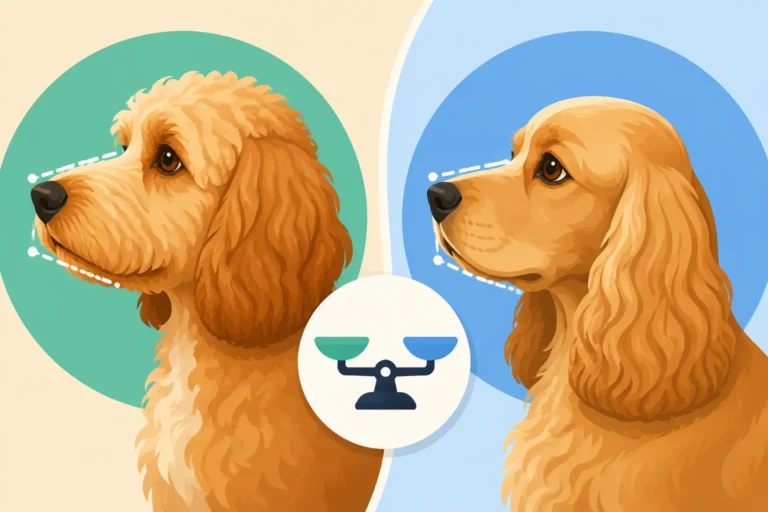
Why the Two Cockapoo Clubs Split
It's incredibly frustrating for anyone looking into bringing a Cockapoo into their life to discover that there isn't just one clear, universally accepted standard for the breed. You'd think after decades of popularity, there'd be a single guiding light, but instead, potential owners and even experienced breeders grapple with the existence of two prominent Cockapoo clubs. This can lead to confusion about breeding practices, health testing expectations, and what truly defines a well-bred Cockapoo. This guide aims to clear the air, diving into the historical journey that led to the formation of these two clubs and the reasons behind their eventual divergence.
The Early Days of the Cockapoo and the Need for Organization
Back in the mid-20th century, before anyone even coined the term "designer dog," the Cockapoo quietly emerged. It wasn't born from a grand plan or a kennel club decree, but rather from a desire for a friendly, low-shedding companion. Yet, this informal beginning, while charming, laid the groundwork for the later need for organization that eventually sparked a split in the community.
A Crossbreed Before its Time
Imagine the 1950s: a time when the focus was less on elaborate pedigrees and more on simply finding a good family pet. That's precisely how the Cockapoo came about. People were pairing Cocker Spaniels with Poodles, often Miniature Poodles, and finding that the offspring were delightful. They were intelligent, affectionate, and often inherited the Poodle's prized low-shedding coat, which was a huge bonus for allergy sufferers. There was no formal breeding program, no registration, and certainly no club overseeing anything. It was a grassroots movement, driven by word-of-mouth and the sheer lovability of these charming hybrids. You can learn more about this history in The Doodle That Predates the Word. These were genuinely the original "doodles," predating the Labradoodle phenomenon by decades, often created by accident or by small-scale hobby breeders simply trying to produce healthy, happy puppies.
However, this lack of formal structure meant there was no unified vision for what a Cockapoo should be. Every breeder, big or small, was essentially making it up as they went along. This meant huge variations in appearance, temperament, and crucially, health. While many early Cockapoos were wonderful, there was no way to guarantee consistency. It was a bit like the Wild West of dog breeding, with lots of good intentions but little oversight. The early litters often came from accidental breedings or simply two desirable parents being paired for a litter, without the rigorous health testing or lineage tracking that would later become a hallmark of responsible breeding. The stories of these early, serendipitous pairings are fascinating, detailing The 1950s American Litters Behind the Cockapoo.
The Growing Pains of Popularity
As the Cockapoo's popularity grew, so did the demand. What started as a niche crossbreed quickly became highly sought after, and with increased demand came inevitable challenges. More people, some with less-than-ethical intentions, jumped on the bandwagon, eager to produce puppies for profit. This led to a significant increase in the inconsistent breeding practices that had always been present but were now amplified. Puppies were being produced without proper health screening of the parent dogs, leading to a rise in inheritable health conditions that could be devastating for new owners.
Temperament also became a wild card. Without a consistent focus on breeding for sound minds, some Cockapoos displayed traits that were less than ideal, such as excessive shyness, nervousness, or even aggression, which are certainly not what you expect from such a charming family dog. This inconsistency was a huge concern for conscientious breeders who genuinely cared about the welfare and reputation of the Cockapoo. They recognized that if the Cockapoo was to maintain its good name and continue to be a beloved companion, some form of standardization and oversight was desperately needed. It was this desire for a more organized, ethical approach that spurred the earliest conversations about forming a dedicated club.
The Formation of the Cockapoo Club of America (CCA)
In response to the growing popularity and the increasing need for some form of ethical guidance, a group of dedicated individuals stepped forward. They recognized that the Cockapoo, despite its hybrid status, deserved a champion – an organization that would advocate for its health, temperament, and future. This led to the formation of the first major club dedicated solely to the Cockapoo.
Pioneering a Purpose
The Cockapoo Club of America (CCA) was officially established in 1999, marking a significant milestone for the breed. It wasn't just a casual gathering of enthusiasts; it was a deliberate effort to bring structure and responsibility to Cockapoo breeding. Their primary goals were clear: to promote responsible breeding practices, encourage comprehensive health testing for parent dogs, and ultimately, to preserve the wonderful traits that had made the Cockapoo so beloved in the first place. This meant a commitment to ensuring good health, stable temperaments, and the characteristic low-shedding coats that were so appealing.
The CCA aimed to be a resource for both breeders and prospective owners, offering guidelines and education to help navigate the complexities of breeding and purchasing a Cockapoo. They understood that without a united front, the breed's future could be jeopardized by poor practices. They wanted to ensure that every Cockapoo puppy born had the best possible start, both genetically and environmentally. This was about more than just registering dogs; it was about protecting the breed's integrity and ensuring its longevity as a healthy, happy companion. You can delve deeper into their foundational principles by looking into What the Cockapoo Club of America Set in 1999.
Early Efforts Towards Standardization
One of the CCA's most ambitious endeavors was to define what a "Cockapoo standard" actually looked like, even in the absence of official recognition from major kennel clubs. This was a monumental task because, as a crossbreed, the Cockapoo naturally exhibits a wider range of characteristics than a purebred dog. However, the CCA believed it was essential to establish guidelines for breeders to strive towards, ensuring some level of predictability and quality. This involved outlining desirable physical traits, temperament characteristics, and coat types, moving away from the "anything goes" approach of earlier days.
They also provided guidance on parent selection, emphasizing the use of healthy, temperamentally sound American Cocker Spaniels and Poodles (Toy, Miniature, or Standard, depending on the desired Cockapoo size). The club distinguished between different "generations" – F1 (first cross), F1b (backcross to a Poodle), and multi-generational Cockapoos – and offered recommendations for each, helping breeders understand the genetic implications of their pairings. Crucially, the CCA strongly advocated for health screenings, particularly for conditions prevalent in Cocker Spaniels (like certain eye diseases) and Poodles (like Progressive Retinal Atrophy and luxating patellas). They urged breeders to screen for these genetic issues to minimize their transmission to future generations. These early efforts were vital in shaping the perception of what a responsible Cockapoo breeder should be doing.
The Emergence and Philosophy of the American Cockapoo Club (ACC)
While the Cockapoo Club of America (CCA) made significant strides, it wasn't long before another organization emerged, signaling a divergence in the vision for the Cockapoo. This new club, the American Cockapoo Club (ACC), arose from differing philosophies and priorities, adding another layer of complexity to the Cockapoo world.
A Divergent Vision
The reasons for the American Cockapoo Club's (ACC) formation are rooted in various factors, often stemming from philosophical disagreements within the Cockapoo community about how the breed should be managed and, crucially, how it should evolve. Sometimes these splits in dog communities arise from genuine differences in opinion on important matters like health testing protocols, accepted breeding practices, or even the ultimate goal for the crossbreed. For example, some might have believed the original CCA was too restrictive, while others felt it wasn't going far enough to establish a true "breed standard." The exact circumstances can be complex, but often it boils down to varying interpretations of the best path forward for the Cockapoo. You can explore the broader context of such separations in When the Second Cockapoo Club Broke Away.
These disagreements might have centered on anything from the emphasis placed on certain coat types to the acceptable lineage of parent breeds or even the level of advocacy for official kennel club recognition. For some, the vision might have been for the Cockapoo to remain a delightful hybrid, focusing on health and temperament above all else. For others, there might have been a stronger pull towards working towards formal recognition as a distinct breed, requiring more stringent and specific standards. These subtle but significant differences in perspective created fertile ground for a separate organization to form, dedicated to pursuing its own vision for the Cockapoo.
Crafting a New Path
With its formation, the ACC set out to craft its own distinct path for the Cockapoo. This meant developing its own set of guidelines, registration criteria, and a unique emphasis that differentiated it from the CCA. For instance, the ACC might have adopted a slightly different breed standard, perhaps focusing more heavily on specific physical characteristics or advocating for particular temperament traits. The Standard the American Cockapoo Club Wrote would reflect these priorities, outlining their ideal Cockapoo. These standards are living documents, always evolving as breeders learn more and as the goals for the breed become clearer.
The ACC might also have had different perspectives on breeding practices. While both clubs certainly prioritize ethical breeding, there could have been variations in their stance on multi-generational breeding, for example, or which Poodle sizes were most appropriate for certain Cockapoo sizes. Perhaps one club placed a greater emphasis on F1 crosses, believing them to offer the greatest hybrid vigor, while the other championed multi-generational breeding as the path to breed consistency. Their commitment to achieving future recognition as a purebred dog could also have been a stronger driving force for the ACC, leading them to implement stricter rules aimed at producing more uniform litters. These subtle differences in approach are what distinguish the clubs and reflect their unique philosophies for the beloved Cockapoo.
Key Differences and Points of Contention Between the Clubs
When two organizations emerge to serve the same community, it's inevitable that differences will arise. For the Cockapoo clubs, these distinctions often manifest in their official standards, breeding philosophies, and the very future they envision for the breed. Understanding these nuances is crucial for anyone trying to navigate the Cockapoo world.
Standards and Registration Criteria
One of the most immediate points of divergence between the CCA and the ACC lies in their specific standards and registration criteria. While both clubs aim for healthy, well-tempered Cockapoos, the details of what they deem acceptable can vary. For example, there might be subtle differences in the acceptable weight and height ranges for the various Cockapoo sizes (Teacup, Toy, Miniature, and Maxi). While both might recognize four sizes, the exact measurements that define each category could differ slightly. This can be confusing for breeders trying to meet standards and for owners trying to understand what size their puppy is expected to reach. Understanding Whether Cockapoo Standards Agree on Size is one area where prospective owners will need to do their homework.
Furthermore, the clubs might have distinct rules regarding which parent breeds are acceptable. While both require a Cocker Spaniel and a Poodle, one might be more open to English Cocker Spaniel crosses, while the other might strictly adhere to American Cocker Spaniels. The generation type (F1, F1b, F2, Multigen) accepted for registration or preferred in breeding programs could also vary. These differences mean that a dog recognized and registered by one club might not perfectly fit the criteria of the other. It really highlights how distinct their interpretations of What a Cockapoo Standard Actually Describes can be. These differences are often subtle, but for a dedicated breeder striving for consistency and adherence to a particular vision, they are paramount.
Breeding Philosophy and Future Recognition
Beyond the specific physical standards, a more fundamental difference often lies in the breeding philosophy and the long-term goals for the Cockapoo. One club might lean heavily into the idea of the Cockapoo as a unique hybrid, celebrating its mixed heritage and emphasizing the health benefits of a first-generation cross (F1). Their focus might be on continuously bringing together carefully selected Cocker Spaniel and Poodle parents, ensuring a fresh genetic mix. This approach often values the "hybrid vigor" believed to come from crossing two distinct purebred lines.
On the other hand, a club might have a stronger aspiration for the Cockapoo to one day achieve official recognition as a purebred dog by major kennel clubs like the AKC. This goal would necessitate a focus on multi-generational breeding, where Cockapoos are bred to other Cockapoos, with the aim of producing more consistent traits and establishing a stable gene pool. This path requires a rigorous commitment to selecting breeding pairs that conform closely to a developing breed standard, eventually making the Cockapoo "breed true." The question of Whether Multigen Breeding Is Making a Cockapoo Breed is central to this philosophical divide, and it significantly impacts the type of breeding programs encouraged by each club. Naturally, this also leads to differing views on Whether the AKC Would Ever Take the Cockapoo, with some seeing it as an attainable goal and others viewing it as unnecessary or even undesirable for the breed's current status.
Health Testing and Ethical Guidelines
While both the Cockapoo Club of America and the American Cockapoo Club are dedicated to the health and welfare of Cockapoos, there can be subtle differences in their explicitly required versus strongly recommended health testing protocols. Both clubs will emphasize critical screenings, such as for Progressive Retinal Atrophy (PRA) in Poodles and certain eye conditions like glaucoma in Cocker Spaniels, as well as hip and patella evaluations. However, one club might mandate a broader panel of DNA tests or annual certifications, while the other might list them as highly advisable. For example, they might have different requirements for what constitutes a "cleared" parent, or how recently a health test needs to have been performed for a dog to be considered eligible for breeding.
Transparency around health testing is also a key aspect of ethical breeding. While both clubs encourage breeders to share health certificates, the level of detail or the mandatory presentation of these results might vary. Some might require submission of all test results to a central database, while others might rely more on individual breeder integrity. These differences, while sometimes nuanced, can impact the level of assurance a prospective owner receives when looking at a puppy's lineage. It's important to ask pointed questions about The Kidney and Eye Tests a Cockapoo Price Should Cover and to specifically request proof of all recommended screenings, no matter which club a breeder aligns with. This due diligence is paramount for securing a healthy puppy.
| Feature | Cockapoo Club of America (CCA) | American Cockapoo Club (ACC) |
|---|---|---|
| Year Formed | 1999 | Later than CCA (exact year varies by source, usually early 2000s) |
| Primary Focus | Promote responsible breeding, health, temperament. Often embraces hybrid nature. | Strive for consistency, specific breed standard. Stronger emphasis on eventual purebred recognition. |
| Accepted Generations | Recognizes F1, F1b, Multi-gen. | Recognizes F1, F1b, Multi-gen, but might have stricter definitions or preferences. |
| Health Testing | Strong recommendations for parent health screening (eyes, hips, patellas, etc.). | Similar strong recommendations, potentially with more explicit requirements for submitted records. |
| Breed Standard | Provides a guideline for desirable traits and temperament. | Aims for a more definitive and consistent standard to work towards official recognition. |
| Registration | Registers Cockapoos meeting their criteria. | Registers Cockapoos meeting their specific criteria and lineage. |
The Impact on Cockapoo Breeders and Owners
The existence of two prominent Cockapoo clubs isn't just an academic discussion; it has very real, tangible effects on the people who breed these dogs and, more importantly, on families looking to welcome a Cockapoo into their home. Navigating this landscape requires careful consideration and thorough research.
Navigating Two Sets of Guidelines
For breeders, the presence of two clubs can create a complex environment. They might find themselves needing to choose which club's philosophy and standards best align with their own breeding goals, or even try to meet the criteria of both, which can be challenging due to differing specifics. For instance, if one club prefers a slightly shorter muzzle length while the other is more lenient, a breeder aiming for show potential might feel pulled in two directions. This can affect the consistency of traits across the broader Cockapoo population. Without a single, unified standard, there will naturally be a wider variation in appearance, coat type, and even temperament across different breeding lines, even within what is generally recognized as a Cockapoo.
Many reputable breeders will clearly state their affiliation and the guidelines they follow, using their club membership as a mark of their commitment to ethical practices. This transparency is incredibly important. When a breeder proudly displays their club affiliation, it’s often an indication that they are striving for a certain level of quality and responsibility. However, it's also important for prospective owners to understand that club papers alone aren't the only indicator of a good breeder. It's still vital to ask questions and review health certificates, but knowing which club a breeder follows gives you a starting point for understanding their breeding philosophy. For more on this, you can check out Whether Club Papers Prove a Cockapoo Was Tested.
What This Means for Prospective Owners
For you, the prospective Cockapoo owner, the existence of two clubs means that a little extra homework is in order. When you're speaking with a breeder, it's absolutely crucial to ask which club, if any, they are affiliated with and what their specific breeding practices entail. Don't be afraid to ask for details about their health testing protocols, how they select their breeding pairs, and what their goals are for their puppies. A good breeder will be happy to discuss these things openly and answer all your questions. If you find yourself needing to stock up on supplies like food, toys, or grooming tools for your new puppy, reputable online retailers like Chewy are excellent resources, offering a wide variety of products no matter which club's philosophy a breeder subscribes to.
It’s also important to understand the concept of "generation" (F1, F1b, F2, Multigen) in the context of your breeder's club affiliation. While most clubs agree on the basic definitions, subtle differences in emphasis or preference can exist. For example, one club might heavily promote F1b crosses for their increased likelihood of a non-shedding coat, while another might be more focused on achieving consistency through multi-generational breeding. Asking about What the Cockapoo Clubs Mean by F1 and F1b will help you understand if the puppy's lineage aligns with your expectations regarding coat type and genetic diversity. Ultimately, your research should lead you to a breeder whose ethics and practices you trust, regardless of which club they might belong to.
The Ongoing Journey Towards Consolidation or Coexistence
The story of the two Cockapoo clubs is a fascinating one, reflecting the broader challenges and aspirations within the "designer dog" world. As time moves forward, the question remains: will these clubs ever find common ground, or are they destined to coexist as separate entities, each with its own vision for the beloved Cockapoo?
The Long Road to Unity
The idea of the two Cockapoo clubs eventually merging or consolidating their efforts is a hopeful thought for many in the community. A unified front could provide clearer guidance for breeders, more consistent standards for owners, and a stronger voice for the Cockapoo as a whole. However, the path to unity is rarely smooth, especially when philosophical differences are at play. Deeply held beliefs about what constitutes the "ideal" Cockapoo, how best to achieve health and temperament, and the ultimate destiny of the breed (as a hybrid or a recognized purebred) can be incredibly difficult to reconcile. Compromise often means letting go of certain deeply ingrained principles, which isn't easy for dedicated individuals who have poured their hearts into developing their club's vision.
It’s not uncommon in the dog world for different factions to arise, each believing their approach is superior. These divisions can become entrenched over time, making it harder for leaders and members to bridge the gap. While there might be informal conversations or shared goals related to health and welfare, the formal merging of two distinct organizations, each with its own history, membership, and set of rules, is a monumental undertaking. For now, it seems the focus remains on each club pursuing its own mission, with the dream of full unity remaining a distant, albeit appealing, prospect.
Coexistence and the Future of the Cockapoo
Despite the split, both the Cockapoo Club of America and the American Cockapoo Club share a fundamental goal: to promote healthy, well-adjusted Cockapoos. Their continued existence, while sometimes confusing, is also a testament to the enduring popularity of this wonderful crossbreed. In a way, having multiple organizations can even be seen as a natural part of a "designer dog's" evolution, as different groups explore various paths towards establishing a consistent identity. This period of coexistence allows for different approaches to be tested and refined, contributing to the overall knowledge base about the breed.
For Cockapoo owners, this means that careful research remains paramount. While you might not have a single, definitive guide, you do have resources and dedicated communities striving to improve the breed. As the Cockapoo continues to charm families worldwide, its future will undoubtedly involve ongoing discussions, evolving standards, and the continued dedication of these clubs. Whether they ever formally unite or simply continue to guide breeders and owners with their distinct philosophies, the Cockapoo's place as a beloved companion is secure. As the breed moves forward, the question of Whether the Cockapoo Will Ever Be Recognized by major kennel clubs will likely continue to be debated, with each club potentially holding different views on the desirability and feasibility of such an achievement. Regardless, the fundamental qualities that make a Cockapoo so special – their intelligence, affection, and adaptability – will always be at the heart of their appeal. Don't forget to stock up on essentials for your furry friend, like quality food and treats, readily available at places like Chewy, to ensure they thrive no matter what!
Disclaimer
This article is for general informational purposes only and does not constitute professional advice. Laws, prices and regulations vary by location and change over time. Consult a qualified professional for guidance on your specific situation.