Whether the First Cockapoo Breeder Is Known
One of the most common questions new Cockapoo parents or hopeful owners have is about the breed's history. We love to know where our beloved companions come from, hoping to find a clear, definitive origin story with a named individual or kennel credited with their creation. However, when it comes to the Cockapoo, this search often leads to a bit of a head-scratching mystery, leaving many feeling frustrated by the lack of a single, traceable "first breeder" to celebrate. This guide will delve into why pinpointing one original breeder for the Cockapoo is nearly impossible and what that means for understanding this wonderful hybrid.
The Elusive Genesis: Why No Single "First Breeder" Exists for the Cockapoo
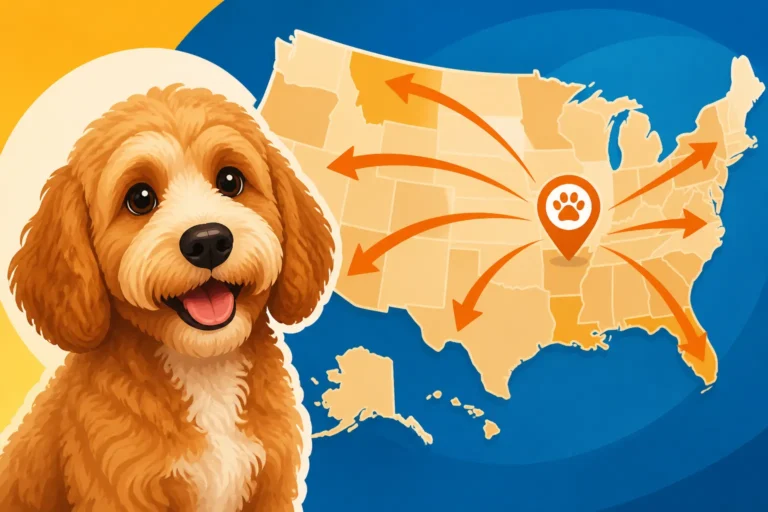
Unlike many established purebred dogs, which often trace their lineage back to a specific kennel or even an individual whose meticulous records laid the foundation for the breed, the Cockapoo's origins are far more organic and, frankly, a bit blurry. The Cockapoo didn't spring forth from a singular, carefully planned breeding program conceived by one visionary breeder. Instead, this charming crossbreed appears to have emerged somewhat spontaneously and simultaneously in various places, primarily across the United States, during the middle of the 20th century.
Think of it less like a meticulously engineered invention and more like a popular trend that caught on fire. People were already cross-breeding dogs for generations, often without formal records or an intent to create a new "breed." The combination of the friendly, eager-to-please Cocker Spaniel and the intelligent, often low-shedding Poodle just made sense to many individuals who were simply looking for a delightful family pet. These early crosses were likely made by everyday pet owners, accidental breeders, or small-scale hobbyists who saw the immediate appeal of combining these two beloved breeds. There was no "founding father" or "founding kennel" keeping meticulous studbooks or publishing their breeding goals for posterity. This informal beginning is a significant reason why attributing the Cockapoo's creation to a single breeder is a wild goose chase. The 1950s American Litters Behind the Cockapoo really highlights this era.
The Mid-Century American Dog Scene: A Perfect Storm for a Hybrid
To truly understand why the Cockapoo's origins are so decentralized, we need to look at the cultural context of dog ownership in the 1950s and 60s in America. This was a time when the American Cocker Spaniel was immensely popular, gracing magazine covers and family homes across the nation. Poodles, too, were on the rise, admired for their intelligence and distinctive coats, especially their low-shedding qualities, which were becoming increasingly appealing to allergy sufferers.
Many dog lovers simply wanted a companion that embodied the best traits of both. They appreciated the Cocker's merry disposition and manageable size, but perhaps wanted a dog that shed less or might have a touch more "zip" from the Poodle's brainpower. Conversely, Poodle owners might have wanted a dog with a slightly less "regal" or more "all-American" appearance, a bit less formal than the traditional Poodle clip. Thus, the idea of crossing a Cocker Spaniel with a Poodle wasn't a revolutionary scientific experiment; it was a rather obvious, practical solution for many families.
Imagine Mrs. Henderson down the street, whose beloved Cocker had an accidental rendezvous with her neighbor's handsome Miniature Poodle. The resulting puppies were adored by everyone who met them – friendly, cute, and surprisingly easy on the allergies. Word spread through casual conversations and local networks, not through grand kennel advertisements. Soon, other individuals, seeing the success and appeal of these initial crosses, began intentionally breeding Cockers and Poodles. This was a grassroots movement, driven by pet owners' desires rather than a structured breeding plan aimed at creating a new, recognized breed. This is also why The Doodle That Predates the Word is such an interesting historical point for Cockapoos.
Early Enthusiasts and the Collective Journey Towards Recognition
While there isn't a single "first breeder," there were certainly early enthusiasts who recognized the unique charm and potential of the Cockapoo and played a crucial role in its early development and popularization. These individuals, often working independently, shared a common goal: to promote the Cockapoo as a wonderful companion dog. They were the ones who saw past the "mixed-breed" label and understood that these dogs had consistent desirable traits that warranted further, more intentional breeding.
These early adopters weren't operating with the strict rules and oversight of established breed clubs like the AKC. They were essentially hobby breeders and advocates who started networking, sharing experiences, and, importantly, trying to create some form of consistency. Over time, as the popularity of the Cockapoo grew, this collective effort began to coalesce into more organized groups. This eventually led to the formation of clubs like the Cockapoo Club of America (CCA) and the American Cockapoo Club (ACC).
These clubs, which emerged much later than the initial crosses, weren't founded by the original "creator" of the Cockapoo, but rather by a community of breeders and owners committed to guiding the breed's development. Their aim was to establish standards, promote responsible breeding practices (like health testing, which is vital for understanding Familial Nephropathy and the Kidneys a Cockapoo Can Inherit), and provide a framework for the Cockapoo community. They sought to document pedigrees, even if they couldn't trace back to a single common ancestor. This transition from informal cross to a more organized movement demonstrates a collective desire to give the Cockapoo a more defined identity, even if it wasn't a singular "invention." When considering a puppy, asking for The Five Certificates a Cockapoo Breeder Should Show becomes crucial because of this history.
Here's a quick comparison of how formal breeds usually start versus how the Cockapoo emerged:
| Feature | Formal Breed Development | Cockapoo's Emergence |
|---|---|---|
| Origin Point | Single, documented individual/kennel | Multiple, informal sources simultaneously |
| Initial Goal | Create a specific "breed" with a standard | Produce desirable companion traits |
| Record Keeping | Meticulous pedigrees, studbooks | Minimal to none, word-of-mouth |
| Standardization | Strict breed standard from inception | Gradual, club-driven over decades |
| Parent Breeds | Often multiple purebreds, carefully selected | Typically two specific purebreds |
| Recognition Path | Formal application to kennel clubs | Grassroots popularity, later club efforts |
The Lasting Legacy of an Informal Beginning
The fact that the first Cockapoo breeder is unknown has a profound and ongoing impact on the breed today. Without a single, guiding vision or a strict initial standard, the Cockapoo started with a vast genetic pool, leading to significant variation. This is why you see such a wide range in appearance, size, and even temperament among Cockapoos. Some might look more like a Cocker, others more like a Poodle, and their coats can vary wildly from straight to wavy to tightly curled. The Curl Gene and Where a Cockapoo's Coat Lands is a fascinating read on this variability.
This variability, while charming to some, also poses challenges. Without a clear genetic blueprint from a foundational breeder, new owners must be extra diligent when choosing a puppy. The importance of responsible breeding, including health testing and transparency about the parent breeds, cannot be overstated. A good breeder today will focus on health clearances for both the Cocker Spaniel and Poodle lines, ensuring they are testing for conditions common to both, such as Progressive Retinal Atrophy in a Cockapoo or patella issues. Resources like Chewy, which often have detailed breed information, can be a great place to start researching common health concerns for both parent breeds.
Furthermore, the lack of a single origin means that the Cockapoo is still very much a "work in progress" as a breed. While clubs are striving for consistency, you'll still encounter different generations (F1, F1b, Multigen) with varying predictability in traits like shedding or mature size. This is why it's so important for prospective owners to ask questions, meet the puppy's parents if possible, and engage with reputable breeders who are committed to the health and temperament of their dogs. Whether an Untested Cockapoo Litter Is a Gamble really drives home the importance of this. The goal isn't just to find a cute puppy; it's to find one whose lineage has been thoughtfully considered, even if that lineage doesn't trace back to a singular, named founder. This enduring mystery is part of the Cockapoo's charm, reminding us that sometimes, the most beloved companions emerge not from a single brilliant mind, but from the collective heart of dog lovers everywhere.
The journey of the Cockapoo, from its informal beginnings to its current status as a cherished family pet, is a testament to its undeniable appeal. While we may never identify the "first" breeder, the countless individuals who recognized and nurtured the potential of this delightful cross have collectively shaped the Cockapoo into the wonderful companion we know and love today. And when it comes to finding all the best treats, toys, and essentials for your Cockapoo, don't forget trusted sources like Chewy that cater to every dog's needs.
Disclaimer
This article is for general informational purposes only and does not constitute professional advice. Laws, prices and regulations vary by location and change over time. Consult a qualified professional for guidance on your specific situation.