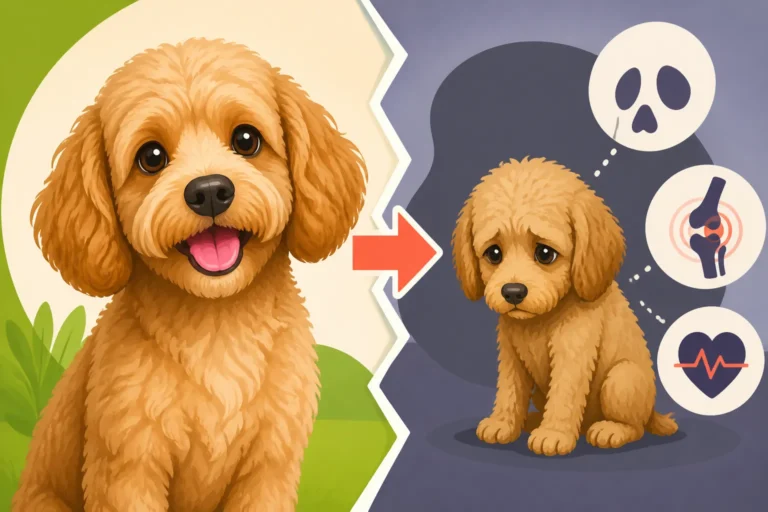
Two Clubs and Two Definitions of a Cockapoo
It's incredibly frustrating when you're trying to understand a specific dog breed, especially a popular hybrid like the Cockapoo, only to find conflicting information about what they actually are. This guide is here to untangle the confusion surrounding the Cockapoo by delving into the roles of the two main clubs dedicated to them, and how their differing definitions and goals shape the breed today.
The Roots of the Cockapoo: An Unofficial Beginning
Before any clubs stepped in, the Cockapoo came into being quite naturally, a happy accident that blossomed into an intentional crossbreed due to its wonderful temperament and low-shedding potential. The very idea of a "designer dog" or "doodle" wasn't even coined yet when these charming little dogs first appeared. Their origins are rooted in a genuine desire for a companion animal that blended the best qualities of two beloved breeds.
The American Cocker Spaniel and the Poodle Mix
The initial Cockapoos were primarily a cross between an American Cocker Spaniel and a Miniature Poodle, though over time, other Poodle sizes and even English Cocker Spaniels entered the mix. The American Cocker Spaniel brought its sweet, eager-to-please nature, its loving gaze, and its compact size. They were, and still are, fantastic family dogs, known for their devotion and relatively mellow indoor demeanor. However, they also came with some common breed-specific health concerns and a notoriously high-maintenance coat that shed quite a bit.
Enter the Poodle – typically the Miniature Poodle for these early crosses, offering intelligence, a playful spirit, and that famous non-shedding, hypoallergenic coat. Poodles are incredibly smart and adaptable, but can sometimes be a bit more aloof or energetic than a Cocker. The idea was to marry these two breeds to create a dog that had the Cocker's endearing personality and soft expression, with the Poodle's intelligence and, crucially for many, its low-shedding coat. It wasn't about creating a new "breed" in the traditional sense, but a wonderful companion. The Doodle That Predates the Word is a great resource to learn more about this fascinating history.
Early Popularity and the Lack of Formal Recognition
The Cockapoo quickly gained popularity, especially in the 1950s and 60s, long before the term "doodle" became a household word. People loved their friendly dispositions, their manageable size, and the fact that many of them caused fewer allergic reactions than shedding breeds. They were often referred to simply as "Poo-Cockers" or "Cock-a-Poos" and were cherished family pets. Breeders at the time, seeing the demand and the inherent good qualities of the cross, began to intentionally breed them.
However, because they weren't a recognized purebred dog, there was no overarching kennel club or breed standard dictating how they should be bred, what their characteristics should be, or what health tests their parents should undergo. This led to a wide variety in appearance, size, and even temperament, as breeders operated independently. While this organic development had its charms, it also meant that quality could be inconsistent, and health testing wasn't always a priority, leaving new owners vulnerable to unexpected issues. This period truly laid the groundwork for the eventual formation of dedicated Cockapoo clubs.
The Emergence of Breed Clubs: A Quest for Consistency
As the Cockapoo's popularity grew steadily over the decades, a clear need emerged for some form of organization and guidance within the breeding community. Without a formal body, prospective owners often felt like they were taking a shot in the dark, unsure of what they were truly getting. This inconsistency, while understandable for a hybrid dog, highlighted the desire for greater predictability and ethical breeding practices.
Why Clubs Formed: Addressing the "Wild West" of Early Breeding
Imagine walking into a store wanting to buy a specific item, but every version of that item looks different, performs differently, and there's no quality guarantee. That's essentially what the Cockapoo market was like in its early days. You might see a litter where some puppies had sleek, shedding coats, and others had the desired curly, low-shedding "furnishings." Some might grow to be quite large, others tiny. While charming in their individuality, this was a challenge for those seeking a predictable companion.
Dedicated enthusiasts and responsible breeders recognized this chaotic environment. They understood that to protect the integrity of the Cockapoo, to promote its wonderful qualities, and to safeguard its health, some form of collective action was necessary. These pioneering individuals were motivated by a genuine love for the Cockapoo and a desire to see it thrive responsibly. They wanted to provide resources, share knowledge, and establish some common goals, turning the "wild west" into a more organized, reputable space for this beloved hybrid.
The Challenge of a Hybrid Dog
Forming a "breed club" for a hybrid dog presents unique challenges that purebred clubs don't face. Purebred clubs have centuries of established genetics, detailed breed standards, and often large, historical studbooks to draw upon. A hybrid like the Cockapoo, by its very nature, is a mix of two distinct breeds, meaning there's a wider genetic pool and more variation in traits. How do you define a "standard" for a dog that is, by definition, a cross? How do you maintain genetic diversity while also striving for consistency?
This inherent challenge meant that any club attempting to define the Cockapoo had to navigate a delicate balance. They couldn't simply copy existing purebred club models. They needed to create guidelines that acknowledged the hybrid nature, celebrated the blend of traits, and, most importantly, prioritized health and temperament above rigid cosmetic standards. It required foresight, flexibility, and a deep understanding of both parent breeds to guide the development of the Cockapoo responsibly. This is why you see discussions about Whether Multigen Breeding Is Making a Cockapoo Breed as part of this ongoing effort.
The Cockapoo Club of America (CCA): Setting the First Stakes
The Cockapoo Club of America (CCA) stands as one of the longest-running organizations dedicated to this charming hybrid, established to bring some order and shared vision to the burgeoning Cockapoo community. Their efforts have been instrumental in shaping the perception and breeding practices for many within the breed. They really were pioneers in trying to define what a Cockapoo "should" be.
CCA's Mission and Vision
The Cockapoo Club of America was founded with a clear mission: to promote the responsible breeding and ownership of healthy, well-adjusted Cockapoos. They envisioned a future where Cockapoos were bred with purpose, focusing on temperament, health, and a consistent, desirable appearance, rather than just being random mixes. Their goal wasn't to "make" the Cockapoo a purebred dog, but to establish a framework for breeders and owners to ensure quality and predictability within the hybrid's unique context.
They believed that by setting standards and encouraging specific practices, they could help eliminate many of the pitfalls associated with indiscriminate breeding, such as inherited health problems or unpredictable temperaments. For them, it was about safeguarding the future of the Cockapoo as a cherished companion animal, ensuring that each puppy had the best possible start in life and lived a long, healthy life with its family. This deep commitment to the welfare of the dogs themselves drives their entire philosophy.
Defining the Cockapoo: Appearance, Temperament, and Health Focus
The CCA developed a breed standard that, while acknowledging the hybrid nature, sought to describe the ideal Cockapoo. In terms of appearance, they typically favor a soft, wavy to curly coat (often referred to as "furnishings") that is low-shedding, reflecting one of the primary reasons people seek out the breed. They describe a dog of balanced proportions, with a friendly, inquisitive expression. You can explore What the Cockapoo Club of America Set in 1999 for a deeper dive into their original guidelines.
Temperament is paramount for the CCA, emphasizing the Cockapoo's renowned cheerful, outgoing, and affectionate nature. They look for a dog that is intelligent, eager to please, and good with families and other pets – a true companion dog. Health is a cornerstone of their definition, with a strong emphasis on health testing of parent dogs for conditions common to both Cocker Spaniels and Poodles, such as hip dysplasia, patellar luxation, and various eye diseases like Progressive Retinal Atrophy (PRA). They advocate for genetic testing to identify carriers and affected dogs, ensuring that puppies are born as healthy as possible. This focus on preventative health measures is vital for the breed's long-term well-being.
Registration Requirements and Breeder Guidelines
To register a Cockapoo with the CCA, there are specific requirements concerning the parentage and the health testing performed on the breeding dogs. Generally, both parent breeds (Cocker Spaniel and Poodle) must be purebred and often registered with a recognized kennel club like the AKC. This provides a clear lineage and helps ensure the genetic health data is reliable. Breeders must adhere to a code of ethics that includes health testing protocols, proper care for breeding animals and puppies, and responsible placement of puppies in suitable homes.
The CCA also recognizes different generations of Cockapoos, such as F1 (first generation, purebred Cocker x purebred Poodle), F1b (F1 Cockapoo x purebred Poodle or Cocker), and Multigen (Cockapoo x Cockapoo). Their guidelines help breeders understand the genetic implications of each cross, particularly concerning coat type and health traits. This structured approach aims to provide greater transparency and accountability within the Cockapoo breeding community, giving prospective owners more confidence when choosing a puppy from a CCA-registered breeder.
The American Cockapoo Club (ACC): A Parallel Path
While the Cockapoo Club of America was establishing its groundwork, another dedicated group emerged with a slightly different vision for the Cockapoo. The American Cockapoo Club (ACC) also formed out of a desire to promote responsible breeding and maintain the wonderful qualities of the Cockapoo, but they carved out their own path, leading to a distinct, though often complementary, set of standards and philosophies.
ACC's Unique Approach and Philosophy
The American Cockapoo Club shares the core commitment to the health and temperament of the Cockapoo, but their approach often leans towards a more inclusive vision for the hybrid. They emphasize the overall quality and consistency of the Cockapoo without necessarily adhering to the exact same strict parameters for parentage or generational crosses as other clubs might. Their philosophy often highlights the importance of the individual dog's characteristics over a rigid adherence to a specific pedigree type, as long as the fundamental health and temperament standards are met.
They pride themselves on fostering a community of breeders and owners who are dedicated to the Cockapoo's well-being, providing education and support. The ACC recognizes that the beauty of a hybrid often lies in its diversity, and while striving for consistency, they also appreciate the variations that can occur when blending two distinct breeds. This nuanced approach has allowed them to attract a broad base of members who value their practical, dog-centric guidelines.
Distinguishing Features of the ACC Standard
The ACC's standard, much like the CCA's, outlines ideal characteristics for the Cockapoo, covering appearance, temperament, and health. They too advocate for the characteristic low-shedding, wavy to curly coat that is so sought after in the breed, acknowledging that some variation is natural within a hybrid. Their emphasis on a "furnishing" coat helps to distinguish the typical Cockapoo look from a flat-coated version that might shed more like a Spaniel. They describe a balanced, happy dog, intelligent and robust. The Standard the American Cockapoo Club Wrote offers more details on their specific guidelines.
Where the ACC might subtly differ is in its flexibility regarding certain aspects of breeding. While still championing health testing as crucial, they may offer a slightly broader interpretation of acceptable lineage or breeding practices, always with the underlying goal of producing healthy, stable puppies. For instance, some clubs might have stricter rules on backcrossing to a purebred parent versus breeding two Cockapoos together (multigen). The ACC focuses heavily on the outcome – a healthy, good-tempered Cockapoo – rather than being overly prescriptive on every single step of the breeding process, provided ethical standards are maintained.
How ACC Supports its Breeders and Members
The American Cockapoo Club provides a robust support system for its breeders and members through various educational resources, community forums, and mentorship programs. They understand that breeding responsible Cockapoos requires ongoing learning and sharing of best practices. They often host events or online discussions centered around canine health, genetics, grooming techniques, and behavior training. Resources might include articles on nutrition (like suitable foods you might find at Chewy for your Cockapoo), exercise needs, or even tips on managing specific Cockapoo behaviors.
Their platform allows members to connect, share experiences, and seek advice, fostering a sense of camaraderie among Cockapoo enthusiasts. For prospective owners, the ACC aims to be a reliable source of information, helping them understand what to look for in a responsible breeder and how to properly care for their Cockapoo. By providing a clear framework for ethical breeding and offering continuous support, the ACC plays a vital role in upholding the quality and reputation of the Cockapoo.
Key Differences Between the Two Club Definitions
While both the Cockapoo Club of America (CCA) and the American Cockapoo Club (ACC) share a fundamental love for the Cockapoo and a commitment to responsible breeding, their approaches and specific definitions can sometimes diverge. These differences, though subtle to an outsider, can have significant implications for breeders and, ultimately, for prospective puppy owners. Understanding these nuances is key to navigating the Cockapoo world.
Variations in Size and Coat Expectations
One area where slight differences might arise is in the exact size categories and coat descriptions. Both clubs generally recognize the four common Cockapoo sizes: Teacup, Toy, Miniature, and Maxi. However, the precise weight or height ranges for each category might have minor variations between the two clubs. For example, a dog that falls on the upper end of a Toy Cockapoo for one club might be considered a small Miniature by another. This isn't a huge discrepancy, but it speaks to the challenge of standardizing a hybrid.
When it comes to coats, both clubs prioritize the "furnished" look – the soft, wavy to curly coat that is less prone to shedding. However, the emphasis or acceptance of certain curl patterns or coat textures could vary. Some breeders might align more closely with one club's aesthetic preference, focusing on a very specific type of curl or softness. It’s worth noting that predicting a Cockapoo's coat can be tricky, even with genetic testing, and The Curl Gene and Where a Cockapoo's Coat Lands is a fascinating read on this topic. While both agree on the general "doodle coat," the fine print might differ.
Health Testing Directives and Emphasis
Both the CCA and ACC unequivocally stress the importance of health testing. This is perhaps the most critical shared value, as it directly impacts the welfare of the dogs. However, there can be differences in the specific panel of tests required or the recommended frequency. For instance, one club might place a slightly heavier emphasis on specific orthopedic clearances, while another might highlight certain genetic eye conditions.
It's common for both to require or recommend screening for hip and elbow dysplasia, patellar luxation, and various eye conditions like Progressive Retinal Atrophy (PRA). They also typically advocate for genetic tests for conditions like Familial Nephropathy (FN) and Phosphofructokinase (PFK) Deficiency, which can come from the Cocker and Poodle lines respectively. However, the mandate versus recommendation of certain tests, or the acceptance of OFA vs. PennHIP evaluations, might vary. This means that a breeder might be compliant with one club's health protocols but not necessarily the other's, even if they are doing excellent work. The FN DNA Test a Cockapoo Breeder Runs provides insight into one such crucial test.
Generational Breeding Policies (F1, F1b, Multigen)
The most notable differences often lie in the rules surrounding generational breeding. The Cockapoo, being a hybrid, has distinct generations:
- F1 Generation: A direct cross between a purebred Cocker Spaniel and a purebred Poodle.
- F1b Generation: An F1 Cockapoo bred back to a purebred Cocker Spaniel or Poodle (typically a Poodle to enhance the low-shedding coat).
- F2 Generation: Two F1 Cockapoos bred together.
- Multigenerational (Multigen): Breeding two F2 or later generation Cockapoos together, or an F2/F3 back to an F1b, etc., usually striving for greater consistency in traits.
Some clubs might have stricter guidelines on which generations they will register, or which crosses they encourage. For example, one club might heavily promote Multigen breeding as the path towards greater consistency and eventual "breed" status, while another might be more accepting of F1 or F1b crosses, valuing the hybrid vigor they bring. These policies reflect differing philosophies on how best to continue the development of the Cockapoo. Whether One Cockapoo Club Refuses F2 Registration is a pertinent question that highlights these differences in policy. These distinct approaches can influence how breeders structure their programs and which types of Cockapoos they produce.
The Impact on Breeders and Prospective Owners
The existence of two prominent Cockapoo clubs, each with its own guidelines and philosophies, can certainly create a complex landscape for both the people breeding these dogs and the families hoping to bring one home. It means doing your homework is even more critical.
Navigating Breeder Claims and Club Affiliations
As a prospective puppy owner, you'll inevitably encounter breeders who state their affiliation with either the Cockapoo Club of America (CCA) or the American Cockapoo Club (ACC), or sometimes both. It's easy to assume that membership in any club automatically guarantees a "good" or "reputable" breeder, but the reality is more nuanced. While both clubs strive for excellence, their standards and enforcement mechanisms might differ.
A breeder might proudly display their CCA or ACC affiliation, and while this is a good starting point, it shouldn't be your only criterion. It's crucial to understand what that affiliation truly means for that specific breeder. Does it mean they adhere to all the club's health testing recommendations? Do they follow their ethical breeding guidelines? Always ask to see proof of parent health testing (like orthopedic clearances and genetic panels), regardless of club affiliation. A reputable breeder, regardless of which club they prefer, will be transparent and eager to share this information with you. Don't just take "club registered" at face value; dig deeper. You'll find helpful information on Asking a Cockapoo Breeder for the FN Certificate or The Five Certificates a Cockapoo Breeder Should Show for guidance on what documentation to request.
What Club Membership Really Means for a Puppy Buyer
For a puppy buyer, a breeder's club membership should ideally indicate a commitment to higher standards than an un-affiliated breeder. It suggests they are part of a community striving for the betterment of the breed, rather than simply breeding for profit. However, it's not a guarantee against all issues. Some breeders might join a club but only adhere to the minimum requirements, while truly exceptional breeders might operate independently, exceeding all club standards without formal affiliation.
Ultimately, club membership is a signal, not a certification of perfection. It provides a framework, a set of ideals that the breeder is supposed to uphold. It means they likely have access to educational resources and a network of other dedicated Cockapoo enthusiasts, which can be invaluable. But the real assurance comes from your own thorough vetting process: asking detailed questions about health testing, parentage, socialization, temperament, and seeing the puppies' living conditions firsthand. Don't let a fancy club name entirely replace your due diligence. It's about finding a truly ethical and transparent breeder, which is often more about their individual practices than just a membership badge.
Choosing a Cockapoo: Beyond the Club Labels
When you're looking for your perfect Cockapoo, it's easy to get caught up in the details of club affiliations, generational distinctions (F1, F1b, Multigen), and specific coat types. While these details are informative and important, remember to keep the bigger picture in mind: you're looking for a healthy, happy, well-socialized companion that will fit into your family's life.
Focus on the individual puppy and its parents. What are their temperaments like? Are the parents calm, friendly, and well-adjusted? Is the puppy outgoing and playful, but also able to settle? Have the parents undergone all recommended health screenings, and can the breeder provide verifiable results? Consider the breeder's environment – are the puppies raised in a clean, stimulating home environment, or are they kept in kennels with little human interaction? A good breeder, regardless of their club preference, will prioritize early socialization and proper care. Don't forget that practical needs, like access to quality supplies from places like Chewy, will be constant regardless of club standards. By focusing on these fundamental aspects, you'll be much more likely to find a Cockapoo that brings joy and companionship for years to come, no matter which club its lineage might have been registered with.
The Broader Implications for the Cockapoo's Future
The existence and efforts of clubs like the CCA and ACC are incredibly important for the Cockapoo, not just for today's puppies but for the long-term health and recognition of the breed itself. Their work contributes to a wider conversation about hybrid dogs and their place in the canine world.
Will the Cockapoo Ever Be Officially Recognized?
This is a question many Cockapoo enthusiasts ponder: will this beloved hybrid ever achieve official recognition by major kennel clubs like the AKC (American Kennel Club)? The path to official recognition is long and arduous, typically requiring a breed to consistently "breed true" over many generations, meaning puppies reliably exhibit specific, predictable characteristics in appearance, temperament, and health. There needs to be a unified breed standard and a robust health testing protocol that has proven effective over time.
While clubs like the CCA and ACC are working towards defining and standardizing the Cockapoo, achieving full recognition is a massive undertaking. It requires a singular, agreed-upon standard, widespread breeder adherence, and sufficient genetic diversity within the "breed" pool. The fact that there are two major clubs, each with slightly different takes on the Cockapoo, highlights one of the inherent challenges in this journey. However, their ongoing efforts to document lineage, promote health testing, and refine the Cockapoo's characteristics are crucial steps, even if full AKC recognition remains a distant goal. Whether the AKC Would Ever Take the Cockapoo is a topic that explores these very hurdles.
The Role of Enthusiast Clubs in Hybrid Development
Enthusiast clubs like the CCA and ACC play an absolutely vital role in the development of hybrid dogs. In the absence of traditional kennel club recognition, these organizations step in to fill a critical void. They provide a framework for responsible breeding, establish ethical guidelines, and act as a repository of knowledge and experience for a breed that otherwise might lack structure. They are the driving force behind improving the health and predictability of hybrid breeds.
These clubs actively work to:
- Educate: Inform breeders and the public about inherited health conditions, proper care, and responsible ownership.
- Standardize: Develop "standards" or guidelines for appearance and temperament, even if not officially recognized, which helps breeders produce more consistent puppies.
- Promote Health: Encourage and often require health testing for breeding dogs, reducing the incidence of genetic diseases within the population. Whether FN Is Why Cockapoo Clubs Formed illustrates the critical importance of health focus.
- Build Community: Create a network for breeders and owners to share knowledge, offer support, and collectively work towards the betterment of the Cockapoo.
Without these dedicated clubs, the Cockapoo, like many other popular doodles, would remain much more of a genetic lottery, with less predictable outcomes for owners. They are truly the guardians of the breed's future.
The Enduring Appeal of the Cockapoo
Despite the complexities of club definitions and the ongoing journey towards potential recognition, the Cockapoo's enduring appeal is undeniable. For decades, they have charmed their way into countless homes with their irresistible combination of a friendly disposition, keen intelligence, and that wonderful low-shedding coat. People aren't just buying a "designer dog"; they're falling in love with a loyal, affectionate family member.
The Cockapoo often inherits the best qualities of both the Cocker Spaniel and the Poodle: the Cocker's sweetness and devotion, combined with the Poodle's smarts and playful energy. They are adaptable, making them suitable for various living situations, from apartments to houses with yards, as long as their exercise and mental stimulation needs are met. Their moderate size, typically ranging from Toy to Miniature, makes them manageable companions for many families. While the intricacies of breeding and club standards are important for the longevity and health of the population, the individual Cockapoo's ability to be a loving, joyful, and healthy pet is what truly cements its place in our hearts. Just make sure you're getting all the right supplies, from food to toys, that can be easily found on sites like Chewy, to support their happy, healthy life.
Comparing Cockapoo Clubs: CCA vs. ACC
To help you visualize some of the distinctions between the two main Cockapoo clubs, here's a comparative table. While their core mission is similar, their specific approaches and emphases can differ.
| Feature | Cockapoo Club of America (CCA) | American Cockapoo Club (ACC) |
|---|---|---|
| Founding & History | One of the earliest established clubs for Cockapoos. Focus on setting a foundation. | Emerged with a parallel vision, offering a distinct approach. |
| Primary Goal | To establish clear standards for breeding, health, and temperament, promoting the Cockapoo as a developing breed. | To promote responsible breeding and ownership, emphasizing healthy, well-tempered Cockapoos while often being more inclusive of breeding variations. |
| Breed Standard | Has a detailed standard describing ideal appearance (coat, size, structure) and temperament, striving for consistency. | Also has a standard, with similar descriptions of ideal traits, often with a focus on holistic quality over rigid aesthetics. |
| Health Testing | Strong emphasis on specific health clearances for parent breeds (e.g., hips, elbows, eyes, genetic tests). Often has detailed requirements. | Places high importance on health testing for genetic conditions; may offer slightly broader interpretation of acceptable screenings or certifications. |
| Generational Focus | May have stricter guidelines on which generations (F1, F1b, Multigen) are recognized or preferred for registration, guiding towards predictable outcomes. | Often more flexible or inclusive regarding generational crosses, as long as health and temperament are prioritized. Focus on the quality of the individual dog. |
| Breeder Support | Provides resources, code of ethics, and registration for breeders committed to their specific standards. | Offers educational materials, community forums, and mentorship, aiming to support a wider range of responsible breeders. |
| Overall Philosophy | Often seen as striving for a more standardized, breed-like Cockapoo. | Often more focused on celebrating the hybrid nature while ensuring health and good temperament. |
Disclaimer
This article is for general informational purposes only and does not constitute professional advice. Laws, prices and regulations vary by location and change over time. Consult a qualified professional for guidance on your specific situation.