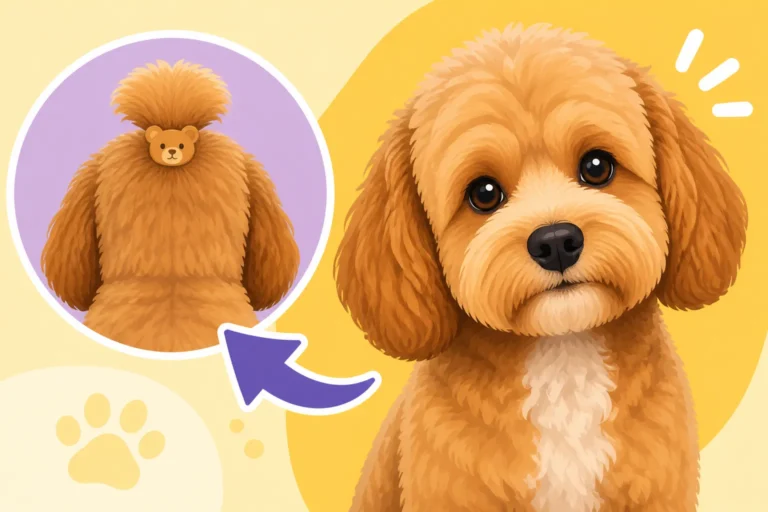
Whether a Cocker Can Carry Furnishings
It's a common misconception, and one that causes a fair bit of confusion when you're trying to understand your Cockapoo's potential coat, but the question of whether a Cocker Spaniel can carry the furnishings gene is actually pretty straightforward. Many hopeful Cockapoo parents dream of that iconic, low-shedding, fluffy look, and a big part of that comes down to something called "furnishings." This guide will help you unravel the genetics of furnishings, explaining exactly why your Cocker Spaniel parent isn't likely to carry this gene and what that means for your beloved Cockapoo's coat.
Decoding the Furnishings Gene: What it Means for Your Cockapoo's Iconic Look
When you picture a Cockapoo, what often comes to mind is that adorable, shaggy face with long eyebrows and a distinctive beard and mustache. This isn't just a cute aesthetic; it's a direct result of a specific genetic trait called "furnishings." Without furnishings, a Cockapoo's face would look more like a traditional Cocker Spaniel or even a Labrador Retriever – smooth, short-haired, and shedding. Understanding this gene is key to predicting your Cockapoo's adult coat and managing your expectations regarding shedding.
The Signature Furnished Face and Why We Love It
Think about the faces of most Poodles: they have abundant hair on their muzzle, around their eyes, and distinct eyebrows. This long facial hair, often trimmed into that classic Poodle "look," is what we refer to as furnishings. It's not just about the face, though; furnishings also contribute to the longer body coat that continues to grow, rather than shedding out like a smooth-coated dog. For Cockapoo owners, this is gold. This particular genetic trait is what gives Cockapoos that teddy bear appearance, setting them apart from other breeds and contributing heavily to their reputation as a low-shedding or even non-shedding companion. It’s what keeps them from shedding tumbleweeds of hair around your house, a huge draw for many families, especially those with allergies. The Furnishings Gene That Decides a Cockapoo's Face is truly the magic ingredient.
The Genetic Basis of Furnishings (It's Simpler Than You Think)
Genetically speaking, furnishings are controlled by a single dominant gene. We often refer to it as the 'F' gene. A dog only needs one copy of this dominant 'F' gene to display furnishings. If a dog has two copies of the dominant gene (FF), or one dominant and one recessive copy (Ff), they will be furnished. The only way a dog won't have furnishings is if they inherit two copies of the recessive gene (ff), meaning they are "unfurnished." This genetic lottery determines whether your Cockapoo will have that coveted fluffy look or a flatter, more shedding coat. For breeders, testing for this gene is really important, which is why you might hear them talk about What RSPO2 Testing Tells a Cockapoo Breeder.
The Cocker Spaniel's Genetic Contribution: Can They Carry Furnishings?
Now, let's get to the heart of the matter: the Cocker Spaniel. When you're considering the genetic contributions to your Cockapoo, it's essential to understand what each parent brings to the table. In the case of furnishings, the Cocker Spaniel's role is quite specific and, for many, a bit surprising.
Cocker Spaniels Are Inherently Unfurnished
The vast majority of purebred Cocker Spaniels, whether American or English, do not carry the furnishings gene. In genetic terms, they are typically 'ff' – meaning they have two copies of the recessive gene for being unfurnished. They have short hair on their muzzle and face, and their body coat sheds regularly, as is characteristic of a spaniel. This is just how the breed is constituted. If you've ever met a purebred Cocker, you know their lovely, silky coats, but you'll also notice their smooth, short-haired faces and their tendency to shed, especially seasonally. This isn't a flaw; it's just their breed standard. So, to answer the initial query directly, a purebred Cocker Spaniel, in almost all cases, does not carry furnishings. They are unfurnished. This is a critical piece of information for anyone interested in a Cockapoo, as it directly impacts the F1 generation.
What This Means for the First Generation (F1) Cockapoo
This is where the genetic lesson gets interesting for Cockapoo enthusiasts. An F1 Cockapoo is the direct offspring of a purebred Cocker Spaniel and a purebred Poodle. Since the Cocker Spaniel contributes an 'f' (unfurnished) gene, and the Poodle always contributes an 'F' (furnished) gene (more on that in the next section), every F1 Cockapoo will inherit one 'F' and one 'f' gene. Genetically, they will be 'Ff'.
Because 'F' is the dominant gene, all F1 Cockapoos will display furnishings. They will have that lovely facial hair, and their coat will be significantly lower shedding than a purebred Cocker's. This is why F1 Cockapoos are so popular and often sought after by those with allergies. However, even though they are furnished, they carry the recessive 'f' gene from their Cocker parent. This means that while they look the part, if they were later bred, they could pass on that 'f' gene. This is what breeders often mean when they say Whether an F1 Cockapoo's Coat Is a Coin Flip for future generations, though for the F1 itself, the coat is quite predictable in terms of furnishings.
Beyond the F1: Understanding Coat Genetics in Later Generations
The magic of the Cockapoo's coat really begins to unfold when we consider generations beyond the F1. The initial pairing of a Cocker and a Poodle sets the stage, but subsequent breedings can lead to a wider variety of coat types, all stemming from those foundational genetic contributions.
The Poodle's Unwavering Furnishings
In stark contrast to the Cocker Spaniel, Poodles (Toy, Miniature, and Standard alike) are almost universally 'FF' for the furnishings gene – meaning they carry two copies of the dominant furnished gene. This is why Poodles consistently have dense, continuously growing hair and are known for being very low-shedding. They will always pass on an 'F' gene to their offspring. This makes them the consistent source of the furnishings trait in the Cockapoo cross, ensuring that the first generation (F1) always expresses the furnished trait. If you're looking for that guaranteed fluffy, low-shedding trait, the Poodle parent is your insurance policy for the initial cross.
The "Improper Coat" and Why It Happens
The term "improper coat" in a Cockapoo refers to a dog that lacks furnishings, essentially having a smooth, short-haired face and a shedding body coat, much like a purebred Cocker Spaniel. This can happen in Cockapoo generations after the F1.
Here’s how it works:
- F1 Generation: As we discussed, an F1 Cockapoo is 'Ff' (one furnished gene from the Poodle, one unfurnished from the Cocker). They are furnished.
- F1b Generation: An F1b is an F1 Cockapoo ('Ff') bred back to a Poodle ('FF'). In this scenario, all offspring will either be 'FF' or 'Ff', meaning they will all be furnished and typically very low-shedding. This is a popular cross for those seeking maximum allergy-friendliness and that classic doodle look.
- F2 Generation: An F2 Cockapoo is the result of breeding two F1 Cockapoos together (F1 x F1, or 'Ff' x 'Ff'). This is where the "improper coat" can appear. Each F1 parent can pass on either an 'F' or an 'f' gene.
- There's a 25% chance the puppy will inherit 'FF' (furnished).
- There's a 50% chance the puppy will inherit 'Ff' (furnished).
- There's a 25% chance the puppy will inherit 'ff' (unfurnished – this is the "improper coat").
This 'ff' puppy will have a coat much more like a Cocker Spaniel – shorter facial hair and more shedding. This is why What an Improper Coated Cockapoo Looks Like can vary so much, and why some families find their Cockapoo sheds more than they expected. It's not a fault of the dog, but a natural genetic outcome if two F1s or other carriers are bred. It's a key reason why understanding The Curl Gene and Where a Cockapoo's Coat Lands and other genetic factors is so important.
Making Informed Choices: What to Ask Your Breeder and Why Genetic Testing Matters
Navigating the world of Cockapoo breeding can feel like a minefield, especially when you're trying to ensure your future companion has the traits you desire, like that lovely low-shedding coat. Thankfully, modern genetic testing has made it much easier for breeders to make informed decisions and for you to ask the right questions.
Asking About Parentage and Genetic Panels
When you're speaking with a potential breeder, don't be shy about asking for proof of genetic testing. A responsible breeder will be transparent and proud to show you the health and coat panel results for their breeding dogs. Specifically, you want to see testing for the furnishings gene (often referred to as the R-spondin-2 gene, or RSPO2). This test will confirm whether the parents are FF (homozygous furnished), Ff (heterozygous furnished, meaning they carry the unfurnished gene), or ff (unfurnished).
For an F1 litter, you'd expect the Poodle parent to be FF and the Cocker parent to be ff. This combination guarantees all F1 puppies will be Ff and therefore furnished. If you're looking at F1b, F2, or multigen Cockapoos, asking for these genetic panel results for both parents becomes even more crucial. For example, if both parents of an F2 litter are Ff (meaning both are furnished but carry the unfurnished gene), there's a 25% chance of an improper coat. Good breeders understand this and often aim to breed at least one FF parent to ensure all puppies are furnished. Reading a Cockapoo Coat Report Before You Choose can really empower you. Reputable breeders should readily provide The Five Certificates a Cockapoo Breeder Should Show, and a coat panel is definitely one of them.
Recognizing the Furnished Look in a Puppy
While genetic testing is the most reliable way to predict a Cockapoo's adult coat type, you can also start to look for visual cues in puppies, although these are less definitive at a very young age. Puppies destined to be furnished will typically start to show signs of longer hair on their muzzle and eyebrows around 6-8 weeks of age. This will look like a developing beard and mustache, rather than a smooth, short-haired face like a Spaniel puppy. Unfurnished puppies will have smoother, shorter facial hair.
However, relying solely on visual inspection can be tricky because puppy coats can be deceptive. Some furnished puppies might have less prominent facial hair early on, and some unfurnished puppies might have slightly longer wisps that give false hope. This is why genetic testing is so important for breeders to manage their lines and for you to be truly confident in your puppy's eventual coat. Remember, Whether a Cockapoo Without a Beard Sheds More is generally true, as the beard (furnishings) is linked to the overall low-shedding trait. If you see a puppy with a very smooth, short muzzle, similar to its Cocker parent, it’s a strong indicator that it might have an improper coat. For a comprehensive overview, checking out The Three Cockapoo Coat Types and Their Upkeep can help you understand what you're looking for and the commitment involved.
Ultimately, understanding that purebred Cocker Spaniels are typically unfurnished helps explain the genetic dynamics of Cockapoo coats. While the Cocker parent passes on the recessive gene, the Poodle's dominant furnished gene ensures that all F1 Cockapoos will have that beloved, low-shedding furnished look. However, as generations progress, being informed about the genetic makeup of the parents through testing becomes vital to avoid the "improper coat" and ensure you bring home the Cockapoo of your dreams. Always ask questions, seek out transparent breeders, and enjoy the wonderful journey with your furry friend! And if you're ever in doubt about grooming tools or dietary supplements that can support a healthy coat, reliable online retailers like Chewy or Amazon offer a huge selection, while specialized brands like Ollie can provide tailored nutrition.
Disclaimer
This article is for general informational purposes only and does not constitute professional advice. Laws, prices and regulations vary by location and change over time. Consult a qualified professional for guidance on your specific situation.