Whether a Cockapoo Carrying One Improper Copy Sheds
One of the biggest hopes for prospective Cockapoo owners is often that their furry companion will be a low-shedding delight, a dream especially for those with allergies. It’s incredibly frustrating when you hear confusing terms like "improper coat" or "carrier" and start to wonder if that means your future puppy will actually shed tumbleweeds of hair all over your home. Let's clear up exactly what it means if a Cockapoo carries one copy of the "improper coat" gene and whether that impacts its shedding for you, the owner.
Unpacking the "Improper Coat" Gene in Cockapoos
The term "improper coat" (often abbreviated as IC) can sound alarming, but it’s a specific genetic designation in the world of Doodles. It refers to the absence of what breeders call "furnishings" – those lovely long hairs on a Cockapoo's face that form eyebrows, a mustache, and a beard. These furnishings are crucial not just for their adorable appearance but also for their low-shedding qualities.
The Genetics Behind Furnishings and Improper Coats
At the heart of it all is a gene called RSPO2. This gene dictates whether a dog will have furnishings or not. In Cockapoos, we're looking for at least one dominant "F" allele (furnishings) to be present for the dog to have that classic fluffy face and low-shedding coat. If a dog inherits two copies of the recessive "IC" allele (improper coat), then they won't have furnishings, and their coat will resemble more of a Cocker Spaniel's or Poodle's smooth, shedding body coat, even if the rest of their body is curly. Think of it like this:
- FF (Furnished, homozygous dominant): This dog has two copies of the furnishing gene. It will have furnishings and a low-shedding coat.
- F/IC (Furnished, heterozygous, or "carrier"): This dog has one furnishing gene and one improper coat gene. It will still have furnishings because the dominant "F" gene overrides the "IC." This dog will also have a low-shedding coat. This is the scenario we're focusing on today!
- IC/IC (Improper Coat, homozygous recessive): This dog has two copies of the improper coat gene. It will not have furnishings and will shed more heavily, like a typical Spaniel.
So, when a breeder talks about a Cockapoo carrying one improper copy, they're describing a dog with the F/IC genetic makeup. This is a very important distinction to grasp because it directly answers our shedding question.
What Furnishings Really Do for Shedding
It's those long facial hairs, the furnishings, that are intrinsically linked to the low-shedding trait in Poodles and Doodles. Without them, the coat sheds much more freely. Many people mistakenly believe that the curl is what prevents shedding, but it's actually the presence of furnishings that matters most for those low-allergen qualities. A dog with an improper coat will have a smoother, flatter facial coat and you'll likely see more hair on your furniture.
If Your Cockapoo Carries One Improper Copy, Will It Shed?
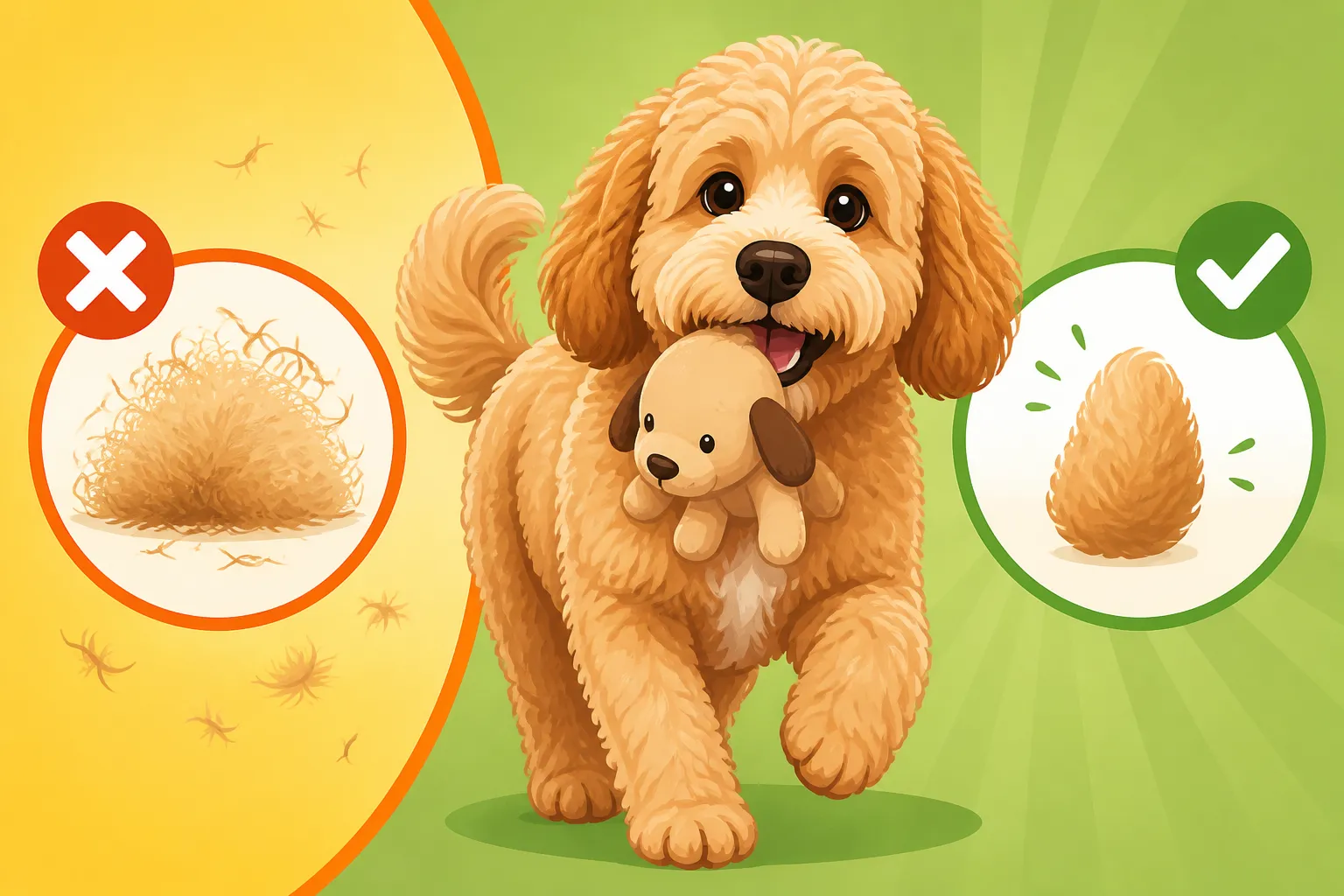
This is the million-dollar question for many hopeful Cockapoo owners, and the answer, happily, is no, not in the way an "improper coated" dog would. If your Cockapoo carries one improper coat copy (F/IC), it will still have furnishings. Because it has furnishings, it will exhibit the characteristic low-shedding coat that Cockapoos are famous for.
The Appearance of a Carrier Cockapoo
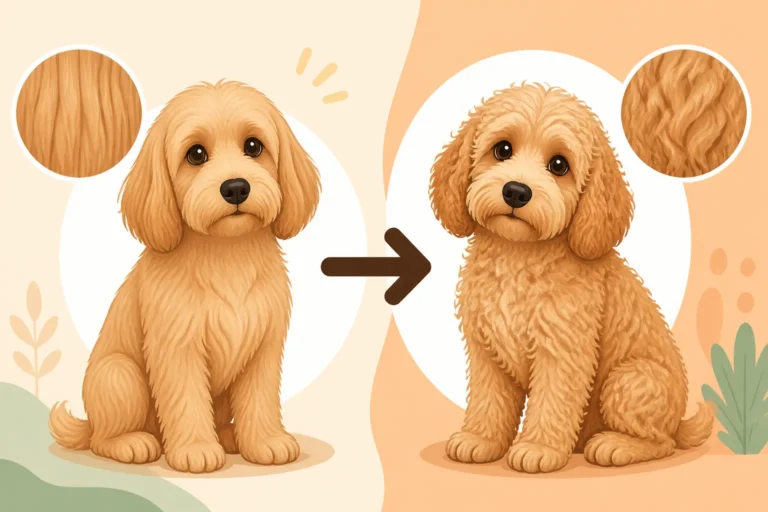
A Cockapoo that is an F/IC carrier will look exactly like a Cockapoo that is FF. You won't be able to tell the difference just by looking at them. They'll have that adorable beard, those expressive eyebrows, and the soft, wavy or curly coat that you expect. Their coat type – whether The Curl Gene and Where a Cockapoo's Coat Lands as wavy or tightly curled – will still determine the specific texture, but the presence of furnishings ensures it behaves like a low-shedding coat. This means you’ll still need to put in the grooming work associated with a furnished coat, regardless of its carrier status.
Why the Confusion About Shedding and Carriers?
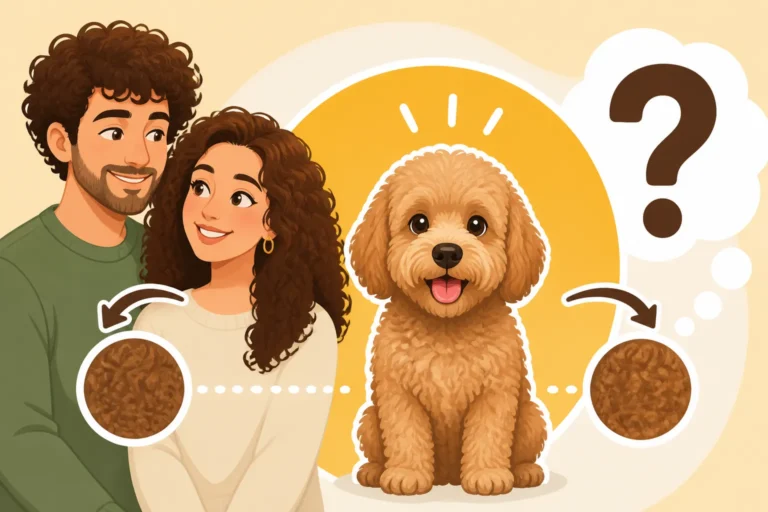
The concern often stems from a misunderstanding of how recessive genes work. For a dog to express the improper coat (meaning it doesn't have furnishings and sheds more), it needs to inherit two copies of the IC gene – one from each parent. A dog that is merely a "carrier" only has one copy, and because the furnishing gene (F) is dominant, it completely masks the presence of the recessive IC gene.
Think of it like eye color in humans, simplified. If 'B' is for brown eyes (dominant) and 'b' is for blue eyes (recessive). A person with 'BB' has brown eyes, a person with 'Bb' also has brown eyes (they're a carrier for blue), and only a person with 'bb' has blue eyes. It's the same principle for furnishings.
So, if your Cockapoo puppy is an F/IC carrier, you can breathe a sigh of relief regarding its own shedding. It will have the facial furnishings and low-shedding coat you desire. The "carrier" status only becomes relevant for breeders who are planning future litters, as it means the dog could pass that single IC gene onto its offspring.
Implications for Breeding and Breeder Transparency
While an F/IC Cockapoo will be a wonderful, low-shedding pet for you, its carrier status is extremely important for responsible breeders.
The Breeder's Role in Avoiding Improper Coats
A responsible breeder will use DNA testing to identify the genetic makeup of their breeding dogs for several traits, including furnishings. They want to ensure they never accidentally produce puppies with the improper coat (IC/IC), which would shed more and likely disappoint buyers seeking a low-shedding dog.
Here’s how it works:
- If you breed a carrier (F/IC) with a clear (FF) dog: All puppies will have furnishings. Statistically, half will be FF and half will be F/IC carriers. None will be IC/IC (improper coat).
- If you breed two carriers (F/IC x F/IC): This is where the risk lies. Statistically, 25% of the puppies will be FF, 50% will be F/IC carriers, and 25% will be IC/IC (improper coat). These IC/IC puppies will lack furnishings and shed more.
- If you breed a carrier (F/IC) with an improper coated (IC/IC) dog: Half the litter will be F/IC carriers, and half will be IC/IC (improper coat).
This is why breeders test their dogs and should be able to show you a What a Cockapoo Coat Panel Actually Reports document from a reputable lab. If you're asking a Cockapoo breeder for information, don't hesitate to ask for copies of parent health testing, including a coat panel. Asking a Cockapoo Breeder for the FN Certificate or any other health or genetic test certificate is your right as a prospective owner.
Why Breeder Transparency Matters
When you're looking for a Cockapoo, seeing that a parent is an F/IC carrier isn't a red flag for the pet puppy itself, as long as the other parent is "clear" (FF). What it signals is that the breeder is aware of the genetics and is breeding responsibly to avoid producing puppies with an improper coat. They should be able to explain this to you clearly. You want a breeder who is open about the genetic testing they do on both parents.
Managing the Coat of a Furnished Cockapoo (Carrier or Not)
Even a Cockapoo with two copies of the furnishing gene (FF) or one copy (F/IC) will shed some. The idea of a "non-shedding" dog is largely a myth; it's more accurate to say "low-shedding" or "minimal shedding." The hair that would normally fall out all over your house often gets trapped within their curly or wavy coat. This trapped hair, combined with new growth, is what leads to matting if not properly managed.
The Reality of Cockapoo Grooming
Regardless of whether your Cockapoo is a carrier or clear for the IC gene, if it has furnishings, it will require dedicated grooming. This isn't a wash-and-wear dog! Expect regular brushing sessions, typically several times a week, to prevent mats and remove dead hair.
Here's a quick look at the grooming commitment:
| Coat Type (with Furnishings) | Shedding Level | Grooming Frequency | Common Tools |
|---|---|---|---|
| Wavy | Low | 2-3 times/week | Slicker brush, metal comb |
| Curly | Very Low | Daily or every other day | Slicker brush, metal comb, dematting tools |
Even a straight-coated Cockapoo, which is rare but can occur, if it still has furnishings, will require less intense grooming than a truly improper coat. But don't let the "low-shedding" label fool you into thinking grooming is optional. It’s absolutely essential.
Essential Grooming Tools and Techniques
To keep your furnished Cockapoo's coat healthy and mat-free, you'll need a few key tools:
- Slicker Brush: This is your primary tool for daily brushing. Make sure you get down to the skin, not just skimming the topcoat.
- Metal Comb: An absolute must for finding mats that the slicker brush might miss. Use it after brushing to check for tangles, especially in sensitive areas like behind the ears, armpits, and groin. The Comb That Finds Mats a Slickapoo Misses is a crucial tool in your arsenal.
- Dematting Tool/Spray: For those stubborn tangles, these can help loosen and separate mats without having to cut them out entirely.
- Clippers: Most Cockapoo owners choose to have their dogs professionally groomed every 6-10 weeks to maintain a manageable length. While grooming at home can save money, it's a learned skill.
Learning to Line Brushing a Cockapoo and Why the Top Coat Lies is a technique that ensures you're brushing all the way through the coat, preventing mats from forming close to the skin where they're hardest to detect and remove.
The Overall Health of Carrier Cockapoos
Beyond shedding, you might wonder if carrying one copy of the improper coat gene affects your Cockapoo's health in any way. The good news is that carrying one copy of the IC gene has no known health implications for the individual dog. It's purely a cosmetic and shedding-related trait.
Reputable breeders run a battery of tests to ensure the health of their breeding stock, covering conditions that affect both Cocker Spaniels and Poodles. These might include tests for Familial Nephropathy and the Kidneys a Cockapoo Can Inherit, Progressive Retinal Atrophy in a Cockapoo, hip and elbow dysplasia, and patellar luxation, among others. The coat panel, including the IC gene test, is primarily for predicting coat type and shedding level in offspring, not for health concerns of the parent dog itself.
In conclusion, if you encounter a Cockapoo or a Cockapoo puppy described as carrying one improper coat copy, you can rest assured that this individual dog will still likely possess the desirable furnishings and low-shedding qualities you're looking for. The "carrier" status is primarily a genetic marker for breeders to manage their breeding programs responsibly, ensuring they don't produce puppies that lack those iconic, low-shedding furnishings. Your furnished F/IC Cockapoo will still need consistent grooming, but you won't be battling excessive shedding any more than with an FF Cockapoo. Always ask your breeder for clarity and documentation on genetic testing – it’s a sign of a responsible breeding program.
Disclaimer
This article is for general informational purposes only and does not constitute professional advice. Laws, prices and regulations vary by location and change over time. Consult a qualified professional for guidance on your specific situation.