What RSPO2 Testing Tells a Cockapoo Breeder
If you've ever fallen in love with the classic "teddy bear" look of a Cockapoo, complete with that adorable beard, mustache, and expressive eyebrows, you're not alone. Many aspiring owners dream of that low-shedding, furnished coat, only to discover that not all Cockapoos turn out that way. This guide will dive deep into RSPO2 testing, explaining what it tells a Cockapoo breeder about those much-desired furnishings, and how this genetic knowledge can lead to more predictable and happy puppy matches.
Understanding the Furnishings Gene RSPO2
The RSPO2 gene is like the secret ingredient for that signature Cockapoo look. It's what gives them those delightful facial furnishings – the longer hair around their muzzle, chin, and eyes that really defines the "doodle" aesthetic. Without it, a Cockapoo might look more like a flat-faced spaniel, which is still lovely, but not what many people envision when they think of a Cockapoo. Understanding this gene is paramount for breeders aiming to produce puppies that meet specific coat expectations.
What are "Furnishings" and Why Do They Matter?
When we talk about "furnishings" in a Cockapoo, we're referring to the longer hair on their face, particularly the eyebrows, beard, and mustache. This isn't just about aesthetics; it's intricately linked to the dog's shedding potential. Dogs with furnishings, inherited from their Poodle parent, tend to have a coat that sheds significantly less than dogs without them. This characteristic is a huge draw for families seeking a more allergy-friendly companion, making furnishings a highly desirable trait for many prospective owners.
Imagine a world where you bring home a Cockapoo, expecting that fluffy, cuddly look and minimal shedding, only to find your new family member sporting a smooth face and leaving a trail of hair like a traditional Spaniel. It's a common disappointment that can often be avoided with informed breeding. The desire for that quintessential doodle appearance and reduced allergen load makes the presence of furnishings a critical factor for many families, directly influencing why RSPO2 testing is so important.
The Genetics Behind Furnishings: F/F, F/IC, and IC/IC
The furnishings gene, RSPO2, operates with a dominant 'F' allele (for furnished) and a recessive 'IC' allele (for improper coat, or unfurnished). This means that even a single copy of the 'F' allele is enough to produce furnishings. Breeders use genetic testing to identify if a dog carries two copies of the furnished gene (F/F), one copy of furnished and one copy of improper coat (F/IC), or two copies of the improper coat gene (IC/IC). Each combination tells a very different story about the puppies a dog might produce.
A dog with an F/F genotype will always pass on a furnished gene to its offspring, meaning all its puppies will have at least one 'F' allele and therefore will be furnished. An F/IC dog has furnishings itself, but it carries a hidden 'IC' gene. This means it can pass on either an 'F' or an 'IC' to its puppies. If two F/IC dogs are bred together, there's a chance some puppies could inherit two 'IC' genes and be unfurnished. Finally, an IC/IC dog will be unfurnished and will only pass on 'IC' genes, meaning all its puppies will also be unfurnished, regardless of the other parent's genetics, unless the other parent is F/F. Knowing these combinations helps breeders predict litter outcomes with a high degree of accuracy. What an Improper Coated Cockapoo Looks Like
How RSPO2 Testing Benefits Cockapoo Breeders
For responsible Cockapoo breeders, RSPO2 testing isn't just a trend; it's a valuable tool that promotes transparency and helps meet buyer expectations. It takes some of the guesswork out of breeding, allowing for more strategic pairings and clearer communication with future puppy owners. This foresight contributes to the overall reputation of a breeder and the satisfaction of families bringing home a new companion.
Predicting Puppy Coat Types with Confidence
One of the biggest challenges in breeding hybrid dogs like Cockapoos has always been the variability in their traits, especially coat type. Buyers often have specific desires, particularly concerning shedding and allergy-friendliness. By performing RSPO2 testing on prospective parent dogs, breeders can confidently predict the likelihood of furnished or unfurnished puppies in a litter. This is a game-changer because it allows them to avoid accidental pairings that might result in unfurnished puppies when buyers are specifically looking for the low-shedding, furnished look.
Consider a scenario where a breeder has a beautiful Cockapoo female, clearly furnished, but has never tested her. If she is F/IC, and is bred to an F/IC male, there's a 25% chance of unfurnished puppies in that litter. Without testing, this outcome would be a surprise, potentially leading to disappointment for both the breeder and the buyer. With RSPO2 testing, the breeder can instead opt for an F/F male to guarantee all furnished puppies, or at least be prepared to explain the genetic possibilities to potential owners. It’s about being proactive and ensuring the health and predictability of each litter, rather than hoping for the best. Whether a Breeder Can Guarantee a Cockapoo's Coat
Marketing and Buyer Assurance
In today's market, where many families seek a Cockapoo specifically for its perceived low-shedding qualities, offering proof of genetic testing can be a significant marketing advantage for a breeder. Being able to state definitively that parents are F/F or F/IC and explain what that means for the puppies’ coat type builds immense trust. Buyers are often wary of breeders who can't provide solid information, especially given the prevalence of "backyard breeders" who may not prioritize health or genetic testing.
When a breeder can present official RSPO2 test certificates, it shows a commitment to ethical breeding practices and transparency. It allows them to confidently advertise a litter as "guaranteed furnished" if both parents are F/F, or to clearly explain the potential for different coat types if a carrier (F/IC) is part of the pairing. This level of assurance not only attracts more discerning buyers but also sets realistic expectations, preventing future issues. It's like having a detailed map for your journey, rather than just a vague idea of the destination. Prospective owners can review these documents and make an informed decision, knowing exactly what to expect from their future companion's coat. What a Cockapoo Coat Panel Actually Reports
The Implications of Improper Coat IC in Cockapoos
While many people associate Cockapoos with their signature fluffy, furnished look, it's important to understand that not every Cockapoo will inherit these traits. The presence of the improper coat (IC) gene can lead to a very different appearance and shedding characteristic, which can sometimes come as a surprise to unprepared owners. It's not a flaw, but a natural genetic variation that defines a different type of Cockapoo.
What an Improper Coated Cockapoo Looks Like and Sheds
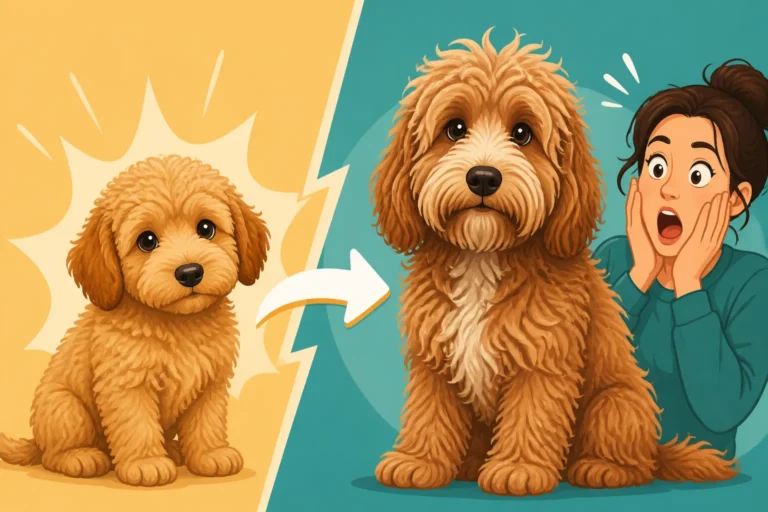
An improper coated Cockapoo, also known as an "unfurnished" Cockapoo, will typically have a smoother face, resembling more of its Cocker Spaniel parent than its Poodle side. This means no prominent beard, mustache, or eyebrows that are so characteristic of the "doodle" look. Instead, their facial hair will be shorter and lie flatter, giving them a more traditional spaniel expression. This difference in appearance is often the first thing people notice.
Beyond aesthetics, the key implication of an improper coat is shedding. Without the furnishings gene, a Cockapoo's coat behaves more like a typical shedding dog. While still a hybrid, these unfurnished Cockapoos will shed noticeably, often surprising owners who were expecting a low-shedding companion due to the Poodle influence. For families with allergy concerns, an unfurnished Cockapoo would likely not be a suitable choice, making it crucial for breeders to understand and communicate this genetic possibility. Whether a Furnished Cockapoo Suits an Allergic Home
Why IC Isn't a "Fault" but a Genetic Reality
It's vital to clarify that having an improper coat (IC/IC genotype) is not a "fault" or a health defect. It's simply a genetic variant, much like eye color or hair color in humans. It means the dog inherits the genes for a coat type that is closer to the original Cocker Spaniel, rather than the Poodle's furnishing traits. Unfortunately, sometimes this variation is misunderstood or even misrepresented, leading to frustration. A responsible breeder understands this genetic reality and uses testing to ensure transparency, not to eliminate a perfectly healthy genetic variation.
The perception of an "improper coat" as a fault often stems from the strong market demand for the low-shedding, furnished aesthetic. However, an unfurnished Cockapoo can be just as wonderful a companion, albeit with different grooming and allergy considerations. Educating potential buyers about these genetic possibilities ensures that people adopt a puppy that truly fits their lifestyle and expectations, regardless of whether it has that classic doodle beard. It’s all about informed choices and celebrating the natural diversity within the breed. Whether an Improper Coated Cockapoo Is a Fault
Integrating RSPO2 Testing into a Breeding Program
For any breeder committed to responsible practices and meeting the expectations of potential puppy owners, integrating RSPO2 testing is a non-negotiable step. It's about more than just predicting coat types; it's about making educated decisions that contribute to the overall well-being and satisfaction of both the dogs and their future families.
When and How to Test Parents
The ideal time to conduct RSPO2 testing on breeding dogs is before any mating takes place. This allows breeders to make informed decisions about pairing choices and avoid any unwelcome surprises down the line. Testing is typically straightforward and non-invasive. Most genetic testing laboratories, some of which you might find through a quick search online, offer specific DNA panels for coat traits. They usually require a simple cheek swab, where a small brush is rubbed against the inside of the dog's cheek to collect cells, or sometimes a blood sample from your veterinarian.
Once the sample is collected, it's sent to the lab for analysis. The results will clearly indicate the dog's genotype (F/F, F/IC, or IC/IC). Having these results in hand means a breeder can confidently plan their litters to either guarantee furnished puppies, or to ensure they are upfront with prospective owners about the possibility of unfurnished coats. The cost for such tests is an investment in the health and predictability of future generations, and it’s something responsible breeders are willing to make. Which Labs Test a Cockapoo's Coat Genes
Responsible Breeding Practices with RSPO2 Results
Once a breeder has the RSPO2 results for their breeding stock, they can apply this knowledge to make ethical and strategic pairing decisions. For instance, if the goal is to produce a litter of all furnished, low-shedding puppies, a breeder would ensure that at least one parent is F/F. If both parents are F/IC, the breeder must be prepared for the possibility of unfurnished puppies and be transparent about this with buyers. This doesn't mean F/IC dogs shouldn't be bred; it simply means understanding the genetic outcomes and communicating them clearly.
A truly responsible breeder goes beyond simply testing. They educate their puppy buyers about the significance of these tests and what the results mean for their specific puppy. This might involve discussing grooming needs, potential shedding, and how to manage allergies if applicable. It's about providing a comprehensive picture, not just selling a puppy. This commitment to honesty helps to ensure that puppies go to homes where their needs and characteristics are fully understood and appreciated, leading to happier, healthier lives for these wonderful dogs.
The Impact on Cockapoo Owners and the Breed's Future
The knowledge gained from RSPO2 testing isn't just for breeders; it profoundly impacts prospective Cockapoo owners and plays a crucial role in the ongoing development and recognition of the breed itself. It empowers buyers and helps shape the direction of breeding toward more consistent and healthier lines.
Making Informed Puppy Choices
For families searching for a Cockapoo, often with specific requirements like low shedding due to allergies, RSPO2 testing results offer invaluable insight. Instead of relying solely on the breeder's visual assessment or general assumptions about Cockapoo coats, prospective owners can ask to see the genetic test results for the parent dogs. This provides concrete evidence of a puppy's likely coat type and shedding characteristics, enabling families to make a truly informed decision.
Imagine a family with mild pet allergies doing their due diligence. They find a breeder who proudly displays the F/F results for both parents, guaranteeing that their future puppy will be furnished and therefore much less likely to trigger allergies. This level of certainty alleviates a huge amount of anxiety and dramatically improves the chances of a successful, long-term placement for the puppy. Conversely, if a family discovers that a litter has a chance of producing unfurnished puppies, and they need a low-shedding dog, they can then seek out a different litter without regret. This leads to happier matches all around, reducing the sad instances of dogs needing rehoming due to unforeseen shedding. Reading a Cockapoo Coat Report Before You Choose
Advancing the Cockapoo as a Predictable Companion
The consistent application of genetic testing like RSPO2 isn't just good for individual litters; it's a vital step in advancing the Cockapoo as a more predictable and well-understood companion animal. For decades, one of the challenges with hybrid breeds has been the wide variability in traits, making it hard to predict what a puppy will truly be like as an adult. By systematically using genetic tests to understand and influence coat types, breeders are moving the Cockapoo closer to having more consistent characteristics, a hallmark of an established breed.
This improved predictability doesn't just apply to coats. It also fosters a breeding community that is more aware of genetic health screening in general, such as testing for Familial Nephropathy and the Kidneys a Cockapoo Can Inherit or Progressive Retinal Atrophy in a Cockapoo. As breeders increasingly use these tools, the overall health and consistency of the Cockapoo improve, solidifying its place as a beloved and reliable family dog. This commitment to genetic health and predictability is a crucial part of the journey for the Cockapoo to be seen not just as a "designer dog," but as a legitimate and well-developed breed. Why the Cockapoo Has Been Sixty Years Becoming a Breed
Genetic Testing Resources for Cockapoo Coat Types
Navigating the world of genetic testing can feel a little overwhelming at first, but thankfully, there are several reputable labs that offer RSPO2 testing, often as part of a larger coat color and trait panel. These resources make it accessible for breeders to gain the valuable insights needed to make informed decisions about their breeding programs.
Choosing a Reputable Genetic Testing Lab
When selecting a lab for RSPO2 testing, it's crucial to choose one that is well-established, provides clear, easy-to-understand results, and ideally offers support if you have questions. While I can't name specific prices or current offers, you'll find that many canine genetic testing companies allow you to order test kits online directly. These kits usually include everything you need, like cheek swabs and instructions, which you then send back to the lab. Some popular labs are well-known in the breeder community for their comprehensive panels.
Before committing, it's a good idea to research customer reviews and turnaround times. A lab that provides prompt, accurate results is a huge asset to a busy breeding program. Look for those that explicitly list RSPO2 (Furnishings) in their coat trait panels. Many breeders also appreciate labs that offer combined panels, covering not just furnishings but also curl, shedding, and various color genes, giving a holistic picture of a dog's genetic coat profile. Which Labs Test a Cockapoo's Coat Genes
Interpreting Your RSPO2 Test Results
Once you receive your RSPO2 test results, they will typically come in a report detailing your dog's genotype: F/F, F/IC, or IC/IC.
- F/F (Furnished/Furnished): This means your dog has two copies of the furnishing gene. They will be furnished and will pass on an 'F' allele to all of their offspring. Therefore, all puppies from an F/F parent will also be furnished, regardless of the other parent's status. This is the ideal genotype for consistently producing furnished Cockapoos.
- F/IC (Furnished/Improper Coat): Your dog has one copy of the furnishing gene and one copy of the improper coat gene. They will be furnished themselves, as 'F' is dominant. However, they can pass on either 'F' or 'IC' to their puppies. If bred to another F/IC dog, there's a 25% chance of producing unfurnished (IC/IC) puppies.
- IC/IC (Improper Coat/Improper Coat): Your dog has two copies of the improper coat gene. They will be unfurnished (smooth-faced) and will pass on an 'IC' allele to all of their offspring. This means all their puppies will be unfurnished, even if bred to an F/IC dog. Only breeding to an F/F dog would ensure all puppies are at least F/IC (furnished carriers).
Understanding these results allows breeders to carefully plan pairings to achieve desired coat outcomes and provide clear, accurate information to prospective puppy buyers.
| Genotype | Phenotype (Appearance) | Alleles Passed to Offspring | Implications for Litters |
|---|---|---|---|
| F/F | Furnished (beard, mustache, eyebrows) | Always 'F' | All puppies will inherit at least one 'F' allele and thus be furnished. |
| F/IC | Furnished (beard, mustache, eyebrows) | 50% 'F', 50% 'IC' | Can produce furnished or unfurnished puppies, depending on the mate's genotype. Transparency with buyers is key. |
| IC/IC | Unfurnished (smooth face, no prominent beard) | Always 'IC' | All puppies will inherit an 'IC' allele. Will be unfurnished unless bred to an F/F parent, in which case all puppies will be F/IC (furnished carriers). |
Many of these labs offer additional services, such as health panels that can screen for a range of genetic conditions common in Cockapoos. Brands like Chewy and Amazon often carry products that support responsible pet ownership, from specialized puppy food for different sizes to grooming tools essential for maintaining various Cockapoo coats, whether furnished or unfurnished. For example, a quality brush is always a good idea. The Furnishings Gene That Decides a Cockapoo's Face
Frequently Asked Questions About RSPO2 Testing
Even with all the information in the world, new questions always seem to pop up! Let's address some common concerns and curiosities breeders and prospective owners often have about RSPO2 testing and Cockapoo coats.
Can an F1 Cockapoo Be Unfurnished?
This is a really common question, and the answer is yes, absolutely! An F1 Cockapoo is a first-generation cross between a purebred Cocker Spaniel and a purebred Poodle. Here's why unfurnished F1s happen: while Poodles are universally F/F (meaning they pass on a furnishing gene), not all Cocker Spaniels are. Some Cocker Spaniels can carry the improper coat (IC) gene, even though they are purebred. If a Poodle (F/F) is bred to a Cocker Spaniel that happens to be a carrier (F/IC) or even unfurnished (IC/IC), you could indeed get unfurnished puppies in the F1 litter.
This is precisely why RSPO2 testing is so valuable for breeders, even for first-generation crosses. Knowing the Cocker parent's status ensures that the breeder can predict the likelihood of furnished puppies and set accurate expectations for buyers. An F1 litter is often seen as the "gold standard" for hybrid vigor, but without genetic testing for furnishings, their coat type is not a 100% guarantee.
Does RSPO2 Testing Predict Shedding for Sure?
RSPO2 testing is an excellent indicator of whether a Cockapoo will have the potential for low shedding due to the presence of furnishings, but it's not the only factor. Furnishings (the F gene) are strongly correlated with low shedding because the longer facial hair and overall coat texture tend to trap shed hair rather than releasing it into the environment. However, shedding is a complex trait influenced by multiple genes, as well as environmental factors, diet, and overall health.
So, while an F/F or F/IC Cockapoo is much more likely to be low shedding than an IC/IC Cockapoo, no dog is truly 100% non-shedding. Even furnished Cockapoos will shed a tiny bit, and coat changes throughout their life, particularly around The Coat Change That Ambushes a Cockapoo Owner at Ten Months, can temporarily increase shedding. RSPO2 testing gives you the best possible genetic prediction for a low-shedding coat, but it's important to understand it's part of a larger picture. Whether Any Cockapoo Is Truly Non Shedding
Is it Possible for an Unfurnished Cockapoo to Have Allergies?
Yes, absolutely. Allergies in humans are triggered by dander (dead skin cells), saliva, and urine, not just the hair itself. While furnished, low-shedding dogs often release less dander into the environment, making them more tolerable for allergy sufferers, they still produce allergens. An unfurnished Cockapoo, because it sheds more, might distribute more dander, but even a furnished Cockapoo can trigger severe allergies in highly sensitive individuals.
The key takeaway is that there's no such thing as a truly "hypoallergenic" dog. It's more accurate to say "allergy-friendly" or "low-allergen." RSPO2 testing helps identify dogs that are more likely to be allergy-friendly, but individual human reactions vary widely. For anyone with severe allergies, spending time with the specific puppy and its parents is always recommended, regardless of genetic test results. Whether the Cocker Half Ruins the Allergy Claim
Should All Cockapoo Breeders Be RSPO2 Testing?
In short, yes, for the sake of transparency, predictability, and meeting client expectations. Given the high demand for low-shedding Cockapoos, responsible breeders have a moral obligation to understand the genetic makeup of their breeding dogs. RSPO2 testing is a relatively inexpensive and simple test that provides critical information. It prevents accidental litters of unfurnished puppies when buyers are specifically looking for the furnished type, and it allows breeders to be completely upfront about what a family can expect.
Not all breeders choose to test, which means buyers should be diligent in Asking a Cockapoo Breeder for the FN Certificate or other genetic health clearances, including RSPO2. A breeder who voluntarily tests and shares these results demonstrates a commitment to ethical practices and the health and welfare of their puppies. It empowers both the breeder to make informed decisions and the buyer to choose a puppy that truly fits their needs and expectations.
Disclaimer
This article is for general informational purposes only and does not constitute professional advice. Laws, prices and regulations vary by location and change over time. Consult a qualified professional for guidance on your specific situation.