Whether a Toy Cockapoo’s Knees Go First
It’s incredibly unsettling to notice your energetic little Toy Cockapoo suddenly skip a step, hold a back leg up, or hesitate before jumping on the sofa. For many small breed owners, these fleeting moments spark an immediate worry about joint health, and often, it's those tiny knees that become the primary concern. This comprehensive guide will walk you through why Toy Cockapoos are particularly susceptible to knee issues, how to recognize the signs, and what you can do to manage and prevent these common joint problems.
Understanding Patellar Luxation in Toy Cockapoos
One of the most common and often distressing knee problems in Toy Cockapoos, and indeed many small breeds, is patellar luxation. The very phrase can sound intimidating, but understanding it is the first step toward helping your furry friend.
What is Patellar Luxation?
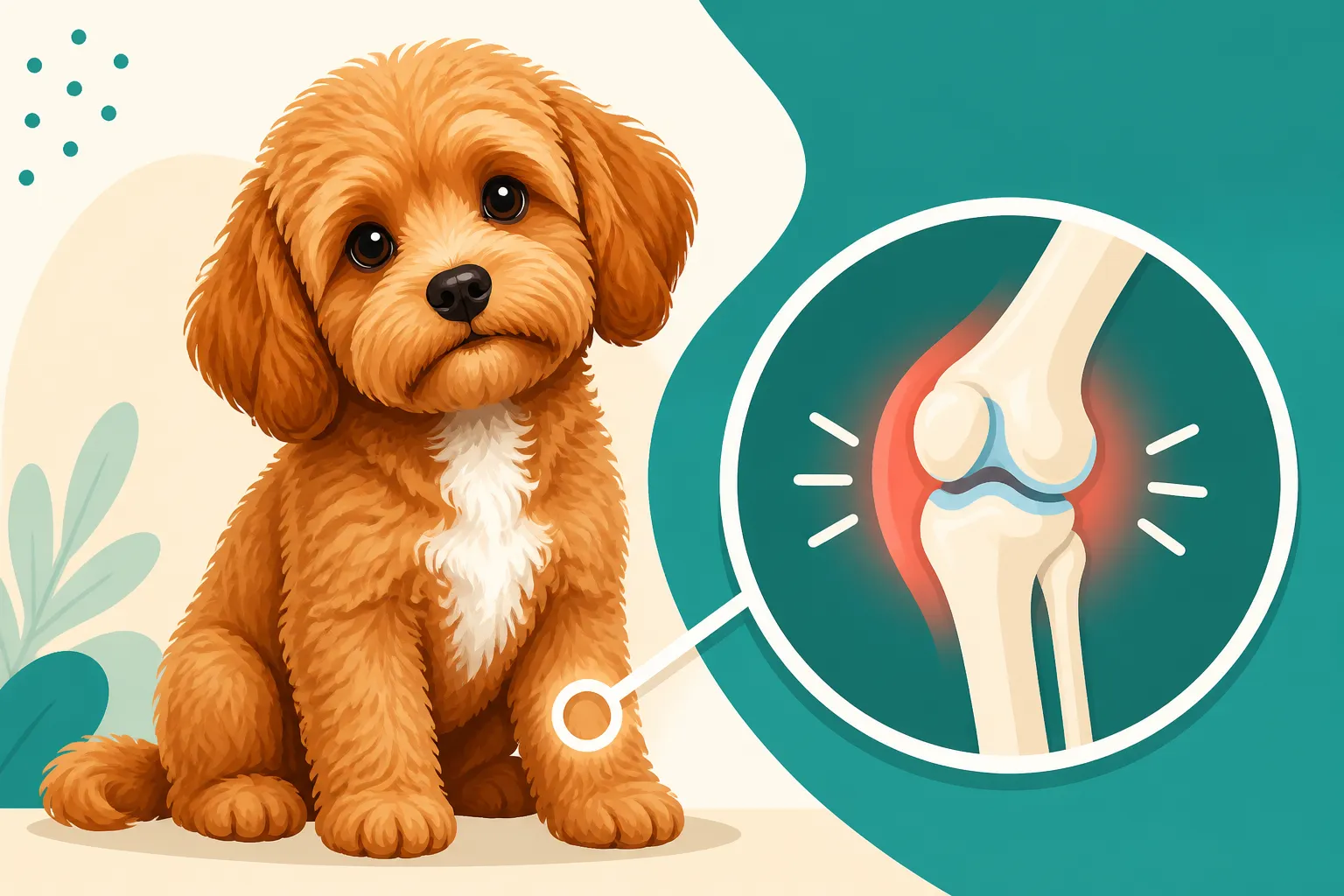
In simple terms, patellar luxation means a dislocating kneecap. Your dog’s kneecap (patella) normally sits in a groove at the end of the thigh bone (femur), allowing it to glide smoothly up and down as the knee bends and straightens. When a patella luxates, it slips out of this groove, either to the inside (medial luxation, most common in small breeds) or occasionally to the outside (lateral luxation) of the leg. This slipping can happen intermittently or become a permanent displacement.
Imagine trying to walk when your own kneecap keeps popping out of place – it’s painful, startling, and definitely hinders your movement! For a Toy Cockapoo, this can manifest as a sudden yelp, a moment of holding the leg up, or a peculiar "skipping" gait as they try to pop the kneecap back into position themselves. It’s natural to feel worried when you see your beloved dog in discomfort, and it's a common frustration for owners of these charming little dogs. Patellar luxation is graded on a scale from 1 to 4, with Grade 1 being occasional, minor slips, and Grade 4 being a permanent and severe dislocation that significantly impacts mobility. Recognizing that such a seemingly small issue can have such a big impact on your dog's quality of life is key.
Why Toy Cockapoos Are Prone
So, why do Toy Cockapoos seem to draw the short straw when it comes to knee problems? It really boils down to a combination of genetics and anatomy, inherited from both sides of their lineage. Both Cocker Spaniels and Poodles, especially the smaller varieties like Miniature and Toy Poodles, are predisposed to patellar luxation. This means that when you cross them to create a Cockapoo, that genetic predisposition is carried over.
Small breeds, by their very nature, often have slightly different leg structures compared to larger dogs. Their bones can be more finely constructed, and the grooves in their femurs where the patella sits might be shallower. The alignment of the quadriceps muscle, the patella, and the patellar ligament can also be off-kilter, making it easier for the kneecap to slip. If a Toy Cockapoo inherits these structural quirks from either the Cocker or Poodle side, it significantly increases their risk. It's not a fault of the dog, but rather an unfortunate genetic lottery that can affect even the happiest, most active pups. Understanding these predispositions highlights the importance of choosing a responsible breeder who performs genetic health screenings.
The Role of Genetics vs. Environment
While genetics undeniably play a huge role in whether your Toy Cockapoo is predisposed to patellar luxation, environmental factors can certainly influence the onset and severity of the condition. You might find yourself wondering if something you did caused it, and it's important to remember that most of the foundational risk is genetic.
However, certain lifestyle aspects can exacerbate an existing predisposition. For example, obesity puts extra strain on all joints, including the knees, making it harder for an already unstable kneecap to stay in its groove. Excessive jumping from high places, like off beds or furniture, especially when they're young and still developing, can also put undue stress on delicate knee joints. Think about your small pup repeatedly landing awkwardly – over time, this can contribute to the development or worsening of luxation. While a healthy, active lifestyle is crucial, it's about balance. Gentle, controlled exercise on soft surfaces is generally better than vigorous, high-impact activities, especially if you know your dog has a genetic susceptibility. Knowing that you have some control over environmental factors can be empowering, even if the primary cause is genetic. This is why discussions around topics like Whether Furniture Jumping Wrecks a Toy Cockapoo's Knees are so important.
Recognizing the Signs and Symptoms of Knee Issues
Spotting knee problems in your Toy Cockapoo can sometimes feel like trying to catch a shadow – they might be subtle at first, or your dog might be a master at hiding discomfort. But knowing what to look for can make all the difference.
Early Indicators in Young Puppies
It’s heartbreaking to think of a tiny puppy with joint issues, but patellar luxation can indeed show up very early. In young Toy Cockapoo puppies, the signs might be incredibly subtle, making it easy for an unsuspecting owner to miss them. You might notice an occasional "hop" or "skip" while they're running and playing, where they momentarily hold one back leg up for a step or two before putting it back down as if nothing happened. They might do this when they're excited, or after a burst of zoomies.
Sometimes, puppies might show a slight reluctance to bear weight on a leg, or seem a bit clumsy when moving. It’s easy to dismiss these as puppy antics or a misstep during play, especially if it's intermittent. However, these brief moments are often the earliest hints of a luxating patella. Pay close attention during playtimes. If you see them shaking a back leg, or an unusual way of carrying it, it's worth a mental note. Early detection can lead to earlier management, potentially slowing progression or guiding treatment decisions.
Common Symptoms in Adult Toy Cockapoos
As Toy Cockapoos mature, or if the luxation progresses, the symptoms usually become more pronounced and consistent. The classic sign that many owners observe is the "skip," where the dog runs a few steps and then lifts one back leg off the ground for a stride or two, then puts it back down and continues normally. This is often the dog manually extending its leg to "pop" the kneecap back into place.
Other signs can include intermittent lameness, where your dog might limp for a while and then appear fine. You might notice them favoring a leg, or showing reluctance to jump onto furniture or climb stairs, activities they once performed with ease. They might also exhibit pain signals, such as yelping when the leg is touched or manipulated, or when the kneecap slips. In more severe cases (Grade 3 or 4), the leg might be held up almost constantly, or they might walk with a crouched stance, resembling a bow-legged appearance, because the kneecap is permanently displaced. Over time, chronic luxation can lead to further joint degeneration and conditions like Arthritis in a Cockapoo at Eleven, which is why addressing it promptly is so important. These visible struggles are truly distressing for any pet parent.
When to Seek Veterinary Attention
If you suspect your Toy Cockapoo is experiencing any knee problems, the best thing you can do is schedule a veterinary appointment promptly. Don't wait until the symptoms are constant or severe. Even those occasional skips or hesitations warrant a check-up. Your veterinarian will perform a thorough physical examination, which will often involve palpating your dog's knees and manipulating their legs to check for instability.
During this examination, they'll often be able to feel if the kneecap slips out of its groove. This manual assessment is key to diagnosing patellar luxation and determining its grade. They might also observe your dog walking or running to assess their gait. Sometimes, X-rays might be recommended to get a clearer picture of the skeletal alignment, rule out other orthopedic issues, or assess for secondary arthritis if the condition has been present for a while. Being proactive can prevent further damage and provide your Cockapoo with the best possible outcome. Learning to read your dog's body language for signs of pain or discomfort is a powerful tool in advocating for their health.
Diagnosis and Treatment Options for Patellar Luxation
Receiving a diagnosis of patellar luxation can be daunting, but there are many effective ways to manage this condition, from conservative approaches to surgical interventions. Your vet will guide you through the best path for your unique Toy Cockapoo.
Veterinary Examination and Imaging
When you bring your Toy Cockapoo in for suspected knee issues, your vet will start with a comprehensive orthopedic examination. This isn't just a quick look; it's a careful assessment of how your dog stands, walks, and how their joints feel. The vet will gently flex and extend each knee, trying to manually push the kneecap out of its groove. This tactile examination is usually sufficient to diagnose patellar luxation and determine its grade – from a Grade 1, which might only slip with direct pressure, to a Grade 4, where it’s already out of place and can't be easily put back.
Beyond the physical exam, X-rays are often recommended. While X-rays don't directly show the kneecap slipping, they are invaluable for assessing the overall bone structure of the leg. They can reveal any rotational deformities in the femur or tibia, the depth of the patellar groove, and any signs of arthritis or other joint degeneration that might have developed over time due to chronic instability. This complete picture helps your vet understand the full extent of the problem and tailor the most appropriate treatment plan.
Conservative Management Strategies
For Toy Cockapoos with lower-grade patellar luxation (typically Grade 1 or 2, and sometimes even a non-painful Grade 3), conservative management is often the first line of defense. The goal here isn't to fix the kneecap, but to reduce pain, inflammation, and prevent the condition from worsening.
- Weight Management: This is perhaps the most crucial step. Even a few extra pounds put immense stress on already compromised joints. Working with your vet to achieve and maintain an ideal weight for your Cockapoo can dramatically reduce symptoms and slow progression.
- Controlled Exercise: While activity is important, high-impact activities like jumping off furniture or vigorous fetch should be minimized. Instead, focus on low-impact, consistent exercise like leash walks on soft, even surfaces. Swimming is another fantastic option as it builds muscle without joint impact. This directly relates to preventing issues like Whether Furniture Jumping Wrecks a Toy Cockapoo's Knees.
- Physical Therapy: A certified canine physical therapist can be a game-changer. They can design exercises to strengthen the quadriceps muscles surrounding the knee, which helps to hold the kneecap more securely in its groove. They might also use modalities like massage, laser therapy, or hydrotherapy.
- Joint Supplements: Many vets recommend supplements containing ingredients like glucosamine, chondroitin, and MSM. These can help support cartilage health and reduce inflammation. You might also want to discuss Whether Glucosamine Helps a Cockapoo with your vet. While not a cure, they can offer symptomatic relief and support long-term joint health.
- Anti-inflammatory Medications: During flare-ups of pain or discomfort, your vet might prescribe non-steroidal anti-inflammatory drugs (NSAIDs) to provide relief.
This multi-faceted approach aims to keep your Toy Cockapoo comfortable and active without resorting to surgery.
Surgical Interventions and Recovery
When conservative management isn't enough – typically for painful Grade 2 luxations, most Grade 3s, and all Grade 4s – surgical correction becomes the best option to restore comfort and mobility. The goal of surgery is to realign the kneecap so it stays within its groove.
There are a few different surgical techniques, often used in combination:
- Trochlear Wedge or Block Recession: This involves deepening the groove (trochlea) in the femur so the kneecap has a more stable channel to sit in.
- Tibial Tuberosity Transposition: If the patellar ligament attachment point on the tibia is out of alignment, it can be moved to a more appropriate position and secured with pins.
- Fascial Release/Anti-Rotation Suture: Soft tissues around the knee might be tightened or loosened to help pull the kneecap into proper alignment.
The decision about which procedure to use depends entirely on the specific anatomical issues of your dog.
Recovery from patellar luxation surgery is a significant commitment. Your Toy Cockapoo will need strict rest and restricted activity for several weeks, gradually increasing mobility under vet guidance. This often involves crate rest, leash walks only, and no jumping or running. Pain medication and anti-inflammatories will be crucial. Many owners find working with a physical therapist post-surgery accelerates recovery and improves long-term outcomes.
Financially, patellar luxation surgery can be a considerable expense, ranging from a couple of thousand dollars to several thousand per knee, depending on the severity, location, and veterinary practice. This is where pet insurance can be a lifesaver. Companies like Healthy Paws, for instance, offer plans that can cover a significant portion of these unexpected costs, alleviating some of the financial burden during an already stressful time. Thinking ahead about how to cover potential vet bills for procedures like What Patella Surgery Costs on a Cockapoo can provide immense peace of mind.
| Patellar Luxation Grade | Description | Common Symptoms | Typical Management |
|---|---|---|---|
| Grade 1 | Kneecap can be manually luxated but returns to normal position when released. | Occasional skipping, no consistent lameness. | Conservative management (weight control, exercise, supplements). |
| Grade 2 | Kneecap spontaneously luxates and remains out for some time, or requires manual repositioning. | Frequent skipping, intermittent lameness, mild pain. | Conservative management often tried first; surgery if painful or progressive. |
| Grade 3 | Kneecap is luxated most of the time but can be manually repositioned into the groove. | Consistent lameness, abnormal crouched gait, pain. | Surgical correction usually recommended. |
| Grade 4 | Kneecap is permanently luxated and cannot be manually repositioned. | Severe lameness, significant gait abnormality, chronic pain, often bow-legged appearance. | Surgical correction is typically required to improve mobility and quality of life. |
Prevention and Long-Term Care for Your Toy Cockapoo's Knees
While you can't completely eliminate the genetic risk of patellar luxation, there's a lot you can do as a responsible owner to minimize the chances and provide the best possible long-term care for your Toy Cockapoo's precious knees.
Responsible Breeding Practices
The single most impactful step in preventing patellar luxation is choosing your Toy Cockapoo from a responsible, ethical breeder. A reputable breeder will prioritize the health of their breeding dogs above all else. This means they will conduct thorough health screenings on both parent dogs for conditions common in Cocker Spaniels and Poodles, including patellar luxation. They should be able to provide clear documentation, often from organizations like the Orthopedic Foundation for Animals (OFA), showing that their breeding stock has been evaluated and cleared of significant knee issues.
A breeder dedicated to improving the breed's health understands the importance of not breeding dogs with luxating patellas, even mild cases, to avoid passing on the genetic predisposition. Don't be shy about asking for these health certificates and understanding what they mean. A good breeder will welcome your questions and be transparent about their practices. They'll know that ensuring healthy Joints in a Cockapoo Bred From Four Sizes is paramount. This diligence on the breeder's part is your first and most vital line of defense against hereditary conditions. An untested litter of Toy Cockapoos is truly a gamble, and the consequences can be heartbreaking and costly.
Lifestyle Adjustments for Joint Health
Once your Toy Cockapoo is home, ongoing proactive care becomes your responsibility. A thoughtful approach to their daily life can make a big difference in maintaining joint health, especially if they have even a mild predisposition to knee issues.
- Maintain an Ideal Weight: We touched on this, but it cannot be overstated. Work with your vet to determine your Cockapoo's ideal weight and adjust their diet and exercise accordingly. Even a slight increase in weight can put disproportionate stress on small joints.
- Appropriate Exercise: Ensure your Cockapoo gets regular, moderate exercise. This strengthens the muscles that support the joints. However, avoid high-impact activities like excessive jumping, agility sports on hard surfaces, or prolonged, intense running, especially on uneven terrain. Think gentle walks, controlled play, and perhaps even swimming if they enjoy it. Remember that while Cockapoos are energetic, their small frames need protection.
- Environmental Modifications: Make your home joint-friendly. Provide ramps or pet stairs for accessing beds and sofas to reduce the strain from jumping down. Use non-slip rugs on hard floors to prevent slips and falls that could injure a knee. For puppies, restrict access to stairs until their growth plates have closed and their muscles are stronger.
- Nutritional Support: Beyond a balanced diet, discuss joint-supporting supplements with your vet. Many Cockapoo owners find that adding omega-3 fatty acids, glucosamine, and chondroitin can contribute to overall joint health and help manage inflammation, potentially delaying the onset of Arthritis in a Cockapoo at Eleven.
By being mindful of these aspects of your Toy Cockapoo's life, you're actively contributing to their joint well-being and setting them up for a more comfortable future.
Ongoing Monitoring and Support
Even with all the preventative measures, it’s vital to remain vigilant about your Toy Cockapoo's joint health throughout their life. Regular veterinary check-ups are key. During these visits, your vet will perform physical examinations that include assessing their gait and palpating their knees. Mention any changes you've observed, no matter how minor. Are they hesitating more before jumping? Is their The Skip That Means a Cockapoo's Knee Has Slipped becoming more frequent? Every piece of information helps.
As your Toy Cockapoo ages, like all dogs, they will be more prone to joint issues, including arthritis. Being proactive means addressing any pain or discomfort promptly. Don't assume a slowing dog is "just getting old"; it might be a treatable condition. Continue with joint supplements, maintain their ideal weight, and adjust their exercise routine as needed. Consider options like therapeutic massage, acupuncture, or laser therapy, which can provide significant comfort for dogs with chronic joint pain. Pet insurance providers, like Healthy Paws, often cover these types of alternative therapies when prescribed by a veterinarian, offering broader support for your dog's long-term well-being. By being an observant and proactive owner, you can ensure your Toy Cockapoo lives the happiest, most comfortable life possible, even if their little knees need a bit of extra TLC.
Disclaimer
The information provided in this article is for educational and informational purposes only, and does not constitute veterinary advice. Always consult with a qualified veterinarian for any health concerns or before making any decisions about your pet's medical care.