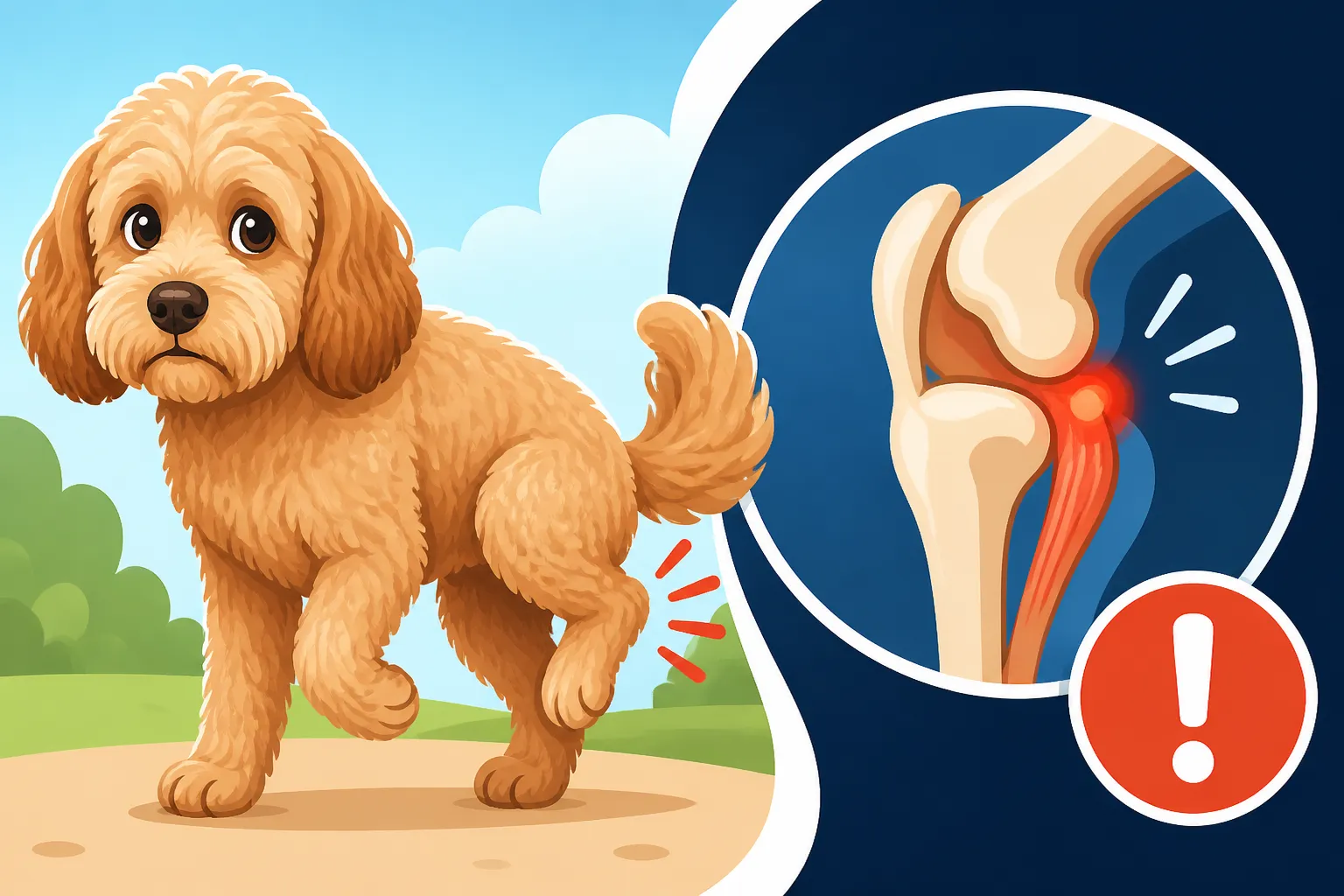
The Skip That Means a Cockapoo’s Knee Has Slipped
That sudden, alarming skip your Cockapoo does, where they pick up a back leg for a few steps then put it down as if nothing happened, can be incredibly unsettling. It’s a moment that makes your heart pound, leaving you wondering if they've stepped on something sharp or if it's something more serious. This guide is here to shed light on what that skip might mean, focusing on patellar luxation, a common orthopedic issue in our beloved Doodles, and how to manage it.
Understanding That Sudden Skip in Your Cockapoo's Gait
It’s completely natural to feel a pang of worry when you first notice your Cockapoo's peculiar gait. One minute they're trotting along happily, the next they're lifting a back leg, hopping on three, and then just as quickly, they're back to all fours. This isn't just a quirky habit; it's often a tell-tale sign that something isn't quite right with their knee. This intermittent lameness, often described as a "skip" or a "bunny hop," is a classic symptom of patellar luxation, which is essentially a slipped kneecap.
What Exactly is Patellar Luxation?
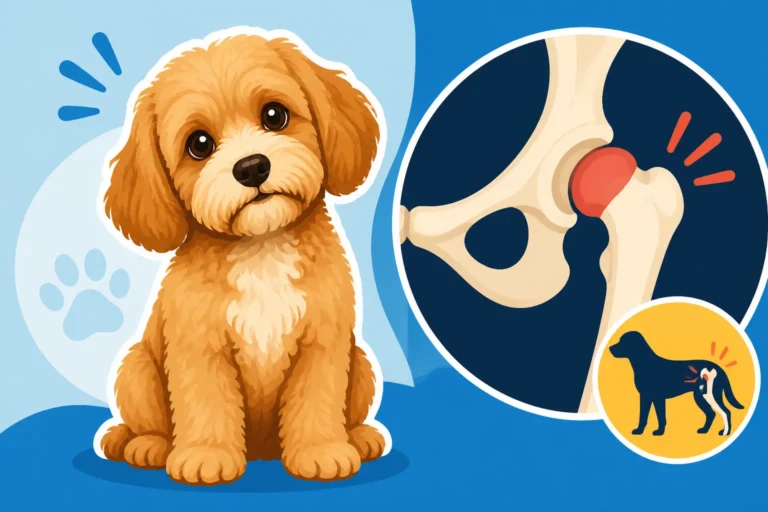
Let’s break down what's happening inside your Cockapoo’s knee. The patella, or kneecap, is a small bone that sits in a groove on the front of the femur (thigh bone), known as the trochlear groove. It’s held in place by tendons and ligaments and acts like a pulley, allowing the leg to extend smoothly. In a healthy knee, the patella glides up and down within this groove as your dog walks, runs, and jumps.
When a dog has patellar luxation, the kneecap slips out of this groove. It can slip either to the inside of the leg (medial luxation, which is more common in small breeds) or to the outside (lateral luxation). This misalignment can be due to a shallow trochlear groove, weak ligaments, or an abnormal angle of the tibia (shin bone) or femur. The Cockapoo, being a crossbreed of the Cocker Spaniel and Poodle, often inherits the predispositions of smaller Poodles, which are particularly susceptible to this condition. It's a structural issue that can be present from birth, even if symptoms don't appear until later in life. Understanding this foundational problem is key to addressing the discomfort your dog might be experiencing, especially if you have a smaller variant; you might want to learn more about Slipping Kneecaps in a Toy Cockapoo.
Why Your Cockapoo Might "Bunny Hop" or Skip
That distinctive "skip" you observe isn't just random; it's your Cockapoo's way of trying to correct the problem. When the kneecap slips out of its groove, it causes discomfort and prevents the leg from extending properly. To get the kneecap back into place, your dog will often lift the affected leg, shake it, or kick it out, causing that characteristic momentary three-legged gait. Once the kneecap pops back into its groove, they'll immediately put the leg down and carry on as if nothing happened – a seamless transition that can be both relieving and confusing for you as an owner.
In the early stages, this skipping might be infrequent, happening only every now and then. Perhaps after a burst of zoomies, or a particularly enthusiastic jump. As the condition progresses, or if the kneecap slips out more easily, these episodes can become more frequent and more pronounced. You might notice them "bunny hopping" with both back legs together, or showing a more persistent lameness, where they struggle to bear weight on the affected leg for longer periods. This compensation can put extra strain on other joints and muscles, potentially leading to secondary issues like arthritis over time. Recognizing this behavior early is crucial for getting your furry friend the care they need and preventing further complications down the line.
Diagnosing Patellar Luxation in Your Cockapoo
If you’ve noticed your Cockapoo doing that tell-tale skip, the next step is a trip to your veterinarian. It’s important not to delay, as early diagnosis can often lead to more effective management and better long-term outcomes for your dog. Your vet will conduct a thorough examination and may recommend further diagnostics to get a complete picture of what’s going on inside that knee.
What to Expect at the Vet
When you bring your Cockapoo in, your veterinarian will start by gathering a detailed history from you. Be prepared to describe exactly what you've observed: when the skipping started, how often it happens, what activities seem to trigger it, and if your dog shows any signs of pain (like yelping or sensitivity to touch). They will then perform a comprehensive physical examination, paying close attention to your dog's gait and orthopedic health. This usually involves manipulating the knee joint to feel for instability and to assess how easily the kneecap can be manually luxated (moved out of place) and returned to its groove. They’ll also check other joints, including the hips, as sometimes conditions like hip dysplasia can present with similar lameness or occur concurrently. If you're concerned about other joint issues, understanding The Age a Cockapoo Can Be Hip Scored might be useful.
To get a clearer understanding of the underlying bone structure and to rule out other potential causes of lameness, your vet will likely recommend radiographs (X-rays) of the knee and possibly the hips. While X-rays don't directly show the kneecap slipping, they can reveal abnormalities in the trochlear groove, bone deformities, and the degree of any existing arthritis, all of which contribute to or are a consequence of patellar luxation. These diagnostic steps are essential for accurately assessing the severity of the condition and formulating the most appropriate treatment plan for your beloved companion. It's also vital to differentiate from other conditions, like Legg Calve Perthes in a Small Cockapoo, which can also cause hind limb lameness.
Grading the Severity of Patellar Luxation
One of the most critical aspects of diagnosis is determining the grade of patellar luxation. Veterinarians use a grading system from I to IV to classify the severity of the condition. This grading helps inform treatment decisions and provides an indication of the potential long-term prognosis.
Here's a breakdown of what each grade signifies:
| Grade | Description | Clinical Signs Observed |
|---|---|---|
| Grade I | The patella can be manually luxated but spontaneously reduces (slips back into place). | Intermittent, mild skipping or lameness, often goes unnoticed by owners. |
| Grade II | The patella spontaneously luxates and remains luxated for a short period before reducing spontaneously or with manipulation. | More frequent skipping, occasional holding the leg up, sudden yelps of pain. |
| Grade III | The patella is permanently luxated but can be manually reduced. | Persistent lameness, abnormal gait, bowed legs, muscle atrophy in affected limb. |
| Grade IV | The patella is permanently luxated and cannot be manually reduced. | Severe, constant lameness, often unable to bear weight, significant skeletal deformities. |
As you can see, the severity escalates with each grade. A Grade I might only present with that occasional skip, barely noticeable, while a Grade IV would be causing constant pain and significantly impacting your Cockapoo's mobility and quality of life. The higher the grade, the more intervention is typically required. It's worth noting that even a Grade I can progress over time if left unaddressed, so don't dismiss those early skips. Early intervention can make a significant difference in your dog's comfort and mobility. Learning more about The Patella Grade at Which a Cockapoo Is Operated can help you understand the intervention threshold.
Management and Treatment Options for a Slipped Kneecap
Once your veterinarian has diagnosed the patellar luxation and determined its grade, you'll discuss the best course of action. Treatment can range from conservative management for milder cases to surgical intervention for more severe or painful conditions. The goal is always to reduce pain, improve mobility, and enhance your Cockapoo's overall quality of life.
Conservative Approaches for Milder Cases
For Cockapoos with Grade I or some Grade II patellar luxation, or for those whose owners prefer to avoid surgery, conservative management can often be very effective. This approach focuses on supportive care to strengthen the surrounding muscles, reduce inflammation, and minimize discomfort.
First and foremost, weight management is absolutely crucial. Excess weight puts additional strain on all joints, including the knees, exacerbating luxation and increasing pain. Working with your vet to achieve and maintain an ideal body condition for your Cockapoo can make a profound difference. Next, exercise modification plays a big role. While your Cockapoo still needs activity, high-impact activities like jumping, sudden turns, or intense running on slippery surfaces should be limited. Instead, focus on controlled, low-impact exercises like leash walks, swimming, or short, structured play sessions on soft ground. These activities help build muscle strength around the knee without stressing the joint.
Many owners also find success with joint supplements. Ingredients like glucosamine, chondroitin, and omega-3 fatty acids (EPA and DHA) are widely used to support cartilage health and reduce inflammation. Brands like Nutramax's Dasuquin or Cosequin are often recommended by vets. You might want to research Whether Glucosamine Helps a Cockapoo for more in-depth information. For those occasional flare-ups of pain or inflammation, your vet might prescribe non-steroidal anti-inflammatory drugs (NSAIDs) to keep your Cockapoo comfortable. Additionally, physical therapy, including hydrotherapy (underwater treadmill), can be incredibly beneficial for building muscle and improving range of motion without putting pressure on the joint. These conservative strategies aim to manage symptoms and slow the progression of the disease, allowing many Cockapoos to live comfortably without surgery for years.
Surgical Intervention and Recovery
When conservative management isn't enough – typically for Grade II luxation that causes significant pain or lameness, and certainly for Grade III and IV cases – surgical intervention becomes the most effective path to long-term relief. The decision to operate is a big one, and your vet will discuss all the pros and cons with you, considering your Cockapoo's age, overall health, and quality of life.
The goal of surgery is to permanently realign the kneecap within its groove. Several surgical techniques might be employed, often in combination, to achieve this. One common procedure is trochleoplasty, where the trochlear groove is deepened to provide a more stable channel for the patella. Another is tibial crest transposition, which involves moving the attachment point of the patellar ligament on the tibia to properly align the kneecap. Sometimes, the joint capsule or surrounding tissues are tightened (lateral imbrication) or released (medial release) to help keep the kneecap in place. The specific technique chosen will depend on the unique anatomical issues contributing to your Cockapoo's luxation.
Post-surgery, recovery is a critical phase that requires commitment from you. Your Cockapoo will need strict rest and restricted activity for several weeks to allow the surgical site to heal properly. This usually means kennel rest, short leash walks only, and no jumping or running. Pain medication and anti-inflammatory drugs will be prescribed to keep them comfortable during this period. Your vet will also likely recommend a post-operative physical therapy program, which might involve gentle range-of-motion exercises, controlled walks, and eventually, more intensive rehabilitation, possibly including hydrotherapy. This rehab is vital for rebuilding muscle strength, improving flexibility, and ensuring a successful return to full function. It's a journey, but with dedicated care, many Cockapoos go on to live active, pain-free lives after successful surgery. Given the potential costs involved, you might want to look into What Patella Surgery Costs on a Cockapoo and consider pet insurance options. Providers like Healthy Paws can be a real lifeline when unexpected orthopedic issues arise, helping cover a significant portion of these expenses, providing peace of mind during a stressful time. Having a good policy, like those discussed in What a Cockapoo Policy Costs in Its First Year, can be invaluable.
Preventing Patellar Luxation and Long-Term Care
While some cases of patellar luxation are unavoidable due to genetic factors, there are proactive steps you can take to minimize risk and support your Cockapoo's joint health throughout their life. It starts even before you bring your puppy home and continues through daily care.
The Role of Responsible Breeding
Patellar luxation has a significant hereditary component, meaning it can be passed down from parents to offspring. This is why responsible breeding practices are absolutely paramount. A reputable Cockapoo breeder should be screening their breeding dogs for orthopedic issues, including patellar luxation, before mating. They should be able to provide clear health certifications for both parent dogs, demonstrating that their knees have been evaluated by a qualified veterinarian and found to be free of luxation (or to have only a very mild, non-problematic grade if applicable). These health clearances, often issued by organizations like the Orthopedic Foundation for Animals (OFA), are not just pieces of paper; they are evidence of a breeder's commitment to producing healthy puppies.
When you're looking for a Cockapoo puppy, don't be afraid to ask for these certifications. A transparent breeder will be happy to share them and explain what they mean. Avoiding breeders who cannot or will not provide health clearances is one of the most powerful steps you can take to reduce the risk of your puppy inheriting this condition. Opting for a puppy from health-tested parents significantly decreases the likelihood of expensive and painful orthopedic problems down the line. It's important to know The Five Certificates a Cockapoo Breeder Should Show and understand Whether an Untested Cockapoo Litter Is a Gamble. Remember, a healthy start begins with informed choices.
Everyday Care to Support Joint Health
Even if your Cockapoo comes from excellent lines with health-tested parents, ongoing care throughout their life can make a big difference in maintaining optimal joint health. Your daily routines play a crucial role in preventing or mitigating orthopedic problems.
Maintaining a healthy weight is perhaps the single most important thing you can do. Every extra pound your Cockapoo carries puts unnecessary stress on their joints, accelerating wear and tear and potentially worsening any latent orthopedic conditions. Work with your vet to establish a proper diet and monitor your dog’s body condition regularly. Appropriate nutrition through a high-quality dog food, often supplemented with joint-supporting nutrients like glucosamine and chondroitin, can also be beneficial.
Beyond diet, safe exercise is key. While Cockapoos are active and love to play, avoid excessive high-impact activities, especially during puppyhood when their joints are still developing. Instead, focus on consistent, moderate exercise like daily walks and controlled play. Consider providing safe environments at home; for instance, using ramps or steps for access to furniture can prevent repetitive jumping, which can be hard on the knees. You might want to consider Whether Furniture Jumping Wrecks a Toy Cockapoo's Knees. Ensure non-slip surfaces are available, especially in areas where your dog runs, to prevent slips and falls that could injure a knee. Regular veterinary check-ups are also crucial, allowing your vet to monitor your Cockapoo's joint health and catch any issues early. Even with the best preventive measures, some dogs, due to their genetic makeup, may still develop patellar luxation. This is where pet insurance, like plans offered by Healthy Paws, becomes a valuable asset, ready to assist with unexpected veterinary costs, ensuring you can always provide the best care for your furry family member without financial stress.
Disclaimer
The information provided in this article is for educational and informational purposes only and does not constitute medical advice. Always consult with a qualified veterinarian for any health concerns or before making any decisions about your Cockapoo's health care.