Whether a Cockapoo Can Do Detection Work
Many Cockapoo owners wonder if their beloved, energetic companions, often known for their charming personalities, have what it takes for more serious pursuits beyond being a fantastic family pet. The idea of your Cockapoo doing detection work, like finding specific scents or even people, might seem ambitious to some, but it's a completely valid question for such an intelligent and motivated breed. This comprehensive guide will explore whether Cockapoos possess the inherent traits and trainability to excel in various forms of detection work, and how you can nurture that incredible potential.
The Foundations of a Detection Dog: What Does It Take?
Before we dive into the specifics of our curly-coated friends, it’s important to understand what makes any dog a successful candidate for detection work. It's not just about having a nose; it's about a complex interplay of inherited traits, temperament, and dedicated training that turns raw potential into a working marvel.
Inherited Traits: Nose, Drive, and Focus
Detection work isn't merely about possessing a good nose; let's be honest, almost all dogs have an olfactory sense far superior to our own. The true magic lies in having the drive to relentlessly use that nose and the focus to tune out every irrelevant distraction, zeroing in solely on the target scent. A truly great detection dog has an almost insatiable curiosity about specific odors and an inherent, burning desire to work for a reward, be it a cherished toy, a high-value treat, or enthusiastic praise from their handler. They find immense satisfaction in the "hunt" itself.
This incredible drive is often deeply embedded in a dog's genetic blueprint, passed down through generations of working dogs meticulously bred for these very qualities. Consider breeds like Beagles, whose ancestry is steeped in tracking game, or German Shepherds, long employed in law enforcement for their scenting prowess. Their instincts compel them to follow a scent trail to its very conclusion, deriving profound contentment from successfully completing that mission. Without this fundamental, innate drive, training becomes an incredibly arduous, often unrewarding, task, demanding far more effort than the dog is naturally inclined to give.
Focus is equally, if not more, critical. Imagine a dog tasked with finding a specific target odor in a bustling airport terminal, a chaotic disaster zone, or a noisy public park. They cannot afford to be easily sidetracked by the tempting aroma of a discarded sandwich, the fleeting presence of a stranger, or the playful antics of another dog. They require exceptional mental fortitude, an unwavering ability to filter out a deluge of irrelevant sensory information and concentrate exclusively on their assigned mission. This goes beyond mere obedience; it represents a deep, unwavering commitment to the task at hand. While diligent training can certainly enhance a dog's ability to focus, an innate predisposition to concentrate intently provides a significant head start.
Furthermore, detection work frequently demands remarkable endurance. Searching extensive areas, often for prolonged periods under challenging conditions, requires both physical stamina and mental resilience. A dog must be capable of sustaining a high level of concentration and physical exertion without experiencing rapid burnout. This is precisely where a dog's overall health, physical conditioning, and robust constitution become paramount, ensuring they can perform consistently at their peak when the demands of the task are at their highest.
Temperament and Trainability: The Mental Game
While natural scenting ability is an undeniable asset, even the most sensitive nose in the world is of little practical use without a dog that is highly trainable and possesses the ideal temperament. A successful detection dog needs to be eager to please, resilient in the face of challenges, and intelligent enough to comprehend complex cues and engage in effective problem-solving. They must be able to collaborate seamlessly with a human handler, responding dependably to commands even when their scent drive is at its peak. This translates to a dog that quickly grasps expectations and genuinely enjoys the learning process, seeing it as a rewarding partnership.
The quintessential temperament for a detection dog includes being inherently confident, emotionally stable, and not overly reactive to novel environments or sudden, loud noises. These dogs may find themselves working in incredibly diverse settings, from bustling public spaces to cramped, unfamiliar enclosures, or even around a multitude of unknown people and animals. A dog that is prone to stress, timidity, or aggression would not only struggle to perform its duties effectively but could also pose a significant safety risk. Comprehensive socialization from an early age is therefore indispensable, fostering a robust and unshakeable demeanor that can handle almost anything thrown its way.
Motivation remains the linchpin of trainability. What truly ignites your dog's enthusiasm? Is it delectable food, stimulating toys, heartfelt praise, or a combination of these? Successful detection training hinges entirely on strategically leveraging this motivation to consistently reward accurate indications of the target scent. Positive reinforcement techniques are not just preferred, they are paramount, meticulously shaping the dog's behavior to pinpoint the exact source of the desired odor. Discovering that ultimate high-value reward that makes your Cockapoo's tail wag furiously and their eyes sparkle with excitement is absolutely crucial for implementing effective and enjoyable training. If you're pondering Whether a Cockapoo Works Harder for Scent Than Food, exploring their individual motivators can be a fascinating journey.
Ultimately, the synergy between the dog and handler forms the bedrock of any triumphant detection pairing. The handler must possess the acute ability to discern their dog's subtle cues, accurately interpret their body language, and skillfully guide them through intricate search patterns. The dog, in turn, must place implicit trust in their handler and respond with unwavering reliability to their directives. This profound bond, meticulously forged through mutual respect, understanding, and countless hours of shared experience, is absolutely fundamental to any high-level working relationship, especially in a field as nuanced, challenging, and deeply collaborative as scent detection.
Cockapoo Strengths in Detection Work
So, how do our beloved Cockapoos measure up against these demanding requirements? You might be pleasantly surprised to discover that they bring a wealth of strengths to the detection table, stemming directly from their intelligent and active heritage.
The Keen Nose of the Poodle and Cocker Ancestry
Let's wholeheartedly embrace the fantastic olfactory inheritance our wonderful Cockapoos possess, stemming from both sides of their esteemed family tree. Cocker Spaniels, whether American or English variants, trace their lineage back to purpose-bred flushing and retrieving gundogs. This means they were specifically developed over generations to utilize their exceptional noses to locate game skillfully concealed in dense undergrowth, and then to flush it out efficiently for their human hunting companions. Their potent prey drive and astounding scenting abilities are not merely present; they are deeply, inherently ingrained within their very being. Many Cockapoo owners frequently observe The Flushing Drive Still Alive in a Cockapoo even in their most pampered and domestic pets, manifesting as an insatiable urge to relentlessly sniff every bush, investigate every patch of grass, and explore every intriguing scent trail they encounter.
Poodles, too often unfairly dismissed or underestimated beyond their elegant, often sculpted, appearance, are also remarkably intelligent and historically served as proficient water retrievers. They, much like their Spaniel counterparts, are endowed with excellent noses and a profound desire to engage in purposeful work. This remarkable dual heritage means that a Cockapoo is typically equipped from birth with a highly sensitive nose and an innate, almost irresistible, inclination to interact with and comprehend the world predominantly through the intricate language of scent. This isn't merely about a casual sniff; it signifies a dog whose very brain is expertly wired to meticulously process, categorize, and interpret a vast array of odors, rendering them inherently and perpetually curious about new and complex smells.
When these two extraordinary breeds are harmoniously combined, the result is frequently a dog that not only possesses an outstanding nose but also boasts the appropriate physical conformation to utilize it with maximum effectiveness. Cockapoos are typically agile, nimble, and perfectly capable of navigating through a myriad of diverse terrains, a crucial attribute for real-world detection scenarios. Their often compact yet athletic physical structure allows them to get low to the ground with ease, meticulously pinpointing scents without experiencing undue physical strain, which makes them remarkably well-suited for prolonged and intensive searching tasks.
Eagerness to Please and High Motivation
One of the most genuinely endearing and profoundly advantageous traits that a Cockapoo consistently exhibits is their boundless, almost overwhelming, desire to please their human companions. This intrinsic "eagerness to please" is an absolute golden ticket in virtually any training endeavor, and it proves particularly invaluable in the intricate and demanding realm of detection work. They genuinely thrive on positive interaction, lavish praise, and joyful affirmation, which inherently makes them exceptionally receptive to and flourishing under reward-based training methodologies. If your Cockapoo can clearly establish the connection that successfully locating a particular scent culminates in a deeply satisfying and joyous interaction with you, they will, without hesitation, work with tireless dedication to replicate that success again and again.
Cockapoos are also, by and large, recognized for their considerable intelligence and their remarkable ability to learn new things with impressive speed. The question of Whether a Cockapoo Learns Faster Than a Cocker is frequently debated among enthusiasts, but a significant number of owners consistently report that their Cockapoos assimilate new commands, grasp complex concepts, and master novel skills with remarkable alacrity. This inherent mental agility signifies that they can grasp the nuanced and often complex association between a designated target scent and the required indication behavior far more readily and efficiently than some other breeds might. Their bright, inquisitive minds mean they derive genuine enjoyment from the intellectual challenge of learning and engaging in problem-solving, both of which are fundamental and indispensable components at the very core of all effective detection tasks.
Their often high energy levels, when thoughtfully and correctly channeled, also transform into a significant and invaluable asset. Far from being a mere nuisance or a source of household chaos, this abundant energy, when properly directed, manifests as sustained enthusiasm and an unwavering zeal for searching. A Cockapoo with a robust and well-cultivated play drive, for instance, will happily and energetically work for extended periods if the ultimate reward is an exhilarating game of fetch with their most treasured squeaky toy. This inherent zest for life and an innate willingness to work can serve as an incredibly potent motivator, crucial for maintaining consistent focus and drive throughout lengthy and demanding training sessions.
Adaptability and Size Advantages
The wonderful diversity of Cockapoo sizes, ranging from the delicate Teacup and agile Toy to the more robust Miniature and substantial Maxi, offers a truly unique and practical advantage in various forms of detection work. The availability of smaller dogs means they can effortlessly access confined and challenging spaces that larger, more imposing breeds might struggle to navigate, or simply cannot fit into. Imagine the immense value of a compact, incredibly agile Cockapoo meticulously searching through the precarious rubble of a collapsed structure, meticulously exploring the cramped compartments of a vehicle, or investigating the tight confines beneath furniture for a specific scent. Their smaller stature makes them exceptionally well-suited for such intricate tasks. Furthermore, their size often renders them less intimidating and more approachable to the general public, a distinct benefit when working in crowded public environments or around individuals who may harbor a fear of larger dogs.
Their generally affable disposition and remarkable adaptability also position them as exceptionally suitable candidates for a wide spectrum of diverse working environments. A well-trained Cockapoo can seamlessly transition from a calm, focused training session in the familiar tranquility of a backyard to a bustling, cacophonous urban setting without becoming overly stressed, overwhelmed, or losing their focus. This extraordinary versatility is a critical attribute for any detection dog, as they may be deployed and expected to perform effectively in an unpredictable array of situations and locations. A Cockapoo that has been thoroughly and positively socialized from an early age typically navigates new sights, sounds, and unfamiliar smells with a confident stride, allowing them to remain steadfastly concentrated on the crucial task at hand, regardless of their immediate surroundings.
Moreover, Cockapoos are renowned for cultivating an incredibly strong and unwavering bond with their human families. This deep, almost intuitive, connection translates directly into a dog that is exceptionally keen and eager to work collaboratively with their handler, demonstrating an admirable willingness to take direction and respond to cues. This makes them outstanding candidates for detection work, a discipline where seamless teamwork, clear communication, and mutual understanding are not just desirable, but absolutely paramount. Many owners joyfully discover that their Cockapoo thrives on nothing more than being actively engaged in a purposeful activity alongside them, making scent detection a profoundly natural and fulfilling fit for their collaborative spirit. Ultimately, embracing Scent Work That Satisfies a Cockapoo can deeply fulfill this breed's natural instincts and unwavering desire to work in close partnership with their cherished human.
Common Misconceptions and Challenges for Cockapoos
While Cockapoos possess many admirable qualities for detection work, it’s only fair to address some common misconceptions and the unique challenges they might face. Understanding these helps prepare owners for a realistic and rewarding training journey.
The "Doodle" Stereotype and Serious Work
One of the most significant, albeit often unfair, hurdles that Cockapoos frequently encounter when being considered or evaluated for serious working roles is the pervasive and often limiting "doodle" stereotype. They are commonly perceived as charmingly fluffy, somewhat goofy, and perpetually cheerful family pets, leading to an unfortunately widespread misconception that they inherently lack the gravity, innate drive, or sheer grit required for rigorous and demanding tasks like detection. While their delightful, often playful, demeanor is undoubtedly a significant part of their widespread appeal and endearment, it can, regrettably, sometimes overshadow their profound potential for focused, purposeful work. It's a common, if misguided, tendency for people to automatically assume that a purebred German Shepherd or a Labrador Retriever would be inherently better suited for such roles, purely based on established breed reputations and traditional expectations.
However, to truly judge a dog's capabilities by its superficial appearance, or indeed, an entire breed by its "doodle" label, is a profound misjudgment. Many, many individual Cockapoos possess astonishing intelligence, remarkable tenacity, and an impressive drive, all directly inherited from their esteemed working Poodle and Cocker Spaniel ancestors. The crucial imperative here is to see beyond the undeniably cute exterior and instead meticulously evaluate the individual dog's specific temperament, their inherent genetic predispositions, and, perhaps most crucially, the quality of their training and the depth of their motivation. It is fundamentally about identifying and nurturing the right dog within the breed, rather than unfairly dismissing the entire group based on preconceived notions.
This deeply entrenched stereotype can, unfortunately, also lead to a scarcity of opportunities for talented Cockapoos to even attempt detection work. Handlers, trainers, or professional organizations might instinctively gravitate towards traditionally recognized working breeds, inadvertently overlooking genuinely talented and highly capable individuals within the broader Cockapoo population. It requires a discerning eye, an open mind, and a willingness to challenge conventional wisdom to truly recognize and cultivate the potential for serious, impactful work in a breed that is all too frequently associated more with cuddles on the sofa than with critical, life-saving detection tasks.
Distraction Management and Environmental Sensitivity
While Cockapoos can demonstrate truly remarkable levels of focus when engaged, their inherently friendly and endlessly curious nature can, at times, prove to be a double-edged sword, particularly when the challenge of managing distractions arises. A Cockapoo, in the midst of a critical search, might find themselves equally captivated by the prospect of enthusiastically greeting a new person, meticulously investigating a tantalizingly dropped morsel of food, or engaging with a playful squirrel, as they are by diligently locating a target scent. This is especially true if their training hasn't been specifically designed and rigorously executed to address and overcome these particular challenges. The lively, outgoing personality that makes them so utterly endearing within the comforting confines of the home needs extremely careful and consistent channeling when operating in a demanding, dynamic working environment.
Furthermore, some individual Cockapoos can exhibit a greater degree of environmental sensitivity compared to, for instance, the more stoic and traditionally unflappable working line Labrador. Sudden, loud noises, unexpected rapid movements, or completely novel environments might initially startle them or momentarily pull their intense focus away from the task. While comprehensive and positive socialization from early puppyhood is absolutely crucial in mitigating these reactions, owners and trainers must remain acutely aware of this potential predisposition. Gradually and positively exposing them to an extensive and varied range of stimuli is absolutely essential for systematically building their confidence and resilience, thereby preparing them for the diverse and often unpredictable conditions encountered in real-world searches. Consider the cacophony of a bustling shopping mall during a search for a lost person, or the inherent noise and activity of an industrial site; a detection dog must possess the uncanny ability to effectively tune out such ambient chaos.
Their inherent potential for barking, a trait often shared by both parent breeds in varying degrees, also requires careful and consistent management within a detection context. While a well-timed, specific alert bark can be immensely useful in certain detection tasks, excessive, undirected, or unfocused barking can quickly become a significant distraction, not only for the dog itself but also for the handler and anyone else in the vicinity. Consequently, training efforts must rigorously emphasize a clear, precisely defined indication behavior, such as a "freeze" at the scent source, a distinct "sit," or even a specific paw tap, rather than relying solely on vocalization. This ensures the alert is accurate and controlled, preventing it from devolving into generalized excitement rather than a precise communication of scent detection.
The Commitment Required from Owners
Engaging in detection work, whether you're pursuing it as a competitive sport, a serious hobby, or even with professional aspirations, represents a truly significant commitment. It’s far more than simply attending a handful of training sessions; it’s an ongoing, deeply immersive journey of continuous learning, consistent practice, and unwavering dedication. Owners must be fully prepared to invest a considerable amount of their time, exert substantial effort, and potentially allocate significant financial resources towards specialized training and equipment. This isn't your garden-variety "sit" and "stay" class; it demands a profound, in-depth exploration of canine olfaction, intricate behavior modification, and the nuances of scent discrimination.
Finding a highly qualified and experienced instructor who possesses a deep understanding of scent work principles and is genuinely willing to collaborate with a non-traditional breed like a Cockapoo is absolutely paramount. It's important to recognize that not all dog trainers possess equal experience or expertise in the specialized field of detection, and even fewer may have extensive, hands-on experience working with breeds outside the conventional cadre of detection dogs. A truly excellent trainer will skillfully help you understand your individual dog's unique drives and motivations, and then expertly tailor the training approach to maximize their inherent potential. Resources like comprehensive online courses, such as those thoughtfully provided by BAXTER & Bella, can offer a remarkably solid foundational framework for owners eager to cultivate a strong training relationship and master the fundamental principles of canine communication before embarking on more highly specialized detection classes.
Furthermore, success in detection work hinges critically on unwavering consistency. Regular practice, even when conducted in short, focused bursts, consistently proves to be far more effective and beneficial than sporadic, extended training sessions. Owners need to consciously integrate detection training into their daily routines, consistently reinforcing concepts, refining behaviors, and, crucially, maintaining their dog's enthusiastic engagement and motivation. This elevated level of commitment, which extends far beyond basic pet ownership, may often be underestimated by those who have not previously ventured into the demanding yet incredibly rewarding realm of working dog fields. Indeed, while What a Cockapoo Asks of a First Time Owner certainly highlights that this breed thrives on consistent engagement and interaction, the depth and breadth of commitment required for truly excelling in detection work represents an entirely different echelon of dedication.
Getting Started with Detection Work for Your Cockapoo
If you're feeling inspired and believe your Cockapoo has what it takes, there are clear, actionable steps you can take to begin their detection journey. Remember, this should always be a positive and enriching experience for both of you.
Building a Strong Foundation: Obedience and Bond
Before you even begin to contemplate introducing specific target scents or complex search patterns, it is absolutely essential to ensure that your Cockapoo possesses a rock-solid, unwavering foundation in general obedience. A dog that can reliably and consistently perform fundamental commands such as "sit," "stay," "come," and "leave it" will prove immeasurably easier to guide through the inherently complex and precise maneuvers required for scent work. This foundational obedience isn't merely about establishing control; it's about meticulously building clear, unambiguous communication channels and fostering a deep, mutual understanding between you and your dog. A strong, dependable recall, for instance, becomes absolutely vital if you intend to engage in outdoor searches, acting as your primary safeguard against your dog becoming disoriented or lost if they become overly focused on a particularly compelling scent trail. For comprehensive guidance on this, Building a Recall a Cockapoo Answers is an invaluable resource.
Equally, if not more, crucial is the cultivation of a robust, positive, and trusting bond with your Cockapoo. Detection work is, at its heart, a true team sport, and unwavering trust forms the very cornerstone of that vital partnership. Dedicate ample quality time together, engaging in activities that your dog genuinely loves and finds intrinsically rewarding, whether that involves an exhilarating game of fetch, leisurely exploratory walks, or simply comfortable snuggles on the couch. This consistent positive interaction systematically builds their confidence in you as their reliable leader and nurturer, simultaneously making them far more eager and enthusiastic to engage in joint activities. Your Cockapoo should ultimately perceive working alongside you as the pinnacle of all possible rewards, a joyful and fulfilling collaboration.
Comprehensive socialization also stands as another absolutely crucial element in preparing your Cockapoo for detection work. A detection dog must be thoroughly comfortable, confident, and unflappable in a wide and diverse variety of environments, around myriad different people, and in the presence of other animals. Early, consistent, and positive exposure to an extensive array of diverse sights, sounds, textures, and experiences will significantly help your Cockapoo develop a robust and imperturbable temperament, which is unequivocally essential for effectively working in potentially chaotic, unpredictable, or entirely novel settings. This meticulous, all-encompassing exposure ensures that when the opportune moment arrives to intensely focus on a specific scent, they are not easily overwhelmed or distracted by their surrounding environment.
Introduction to Scent Games at Home
You can joyfully begin to nurture and develop your Cockapoo's budding detection skills right within the comfort and familiarity of your own home, starting with simple, incredibly fun, and highly rewarding scent games. This foundational activity is frequently referred to as "Nosework" or "K9 Nose Work." Initiate the process by making it extraordinarily easy and overwhelmingly positive. Take a high-value, irresistible treat or one of your dog's absolute favorite toys and, ensuring your dog observes you, conspicuously hide it in a very obvious, easily accessible spot. Then, with enthusiastic encouragement, prompt them with a cheerful command like "find it!" or "search!" When they successfully locate the hidden item, shower them with exuberant praise and abundantly reward them. This delightful game serves to teach them the core concept of purposeful searching and instills within them a profound excitement about actively utilizing their remarkable sense of smell.
As your Cockapoo gains confidence and understanding, you can gradually, and progressively, increase the level of difficulty. Begin by concealing treats in slightly less obvious locations – perhaps tucked discreetly under a soft towel, cleverly positioned behind a sturdy chair leg, or carefully placed inside a plain cardboard box. Always utilize a consistent, clear search command, such as "find it" or "search," to avoid confusion. The primary objective at this crucial stage is to systematically build their confidence and intrinsic motivation for engaging in independent searching activities. You can even employ a series of empty boxes to ingeniously create a "search grid" right in your living room, hiding a single treat in just one of the boxes. This brilliantly mimics some of the fundamental aspects of formal detection training, albeit on a very rudimentary and accessible level. Many affordable, engaging puzzle toys readily available on platforms like Amazon can also serve as superb tools to stimulate your Cockapoo's keen nose and active mind, fostering their problem-solving abilities.
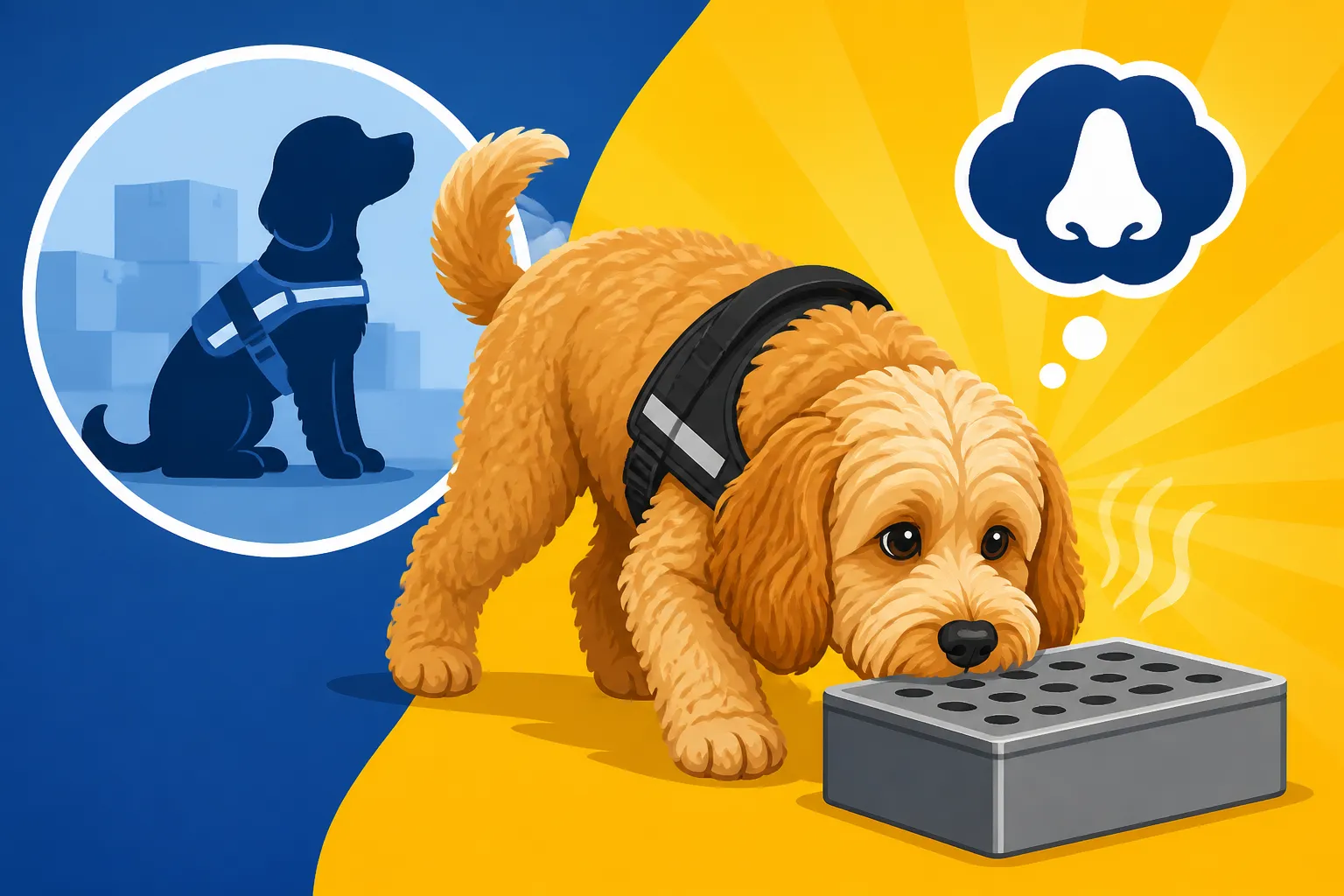
Once they demonstrate consistent success with these basic exercises, you can thoughtfully introduce a specific, distinct target odor. This is the stage where you might consider using highly diluted essential oils, such as birch, anise, or clove (which are commonly employed in formal Nosework competitions), infused onto cotton swabs and then securely placed inside a small, perforated tin. Always ensure that any essential oils used are therapeutic grade and applied with utmost safety, never directly onto your dog's skin or incorporated into their food. This crucial step teaches them the sophisticated skill of discriminating between a multitude of ambient odors and precisely focusing solely on the designated target. Keep all training sessions brief, inherently fun, and always conclude on an overwhelmingly positive note, leaving your dog eager for the next session. Many owners wonder Whether a Cockapoo Needs a Sport to Be Manageable; indeed, scent work offers a fantastic, enriching, and incredibly fulfilling outlet for their abundant energy and keen intellect.
Finding a Qualified Trainer and Next Steps
Once your Cockapoo consistently demonstrates genuine enjoyment and proficiency in basic home-based scent games, the pivotal next step is to diligently seek out and engage with a highly qualified and experienced detection or Nosework trainer. When searching for an instructor, prioritize those who exclusively utilize positive reinforcement training methodologies and possess demonstrated experience working with a diverse array of dog breeds, extending beyond just traditionally recognized working dogs. Such a trainer should possess a profound understanding of how to systematically build and maintain drive and focus in a dog, and critically, how to effectively teach a reliable, unmistakable "alert" or "indication" behavior when the dog successfully locates the target scent. Do not hesitate to inquire about their professional certifications, their extensive experience specifically in scent detection or K9 Nose Work, and their overall philosophy.
Many reputable organizations and training facilities offer structured Nosework classes, typically commencing at foundational, beginner levels. These specialized classes will systematically introduce your Cockapoo to officially recognized target odors, impart systematic and efficient search patterns, and meticulously help to refine your dog's specific alert behavior to a precise, consistent standard. Furthermore, these classes provide carefully controlled environments where your dog can practice their skills while gradually being exposed to increasing levels of real-world distractions, thereby systematically escalating the complexity of their training scenarios. Enrolling in an introductory class is an exceptionally effective way to accurately gauge your Cockapoo's innate aptitude for detection work and, equally importantly, your own personal enjoyment and commitment to the process. Whether a Cockapoo Passes an Obedience Title could be an indicator of their general trainability and readiness for such focused work.
Consider exploring the wealth of resources available on online training platforms for supplementary guidance and support. While these digital resources are not intended to fully replace the invaluable benefits of direct, in-person instruction with a certified professional, comprehensive online programs, such as those provided by BAXTER & Bella, offer robust online puppy and dog training courses. These can be instrumental in solidifying your Cockapoo's foundational obedience, systematically building their confidence in various situations, and thoroughly preparing them for the demands of more advanced and specialized work. This blended approach of online learning complementing in-person classes can be incredibly advantageous, allowing you to review complex concepts at your leisure and consistently practice vital skills within the familiar comfort of your home. With unwavering dedication, consistent effort, and the expert guidance of a skilled trainer, your intelligent, highly motivated Cockapoo possesses truly remarkable potential to excel and flourish in the exciting and deeply rewarding field of detection work, transforming their keen nose and eager spirit into a truly extraordinary and fulfilling endeavor for both of you.
Disclaimer
This article is for general informational purposes only and does not constitute professional advice. Laws, prices and regulations vary by location and change over time. Consult a qualified professional for guidance on your specific situation.