Building a Recall a Cockapoo Answers
It’s a scenario many Cockapoo owners know all too well: you’re at the park, enjoying a lovely walk, when suddenly your sweet, attentive companion spots a squirrel, a distant dog, or even just an interesting patch of grass, and their ears seemingly switch off. You call their name, perhaps even with your special "come" tone, but they're gone, galloping off on an adventure of their own. This guide is dedicated to helping you build a recall so reliable that your Cockapoo chooses to come back to you, even when the world is full of tempting distractions.
Understanding the Cockapoo's Recall Challenges
Before we can effectively teach our Cockapoos to come back every single time, it’s really helpful to understand why they might be prone to ignoring us in the first place. It's not usually defiance; it's often an irresistible pull from their instincts and breed heritage. Knowing these tendencies allows us to tailor our training approach to be more effective and empathetic.
The Spaniel's Scent Drive: A Powerful Distraction
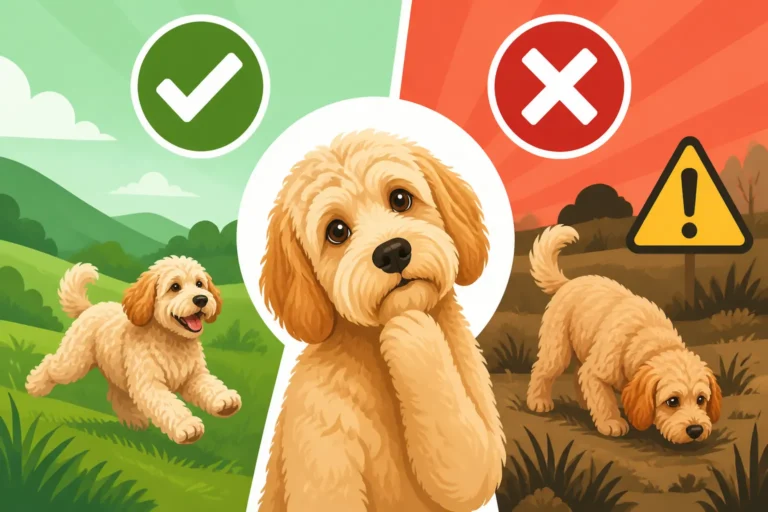
One of the biggest hurdles in establishing a rock-solid recall for a Cockapoo is the formidable scent drive inherited from their Cocker Spaniel lineage. Cocker Spaniels were originally bred as hunting dogs, specifically for flushing game out of dense cover. This means they have an incredible nose and an inherent desire to follow interesting smells. Imagine a scent like a vibrant, compelling story unfolding right before their nose—it's incredibly hard for them to just "put the book down."
When your Cockapoo puts their nose to the ground and starts tracking, they enter a different world. Their focus narrows, their hearing seems to diminish, and their entire being becomes dedicated to deciphering that fascinating trail. This isn't them being naughty; it's their genes kicking in. A distant rabbit, the lingering scent of another dog, or even just a particularly interesting patch of damp earth can completely hijack their attention, making your calls seem like distant static. We've written more about The Flushing Drive Still Alive in a Cockapoo because it's such a fundamental aspect of their character. This strong drive means that simply shouting louder often doesn't work and can actually make them less likely to come, as it might associate your call with frustration or anger.
The Poodle's Independent Streak: Selective Hearing
While the Spaniel side brings the scent drive, the Poodle side, especially from Miniature or Toy Poodles, can contribute a certain level of independence and intelligence that sometimes translates into "selective hearing." Poodles are incredibly smart, and they can sometimes weigh the perceived reward of coming to you versus the perceived reward of continuing what they're doing. If what they're doing (like chasing a leaf or exploring a new bush) is more intrinsically rewarding than whatever you might offer, they might just decide to politely ignore you.
This isn't to say Poodles are difficult; far from it, they are eager to please and highly trainable. However, their intelligence means they are constantly assessing situations. If your recall has become predictable or unexciting, or if you only call them back to put them on the leash and end their fun, they learn this pattern very quickly. To combat this, our recall needs to be consistently exciting, unpredictable in a good way, and always lead to something positive, not just the end of their fun. The key is to make you the most exciting thing in their environment, even when there are other interesting things happening.
The "Cockapoo Zoomies" and Over-Excitement
Cockapoos are renowned for their playful, energetic nature. This often manifests in bursts of high energy, affectionately known as "zoomies." While these are adorable and a natural outlet for their exuberance, they can also pose a significant challenge to recall. When your Cockapoo is in the midst of a full-blown zoomie session, tearing around at top speed with pure joy, their arousal levels are incredibly high. In this state, their ability to process commands and respond to your voice is significantly diminished.
Trying to recall a Cockapoo mid-zoomie is often an exercise in futility. They're literally too excited to hear you, let alone comprehend what you're asking. It’s like trying to have a serious conversation with a toddler who just ate a bag of candy and is bouncing off the walls. This isn't malice; it's simply a physiological state where their brain is focused on the sheer exhilaration of movement. Recognizing these moments and adjusting your expectations, rather than getting frustrated, is crucial. It’s better to anticipate when zoomies might occur and either prevent them in an off-leash scenario or wait for them to naturally wind down before attempting a recall.
Laying the Foundation: Early Training and Trust
Building a truly reliable recall isn't just about teaching a command; it's about fostering a deep bond of trust and making coming back to you the most rewarding choice your Cockapoo can make. This foundation starts early and needs consistent reinforcement throughout their lives.
Starting Young: Puppy Recall Basics
When you first bring home your Cockapoo puppy, recall training should begin immediately, even before they step paw outside. Start in a quiet, enclosed space like your living room or a fenced yard with minimal distractions. The goal at this stage is to build a super positive association with their name and the recall cue. Use a happy, excited voice and make it a game. Call their name, then your recall word (like "come" or "here"), and as soon as they take a step towards you, shower them with praise, a fantastic treat, or a quick game with a favorite toy.
The crucial part here is making yourself the most exciting thing in their little world. Don't just save treats for recall; save the best treats. Little bits of cooked chicken, cheese, or hot dogs can be highly motivating. At this stage, you're not testing their recall in a challenging environment; you're purely building enthusiasm and a positive emotional response. Think of it as creating a strong mental magnet that always pulls them back to you. Consistency is key, even if it's just practicing a few times a day for short, fun sessions. For more on initial training, consider What a Cockapoo Puppy Should Learn First.
Building Value for Coming When Called
Many owners inadvertently devalue their recall cue. Think about it: when do you usually call your dog? Often, it's to put them on the leash to leave the park, to stop them from doing something naughty, or to end their fun. If "come" always means the good times are over, why would they rush back? We need to flip that script entirely. Your recall cue should be associated with amazing, joyful things.
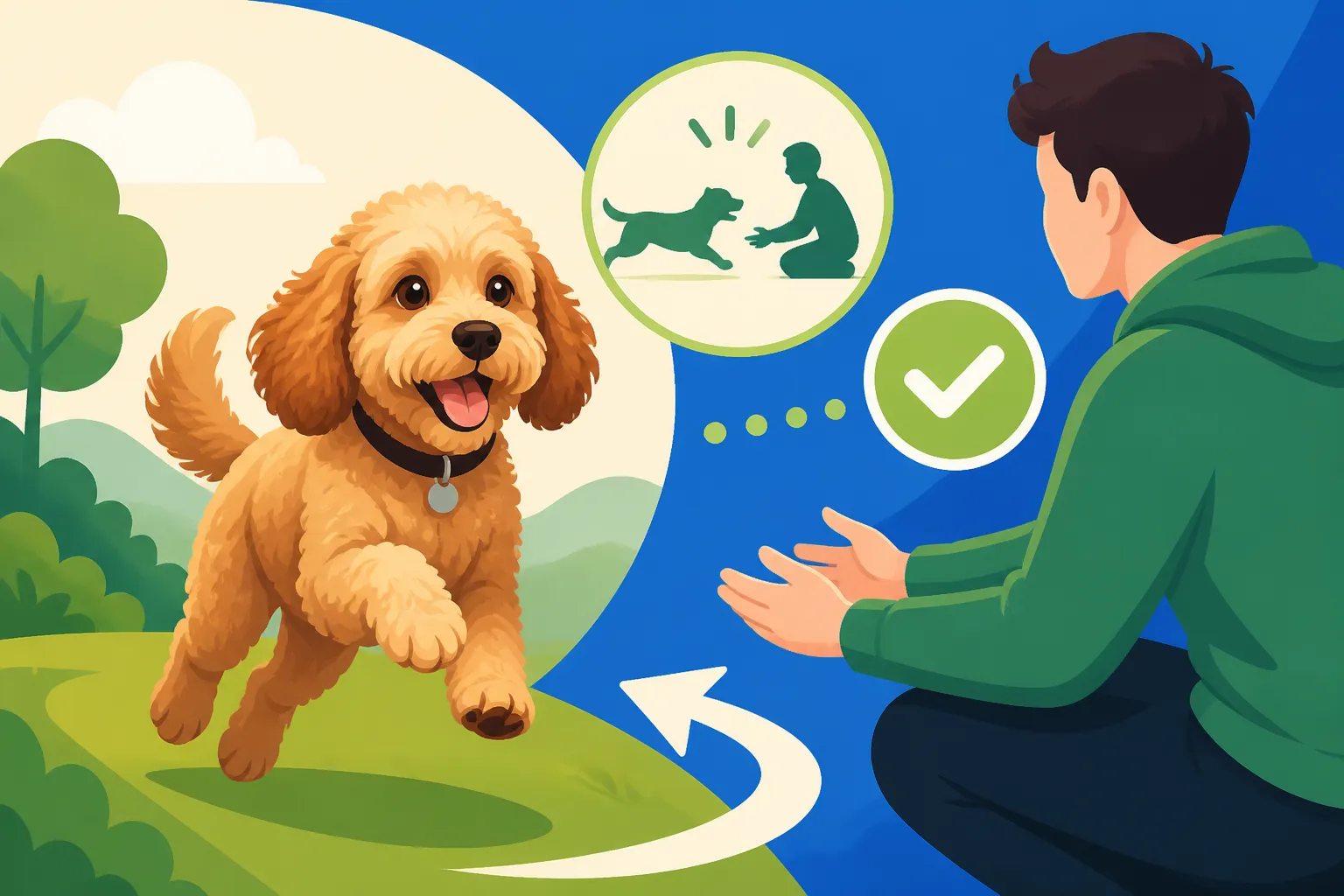
Practice "surprise recalls" even when you're not intending to leave. Call your Cockapoo, give them an amazing treat and a quick cuddle, then immediately release them back to play. This teaches them that coming to you doesn't always mean the end of fun; sometimes, it just means a quick, delicious pit stop and then more fun. The idea is to make them think, "Oh, what's she got for me this time?" This unpredictability and high reward value makes your recall cue irresistible. A valuable resource like the BAXTER & Bella online puppy school often emphasizes these positive reinforcement techniques, building a strong desire in your dog to engage with you.
The Importance of a Consistent Cue Word
It might sound obvious, but using a consistent recall cue is paramount. Many people inadvertently use a whole host of phrases: "Come here, Fido!" "Fido, let's go!" "Fido, now!" "Get over here!" While your Cockapoo might eventually piece together that all these mean "return to human," it's far more confusing than it needs to be. Pick one word – "Come," "Here," "Front," or whatever you choose – and stick to it religiously.
Everyone in the household needs to use the same word. If one person says "Come" and another says "Over here," it dilutes the power and clarity of the command. Make sure the word is short, sharp, and distinct. Always say it in a happy, inviting tone, even if you're feeling frustrated internally. Remember, your tone conveys a lot, and a harsh, angry tone will only make your Cockapoo hesitant to approach you. The cue word should always predict something wonderful.
Essential Tools and Techniques for Recall Training
Once you've established a strong foundation of positive association and consistency, it's time to introduce some practical tools and techniques that will help you proof your recall in more challenging environments. These aren't shortcuts, but aids to help you succeed.
Using a Long Line for Safety and Practice
A long line is perhaps the single most important tool for building a reliable recall, especially for a breed with a strong scent drive like the Cockapoo. A long line is essentially a very long leash, typically 15 to 50 feet, that allows your dog to explore and feel a sense of freedom while still giving you control and safety. You can find excellent long lines on platforms like Amazon, available in various lengths and materials to suit your dog's size and your training needs.
The beauty of the long line is that it allows you to practice recall in stimulating environments without the risk of your Cockapoo bolting. When you call your dog and they hesitate or get distracted, you can gently reel them in, rather than letting them learn that ignoring you has no consequences. This isn't about yanking them; it's about providing a gentle, consistent reminder that your call means "come." It also allows you to reinforce the idea that they must come when called, even if they're far away. It's an invaluable bridge between practicing in a secure area and trusting them off-leash completely. More on this crucial tool can be found in Working a Cockapoo on a Long Line.
High-Value Rewards: What Truly Motivates Your Cockapoo
We talked about making yourself exciting, and a huge part of that is offering rewards that truly motivate your individual Cockapoo. Not all treats are created equal! While dry kibble might work in your quiet living room, it's unlikely to compete with the thrill of a rabbit scent in a field. You need to upgrade your rewards for outdoor recall practice. This means bringing out the "jackpot" treats: small pieces of cheese, cooked chicken, hot dogs, or even specially made high-value training treats.
Beyond food, consider what else your Cockapoo loves. Is it a squeaky toy? A quick tug game? A belly rub? Incorporate these into your recall rewards. Sometimes, the reward isn't just what you give them, but how you give it. Make a fuss! Be excited! Throw a mini party when they come back. This makes the experience so positive that they actively want to interrupt whatever they're doing to return to you. Remember, a Cockapoo might be more motivated by scent than food in some situations, so experiment to find their ultimate reward. You might be interested in Whether a Cockapoo Works Harder for Scent Than Food for more ideas.
Introducing a Whistle for Recall
A whistle can be an incredibly powerful tool for recall, especially for breeds like the Cockapoo with their tendency to get hyper-focused on scents or distant objects. Unlike your voice, a whistle carries further, cuts through environmental noise more effectively, and its tone never varies with your mood or frustration level. This consistency makes it a clear, unmistakable signal for your dog. A basic dog whistle is easy to find on Amazon.
To introduce a whistle, pair it with your highest-value rewards. Start in a quiet environment, blow the whistle (a short, sharp blast or a specific pattern), and immediately give a fantastic treat. Repeat this many, many times over several days or weeks, always whistle then treat. Your dog will quickly associate the whistle with something incredibly good happening. Only once they are consistently rushing to you for the treat after the whistle, even from across the room, should you start using it in slightly more distracting environments, still paired with those jackpot rewards. This helps solidify the understanding that Whether a Whistle Works on a Cockapoo is directly related to how consistently and positively you pair it with rewards.
Progressing Recall in Different Environments
Once your Cockapoo has a solid understanding of recall basics in a low-distraction setting, the real work begins: gradually introducing more challenges. This process is called "proofing," and it's essential for a reliable recall in the real world.
Practicing in Low-Distraction Areas First
Think of your recall training as a ladder, not a single jump. You wouldn't expect your Cockapoo to flawlessly come back from chasing a deer if they can't even come back from sniffing a flower. Start by practicing in environments that are only slightly more distracting than your backyard. This might be a quiet, local park during off-peak hours, an empty school field, or a friend's large, fenced yard.
During these sessions, keep your Cockapoo on a long line. This allows them to explore a bit, encounter mild distractions (like a distant person or another dog walking by), but you still have the means to gently guide them back if they hesitate. The goal is to set them up for success. Call them when you know they're likely to respond, reward lavishly, and gradually increase the distance and the mildness of the distractions. Remember to perform "surprise recalls" too—call them, reward, and release them to play again. This prevents them from associating your call solely with leaving the fun.
Gradually Increasing Distractions
As your Cockapoo's recall strengthens in quieter spots, you can slowly, incrementally increase the level of distraction. This is where patience really comes into play. You might move from an empty field to a park where there are a few people, then to a park with other dogs on leashes, and eventually to a park where dogs are playing off-leash. Each step should be small enough that your Cockapoo still has a high chance of success.
The long line remains your best friend here. It provides that safety net and allows you to intervene before your dog completely blows off your command. If you call and they don't respond, don't just keep calling. Instead, gently reel them in with the long line, praise them when they reach you, and give a reward. This teaches them that even if they momentarily forget, the recall is non-negotiable. It's about building consistent success and showing them that coming back to you is always the best option, even with squirrels darting about. Remember, Whether a Cockapoo Is Safe Off Leash on Open Ground is entirely dependent on the reliability of this recall.
Simulating Real-World Scenarios
To truly proof your Cockapoo's recall, you need to practice in situations that mimic real-life challenges. This means incorporating unexpected elements and higher stakes (while still maintaining safety with a long line). For instance, have a friend walk past with their dog, or throw a toy for them to chase and then call them back mid-chase. Practice recall when they're intensely focused on sniffing something interesting, as explored in Recall on a Cockapoo That Has Found a Scent.
Vary the distance from which you call them, and change your location—hide behind a tree or a bench and call them. This teaches them to actively seek you out. Always make coming back a positive, exciting event. The more scenarios you practice in, the more resilient their recall will become. This systematic progression ensures that when a genuine high-distraction situation arises, your Cockapoo has a strong history of making the right choice, even when their instincts are screaming at them to do otherwise.
Troubleshooting Common Recall Problems
Even with the best intentions and consistent training, you're likely to encounter some bumps in the road. It's crucial not to get discouraged but instead to understand what might be going wrong and how to adjust your approach.
When Your Cockapoo Ignores You Completely
If your Cockapoo simply isn't responding to your recall cue, even after training, it's often a sign that the environment is too distracting, or the rewards aren't high enough, or perhaps they've learned that ignoring you has no consequence. First, take a step back to a less distracting environment where they have a higher chance of success. Re-evaluate your rewards: are you still using kibble when you should be using chicken?
If they are on a long line, use it to your advantage. Call them once, in a cheerful voice. If they don't immediately respond, start reeling them in gently but firmly. The moment they start moving towards you, even if you’re pulling them, praise them. When they reach you, give them that jackpot reward. The key is to teach them that the recall cue is a command, not a suggestion, and that there are always positive outcomes for coming, regardless of whether they come on their own or with a little help from the line. Avoid repeatedly shouting their name or the command; this can make the word meaningless. If you notice your Cockapoo constantly pulling towards hedgerows, this is a prime example of their scent drive overcoming their recall, making the long line essential to prevent full-blown disengagement. Whether a Cockapoo Pulls Toward Hedgerows shows this common challenge.
Dealing with the "Oops, I'm Caught!" Game
Some Cockapoos, particularly intelligent ones, quickly figure out that "come" often means the fun is over. They might play a game of "keep away" or run just out of reach, stopping only when they feel you're too close to escape. This is a clear indicator that you need to re-establish the positive association with coming to you. You need to make them want to come back, not fear being caught.
To fix this, revisit the "surprise recall" strategy. Call them, reward them with something amazing (the best treat, a quick game of tug), and then immediately let them go back to playing. Do this multiple times during your outings. This teaches them that coming to you doesn't always mean the end of their freedom or fun. Over time, they'll learn that returning to you is often a delightful pit stop, not a capture. Also, when you do need to put them on the leash to leave, try to do a surprise recall before they are completely exhausted or bored, so they don't associate your call only with the end of the adventure.
Overcoming Fear or Anxiety Related to Recall
In some rare cases, a Cockapoo might be hesitant to come back due to fear or anxiety, rather than just distraction. This could be due to a negative past experience (e.g., being punished when they finally came back after a long chase), or an underlying anxiety about certain environments or people. If your Cockapoo suddenly becomes reluctant to return, or shows signs of fear (tail tucked, ears back, cowering), it's important to rule out pain or illness first with a vet visit.
If health is not an issue, then you need to rebuild trust. This means making every single interaction around recall overwhelmingly positive and safe. Go back to basics in a secure, quiet environment. Use only positive reinforcement, gentle tones, and very high-value rewards. Avoid any harsh corrections or chasing. If the fear is linked to specific triggers (loud noises, certain people), work with a professional positive reinforcement trainer or a veterinary behaviorist who can help you desensitize and counter-condition your Cockapoo to those fears, slowly rebuilding their confidence and willingness to engage with you.
Maintaining a Lifetime of Reliable Recall
Building a great recall is an ongoing journey, not a destination. Just like any skill, it needs maintenance and occasional fine-tuning to remain sharp and reliable throughout your Cockapoo's life.
Regular Practice is Key
Even if your Cockapoo has a fantastic recall, you can't just stop practicing. Recall is a "use it or lose it" skill. Integrate short, fun recall practice into your daily walks and playtimes. This doesn't mean calling them back every five minutes; it means a few times during an outing, call them, reward them generously, and then release them to play again. This keeps the recall "fresh" in their minds and reinforces the positive association.
Think of it as muscle memory. The more consistently you practice, the more automatic and ingrained the response becomes. This also means varying the environments you practice in. Don't always go to the same park; explore new trails, different fields, or even busy urban areas (always with a long line initially, of course!). The more contexts your Cockapoo practices recall in, the more resilient their response will be, regardless of the distractions. For tips on managing their energy, you might read The Miles a Cockapoo Wants Every Day.
Keeping Rewards Exciting
Just like we discussed for initial training, the value of your rewards needs to remain high. As dogs get older, they can become a bit jaded if the reward is always the same boring biscuit. Keep them guessing! Rotate your high-value treats. One day it's cheese, the next it's chicken, the next it's a piece of hot dog. Sometimes, the reward is a quick game of fetch with their favorite ball instead of food.
The element of surprise and variety keeps the recall exciting and prevents it from becoming mundane. Your Cockapoo will continue to view coming back to you as an opportunity for something fantastic. If you notice their response waning, it's often a sign that you need to re-evaluate what you're offering as a reward. Make yourself the ultimate "jackpot" machine, always ready with something irresistible to make coming back to you the most appealing choice.
Adapting as Your Cockapoo Ages
A Cockapoo's recall needs can change as they age. A young, energetic puppy might be more prone to chasing everything, while an older dog might develop hearing loss or become less physically agile. Be mindful of these changes and adapt your expectations and training accordingly. If your senior Cockapoo starts to develop What Changes in a Cockapoo After Ten or hearing issues, a whistle might become even more effective than a verbal cue, as its sound can be more distinct. You might also need to keep them on a long line more frequently for their safety if their senses or mobility decline.
Always be observant of your dog's capabilities and environmental factors. On a particularly windy day, your voice might not carry as well, making a whistle a better option. If you're in a new, highly stimulating environment, err on the side of caution and keep them on a long line. The goal is always safety and success. A reliable recall is a gift that allows your Cockapoo to enjoy freedom and exercise safely throughout their entire life, so continue to nurture and reinforce this vital skill with love and consistency. In some situations, especially if your Cockapoo has a strong prey drive, you may want to consider Whether a Cockapoo Needs a GPS Collar as a safety net.
Recall Training Checklist
Here’s a quick summary of key points to help you keep your Cockapoo's recall training on track.
| Aspect | Key Action | Why it Matters |
|---|---|---|
| Consistency | Use one specific cue word, always. | Avoids confusion; builds clear association. |
| High-Value Rewards | Use jackpot treats/toys they love for recall. | Makes coming back the most rewarding choice, especially over distractions. |
| Positive Tone | Always use an excited, happy voice for your cue. | Builds positive emotional association with coming to you. |
| Long Line Use | Practice in new environments, keeping them safely leashed. | Allows freedom for exploration, prevents escape, enables gentle corrections. |
| Gradual Progression | Start in low-distraction areas, slowly increase challenges. | Sets your Cockapoo up for success, preventing overwhelming failures. |
| Surprise Recalls | Call, reward, then release back to play. | Teaches that "come" doesn't always mean the end of fun. |
| Avoid Punishment | Never scold or punish if they take time to return. | Prevents negative associations that make them fear coming back. |
| Whistle Training | Introduce a whistle with treats for clear, consistent cue. | Carries further, unaffected by mood, distinct from other sounds. |
| Regular Practice | Integrate short, fun sessions into daily routine. | Maintains the skill, keeps it sharp, reinforces positive habits. |
Disclaimer
This article is for general informational purposes only and does not constitute professional advice. Laws, prices and regulations vary by location and change over time. Consult a qualified professional for guidance on your specific situation.