Whether a Cockapoo Is Safe Off Leash on Open Ground
The dream of watching your beloved Cockapoo joyfully gambol through an open field, ears flying and tail wagging without a leash in sight, is one many of us share. However, the reality of canine instincts, unexpected distractions, and varied environments can quickly turn that idyllic vision into a heart-stopping panic. This guide will help you understand the unique blend of traits that influence a Cockapoo's off-leash reliability and equip you with realistic strategies for making safe choices for your furry friend.
Understanding Your Cockapoo's Instincts: The Call of the Wild (and the Squirrel)
It’s easy to look at our fluffy, adorable Cockapoos and forget that they are, at their core, dogs with deeply ingrained instincts. The mix of the Cocker Spaniel and the Poodle brings a fascinating, sometimes challenging, combination of traits to the table. While their intelligence and eagerness to please are undeniable, so too are their genetic predispositions to certain behaviors, especially when off-leash in an open environment.
The Flushing Drive: A Spaniel's Legacy
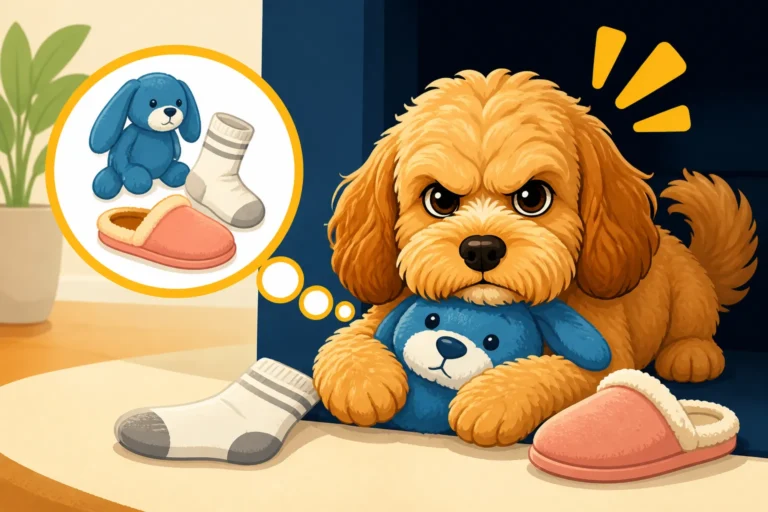
Let's talk about the Cocker Spaniel side of your Cockapoo, shall we? These dogs were originally bred to flush game birds from dense cover. That means they have an innate drive to quarter, search, and follow their nose once a tempting scent hits it. This isn't just a playful quirk; it's a powerful, primal instinct that can override even the most consistent recall command when something truly captivating crosses their path. Imagine your Cockapoo, trotting happily, when suddenly, a rabbit darts across the field or the irresistible odor of a deer trail fills the air. The Flushing Drive Still Alive in a Cockapoo means that gentle voice command you use for "come" might as well be background noise. Their focus shifts entirely to the chase, to the exploration, and to fulfilling that ancient genetic programming.
Many Cockapoo owners have experienced that moment of dread when their dog, usually so attentive, suddenly becomes "deaf" to their calls. It's not defiance; it's instinct. The urge to hunt, to flush, to pursue is incredibly strong. Even if your Cockapoo isn't actively hunting, that desire to investigate every rustle in the grass, every bird taking flight, or every intriguing smell can lead them far astray. It's why a perfectly behaved Cockapoo in a fenced yard might become a vanishing act in a wide-open space with enticing stimuli. They're just doing what their ancestors did for centuries.
The Poodle's Independent Streak and Intelligence
Then we have the Poodle influence. Poodles are incredibly intelligent, agile, and often possess an independent spirit. While this intelligence makes them highly trainable, it also means they can be incredibly clever problem-solvers, sometimes to their own detriment (and your stress!). A Poodle, historically a water retriever, also has a drive to investigate and, at times, to be a bit more self-directed than you might expect from such a smart breed. This isn't to say they're aloof, but rather that their intelligence can sometimes lead them to make their own decisions about what's important in the moment.
Combine this with the spaniel's prey drive, and you get a dog that is not only driven to chase but also smart enough to figure out how to get to that enticing thing, or simply decide that chasing it is more rewarding than coming back to you. Whether a Cockapoo Ignores You Once It Scents Something is a very real concern for this reason. Their cleverness can sometimes translate into selective hearing, especially if they've learned that ignoring your calls sometimes leads to a more exciting outcome, like continuing their sniff-fest or an exhilarating dash. Owners often remark on their Cockapoo's "naughty but nice" intelligence – they know exactly what you want, but sometimes what they want is just a little bit more compelling.
Building a Bomb-Proof Recall: More Than Just a Treat
Given these strong instincts, achieving a reliable off-leash recall with a Cockapoo isn't just about yelling "Come!" louder. It requires dedication, consistency, high-value rewards, and a deep understanding of what motivates your specific dog. It's a journey, not a destination, and it needs constant reinforcement.
Starting Strong: Foundation and High-Value Rewards
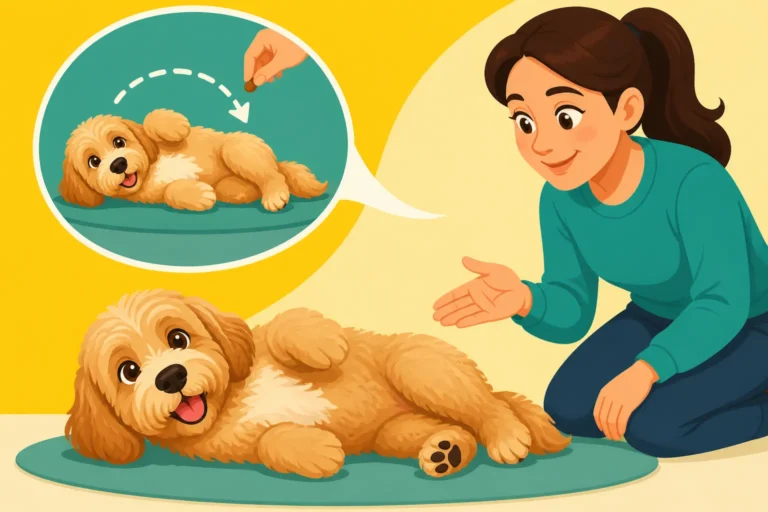
The absolute bedrock of any reliable recall begins in a controlled, low-distraction environment, ideally in your home or a securely fenced yard. Begin by teaching your Cockapoo that coming to you is the most rewarding thing they can possibly do. Forget plain old kibble for recall training; you need high-value treats – think tiny pieces of cooked chicken, cheese, or even hot dogs. These aren't everyday snacks; they're the jackpot that says, "Coming to Mom/Dad is like winning the lottery!" Make it fun, exciting, and consistently positive. Call their name, say "Come!", and as they move towards you, praise enthusiastically, then reward lavishly. Practice this dozens of times a day in short bursts. What a Cockapoo Puppy Should Learn First includes this crucial recall work from a young age.
As they become reliable indoors, gradually introduce mild distractions. A squeaky toy, another family member walking by, or a calm dog in a controlled setting. The key is to set them up for success, never calling them if you suspect they won't come. If they don't respond, don't repeat the command; instead, go to them, gently lead them back, and then reward them. This teaches them that "come" isn't optional. Consistency is paramount, and everyone in the household needs to be on the same page. For those who feel they need more structured guidance, online training programs like those offered by BAXTER & Bella can provide step-by-step instructions and support for building a solid foundation from puppyhood right through to advanced recall.
Proofing Your Recall in Varied Environments
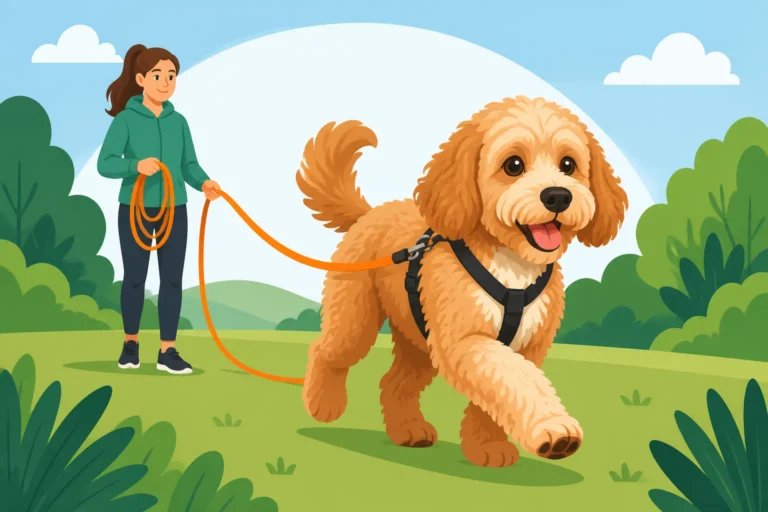
Once your Cockapoo is consistently responding to recall in low-distraction settings, it's time to "proof" the command in progressively more challenging environments. This is where many owners falter, thinking that if their dog comes in the backyard, they'll come in the park. Not so! The smells, sights, and sounds of an open field are a world away from your familiar surroundings. Always start with a long line – a lightweight lead that can be 15 to 30 feet long, readily available on Amazon. This allows your Cockapoo to explore safely while you maintain control. When you call, if they hesitate, you can gently reel them in, ensuring they still associate "come" with returning to you and receiving that high-value reward. Working a Cockapoo on a Long Line is an invaluable step here.
Vary your locations: a quiet park, a hiking trail during off-peak hours, or a friend's large, fenced property. Each new environment presents unique challenges and distractions. Practice your recall frequently, rewarding big every time they succeed. Remember, every time your Cockapoo blows off your recall, they learn that they can ignore you, making it harder next time. Building a Recall a Cockapoo Answers means making yourself more interesting and rewarding than any squirrel or scent could ever be. Don't be afraid to pull out the absolute best treats, make silly noises, or even run away from them to ignite their chase drive towards you!
Assessing the Environment: Is "Open Ground" Truly Safe?
The term "open ground" can mean vastly different things. What's safe for off-leash play in one spot might be incredibly dangerous in another. It's crucial for Cockapoo owners to become astute observers of their surroundings and make informed decisions based on real risks, not just hopeful wishes.
The Risks of Unfenced Public Spaces
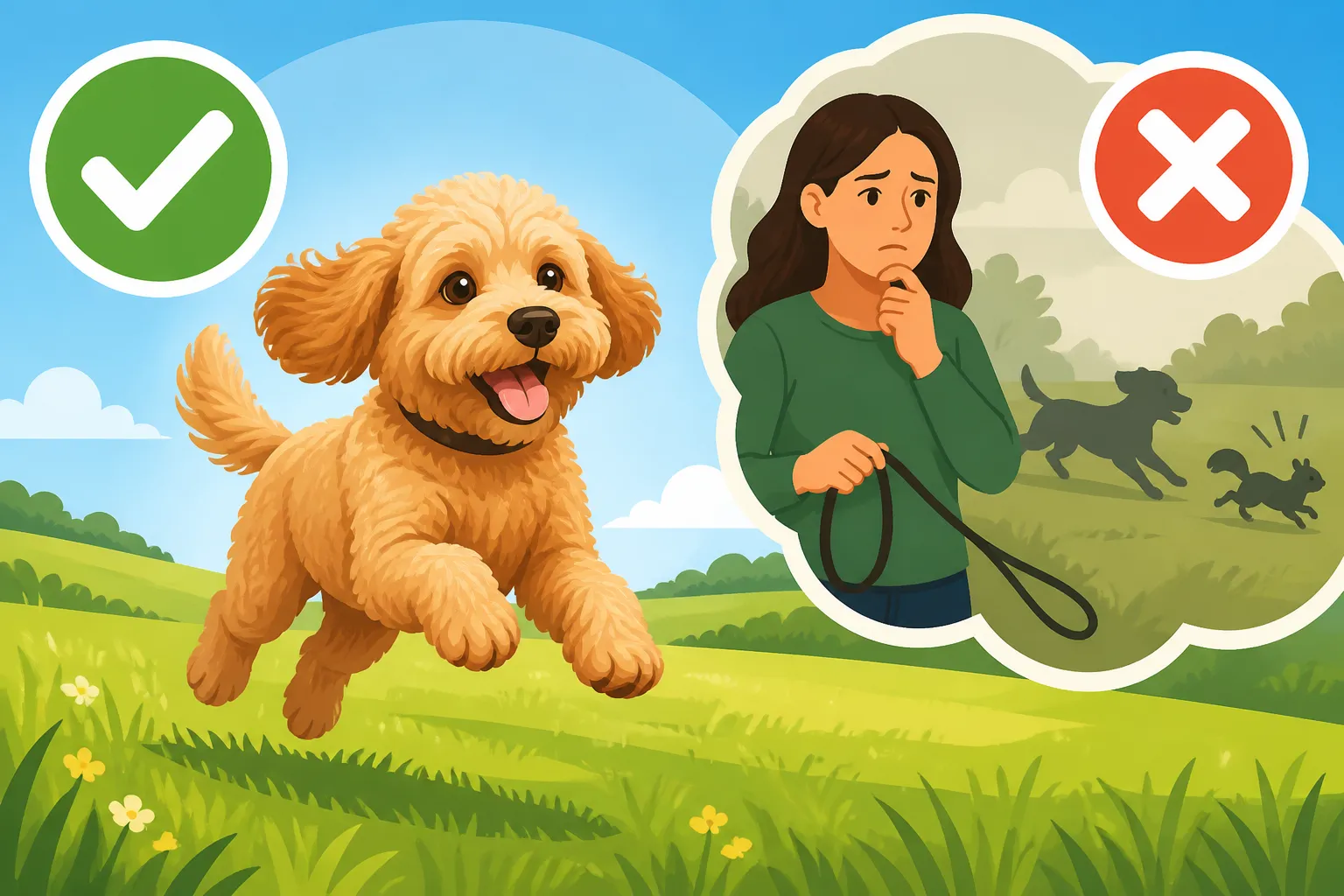
Picture a sprawling city park with large grassy areas, but no fences. Sounds great, right? But now add in joggers, cyclists, children playing, other dogs (leashed and unleashed), and the inevitable squirrels. For a Cockapoo, this is a sensory overload. The combination of their spaniel flushing drive and the poodle's alertness means they could easily bolt after a squirrel, a bird, or even an interesting smell, crossing paths with a bike or running into the street. The momentary joy of off-leash freedom isn't worth the potentially devastating consequences. Even in rural areas, an open field might border a busy road, have hidden dangers like sharp objects, or contain wildlife that could lure your dog away indefinitely. Whether a Cockapoo Is Safe Off Leash on Open Ground depends entirely on the specific open ground you're considering.
Many public parks, even those with large open areas, have leash laws for a good reason. Respecting these laws is not just about avoiding fines; it's about protecting your dog, other people, and other pets. The unexpected appearance of a reactive dog, a child with allergies, or simply a person who is afraid of dogs can turn a pleasant outing into a stressful encounter. Even if your Cockapoo is friendly, not every dog or person wants an unsolicited greeting from an off-leash dog. Being mindful of these potential conflicts is part of responsible dog ownership.
Choosing Secure and Controlled Environments
For truly safe off-leash exercise, the ideal scenario is a securely fenced dog park or a private, enclosed area. Dog parks, while they come with their own set of considerations, at least provide a physical barrier against bolting into traffic. Look for parks that have a double-gated entry system, clear rules, and separate areas for small and large dogs if possible. Always observe the dynamics of the dogs already there before letting your Cockapoo off-leash. Are they playing nicely? Are there any signs of aggression or over-excitement?
If a dog park isn't feasible or desirable, consider renting a private, securely fenced sniff spot or field for an hour. These services are becoming more common and offer a safe, controlled environment where your Cockapoo can truly run free without the worries of other dogs, traffic, or unseen hazards. This provides the mental and physical stimulation they crave without putting them at undue risk. Remember, the goal is enriching your Cockapoo's life, and that always starts with their safety.
Tools and Strategies for Off-Leash Freedom (or Controlled Exploration)
Even with the best training, some Cockapoos might never be entirely reliable off-leash in truly open, uncontrolled environments. That's okay! There are still plenty of ways to give them a sense of freedom and adventure while keeping them safe.
The Power of the Long Line and GPS Trackers
A long line is your best friend when practicing recall in open spaces that aren't fully fenced. As mentioned, these lines, often 15, 20, or even 30 feet long, allow your Cockapoo to roam, sniff, and build confidence while you maintain a physical connection. You can drop the line and let them drag it, allowing them to feel "free," but if they wander too far or ignore a recall, you can step on the line or grab it to reinforce the command. It's a fantastic training tool for bridging the gap between leashed walks and full off-leash reliability. You can find a wide variety of durable long lines on Amazon to suit your Cockapoo's size and your training needs.
For those moments when you do decide to test off-leash skills in a more open area, or simply for peace of mind, a GPS tracker is an excellent investment. These small devices attach to your dog's collar and allow you to track their location in real-time via a smartphone app. While not a substitute for training or supervision, a GPS tracker can provide immense reassurance if your Cockapoo ever does get separated from you, especially in a densely wooded area or an unfamiliar environment. Whether a Cockapoo Needs a GPS Collar is a question many owners ponder, and for adventurous Cockapoos or those with a strong wanderlust, the answer is often yes.
Advanced Training and Dog Sports
For Cockapoos that have a high drive and boundless energy, channeling that into structured activities can significantly improve their responsiveness and focus. Dog sports like agility, scent work, or even obedience competitions provide mental stimulation and build a stronger working relationship between you and your dog. In scent work, for example, your Cockapoo uses their incredible nose to locate specific odors, which is incredibly satisfying for their spaniel half and mentally taxing in a good way for their poodle brain. Scent Work That Satisfies a Cockapoo can make them more engaged with you and less likely to become "deaf" to your commands when a wild scent appears.
A well-exercised and mentally stimulated Cockapoo is generally a more biddable dog. If your Cockapoo is constantly running off, it might not just be a training issue, but an energy management one. Perhaps they aren't getting enough appropriate outlets for their instincts and intelligence. Enrolling in advanced obedience classes or even exploring a local dog sports club can transform a scattered, easily distracted dog into a more focused and attentive companion. The extra effort you put into these activities can pay dividends in their overall behavior, including their off-leash recall.
When to Keep the Leash On: Realistic Expectations
It's important to have realistic expectations about off-leash freedom. Not every dog, regardless of breed, is suited for it, and not every environment is safe. Understanding these limitations is a sign of responsible and caring ownership.
Understanding Your Individual Cockapoo's Temperament
Every Cockapoo is an individual, even within the same litter. While the breed generally boasts intelligence and a desire to please, some will have a higher prey drive from their Cocker lineage, a more independent streak from their Poodle side, or simply be more easily distracted than others. Observe your Cockapoo carefully:
- How do they react to squirrels, rabbits, or birds in a fenced yard? Do they stare intently, whine, or attempt to chase?
- How strong is their focus on you when other dogs or people are around?
- Do they respond consistently to your recall in increasingly distracting environments on a long line?
Some Cockapoos, despite consistent training, will always prioritize a compelling scent or chase over your calls. For these dogs, even in seemingly safe open spaces, the risk might simply be too high. It's not a failure on your part or theirs; it's just who they are. The Age a Cockapoo's Recall Falls Apart is often around adolescence, and it can be a challenging period where training needs to be extra consistent.
Embracing the Leash as a Safety Tool
There's absolutely no shame in keeping your Cockapoo on a leash, especially in unfenced public areas. The leash is not a punishment; it's a safety device that protects them from traffic, fights with other dogs, getting lost, and encountering unforeseen dangers. A well-fitted, comfortable harness and leash allow your Cockapoo to explore safely by your side, sniffing to their heart's content without putting them or others at risk. Many beautiful trails and parks still offer wonderful experiences while leashed.
If you crave that sense of freedom for your Cockapoo, explore options like private dog parks, securely fenced sniff spots, or even engaging in urban recall games in low-distraction environments. Your Cockapoo will still benefit immensely from exploring new places, even if it's on a leash. The bond you build through consistent training and safe adventures is far more valuable than the fleeting moments of off-leash freedom in a risky environment. Ultimately, the safety and well-being of your Cockapoo should always be the top priority, and sometimes, that means keeping them securely by your side.
| Environment Type | Off-Leash Suitability for a Cockapoo | Key Considerations |
|---|---|---|
| Securely Fenced Dog Park | High | Ensure fences are truly escape-proof. Observe other dogs for temperament. Check for water, shade, and cleanliness. |
| Private Fenced Field | High | Ideal for safe, uninterrupted play. Check fence integrity beforehand. Great for focused training. |
| Open, Unfenced Field | Low to Moderate (with caution) | High risk of bolting after prey or getting lost. Requires an exceptionally reliable recall and strong environmental awareness. Not recommended if near roads or dense woods. |
| Hiking Trails (unfenced) | Low | High risk of encountering wildlife, other dogs, or people unexpectedly. Scent trails are extremely enticing. Long line use is highly recommended; full off-leash should be reserved for very remote, rarely used trails. |
| City Park (unfenced) | Very Low | High distraction levels from people, dogs, traffic. Strong leash laws often apply. Very high risk of accidents or conflict. |
| Beach (unfenced) | Moderate (with caution) | Check local regulations as many beaches have leash rules or restricted hours for dogs. Large open spaces can lead to long chases. Watch for currents if they go near water, and potential ingestion of sand or debris. |
This article is for general informational purposes only and does not constitute professional advice. Laws, prices and regulations vary by location and change over time. Consult a qualified professional for guidance on your specific situation.