Whether a Cockapoo Should Be Muzzled at the Groomer
It’s a tough moment when your groomer suggests a muzzle for your beloved Cockapoo. You might feel a pang of guilt, thinking you’ve failed them, or perhaps a rush of frustration because grooming day is already a high-stress event. The truth is, sometimes a muzzle becomes a necessary tool to ensure everyone's safety and to make the grooming experience, while perhaps not blissful, at least manageable for your dog. This guide will help you understand why muzzling might be suggested, the types of muzzles available, and how you can work towards a more positive grooming future for your curly-coated companion.
Understanding Why Muzzling Might Be Considered
When your groomer mentions a muzzle, it's not a judgment on your Cockapoo's character, nor is it a sign that your dog is "bad." More often than not, it's a safety precaution born out of necessity. Grooming can be incredibly overwhelming for dogs, and a muzzle is a tool to protect both your dog and the person caring for them from accidental injury.
Grooming Anxiety and Fear in Cockapoos
Cockapoos are generally known for their sweet, friendly dispositions, but like any dog, they can develop anxieties, especially around grooming. Imagine being held still by a stranger, with loud clippers buzzing near your ears, unfamiliar hands touching sensitive areas, and the force of a high-velocity dryer blasting your fur. For a sensitive Cockapoo, this can be terrifying. This fear isn't always something they grow out of naturally; sometimes it escalates with each negative experience. Early negative experiences, even seemingly minor ones, can lay the groundwork for a dog who genuinely dreads the grooming salon.
The unique needs of a Cockapoo’s coat also contribute to this stress. Their luscious curls and furnishings, while adorable, are prone to matting, which often requires careful, sometimes painful, dematting or shaving. Being still for extended periods for brushing, clipping, and drying can be physically uncomfortable and mentally exhausting for a dog who just wants to wiggle and play. The combination of intense sensory input and physical discomfort can push even the calmest Cockapoo to a breaking point, leading to fear-based reactions that the groomer needs to anticipate.
Protecting the Groomer and Your Cockapoo
A groomer's primary responsibility is to complete the groom safely for everyone involved. Even a quick nip or a sudden lunge can cause serious injury. A groomer is working with sharp tools – clippers, scissors, nail trimmers – in close proximity to a dog's skin, eyes, and paws. A sudden head turn, a snap, or an attempt to bite could lead to a severe cut or a punctured eye, not just for the groomer, but potentially for your Cockapoo too.
Muzzling isn't about punishment; it's about prevention. It creates a controlled environment where the groomer can focus on their delicate work without constant fear of being bitten, and ironically, it can make the experience safer for your dog by preventing injuries that could occur if they suddenly lash out. When a groomer feels safe, they can work more confidently and efficiently, potentially shortening the stressful parts of the grooming session. It allows them to provide the care your Cockapoo needs, even if your dog isn't thrilled about it in the moment.
When a Cockapoo’s Temperament Plays a Role
While many Cockapoos inherit a joyful, eager-to-please nature, individual personalities vary wildly, much like in people. Some Cockapoos are naturally more reserved, anxious, or sensitive to touch and sound, regardless of their upbringing. This might be due to a blend of genetics from their Cocker Spaniel and Poodle parents, or it could simply be their unique disposition. A Cockapoo with a naturally more nervous temperament might find the sensory overload of a grooming salon particularly distressing, leading to a fear response.
Additionally, past experiences, even outside the grooming salon, can influence their reaction. Perhaps they had a frightening vet visit, or a clumsy handler at a young age. These experiences can generalize, making them wary of any handling by strangers. Sometimes, despite all your best efforts at home with desensitization and positive reinforcement, some dogs simply struggle with being handled by unfamiliar people in novel environments. It’s important not to blame yourself or your dog in these situations, but rather to acknowledge their individual needs and work with professionals to manage them.
Types of Muzzles and When They're Appropriate
Understanding that not all muzzles are created equal is a big step in accepting their use. There are different designs for different purposes, and choosing the right one can make a huge difference in your dog's comfort and safety.
Basket Muzzles for Safety and Comfort
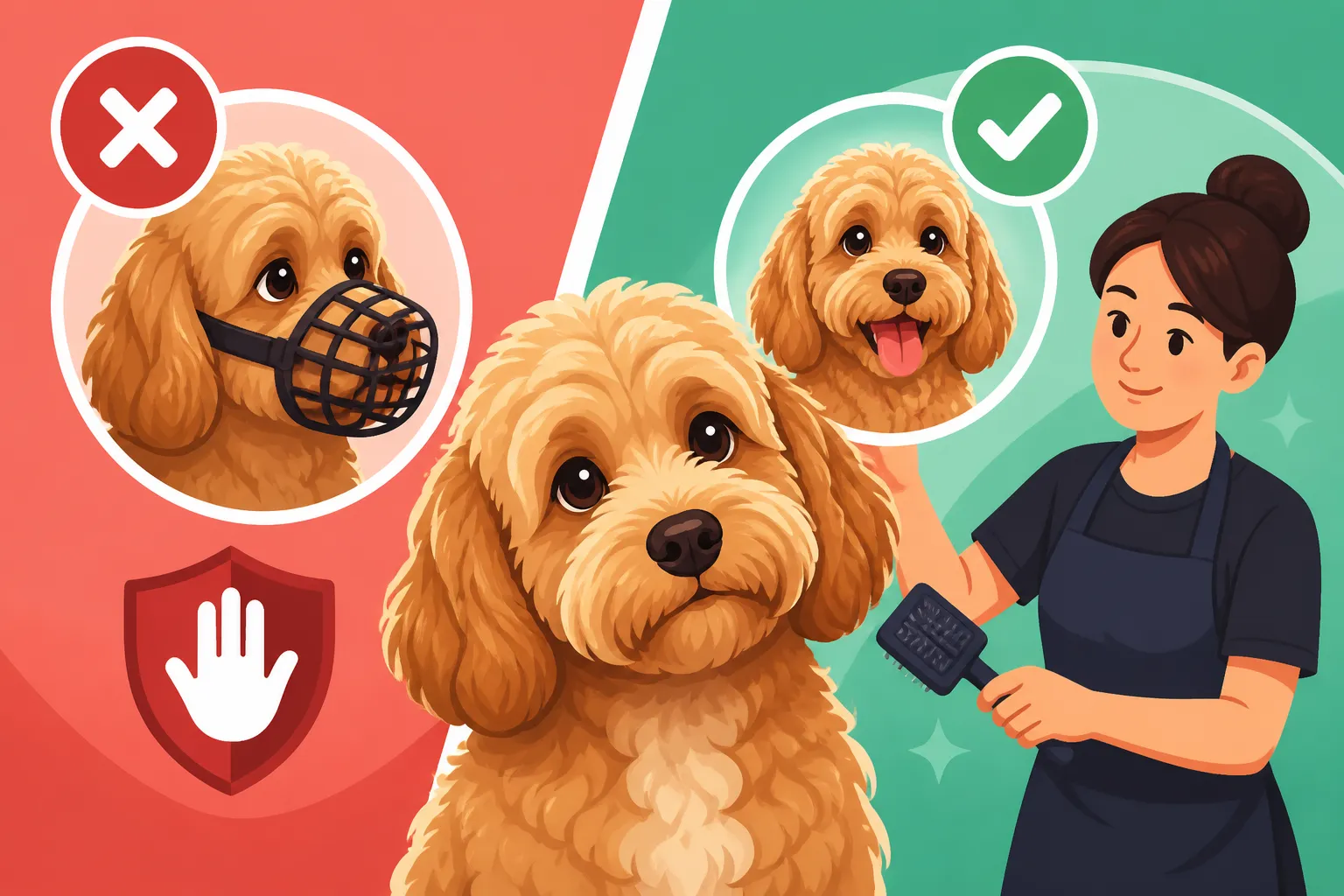
Basket muzzles, sometimes called greyhound muzzles, are often the preferred choice by trainers and behaviorists because they allow the dog to pant, drink water, and even take small treats. This is crucial for longer grooming sessions, as it prevents overheating and allows for positive reinforcement to continue. A well-fitting basket muzzle should allow enough room for your Cockapoo to open their mouth slightly, which is essential for cooling down, especially in a warm grooming salon. You can find a good selection of these on Amazon, often with adjustable straps to ensure a snug, but not tight, fit.
These muzzles are ideal when a groomer anticipates a dog might be a flight risk or might attempt to bite during specific, more stressful parts of the groom. Because the dog can pant and drink, a basket muzzle can be worn for longer durations, making it suitable for a full groom where the dog might become stressed at various points. Introducing a basket muzzle positively at home, using treats and praise (perhaps even from brands like BAXTER & Bella, known for their positive reinforcement training programs), can help your Cockapoo associate it with good things, rather than fear. Think of it as a safety helmet, not a punishment.
Fabric or Soft Muzzles for Short-Term Use
Fabric or soft muzzles are typically made of nylon or mesh and wrap more snugly around the dog's muzzle, holding their mouth closed. While effective at preventing bites, they severely restrict a dog's ability to pant, which is their primary way of cooling down. This means they should never be used for prolonged periods or in warm environments, as they can quickly lead to overheating and distress. They are truly for very short-term, specific procedures.
A groomer might use a fabric muzzle for extremely quick tasks, such as a speedy nail trim on a particularly wiggly Cockapoo, or for removing a small, tight mat that needs a moment of absolute stillness. The duration of wear should be minimal – only for a few minutes at most – and the dog should be closely monitored for signs of overheating or panic. While they offer a quick solution for immediate safety, they don't contribute to a positive change in the dog's attitude towards grooming. It’s a tool for emergency situations or fleeting moments, not a long-term strategy for managing grooming anxiety.
The Importance of Proper Muzzle Introduction
Just like teaching any new skill, introducing a muzzle should be a gradual, positive experience, not a sudden imposition. If the first time your Cockapoo sees a muzzle is at the groomer, clamped onto their face in a stressful situation, they will undoubtedly form a negative association. The key is to make the muzzle a normal, even pleasant, part of their routine at home, long before they need it at the groomer.
Start by letting your Cockapoo sniff the muzzle, rewarding them with high-value treats (think tiny pieces of cheese or cooked chicken) for any interest shown. Then, encourage them to touch their nose to the muzzle, again rewarding them. Gradually, work up to them putting their nose into the muzzle for a few seconds, immediately followed by a treat. Use a brand like BAXTER & Bella for training tips, as they often emphasize positive reinforcement. Build up the duration of wear very slowly, always pairing it with something wonderful, like mealtime or a favorite game. The goal is for your Cockapoo to view the muzzle as a non-threatening, even rewarding, object, rather than a scary restraint. Remember, a muzzle is a tool for safety, and its effectiveness is greatly increased when your dog accepts it calmly.
Alternative Strategies and Prevention
While a muzzle might be necessary in some situations, the ultimate goal should always be to reduce your Cockapoo's stress and make grooming a more positive experience. There are many proactive steps you can take to prevent the need for a muzzle in the first place, or to eventually transition away from it.
Early Socialization and Desensitization to Grooming
The foundation for a happy grooming experience begins during puppyhood. From the moment you bring your Cockapoo puppy home, start gently handling their paws, ears, tail, and muzzle. Make it a game, associate it with praise and treats. Let them experience the gentle hum of an electric toothbrush or a quiet hair dryer from a distance, gradually moving closer. Even if your puppy's coat won't mat much initially, getting them used to the sensations of brushing with a soft brush and having their nails lightly touched will pay dividends later. How Early a Cockapoo Should Meet a Groomer is crucial; positive puppy grooms, even just for a bath and tidy, help desensitize them to the salon environment.
Regular short sessions at home, even just a few minutes daily, of brushing and checking ears and paws, can normalize these activities. You want to build a positive emotional response to being handled. This consistent, gentle exposure ensures that by the time your Cockapoo faces their first full groom, they aren't bombarded with entirely new, potentially frightening sensations. Think of it as building a strong emotional bank account for handling – every positive interaction is a deposit, reducing the likelihood of a stress-induced withdrawal later on.
Finding the Right Groomer for Your Cockapoo
Not all groomers are created equal, and finding one who understands your Cockapoo’s specific needs and anxieties can be a game-changer. Look for groomers who advertise "fear-free" or "low-stress" grooming. These professionals often use techniques like positive reinforcement, taking breaks when needed, and adjusting their methods to suit the individual dog. They understand that a calm, cooperative dog is ultimately easier and safer to groom than a terrified one.
Don't be afraid to interview potential groomers. Ask about their approach to anxious dogs, whether they use force, and how they handle dogs that might snap or bite. A good groomer will be transparent and should welcome your questions, and perhaps even offer a "meet and greet" where your Cockapoo can visit the salon without undergoing a full groom. This allows your dog to acclimate to the sounds and smells and associate the place with positive interactions and treats. Clear communication about your dog's history and potential triggers is vital for them to provide the best, safest care. You might even want to ask if they're familiar with handling common Cockapoo grooming quirks, as discussed in A Cockapoo That Will Not Sit Still to Be Combed.
Training for a Positive Grooming Experience
Beyond general socialization, specific training can empower your Cockapoo to be an active, willing participant in their grooming. This is often referred to as "cooperative care" or "husbandry training." Instead of holding your dog still, you teach them to offer desired behaviors, like resting their chin on your hand for a face trim, or standing patiently for brushing. This gives them a sense of control and choice, which significantly reduces anxiety.
Start with simple cues like "paw" for nail trims, or "chin" for brushing around the face. Reward heavily with treats every time they comply, even for a second. Break down complex tasks into tiny, manageable steps. For example, for nail trims, first just touch their paw, then touch the clippers to their paw, then clip one nail, always rewarding success. Consistent, positive training at home, perhaps utilizing online resources from trainers or programs like BAXTER & Bella, builds confidence and a positive association with handling. This kind of training is an investment in your Cockapoo’s lifelong well-being and can ultimately reduce or eliminate the need for a muzzle. Teaching a Cockapoo to Accept the Groomer delves deeper into these proactive training techniques.
When Muzzling Becomes a Necessity, Not a Choice
Despite our best intentions and all the preventative measures, there are times when muzzling genuinely becomes unavoidable. This can be a hard pill to swallow for any loving dog owner, but it's important to recognize these situations and understand that it's still an act of care.
Prioritizing Safety Over Stress
Sometimes, you've done everything right: early socialization, positive desensitization, careful groomer selection, and ongoing cooperative care training. Yet, your Cockapoo still becomes severely stressed, and perhaps even aggressive, in the grooming environment. In these moments, safety must come first. A groomer cannot risk injury to themselves, their staff, or your dog by attempting a groom without appropriate precautions. The goal isn't to traumatize your dog, but to ensure that essential health and hygiene tasks are completed without anyone getting hurt.
Think of it this way: sometimes we have to do things for our dogs that they don't enjoy, like visiting the vet for shots or taking medication. Grooming, especially for a breed like the Cockapoo with a high-maintenance coat, falls into the category of essential care. If a muzzle allows the groomer to safely perform a necessary service, like dematting a painful pelt or trimming overgrown nails that are impacting mobility, then it serves a crucial purpose. It's a temporary solution to a potentially hazardous problem, allowing the groomer to work efficiently and minimize the overall stress time for your Cockapoo.
Working with Your Vet and a Professional Trainer
If your Cockapoo's anxiety around grooming is severe enough to warrant regular muzzling, it's a strong signal that you should involve professionals beyond the groomer. A visit to your veterinarian is a crucial first step. They can rule out any underlying medical conditions that might be contributing to pain or discomfort during grooming, which could be exacerbating their fear or aggression. Your vet might also discuss anti-anxiety medications or calming supplements that could help reduce your Cockapoo's stress levels for grooming appointments. These aren't meant to "dope" your dog, but rather to take the edge off their anxiety, allowing them to be more receptive to positive experiences.
Concurrently, seeking the help of a certified professional dog trainer or a veterinary behaviorist specializing in fear and aggression can provide invaluable tools and strategies. They can help you implement a detailed desensitization and counter-conditioning plan tailored to your Cockapoo's specific triggers. This might involve gradually introducing grooming tools at home, pairing them with high-value rewards, and slowly increasing the intensity and duration of handling. Their expertise can help you understand the root cause of the behavior and develop long-term strategies to improve your Cockapoo's comfort, potentially reducing or eliminating the need for a muzzle over time. Remember, this is a journey, and patience and professional guidance are key.
Muzzle Types at a Glance
| Muzzle Type | Primary Purpose | Allows Panting/Drinking? | Recommended Use | Pros | Cons |
|---|---|---|---|---|---|
| Basket Muzzle | Bite prevention | Yes | Longer grooming sessions, training | Comfortable for longer wear, allows treats, no overheating risk | Can appear intimidating, requires proper fit |
| Fabric Muzzle | Immediate bite prevention | No | Very short, emergency procedures | Lightweight, easy to apply quickly | Restricts panting (overheating risk), no treats, can increase stress |
This article is for general informational purposes only and does not constitute professional advice. Laws, prices and regulations vary by location and change over time. Consult a qualified professional for guidance on your specific situation.