Whether Two Curly Parents Give a Curly Cockapoo
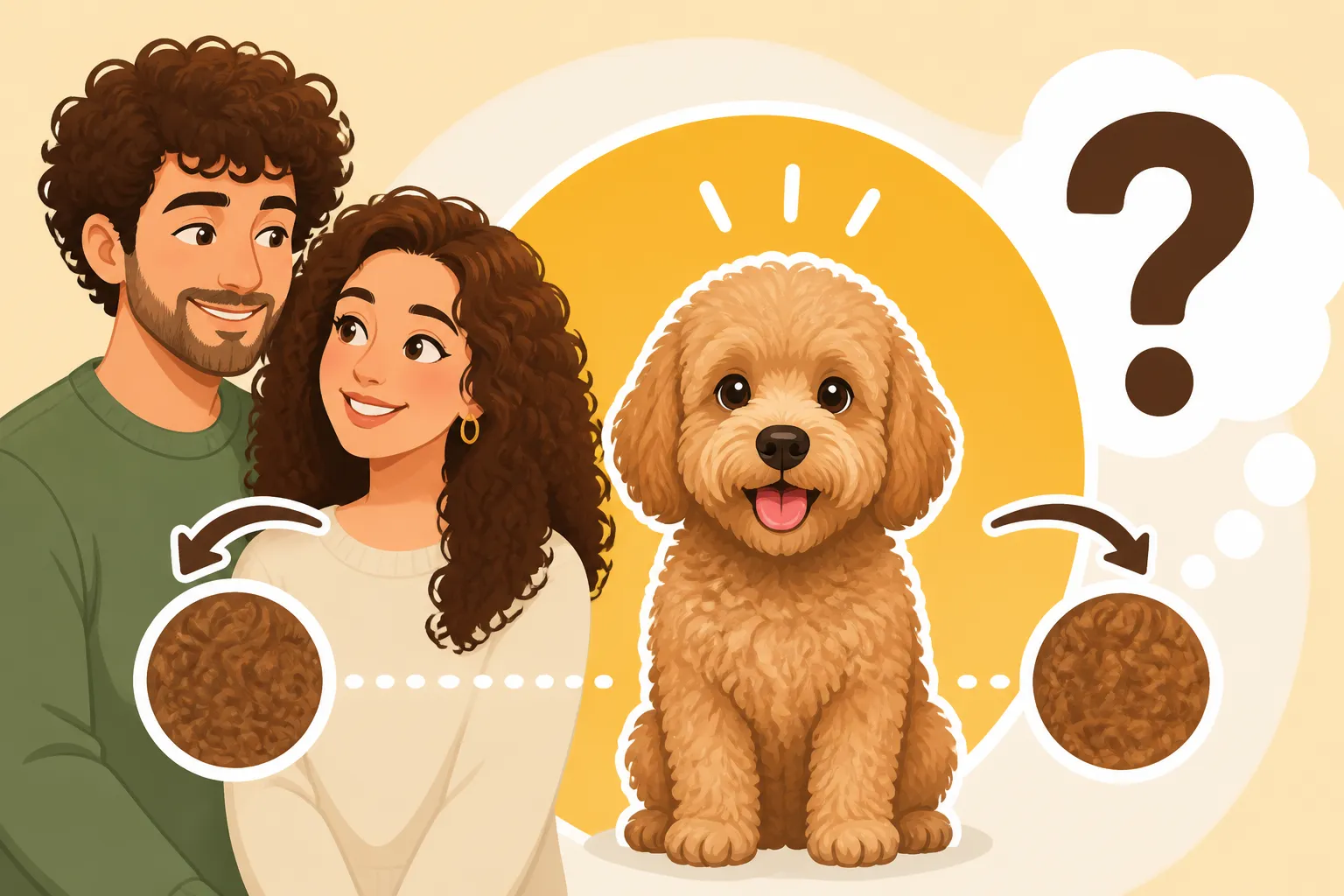
It's a common dream for many aspiring Cockapoo owners: a dog with those iconic, soft, curly locks that seem to promise minimal shedding and endless snuggles. When you’re looking at breeding pairs, it feels logical to assume that if both parents sport a beautiful, tight curl, their puppies will, too. However, the world of canine genetics is rarely that straightforward, and the reality can sometimes leave you with a puppy whose coat isn't quite what you expected. This guide will delve into the fascinating (and sometimes frustrating) genetics behind the Cockapoo's curl, explaining why two curly parents don't always guarantee a litter of identically coated pups, and what you can realistically expect.
Understanding the Cockapoo Coat: A Genetic Primer
The Cockapoo's coat is one of its most defining features, and also one of the most variable. It’s a delightful blend of its two parent breeds: the Cocker Spaniel and the Poodle. Understanding the genetic contributions from each side is key to grasping why coat types can differ so much, even within the same litter.
The Poodle's Curly Legacy
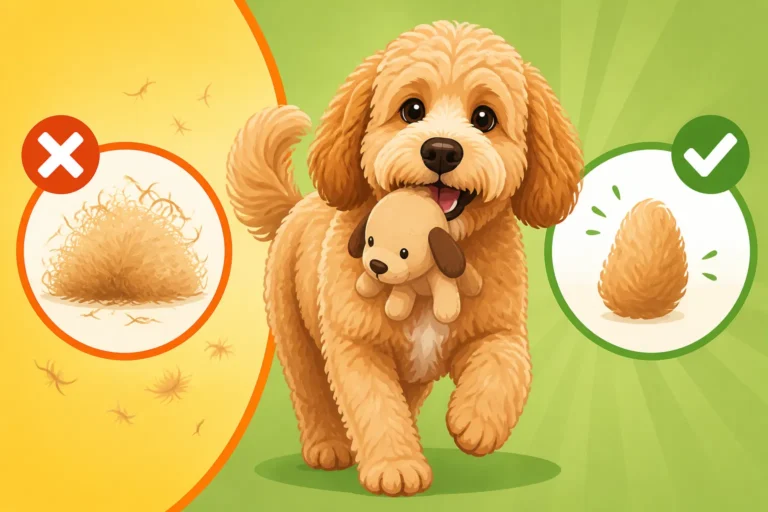
Poodles are renowned for their dense, curly, non-shedding coats. This trait is highly desirable in Cockapoos, particularly for those seeking a hypoallergenic companion. The Poodle's coat is primarily dictated by a specific gene called KRT71, which we'll dive into more deeply soon. In Poodles, this gene typically presents in a way that ensures a consistent, tight curl. This genetic predisposition is one of the main reasons breeders introduced the Poodle into the mix when creating the Cockapoo – to impart that lovely curl and reduce shedding.
However, it's not just about curl. Poodle coats are also generally low in dander and tend to trap shed hair within their curls, making them excellent choices for people with allergies. When a Poodle passes on its genetic material, it's bringing a strong influence for that characteristic curl and texture. The Curl Gene and Where a Cockapoo's Coat Lands is a great resource if you want to understand the curly legacy further.
The Cocker Spaniel's Diverse Coats
On the other side of the equation, we have the Cocker Spaniel, which has a very different coat profile. Cocker Spaniels have a beautiful, silky, sometimes wavy or feathered coat that sheds, often quite a bit. They are known for their soft topcoat and a denser undercoat, particularly in certain lines. The Cocker Spaniel contributes a range of coat textures and a propensity for shedding, which can surprise new Cockapoo owners who assumed their dog would be entirely non-shedding.
There's also a difference between American Cocker Spaniels and English Cocker Spaniels, both of which are used in Cockapoo breeding. American Cockers often have a thicker, more abundant coat, while English Cockers can have a slightly flatter, wavier coat. These differences can subtly influence the resulting Cockapoo's texture. The interplay between the shedding gene from the Cocker and the non-shedding tendencies from the Poodle is where the variability truly begins.
The Role of the Furnishings Gene
While the main focus here is curl, it's impossible to talk about Cockapoo coats without at least a nod to "furnishings." Furnishings refer to the longer hair on a dog's face, including eyebrows, mustache, and beard. This gene (RSPO2) is what gives many Cockapoos that adorable teddy bear look and, crucially, is strongly linked to the low-shedding trait. A dog without furnishings will have a flatter, often shedding face, much like a typical spaniel.
Even if a dog has two copies of the curl gene, if it lacks furnishings, its coat will still shed more and have a different texture. This is why a perfectly curly Cockapoo could still shed if it didn't inherit the furnishing gene from at least one parent. The beauty of the Cockapoo often lies in the combination of both the curl and the furnishings, creating that sought-after low-shedding, fluffy appearance. For a deeper dive into this, check out The Furnishings Gene That Decides a Cockapoo's Face.
The KRT71 Gene and the Curl Factor
The KRT71 gene is the primary genetic player when it comes to determining whether a Cockapoo will have a straight, wavy, or curly coat. Understanding this gene and its different alleles (variants) is paramount to predicting a puppy's adult coat.
Decoding the KRT71 Alleles
Dogs inherit two copies of every gene, one from each parent. For the KRT71 gene, there are two primary alleles we're concerned with:
- Cu (curly): This is the allele responsible for producing curl. It's often referred to as the "curly" allele.
- Cs (straight/wavy): This allele is associated with straighter or wavier coats. It's often called the "straight" or "wavy" allele.
The combination of these two alleles dictates the coat type. Here's a simplified breakdown:
- Cu/Cu: A dog with two copies of the curly allele will almost certainly have a very tight, consistent curl, like a purebred Poodle.
- Cu/Cs: A dog with one curly allele and one straight/wavy allele will typically have a wavy coat. This is a very common coat type in F1 Cockapoos (first-generation crosses), as the Cocker Spaniel usually contributes a Cs allele and the Poodle a Cu allele.
- Cs/Cs: A dog with two copies of the straight/wavy allele will have a straight coat, much like a Cocker Spaniel. This dog will shed.
This is a powerful piece of knowledge, and breeders who are serious about predicting coat types will often conduct genetic testing on their breeding dogs. What KRT71 Says About a Cockapoo's Curl can give you even more insight into this specific gene.
Interpreting the Genetic Test Results
When a breeder performs a DNA coat panel test on their parent dogs, they'll receive results that indicate the KRT71 genotype. For example, a Poodle parent would ideally be Cu/Cu, meaning it will always pass on a Cu allele to its offspring. A Cocker Spaniel parent might be Cs/Cs or, less commonly, could carry a Cu allele if there's some Poodle influence far back in its ancestry (though this is rare and generally undesirable for purebred Cocker lines).
The magic (and sometimes the mystery) happens when these two parents combine their genetic material. If you have a Cu/Cu Poodle and a Cs/Cs Cocker, all their F1 (first generation) puppies will be Cu/Cs, resulting in wavy coats. But what if one or both parents aren't pure Cu/Cu or Cs/Cs? This is where predictability becomes more complex. Genetic testing allows breeders to make informed decisions and even provide you with a clearer picture of what to expect in terms of your puppy's coat. Ask your breeder for these reports – it's a sign of their commitment to healthy, predictable litters. You can learn more about this by checking out Reading a Cockapoo Coat Report Before You Choose.
The Spectrum of Curl: From Wavy to Tight
It's important to remember that "curly" isn't a single, uniform thing. Even within Cu/Cu dogs, there can be variations in the tightness, density, and texture of the curl, influenced by other modifying genes that aren't as well understood or commonly tested. A Cu/Cs dog might have a gentle wave or a more pronounced curl, again depending on those other genetic factors.
A good example is seeing a litter where one puppy has a loose, flowing wave, another has a soft, shaggy curl, and a third has a tighter, more Poodle-like ringlet. All of these could technically be described as "wavy" or "curly," but their grooming needs and visual appeal might differ significantly. This spectrum means that while genetics can give us a strong indication, there’s still an element of surprise when it comes to the exact look and feel of the curl.
When Two Curly Parents Meet: Predictability vs. Possibility
This is where the heart of your question lies. If both parents are curly, shouldn't all the puppies be curly? The answer is "usually," but not "always," and understanding why is crucial.
The Simple Mendelian View (and Why It's Not Always Simple)
In basic Mendelian genetics, if curl (Cu) were a completely dominant trait and straight (Cs) completely recessive, and both parents were "true breeding" for curl (meaning they were Cu/Cu), then indeed, all offspring would be Cu/Cu and thus curly. However, in the real world of canine genetics, especially with hybrid breeds like the Cockapoo, it's rarely that simple.
Often, what we perceive as "curly" might actually be a Cu/Cs wavy coat that's on the curlier side, or a Cu/Cu dog whose curl is less tight due to other modifying genes. If two Cu/Cs wavy-coated Cockapoos are bred together, their offspring's genetic possibilities look like this:
- 25% chance of Cu/Cu (tightly curly)
- 50% chance of Cu/Cs (wavy)
- 25% chance of Cs/Cs (straight)
So, even if both parents appear curly or wavy, they could still carry that recessive Cs gene, leading to the possibility of straight-coated puppies in the litter. This is why just looking at the parents isn't enough; you need to understand their genetic makeup.
The Hidden Recessives: Surprise Coats
The presence of those hidden recessive Cs genes is the primary reason why you can get "surprise" coats in a litter from two ostensibly curly or wavy parents. Imagine two wavy-coated Cockapoos, both with a Cu/Cs genotype. They might have lovely, manageable wavy coats that don't shed much, making them seem like perfect parents for low-shedding, curly puppies.
However, each of them has a 50% chance of passing on their Cs allele. If both happen to pass on their Cs allele to the same puppy, that puppy will be Cs/Cs – a straight-coated, shedding Cockapoo. This scenario can be a real disappointment for families specifically seeking a non-shedding dog due to allergies. It highlights why genetic testing of the parents is so incredibly valuable. A breeder who tests both parents for the KRT71 gene can tell you with far greater certainty what the likely coat outcomes for their litter will be. Whether a Breeder Must Test Both Cockapoo Parents gives more context on this.
Backcrossing and Multigenerational Breeding for Curl
To increase the predictability of curly, low-shedding coats, many Cockapoo breeders engage in backcrossing or multigenerational breeding.
- Backcrossing (F1b): This involves breeding an F1 Cockapoo (Cocker x Poodle) back to a purebred Poodle. The F1 Cockapoo is typically Cu/Cs (wavy). The Poodle is usually Cu/Cu. This pairing drastically increases the likelihood of curly or wavy offspring. The puppies from an F1b cross would be approximately 50% Cu/Cu (curly) and 50% Cu/Cs (wavy), effectively eliminating the Cs/Cs (straight) possibility.
- Multigenerational (F2, F3, etc.): This involves breeding two Cockapoos together who are both F1, F1b, or later generations. As mentioned above, breeding two Cu/Cs Cockapoos can still produce straight coats. However, if breeders carefully select F2 parents that are known to be Cu/Cu (from genetic testing), then the predictability of having an entire litter of Cu/Cu curly puppies increases dramatically.
The goal in these later generations is to consistently produce Cu/Cu dogs that also have furnishings, thereby maximizing the chances of low-shedding, curly coats. It's a continuous process of selective breeding and genetic understanding. For more details on this, you might find Whether a Multigen Cockapoo Is Predictable helpful.
Navigating the Nuances: Beyond Just Curl
The KRT71 gene is crucial, but it's not the only thing that defines a Cockapoo's coat. There are other factors that contribute to the overall appearance, texture, and care requirements.
Understanding Coat Density and Texture
Beyond whether a coat is straight, wavy, or curly, you also have to consider its density and texture.
- Density: A dense coat has more hair follicles per square inch. Poodles tend to have very dense coats, while Cocker Spaniels can vary. A very dense, curly coat will be more prone to matting and will require more intensive grooming.
- Texture: Coat texture can range from soft and cottony to coarse and wiry. Poodles typically have a coarser, non-shedding texture, while Cockers have a silkier feel. The combination in a Cockapoo can lead to various textures. Some might have a very soft, "fluffy" coat that feels wonderful but mats easily, while others might have a slightly wirier coat that is more resilient. These textural differences can significantly impact how often you need to brush your dog and what kind of grooming tools you'll need. Grooming tools available on Chewy or Amazon can help with different textures.
These qualities, combined with curl, determine the overall "feel" and manageability of your Cockapoo's coat. A dog with a dense, soft, curly coat will be a matting magnet without diligent care.
The "Improper Coat" Phenomenon
While the term "improper coat" (IC) technically refers to the absence of furnishings, it's worth mentioning again because it's often confused with or linked to coat texture and shedding. A Cockapoo with an "improper coat" will lack the characteristic beard, mustache, and eyebrows. Instead, their face will look more like a Cocker Spaniel's.
Crucially, dogs with an improper coat (genotype IC/IC) will shed, regardless of their KRT71 curl status. So, you could theoretically have a straight-coated, non-furnished Cockapoo (Cs/Cs + IC/IC) that sheds heavily, or a curly-coated, non-furnished Cockapoo (Cu/Cu + IC/IC) that still sheds moderately. Most people seeking a "doodle" look and low shedding want a dog with furnishings (F/F or F/IC). This further emphasizes the need for comprehensive genetic testing if coat characteristics are a high priority for you. What an Improper Coated Cockapoo Looks Like offers more clarity on this.
Growth and Maturation: The Coat Change
One of the biggest surprises for new Cockapoo owners is the "coat change" that happens around 8-18 months of age. A puppy's soft, easy-to-manage coat will transition into its adult coat, which is often thicker, denser, and more prone to matting. This is especially true for dogs with wavy or curly coats.
During this period, what was once a simple brush-through might become a daily wrestling match with mats. The coat often "felts" from the skin outwards as the softer puppy hair gets tangled with the coarser adult hair. It's a challenging time for many owners, and without proper grooming, it can quickly lead to a pelted dog that needs to be completely shaved down. This is why establishing a rigorous grooming routine early on is so important, regardless of how curly you think your puppy will be. For more on this, you might want to read The Coat Change That Ambushes a Cockapoo Owner at Ten Months.
What to Look for in a Puppy: Early Indicators and Breeder Insights
Choosing a Cockapoo puppy with a specific coat type can feel like a guessing game, but there are definitely strategies you can employ to increase your chances.
Observing Puppy Coats at Birth and Eight Weeks
Even very young puppies can offer clues about their future coat.
- At Birth: Puppies with furnishings often have noticeably thicker hair on their muzzles and around their eyes compared to those without. Straight-coated puppies might look quite sleek, while future curly or wavy puppies might have a slightly fluffier or kinkier texture to their newborn coats.
- At Eight Weeks: By the time puppies are ready to go home, their coat types become a bit more distinct. Straight-coated puppies will typically have smooth, flat hair. Wavy-coated puppies will have a noticeable ripple or wave, particularly on their back and ears. Truly curly puppies will have a tighter, more uniform curl. However, predicting the degree of curl (e.g., loose wave versus tight ringlet) is still challenging at this age. What a Cockapoo Puppy's Coat Feels Like at Eight Weeks provides a good description.
Keep in mind that even the fluffiest puppy at eight weeks isn't a guarantee against matting later on. All Cockapoo coats, especially those with furnishings and curl, require regular care.
The Value of Genetic Testing for Parents
This cannot be stressed enough: the single most reliable way to predict a Cockapoo puppy's coat type is through genetic testing of the parent dogs. A reputable breeder will have tested both parents for the KRT71 (curl) and RSPO2 (furnishings) genes.
- Knowing the Genotypes: By understanding the genetic makeup of both the dam and the sire, a breeder can tell you the statistical probability of each coat type appearing in a litter. For instance, if both parents are Cu/Cs and F/IC, the breeder can explain the chances of getting Cu/Cu, Cu/Cs, Cs/Cs coats, and F/F, F/IC, or IC/IC furnishing outcomes.
- Transparency: A breeder who is transparent with these results is showing a commitment to ethical breeding and helping prospective owners make informed choices. Don't be shy about asking to see the genetic test certificates, perhaps from reputable labs like Paw Print Genetics or Embark. Whether a Coat DNA Test Is Worth the Money delves into the benefits of this testing.
Communicating Your Preferences with a Breeder
If you have a strong preference for a certain coat type (e.g., very curly and low-shedding due to allergies), it's vital to communicate this clearly with your breeder before selecting a puppy.
- Be Specific: Don't just say "I want a curly one." Explain why (e.g., "I need the tightest curl possible because of severe allergies," or "I prefer a wavy coat because I understand it's a bit easier to maintain").
- Temperament First: While coat is important, remember that temperament and health should always be the top priorities. A good breeder will help you prioritize a healthy, well-socialized puppy, and then work with you on coat preferences. They might guide you towards specific litters or even recommend waiting for a future pairing that is more likely to produce your desired coat type.
- Honest Dialogue: Be prepared for an honest conversation. A reputable breeder won't make unrealistic promises about a puppy's adult coat if genetics dictate otherwise. They will help manage your expectations and educate you on the potential outcomes. Whether a Breeder Can Guarantee a Cockapoo's Coat highlights why guarantees are tricky.
Managing Expectations: Embracing Your Unique Cockapoo
Ultimately, getting a Cockapoo means embracing a degree of genetic variability. While science helps us predict, nature always adds its own unique flair.
The Reality of Variability
Even with all the genetic testing and careful breeding, Cockapoos are hybrids. They don't breed with the same predictable consistency as purebred dogs (at least not yet, though some multi-generational breeders are working towards this). This means that even if you're promised a "curly" puppy, the type of curl, its density, and how much it mats can still vary.
It's about managing expectations. A wavy-coated Cockapoo might still be incredibly low-shedding and just as charming as a tightly curled one. A slightly straighter-coated dog might shed a bit more but require less intensive grooming. Every Cockapoo is an individual, and their coat is just one aspect of their wonderful personality.
Grooming for All Coat Types
Regardless of whether your Cockapoo ends up with a straight, wavy, or tightly curled coat, one thing is certain: they will require regular grooming. The Poodle side of their ancestry ensures a coat that grows continuously and mats easily if neglected.
- Brushing: Daily brushing is often recommended for curly and wavy coats, especially during the coat change period. Tools like a slicker brush and a metal comb (which is essential for finding mats a slicker misses) are your best friends. You can find excellent grooming tools on platforms like Amazon or Chewy.
- Professional Grooming: Most Cockapoos benefit from professional grooming every 6-8 weeks, depending on their coat type and desired length. This isn't just about looking tidy; it's crucial for their hygiene and comfort.
- Mat Prevention: Preventing mats is far easier than trying to remove them. Mats can be painful, pull on the skin, and lead to skin infections. Regular brushing, bathing with appropriate shampoos, and keeping an eye on high-friction areas (armpits, behind the ears, groin) are key. The Three Cockapoo Coat Types and Their Upkeep offers more detailed grooming advice.
Beyond the Curl: What Truly Matters
While it’s natural to have a preference for a certain look, remember that the most important qualities in a companion dog are temperament, health, and the bond you share. A Cockapoo's playful nature, intelligence, and affectionate disposition are what truly make them special. Whether your Cockapoo has tight ringlets, loose waves, or a shaggy flat coat, they will still bring immense joy and love into your home.
Focus on finding a healthy, well-socialized puppy from a reputable breeder who prioritizes the well-being of their dogs. The coat is just one part of the package, and the love and companionship your Cockapoo offers will far outweigh any slight variation in their fur. Embrace the unique characteristics of your individual dog, curl and all!
Disclaimer
This article is for general informational purposes only and does not constitute professional advice. Laws, prices and regulations vary by location and change over time. Consult a qualified professional for guidance on your specific situation.