Handling a Cockapoo Puppy Before Its First Groom
Bringing a fluffy Cockapoo puppy home is an absolute joy, but soon enough, that adorable fluff starts to grow, and you realize the unique challenges that come with managing their gorgeous, often curly, coat. Many new Cockapoo parents quickly discover that grooming isn't just about looking good; it's a vital part of their dog's health and comfort, yet getting a wiggly, sometimes fearful, puppy to cooperate can feel like an impossible mission. This comprehensive guide is here to walk you through the crucial steps of preparing your Cockapoo puppy for a lifetime of happy grooming, long before their first professional salon visit.
Understanding Your Cockapoo Puppy's Grooming Needs from Day One
The Cockapoo's charm lies in its delightful mix of the Cocker Spaniel's sweet nature and the Poodle's intelligent, often non-shedding, coat. However, this blend also means a unique set of grooming demands that start the moment they arrive in your home. Ignoring these early needs can lead to significant stress for both you and your puppy down the line, making future grooming sessions a dreaded chore rather than a routine part of their care.
Why Early Desensitization is Crucial for Cockapoos
Think about the Cockapoo coat: it's typically a blend of the Poodle's dense, curly hair and the Cocker Spaniel's flowing, sometimes silkier, fur. This combination, while beautiful, is a magnet for tangles and mats if not regularly maintained. Unlike short-coated breeds that can get away with less frequent brushing, a Cockapoo absolutely needs consistent grooming to prevent painful matting that can pull on their skin and even cause skin infections. Starting early isn't just about cleanliness; it's about building a foundation of acceptance and comfort around being touched, brushed, and handled, which is especially important before the big The Coat Change That Ambushes a Cockapoo Owner at Ten Months truly kicks in. If you wait until the mats are already forming or until their first professional groom, your puppy will likely associate the entire experience with discomfort or fear, making every subsequent session a battle.
This early desensitization isn't just about preventing physical pain from mats; it's about establishing trust. When you gently introduce grooming tools and handling, you're teaching your puppy that these sensations are not threatening. It validates their natural wariness but shows them you are a safe guide through these new experiences. Without this groundwork, the groomer becomes the "bad guy" who pokes and prods, rather than someone providing essential care. A positive first impression can shape their entire attitude towards grooming, turning what could be a stressful event into a manageable, even pleasant, routine.
The Importance of Positive Associations
Imagine if every time someone touched your hair, it was immediately followed by something unpleasant. You'd quickly learn to flinch away, wouldn't you? It's the same for your Cockapoo puppy. Their little brains are constantly making associations. If grooming sessions are accompanied by fear, restraint, or discomfort, they will naturally develop a negative association. This is why positive reinforcement is your best friend when it comes to early grooming. Every single interaction with a brush, a comb, or a nail clipper should be paired with something wonderfully positive: a high-value treat, gentle praise, or a favorite toy.
The goal is to override any potential apprehension with overwhelming positivity. Even if you only manage to touch their paw for a second and then immediately give a treat, that's a win. You're building a mental bridge: "Paw touch equals yummy treat!" rather than "Paw touch equals scary clippers!" It's a gradual process, but these small, positive moments accumulate, creating a robust foundation of confidence. Companies like BAXTER & Bella, for example, often emphasize this kind of positive training in their puppy programs, and it's a principle that applies perfectly to grooming. The more joyful and rewarding you make these early interactions, the more your Cockapoo will associate grooming with good things, making the actual tasks far easier for everyone involved.
Setting Up a Calm Grooming Environment
The environment in which you introduce grooming plays a massive role in your puppy's comfort level. Picture this: you're trying to brush your puppy, and the TV is blaring, kids are running around, and other pets are vying for attention. It's a recipe for distraction and anxiety. A calm, quiet space is absolutely essential. Choose a time when your puppy is already a little tired or relaxed, perhaps after a potty break or a short play session, but not so tired they're grumpy.
A dedicated grooming spot, even if it's just a specific corner of a room, can also help. Place a non-slip mat or towel on a table or counter if you're comfortable working at that height; this prevents slips and helps define the "grooming zone." For smaller puppies, a laundry basket with a towel in the bottom can provide a secure, elevated space. Consistency in location helps your puppy understand what's coming. Ensure good lighting so you can clearly see what you're doing, especially when dealing with delicate areas like eyes and ears. Eliminating distractions signals to your puppy that this is focused, quiet time, helping them to settle and accept the handling more readily. This thoughtful preparation sets the stage for successful, low-stress grooming experiences.
Essential Tools for Early Puppy Grooming
Before you even think about tackling a full groom, you need the right tools. Investing in quality, puppy-appropriate equipment from the start can make a huge difference in your success and your puppy's comfort. Skimping on tools often leads to frustration, snagged fur, and negative experiences that are hard to undo.
Brushes and Combs for Delicate Puppy Coats
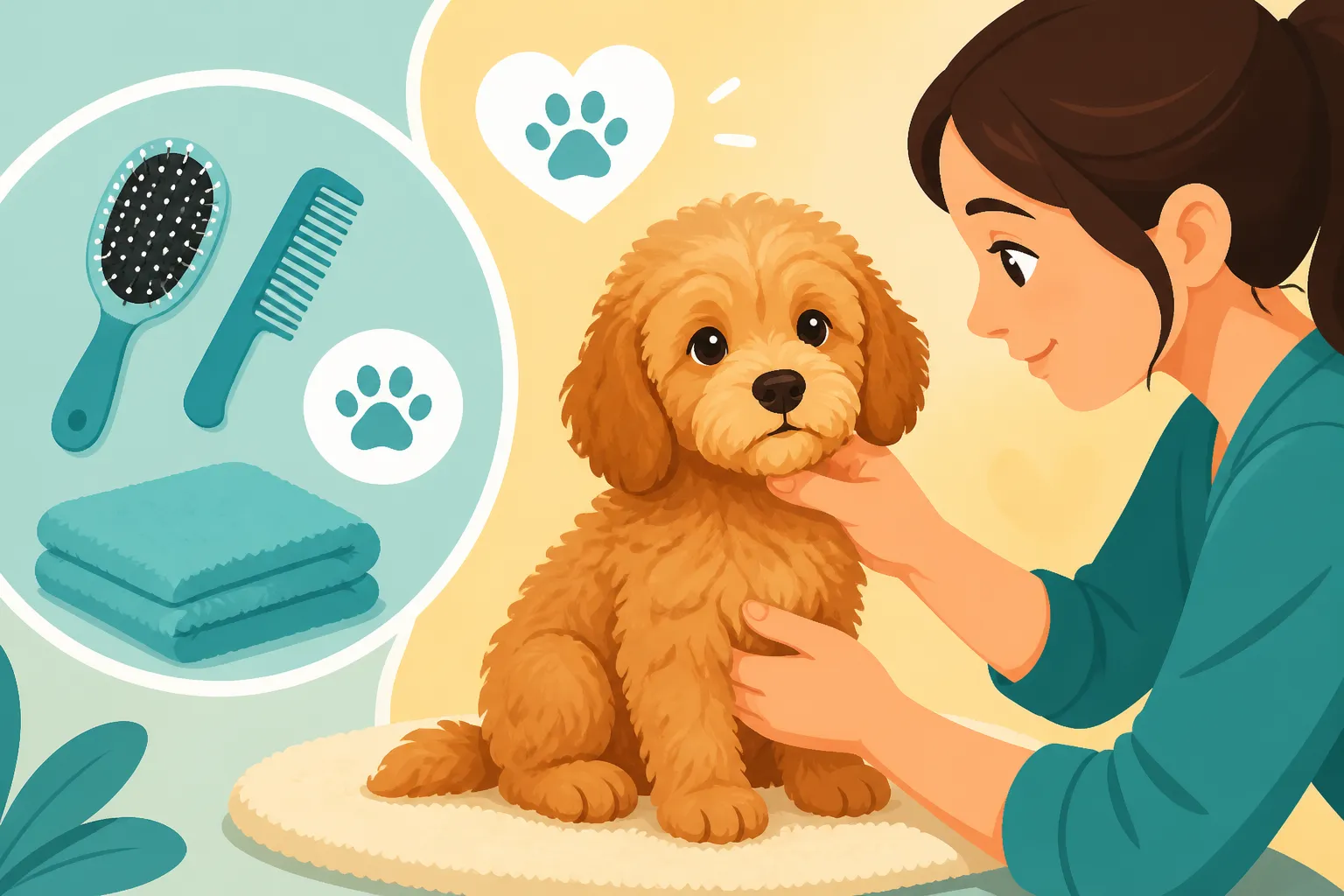
A Cockapoo puppy's coat, especially the What a Cockapoo Puppy's Coat Feels Like at Eight Weeks, is soft and delicate, but it's also prone to tangling. You'll need a couple of key items. First, a good quality slicker brush with flexible pins. This is your primary tool for removing loose hair and small tangles. When using it, be gentle! Don't drag it across their skin; instead, use light, upward strokes, focusing on small sections at a time. Many pet owners unknowingly apply too much pressure, which can scratch the skin and make the puppy dislike the brush.
Next, a metal comb, often called a Greyhound comb, is indispensable. This comb, with its varying teeth widths, is what truly gets down to the skin to find any hidden tangles or mats that the slicker brush might have missed. Start with the wider-toothed side, then move to the finer side. Always make sure the comb can glide smoothly through the coat without resistance. If it snags, you've found a tangle that needs to be gently worked out. It’s important to understand The Comb That Finds Mats a Slicker Misses, as it's those hidden ones that turn into painful pelts. You can find excellent options for both slicker brushes and metal combs on platforms like Amazon, making it easy to stock up on these essentials right away.
Nail Clippers and Grinders: Starting Early
Nail care is often one of the most feared aspects of grooming for both dogs and owners. Those little puppy nails might not look intimidating, but letting them grow too long can lead to discomfort, splayed paws, and even orthopedic issues later on. Starting early is key to demystifying the process. There are two main types of tools: traditional clippers (scissor-style or guillotine-style) and grinders. For puppies, many people find scissor-style clippers easier to manage for small nails, or a dremel-style grinder for a smoother finish and less risk of cutting too far back.
Introduce the clippers or grinder simply by letting your puppy sniff them, then rewarding them. Touch the tool to their paw, then reward. Turn it on (if it's a grinder), let them hear the sound, then reward. You might not even clip a nail the first few times. The goal is positive exposure. When you do clip, take off tiny bits at a time, just the very tip, frequently rewarding them after each nail. Remember, cutting into the quick (the sensitive part of the nail) is painful and will set your progress back significantly. If you're nervous, your vet or a professional groomer can give you a quick tutorial. The earlier your Cockapoo gets used to having their paws handled and nails trimmed, the less of a wrestling match it will be for their entire life. Teaching a Cockapoo to Give a Foot for Nails is a crucial command to work on here.
Shampoos and Conditioners for Puppy Skin
Cockapoo puppies have sensitive skin, and using harsh shampoos can strip their natural oils, leading to dryness, itchiness, or even skin irritations. Always opt for a gentle, tearless puppy shampoo. These are formulated to be mild and pH-balanced for young dogs. You might also consider a very light, puppy-safe conditioner, especially if your puppy has a curlier coat, as this can help keep the fur soft and make brushing easier.
Bathing a puppy too frequently isn't usually necessary unless they've gotten particularly dirty. Over-bathing can indeed lead to dry skin, so focus on targeted cleaning if only a small area is soiled. When you do bathe them, use lukewarm water and ensure you rinse thoroughly. Any shampoo residue left behind can also cause skin irritation. Towel dry them gently, and then if you plan to introduce the dryer (which we’ll get to!), do so slowly. The goal is to keep their skin healthy and their coat clean without causing discomfort. If you notice your puppy's skin seems Whether a Cockapoo's Skin Dries Out From Washing, consider consulting your vet about bathing frequency or product choices.
Step-by-Step Desensitization Techniques
The key to successful puppy grooming isn't a single "grooming session" but rather a series of tiny, positive interactions spread out over days and weeks. This gradual approach allows your puppy to build confidence and trust without feeling overwhelmed.
Handling Paws and Nails Without a Fight
This is often one of the trickiest areas for puppy owners, yet it’s one of the most important for both grooming and health. Start by simply touching your puppy's paws while they are relaxed, perhaps during cuddle time. Gently rub your fingers along their leg, then onto their paw. As soon as you touch the paw, give a treat and praise. Repeat this many times a day, keeping the sessions incredibly short – literally a few seconds.
Once they tolerate light paw touches, gradually increase the duration and intensity. Hold a paw gently for a second, then two, then five, always rewarding calm behavior. Next, start touching individual toes and spreading them apart, mimicking how you would handle them for a nail trim. This helps them get used to the feeling. Finally, introduce the clippers or grinder. Don't even try to clip a nail at first. Just touch the tool to each nail, give a treat, and move on. Slowly, over many sessions, you can progress to actually clipping just the very tip of one nail, then rewarding. If your puppy pulls away, don't force it. Just go back a step, make it even shorter and more positive, and try again later. It’s all about building tolerance through positive reinforcement, not force.
Ear Cleaning and Hair Plucking (or not)
Cockapoos, with their adorable floppy ears, are prone to ear infections if their ears aren't properly cared for. The combination of dense hair in the ear canal and the floppiness that restricts airflow creates a warm, moist environment perfect for yeast and bacteria. Therefore, regular ear checks and cleaning are non-negotiable. Begin by simply lifting your puppy's ears, looking inside, and immediately giving a treat. Do this several times a day. As they become comfortable, gently touch the inside of their ear flap, then move to gently touching just inside the ear canal opening.
For cleaning, use a veterinarian-approved ear cleaner. Squirt a small amount into the ear (or onto a cotton ball) and gently massage the base of the ear for 30 seconds. This helps loosen debris. Let your puppy shake their head, and then wipe away any visible gunk with a cotton ball or soft cloth. Never use cotton swabs deep inside the ear, as this can push debris further in and damage the eardrum. When it comes to ear hair plucking, this is a contentious topic. Some groomers and vets recommend plucking to improve airflow, while others argue it can cause micro-traumas and lead to more infections. It's best to discuss Whether Ear Hair Should Come Out of a Cockapoo with your vet or an experienced groomer, as it depends on the individual dog. In the meantime, just focus on Getting a Cockapoo Used to Ear Handling positively. If you notice persistent redness, discharge, or a foul odor, it's time for a vet check-up, as it might be Whether a Cockapoo Needs Its Ears Cultured.
Face Trimming and Eye Area Care
That cute Cockapoo beard and those expressive eyes can quickly become problematic if not managed. Hair growing around the eyes can irritate them, potentially causing tears, stains, or even corneal abrasions if Whether Hair in a Cockapoo's Eyes Scratches the Cornea. Start by gently touching your puppy's muzzle and forehead, rewarding them for stillness. Gradually introduce a round-tipped safety scissor or a small pair of blunt-nosed shears. Again, the first few sessions might only involve holding the scissors near their face and giving a treat.
When you're ready to trim, make sure your puppy is calm and you have good lighting. Hold their head gently but firmly, and carefully brush the hair away from their eyes. Trim small bits at a time, always pointing the scissors away from the eye. For the beard, you can use thinning shears or small scissors to keep it tidy and prevent food and water from clinging to it. If you're nervous about trimming around the eyes, many owners choose to leave this to a professional groomer, but getting your puppy used to the handling is still paramount. Remember, you want to get them used to having their face handled, even if you’re not the one doing the trimming. Learning Trimming a Cockapoo's Face Without Cutting an Eye safely is a skill many owners perfect over time.
Introducing the Scary Noises: Clippers and Dryers
Many puppies find the noise and vibrations of grooming tools frightening. The key is to introduce them slowly and in a non-threatening way, long before they need a full haircut. This proactive approach prevents a traumatic first grooming experience.
Desensitizing to Clipper Vibrations and Sound
Electric clippers can be quite loud and vibrate intensely, which is startling for a young puppy. Start this desensitization process without even touching the clippers to your dog. First, simply turn the clippers on in a different room, so the sound is muffled. Reward your puppy for staying calm. Gradually, bring the clippers closer to your puppy while they're on, continuing to reward. Never force them to stay near the noise if they are genuinely scared.
Once they tolerate the sound, turn the clippers off and let your puppy sniff them. Reward. Then, with the clippers off, gently touch the back of the clippers (the cool, non-blade side) to various parts of their body – their back, their shoulder, their hip. Reward for calmness. Finally, and this is a big step, turn the clippers on and gently touch the back of them to their body, briefly, then immediately reward. The goal isn't to cut hair, but to get them used to the vibration and sound without fear. Never use clippers on a matted coat at home, as this can pull and hurt them; leave serious mats to a professional groomer.
Acclimating to the Hair Dryer
The hair dryer presents a double challenge: loud noise and blowing air. Both can be very intimidating. Just like with clippers, start by introducing the sound from a distance. Turn on your human hair dryer (on a low, cool setting) in another room and give your puppy treats for ignoring it. Slowly, bring it closer. The key here is not to blast them with air at first.
Once they tolerate the sound nearby, point the dryer away from them and let them feel the gentle ambient air movement from a distance. Then, very briefly, direct the cool, low air flow towards their back, immediately followed by a treat. Keep the sessions super short – a few seconds at most. Never point the dryer directly at their face or ears, and always use a cool or lukewarm setting to prevent burns. A noisy, powerful dryer can be especially scary. If you notice your Cockapoo reacts with extreme fear or you feel they are becoming A Cockapoo That Panics at the Dryer, slow down the process dramatically, or switch to a very quiet, low-setting pet dryer which you can often find on Amazon. Some dogs never fully love the dryer, but with patient desensitization, most can learn to tolerate it without extreme anxiety.
Practice Makes Perfect: Establishing a Grooming Routine
Consistency is paramount when it comes to grooming. Think of it less as a chore you squeeze in when necessary and more as a regular bonding experience that happens on a schedule. This predictability helps your Cockapoo puppy understand and accept the routine.
Short, Frequent Sessions for Success
When you're starting out with a puppy, trying to do a full brush-out, nail trim, and ear clean all in one go is a recipe for disaster. Puppies have short attention spans and can get overwhelmed quickly. Instead, aim for multiple, very short sessions throughout the day or week. Perhaps 2-5 minutes of gentle brushing one morning, followed by a quick paw handling session in the afternoon, and an ear check in the evening.
These micro-sessions prevent your puppy from becoming fatigued or frustrated. They learn that grooming interactions are brief, positive, and always end quickly. As they grow more comfortable, you can gradually extend the duration of each session. This incremental approach builds their tolerance and confidence over time, making them far more cooperative than if you tried to force a long session when they're not ready. Remember, even a minute of positive handling is progress!
Rewarding Calm Behavior
This can't be stressed enough: positive reinforcement is the cornerstone of successful puppy grooming. Every time your Cockapoo puppy remains calm, allows a touch, or tolerates a tool, they should be rewarded. And we're not talking about just a pat on the head; use high-value treats – something truly special they don't get at any other time. Tiny pieces of cheese, cooked chicken, or training treats work wonderfully.
Beyond treats, lavish them with verbal praise in a happy, encouraging tone. "Good job! Such a brave puppy!" Combine this with gentle petting in their favorite spots. The goal is to make grooming associated with the best things in their world. If they pull away or get squirmy, calmly stop the session. Don't scold them, but don't reward the undesired behavior. Simply end the interaction and try again later, starting with an easier step. This teaches them that calm cooperation brings good things, while struggling ends the session but doesn't yield rewards. This approach helps them learn what What a Cockapoo Puppy Should Learn First is for these types of interactions.
What to Expect from the First Professional Groom
Even with all your hard work at home, your puppy's first professional groom can still be a bit overwhelming. They'll encounter new smells, new sounds, new people, and new sensations like the professional high-velocity dryer. It's perfectly normal for them to be a little scared or stressed. This is why most groomers recommend a "puppy trim" or "familiarization visit" around 12-16 weeks of age, after they've had all their vaccinations. This initial visit is often less about a perfect haircut and more about positive exposure. How Early a Cockapoo Should Meet a Groomer can significantly impact their future comfort.
During a puppy trim, the groomer will likely do a bath, a gentle brush-out, a sanitary trim, trim around the eyes, and perhaps a very light trim on their paws. They'll focus on making the experience as positive as possible, introducing the puppy to the grooming table, dryer, and clippers in a non-threatening way. Don't expect your puppy to come back looking like a perfectly sculpted show dog. The goal is to ensure they have a positive first impression and aren't traumatized. Discuss your home desensitization efforts with your groomer so they know what your puppy is already comfortable with and what might need more gentle introduction. This collaboration between you and the groomer is vital for setting your Cockapoo up for a lifetime of comfortable grooming.
| Grooming Tool | Primary Use | Why It's Essential for Puppies | How to Introduce |
|---|---|---|---|
| Slicker Brush | Removing loose hair, detangling | Prevents mats, introduces brushing | Gentle strokes, short sessions, treats |
| Metal Comb | Finding hidden tangles at skin level | Catches mats slicker misses, thorough | Follows slicker brush, gentle probing |
| Nail Clippers/Grinder | Trimming nails to a healthy length | Prevents paw discomfort, splayed feet | Sound/touch desensitization, tiny clips, rewards |
| Puppy Shampoo | Gentle cleaning of coat and skin | Avoids skin irritation, pH-balanced | Lukewarm water, gentle lather, thorough rinse |
| Blunt-nosed Shears | Trimming around eyes, paws, sanitary | Safety for delicate areas, tidy appearance | Hold near face, small snips, praise |
Disclaimer
This article is for general informational purposes only and does not constitute professional advice. Laws, prices and regulations vary by location and change over time. Consult a qualified professional for guidance on your specific situation.