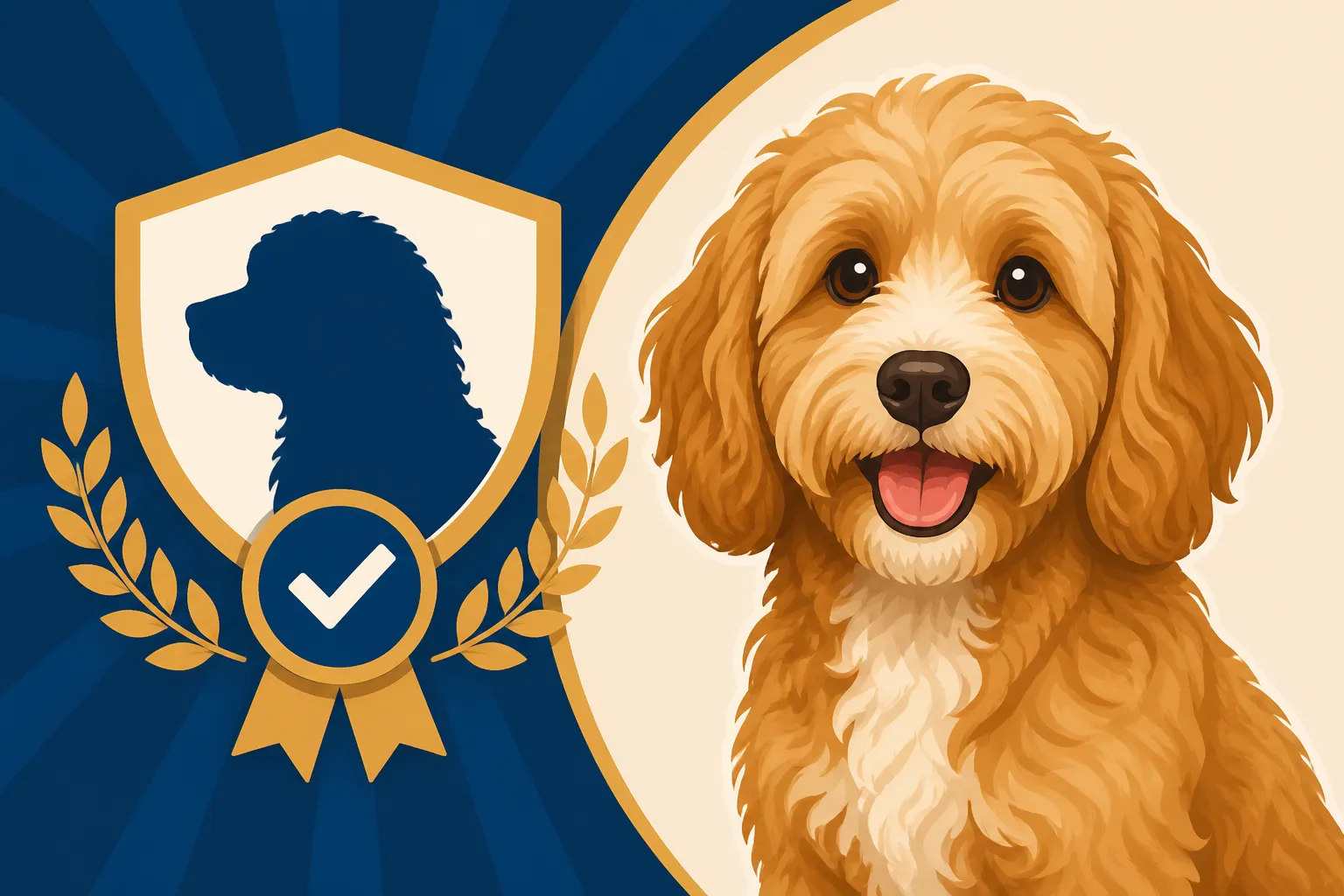
The Standard the American Cockapoo Club Wrote
When you're looking for a Cockapoo, the sheer variety can be overwhelming, making it feel like every other puppy you see is a different breed entirely. It's tough to know what to expect when there isn't one universally accepted blueprint for these wonderful dogs. This guide will walk you through the specific standard established by the American Cockapoo Club (ACC), detailing what they consider the ideal Cockapoo in terms of temperament, appearance, and health.
The Quest for Consistency: Why a Standard Matters
Imagine falling in love with the idea of a Cockapoo – their bouncy personality, their charming looks, that lovely soft coat – only to find a vast spectrum of dogs all bearing the same name. It can be incredibly confusing and, frankly, a bit disappointing when the puppy you envisioned doesn't quite match up with what's available. This is precisely why breed standards, even for hybrid dogs like Cockapoos, become so important. They provide a common goal for breeders and a clearer expectation for families like yours looking to bring one home. Without some form of guideline, the Cockapoo experience could become a total lottery, making it harder to ensure you're getting a healthy, predictable companion.
The Wild West of Early Cockapoo Breeding
For many years, the Cockapoo was truly a "designer dog" in the loosest sense of the term. The initial crosses, often accidental or simply driven by a desire for a low-shedding, friendly companion, weren't guided by a shared vision. Breeders simply crossed a Cocker Spaniel with a Poodle, and whatever came out was a Cockapoo. This led to a huge variation in size, coat type, temperament, and even health outcomes. It was the wild west, where every breeder was pretty much doing their own thing. While this spontaneity led to many wonderful dogs, it also meant that prospective owners had little assurance about what their puppy would grow into. You might think you're getting a calm, wavy-coated companion, but end up with a high-energy, tightly curled dog that needs far more grooming and exercise than you anticipated. This lack of predictability could certainly lead to frustrated owners and, sadly, sometimes dogs ending up in shelters when they didn't meet expectations.
Bringing Order to the Doodleville
Over time, as the Cockapoo's popularity soared, a need for more consistency became apparent. Dedicated breeders and enthusiasts started to see the value in working towards a common goal, much like purebred clubs have done for centuries. This wasn't about stifling the natural variation or dictating every single detail, but rather about establishing a set of ideals that would help ensure the breed's future health and maintain the delightful characteristics that made Cockapoos so beloved in the first place. Think of it less like a rigid rulebook and more like a compass guiding the direction of responsible breeding. Organizations like the American Cockapoo Club (ACC) stepped up to provide that compass, offering a framework for what a well-bred Cockapoo should embody. Their aim was to protect the integrity of the Cockapoo, encouraging ethical practices and predictable outcomes for families. It's about recognizing that while they are a crossbreed, they deserve the same thoughtful approach to breeding as any established purebred.
Diving Deep into the American Cockapoo Club's Standard
When we talk about a "standard" for a breed, it's essentially a detailed description of the ideal specimen. For the American Cockapoo Club, this isn't just about pretty pictures; it's a guide for breeders striving for consistency in temperament, health, and physical characteristics. It’s their blueprint for the best possible Cockapoo companion. They really want to preserve the traits that make these dogs so special while actively working to minimize common issues. It offers a clear benchmark for evaluating puppies and parent dogs, ensuring that the wonderful qualities of both the Cocker Spaniel and the Poodle are thoughtfully combined.
The Ideal Cockapoo Temperament
The ACC places a huge emphasis on temperament, and rightly so. After all, a dog's personality is what truly defines its role in your family. According to their standard, an ideal Cockapoo should be intelligent, eager to please, loyal, and incredibly affectionate. They're looking for a dog that is generally happy-go-lucky, outgoing, and friendly towards both people and other animals. This means a Cockapoo that thrives on companionship and quickly bonds with its human family. They should be adaptable, capable of fitting into various home environments, whether it’s a bustling family home or a quieter household. Aggression, shyness, or excessive timidity are considered serious faults, as these traits can significantly impact a dog's quality of life and its ability to be a good family pet. The goal is a stable, well-adjusted dog that brings joy, not stress. This is often what draws people to the breed in the first place, and the ACC aims to protect that core characteristic. You'll find many breeders focus heavily on socializing their puppies from a young age to foster these desirable traits, making sure they're exposed to different sights, sounds, and experiences before they even leave for their forever homes. This early work is crucial for developing that balanced temperament. Raising a Cockapoo Puppy touches on some of these important early developmental steps.
Physical Traits: What Does a "Standard" Cockapoo Look Like?
When it comes to looks, the ACC standard aims for a harmonious blend of the Cocker Spaniel and the Poodle, avoiding extremes from either parent. They recognize four distinct size categories: Teacup, Toy, Miniature, and Maxi. These aren't just arbitrary labels; they come with specific weight and height ranges to help breeders and owners understand what to expect. For instance, a Maxi Cockapoo might weigh over 19 pounds, while a Teacup is significantly smaller. Beyond size, they describe a well-proportioned body, a sturdy build that isn't too delicate or too bulky, and a friendly, intelligent expression. The head should be rounded but not domed, with a moderate stop. Their ears should be dropped, like a Cocker's, and set at or below eye level, framing the face nicely. Tail docking is typically not favored, as a natural tail contributes to the dog's balance and expression. The overall impression should be one of balance, athleticism, and charm. It's about finding that sweet spot between the two parent breeds, resulting in a dog that is both elegant and robust.
American Cockapoo Club Size Standard Overview
| Size Category | Approximate Weight Range | Approximate Height Range (at shoulder) | Description |
|---|---|---|---|
| Teacup | Under 6 lbs | Under 10 inches | Smallest, most delicate. Requires extra care. |
| Toy | 6-12 lbs | 10-12 inches | Popular for apartment living. |
| Miniature | 13-18 lbs | 12-15 inches | A sturdy, versatile size. |
| Maxi | 19 lbs and over | 15 inches and over | Can be quite substantial, often resembling a smaller Standard Poodle. |
Note: These are general guidelines; individual dogs may vary slightly.
Coat Types and Care Expectations
The coat is often one of the biggest reasons people choose a Cockapoo, particularly for those with allergies. The ACC standard acknowledges the various coat types that can result from the Poodle and Cocker cross, but it definitely leans towards the low-shedding, furnished coats that are characteristic of the breed's "doodle" appeal. They describe the ideal coat as being soft, wavy to curly, and requiring regular grooming to prevent matting. They understand that a straight coat can occur, often called an "improper coat," but it’s generally not preferred within the standard for those aiming for the classic Cockapoo look and low-shedding properties. A proper Cockapoo coat should feel like a Poodle's (soft, not harsh) and possess the 'furnishings' – the longer hair on the face, beard, and eyebrows – that give the Cockapoo its distinctive teddy bear look.
Regular grooming is a non-negotiable part of owning a Cockapoo, regardless of how curly or wavy their coat is. The ACC standard implies that owners should be prepared for this commitment, whether it's daily brushing at home or regular trips to a professional groomer. The Three Cockapoo Coat Types and Their Upkeep is a great resource if you're trying to understand the nuances of what your particular puppy might need. Even if your Cockapoo has a less curly coat, it can still be prone to tangles and matting, especially behind the ears, in the armpits, and on the legs. Tools like slicker brushes, combs, and detangling sprays become your best friends. Many owners visit their groomer every 6-8 weeks for a full trim and bath. You can find many grooming supplies on Chewy to help maintain your dog's coat between professional visits. Understanding the coat genetics, particularly the furnishings gene, is crucial for breeders aiming for these desired traits, and helps them predict Picking the Puppy in a Cockapoo Litter That Will Shed Least.
Health and Responsible Breeding: The Club's Stance
One of the most valuable contributions of any breed club standard, especially for a hybrid, is its emphasis on health. The ACC understands that while Cockapoos are often touted as "healthier" than their purebred parents, they are still susceptible to inherited conditions. A responsible club isn't just about looks and temperament; it's about safeguarding the future health of the breed. Their standard implicitly encourages breeders to prioritize the well-being of their dogs, ensuring that puppies are born with the best possible genetic start in life. This commitment to health is paramount, far outweighing superficial traits.
Genetic Testing Recommendations
The American Cockapoo Club, like most responsible breeding organizations, strongly advocates for genetic health testing of parent dogs. They know that both Cocker Spaniels and Poodles carry certain inherited conditions that can be passed down to their Cockapoo offspring. Without proper testing, breeders are essentially playing roulette with their puppies' health. Key conditions that reputable breeders test for include:
- Progressive Retinal Atrophy (PRA-prcd): A degenerative eye disease that can lead to blindness. Ensuring both parents are clear or that at least one is clear and the other a non-affected carrier is vital. Whether Both Cockapoo Parents Must Be prcd-PRA Clear goes into detail on why this is so important.
- Familial Nephropathy (FN): A devastating kidney disease primarily found in English Cocker Spaniels but can be carried by American Cocker lines as well. What Familial Nephropathy Does to a Cockapoo is a condition no owner wants to face.
- Patellar Luxation: A condition where the kneecap slips out of place, common in smaller breeds.
- Hip Dysplasia: While often associated with larger breeds, Poodles and, by extension, Cockapoos can be affected.
- Von Willebrand's Disease (vWD): A bleeding disorder seen in Poodles.
The ACC standard doesn't just list these; it implies that breeders adhering to their guidelines would undertake these tests, making the results transparent to potential puppy buyers. This helps reduce the incidence of these painful and costly diseases in future generations. It’s about building a foundation of health, not just pretty faces. When you look at a puppy's pedigree, asking for The Five Certificates a Cockapoo Breeder Should Show is a critical step.
Ethical Breeding Practices
Beyond health testing, the ACC's standard also touches upon the broader principles of ethical breeding. This includes ensuring breeding dogs are of appropriate age and maturity, providing a clean and stimulating environment for puppies, and conducting thorough temperament assessments. Ethical breeders operating under such a standard wouldn't overbreed their females, would retire them at a reasonable age, and would ensure that all puppies are well-socialized before going to their new homes. They would also be meticulous about placing puppies in suitable environments, often having a thorough application process.
An ethical breeder, guided by a club standard, acts as a responsible steward of the breed. They're not just selling puppies; they're creating future family members. This also involves offering lifetime support to puppy buyers, being available for questions, and sometimes even having a take-back clause in their contracts if an owner's circumstances change. They would also ensure that their breeding dogs are truly representative of the ideal temperament and physical traits outlined in the standard, not just breeding any two Cockapoos together. This thoughtful approach ensures the continued health and well-being of the Cockapoo breed, moving it further away from the stigma sometimes associated with "designer dog" breeding. Many even recommend specific food, such as options available on Chewy, to ensure proper nutrition for their puppies from the start.
How the ACC Standard Differs from Other Definitions
When navigating the world of Cockapoos, you might encounter different organizations and differing ideas of what constitutes a "true" Cockapoo. This can be confusing, to say the least! The American Cockapoo Club (ACC) has put forth its own standard, but it's important to understand that it's not the only voice out there. These differences highlight the ongoing evolution of the breed and the passionate, sometimes divergent, opinions within the Cockapoo community.
Comparing to the Cockapoo Club of America (CCA)
Perhaps the most significant difference arises when comparing the American Cockapoo Club (ACC) standard to that of the Cockapoo Club of America (CCA). While both clubs are dedicated to the Cockapoo, they have distinct philosophies that influence their standards and guidelines. The CCA, for example, might emphasize slightly different aspects of temperament or physical appearance, or have different rules regarding generational breeding. Historically, they've been the oldest and perhaps the most well-known club, having been around since 1999. What the Cockapoo Club of America Set in 1999 shows how they aimed for consistency. However, the ACC offers a more contemporary perspective, seeking to evolve the breed with a focus on comprehensive health testing and specific physical ideals.
One key area where differences might emerge is in the acceptance of various generations. Some clubs might have stricter rules about F1, F1b, or multi-generational crosses, while others are more inclusive. These distinctions can impact a breeder's ability to register their puppies or claim adherence to a particular standard. It’s not uncommon for breeders to choose to align with one club over another based on which standard and ethos best matches their own breeding program. For the average puppy buyer, this means that a "club registered" Cockapoo might look slightly different or have come from a slightly different breeding philosophy depending on which club the breeder belongs to. It’s crucial to ask breeders directly about their club affiliation and what that means for their puppies.
The Unregistered Landscape
Beyond the two main clubs, there's a vast landscape of unregistered Cockapoo breeders. These breeders may or may not adhere to any formal standard, choosing instead to follow their own interpretation of what makes a good Cockapoo. While many unregistered breeders are responsible and produce wonderful, healthy puppies, the lack of an overarching standard or club oversight means there's less consistency. An unregistered breeder might prioritize certain traits, such as a specific color like "red" or "merle" (which often comes with its own set of genetic considerations), without necessarily adhering to the temperament or health guidelines that a club like the ACC would enforce.
In this unregistered landscape, it can be harder for prospective owners to vet breeders and understand what they're truly getting. Without a standard to refer to, the definition of a Cockapoo can become incredibly broad, encompassing dogs with widely varying appearances, temperaments, and health backgrounds. This is where the risks of puppy mills or irresponsible breeding practices can become more prevalent, as there's no governing body to hold them accountable to a set of best practices. Why Cockapoos Fill Puppy Mills is a sobering read on this topic. When considering a puppy from an unregistered breeder, extra diligence is required to ensure they are prioritizing health and ethical practices, even if they aren't bound by a formal club standard. You'll want to ask even more questions about parentage, health testing, and socialization practices.
What the ACC Standard Means for Prospective Owners
For you, the prospective Cockapoo owner, understanding the American Cockapoo Club's standard is more than just academic knowledge. It's a powerful tool that helps you make informed decisions, ensuring you bring home a healthy, well-adjusted companion that truly embodies the best of the Cockapoo breed. It gives you a language to speak with breeders and a set of expectations to guide your search. This isn't about being exclusionary; it's about being informed and protecting yourself and your future furry family member.
Finding a Breeder Who Adheres to the Standard
One of the primary benefits of a club standard is that it helps you identify responsible breeders. A breeder who proudly states their adherence to the ACC standard (or any recognized club's standard) is signaling their commitment to ethical practices, health testing, and the preservation of desirable traits. When you speak with a breeder, don't be afraid to ask direct questions about how they align with the ACC standard. Inquire about their health testing protocols for both parent dogs, asking for proof of OFA (Orthopedic Foundation for Animals) clearances for hips and patellas, as well as genetic test results for conditions like PRA and FN. Asking a Cockapoo Breeder for the FN Certificate is a perfectly reasonable request.
Ask about the temperament of their breeding dogs and how they ensure puppies are well-socialized. A good breeder will be transparent and eager to share this information. They might even have a website that outlines their breeding philosophy and lists the health certifications of their parent dogs. Look for breeders who prioritize quality over quantity, who have limited litters, and who invest in the health and well-being of their adult dogs. These are the breeders who are truly working to uphold a standard, rather than just breeding for profit. You can often find useful products for health and well-being, from specialized foods to grooming tools, on Chewy, which many responsible breeders also recommend.
Understanding Your Puppy's Potential
By choosing a puppy from a breeder who follows the ACC standard, you gain a greater understanding of your puppy's potential. While no reputable breeder can ever guarantee 100% certainty in a living creature, adherence to a standard significantly increases the likelihood of a predictable outcome. You can expect a dog that generally fits the described temperament – intelligent, affectionate, and outgoing. You can anticipate the type of coat your puppy will likely develop and understand the grooming commitment involved. And most importantly, you can have more confidence in your puppy's genetic health, knowing that their parents were screened for common inherited conditions.
This understanding helps you prepare for life with your new Cockapoo. If you know you're getting a dog with a wavy, furnished coat, you can invest in the right brushes and schedule regular grooming appointments. If you're expecting an active, intelligent companion, you can plan for appropriate training and mental stimulation activities. Whether a Cockapoo Needs a Sport to Be Manageable addresses this need for mental engagement. Having this clarity from the outset can prevent surprises and lead to a more harmonious relationship with your Cockapoo. It’s about choosing a dog that is the right fit for your lifestyle and family, and the ACC standard provides a valuable framework for making that choice with confidence.
Disclaimer
This article is for general informational purposes only and does not constitute professional advice. Laws, prices and regulations vary by location and change over time. Consult a qualified professional for guidance on your specific situation.