Cockapoo or Miniature Poodle
Choosing between a Cockapoo and a Miniature Poodle can feel like choosing between two versions of the same cheerful, curly-coated dog. But the differences matter: Cockapoos can vary widely in size, coat, and temperament, while Miniature Poodles are more predictable in many respects. This guide compares their everyday needs so you can picture which dog fits your home and routine.
Cockapoo or Miniature Poodle at a glance
Both dogs are intelligent, people-oriented, and often active. Neither is automatically an easy-care option: a small dog can still need daily exercise, patient training, regular grooming, and company. The biggest distinction is predictability. A Miniature Poodle belongs to a recognized breed with a more established size and appearance; a Cockapoo is a Cocker Spaniel and Poodle cross whose traits can be harder to forecast.
What differs in size, appearance, and predictability
A Miniature Poodle is a specific size variety of Poodle, although individual dogs can still differ in build and personality. Cockapoo size varies because breeders may pair a Cocker Spaniel with different sizes of Poodle, and puppies from the same litter can sometimes mature differently. Labels such as “mini” or “toy” are not a guarantee of adult size. For a broader look at Cockapoo size categories, see The Four Cockapoo Sizes.
Appearance is variable, too. One Cockapoo may have a looser, wavy coat and a Spaniel-like face; another may have tighter curls and look more Poodle-like. Even siblings can differ in coat texture, furnishings, and shedding. A Miniature Poodle’s general outline and coat type are more consistent, though its grooming style can change its appearance dramatically.
That variation matters if you have a firm expectation. If you need a dog to stay within a narrow size range or have a particular coat texture, ask about the parents and previous litters, but understand that estimates are not guarantees. A responsible breeder should explain what is known about the puppy’s family rather than promise a precise adult weight or a completely non-shedding coat. Whether a Cockapoo Breeder Can Promise a Cockapoo's Coat explores why even coat predictions have limits.
Quick comparison of everyday needs
| Consideration | Cockapoo | Miniature Poodle |
|---|---|---|
| Type | Cocker Spaniel and Poodle cross | Recognized Poodle variety |
| Adult size | Can vary with parent size and breeding | More consistent size category, though individual size varies |
| Coat | May be straight, wavy, or curly; shedding can vary | Typically curly and continuously growing |
| Grooming | Frequent brushing and professional grooming are commonly needed | Frequent brushing and professional grooming are commonly needed |
| Temperament | May combine traits from both parent breeds; individual variation is significant | Often bright and trainable, but still an individual with its own energy and sensitivities |
| Exercise | Needs daily activity and enrichment; requirements vary | Needs daily activity and mental challenges |
| Best fit to consider | Someone comfortable with some uncertainty and mixed-breed variation | Someone who values a more predictable breed type and enjoys active training |
These are tendencies, not guarantees. A calm Cockapoo can be more relaxed than a lively Poodle, and a small dog of either type can be energetic, noisy, or easily bored. Meeting adult dogs from the lines you are considering can tell you more than relying on a breed label alone.
Temperament, exercise, and training
A family choosing between these dogs may imagine a Cockapoo as the softer, more relaxed option and a Miniature Poodle as the sharper, more demanding one. That tidy split is not dependable. Both can be affectionate and clever, and both can become restless when their needs are overlooked. Their parentage and upbringing offer clues, but everyday behavior comes down to the individual dog as well as consistent care.
How their personalities may differ
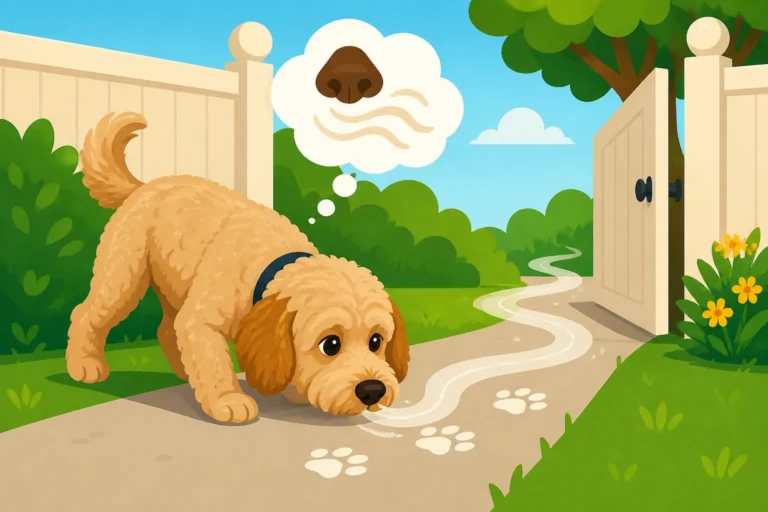
Cockapoos may inherit social, people-focused traits from either parent, alongside some of the Cocker Spaniel’s interest in scents, birds, and movement. That does not mean every Cockapoo will chase wildlife or follow a trail with its nose down, but it is sensible to build recall gradually and use a lead or long line in places where the dog could run after something. The Flushing Drive Still Alive in a Cockapoo describes how the Spaniel side can show up in a pet home.
Miniature Poodles are known for learning quickly, which can make training rewarding. Quick learning does not always mean effortless behavior, though. A clever dog can learn unwanted routines just as fast as useful ones, such as barking for attention or stealing a sock to start a game. Give the dog clear, consistent alternatives, and reward the behavior you want rather than relying on a label like “easy to train.”
Both dogs may be closely attached to their people. If you work away from home, plan ahead for gradual alone-time practice, appropriate enrichment, and a reliable care arrangement. A second dog is not a guaranteed fix for distress when left alone. The needs of a particular dog matter more than whether it is a Cockapoo or a Poodle. For Cockapoo-specific context, A Cockapoo That Cannot Be Left examines how attachment and alone time can affect daily life.
Exercise and mental enrichment
Neither dog is simply a lap dog because of its size. Most need a regular routine that includes walks, sniffing, play, and training. The right amount depends on age, health, fitness, and individual temperament. A young dog may need multiple short activities rather than one long, exhausting outing; an older dog may benefit from gentler movement and more rest.
Mental activity is useful for both. You might practice basic cues during a walk, hide treats around a room, or teach a dog to wait calmly while you prepare its meal. For a Cockapoo that is fascinated by outdoor smells, short scent games can offer a constructive outlet. Avoid assuming that tiring a dog out physically is the only answer: a dog that is overstimulated may become more frantic, not more settled.
Training should be reward-based and manageable. Keep sessions short, practice in low-distraction settings first, then gradually work around more tempting sights and sounds. If a dog stops responding outdoors, make the task easier rather than repeating a cue louder and louder. For Cockapoo owners working on attention outside, Building a Recall a Cockapoo Answers offers related guidance.
Grooming, shedding, and home care
The “low-shedding” expectation can make this comparison especially confusing. A Poodle coat is often associated with less loose hair around the home, but low shedding does not mean low maintenance. Cockapoo coats vary, and no coat description can promise that a dog will not shed or trigger allergies. Both dogs need a realistic grooming plan, including brushing at home and regular coat care.
Brushing and professional grooming
A Miniature Poodle’s curly coat can trap loose hair and develop tangles if it is not brushed through carefully. A Cockapoo may have a straighter, wavier, or curlier coat, and the grooming demands can differ accordingly. Mats often develop in places owners do not notice at first: behind the ears, under the collar, around the armpits, between the legs, and where a harness rubs.
A quick surface brush can leave knots close to the skin. Work in small sections, parting the coat so you can see what you are brushing, and check with a comb down to the skin. If you find tight mats, do not tug hard or cut close to the skin with scissors; a groomer can assess whether the coat can be safely detangled or needs a shorter clip. Line Brushing a Cockapoo and Why the Top Coat Lies explains why a fluffy-looking surface can hide tangles underneath.
Professional grooming is part of the care commitment for many dogs with Poodle-type coats. The precise schedule depends on coat length, texture, brushing routine, and the dog’s tolerance for handling. A short clip can be easier to maintain, but it does not remove the need for brushing, bathing, nail care, ear checks, and eye-area tidying. Start handling paws, ears, and the face gently while the dog is young, and make grooming a calm, familiar routine.
If you are assembling a basic grooming kit, retailers such as Chewy may help you compare brushes, combs, and dog shampoos. Choose tools suited to the dog’s coat and ask a groomer to demonstrate safe brushing technique; a tool that works well for one coat may be uncomfortable or ineffective on another. For coat-specific time and upkeep, The Three Cockapoo Coat Types and Their Upkeep gives useful context.
Shedding and allergy expectations
A Cockapoo is not guaranteed to shed less than a Miniature Poodle. Coat inheritance is complex, and puppies from the same litter may not have identical coats. A puppy’s appearance also may not predict the adult coat perfectly, particularly as the coat changes during growth. If shedding is a major concern, discuss parent coat characteristics and available genetic information with the breeder, but treat predictions as estimates. Whether Any Cockapoo Is Truly Non Shedding explains why “non-shedding” is not a promise to rely on.
Allergies are another reason to be cautious about promises. People may react to a dog’s dander, saliva, or other allergens, not simply to visible hair. Spending time with an individual dog may help you understand your own response, although a brief visit cannot guarantee how you will feel living together. A home with a serious allergy concern should speak with a qualified healthcare professional before bringing home either dog.
For ongoing care, Chewy can be one place to browse supplies such as combs, ear-cleaning products, and coat-care items, but product choice should follow the dog’s needs. Avoid putting products into the ear canal or using medicated shampoos without appropriate guidance. A dog that is persistently itchy, greasy, red, or smelly may need a veterinary assessment rather than another change in grooming product.
Choosing the right dog for your household
The better choice is not necessarily the dog with the more appealing coat or the most reassuring label. Think about how much uncertainty you can accept, how much grooming you can maintain, and what kind of daily interaction you can offer. A well-matched adult dog may suit your home better than a puppy chosen mainly for appearance.
When a Cockapoo may suit you
A Cockapoo may be a good fit if you are comfortable with mixed-breed variation and have time for training, companionship, exercise, and coat care. You may enjoy the possibility of a dog that combines traits from both Cocker Spaniels and Poodles, while accepting that you cannot select exactly which traits each puppy will inherit. Ask how the breeder assesses the parents’ health and temperament, and what support is offered if a coat or behavior turns out differently than expected.
Look at the puppy’s environment and the adult dogs’ behavior, not just photographs or a list of desirable adjectives. Ask what health checks were done and request to see relevant records. Registration alone does not prove that health testing has been completed; the actual records matter. The questions in What to Ask a Cockapoo Breeder Before Paying can help you prepare for a conversation.
A Cockapoo may be less suitable if you need a very predictable coat, adult size, or temperament, or if the family is not prepared for regular grooming. That does not mean Cockapoos are inherently difficult. It means the honest decision includes the possibility of more variation than you might expect from a particular breed variety.
When a Miniature Poodle may suit you
A Miniature Poodle may appeal if you want a more established breed type and value a dog that is often highly responsive to training. Poodles can thrive with people who enjoy teaching skills and providing mental challenges. Their intelligence is a pleasure when the household is consistent, but it can be demanding if the dog is left without enough interaction or structure.
The Poodle’s coat is not a wash-and-go coat. If you like the traditional look, be prepared for ongoing brushing and professional grooming; if you prefer a shorter style, discuss practical options with a groomer. Consider how the coat routine fits your schedule and budget rather than assuming a Poodle will require less work because it may shed less visibly.
Meet adult Miniature Poodles, if possible, and ask about the particular line and individual dog. Breed tendencies can guide your questions, but they cannot tell you exactly how one dog will behave in your home. The same principle applies to Cockapoos: spend time with the dog and consider the care it will need for years, not just the first few weeks.
A practical decision checklist
Before making a choice, answer these questions honestly:
- How important is predictability? A Miniature Poodle is generally the clearer choice if a defined breed type matters to you. A Cockapoo may suit you if you welcome variation.
- Can you commit to coat care? Both may need frequent brushing and professional grooming. If daily maintenance is unrealistic, talk with a groomer about a manageable clip before deciding.
- What kind of activity can you provide? Plan for walks, play, training, and mental enrichment with either dog.
- How much time will the dog spend alone? Prepare for gradual practice and dependable care, rather than expecting a breed choice to solve separation difficulties.
- Are allergies part of the decision? Do not rely on a breed or coat label as a guarantee. Consider the individual dog and seek appropriate health guidance.
- Have you checked health and background information? Ask for records and clear answers.
If you are still comparing the day-to-day details, Chewy can be useful for looking at basic supplies, but buying the right brush cannot compensate for an unrealistic grooming schedule. Choose the dog whose needs you can meet consistently, and make room for the individual personality that will not fit every breed description.
Disclaimer
This article is for general informational purposes only and does not constitute professional advice. Laws, prices and regulations vary by location and change over time. Consult a qualified professional for guidance on your specific situation.