Splitting a Mat Before It Tightens on a Cockapoo
Oh, the dreaded mat! If you’ve got a Cockapoo, you know that heartbreaking feeling when your fingers hit a solid, tangled clump of fur, especially in those sneaky spots. It's frustrating, it's uncomfortable for your beloved pup, and it can feel like a losing battle sometimes. But don't despair! This guide is all about how to identify those sneaky tangles early and tackle them before they become a matted nightmare, keeping your Cockapoo's beautiful coat healthy and your grooming sessions (mostly) stress-free.
Understanding the Cockapoo Coat and Why Mats Happen So Easily
Let's be honest, the Cockapoo's coat is what often draws us in – that soft, fluffy, sometimes curly, adorable look. But it's also the very thing that makes them such a challenge when it comes to grooming. It’s a unique blend, and understanding its composition is key to tackling mats effectively.
The Double Whammy: Poodle Curl Meets Cocker Softness
Think about the two parent breeds: the Poodle, famous for its dense, tightly curled, single coat that is famously low-shedding. Then you have the Cocker Spaniel, with its lush, silky, often wavy double coat that does shed, and also has fine, feathering hair. When you mix these two, you get a Cockapoo, and their coat can literally be anything in between – from nearly straight and shedding, to wavy, to a tight Poodle-like curl.
The issue arises because the shedding hair from the Cocker side gets trapped in the non-shedding, curly Poodle-like coat. Instead of falling out naturally, these loose hairs weave themselves into the existing curls, forming intricate knots and tangles. Add to this equation a dog that loves to play, roll in the grass, go for a swim, or simply snuggle on the couch, and you have a perfect storm for matting. Imagine your Cockapoo, fresh from a romp in the park, dashing through some overgrown bushes, then coming home for a big drink of water, getting their beard and chest wet, and then lying down for a nap. All that action and dampness can turn a few loose hairs into a tight knot in no time at all. This genetic blend, while giving us those adorable looks, really does put the onus on us as owners to be super vigilant with grooming.
The Dreaded "Coat Change" Phase
If you’re a new Cockapoo owner, you might be blissfully unaware of the "coat change" that is lurking around the corner. Typically, between 6 and 18 months of age, your Cockapoo's soft, fluffy puppy coat begins to transition into their more dense, adult coat. This isn't like a human teenager's voice breaking; it’s a complete overhaul of their hair texture and density.
During this period, the puppy fur is still trying to shed out, but it’s getting caught in the new, tougher adult coat that's growing in. This creates an incredibly dense and difficult-to-manage layer, where mats can form at an alarming rate, often seemingly overnight. Many owners feel completely blindsided by this phase, thinking they had their grooming routine down, only to find their brush suddenly isn’t getting through. It's a rite of passage for Cockapoo owners, and it requires even more diligent brushing and patience. Understanding A Cockapoo's Coat Through the Ten Month Change can really help prepare you for this tricky time.
Catching a Mat Before It Becomes a Monster
The secret to managing a Cockapoo's coat isn't just about how you de-mat; it’s about preventing those mats from taking hold in the first place, or catching them when they’re just tiny, manageable tangles. Early detection is your absolute superpower here.
The Daily Touch-and-Feel Method
While a formal brushing session might happen every couple of days, incorporating a quick daily "touch-and-feel" into your routine can make all the difference. This isn't about pulling out the whole grooming kit, but simply running your hands and fingers through your Cockapoo’s coat while you’re petting them, cuddling on the sofa, or giving them a belly rub. The goal is to feel for any small bumps or areas where the hair feels denser or stickier than usual.
Pay particular attention to the "blind spots" where mats love to hide and where your brush might not always reach effectively. These include behind the ears (a notorious spot!), under the armpits, around the collar area (where friction constantly rubs the fur), in the groin area, and at the base of the tail. If your Cockapoo wears a harness, check under all the straps regularly. These areas are prone to constant friction and often collect more loose hair, making them prime real estate for mat formation. A quick check of these zones daily can alert you to a small tangle before it transforms into a significant problem.
Identifying the Early Signs of a Tangle
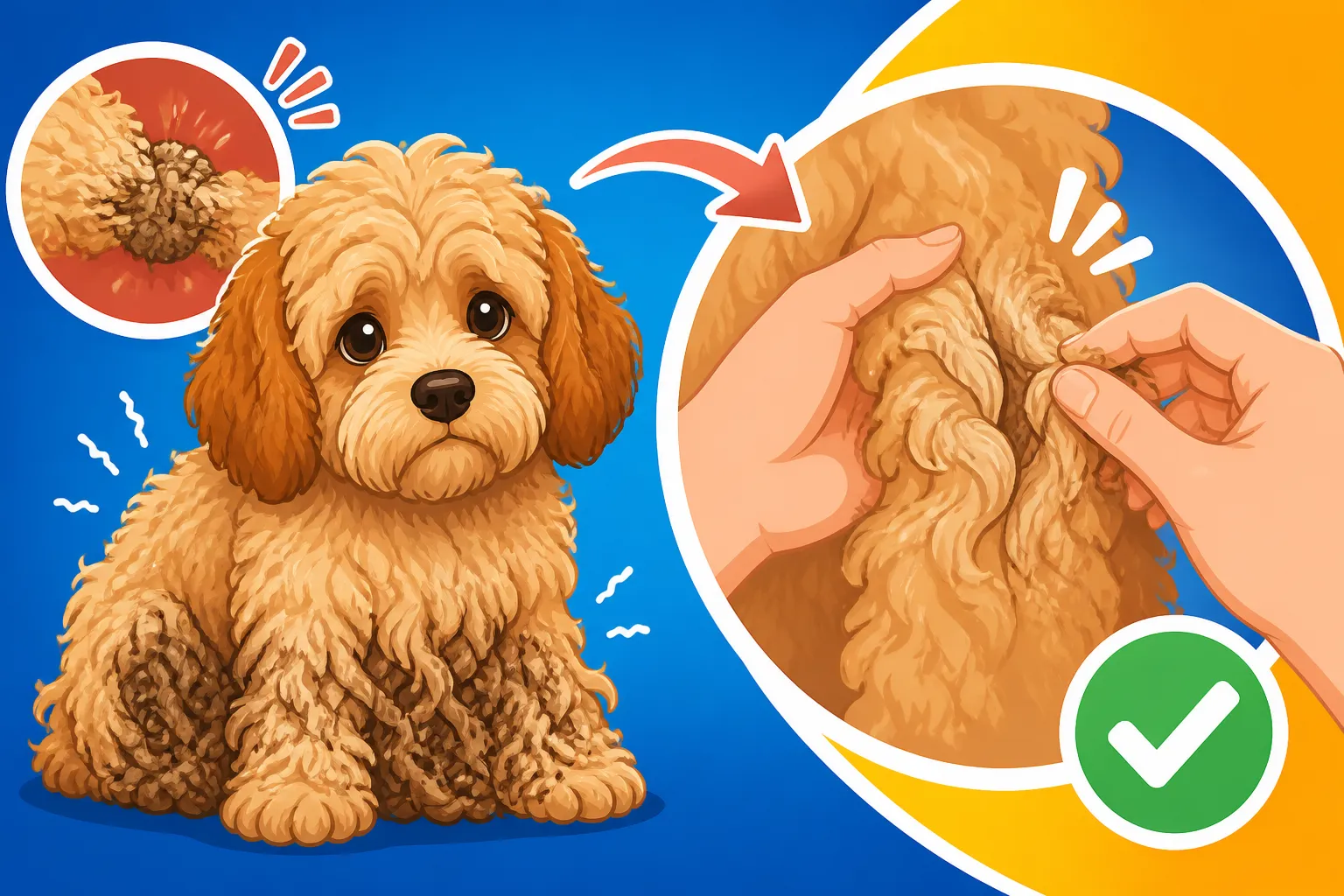
What does an early mat feel like? It's not the solid, unyielding brick of felt that a severe mat becomes. Instead, an early tangle might feel like a small knot, a slightly denser patch of hair, or a clump that doesn't feel as soft and flowing as the surrounding fur. When you try to gently separate the hair with your fingers, it might resist just a little. Visually, you might not even see it, especially with a curly or wavy coat, but you’ll feel it.
The moment you feel that little knot, that slightly sticky patch, or that resistant clump, that’s your cue to act. Don't put it off, even for a day. That tiny tangle can double in size and tightness overnight, especially if your Cockapoo gets wet or rolls around. Addressing it immediately, when it’s still small and loose, is far less painful and stressful for your dog (and for you!) than waiting until it becomes a large, tight mat that pulls on their skin. Knowing Where a Curly Cockapoo Mats First can give you a head start on these tricky areas.
Your Step-by-Step Guide to Splitting a Mat
So, you’ve found a small mat. Don't panic! The key is to approach it systematically and gently. Resisting the urge to rip or pull is crucial – that's when you cause pain and make your Cockapoo dread grooming.
Gathering Your Tools: No Cheating!
Before you even touch that mat, make sure you have the right arsenal of tools at your fingertips. Skimping on tools will only lead to frustration and potentially hurt your dog. Here’s what you’ll need:
- Slicker Brush: This is your everyday workhorse. It helps remove loose hair and gently detangle the outer layers. You can find a wide variety of effective slicker brushes on Amazon, often with different pin lengths and flexibility to suit your Cockapoo's specific coat type.
- Metal Comb: A good quality metal comb is indispensable. Look for one with both wide and fine teeth. The wide teeth are for initial detangling, while the fine teeth help ensure you’ve gotten everything out. The Comb That Finds Mats a Slicker Misses explains why this is so important.
- Detangling Spray: This is your secret weapon. A good detangling spray (look for brands popular on Chewy with good reviews for curly coats) helps lubricate the hair, making it easier to separate and reducing static. Never work on a dry mat!
- Mat Splitter or Dematting Tool: These tools have sharp, inwardly curved blades designed to slice through the mat without cutting the surrounding healthy hair. They are incredibly effective but must be used with extreme caution.
- Blunt-Nosed Scissors: These are for emergencies only and should never be used to cut into a mat directly. Their purpose is to carefully cut hair around a mat if absolutely necessary, or to cut tight bands of hair that might be constricting a limb. Always choose blunt-nosed to prevent accidental injury to the skin.
Having all these tools ready means you won't have to interrupt the process to hunt for something, which keeps your Cockapoo calmer.
The Gentle Approach: Working the Tangle
This is where patience and a light touch pay off. Remember, your goal is to split the mat, not rip it out.
Step 1: Prep and Position.
First things first, make sure your Cockapoo is as relaxed as possible. Choose a quiet spot where you both feel comfortable and there are no distractions. A grooming table can be helpful for positioning, but a comfy rug on the floor works just as well for smaller tangles. Offer praise and perhaps a favorite treat to set a positive tone. If your dog is squirming, take a break and try again later. For safety, always make sure you can see what you are doing.
Step 2: Spray and Separate.
Liberally spray the mat and the surrounding hair with your detangling spray. Don't be shy! Allow it to soak in for a minute or two. This lubricates the hair strands, making them more pliable. Now, using just your fingers, gently try to pull the mat apart, starting from the outermost edges and working your way inward. Imagine you're teasing apart cotton candy, not tearing a piece of paper. The goal here is to loosen the fibers as much as possible without pulling on the skin. You might get lucky and find it separates quite easily if it’s a new, small tangle. Always keep a hand at the base of the mat, holding the skin taut, to prevent pulling and hurting your dog.
Step 3: The Mat Splitter's Job.
If finger-separating isn’t doing the trick, or if the mat is a bit denser, it's time for the mat splitter. Hold the base of the mat firmly against your dog’s skin with one hand. With the other, carefully insert the mat splitter into the mat, parallel to the skin, with the blades facing away from your dog’s body. You are going to make small, controlled slicing motions down through the mat, creating channels or "splits" in the tangled mass. Do not saw back and forth. Think of it like slicing a loaf of bread, not hacking at a block of wood. Make a few parallel cuts through the mat, then rotate your wrist slightly and make a few perpendicular cuts, effectively cross-hatching the mat into smaller, more manageable sections. This tool is designed to cut the matted hair, not pull on it. For example, if little Charlie has a mat in his fluffy pantaloons (the long hair on his back legs), you'd spray it, gently pull it apart with your fingers, then carefully slice through it a few times with the splitter, always moving away from his body.
Step 4: Combing Through.
Once you’ve successfully split the mat into smaller sections, switch to your wide-toothed metal comb. Start at the very ends of the hair, gently working your way through the newly created channels. Take small sections at a time. Once the wide-toothed comb glides through, switch to the fine-toothed side to ensure all tangles are gone. Again, always start from the ends and work your way up to the skin, taking care not to pull. If you encounter resistance, stop and go back to gently teasing with your fingers or a few more careful strokes with the mat splitter.
Step 5: Reward and Reassurance.
Throughout this process, keep talking to your Cockapoo in a calm, soothing voice. Offer praise and small, high-value treats frequently. When you’re done, give them a big hug and a well-deserved reward. The more positive you make the experience, the less they’ll dread future grooming sessions.
Prevention: The Best Defense Against Mats
Dealing with mats after they've formed is reactive. True coat care for a Cockapoo is all about being proactive. Prevention is always better than cure, especially when it comes to the comfort of your furry friend.
Daily Brushing is Non-Negotiable
For a Cockapoo, especially one with a wavy or curly coat, daily brushing isn't just a suggestion; it's an absolute necessity. Even if your pup's coat looks fine on the surface, tangles are often lurking underneath, close to the skin. Missing a day can quickly turn a minor tangle into a tough mat.
The key to effective daily brushing is "line brushing." This technique ensures you're actually getting down to the skin, rather than just brushing over the top layer of hair (which often leaves mats to fester unseen beneath). To line brush, you essentially part the hair, hold the top layer up, and brush the hair underneath, starting from the roots and working outwards. Once that section is tangle-free, you drop a little more hair from the top layer and repeat the process. It's meticulous, but it's the only way to truly prevent mats in a Cockapoo. Use your slicker brush for the main detangling, then follow up with your metal comb to check your work and ensure you've reached the skin in every spot. This routine, though it might seem like a chore, can save you hours of de-matting struggles and keep your Cockapoo comfortable. For a deeper dive, check out Line Brushing a Cockapoo and Why the Top Coat Lies.
Strategic Grooming and Professional Help
Beyond your diligent daily efforts, regular professional grooming is an integral part of Cockapoo coat care. A skilled groomer has specialized tools, techniques, and an experienced eye to spot and handle potential matting issues you might miss. They can expertly trim areas prone to matting, such as armpits, paw pads, and sanitary areas, keeping the hair short enough to prevent tangles without altering the overall look of your dog.
Communicate openly with your groomer about your Cockapoo’s lifestyle and any specific problem areas you’ve noticed. They can offer advice on coat maintenance between appointments and suggest appropriate coat lengths. A good groomer can also guide you on how frequently your Cockapoo needs to be seen; generally, every 4-8 weeks is a good starting point, depending on coat type and length. Many owners find that a professional groomer is invaluable, especially if their Cockapoo has a tight, curly coat that requires significant time and effort to maintain. Consider asking about What a Teddy Bear Clip Looks Like on a Cockapoo if you want a practical, easy-to-maintain style that helps prevent mats. Keeping a consistent schedule with a professional means the job never gets too overwhelming for you or your dog, and they remain comfortable. Understanding The Hours a Wavy Cockapoo Takes Each Week or How Many Minutes a Curly Cockapoo Takes can help you appreciate the commitment required, whether it's by you or a professional.
When to Call in the Cavalry (or the Groomer)
Despite your best intentions and diligent efforts, sometimes mats happen. And sometimes, they get beyond what you can comfortably (and safely) handle at home. Knowing when to wave the white flag and call a professional groomer is not a sign of failure, but a sign of responsible pet ownership.
Recognizing When a Mat is Beyond Home Care
There are definite indicators that a mat has crossed the line from a home-manageable tangle to a professional-level problem. If a mat is rock-solid, incredibly tight, or feels like it's pulling on your dog's skin, it's probably too severe for you to tackle without causing pain or injury. Mats that are very large, cover significant portions of the body, or are deeply embedded close to the skin are also best left to the experts. Trying to force a brush or comb through such a mat can rip your dog's skin, cause bruising, or create intense discomfort and fear, making future grooming sessions a battle.
You might also notice your Cockapoo reacting negatively to your attempts to de-mat. Excessive squirming, yelping, trying to bite the comb, or even showing signs of aggression are clear signals that they are in pain or severe discomfort. It's vital to remember that a matted coat can lead to skin infections, hot spots, and even restrict movement, causing continuous discomfort for your dog. Sometimes, you hit a point where trying to de-mat at home causes more stress than it's worth, both for you and your beloved companion.
The Professional Touch: Dematting vs. Shaving
When you take a severely matted Cockapoo to a professional groomer, they will assess the situation and recommend the best course of action. Groomers have specialized tools and techniques that allow them to work on stubborn mats more safely and efficiently than you can at home. They can often split and comb out mats that seem impossible to an owner, using a gentle touch and expert knowledge.
However, sometimes the kindest and most humane option for a severely matted dog is a full body shave. This can be a tough conversation for owners, especially those who love their Cockapoo's fluffy look, but a matted coat essentially becomes a restrictive, uncomfortable pelt. Shaving removes all the painful tangles, allowing the skin underneath to breathe and heal, and giving the coat a fresh start. It also prevents further distress to your dog during a prolonged and painful de-matting process. A groomer might charge more for a severely matted dog because the process is labor-intensive, requires specialized equipment, and carries a higher risk of nicks and cuts due to the skin being pulled taut by the mats. The goal is always the comfort and health of your Cockapoo, and sometimes, that means embracing a shorter, simpler clip. Understanding Whether a Matted Cockapoo Has to Be Shaved can help prepare you for this possibility.
Dealing with your Cockapoo's magnificent, yet demanding, coat is truly a journey. It takes patience, the right tools, and a consistent routine. But by being vigilant, catching those tiny tangles early, and knowing when to call in the professionals, you can ensure your furry friend remains comfortable, healthy, and happy, sporting a beautiful coat that truly shines.
Disclaimer
This article is for general informational purposes only and does not constitute professional advice. Laws, prices and regulations vary by location and change over time. Consult a qualified professional for guidance on your specific situation.