A Cockapoo’s Coat at Eight Weeks
Bringing home an eight-week-old Cockapoo puppy is an absolutely joyous, overwhelming, and utterly adorable experience. Amidst all the puppy snuggles and house-training adventures, you might find yourself staring at that fluffy little creature and wondering, "What exactly will this magnificent coat turn into?" Many new owners quickly realize that the soft, downy fur of an eight-week-old puppy is often a far cry from the adult coat they've envisioned, leading to a lot of questions about shedding, grooming, and future appearance. This comprehensive guide will walk you through everything you need to know about your Cockapoo's coat at eight weeks, helping you understand its genetics, what to expect as it grows, and how to start its grooming journey right.
Understanding the Eight-Week Cockapoo Coat
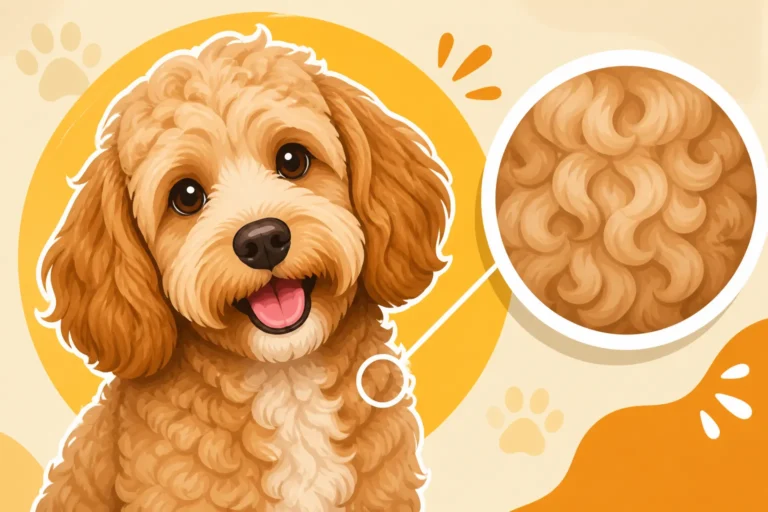
At eight weeks old, your Cockapoo puppy is still very much a baby, and its coat reflects that. It's usually incredibly soft, often fluffy, and might not give many definitive clues about its adult texture, curl, or even its exact color. This stage is a critical time for developing a bond and introducing positive grooming habits, but it's also a period of immense anticipation for what kind of coat will ultimately emerge.
The Genetic Lottery of the F1 Cockapoo Coat
If you have an F1 Cockapoo (a first-generation cross between a Cocker Spaniel and a Poodle), their coat at eight weeks is truly a roll of the genetic dice. Both parent breeds contribute significantly different coat types. The Cocker Spaniel typically has a dense, silky, shedding coat, while the Poodle is known for its non-shedding, tightly curled fur. The combination of these genes in an F1 puppy means there's a wide spectrum of possibilities. You might see anything from a straighter, more Spaniel-like coat that will shed, to a wavy coat, or even a tight curl that resembles the Poodle.
This genetic variability is part of the charm and challenge of the F1 Cockapoo. Breeders often use terms like "shaggy," "wavy," or "fluffy" to describe these early coats, but the true nature won't be fully evident until later. It's why trying to predict the exact adult coat can feel like guesswork, even for experienced breeders. Understanding why an F1 Cockapoo's coat is a coin flip helps manage expectations, especially regarding shedding. Even if a puppy looks fluffy and non-shedding at eight weeks, the underlying genetics might still lean towards more shedding in adulthood if it didn't inherit the crucial "furnishings" gene from both parents.
What Furnishings Look Like at Eight Weeks
Furnishings are perhaps the most important visual marker at eight weeks when trying to gauge a Cockapoo's future coat. Furnishings refer to the longer hair on the face (beard, mustache, eyebrows) and legs, which is characteristic of Poodles and gives Doodles their signature "teddy bear" look. A Cockapoo needs at least one copy of the furnishings gene (RSPO2) to have these distinctive features and to be considered low-shedding. Without furnishings, a Cockapoo will have a "flat" or "improper" coat, resembling a Spaniel's face, and will shed.
At eight weeks, if a puppy has furnishings, you'll start to see a difference in the hair around its muzzle and eyes. Instead of short, smooth Spaniel-like facial hair, you'll notice longer, wispy hairs forming the beginnings of a beard and eyebrows. This can be subtle, especially on a very young puppy, but it's often discernible. The hair on their muzzle might appear slightly scruffier or longer than the hair on their forehead or body. This is a crucial indicator, as The Furnishings Gene That Decides a Cockapoo's Face largely determines if your dog will be low-shedding. A puppy without these furnishings at eight weeks is almost certainly destined for an improper coat, meaning more shedding than the typical "doodle" expectation.
Identifying Early Curl Patterns in a Puppy
While the adult curl won't be fully developed, you can often get a hint of what's to come even at eight weeks. The "curl gene" (KRT71) determines how curly a Cockapoo's coat will be.
Here's a basic breakdown of what you might observe:
- Straight Coat: Puppies with a straight coat at eight weeks will have very little to no wave or curl in their fur. Their coat might lay flat against their body, similar to a Cocker Spaniel puppy. This usually indicates they will have a straighter adult coat, which will shed more.
- Wavy Coat: A wavy coat at this age might show gentle bends or ripples, especially when the coat is slightly longer. It won't be tight curls, but you'll notice it's not perfectly straight either. This often matures into a beautiful, flowing wavy coat that is low to moderate shedding.
- Curly Coat: Puppies destined for a truly curly adult coat might already show very subtle, tighter kinks or coils, particularly on their ears, tail, or around their neck. The hair won't lie completely flat. While not yet the dense Poodle curl, these early signs are often present.
It's important to remember that even with these early observations, the coat can change dramatically during the "coat change" phase around 6-18 months. However, the presence or absence of curl at eight weeks is one of the few early indicators we have. Understanding What KRT71 Says About a Cockapoo's Curl can provide more genetic insight, but at this visual stage, it's about observation.
Predicting the Adult Coat: What Eight Weeks Can (and Can't) Tell You
While we can look for clues, it's vital to maintain realistic expectations about predicting a Cockapoo's adult coat at just eight weeks. The puppy coat is a temporary phase, and significant transformations are ahead.
The Limitations of Puppy Coat Assessment
One of the biggest misconceptions new Cockapoo owners have is that the eight-week puppy coat is a reliable predictor of the adult coat. It's simply not. That incredibly soft, often fluffy "puppy fluff" is distinct from the coarser, denser adult coat that will eventually replace it. What appears low-shedding and perfectly wavy at eight weeks can become a heavily shedding, straighter coat, or a tightly curled, high-maintenance coat that mats easily.
Think of it like human baby hair; it often bears little resemblance to adult hair in terms of texture, thickness, or even color. The same principle applies to puppies. The underlying genetic information is there, of course, but the physical manifestation of those genes is still in its infancy. A fluffy puppy might fool you into thinking it will be low-maintenance, but without the proper genetic background (specifically furnishings), that fluff will transition into a shedding coat. This is also why Whether Shedding Can Be Seen in a Cockapoo Puppy can be misleading; very young puppies shed minimally simply because their hair growth cycle is different, not necessarily because they possess the non-shedding genes.
The Role of the Furnishings Gene (RSPO2)
As mentioned, the furnishings gene (RSPO2) is paramount in determining whether a Cockapoo will have the characteristic "doodle" look and low-shedding qualities. At eight weeks, a breeder who has conducted genetic testing on the parents can definitively tell you the puppy's likely furnishings status.
Puppies inherit two copies of every gene, one from each parent. For furnishings, the alleles are F (furnished) and IC (improper coat/unfurnished).
- FF (Homozygous Furnished): If a puppy inherits two F genes (one from each parent), it will be fully furnished and virtually guaranteed to be low-shedding. You'll see clear facial furnishings at eight weeks.
- Ff (Heterozygous Furnished/Carrier): If a puppy inherits one F and one IC gene, it will still be furnished and low-shedding, but it carries the improper coat gene. These puppies will also show furnishings at eight weeks, though sometimes slightly less pronounced than an FF dog.
- ic/ic (Improper Coat/Unfurnished): If a puppy inherits two IC genes (one from each parent), it will be unfurnished, meaning it will have a smooth face and shed like a Cocker Spaniel. At eight weeks, these puppies will lack the distinctive facial hair of a furnished Cockapoo.
Without a DNA test, it's harder to be certain, but the visual cues at eight weeks are the best non-test indicators. If a puppy has a smooth, short face, it's very likely to be ic/ic, regardless of how fluffy its body might seem.
How the Curl Gene (KRT71) Expresses Early
Similar to furnishings, the curl gene (KRT71) also has different alleles that dictate the degree of curl. Again, genetic testing of the parents can give a breeder a very accurate prediction of a puppy's adult curl type.
The KRT71 gene comes in various forms, usually C (curly) and T (straight or wavy).
- C/C (Homozygous Curly): Puppies inheriting two C genes will almost certainly have a very tight, Poodle-like curl in adulthood. At eight weeks, you might see noticeable kinks or a denser, more textured coat.
- C/T (Heterozygous Wavy/Curly): These puppies typically develop a wavy to loose-curly adult coat. At eight weeks, they might have distinct waves or a slightly dishevelled appearance that isn't completely straight. This is a common and often desired coat type for its balance of curl and manageability.
- T/T (Homozygous Straight): Puppies with two T genes will have a straight or very slightly wavy coat, resembling a Spaniel's more. At eight weeks, their coat will appear flat and smooth.
It’s important to remember that curl can tighten significantly during the infamous "coat change" around 10-18 months. What looks wavy at eight weeks could easily become a much curlier coat, requiring more dedicated grooming. This is part of the challenge in predicting The Curl Gene and Where a Cockapoo's Coat Lands with absolute certainty just from visual inspection in a young puppy.
Common Coat Types Seen in Eight-Week Cockapoos
When you're looking at a litter of eight-week-old Cockapoos, you might notice a surprising variety even among siblings. This is a testament to the diverse genetic contributions of the parent breeds.
The "Puppy Fluff" and Its Deception
Almost all eight-week-old Cockapoo puppies will have what we lovingly call "puppy fluff." This is a soft, often fine, and relatively easy-to-manage coat that feels like cotton candy. It’s what makes them irresistibly cuddly and doesn’t typically mat quickly, nor does it shed heavily at this age. However, this puppy fluff is highly deceptive. It gives little indication of the adult coat's texture, density, or shedding potential.
Many new owners are taken by surprise when this beautiful, low-maintenance fluff begins to "blow" around 6-10 months, replaced by the adult coat. This transition, often referred to as The Coat Change That Ambushes a Cockapoo Owner at Ten Months, can lead to intense matting and a much more demanding grooming routine. If you choose a puppy based solely on its eight-week fluff, without considering genetics or parent coats, you might be in for a shock. It's crucial to look beyond the immediate cuteness and ask the breeder about the parents' coat types and any genetic testing performed.
Straight-Coated Puppies: An Early Indication
At eight weeks, a straight-coated Cockapoo puppy will usually be quite obvious. Their fur will lie flat, with minimal to no wave, and they often have a smoother, shorter facial hair, characteristic of an unfurnished dog. These puppies tend to look more like a traditional Cocker Spaniel than the Poodle.
While these coats might be easier to manage in terms of matting compared to curly coats, they are also the most likely to shed significantly. Owners seeking a low-shedding dog for allergy reasons should be wary of straight-coated puppies at this age, even if they have some length to their body hair. Without furnishings, shedding is inevitable. This coat type might not require as much brushing to prevent mats, but it will certainly require more cleanup of loose hair around the home. These puppies still need grooming, but it will be a different routine, focusing more on deshedding tools rather than tangle prevention.
Wavy and Curly Coats: Subtle Differences
Distinguishing between a wavy and a truly curly coat at eight weeks can be tricky. Both will show some degree of texture that isn't straight, but the intensity varies.
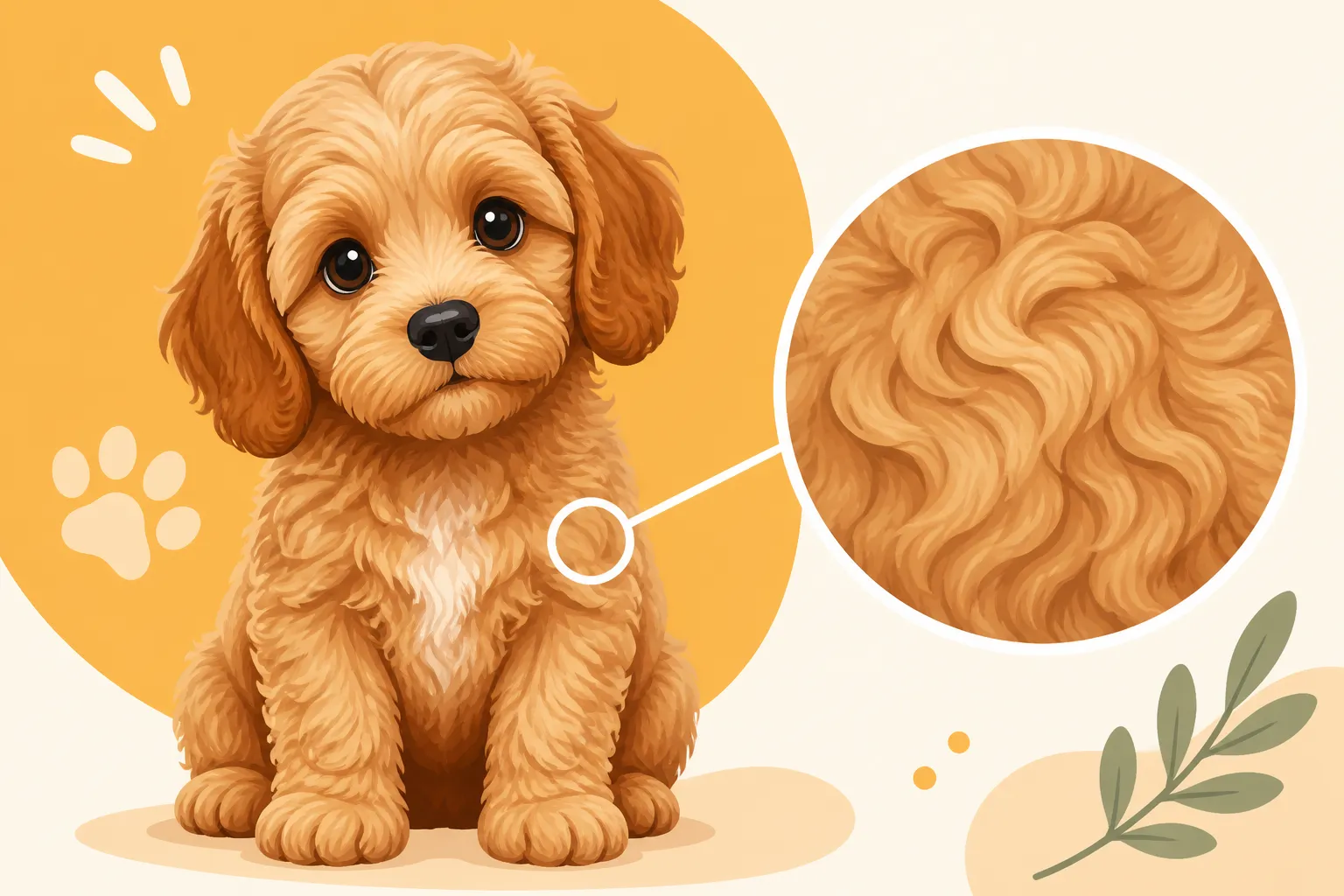
- Wavy Coats: At eight weeks, a wavy puppy will have noticeable gentle ripples or S-shaped patterns in their fur. This wave might be more apparent on the back, ears, or tail. Their hair won't lie completely flat, and you'll often see individual strands twisting and turning. This type of coat is often considered the "ideal" Cockapoo coat, striking a balance between the Poodle's curl and the Spaniel's softness. It's typically low-shedding, provided furnishings are present, and manageable with regular brushing.
- Curly Coats: A curly puppy, even at eight weeks, might show tighter, more defined kinks or spirals. Their coat might appear denser and stand away from the body slightly more than a wavy coat. You might notice the hair around their ears and muzzle starting to form tighter ringlets. These puppies are usually destined for a coat that strongly resembles a Poodle's, meaning it will be very low-shedding but will require intense, daily grooming to prevent matting, especially once the adult coat comes in.
Regardless of the subtle differences at eight weeks, both wavy and curly coats signal the presence of furnishings and a likelihood of being low-shedding. However, both will demand consistent grooming from a young age to prepare for the challenges of The Three Cockapoo Coat Types and Their Upkeep in adulthood.
Grooming Considerations for the Young Cockapoo Puppy
No matter what coat type your Cockapoo puppy has at eight weeks, starting a positive grooming routine early is crucial. This foundational period will shape their attitude toward being brushed, bathed, and handled for veterinary or professional grooming appointments throughout their life.
Gentle Introduction to Brushing and Handling
At eight weeks, your puppy’s coat is soft and usually easy to comb. This is not the time to tackle serious mats, but rather to teach your puppy that grooming is a pleasant, calm experience. Start with very short, positive sessions. Use a soft slicker brush or a wide-toothed comb. Let your puppy sniff the tools, then offer a high-value treat. Gently brush for a minute or two, focusing on easy-to-reach areas like their back or chest. Make sure to praise them enthusiastically and reward them frequently.
The goal is to create a positive association. Avoid holding them down or forcing them. If they squirm, take a break and try again later. Gradually increase the duration and touch more sensitive areas like their paws, ears, and belly. These areas are prone to matting and are often difficult for dogs to tolerate being handled. Regularly inspecting and gently touching their paws will also help them be more accepting of nail trims later on. Consistency is key, even if it's just for five minutes a day. Establishing this routine now will save you countless headaches, tears, and vet bills later on when the adult coat comes in.
First Grooming Experiences: Setting the Stage
Beyond daily brushing, your eight-week-old Cockapoo puppy will benefit immensely from early exposure to other grooming activities. This includes gentle baths, ear cleaning, and very light trimming if needed.
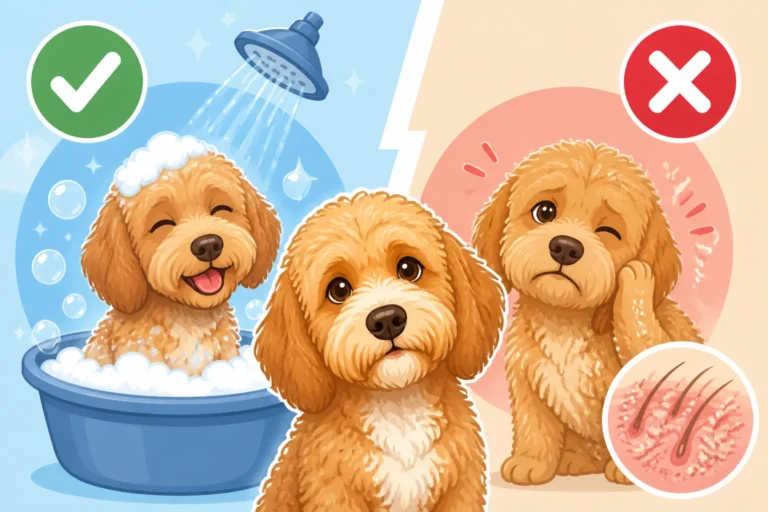
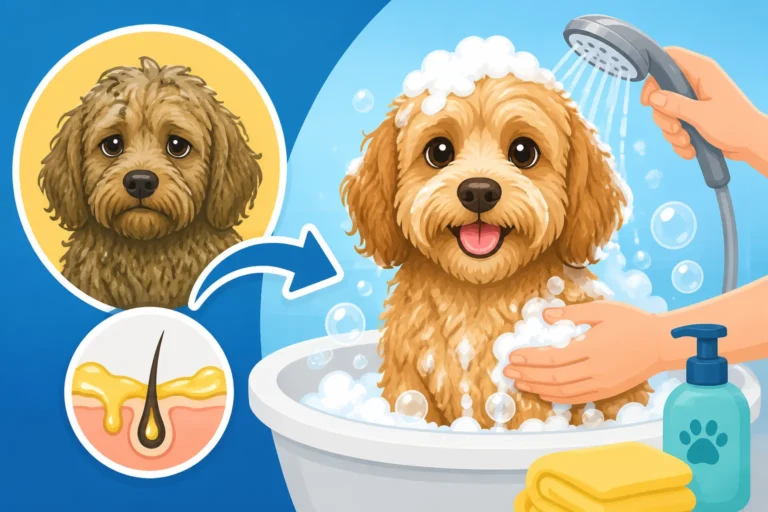
- Bathing: A puppy's first bath should be calm and warm. Use a puppy-specific shampoo and conditioner to avoid irritating their delicate skin. Keep the water shallow and speak in soothing tones. Make it fun, not a chore. Towel dry gently, and if you plan to use a dryer in the future, introduce the sound of a low-setting dryer from a distance, rewarding your puppy for calm behavior.
- Ear Cleaning: Cockapoos, with their floppy ears, are prone to ear infections. Start gently wiping the outer ear canal with a vet-approved cleaner and a cotton ball. Again, make it a positive experience with treats. This early desensitization is vital for future ear care.
- Trimming: While a full professional groom isn't needed at eight weeks, a very light trim around the eyes might be necessary if hair is obscuring their vision. Use blunt-nosed scissors specifically designed for pets, and always be extremely cautious. Many owners opt to wait until the puppy is older for professional trimming, but at least getting them used to the presence of scissors or clippers (even if not actively trimming) is beneficial. For professional grooming, it's a good idea to schedule When a Cockapoo's First Groom Should Happen around 12-16 weeks.
Introducing these elements gradually and positively ensures that when it's time for their first professional groom, they aren't overwhelmed or fearful.
Products for Puppy Coat Care
Choosing the right tools and products for your eight-week-old Cockapoo's coat can make a big difference in establishing a good grooming routine. You don't need a huge arsenal, but a few key items are essential.
Here’s a simple table of recommended puppy grooming tools:
| Tool/Product | Purpose | Why It's Important for an 8-Week Puppy |
|---|---|---|
| Soft Slicker Brush | Gently removes loose hair, prevents tangles, and stimulates skin. | Ideal for sensitive puppy skin, introduces the brushing sensation positively, and prevents early matting. |
| Wide-Toothed Comb | Untangles small knots, checks for mats the slicker brush might miss, especially around ears and tail. | Helps separate fur gently, crucial for early tangle detection without pulling. |
| Puppy Shampoo | Mild, tear-free formula designed for delicate puppy skin and coats. | Prevents skin irritation and dry skin, making bath time more comfortable and less stressful. |
| Puppy Conditioner | Adds moisture, detangles, and keeps the coat soft. | Makes brushing easier after baths, keeps coat healthy and reduces static. |
| Nail Clippers | Trimming sharp puppy nails to prevent scratches and discomfort. | Starts nail care early, desensitizes paws, and helps prevent future fear of nail trims. Choose a size appropriate for small puppy nails. |
| Ear Cleaner | Gentle, vet-approved solution for cleaning outer ear canals. | Prevents ear infections common in floppy-eared breeds and introduces ear handling positively. |
| High-Value Treats | Rewards for calm behavior during grooming sessions. | Essential for positive reinforcement, building a happy association with grooming. |
You can find most of these essential puppy grooming supplies at pet stores or online retailers like Chewy or Amazon. Look for products specifically labeled "for puppies" as they are typically gentler. Investing in quality tools now will serve you well as your Cockapoo grows and their coat becomes more demanding.
Managing Expectations for the Cockapoo Coat Journey
Understanding that your Cockapoo's coat is a dynamic entity, evolving beyond the eight-week mark, is key to being a prepared and happy owner. The journey from puppy fluff to adult coat can be surprising!
The Inevitable Coat Change
As mentioned, the "coat change" is perhaps the most significant event in your Cockapoo's coat journey. It typically begins around 6-10 months of age and can last until 18 months or even two years. During this period, the soft puppy fur is gradually replaced by the denser, coarser adult coat. This transition is often referred to as "blowing coat."
The main challenge during the coat change is extreme matting. The old puppy coat gets tangled with the new adult coat trying to grow in, creating a dense, felt-like mess that can be painful for your dog if not managed. Daily, thorough line brushing becomes absolutely essential. Line Brushing a Cockapoo and Why the Top Coat Lies is a technique you'll definitely want to master during this phase, as it ensures you're reaching all the way down to the skin to prevent mats. Many owners find themselves overwhelmed during this period and resort to having their Cockapoo shaved down completely, which is perfectly acceptable if it's for the dog's comfort. Understanding that this phase is temporary but intense can help you prepare mentally and practically.
Preparing for the Adolescent Coat
After the initial "blowing coat" phase, your Cockapoo will settle into their adult coat, which can still vary widely. Some will maintain a relatively loose wave, while others will develop a much tighter curl. The adolescent coat is often the first true indicator of what kind of long-term grooming commitment you're in for.
If your Cockapoo ends up with a wavy coat, like many do, you'll still need consistent brushing several times a week, especially in areas prone to friction like behind the ears, armpits, and groin. For those with a curly coat, daily brushing is almost non-negotiable to prevent mats from forming. The texture of the adult coat is also typically coarser and denser than the puppy fluff, making it more challenging to brush through if mats are allowed to set in. Regular professional grooming appointments, usually every 6-8 weeks, become a cornerstone of maintaining a healthy, comfortable coat. This is where brands like Ollie might come into play, as good nutrition can also influence coat health, though the primary battle is always mechanical brushing.
Long-Term Coat Care: Beyond Puppyhood
Maintaining a Cockapoo's coat is a lifelong commitment, and it goes far beyond the initial eight-week cuteness. The grooming requirements will remain consistent throughout their adult life, adapting slightly as they age or if specific issues arise. Regular bathing with appropriate shampoos and conditioners, consistent brushing, and professional trims are all part of the package.
As your Cockapoo ages, their coat might change again. Senior dogs can sometimes experience thinning or changes in coat texture, which might alter their grooming needs. For instance, an older dog might have a more delicate skin that requires gentler brushing or specific shampoos. Their tolerance for long grooming sessions might decrease, so breaking up the routine into shorter periods could be beneficial. The key is vigilance and adapting your routine to your individual dog's needs. Don't underestimate the time and effort required; A Cockapoo's Coat at Eighteen Months is a far cry from its eight-week counterpart, and the grooming demands only increase. It’s an investment of time, but one that ensures your Cockapoo remains comfortable, healthy, and looking their best.
Disclaimer
This article is for general informational purposes only and does not constitute professional advice. Laws, prices and regulations vary by location and change over time. Consult a qualified professional for guidance on your specific situation.