Whether Multigen Breeding Is Making a Cockapoo Breed
It's completely understandable to wonder if your beloved Cockapoo, with all their charm and unique traits, is truly on the path to becoming a recognized breed. After all, when you bring one of these wonderful dogs into your home, you're not just getting a pet; you're often getting a whole lot of personality and a good bit of unpredictability that can make you question what exactly constitutes a "breed." This guide will explore the fascinating journey of the Cockapoo from its hybrid origins to the ongoing efforts of multi-generational breeders to establish consistency and the characteristics that define a true breed.
The Journey from Hybrid to Established Breed
When we talk about the Cockapoo, it’s easy to get lost in the different generations and terms like F1 or F1b. These aren't just arbitrary labels; they represent specific steps in a journey that, for some, aims to solidify the Cockapoo's place as a distinct breed rather than simply a hybrid. It's a complex process, one that has been decades in the making.
Understanding Hybrid Vigor and First Generations (F1, F1b)
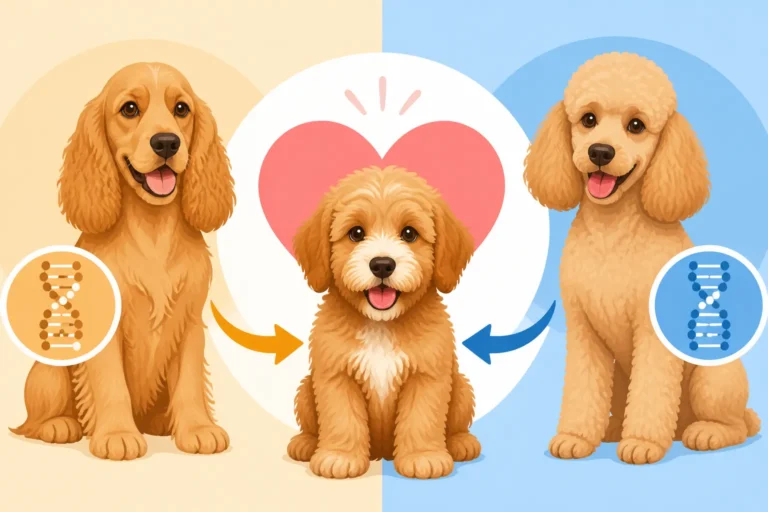
The Cockapoo, as many of us know and love them, started as what's often called a "designer dog" or a first-generation (F1) cross between a purebred Cocker Spaniel and a purebred Poodle. The appeal of this initial cross was immediate: combining the sweet, biddable nature of the Cocker with the intelligence and low-shedding coat of the Poodle. This mixing of two distinct genetic pools often results in something called "hybrid vigor," which is the idea that the offspring of two unrelated purebred parents are often healthier and more robust than either parent line due to increased genetic diversity. It’s like hitting a biological refresh button, potentially sidestepping some of the genetic issues that can become concentrated in highly inbred purebred lines.
However, the F1 generation is also famously unpredictable. You might get a puppy that leans heavily towards the Cocker in appearance and temperament, or one that's almost entirely Poodle-like, or a delightful mix. This variability is part of their charm for many, but it's also the exact opposite of what breed development strives for. The F1b generation, where an F1 Cockapoo is bred back to a purebred Poodle (or sometimes a Cocker), was an early attempt to introduce more consistency, particularly regarding the low-shedding coat, which is often a significant draw for families with allergies. It’s an incremental step, but one that still operates within the framework of crossing established breeds rather than breeding solely within the Cockapoo line itself.
The Concept of a "True Breeding" Dog
So, what does it actually mean for a dog to "breed true" or to be considered an established breed? It boils down to predictability. When you breed two dogs of the same recognized breed, you have a very high expectation that their offspring will share a consistent set of physical characteristics (like size, coat type, ear set, tail carriage) and temperament traits. Think about a Labrador Retriever: you know generally what a Labrador puppy will look like, how big it will get, and what its typical personality will be, whether it’s a playful retriever or a calm family companion. That's because generations of selective breeding have fixed those traits within the breed's gene pool.
For a true breed, these characteristics are enshrined in a "breed standard," a detailed written description that outlines the ideal dog of that breed. This standard is what breeders strive for and what judges use in conformation shows. It sets a bar for appearance, gait, temperament, and sometimes even specific health clearances. The ability to consistently produce puppies that fit this standard, generation after generation, without reverting to the traits of the foundation breeds, is the hallmark of a true breeding dog. Without this consistency, it's hard to define what a "Cockapoo" truly is beyond a cross.
Why Multi-Generational Breeding Emerged for Cockapoos
The very unpredictability of the F1 and F1b generations, while charming, became a driving force for breeders who envisioned more for the Cockapoo. If every litter was a toss-up, how could they ever guarantee a certain look, temperament, or even coat type? This is where multi-generational (multi-gen) breeding entered the scene. Instead of breeding a Cockapoo back to a Poodle or Cocker, multi-gen breeding involves pairing two Cockapoos together (F2, F3, etc., depending on how many generations removed from the original purebred parents they are).
The goal of this approach is clear: to stabilize the traits that make a Cockapoo desirable. Breeders started identifying Cockapoos with the ideal combination of coat, size, and temperament—the wavy, low-shedding coat, the friendly outgoing personality, the balanced build—and then breeding those Cockapoos together. It's a long-term project of careful selection, aiming to eventually create a stable genetic blueprint where a Cockapoo bred to another Cockapoo will consistently produce puppies that look and act like Cockapoos, rather than a mix of Cocker and Poodle features. This selective breeding is the fundamental step in the process of moving from a crossbreed to a distinct breed.
What Defines a Breed? More Than Just Cute Looks
The cuteness factor of a Cockapoo is undeniable, but true breed status goes far beyond an adorable face. It delves into a realm of predictability and consistency that impacts everything from a dog's health to its behavior. Many passionate Cockapoo enthusiasts and dedicated breeders are working tirelessly towards these goals, understanding that a strong foundation is crucial.
Consistency in Appearance and Temperament
One of the most significant challenges and goals for multi-generational Cockapoo breeders is achieving consistency in appearance. Imagine walking into a room full of German Shepherds, or Golden Retrievers—you immediately recognize them as their breed. They might have slight variations, but the overall "type" is unmistakable. For Cockapoos, particularly in earlier generations, this consistency simply isn't there. You can see F1 Cockapoos that look almost identical to a Cocker Spaniel, and others that strongly favor the Poodle. Multi-gen breeding aims to iron out these variations, striving for a distinct "Cockapoo look" that is recognizable across litters and bloodlines. This means consistently producing dogs with the desired muzzle length, ear set, tail carriage, and those famous "furnishings" that give them their teddy-bear appearance. The Furnishings Gene That Decides a Cockapoo's Face is a perfect example of a genetic trait breeders are trying to fix.
But it's not just about looks; temperament is equally vital. We adore Cockapoos for their playful, affectionate, and intelligent personalities. However, like physical traits, temperament can also vary wildly in early generations, reflecting more of one parent breed than the other. Some might inherit a strong "flushing drive" from the Cocker side, making them eager to chase birds and small game, while others might exhibit the Poodle's more reserved intellect. A true breed has a characteristic temperament that owners can generally expect. Breeders are selectively pairing Cockapoos that consistently display the balanced, friendly, and adaptable nature that has become synonymous with the "ideal" Cockapoo, ensuring that future generations maintain these beloved personality traits. This consistency is essential for families looking for a predictable companion.
Predictable Health and Genetic Screening
Health is a cornerstone of responsible breeding and a critical factor in breed establishment. Purebred dogs, unfortunately, often carry a higher risk for certain inherited diseases due to limited gene pools and historical breeding practices. The initial appeal of the Cockapoo, with its hybrid vigor, was partly the hope of sidestepping some of these issues. However, as Cockapoos are bred multi-generationally, the focus shifts to understanding and managing the specific health risks that might emerge within Cockapoo lines themselves. Both parent breeds, the Cocker Spaniel and the Poodle, come with their own predispositions to certain conditions, such as eye diseases like Progressive Retinal Atrophy (PRA) or orthopedic issues like patellar luxation. Progressive Retinal Atrophy in a Cockapoo is one example of a serious condition that breeders must screen for.
Responsible multi-gen breeders are diligently performing genetic health screenings on their breeding dogs to identify carriers of these diseases. The goal is to ensure that, as they develop a distinct Cockapoo gene pool, they are simultaneously creating a healthy one. This means not just testing for known issues from the Cocker and Poodle lines, but also monitoring for any new health concerns that might become prevalent within the developing Cockapoo population. For potential owners, this commitment to health screening offers a greater chance of getting a healthy puppy, minimizing the heartbreak and financial strain that can come with inherited conditions. You can often find products for dogs' health on sites like Chewy, which makes it easier to manage care if issues do arise, but prevention through careful breeding is always the first line of defense.
The Role of a Breed Standard
The existence of a formal breed standard is one of the clearest indicators that a dog has moved beyond being a hybrid and is being recognized as a breed in its own right. A breed standard is essentially the definitive blueprint for the ideal dog of that breed. It's an exhaustive written document that describes in meticulous detail every aspect of the dog: size, proportions, head shape, eye color, ear placement, coat texture, acceptable colors, tail set, movement (gait), and even temperament. What a Cockapoo Standard Actually Describes explains this in more detail.
For the Cockapoo, there are indeed breed clubs, such as the Cockapoo Club of America and the American Cockapoo Club, that have drafted their own standards. Two Clubs and Two Definitions of a Cockapoo points to the challenge here – even among proponents, there isn't universal agreement. These standards represent a collective vision of what the Cockapoo should be, guiding breeders in their selection process and providing a framework for judging dogs in future conformation events, should the breed gain wider recognition. These documents are crucial because they provide a common goal. They help to ensure that breeders aren't just breeding for personal preference but are working towards a unified ideal, which is essential for establishing genetic consistency across the entire population. Without a universally accepted standard, the term "Cockapoo" remains open to broad interpretation, making it difficult to solidify its identity as a true breed.
The Mechanics of Multi-Generational Cockapoo Breeding
Understanding how multi-generational breeding actually works is key to grasping whether the Cockapoo is truly on its way to becoming a recognized breed. It's a far more involved process than simply crossing two different purebreds. It requires a dedicated vision, careful planning, and an understanding of genetics to achieve consistency.
Breeding F2, F3, and Beyond for Consistency
The journey from an F1 hybrid to a multi-generational breed begins with the F2 generation, which is the result of breeding two F1 Cockapoos together. This is where the genetic "dice roll" can get even more interesting, as the recessive traits from both original purebred lines have a chance to manifest. You might see more variety in an F2 litter than even in an F1, which can be surprising to new breeders. This is why careful selection becomes paramount. Breeders observe their F1 dogs closely, noting which ones display the most desirable Cockapoo characteristics – the right temperament, the preferred coat type, the balanced structure, and good health.
From there, F2 Cockapoos are bred to other F2s to produce F3s, and so on. Each generation (F3, F4, F5, and beyond) represents an opportunity for breeders to select for specific traits and gradually "fix" them within the emerging Cockapoo population. It’s about narrowing the genetic variability that is so prevalent in the first few generations. Think of it like a funnel: with each generation, responsible breeders are attempting to funnel down the wide array of potential traits into a more predictable and uniform set. This takes time, patience, and a deep understanding of the individual dogs being used in a breeding program. The goal is that eventually, after many generations, two Cockapoos bred together will produce offspring that consistently exhibit the established "Cockapoo" phenotype and genotype.
The Selective Process for Desired Traits
Selective breeding is the engine that drives breed development, and for multi-generational Cockapoos, this process is rigorous and intentional. It involves a discerning eye and a commitment to improvement with each passing litter. Breeders aren't just looking for "cute" puppies; they're evaluating each dog against the nascent breed standard and the vision for the future Cockapoo. This means carefully assessing everything from coat texture and shedding levels—many are specifically working towards a consistently non-shedding or low-shedding coat which often comes down to specific genes. The Curl Gene and Where a Cockapoo's Coat Lands and What an Improper Coated Cockapoo Looks Like highlight these important coat considerations.
Beyond coat, selection also focuses on structural soundness. Are the legs straight and well-angulated? Is the topline level? Do they move freely and gracefully? Temperament is rigorously assessed too: are they friendly and outgoing, but not overly boisterous? Are they intelligent and eager to please? Are they good with children and other animals? Breeders will track these traits through pedigrees, noting which pairings produce the most consistent and desirable results. It’s a bit like putting together a puzzle, trying to find the right genetic pieces to create the most complete and beautiful picture, while always keeping health at the forefront. This level of intentionality is what separates a truly dedicated multi-gen breeder from someone simply breeding F1 or F1b dogs.
Overcoming Genetic Variability in Doodle Lines
The inherent genetic variability is both a blessing and a curse for Doodle breeds like the Cockapoo. On one hand, it's the source of hybrid vigor, potentially reducing the incidence of breed-specific diseases seen in highly inbred purebred lines. On the other hand, it makes the task of establishing a consistent breed type incredibly challenging. Early generation Cockapoos, particularly F1s, are a genetic lottery. You could have puppies from the same litter looking dramatically different, some with straight coats, some wavy, some curly, some shedding, some not. This is a common frustration for potential owners seeking a specific look or allergy-friendly coat. Whether an F1 Cockapoo's Coat Is a Coin Flip touches on this lottery aspect.
Multi-generational breeders dedicate themselves to gradually reducing this variability. They use genetic testing, such as DNA panels for coat traits (like furnishings and curl), to make informed breeding decisions. By consistently selecting dogs that carry the desired genetic markers for appearance and health, and carefully tracking temperament, they slowly chip away at the unpredictability. This process is often compared to developing a new strain of crops, where geneticists selectively breed plants over many generations to enhance specific qualities and ensure uniformity. It's a marathon, not a sprint, and requires a methodical, scientific approach combined with careful observation and an understanding of canine genetics. Many of these tests are accessible and even Chewy sometimes offers genetic testing kits or supplies related to canine health that can assist owners and breeders in understanding their dog's genetic makeup.
Challenges and Debates in "Breeding Up" the Cockapoo
The journey to establish the Cockapoo as a recognized breed is far from simple and is fraught with challenges and passionate debates within the dog world. It’s a process that requires immense dedication, significant resources, and a consensus that is still largely elusive.
The Difficulty of Fixing Type and Temperament
One of the biggest hurdles in establishing the Cockapoo as a distinct breed lies in the sheer difficulty of "fixing" its type and temperament. Imagine trying to get a large group of people to all agree on the exact ideal look and personality for a new dog breed—it's tough! With Cockapoos, breeders are working with a relatively diverse genetic starting point (two different purebreds), which means there's a wider spectrum of traits to try and consolidate. Some breeders might prioritize a very curly, non-shedding coat, while others might prefer a slightly wavier coat and a particular ear set. These differing visions, though subtle, can make it harder to achieve widespread uniformity. Whether a Multigen Cockapoo Breeds True is a crucial question in this endeavor.
Furthermore, temperament, while often a combination of genetics and environment, can also be difficult to standardize. While most Cockapoos are known for being friendly and intelligent, the nuances can vary. One line might be more energetic and prone to chasing, reflecting its Cocker heritage, while another might be calmer and more pensive, leaning towards its Poodle side. Consistency in temperament is vital for breed recognition, as it ensures owners can reliably expect certain behavioral characteristics. The lack of a single, universally accepted breed standard, combined with the relative youth of multi-generational breeding, means that type and temperament are still very much in flux, presenting a significant long-term challenge for those hoping for breed status.
Health Concerns and the Narrowing Gene Pool
While hybrid vigor in F1 Cockapoos is often lauded for potentially reducing inherited disease, the long-term process of multi-generational breeding introduces new health considerations. As breeders strive for consistency in appearance and temperament, they inherently narrow the genetic diversity within their breeding lines. If not managed carefully, this can inadvertently concentrate recessive genes for various health conditions that were present in the original purebred lines or even introduce new ones through popular sire effects. For instance, if a particular stud dog produces many desirable traits, but unknowingly carries a recessive gene for a health issue, that gene can quickly spread through the developing Cockapoo population. Whether Recognition Would Improve Cockapoo Health is a valid question because a recognized breed with a studbook often brings more health oversight.
Responsible multi-generational breeders understand this risk. They are vigilant about health testing, using genetic panels for conditions common to both Cocker Spaniels (like Familial Nephropathy or eye conditions) and Poodles (like Addison's Disease or Sebaceous Adenitis). Familial Nephropathy and the Kidneys a Cockapoo Can Inherit and The Autoimmune Diseases a Cockapoo Can Inherit are just a couple of examples of serious health conditions that must be proactively managed through careful breeding and testing. They also strive to maintain a broad genetic base, bringing in new lines where appropriate and avoiding excessive inbreeding. However, the sheer volume of untested Cockapoos being bred by less scrupulous individuals means that the overall health picture for the multi-gen Cockapoo is still a patchwork. The goal is to create a robust, healthy gene pool that sustains the breed for generations, but this requires unwavering commitment to health screening and careful genetic management.
The Path to Official Recognition: A Long Road Ahead
Achieving official breed recognition from major kennel clubs like the American Kennel Club (AKC) is an incredibly rigorous and lengthy process, and for the Cockapoo, it remains a very distant prospect. It's not simply a matter of having a popular dog; it involves proving consistent type, temperament, and health across many generations, supported by a significant and stable breeding population. The process typically begins with dogs being registered in a foundation stock service, where breeders are required to adhere to a written standard and meticulously record pedigrees and health clearances. Over many years, if the breed demonstrates sufficient consistency and a strong, dedicated parent club, it might eventually move into the miscellaneous class, and then, after proving its viability there, finally achieve full recognition. Whether the AKC Would Ever Take the Cockapoo is a discussion point among enthusiasts.
There are many hurdles for the Cockapoo on this path. The existence of multiple breed clubs with slightly different standards, rather than a single unifying club, can complicate matters. The sheer genetic diversity, even within multi-generational lines, still presents challenges in achieving the uniformity that kennel clubs demand. Furthermore, the very nature of being a "designer dog" means that many breeders are not interested in official recognition, preferring the flexibility of breeding without the strictures of kennel club rules. For many, the value of the Cockapoo lies in its hybrid status and its freedom from some of the purebred world's historical issues. Until a large, dedicated group of breeders can demonstrate unwavering commitment to a single, consistent vision for the Cockapoo over many decades, official recognition will likely remain an aspiration rather than a near-term reality.
The Cockapoo Community's Role in Breed Development
While the idea of the Cockapoo becoming an officially recognized breed might seem like a distant dream to some, the groundwork is being laid by a passionate and dedicated community. It's through the collective efforts of breed clubs, responsible breeders, and informed owners that the future of the Cockapoo truly takes shape.
Breed Clubs and Their Vision for the Cockapoo
For any aspiring breed, the formation and activity of breed clubs are absolutely vital. These organizations are the driving force behind establishing standards, promoting responsible breeding practices, and advocating for the breed's future. For the Cockapoo, we see this in groups like the Cockapoo Club of America (CCA) and the American Cockapoo Club (ACC). These clubs aren't just social gatherings; they are serious about guiding the development of the Cockapoo. The CCA, for example, states its mission includes promoting the Cockapoo as a unique breed, encouraging responsible ownership, and maintaining a registry. What the Cockapoo Club of America Set in 1999 indicates how long these efforts have been going on.
These clubs typically create their own breed standards, which serve as a blueprint for the ideal Cockapoo. They outline desired physical traits, temperament, and often recommend specific health testing for breeding animals. By doing so, they provide a framework for breeders to work towards consistency. They also often provide educational resources for prospective owners and support for existing ones. While they don't hold the same official authority as an AKC-sanctioned parent club, they represent the organized efforts of those who believe in the Cockapoo's potential as a distinct breed and are actively working towards that goal through advocacy, education, and the promotion of ethical breeding.
Breeder Ethics and Responsible Practices
At the heart of any true breed development lies the unwavering commitment of ethical and responsible breeders. It's their dedication that separates the multi-generational breeding effort from indiscriminate backyard breeding or puppy mills. Responsible Cockapoo breeders aren't just looking to produce puppies; they are meticulously planning pairings, prioritizing health, temperament, and genetic diversity within their lines. They understand that every breeding decision has implications for the future of the Cockapoo. They perform extensive health testing on their breeding stock, including DNA tests for common genetic conditions inherited from both the Cocker Spaniel and Poodle parents, and often OFA certifications for hips and patellas. Asking a Cockapoo Breeder for the FN Certificate is one important question you should be asking.
These breeders are transparent with their puppy buyers, openly discussing health clearances, showing pedigrees, and providing insights into the parents' temperaments. They typically have comprehensive puppy contracts that outline guarantees and expectations. Furthermore, responsible breeders are actively engaged in the Cockapoo community, sharing knowledge, collaborating with other ethical breeders, and participating in breed clubs. Their practices are aimed at producing healthy, well-adjusted puppies that embody the best qualities of the Cockapoo, moving the breed closer to a consistent and predictable identity. Without their tireless efforts, the dream of a recognized Cockapoo breed would remain just that—a dream.
The Owner's Perspective: What Does "Breed" Mean to You?
Ultimately, while breed clubs and breeders are working to define the Cockapoo, the experience of owning one often shapes what "breed" means to individual owners. For many, the joy of a Cockapoo isn't about pedigrees or official recognition, but about the unique companionship they offer. What truly matters is their specific dog's health, temperament, and ability to fit into their family. A beloved Cockapoo, whether F1 or multi-gen, is a cherished family member, and their status as "hybrid" or "breed" might feel less important than their wagging tail and unconditional love. You want a dog that's a good fit for your life, and platforms like Chewy make finding the right food, toys, and accessories for your specific Cockapoo easier, regardless of its official classification.
However, for other owners, the pursuit of breed status can be important. It can represent a sense of pride, a desire for greater predictability in health and temperament, and the hope for a future where the Cockapoo is fully recognized and celebrated in the wider dog world. It can also mean a more standardized approach to health testing and breeding practices, which ultimately benefits all Cockapoos. Owners contribute to this journey by seeking out responsible breeders, demanding transparency, and actively participating in Cockapoo communities. Their experiences, stories, and continued love for the breed are what truly fuel the efforts of those working to solidify the Cockapoo's place in canine history. The question of "breed" isn't just an academic one; it's deeply personal for those who share their lives with these wonderful dogs.
Disclaimer
This article is for general informational purposes only and does not constitute professional advice. Laws, prices and regulations vary by location and change over time. Consult a qualified professional for guidance on your specific situation.