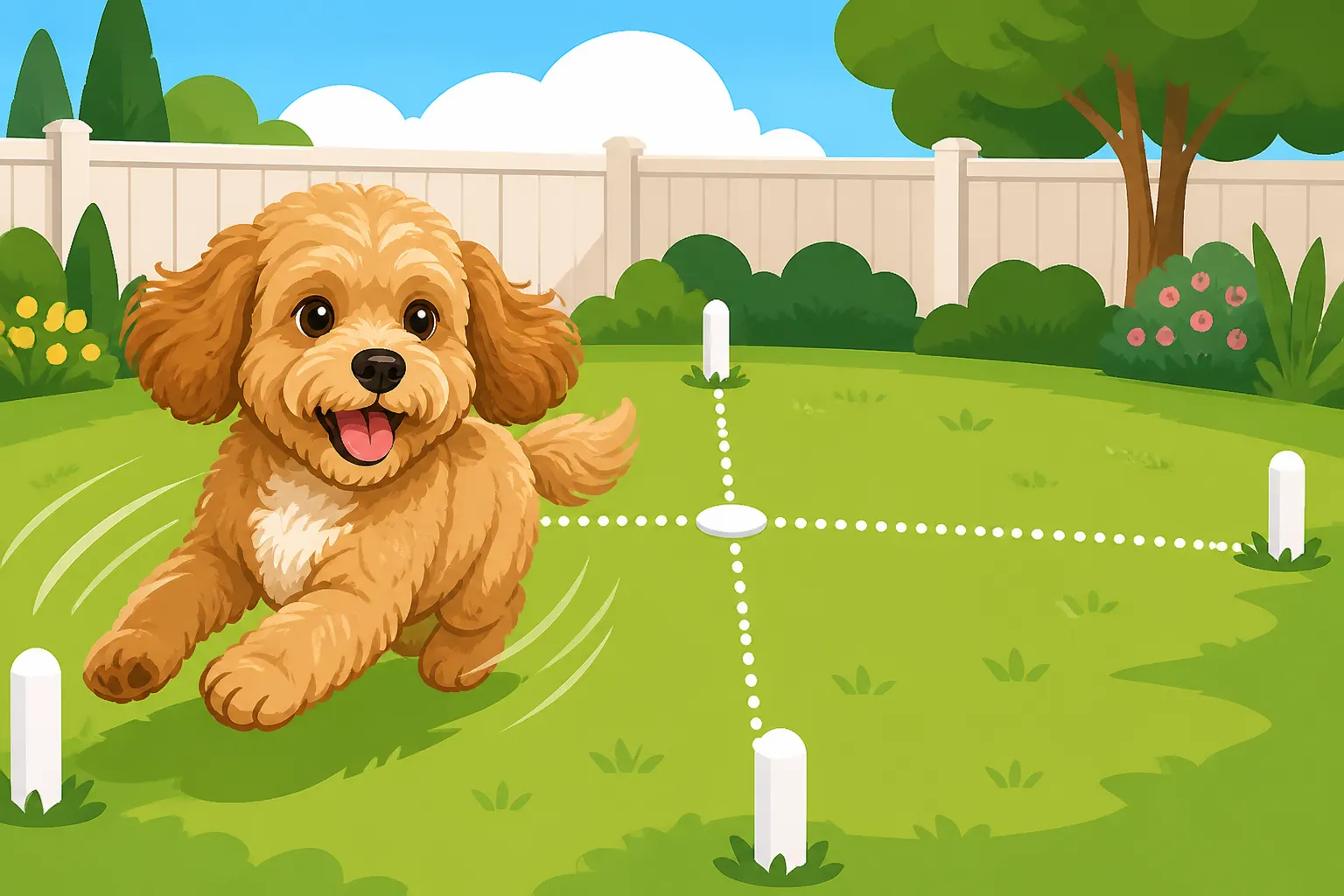
Why a Cockapoo Quarters the Yard
Many Cockapoo owners find themselves watching their beloved furry friend zig-zagging back and forth across the yard, nose to the ground, seemingly on an invisible mission. It's a behavior that can sometimes feel puzzling or even a bit frustrating when you're trying to get them to focus on you. But this distinctive "quartering" pattern isn't just random sniffing; it's a deeply ingrained instinct, a remnant of generations of specialized breeding. This guide will delve into the fascinating reasons behind your Cockapoo's yard-quartering habit, explaining its origins, how it works, and how you can work with this powerful drive to enrich your dog's life and strengthen your bond.
The Instinctual Roots: The Cocker Spaniel's Legacy
To truly understand why your Cockapoo quarters the yard, we need to look back at one half of their heritage: the Cocker Spaniel. These dogs weren't bred to sit politely on the sofa (though they excel at that too!); they were bred to work, and their method of working is precisely what you're seeing in your yard.
The Flushing Dog's Purpose
Cocker Spaniels, whether American or English, fall into a category of hunting dogs known as "flushing spaniels." Their original job was to range within gun-shot distance of a hunter, using their exceptional noses to locate game birds hidden in dense cover. Once a bird was found, the spaniel would "flush" it – meaning they'd burst forward, startling the bird into flight, allowing the hunter to take a shot. This required a very specific and systematic way of searching.
Imagine a field full of tall grass or thick brush. A dog running willy-nilly would miss a lot of potential game. Instead, the spaniel developed a methodical, windshield-wiper-like pattern, covering every inch of ground in front of them, back and forth, to ensure no scent was overlooked. This is the "quartering" pattern. Your Cockapoo, deep down in their DNA, still carries this blueprint for efficient searching. They aren't just meandering; they're diligently surveying their territory for interesting scents, just as their ancestors did for game. It's a deeply satisfying activity for them, tapping into an ancient drive. You can learn more about this inherited trait in The Flushing Drive Still Alive in a Cockapoo.
How Scent Guides the Quartering Pattern
A dog's nose is an incredibly powerful tool, far surpassing our own. For a spaniel, every blade of grass, every gust of wind carries a wealth of information. When a Cockapoo quarters, their nose is literally glued to the ground, or held just above it, constantly processing the scent picture of their environment. They are mapping out the movements of squirrels, rabbits, neighborhood cats, and even other dogs who have passed through.
The quartering pattern allows them to work into the wind, bringing scents directly to their sensitive noses. As they move across the yard, they're not just moving their legs; they're following faint trails, assessing their freshness, and building a detailed picture of who or what has been there. If they hit a particularly strong scent, you might see them pause, dig their nose in, and then pick up the quartering pattern again, perhaps widening their turns slightly to cover more ground around that point of interest. It's a complex, multi-sensory experience for them that we can only begin to imagine. Understanding The Flushing Job Behind a Cockapoo's Spaniel Half can provide further insight into this intricate process.
Inherited Drive Versus Learned Behavior
It's tempting to think that since your Cockapoo isn't a working gun dog, these instincts would simply fade away. However, genetic drives are incredibly powerful and persistent. The desire to quarter, to use their nose systematically, is hardwired. While no one is actively teaching your Cockapoo to quarter the yard in a formal hunting sense, the environment provides plenty of reinforcement. Every interesting smell they find, every leaf that rustles with a hidden critter, every time they simply enjoy the act of sniffing and exploring, it strengthens that inherent drive.
While the form of their quartering might not be as precise as a field-trained spaniel, the underlying motivation and the general pattern remain. It's not so much a learned behavior as it is an innate behavior that manifests itself in their domestic environment. You might notice that some Cockapoos quarter more intensely than others, a variation likely due to the specific lines of Cocker Spaniel and Poodle in their ancestry and individual personalities. What can be learned is control over this drive, guiding it rather than suppressing it, which we'll explore later in this guide.
The Poodle's Contribution to the Equation
While the Cocker Spaniel side provides the fundamental blueprint for quartering, the Poodle half of your Cockapoo's lineage also plays a significant role in how this behavior manifests and how effectively your dog can engage with it. The Poodle brings intelligence, athleticism, and a strong desire to please, all of which influence their approach to exploring their environment.
Intelligence and Trainability
Poodles are renowned for their exceptional intelligence, often ranking among the smartest dog breeds. This sharp mind means your Cockapoo isn't just mindlessly sniffing; they're actively problem-solving and making decisions as they quarter. They're quickly processing information from their nose, determining which scents are most interesting, and strategizing how to follow a trail or locate the source of an intriguing smell.
This intelligence also makes them highly trainable. While the quartering instinct is strong, a Cockapoo's Poodle brain allows them to learn boundaries, respond to cues, and adapt their natural behavior to suit human expectations. This means that with consistent positive reinforcement, you can channel that energetic search drive into structured activities, teach a reliable Recall on a Cockapoo That Has Found a Scent, or even refine their quartering pattern for scent games. Their smarts make them eager participants in any activity that engages their brain and their nose.
Athleticism and Stamina
Poodles, especially the Miniature and Standard sizes often used in Cockapoo breeding, are highly athletic and possess considerable stamina. They were originally bred as water retrievers, requiring strength, agility, and the ability to work for extended periods. This physical prowess means your Cockapoo has the energy reserves to quarter the yard for quite a while, tirelessly covering ground.
A Cockapoo isn't likely to tire after just a few minutes of enthusiastic sniffing. Their Poodle genes equip them with the endurance to thoroughly investigate their surroundings, making their quartering a sustained and invigorating exercise. This athleticism, combined with the Cocker's drive, creates a dog that thrives on physical and mental activity, making that diligent yard patrol a fantastic outlet for their energy. If your Cockapoo isn't getting enough mental and physical stimulation, you might even see their quartering become more intense as they try to fulfill their inherent need for activity.
The Desire to Please
Another hallmark of the Poodle temperament is a strong desire to please their human companions. This trait, often blended with the Cocker's affectionate nature, results in a Cockapoo who generally enjoys working with you and responding to your guidance. While a fascinating scent might momentarily eclipse all else, your Cockapoo's underlying desire to please can be a powerful asset in training.
This "people-pleasing" aspect means that once you start to engage with their quartering behavior in a structured way—perhaps through scent games or by asking them to check in with you during their patrols—they are often very receptive. They enjoy the interaction and the praise that comes from performing a task well, even if that task is simply to use their natural talents under your direction. This makes them wonderful partners for activities that tap into their innate drives, rather than fighting against them.
Understanding the "Quartering" Behavior
Let's dive deeper into what this unique behavior looks like and why it's so compelling for your Cockapoo. It's more than just a walk; it's a profound engagement with their environment on a level we can barely comprehend.
What Quartering Actually Looks Like
When your Cockapoo is quartering, you'll typically see a very specific, almost rhythmic, pattern of movement. They'll move forward a certain distance, then turn sharply and move back across the ground they just covered, but a little further over. Imagine a lawnmower making parallel stripes, or a pendulum swinging back and forth. Their head will be down, nose often making contact with the ground, sweeping from side to side. Their tail might be wagging, sometimes a low, busy wag, indicating intense focus and excitement.
They aren't usually running in a straight line or darting randomly. There's a systematic quality to it, an efficiency born from generations of dogs bred to thoroughly search an area. If they pick up a particularly strong scent, they might momentarily break the pattern to investigate a specific spot with more intense sniffing, sometimes pawing at the ground or even giving a little excited whine. Then, they'll usually return to their grid-like pattern, ensuring no stone (or blade of grass) is left unturned.
Why They Do It: The Hunt for Scent and Exploration
The primary driver behind quartering is, without a doubt, the hunt for scent. It's pure, unadulterated exploration for them. Every new smell tells a story, and their incredible noses are decoding that narrative in real-time. They are detectives, piecing together information about who has been in their space, what they were doing, and where they went. Is there a new squirrel nest? Did a rabbit hop through the flowerbed? Has a neighbor's dog marked a spot along the fence line? These are the thrilling mysteries your Cockapoo is solving.
For many Cockapoos, this is a deeply satisfying mental workout. It engages their most powerful sense and provides a sense of purpose. It's not about catching the "prey" in your backyard, but about the process of searching and discovery. This mental engagement is just as important as physical exercise for their overall well-being. Denying them this outlet can lead to boredom and potentially destructive behaviors, as they seek other ways to fulfill their inherent drives.
When and Where You'll See It Most
You're most likely to observe intensive quartering in a few key scenarios:
- New or Unfamiliar Environments: A new park, a hiking trail, or even a friend's backyard presents a fresh canvas of scents for your Cockapoo to explore. They'll be eager to "read" the new smells and get a lay of the land.
- Tall Grass or Dense Undergrowth: This is reminiscent of the cover their ancestors would have worked, making the instinct even stronger. The longer grass holds scent better and provides more "hiding places" for interesting smells.
- After Rain or Dew: Moisture on the ground enhances scent molecules, making them more potent and easier for your dog to pick up. A freshly dewed lawn or a post-rain walk is an olfactory wonderland for a Cockapoo.
- Areas with Known Wildlife Activity: If your yard has squirrels, rabbits, or even deer passing through, your Cockapoo will be particularly motivated to investigate those areas, quartering with great enthusiasm to pick up recent trails.
- During "Prime Scenting Hours": Early morning and late evening, when temperatures are cooler and scents linger longer, can also trigger more intense quartering behavior.
Understanding these triggers can help you anticipate their behavior and plan activities that truly engage their instincts.
Managing and Channeling the Quartering Drive
While it's wonderful to see your Cockapoo engaging their natural instincts, uncontrolled quartering can sometimes lead to challenges, especially in unfenced areas or near busy roads. The key isn't to suppress this instinct, but to manage and channel it in safe and constructive ways.
Safe Spaces for Off-Leash Exploration
The ideal scenario for a Cockapoo to fully indulge their quartering drive is in a secure, fenced yard or a designated off-leash dog park. This gives them the freedom to follow their nose without the risk of running into traffic or getting lost. If you don't have a fenced yard, consider investing in a long line (a very long leash, often 20-50 feet) for supervised exploration in open, safe areas like large fields or quiet parks. This allows them to roam and investigate without being completely off-leash.
When choosing a space, look for areas that offer a variety of interesting smells and textures – a patch of tall grass, some fallen leaves, or even an area with natural woodland edges. These environments provide richer scent experiences than a manicured lawn. Always scan the area for potential hazards like broken glass, discarded food, or toxic plants before letting your Cockapoo explore freely. Prioritizing their safety while fulfilling their natural needs is crucial for a happy Cockapoo.
Introducing a Reliable Recall
A reliable recall is absolutely paramount for any Cockapoo owner, especially given their strong scent drive. There will be times when their nose completely takes over, and they might appear to go "deaf" to your calls. This isn't defiance; it's instinct. Therefore, training a rock-solid recall, starting in low-distraction environments and gradually increasing the challenge, is essential.
Practice frequently, making recall a fun and rewarding game. Use high-value treats and enthusiastic praise every single time they come back to you. Never scold your dog when they finally return, even if it took a while, as this will only teach them that coming back leads to punishment. Focus on making coming to you the most wonderful thing in their world. You'll find detailed strategies for Building a Recall a Cockapoo Answers in our other articles. Remember, a Cockapoo that comes when called is a safer, happier Cockapoo who can enjoy more freedom.
Engaging Their Nose with Scent Work
One of the most effective and rewarding ways to channel your Cockapoo's quartering drive is through organized scent work activities. These games and sports are designed to tap into their natural ability to find and follow scent, providing incredible mental stimulation and physical exercise. Whether it's a formal nose work class or simple games you play at home, engaging their nose is key to their fulfillment.
You can start with basic "find it" games, hiding treats around the house or yard and encouraging your Cockapoo to sniff them out. As they get better, you can introduce scent articles (like cotton swabs with a specific odor) and teach them to locate and indicate where the scent is. Companies like BAXTER & Bella offer excellent online courses and resources for teaching these skills at home, making it accessible for everyone. For more ideas, explore Scent Work That Satisfies a Cockapoo. Even simple "treasure hunts" with their kibble sprinkled in the grass can turn mealtime into an enriching scent adventure.
Training Your Cockapoo to Quarter on Command
It might sound counterintuitive to train a natural behavior, but teaching your Cockapoo to quarter on command means you can direct their amazing scent abilities in a controlled way. This is particularly useful if you want to involve them in scent games or simply enjoy watching them work a specific area safely.
Using Positive Reinforcement
Training any behavior with a Cockapoo should always involve positive reinforcement. They thrive on praise, treats, and fun. To teach "quarter," start in a quiet, low-distraction environment, like your backyard. Scatter some high-value treats or their kibble in a small, defined area of grass. As they naturally start sniffing and moving in that back-and-forth pattern to find the food, introduce a verbal cue like "search" or "quarter."
As they perform the action, praise them enthusiastically and continue to scatter treats. The goal is for them to associate the cue with the action of systematically sniffing an area. Gradually increase the size of the search area and decrease the visibility of the treats, so they rely more on their nose. Keep sessions short, fun, and always end on a positive note. This gentle approach ensures they remain engaged and eager to participate.
The Whistle as a Training Aid
For working breeds like Cockapoos with strong drives, a whistle can be an incredibly effective training tool, especially for recall and directing their movement. Unlike your voice, a whistle carries further, has a consistent tone, and cuts through distractions more effectively. If you're teaching your Cockapoo to quarter in larger areas, a whistle can be used to signal turns or to bring them back into range.
Start by associating the whistle with something positive. Blow the whistle (a consistent, clear sound, perhaps two short blips) and immediately follow it with a high-value treat. Repeat this many times over several days, so the whistle becomes a predictor of good things. Once they reliably react to the whistle, you can begin to incorporate it into your quartering training. A single whistle might mean "turn" or "check in," while a series of longer toots might be your recall. Understanding Whether a Whistle Works on a Cockapoo can help you integrate this tool into your training regimen.
Working on a Long Line
A long line is an invaluable tool for safely practicing quartering and recall in larger, unfenced areas. It allows your Cockapoo the illusion of freedom while you maintain control. When using a long line, attach it to a well-fitting harness (never a collar, to avoid neck injury if they hit the end of the line). Let the line trail on the ground as your Cockapoo quarters, allowing them to explore a wide radius.
Periodically, gently step on the line to interrupt their intense sniffing, and then call them back to you for a treat and praise. This teaches them to check in with you, even when highly engaged with scent. You can also use the long line to guide them if they drift too far or head towards a potential hazard. Always supervise closely and ensure the line doesn't get tangled around trees or other obstacles. For practical tips, see Working a Cockapoo on a Long Line.
Common Challenges and Solutions
Even with their eagerness to please, your Cockapoo's strong quartering instinct can present a few common challenges. Understanding these and having strategies ready will make your adventures together much smoother.
The Cockapoo That Goes Deaf on a Trail
This is a classic scenario for many Cockapoo owners. Your dog is merrily quartering, nose to the ground, completely engrossed in a scent trail, and suddenly your voice seems to vanish into thin air. They're not being stubborn; they've simply entered a highly focused "scent trance." Their brains are so overloaded with olfactory information that auditory input takes a back seat. This is precisely why a strong, consistent recall, often paired with a whistle, is so vital.
The solution here is prevention and consistent training. Always practice recall in varying environments. If you know your Cockapoo is prone to "selective hearing" when on a hot trail, keep them on a long line in unfamiliar or high-distraction areas until their recall is flawless. When you do call them, make it exciting! Drop to one knee, use an enthusiastic tone, and be ready with the most irresistible treat they can imagine. If they truly don't respond, avoid chasing them, as this often turns into a fun game for them. Instead, try moving in the opposite direction, sometimes this piques their curiosity enough to break the trance. Learning more about A Cockapoo That Goes Deaf on a Trail can offer additional practical advice.
Over-Excitement and Difficulty Focusing
Some Cockapoos can become incredibly excited by the prospect of exploring scents, leading to a bouncy, sometimes frenetic, quartering pattern that makes it hard for them to focus on you or any training cues. This might look like rapid, short turns, or frantic digging at a scent spot. This heightened state of arousal can make learning new commands challenging.
To help with this, try to manage their environment and energy levels. Ensure they've had some basic physical exercise before a scent work session – a brisk walk or a game of fetch can help burn off some initial steam. Start scent work in calmer, less stimulating areas, gradually introducing more distractions. Use calming commands like "find it" in a steady voice. If they become too over-excited, take a short break, ask for a simple, known command like "sit" or "down" to help them reset, and then restart the activity. Keeping sessions short and positive can help prevent overstimulation.
Protecting Your Cockapoo from Hazards
When a Cockapoo's nose is in charge, their awareness of other dangers can diminish. This intense focus on scent means they might inadvertently quarter into poisonous plants, discarded trash, or even stumble upon wildlife like skunks, raccoons, or venomous snakes, depending on your location. Their ancestors might have been built for navigating thick cover, but your domestic Cockapoo needs your watchful eye.
Always survey the area before letting your Cockapoo loose. If you're in an area known for ticks, perform thorough tick checks after outdoor adventures. Be aware of local wildlife and consider training a "leave it" command to redirect their attention from undesirable discoveries. For particularly tempting or hazardous items, a strong Whether a Cockapoo Ignores You Once It Scents Something command can be a literal lifesaver. Regular vaccinations and parasite prevention are also crucial, as their outdoor explorations can expose them to various pathogens.
Benefits of Understanding This Instinct
Far from being just a quirky habit, understanding your Cockapoo's quartering instinct unlocks a deeper appreciation for their natural abilities and offers numerous benefits for both of you.
Deeper Bond with Your Dog
When you recognize and respect your Cockapoo's inherent drives, it strengthens the bond you share. Instead of seeing their frantic sniffing as a distraction, you'll see it as their way of engaging with the world, a direct link to their ancestry. By providing outlets for this instinct through structured games and safe exploration, you're meeting a fundamental need. This appreciation for their true nature fosters trust and makes your relationship richer and more empathetic.
Imagine going on a walk and actively encouraging their nose work, perhaps even pointing out interesting spots for them to investigate. You become a partner in their scent adventures, rather than an obstacle. This shared activity, where you're both engaged in something they love, deepens your connection far more than simply walking side-by-side on a pavement.
Enhanced Mental and Physical Stimulation
Quartering is a full-body and full-brain workout for your Cockapoo. Physically, it involves constant movement, quick changes of direction, and sustained effort. Mentally, it's a complex puzzle-solving activity that engages their sharp intelligence and powerful olfactory senses. Providing regular opportunities for this type of stimulation is vital for their overall health and happiness.
A Cockapoo whose natural instincts are routinely satisfied is generally a more content and well-behaved dog at home. Boredom and pent-up energy, especially mental energy, can lead to destructive behaviors like excessive chewing, barking, or even anxiety. By understanding and channeling their quartering drive into activities like scent work, you're proactively preventing these issues and ensuring they lead a well-rounded, fulfilling life. It's often said that "a tired dog is a good dog," but for a Cockapoo, it's more accurate to say "a mentally stimulated dog is a good dog." This is why a Cockapoo often needs Whether a Cockapoo Needs a Sport to Be Manageable.
Avoiding Frustration and Misunderstanding
Perhaps one of the greatest benefits of understanding why your Cockapoo quarters is the reduction in human frustration and misunderstanding. When you know that this behavior is deeply ingrained and not an act of defiance, your perspective shifts. You stop taking it personally when they ignore a call because they're on an incredible scent trail, and instead, you focus on how to teach them to manage that drive.
Instead of fighting against their nature, you learn to work with it. This understanding allows you to set your Cockapoo up for success, choosing appropriate environments for their explorations and providing the right training to keep them safe and responsive. It turns what could be a source of irritation into an opportunity for growth, learning, and shared enjoyment, making your life together much more harmonious.
Comparative Table: Tools for Managing Quartering Behavior
Here's a quick comparison of different tools and their uses when managing your Cockapoo's quartering instincts.
| Tool / Method | Primary Use | Pros | Cons | Best For |
|---|---|---|---|---|
| Leash (Standard) | Basic control, short walks | Universal, easy to use, keeps dog close | Restricts natural quartering, limits exploration | Urban walks, quick potty breaks, initial obedience training |
| Long Line | Extended exploration in open areas | Allows freedom to quarter, maintains safety, great for recall practice | Can tangle, requires supervision, not suitable for dense brush | Parks, large fields, beaches, recall training |
| Whistle | Consistent, long-distance communication | Clear, consistent sound, cuts through distractions, ideal for recall | Requires practice for dog to understand cues, can be lost or forgotten | Field work, long-distance recall, communicating in noisy areas |
| Scent Work Kits | Structured mental and nose stimulation | Channels natural drive, mentally tiring, can be done indoors/outdoors | Requires time commitment, initial setup cost (e.g. from Amazon) | All Cockapoos, especially those needing mental enrichment |
| Fenced Yard | Unrestricted, safe free-roaming | Ultimate freedom for quartering, secure, minimal supervision needed | Requires property, can still have hazards (wildlife, plants) | Daily exercise, unsupervised potty breaks, casual exploration |
| Harness | Leash attachment point | Distributes pressure evenly, prevents choking, ideal for long lines | Can be warm in summer, some dogs dislike the fit, can rub coat | All leash/long line activities, prevents neck strain |
Disclaimer
This article is for general informational purposes only and does not constitute professional advice. Laws, prices and regulations vary by location and change over time. Consult a qualified professional for guidance on your specific situation.