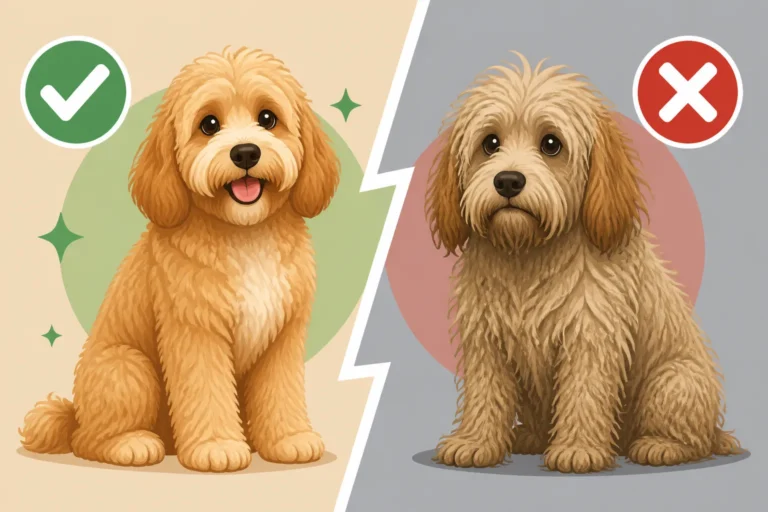
Whether a Breeder Can Guarantee a Cockapoo’s Coat
One of the biggest hopes when bringing a Cockapoo into your family is often tied to that wonderful, fluffy coat – specifically, the idea of a low-shedding or even non-shedding companion. It’s completely understandable; no one loves finding dog hair everywhere, and for those with allergies, it feels like a genuine lifeline. But here's the honest truth many breeders might dance around: trying to get a definitive, iron-clad guarantee on a Cockapoo’s adult coat type, especially concerning shedding, is often a journey fraught with more hope than certainty. This guide aims to pull back the curtain on Cockapoo coat genetics, explain what breeders truly can and cannot promise, and help you navigate the realistic expectations for your future furry friend's magnificent fluff.
The Elusive Coat Guarantee: Why It's More Complex Than You Think
When you're looking for a Cockapoo, the promise of a "hypoallergenic" or "non-shedding" coat is often a huge selling point. It conjures up images of cuddly pups that won't leave a trail of fur across your furniture or trigger sneezes in allergic family members. The reality, however, is a little more nuanced, and understanding why a breeder might hesitate to give a full guarantee is crucial for any prospective owner.
The Dream vs. Reality of a "Non-Shedding" Cockapoo
Let's be clear: no dog is 100% hypoallergenic. The term generally refers to breeds that produce less dander, which is often linked to less shedding. Poodles, with their continuously growing, single coat, are fantastic for this, and it’s why they’re chosen as one of the parent breeds for the Cockapoo. The dream is that the Cockapoo inherits this low-shedding quality. However, the Cocker Spaniel parent, on the other hand, is a moderate to heavy shedder. When you mix these two, you introduce a genetic lottery, and the outcome isn't always a neatly predictable Poodle-like coat. Many people get a Cockapoo expecting zero shedding, only to be surprised by a coat that sheds moderately, especially during seasonal changes or their infamous "coat change" phase. It's not that breeders are intentionally misleading; it's just that genetics aren't always a simple flip of a switch, and even within the same litter, you can see a range of coat types and shedding levels.
The Genetic Lottery and Early Puppy Coats
Puppies are born with soft, fine "puppy fluff" that doesn't always indicate what their adult coat will be like. It's adorable, yes, but it’s notoriously deceptive. You might see a tiny Cockapoo puppy with a beautifully soft, wavy coat, and think "aha! This is the one!" only for that coat to transform significantly as the dog matures. The genes responsible for coat type, texture, and shedding don't fully express themselves until later, usually between 6 to 18 months of age. This means that at 8 or 10 weeks, when you're picking out your puppy, a breeder can only make an educated guess based on the parents' genetics and the puppy's current appearance. Any "guarantee" at this stage about an adult coat would be more wishful thinking than scientific certainty. This is why it's so important to dig into the genetic testing records of the parent dogs, which we'll discuss in a bit.
Decoding Cockapoo Coat Genetics: The Science Behind the Fluff
To really understand why predicting a Cockapoo’s coat is tricky, we need to talk a little bit about genetics. It's not as complicated as it sounds, I promise! Think of it like a recipe – the ingredients from both parents combine in unique ways.
The Mighty Furnishings Gene RSPO2 and Its Role
The single most important genetic factor influencing a Cockapoo's coat, especially its shedding potential, is the presence of "furnishings." Furnishings are those adorable longer hairs on the face (the mustache, beard, and eyebrows) that give Doodles and many Poodle-crosses their signature look. They also happen to be directly linked to reduced shedding. The gene responsible for furnishings is called RSPO2.
Dogs can have two copies of this gene (FF), one copy (Ff), or no copies (ff).
- FF (Homozygous Furnished): This dog has two copies of the furnishing gene and will definitely have furnishings. They are typically very low-shedding.
- Ff (Heterozygous Furnished): This dog has one copy of the furnishing gene. They will also have furnishings and be low-shedding, though sometimes they might shed a tiny bit more than an FF dog.
- ff (Unfurnished, or "Improper Coat"): This dog has no copies of the furnishing gene. They will lack the facial furnishings and will shed much more, often similar to a Cocker Spaniel. This is sometimes referred to as an "Improper Coat" or "IC" by breeders, even though there's nothing "improper" about the dog itself, just that it doesn't fit the expected low-shedding Doodle aesthetic.
A reputable breeder will test their breeding dogs for the RSPO2 gene. If both parents are FF, all their puppies will be FF and inherit furnishings, making them very likely to be low-shedding. If one parent is Ff and the other is FF, a mix of FF and Ff puppies can occur, all with furnishings. The real gamble comes when an Ff dog is bred to another Ff dog, or worse, an Ff to an ff, or an ff to an ff. In these scenarios, you can get puppies without furnishings (ff), which will shed. This is why What an FF Result Means on a Cockapoo is important information to ask a breeder for. Similarly, you'll want to understand What an IC Result Means on a Cockapoo if a breeder has it on their panel.
Understanding the KRT71 Curl Gene
Beyond furnishings, the KRT71 gene influences the curl of the coat. This gene dictates whether the coat will be straight, wavy, or tightly curled.
- CC (Homozygous Curly): Very curly coat.
- CT (Heterozygous Curly): Wavy coat.
- TT (Homozygous Straight): Straight coat.
While the KRT71 gene doesn't directly dictate shedding as much as furnishings do, it does significantly impact grooming requirements. A very curly coat, while often low-shedding, will mat much more easily and require intensive daily grooming to prevent painful knots. A wavy coat is often seen as the ideal balance, offering low shedding with more manageable grooming. A straight coat, while still potentially furnished and low-shedding, can also be easier to maintain, though some might argue it lacks the classic "Doodle look." You can learn more about this in The Curl Gene and Where a Cockapoo's Coat Lands.
Why an Improper Coated Cockapoo Still Sheds
If a Cockapoo puppy inherits two copies of the 'unfurnished' gene (ff) – meaning they don't have those specific longer hairs on their face – they will develop what's often called an "Improper Coat" (IC). This isn't a fault in the dog's health or personality, but it does mean their coat is much more likely to shed, often resembling more of a Cocker Spaniel's coat texture and shedding pattern. These dogs typically don't have the characteristic beard and eyebrows. While they are still delightful dogs, their shedding level can be a huge surprise and disappointment for families who specifically chose a Cockapoo for its low-shedding qualities. A good breeder will be upfront about the possibility of an improper coat, especially if their breeding pair carries the 'f' allele, and explain What an Improper Coated Cockapoo Looks Like from puppyhood.
From Puppy Fluff to Adult Mane: The Great Coat Transformation
One of the most surprising journeys for new Cockapoo owners is watching their puppy's coat evolve. What starts as soft, manageable fluff can, seemingly overnight, turn into a matting nightmare. This "coat change" is a perfectly normal, albeit challenging, part of a Cockapoo's development.
What a Cockapoo's Coat Looks Like at Eight Weeks
At eight weeks old, when most puppies go home, their coats are generally soft, fine, and relatively easy to manage. They might have a slight wave or even appear quite straight, and their furnishings might just be starting to show as a slightly longer fringe around their muzzle. At this stage, shedding is usually minimal, and grooming is fairly straightforward with a soft brush. However, this early coat is far from a reliable indicator of its adult texture, thickness, or shedding potential. It’s essentially a temporary baby coat. Experienced breeders can sometimes make an educated guess about the curl developing, but predicting the intensity of matting or the full adult texture is almost impossible. Whether Shedding Can Be Seen in a Cockapoo Puppy is a common question, and the answer is usually "not reliably."
Navigating the Notorious Ten-Month Coat Change
Around the 6-18 month mark, often hitting its peak around 10-12 months, your Cockapoo will go through what owners lovingly (or exasperatedly) call the "coat change" or "blowing coat." This is when the soft puppy hair starts to give way to the denser, coarser, and often curlier adult coat. The problem is, the puppy hair doesn't just fall out neatly; it gets trapped within the incoming adult coat, creating a perfect storm for matting. It literally feels like a switch has flipped overnight. Your dog might suddenly go from being brushed once a week to needing daily, meticulous grooming to prevent large, felted mats from forming. This period is often described as The Coat Change That Ambushes a Cockapoo Owner at Ten Months because it catches so many off guard. It's a critical time for establishing a consistent grooming routine, and if not managed, it can quickly lead to needing a full shave-down at the groomer. Many owners find themselves investing in new tools from places like Amazon or Chewy to tackle the sudden onset of tangles.
When a Cockapoo's Coat Finally Settles
The intensity of the coat change typically lasts for a few months, but it can take up to two years for a Cockapoo's adult coat to fully mature and settle into its permanent texture and density. During this time, the coat will continue to thicken, and its final curl pattern will become evident. Once through this phase, while daily brushing might still be necessary for curlier coats, the extreme matting from the coat change usually subsides, making grooming a bit more predictable. Don't be surprised if the color changes slightly too! How Long a Cockapoo's Coat Change Runs varies for every dog, but patience and diligent grooming are your best friends during this period.
What a Reputable Breeder Can Honestly Offer Regarding Coat Predictions
Given the genetic complexities and the coat's developmental stages, what can a responsible breeder realistically guarantee about your Cockapoo's coat? While a "non-shedding" guarantee is usually an oversimplification, a transparent breeder can offer solid information and insights.
Genetic Testing: A Breeder's Best Tool for Coat Insights
A truly reputable Cockapoo breeder will perform genetic testing on their breeding dogs for coat traits. This is not just a nice-to-have; it's essential. Specifically, they should test for:
- RSPO2 (Furnishings): This is paramount for predicting shedding. As discussed, knowing if parents are FF, Ff, or ff allows them to predict the likelihood of furnished, low-shedding puppies. A breeder aiming for low-shedding puppies will ideally breed FF to FF, or at least FF to Ff.
- KRT71 (Curl): While less about shedding, this helps predict the degree of curl, which directly impacts grooming needs. This test can help predict if you'll get a The Straight Coated Cockapoo, a The Wavy Coated Cockapoo, or a The Tight Curled Cockapoo.
- Other Coat Genes: Some comprehensive panels also test for coat length (FGF5), intensity of pigment, and color dilution, which are interesting but less critical for shedding or matting.
When you speak to a breeder, ask to see the actual genetic test results for both parent dogs. Don't just accept a verbal assurance. Labs like Paw Print Genetics or Embark offer comprehensive genetic panels that include these coat traits. This hard data is the closest thing you'll get to a "guarantee" on coat type because it removes much of the guesswork. What a Cockapoo Coat Panel Actually Reports will show you exactly what to look for on those certificates.
Transparency Over Guarantees: The Breeder's Ethical Approach
Instead of a vague "non-shedding guarantee," a responsible breeder offers transparency. They will:
- Educate You: Explain the genetics involved, the nuances of "hypoallergenic," and the realities of the coat change. They won't promise something impossible.
- Show Proof: Provide genetic test results for the parent dogs, detailing their RSPO2 and KRT71 status. This allows you to understand the probability of certain coat traits in the litter.
- Describe Parent Coats: Show you photos or videos of the parents' coats, and honestly discuss their shedding levels and grooming needs.
- Offer Observations: Based on their experience with previous litters from similar pairings, they can give you a better idea of what to expect, even though individual puppies can still surprise you.
- Discuss Coat Maintenance: A good breeder will emphasize that all Cockapoo coats, especially those with furnishings and curl, require significant grooming, regardless of shedding. They'll explain The Three Cockapoo Coat Types and Their Upkeep and discuss the weekly hours each type takes. They might even recommend specific brushes or grooming products, perhaps available on Chewy or Amazon.
A breeder who is quick to offer an absolute guarantee without showing any genetic evidence or explaining the complexities should raise a red flag. Their honesty and willingness to educate you are far more valuable than an empty promise.
Setting Realistic Expectations and Preparing for Your Cockapoo's Coat
Ultimately, as a prospective Cockapoo owner, your best defense against disappointment is setting realistic expectations and being prepared for the realities of coat care.
The Importance of Early Grooming Exposure
No matter what coat type your Cockapoo develops – straight, wavy, or curly – it will require consistent grooming. This is not optional. The earlier you start, the better. Begin brushing your puppy gently from the moment they come home, even if their coat doesn't seem to need it. Use positive reinforcement, treats, and praise to make grooming a pleasant experience. Get them used to having their feet, ears, and face handled. Introduce them to the sound of clippers (even if they're off) and the feel of different brushes. Early and frequent exposure will make future grooming sessions, whether at home or at the professional groomer, much less stressful for both of you. You might even want to research How Many Minutes a Curly Cockapoo Takes to groom each week, so you know what you're getting into. Many first-time owners are surprised by the commitment needed, especially during the coat change. Stocking up on good quality brushes, combs, and detangling sprays from retailers like Amazon or Chewy well in advance is a smart move.
Embracing All Cockapoo Coat Types
While it's natural to have a preference for a certain look or shedding level, it's important to embrace your Cockapoo for the wonderful dog they are, regardless of their eventual coat type. Whether you end up with a straight, wavy, or super curly companion, each coat has its charm and its challenges.
- Straight Coat: Often the easiest to maintain, but might shed more than others. Less prone to matting if brushed regularly.
- Wavy Coat: A popular choice, often low-shedding with moderate grooming needs. Can still mat if neglected.
- Curly Coat: Generally the lowest shedding, but demands the most intensive grooming. Daily brushing is often a must to prevent serious matting. Whether a curly coated Cockapoo needs daily work is a question you'll answer quickly in the affirmative if you have one!
Be prepared for the possibility that your Cockapoo's coat might not be exactly what you envisioned. Focus on finding a healthy, well-socialized puppy from a responsible breeder who prioritizes temperament and health testing, and is transparent about coat genetics. The bond you form with your Cockapoo will far outweigh any concerns about the texture or exact shedding amount of their beautiful coat. And remember, no matter the coat, feeding a high-quality diet, perhaps like those offered by Ollie, can also contribute to overall skin and coat health.
Table: Cockapoo Coat Types and Their Realities
To help clarify the differences you might encounter, here’s a quick overview of the main Cockapoo coat types, their characteristics, and what they generally mean for you as an owner:
| Coat Type | Appearance | Shedding Level | Grooming Frequency | Common Genetic Marker |
|---|---|---|---|---|
| Straight Coat | Smooth, lies flat, minimal to no wave. May lack distinct facial furnishings. | Low to moderate (often more like a Cocker Spaniel) | Moderate (2-3 times/week) | KRT71 (TT), RSPO2 (ff possible) |
| Wavy Coat | Soft, loose waves. Often has distinct furnishings (beard, eyebrows). | Very low to non-shedding | Moderate to High (3-5 times/week) | KRT71 (CT), RSPO2 (FF or Ff) |
| Curly Coat | Tight, dense curls all over. Always has distinct furnishings. | Very low to non-shedding | High (Daily brushing required) | KRT71 (CC), RSPO2 (FF or Ff) |
This table provides a general guideline. Individual dogs can still have variations within these categories! The key takeaway is that the more curl and furnishings, the less shedding but the more intensive the grooming.
Disclaimer
This article is for general informational purposes only and does not constitute professional advice. Laws, prices and regulations vary by location and change over time. Consult a qualified professional for guidance on your specific situation.