Whether Breeders Cull Improper Coats From Cockapoo Lines
When you're dreaming of bringing a Cockapoo into your home, you're likely picturing that soft, wavy, low-shedding coat that's become their hallmark. But sometimes, a litter might produce puppies with what breeders call an "improper coat," leading to a lot of confusion and even concern for prospective owners. This guide is here to demystify what an improper coat means for a Cockapoo, how responsible breeders approach these puppies, and what you can expect if you happen to fall in love with one.
Understanding "Improper Coats" in Cockapoos
It's natural to have questions when you hear terms like "improper coat" in relation to a designer breed like the Cockapoo. The very appeal of many Doodles lies in their specific coat characteristics, so a deviation from that ideal can feel a bit unsettling. Let's break down what this term truly signifies and why it's a topic of discussion among breeders and prospective owners.
What Exactly is an Improper Coat?
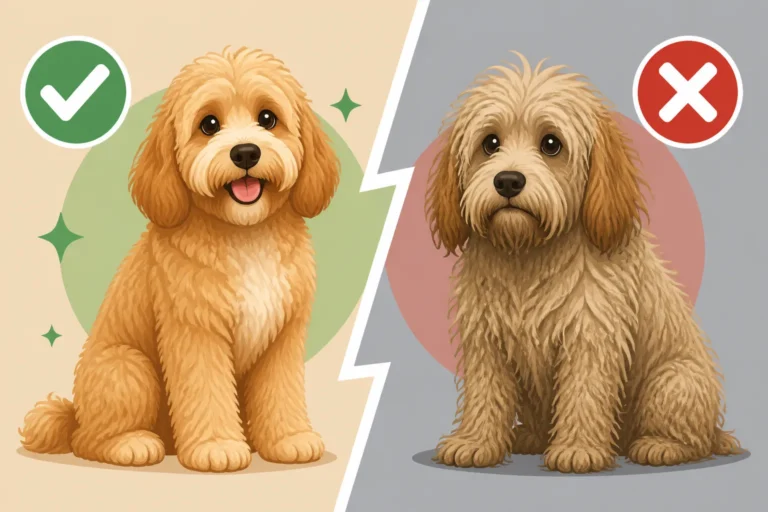
At its heart, an "improper coat" in a Cockapoo refers to a lack of what breeders call "furnishings." Furnishings are those longer hairs on the muzzle, eyebrows, and legs that give most Poodles (and subsequently, most Doodles) their characteristic bearded and whiskered look, and more importantly, are linked to their low-shedding quality. Without these furnishings, a dog's coat often resembles that of its unfurnished parent, in the Cockapoo's case, the Cocker Spaniel. This means it's usually shorter on the face and head, and the body coat might be flatter and shed much more.
Genetically speaking, furnishings are controlled by a specific gene, often referred to as the R-spondin 2 (RSPO2) gene, or more simply, the F (Furnishings) locus. Dogs need at least one copy of the dominant 'F' allele to express furnishings. If a Cockapoo puppy inherits two copies of the recessive 'f' allele (ff), meaning it gets one 'f' from each parent, it will have an improper coat. The Poodle parent always contributes at least one 'F' allele, but the Cocker Spaniel can carry either 'F' or 'f'. So, if a Poodle parent is FF and the Cocker is Ff, all puppies will be furnished. However, if a Poodle parent is Ff (which is rare for purebred Poodles but can happen in mixed lines) or if both Cockapoo parents are Ff carriers, then there's a chance of producing 'ff' puppies. This is why understanding What RSPO2 Testing Tells a Cockapoo Breeder is so crucial for responsible breeding programs.
It's a common misconception that an improper coat is somehow "unhealthy" or a sign of poor breeding. In reality, it's just a genetic variation, not a health defect. These puppies are just as loving, intelligent, and healthy as their furnished siblings. Their primary difference lies in their aesthetic and grooming needs. They simply inherited a different combination of coat genes.
Why Does an Improper Coat Matter to Owners?
For many prospective Cockapoo owners, the main draw is the promise of a low-shedding, potentially hypoallergenic coat. An improper coat directly impacts this expectation. A Cockapoo with an improper coat will shed, often as much as a Cocker Spaniel. This can be a significant surprise and disappointment for families who specifically chose a Cockapoo to mitigate allergy concerns or to avoid copious dog hair around the house. The texture of the coat can also vary greatly, from a flatter, silky spaniel-like coat to something a bit more wiry, but it won't have the typical soft, wavy or curly texture most people associate with a Cockapoo.
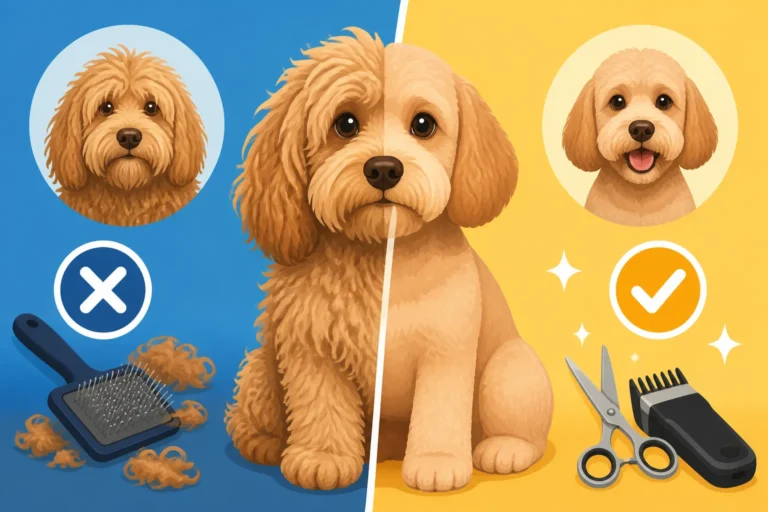
Beyond shedding, the grooming routine will also differ. While a furnished Cockapoo often requires regular brushing and professional grooming to prevent matting, an improper coated Cockapoo, or what some might call a "flat-coated" Cockapoo, generally needs less intensive grooming for matting, but more frequent brushing to remove loose hair. You might not need to worry as much about line brushing through dense curls, but you'll certainly be vacuuming more. It’s a trade-off, and one that potential owners need to be fully aware of before bringing such a puppy home. Whether a Flat Coated Cockapoo Has Fewer Skin Problems is also a common question, and generally, the answer is that their skin and coat issues tend to mirror those of a Cocker Spaniel more closely than a Poodle.
Imagine bringing home a puppy you thought would be low-shedding, only to find your allergies flaring up or your furniture constantly covered in hair. This isn't just an inconvenience; it can lead to heartache if the family can't accommodate the shedding. This is precisely why transparent communication from a breeder about coat genetics and potential outcomes is so vital. It’s not about the puppy being "lesser," but about ensuring the right puppy finds the right forever home, avoiding future disappointment. Whether a Furnished Cockapoo Suits an Allergic Home is a question that needs careful consideration, and understanding improper coats helps illustrate why a simple "yes" or "no" isn't always adequate.
Breeder Practices Regarding Improper Coats
The term "culling" often conjures up very negative images, and it's important to clarify what it does and doesn't mean in the context of breeding practices for coat types. Responsible breeders are ethically bound to ensure the health and welfare of their puppies, regardless of their coat. They certainly don't eliminate puppies simply because their coat isn't the "ideal" or desired type.
Do Breeders Cull Improper Coated Puppies?
No, ethical breeders absolutely do not "cull" puppies with improper coats in the sense of eliminating them. That would be completely reprehensible and goes against all principles of responsible animal husbandry. The word "cull" usually refers to removing animals from a breeding program or herd due to undesirable traits, or in a more extreme, inhumane context, euthanizing them. In the case of improper coated Cockapoos, these puppies are healthy, happy dogs. They are simply not suitable for homes specifically seeking a non-shedding, "hypoallergenic" dog.
What responsible breeders do is transparently identify these puppies, educate prospective owners about their coat type, and ensure they are placed in homes that understand and are prepared for the reality of a shedding coat. This might involve different pricing – often, improper coated puppies are offered at a lower price point because they don't meet the primary "low-shedding" expectation many Cockapoo buyers have. It's about honesty and managing expectations, not about deeming a puppy inferior. Breeders often perform a Whether a Coat DNA Test Is Worth the Money to confirm the genetic makeup of their breeding dogs and puppies, allowing them to predict coat types with greater accuracy and communicate clearly with potential buyers.
For example, a family looking for a pet that sheds less due to allergies might be disappointed by an improper coat, but a family simply looking for a loving companion, without specific allergy concerns, might be perfectly happy with one. It's a matter of matching the right puppy with the right family, ensuring a successful, lifelong placement. Some breeders might even specifically advertise these puppies to families who don't have allergy concerns and appreciate the lower upfront cost. Whether an Improper Coated Cockapoo Costs Less is a valid question for many budgets, and often the answer is yes, reflecting the market demand for specific coat types.
Ethical Considerations and Transparency
Ethical breeding is all about transparency and responsibility. A breeder who understands coat genetics will be upfront about the possibility of improper coats in their litters, especially if one of the parent dogs is a known carrier of the 'f' allele for unfurnished coats. They should be able to explain the genetic basis, show you the parents' DNA test results (if applicable), and demonstrate what an improper coat looks like in a puppy. Reading a Cockapoo Coat Report Before You Choose is a skill every prospective owner should develop, and a good breeder will help you understand it.
A reputable breeder will never try to pass off an improper coated puppy as a low-shedding one, nor will they hide the fact that some puppies in a litter might have this coat type. They will openly discuss the grooming requirements and potential shedding. They might even have a clause in their contract specifically addressing coat type. For instance, some contracts might state that while they strive for low-shedding coats, variations can occur, and the buyer accepts the coat type of the chosen puppy. This ensures everyone is on the same page from the outset, preventing heartache and disappointment down the line. Whether a Cockapoo Breeder Can Guarantee a Cockapoo's Coat is something a responsible breeder will approach with realism.
The goal isn't to breed only "perfect" puppies, but to breed healthy, well-socialized puppies and place them in suitable homes. If a breeder is evasive about coat types, avoids discussing genetics, or makes guarantees they can't possibly keep (like promising every puppy will be non-shedding from certain pairings), that's a red flag. Responsible breeders embrace education and use tools like DNA testing to make informed decisions for their breeding programs and to guide their puppy buyers. This kind of transparency helps build trust and ensures that you, as a buyer, know exactly what you're getting.
Identifying and Managing an Improper Coated Cockapoo
If you're considering a Cockapoo, knowing how to identify an improper coat, even in a young puppy, can be incredibly helpful. And if you do end up with one, understanding how to care for their unique coat type will ensure both you and your furry friend are happy and well-adjusted.
How to Spot an Improper Coat in a Puppy
Spotting an improper coat in a young Cockapoo puppy can be tricky, as puppy coats change so much during their first year. However, there are some tell-tale signs, even at an early age. The most obvious indicator of furnishings is the presence of a "beard" or longer hair on the muzzle and eyebrows. Puppies with proper furnishings will start to show this longer facial hair relatively early, often by 6-8 weeks of age. Their muzzle hair will be noticeably longer than the hair on top of their head. Telling a Furnished Cockapoo Puppy by Its Muzzle is often the easiest way to identify the difference.
Conversely, an improper coated puppy will have a smoother, shorter face, much like a Cocker Spaniel puppy. Their muzzle will appear neat and short, and they won't have those distinct, fluffy eyebrows or a visible beard. The hair around their eyes and on their nose bridge will also be shorter. While the body coat might still be soft, it usually lies flatter and appears less dense than that of a furnished puppy. This is often the case regardless of What a Cockapoo Puppy's Coat Feels Like at Eight Weeks. A truly flat-coated Cockapoo, despite what you might initially perceive as a short, easy-care coat, will develop a shedding undercoat, similar to a purebred Cocker Spaniel.
It's wise to observe puppies over a few weeks if possible, or ask for photos/videos that clearly show their facial hair as they grow. A good breeder will be able to point out the differences in the litter. If you're unsure, ask the breeder if they've had a Whether a Coat DNA Test Is Worth the Money done on the litter or the parents, specifically for the Furnishings gene. This test is definitive and removes all guesswork. Whether Shedding Can Be Seen in a Cockapoo Puppy can be a subtle sign; improper coated pups often have a more wispy, less dense coat even at a young age.
Living with an Improper Coated Cockapoo
Bringing an improper coated Cockapoo home means embracing a bit more shedding than you might have initially expected. But it certainly doesn't mean less love! These dogs are just as wonderful companions. The main difference is managing their coat. You'll want a good vacuum cleaner, of course, and a reliable lint roller. Regular brushing, perhaps every other day, with a slicker brush and a deshedding tool can help minimize the amount of loose hair floating around your home. Brands like Amazon and Chewy offer a wide range of deshedding brushes and vacuums designed specifically for pet hair, making it easier to keep on top of things.
Grooming routines will be different. While a furnished Cockapoo often requires clipping every 6-8 weeks to prevent matting, an improper coated Cockapoo might need less professional clipping, or just a tidy-up. However, they will still benefit from regular baths and brushing to keep their coat healthy and to remove dead hair. If their coat is more silky and prone to tangles, a good conditioning spray can be a lifesaver. You won't be battling dense mats as much, but you will be dealing with more shedding. What a Flat Coated Cockapoo Costs at the Groomer might be less for extensive clipping, but regular bathing and deshedding treatments are still beneficial.
For those with mild allergies, an improper coat might be problematic, as the dander and shed hair are primary triggers. If allergies are a concern, it's always best to spend time with the specific puppy you're considering to see how your allergies react. Never assume a Cockapoo, even a furnished one, is 100% hypoallergenic. The most important thing is managing expectations. If you knew what you were getting into, an improper coated Cockapoo can be a joy. If you were blindsided by the shedding, it can be a source of stress. Open communication with your breeder, and perhaps looking into a fresh food diet like Ollie that can support skin and coat health, are key steps to a happy life together.
Improper vs. Furnished Cockapoo Coats: A Quick Comparison
Here's a simple breakdown of the key differences you might observe between a typical furnished Cockapoo and one with an improper coat:
| Feature | Furnished (Typical Cockapoo) | Improper Coat (Unfurnished) |
|---|---|---|
| Facial Hair | Longer hair on muzzle (beard), prominent eyebrows. | Shorter, smoother facial hair, no distinct beard or eyebrows. |
| Body Coat | Wavy to curly, often dense, grows continuously. | Flatter, straighter, or slightly wavy, often thinner, resembles Cocker. |
| Shedding | Low to minimal shedding. | Moderate to heavy shedding, similar to a Cocker Spaniel. |
| Hypoallergenic | Often considered low-allergen (though no dog is 100%). | Not generally suitable for allergy sufferers. |
| Grooming Needs | Regular brushing to prevent mats, professional clipping every 6-8 weeks. | Regular brushing for shedding, less frequent professional clipping for length. |
| Genetic Basis | At least one dominant 'F' allele (FF or Ff). | Two recessive 'f' alleles (ff). |
Disclaimer
This article is for general informational purposes only and does not constitute professional advice. Laws, prices and regulations vary by location and change over time. Consult a qualified professional for guidance on your specific situation.