Whether a Cockapoo Points or Flushes
It’s a common question among prospective and current Cockapoo owners: what kind of natural hunting instincts does my furry friend truly possess? You might wonder if they’re going to freeze and point like a sophisticated bird dog, or if they’re more inclined to dive headfirst into the bushes, sending every little creature scattering. This guide will delve deep into the inherited behaviors of your Cockapoo, exploring whether they're predisposed to pointing or flushing, and what that means for their everyday life and training.
Understanding the Ancestral Hunting Roles of the Parent Breeds
To truly grasp whether your Cockapoo is a pointer or a flusher, we need to look at the foundations of their lineage: the Cocker Spaniel and the Poodle. Both breeds bring distinct historical roles to the table, and understanding these is key to interpreting your Cockapoo's inherent drives. It's not just about what they do, but why they do it.
The Cocker Spaniel: A Flusher by Nature
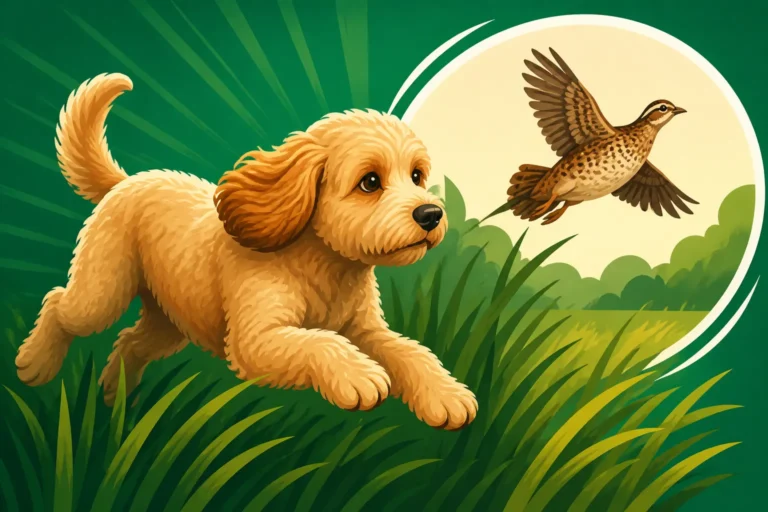
The Cocker Spaniel, whether American or English, was originally bred for a very specific job in the field: flushing game birds. Imagine a bird hunter walking through dense cover, and their dog working diligently ahead, sniffing out hidden birds. When a bird is found, the spaniel’s job is not to stand still and indicate its location. No, their purpose is to burst into the cover, startling the bird into flight so the hunter can take a shot. This is the essence of flushing. They are energetic, tireless hunters, known for their "merry" tails wagging furiously as they work.
This innate drive to flush means a Cocker Spaniel, and by extension, your Cockapoo, will often have a strong desire to explore bushes, tall grass, and undergrowth. They’ll plunge in, nose to the ground, searching for anything that might be hiding. Once they find something – a squirrel, a bird, or even just a very interesting scent – their instinct is to rush in and send it scattering. This can be fantastic for engagement and exercise, but it also means that a Cockapoo with a strong spaniel influence might ignore your calls if a captivating scent or rustle of leaves grabs their attention. The Flushing Drive Still Alive in a Cockapoo is a real force!
The Poodle: A Water Retriever with Intelligence
The Poodle, despite its often-misunderstood fancy appearance, is also a working dog, originally bred as a water retriever. Their historical role involved plunging into cold water to retrieve shot waterfowl, bringing them back to the hunter. While they are incredibly intelligent and eager to please, their natural instinct does not typically involve pointing or flushing game in the same way a spaniel or a setter would. They are more about the retrieve, the carry, and the delivery.
Poodles are known for their athleticism, keen intelligence, and trainable nature. These traits contribute to a Cockapoo's ability to learn quickly and adapt to various training scenarios. However, the Poodle's hunting contribution to the Cockapoo mostly revolves around that retrieving drive and a generally strong prey drive that, while present, doesn't manifest as a specific pointing or flushing behavior in its purest form. Instead, their intelligence often means they can be taught how to interact with game (or toys mimicking game) in a structured way, rather than having a singular, ingrained method of finding it. They might love to fetch a ball for hours, demonstrating that strong retrieving instinct from their Poodle heritage.
Defining the Terms: Pointing Versus Flushing
When we talk about hunting instincts in dogs, "pointing" and "flushing" are two distinct actions with different purposes. It's easy to get them confused, especially if you're new to understanding dog behavior. Let's break down what each term really means in the context of a hunting dog's job, and how these instincts might (or might not) appear in your beloved Cockapoo.
What it Means to "Point"
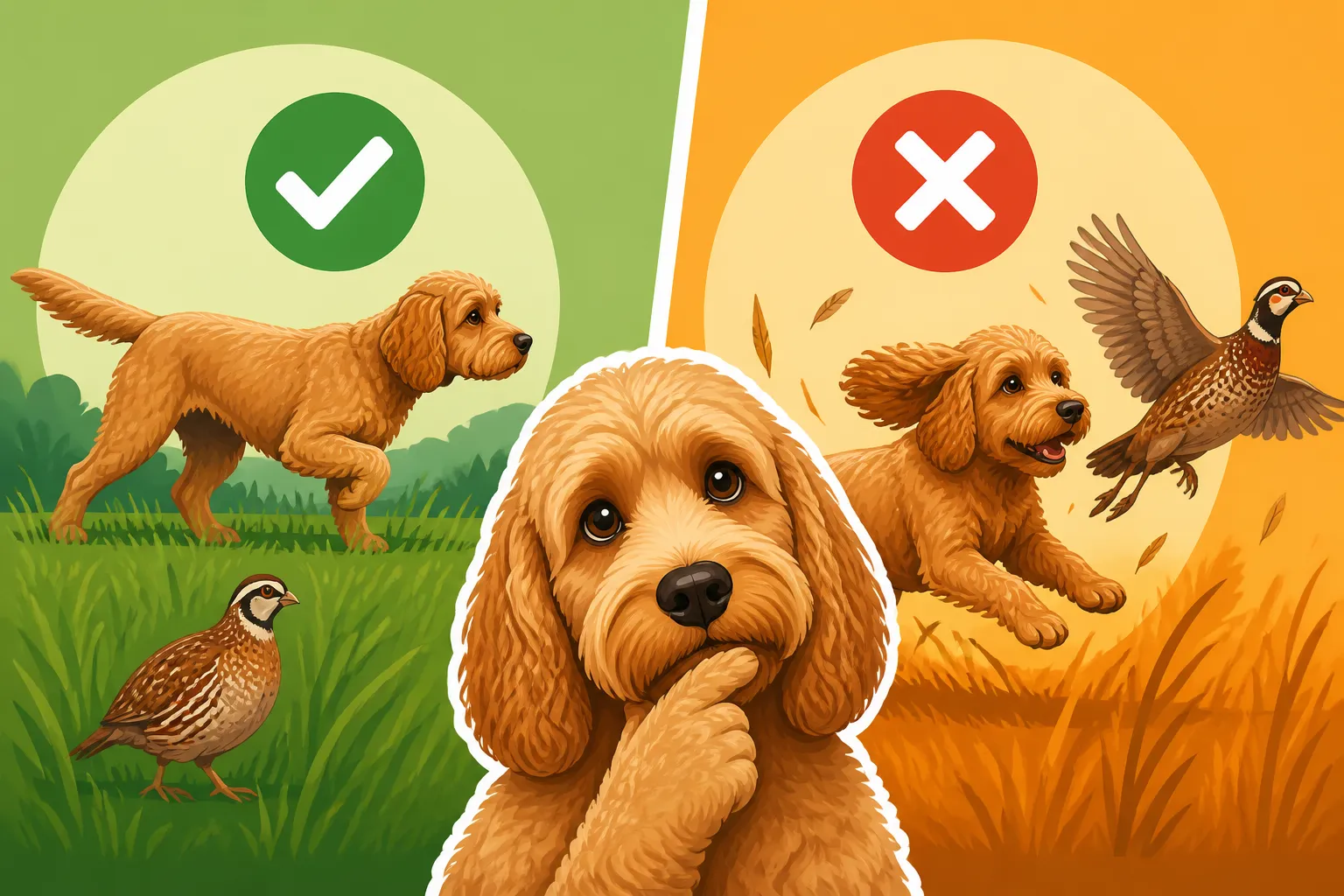
Pointing is a specific hunting behavior where a dog, upon discovering game, freezes in a rigid, often statuesque pose, with its nose directed towards the hidden quarry. One front leg might be lifted, and its body tenses, indicating to the hunter exactly where the bird or small animal is located. This allows the hunter to approach cautiously and prepare for the shot when the game is eventually flushed. Breeds like Pointers, Setters, and some continental European hunting dogs (like the German Shorthaired Pointer or Weimaraner) are renowned for this highly specialized skill. They are bred for that momentary stillness, that intense focus that communicates "here it is, human, now you do your part."
A dog that points is designed to hold the game, not to scare it away. They rely on their scenting ability to locate prey and then their immense discipline to remain absolutely still, often for extended periods. This behavior requires a high degree of control and a very specific genetic predisposition. It's a breathtaking sight to witness in a trained pointing dog, a testament to centuries of selective breeding.
What it Means to "Flush"
Flushing, as we touched on, is almost the opposite of pointing. A flushing dog's primary role is to find game hidden in cover and then, by actively working into the dense vegetation, drive or "flush" it out into the open, making it visible for the hunter. Spaniels are the quintessential flushing dogs, often weaving back and forth in a pattern known as "quartering" (like in Teaching a Cockapoo to Quarter on Command), using their noses to locate scent and then their energetic bodies to push the game into the air or sight. They are typically tireless, enthusiastic, and less concerned with stealth than with thorough exploration.
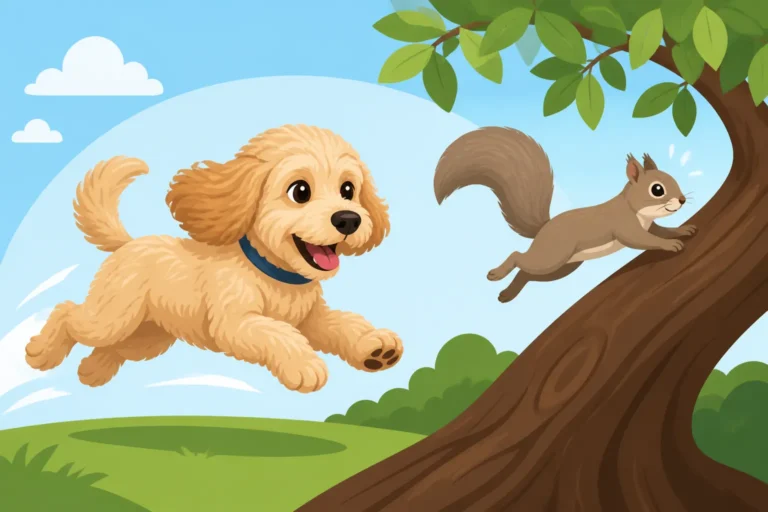
When a Cockapoo dives into a clump of bushes after a squirrel, or excitedly digs at a molehill, that's their inner flusher at work. They're not looking to stand perfectly still; they're looking to rouse whatever is hiding there. This can lead to some rather muddy adventures and a lot of exciting chaos, but it’s a natural expression of The Flushing Job Behind a Cockapoo's Spaniel Half. This instinct is why they might zigzag through a field with their nose to the ground, rather than moving in a straight line.
The Cockapoo's Inherited Hunting Tendencies
Given the lineage, it’s fair to say that a Cockapoo is overwhelmingly a flushing dog, not a pointing dog. The Cocker Spaniel parent imbues them with a strong instinct to root out and send game scattering. While the Poodle contributes intelligence and a retrieving drive, it doesn't typically introduce pointing behaviors.
Why Cockapoos Are Flushers, Not Pointers
Your Cockapoo is far more likely to plunge into a patch of interesting-smelling leaves, vigorously shaking their head and wagging their tail, attempting to discover and then launch whatever critter might be hiding there. This is a direct inheritance from their Cocker Spaniel side. You’ll see them with their nose to the ground, working through dense undergrowth, oblivious to everything else when a good scent takes hold. It's that joy of discovery and the subsequent explosion of activity that truly defines their flushing drive.
Think about a walk in the park. Does your Cockapoo stop dead, pointing a rigid paw towards a bird in the distance? Almost certainly not. Instead, they're probably snuffling along a hedge, suddenly bursting forward to chase a pigeon that takes flight. Or they might be digging with fierce determination at a squirrel's burrow. These are all manifestations of that deep-seated desire to explore, find, and then "flush" out prey. They might love scent games at home, and that’s a wonderful way to channel this natural drive in a constructive manner. Scent Work That Satisfies a Cockapoo can be a great outlet.
How Flushing Instincts Manifest in a Pet Cockapoo
Even if your Cockapoo never steps foot in a field to hunt, their flushing instincts will show up in their everyday behavior. It’s part of who they are!
- Yard Patrol: Many Cockapoos will "quarter" their yard, systematically sniffing every bush, tree, and patch of grass, looking for interesting smells or signs of small animals. They’re like little detectives, determined to know who has been on their turf.
- Chasing: Squirrels, rabbits, birds – anything that moves quickly and can be "flushed" out will often trigger a chase response. This is why a solid Recall on a Cockapoo That Has Found a Scent is absolutely critical, especially in unfenced areas.
- Digging: If they scent something underground, like a mole or vole, their instinct to dig and unearth it can be incredibly strong. This can lead to some rather impressive excavations in your garden!
- "Hunting" Toys: Even with their toys, you might see them stalk, pounce, and "flush" them out from under furniture or blankets, shaking them vigorously as if they were prey.
It’s not just about what they do, but the sheer enthusiasm and focus with which they do it. When a Cockapoo is in full "flush" mode, their world shrinks to that scent, that rustle, that movement, and everything else fades into the background.
Training and Managing Instinct-Driven Behaviors
While your Cockapoo's flushing instincts are a natural part of their charm, they can also present challenges if not managed and channeled appropriately. The good news is that their intelligence from the Poodle side means they are highly trainable. It's all about understanding their drives and working with them, not against them.
Channeling the Flushing Drive Positively
Instead of trying to suppress these powerful instincts, which can be frustrating for both you and your dog, find healthy outlets for them. This will make for a much happier, more fulfilled Cockapoo.
- Scent Games: Hide-and-seek with treats or toys is a fantastic way to engage their nose and their flushing drive. You can start simple indoors and then move to more complex outdoor scenarios. Games like "find it" where they have to track a scent are perfect. You could even get a snuffle mat from Amazon to provide mental stimulation at meal times, mimicking the search for food in the wild.
- "Flushing" Exercises: Use toys to simulate flushing. Toss a toy into tall grass and encourage them to "find" and retrieve it. This taps into both their flushing and retrieving instincts. Make it a fun game with lots of praise and rewards.
- Dog Sports: Consider dog sports like Barn Hunt or Scent Work. These activities are designed to tap into a dog's natural hunting and scenting abilities in a safe, controlled, and competitive environment. Many Cockapoos excel at these due to their inherent drives and intelligence. Whether a Cockapoo Needs a Sport to Be Manageable is a common question, and for many, the answer is a resounding yes!
These activities don't just provide physical exercise; they offer vital mental stimulation that a smart, active Cockapoo craves. A tired Cockapoo, both mentally and physically, is usually a well-behaved Cockapoo.
Addressing Unwanted Flushing Behaviors
While some flushing behaviors are adorable, others, like chasing wildlife or bolting after scents, can be dangerous. Consistency and positive reinforcement are your best friends here.
- Reliable Recall: This is paramount. Start recall training in a low-distraction environment and gradually increase the challenges. Use high-value treats and make coming back to you the most rewarding thing ever. Consider enrolling in an online puppy training program like BAXTER & Bella, which often has modules specifically focused on building a strong recall amidst distractions. Remember, when A Cockapoo That Goes Deaf on a Trail, it’s often because a scent has taken over.
- Leash Training: A loose-leash walk where your Cockapoo learns to focus on you, even with tempting smells around, is crucial. Tools like a front-clip harness can help manage pulling while you're working on training.
- "Leave It" and "Look at Me": These commands are invaluable. "Leave It" teaches your dog to disengage from something tempting, whether it's a discarded chicken bone or a squirrel on the path. "Look at Me" helps you redirect their attention to you, breaking their focus on a potential "flush" target. Practice these daily in various settings.
- Secure Fencing: If your yard isn't securely fenced, or if your Cockapoo is a determined escape artist, ensure they are supervised or on a long line when outdoors. A strong flushing drive means they're likely to follow a captivating scent right out of an open gate.
Remember, patience is key. Your Cockapoo isn't being "naughty" when they follow their instincts; they're just being a dog. Your job is to guide them towards appropriate expressions of those instincts.
Living with a Flusher: Everyday Scenarios
Understanding your Cockapoo's natural inclination to flush will help you anticipate their behaviors and create a harmonious living environment. It changes how you approach walks, playtime, and even how you manage your home.
Walks and Outdoor Adventures
Imagine walking your Cockapoo in a wooded area or a park with lots of squirrels. Instead of a leisurely stroll, you might find yourself attached to a furry rocket launching into every clump of bushes. This isn't just about good manners; it's about safety.
- Sniffing Safaris: Embrace the sniffing! Let your Cockapoo have designated "sniffing time" on walks, especially in interesting areas. Use a long line in safe, open spaces to allow them to explore scents within your control. This satisfies their natural curiosity and desire to work their nose. Just be aware that Whether a Cockapoo Ignores You Once It Scents Something is a definite possibility, so a long line offers that crucial safety net.
- Varying Environments: Take them to different places. A beach offers different scents and open space for running, while a forest offers a myriad of smells and hiding places for "prey." Variety keeps them engaged and mentally stimulated.
- Enrichment at Home: On days when you can't get out for a long adventure, provide enrichment at home. Puzzle toys, KONGs stuffed with treats, or even simple scent games in the house can help satisfy their mental needs. Amazon offers a wide array of puzzle toys that can keep a smart Cockapoo busy.
Playtime and Engaging Activities
Playtime isn't just about burning off energy; it's about channeling instincts. For a Cockapoo, this often means games that involve finding, chasing, and retrieving.
- Fetch and Retrieve: Many Cockapoos adore games of fetch, bringing back toys with a wagging tail. This taps into the Poodle's retrieving instincts and can be a great way to bond. Teaching a Cockapoo to Bring the Ball Back is an excellent starting point.
- Hide-and-Seek (with you or a toy): This game is perfect for flushers! Hide yourself and call your dog, or hide their favorite toy and send them to find it. The thrill of the chase and discovery is incredibly rewarding for them.
- Tug-of-War: This can be a wonderful game for controlled interaction, teaching impulse control ("drop it") and strengthening your bond. Just ensure you teach clear rules and that you initiate and end the game.
Remember that a Cockapoo’s play can sometimes escalate into frantic activity, especially when they are "flushing" out a toy. Keep an eye on their energy levels and ensure they have opportunities to wind down.
What if My Cockapoo Acts Like a Pointer?
While rare, you might occasionally see a behavior in your Cockapoo that looks a bit like a point. Perhaps they freeze, staring intently at something. It’s important to distinguish between a true pointing instinct and a momentary freeze due to intense focus or curiosity.
The Difference Between True Pointing and Intent Staring
A true pointing dog is bred for generations to perform that specific, sustained, and disciplined stance. It’s a very particular form of communication with a hunter. When your Cockapoo freezes, it's more likely a moment of intense interest, curiosity, or even a precursor to a pounce. They might have caught a fascinating scent or seen something dart quickly, and they've paused to process before deciding to chase or investigate further.
- Curiosity Pause: Often, a Cockapoo might halt abruptly, nose twitching, ears perked, intently focusing on a sound or smell. This is typically a "what's that?" moment, assessing the situation before deciding to investigate, not an ingrained pointing posture meant to hold game for a handler.
- Predatory Stance: Sometimes, a freeze can be part of their predatory sequence – stalk, pause, chase, pounce. The pause is brief, preparatory, and quickly dissolves into the chase or flush. It's not the sustained, almost artistic hold of a true pointer.
If your Cockapoo does this, it's a testament to their keen senses and intelligence, showing they are observing their environment with great interest. It just doesn't mean they've suddenly developed the genetics of a Pointer breed.
Encouraging and Redirecting Natural Instincts
Even if your Cockapoo isn't pointing, you can still encourage their natural drives in ways that are safe and fun for both of you.
- Observation Games: Turn their intense staring into a game. If they're focused on a bush, ask "what do you see?" and then praise them when they look back at you. You can then release them to investigate on your cue.
- Retrieval of "Game": Their Poodle heritage gives them a strong retrieving drive. Use this! Instead of just letting them chase, encourage them to bring back what they've "flushed" (e.g., a thrown toy). This reinforces the connection with you and makes the outing more collaborative.
- Positive Reinforcement for Recall: If their intense focus on a scent makes them hesitant to return, keep working on that solid recall. A strong "come" command, backed by high-value rewards, will be your most important tool in managing their flushing enthusiasm. Programs like BAXTER & Bella’s online training are fantastic for building this foundation.
Ultimately, your Cockapoo's instincts are a beautiful part of their heritage. By understanding whether they are a flusher (which they are!) and embracing that natural drive, you can provide them with a rich, stimulating life that honors their history while keeping them safe and happy in your modern home.
Summary of Cockapoo Hunting Behaviors
To quickly recap the key differences and what you can expect from your Cockapoo, here's a table comparing pointing and flushing behaviors:
| Behavior Trait | Pointing Dogs (e.g., Pointers, Setters) | Flushing Dogs (e.g., Spaniels, and by extension, Cockapoos) |
|---|---|---|
| Primary Action | Freezes rigidly, indicating game location to hunter. | Actively searches, bursts into cover, drives game out. |
| Purpose | Allows hunter to approach and prepare for a shot. | Forces hidden game into the open for a shot. |
| Focus | Holding the game in place, stealthy indication. | Finding game and making it move, energetic exploration. |
| Typical Body Pose | Static, intense gaze, often one paw lifted, tail stiff. | Active, nose to ground, tail wagging, weaving patterns, plunging into cover. |
| Sound Level | Generally quiet and controlled while pointing. | Can be vocal with barks or excited whimpers during search and flush. |
| Cockapoo Tendency | Very unlikely to display true pointing; any freeze is typically a momentary pause or intense curiosity before action. | Highly likely to display strong flushing behaviors like chasing, rooting, exploring dense cover, and reacting to sudden movements. |
The beauty of the Cockapoo lies in this blend of instincts. While the Poodle offers intelligence, trainability, and a retrieving drive, it's the Cocker Spaniel that really brings that vibrant, energetic flushing instinct to the forefront. Embrace it, manage it, and enjoy the spirited adventures that come with living with a natural flusher!
Disclaimer
This article is for general informational purposes only and does not constitute professional advice. Laws, prices and regulations vary by location and change over time. Consult a qualified professional for guidance on your specific situation.