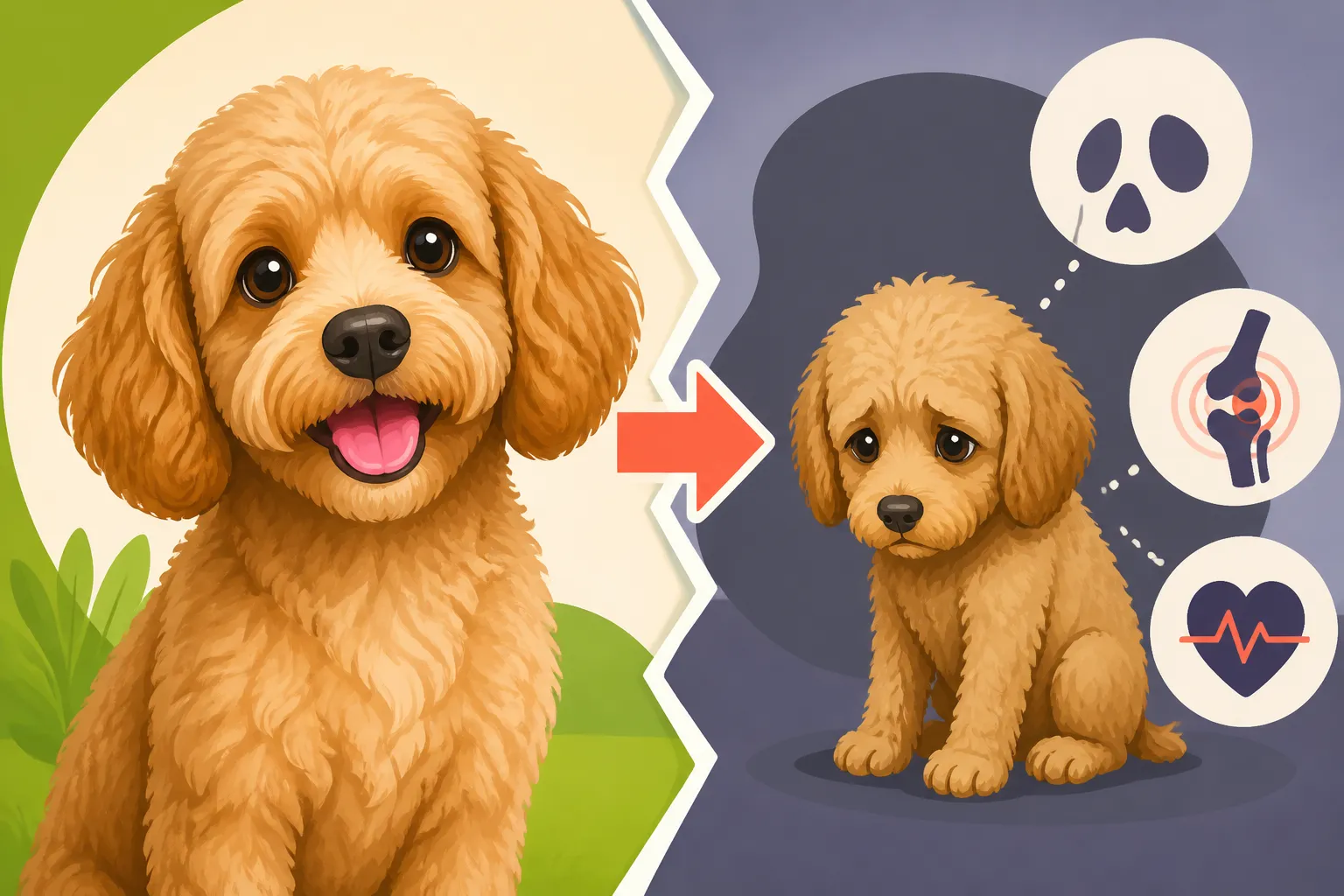
What Breeding Ever Smaller Costs a Cockapoo
A very small Cockapoo can look like the perfect fit for a small home, but “teacup” marketing can hide important questions about health, breeding choices, and the dog’s needs as it grows. This guide explains what breeding for ever-smaller Cockapoos may cost the puppies and their mothers, what extra care a tiny dog may need, and how to assess a breeder’s claims.
What “ever smaller” means for a Cockapoo
Teacup is a sales label, not a dependable size guarantee
Cockapoos come in a range of sizes because they are a cross between a Cocker Spaniel and a Poodle, and the size of the Poodle parent can vary. Breeders and sellers sometimes use labels such as “teacup” to describe especially small dogs, but the label does not guarantee a particular adult weight, height, or body type. It is not a separate, reliably predictable Cockapoo size class.
That matters when you are trying to picture life with the dog. A puppy may look tiny in a listing photo yet grow larger than expected; another may remain unusually small but need more careful handling and monitoring. The parents’ sizes and family history can offer clues, but they do not make a precise promise. For context on the broader range, see The Four Cockapoo Sizes.
Be cautious when an advertisement treats a tiny adult size as a certainty or the main selling point. A responsible breeder should be willing to discuss the individual parents, the puppies’ growth, and what they can and cannot predict. Whether a Cockapoo Breeder Can Promise a Size is a useful companion topic if you are weighing a breeder’s estimate.
Why breeding for extreme smallness raises concerns
A small Cockapoo is not automatically unhealthy, and small size alone does not prove that a breeder has acted irresponsibly. The concern is the breeding goal: repeatedly selecting dogs primarily because they are the smallest can put appearance or marketing appeal ahead of sound structure, health, temperament, and the mother’s welfare.
A naturally small adult dog can be healthy. But if a breeder aims for extreme size by pairing unusually small dogs without carefully considering their health and build, the resulting puppies may be more vulnerable. Tiny puppies have less room for error if they miss meals, become chilled, or develop an illness. The risks depend on the individual puppy and its health—not merely the label used in an advert.
Ask what “small” means in that breeder’s program. Do they mean a modestly sized Cockapoo from appropriately health-tested parents, or are they promising an exceptionally tiny dog at any cost? The difference is important. A breeder who welcomes questions about health and explains uncertainty is generally more reassuring than one who relies on a catchy label or pressures you to reserve a puppy quickly.
Potential costs to the mother and puppies
The mother’s health should be part of the conversation
Breeding decisions affect the mother as well as the litter. A female dog that is very small for her build may face added challenges during pregnancy and delivery, though the level of risk depends on her individual health, anatomy, and the puppies. Responsible breeding involves veterinary care, sensible decisions about whether a particular dog should be bred, and a plan for urgent complications—not simply matching two small dogs.
Ask how the breeder assesses the mother’s suitability for breeding and what veterinary support is available before, during, and after whelping. The breeder should be able to talk plainly about the mother’s health history and the care given to her, rather than focusing only on how small the puppies are expected to be.
It is also reasonable to ask how often the mother has been bred and what happens when a pregnancy or delivery does not go as expected. You are not being difficult by asking. You are trying to understand whether the breeding program treats the dam as an individual dog whose wellbeing matters, rather than as a way to produce a marketable size.
Tiny puppies may need closer observation
Very small puppies can be more vulnerable to practical problems such as missing a feed, getting chilled, or becoming weak when unwell. That does not mean every tiny Cockapoo will experience these problems. It does mean that a breeder should monitor each puppy closely and be prepared to contact a veterinarian when a puppy is not thriving.
Before choosing a puppy, ask how the litter is weighed and monitored, how the breeder checks that every puppy is feeding, and what signs would trigger veterinary attention. A vague answer such as “they’re all fine” is less useful than a clear description of routine care and what the breeder does if one puppy falls behind.
The consequences can continue after the puppy comes home. A small dog may need carefully managed meals, safe handling, and an appropriately fitted harness and carrier. A retailer such as Chewy can be one place to compare small-dog equipment, but fit and safety matter more than a size label on a product page. Check that a harness sits securely without restricting movement, and ask your veterinarian about any special feeding needs.
Health and day-to-day care for a very small Cockapoo
Size can affect feeding, handling, and safety
A tiny puppy has a small body and may not cope well with long gaps between meals in the same way as a larger dog. Feeding frequency should be based on the puppy’s age, condition, and veterinary guidance—not a generic online schedule. For more detail, see Feeding a Teacup Cockapoo and Whether a Teacup Cockapoo Puppy Needs Feeding Four Times.
At home, think about hazards that are easy to overlook. A fall from a sofa, a clumsy step, or a larger dog’s enthusiastic play can pose a greater risk to a very small puppy than to a sturdier adult. Use barriers where needed, supervise interactions with children and other pets, and give the puppy a quiet place to rest. Lifting should be gentle and secure, supporting the chest and hindquarters rather than picking the dog up by its front legs.
When shopping for supplies, avoid assuming that the smallest product is automatically the safest. Chewy may be useful for comparing carriers, bowls, or harness options, but check measurements, construction, and suitability for the dog’s actual weight and shape. For food, follow the breeder’s transition plan and get veterinary advice before making changes, especially if the puppy is eating poorly or gaining weight unevenly.
Small size does not remove the need for health screening
Cockapoos can inherit health concerns from either parent breed, and being small does not protect them from inherited conditions. Ask what health screening was appropriate for the parents and request documentation rather than relying on a verbal assurance that the dogs are “healthy.” The Five Certificates a Cockapoo Breeder Should Show can help you understand what records to discuss.
Small dogs can also have practical health issues that deserve attention. Slipping kneecaps, known as patellar luxation, are one concern to ask a veterinarian about; Slipping Kneecaps in a Toy Cockapoo explores this in more detail. Crowded teeth may also need monitoring in small mouths, so dental crowding in a small Cockapoo's mouth is relevant when you are thinking about routine care.
A puppy’s early veterinary examination is important, but it is not a guarantee that no health problem will ever appear. Ask what the breeder’s health agreement covers, what it excludes, and what steps they expect you to take if the puppy becomes unwell. A good discussion should include everyday prevention and long-term care, not just a certificate or a promise.
How to assess a breeder’s size claims
Questions worth asking before you reserve a puppy
A careful conversation can reveal whether a breeder is prioritizing healthy dogs or selling an image. Ask to learn about both parents, their adult size and health, how the litter is being raised, and how the breeder decides which puppy is suited to which home. You can use What to Ask a Cockapoo Breeder Before Paying as a checklist.
| Ask about | What a helpful answer should clarify |
|---|---|
| Expected adult size | How the estimate was formed and why it is not a guarantee |
| Parent dogs | Their health, temperament, build, and adult size |
| Puppy growth | How each puppy is monitored and what happens if one is not thriving |
| Veterinary care | Which examinations or care the litter has received |
| Breeding decisions | How the breeder considers the mother’s health and suitability |
| Ongoing support | Who to contact if a health or adjustment concern comes up |
Be wary if the breeder will not let you ask questions, dismisses health concerns, or insists that the puppy will stay exceptionally small. Also be cautious if you are asked to pay quickly to secure a puppy before you have seen meaningful information about its care and parentage. A thoughtful breeder should make room for you to consider whether this particular dog is a good match.
If you are still exploring, Whether a Teacup Cockapoo Should Be Bred at All offers another angle on the ethical questions behind breeding for the smallest possible size. The goal is not to condemn every small Cockapoo. It is to separate a naturally small, well-cared-for dog from a sales promise that may put size ahead of the dog’s welfare.
Consider the adult dog you can care for, not just the puppy
It is easy to focus on how portable a tiny puppy looks. A more useful question is whether you can meet the needs of the dog it becomes, including possible veterinary care, supervision, grooming, training, and safe exercise. Small dogs still need to learn calmly, explore their surroundings, and build confidence; keeping a puppy sheltered from every ordinary experience can create its own challenges.
Think about the people and pets in your household. A home with young children may need especially clear rules about gentle handling and close supervision. If you have a larger dog, plan introductions and play carefully so the size difference does not lead to accidental injury. If you live in a small apartment, remember that a very small dog still needs enrichment, training, and regular opportunities to go outside.
The best decision is not necessarily choosing the smallest puppy available. It is choosing a well-socialized dog from a breeder who is open about health, growth, and uncertainty—and whose approach does not treat extreme smallness as more important than a puppy’s wellbeing.
Disclaimer
This article is for general informational purposes only and does not constitute professional advice. Laws, prices and regulations vary by location and change over time. Consult a qualified professional for guidance on your specific situation.