Whether One Cockapoo Club Bans Backcrossing
It's completely understandable to feel a bit lost in the sea of information surrounding Cockapoo breeding. When you're looking for a new furry family member, you want to ensure they come from responsible origins, and the rules of different clubs can be incredibly confusing, especially when terms like "backcrossing" are thrown around. This guide aims to demystify the breeding practices of the major Cockapoo clubs, specifically addressing whether one club prohibits backcrossing and what that truly means for you and your future puppy.
Understanding Cockapoo Generations and Backcrossing
Before we dive into what the various Cockapoo clubs say, it's really helpful to get a grasp on the different generations of Cockapoos and what backcrossing actually entails. This isn't just breeder jargon; it directly impacts traits like coat type, shedding, and even temperament, which are often top concerns for prospective owners.
What Exactly is Backcrossing in the Cockapoo World?
When we talk about Cockapoos, we're discussing a hybrid or "designer" dog, created by crossing a Cocker Spaniel with a Poodle. The generation system helps us track the lineage.
- F1 Generation: This is the first filial generation, a direct cross between a purebred Cocker Spaniel and a purebred Poodle. They are 50% Cocker Spaniel and 50% Poodle. The traits of an F1 can be quite varied, as it's the first mix of two distinct gene pools. You might get a curlier coat, a wavier coat, or even a straighter coat that sheds more.
- F1b Generation: This is where backcrossing comes in! An F1b (first filial backcross) Cockapoo is the result of breeding an F1 Cockapoo back to one of its parent breeds. Most commonly, an F1 Cockapoo is bred back to a purebred Poodle. This creates a puppy that is roughly 75% Poodle and 25% Cocker Spaniel. The primary reason for this specific backcross is usually to enhance the Poodle traits, particularly the non-shedding, curly coat, which is highly sought after by those with allergies or simply a preference for less mess around the house. Less commonly, an F1 Cockapoo could be bred back to a Cocker Spaniel, resulting in a dog that is 75% Cocker and 25% Poodle, but this is rare because it tends to increase shedding.
- F2 Generation: This is a second filial generation, meaning two F1 Cockapoos are bred together. Here, the genetic lottery gets even more interesting, as the offspring can revert to looking more like a Cocker, more like a Poodle, or somewhere in between.
- Multigenerational (F3, F4, etc.): These are Cockapoos bred from two F2 Cockapoos, or an F2 bred to an F1b, and so on. The idea behind multigenerational breeding is often to stabilize traits and create more consistent puppies that reliably exhibit the desired "Cockapoo look and temperament."
So, to be clear, backcrossing is specifically when a Cockapoo (typically an F1) is bred back to one of its original parent breeds (usually a Poodle). It's a deliberate choice by breeders to achieve certain characteristics. This differs from breeding two Cockapoos together, which creates an F2 or later generation.
Why the Controversy Around Backcrossing?
Backcrossing, particularly the F1b generation, has its champions and its critics within the Cockapoo community. Understanding these viewpoints can help you appreciate why clubs might have different regulations.
On one hand, many breeders use F1b backcrossing as a tool to achieve greater predictability in a litter. If a family is specifically looking for a low-shedding, allergy-friendly dog, breeding an F1 Cockapoo back to a Poodle can significantly increase the chances of puppies inheriting those desirable Poodle coat traits. It can also help to standardize the look and feel of the "Cockapoo" as a distinct type of dog. For example, if an F1 litter produced some puppies with straighter, shedding coats, an F1b pairing to a Poodle could help ensure the next litter has that characteristic curl and low-shedding quality. This is a common practice, and many families specifically seek out F1b Cockapoos for this very reason. It often comes down to managing The Curl Gene and Where a Cockapoo's Coat Lands and achieving that quintessential "doodle" look.
However, some argue that excessive or undirected backcrossing can dilute the unique "hybrid vigor" often associated with F1 crosses. Hybrid vigor, or heterosis, refers to the increased strength, health, and vitality often seen in the first cross between two purebred lines. By breeding back to one parent breed, you're increasing the genetic input from one side, which could potentially bring forward more of that breed's specific health concerns or temperament quirks.
Another point of discussion often revolves around the goal of the "Cockapoo" itself. Is it meant to be a consistent breed, or more of an adaptable hybrid? Those who lean towards it becoming a standardized breed might advocate for breeding Cockapoo to Cockapoo (F2, F3, etc.) to develop consistent traits without constantly relying on backcrossing to the parent breeds. This allows for the establishment of its own unique characteristics. On the other hand, for a breed that doesn't yet have official recognition, backcrossing remains a valuable tool for breeders to manage desired traits effectively, especially if you're trying to achieve a more consistent The Three Cockapoo Coat Types and Their Upkeep.
Ultimately, the "controversy" isn't usually about whether backcrossing is inherently "good" or "bad," but rather about how it's used as a breeding tool, what goals it serves, and how different organizations believe the Cockapoo should evolve.
The Two Major Cockapoo Clubs and Their Breeding Philosophies
When we talk about "the" Cockapoo clubs, we're generally referring to two main organizations that have been influential in establishing guidelines and fostering the breed in North America: the Cockapoo Club of America (CCA) and the American Cockapoo Club (ACC). Both clubs share a passion for the Cockapoo, but their approaches to breeding, including backcrossing, can indeed differ in their specifics and emphasis. Understanding these differences is crucial when asking about bans.
The Cockapoo Club of America (CCA) Approach
The Cockapoo Club of America (CCA), formed in 1999, is often considered one of the longest-standing organizations dedicated to the Cockapoo. Their philosophy tends to be quite inclusive regarding generational breeding, seeing it as a path to developing and standardizing the Cockapoo as a distinct breed.
The CCA does not ban backcrossing. In fact, they openly recognize and register F1b Cockapoos. This is a very important distinction. They understand that backcrossing an F1 Cockapoo to a Poodle (creating an F1b) is a widely accepted and often necessary practice to achieve certain desired traits, particularly the non-shedding, allergy-friendly coat that many families seek. Many prospective owners are specifically looking for that dense, curly coat, and an F1b generation is a reliable way to get it. They encourage responsible breeding practices across all generations, focusing on health testing and temperament.
The CCA's approach generally supports the careful use of various generational crosses (F1, F1b, F2, Multigen) to help breeders work towards a consistent Cockapoo type. They believe that by allowing these different pairings, breeders can better refine desired characteristics over time. They emphasize health screening for both parent breeds and subsequent Cockapoo generations to ensure the health of the puppies, no matter their generational status. If you're wondering What a Cockapoo Club Registered Puppy Costs, understanding their generational acceptance is key. You'll find breeders adhering to CCA guidelines offering F1b puppies alongside F1 and multi-gen litters.
The American Cockapoo Club (ACC) Perspective
The American Cockapoo Club (ACC) also plays a significant role in guiding Cockapoo breeders. Their approach, while similar in its core dedication to the breed, has historically placed a slightly different emphasis on breeding generations, sometimes leading to the perception of stricter rules or even a "ban" on certain practices.
Like the CCA, the ACC does not explicitly ban F1b backcrossing to a Poodle. They understand the utility of F1b generations for achieving specific coat qualities. However, the ACC has, at times, put a stronger emphasis on breeding "Cockapoo to Cockapoo" (F2 and beyond) as the pathway to breed development and true consistency, rather than continually backcrossing to parent breeds. The goal here is to establish the Cockapoo's own genetic identity, rather than perpetually relying on the original Poodle or Cocker input.
Where the perception of a "ban" might arise is in their criteria for registration or their stated preferences for what constitutes an ideal path toward the Cockapoo becoming its own recognizable breed. While F1b (Cockapoo x Poodle) is generally accepted, the ACC might have more stringent guidelines or less encouragement for other, less common forms of backcrossing, or for breeding beyond certain generations without a clear path to consistency. They often focus on the idea of breeding towards a standard, and some might interpret this as discouraging practices that could lead to less predictable outcomes or a dilution of the emerging breed characteristics. When considering Whether Either Cockapoo Registry Adds Value, these nuances in breeding philosophy are worth exploring.
It's also worth noting that the rules and guidelines of clubs can evolve. It's always best to check the most current information directly on their official websites or speak with breeders who are members of these organizations. What might have been a strong preference or stricter guideline years ago may have softened or changed as the breed itself has gained more understanding and stability through multigenerational breeding efforts. For breeders committed to the breed's future, Whether Two Registries Have Made Cockapoos Healthier is a constant point of discussion and refinement of standards.
The Impact of Club Rules on Cockapoo Breeding and Owners
The subtle differences in the philosophies and rules of the Cockapoo clubs, especially concerning breeding practices like backcrossing, have tangible impacts. These impacts ripple through the breeding community, influence the availability and characteristics of puppies, and ultimately affect prospective owners who are trying to make an informed choice.
How Breeder Choices Affect Puppy Buyers
A breeder's adherence to one club's guidelines, or their personal interpretation of responsible breeding, directly shapes the puppies they produce. If a breeder is primarily focused on creating low-shedding, allergy-friendly Cockapoos, they will very likely incorporate F1b (backcrossed to a Poodle) pairings into their program. This means that a significant portion of the Cockapoo puppies available on the market, especially those advertised as "hypoallergenic," will be F1b generation dogs.
For buyers, this is generally a good thing. It means you have a higher chance of finding a puppy with the desired coat characteristics. A breeder who follows club guidelines (which often include health testing and ethical practices) and utilizes backcrossing thoughtfully is often providing a well-considered option for families. If you’re looking for a dog that is less likely to trigger allergies or leave hair all over your furniture, an F1b Cockapoo is often a safer bet than a pure F1, which can be a bit more of a gamble on the coat front. However, it’s important to remember that no dog is truly 100% hypoallergenic, and individual reactions can vary.
Breeders who are strictly adhering to a club's preference for F2 or later generations (Cockapoo-to-Cockapoo breeding) might produce litters that are celebrated for their potential to move the "breed" forward. These puppies might have a more consistent "Cockapoo" look and temperament, having been bred to refine those traits internally rather than reintroducing parent-breed genetics. However, without careful selection, F2 litters can sometimes be less predictable in coat type and shedding than F1b litters. Understanding What the Cockapoo Clubs Mean by F1 and F1b is therefore essential for any serious puppy search.
It also affects the availability. If one club were to truly "ban" backcrossing, it would drastically reduce the number of F1b puppies available from ethically-minded breeders associated with that club. This could make it harder for families seeking that specific combination of traits to find a suitable puppy, potentially driving them towards less scrupulous breeders who don't follow any ethical guidelines.
Navigating Breeding Standards When Choosing a Puppy
As a prospective Cockapoo owner, it’s not enough to simply ask if a breeder is affiliated with a club; you need to understand what that affiliation means and how it impacts their practices. Here's how you can navigate these standards:
- Ask About Generations and Goals: Don't be shy about asking a breeder what generation their puppies are (F1, F1b, F2, etc.) and why they chose that particular pairing. A good breeder will be transparent about their breeding philosophy and their goals for each litter. For example, they might explain that they chose an F1b pairing to ensure a high probability of low-shedding coats, or an F2 pairing to further refine temperament. Ask them to show you The Five Certificates a Cockapoo Breeder Should Show including relevant parentage and health clearances.
- Inquire About Health Testing: Regardless of a club's stance on backcrossing, responsible breeding always hinges on thorough health testing. Both Cockapoo parent breeds (Cocker Spaniels and Poodles) are prone to certain genetic conditions, so it's vital that breeders test their breeding stock. Ask to see proof of health clearances for both parents, including checks for eyes, hips, and other breed-specific concerns. You can read more about Whether Both Cockapoo Parents Must Be prcd-PRA Clear for one example of a crucial test.
- Understand Coat Guarantees: If a non-shedding coat is paramount to you, discuss this explicitly with the breeder. While an F1b is generally a good bet, no breeder can offer a 100% guarantee against any shedding or any allergic reaction. Responsible breeders will explain the probabilities and limitations. They might even be able to tell you Whether a Cockapoo Without a Beard Sheds More, as this is often an indicator of the "furnishings" gene associated with low shedding.
- Visit the Breeder and Parents (If Possible): This is perhaps the most important step. Seeing the breeding environment and meeting the parent dogs (at least the mother, and ideally the father if he lives on-site) gives you invaluable insight into the breeder's practices and the temperament of the dogs. It allows you to see for yourself the coat types and general health. Be wary of breeders who won't allow visits or are vague about their facilities.
- Check for Contracts and Guarantees: A reputable breeder will provide a written contract that outlines health guarantees, return policies, and expectations for the puppy's care. Ensure you understand what is covered, for instance, Whether a Cockapoo Contract Covers Kidney Disease or other genetic conditions.
- Seek References: Ask for references from previous puppy buyers. Their experiences can offer a candid look at the breeder's integrity and support.
- Don't Rush Your Decision: The excitement of getting a new puppy is real, but a Cockapoo is a long-term commitment. Take your time, do your homework, and choose a breeder you feel confident and comfortable with, one who aligns with your values regarding animal welfare and responsible breeding. You might find a wider selection of items you'll need for your new puppy at places like Chewy, from food bowls to bedding and toys, but finding the right, responsibly bred puppy takes much more effort and investigation.
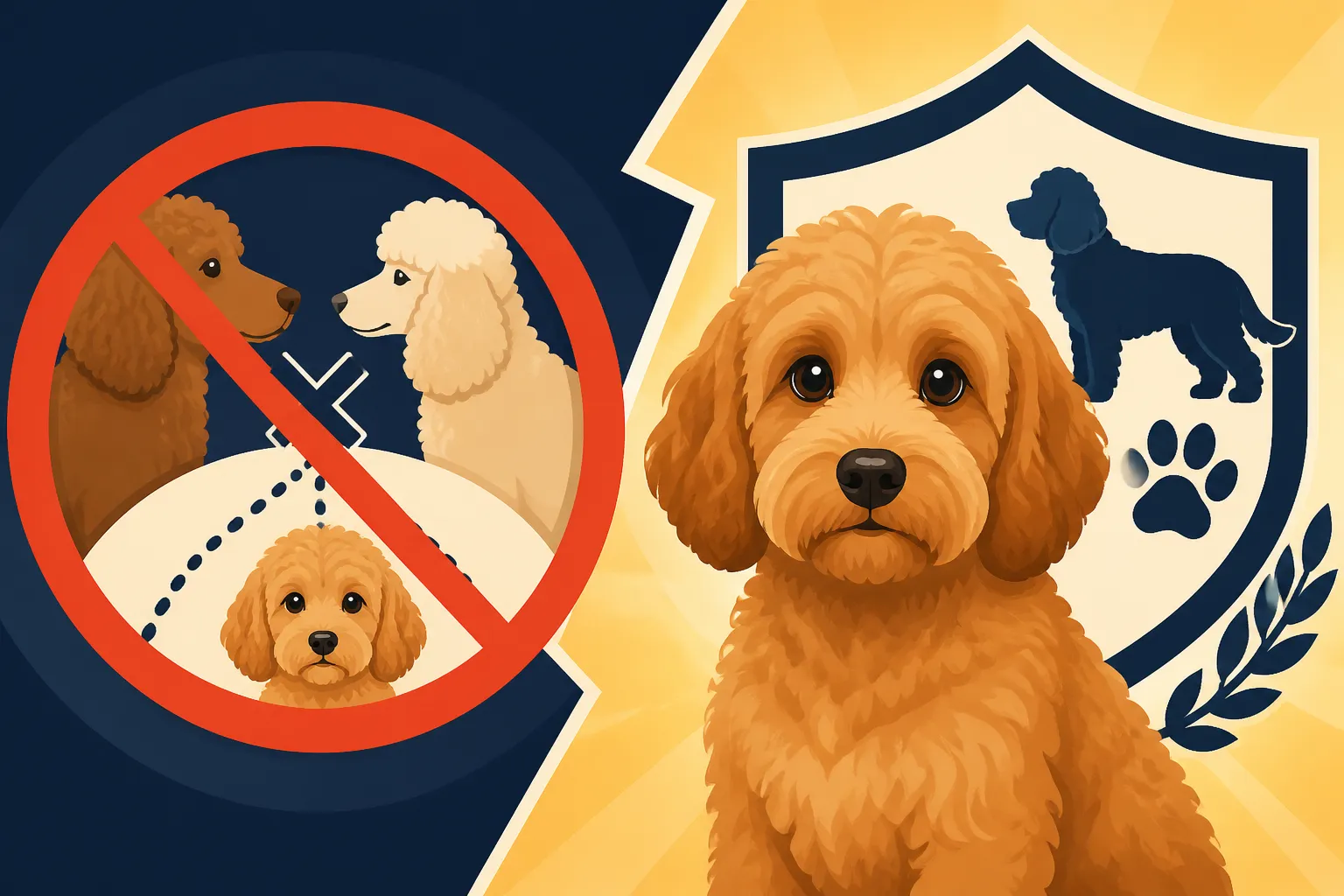
In summary, neither of the main Cockapoo clubs (CCA or ACC) imposes an outright "ban" on backcrossing, particularly for the F1b generation which is widely accepted as a way to produce lower-shedding coats. However, their philosophies and emphasis on different generational pairings may vary, influencing breeders' choices and the characteristics of available puppies. Your role as a prospective owner is to educate yourself on these nuances and engage in thorough due diligence to ensure you bring home a healthy, well-adjusted Cockapoo from a responsible source.
Disclaimer
This article is for general informational purposes only and does not constitute professional advice. Laws, prices and regulations vary by location and change over time. Consult a qualified professional for guidance on your specific situation.