The Age a Cockapoo’s Recall Falls Apart
It’s a scenario many Cockapoo owners know all too well: your sweet, attentive puppy, who once came bounding to you at the slightest whisper, suddenly seems to develop selective hearing around 6-18 months of age. That once-reliable recall, which you worked so hard on, can feel like it's completely fallen apart, leaving you feeling frustrated and a little panicked every time your beloved companion spots something interesting across the park. This guide will delve into why this common shift occurs and, crucially, how to rebuild and maintain a dependable recall for your Cockapoo.
The Adolescent Reality: When Recall Takes a Hit
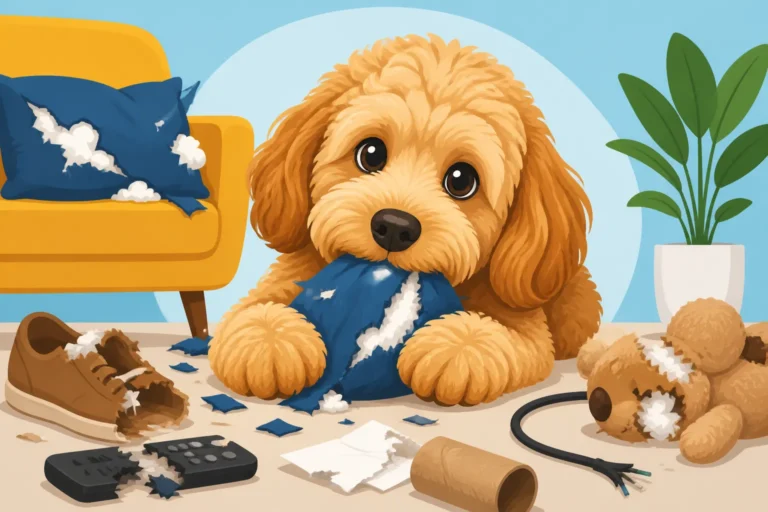
It feels like one day your Cockapoo is a baby, and the next they're a teenager, full of independent thoughts and a sudden urge to explore the world without consulting you. This period, often around six months to two years of age, is a prime time for recall issues to surface. It's not just a Cockapoo thing; it's a common developmental stage for many breeds.
Why Puppy Recall Isn't Forever
Think back to when your Cockapoo was a tiny pup. They were likely a little shadow, sticking close to you because you were their entire world and their source of safety, food, and fun. Their brains were like sponges, eager to please and absorb every lesson. They hadn't fully grasped the vast, exciting expanse beyond your feet, so staying near you was the most logical, comforting, and rewarding choice. This early 'recall' was often more instinctual, a natural part of their attachment to their primary caregiver.
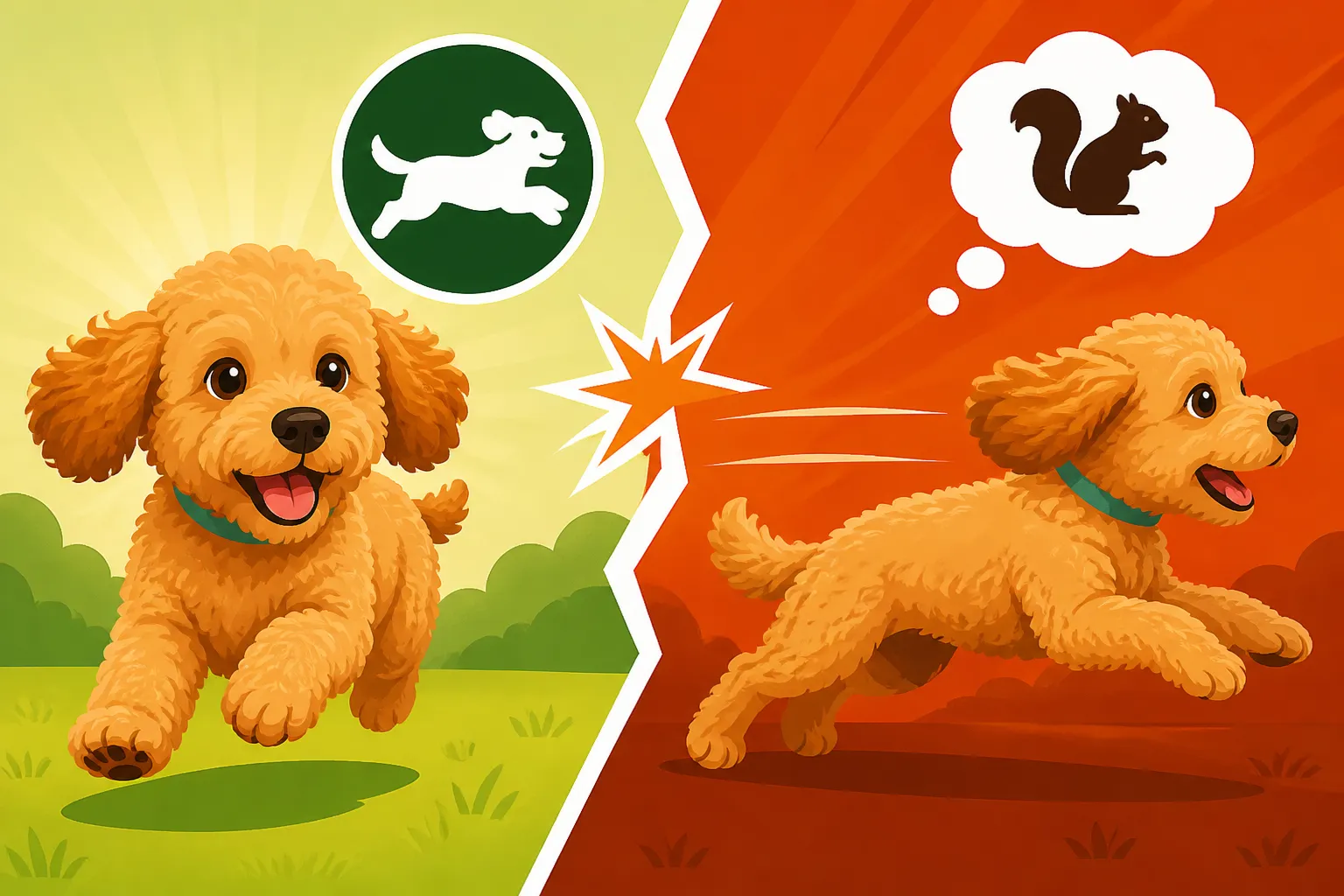
As your Cockapoo matures, their brain undergoes significant changes. They're growing in confidence, their senses are fully developed, and the world outside the immediate vicinity of their human becomes a dazzling, irresistible playground. Every new scent, every rustle in the bushes, every distant squirrel becomes a siren call, pulling them away from you. What was once an instinct to stay close now competes with an instinct to explore, chase, and investigate. This isn't defiance; it's a natural part of their canine development, but it can certainly feel like they’ve simply forgotten everything you taught them.
The Influence of Breed Instincts on Wandering
The Cockapoo's delightful personality is a blend of its parent breeds: the Cocker Spaniel and the Poodle. While the Poodle contributes intelligence and often a biddable nature, the Cocker Spaniel brings a strong heritage of working as a gundog, with an incredible nose and an inherent desire to flush out game. This means your Cockapoo is often genetically predisposed to follow their nose, quartering the ground in search of interesting scents. The Flushing Drive Still Alive in a Cockapoo is a powerful instinct.
Around adolescence, these instincts really kick in. You might notice your Cockapoo's nose glued to the ground, pulling them irresistibly towards a hidden scent trail. A distant bird or a scurrying squirrel can become an obsession, triggering a chase drive that completely overrides any previous training. They're not intentionally ignoring you; they are simply hardwired to engage with these environmental stimuli. Understanding this strong drive is key to empathetically approaching their recall training. It’s not about breaking their spirit or suppressing their instincts, but about teaching them that returning to you is even more rewarding than whatever irresistible thing they've found. Whether a Cockapoo Ignores You Once It Scents Something highlights just how powerful that scent can be.
Recognizing the Early Warning Signs
A failing recall doesn't usually happen overnight. It's often a gradual erosion of reliability, with subtle shifts in behavior that, if not addressed, can lead to bigger problems down the line. Catching these early signs can make a huge difference in preventing a complete recall breakdown.
Subtle Shifts in Responsiveness
Initially, you might notice your Cockapoo hesitating more when you call them. Instead of a swift, direct return, they might take a moment to finish sniffing that interesting patch of grass, or take a wider arc back to you. They might even give you a quick glance before making a conscious decision to either return or continue their investigation. This is them weighing their options: "Is what I'm doing more rewarding than what my human is offering?" If the answer is often "no," the habit of ignoring you begins to form.
Another sign is needing to call your Cockapoo multiple times before they respond. It's easy for us, as owners, to fall into the trap of repeating their name or the recall cue over and over. However, this actually teaches them that they don't need to respond on the first call. They learn that the cue only matters after the third or fourth repetition, or worse, that it’s just background noise. This creates a dangerous precedent where your voice loses its urgency and value in their mind, making it harder to get their attention when it truly matters.
The Power of Distractions
As your Cockapoo grows, the world becomes a place of endless fascination. The sight of another dog bounding across the park, the scent of a rabbit trail, or the sudden flight of a bird can become overwhelmingly distracting. What might have been a minor distraction during puppyhood can now trigger an immediate and powerful response, causing them to bolt. Whether a Cockapoo Comes Back From a Rabbit often depends heavily on their age and training.
Picture this: you're walking your Cockapoo in an open field. Suddenly, a squirrel darts across their path. In their younger days, they might have looked, wagged, and then re-engaged with you. Now, they might be off like a shot, deaf to your frantic calls. This isn't just a brief moment of inattention; it's their prey drive kicking in, and it's incredibly self-rewarding. Every successful chase, even if they don't catch anything, reinforces the idea that chasing is more fun than coming back to you. Similarly, a busy park full of other dogs can make your Cockapoo forget you exist, eager to greet and play. Whether a Cockapoo Bolts After Birds is a common challenge for owners.
Rebuilding a Reliable Recall: Back to Basics
Don't despair if your Cockapoo's recall has taken a nosedive. It's a fixable problem, but it requires patience, consistency, and a willingness to go back to basics, even with an older dog. You're essentially retraining them from the ground up, making yourself the most exciting and rewarding thing in their environment.
The Importance of High-Value Rewards
If you're still using plain old kibble for recall practice, it's time to level up! For an adolescent Cockapoo facing compelling distractions, a standard dry treat simply won't cut it. You need something truly irresistible, something they only get for coming when called, especially in challenging environments. Think of it as currency – you need to offer the highest denomination for the most important command.
What constitutes a "high-value" reward? Cooked chicken breast, bits of cheese, hot dog slices, or specially formulated soft, smelly training treats are often excellent choices. You want something small, easy to swallow quickly, and incredibly delicious. For an exceptional recall, especially when they've ignored a major distraction to come to you, offer a "jackpot" – a handful of these amazing treats, showered with praise. This creates a powerful positive association, teaching them that returning to you isn't just good, it's fantastic. Pair these treats with an excited, happy tone of voice, making yourself sound like the most fun thing on four legs!
Practice, Practice, Practice: The Controlled Environment First
Just like building any new skill, recall needs to start in a low-distraction environment and gradually progress. Begin in your own fenced yard or a very quiet, secure area where you know there are no major temptations. Practice calling your Cockapoo when they are only a few feet away, making it a super easy win. As they succeed, gradually increase the distance and introduce very mild distractions, like a toy on the ground or a family member walking by. Building a Recall a Cockapoo Answers effectively means making it irresistible.
Make recall a fun game! Play "hide and seek" in your house or yard, ducking behind furniture and then calling them with enthusiasm when they find you, rewarding them richly. This teaches them that coming to you is an exciting adventure, not a chore. A crucial rule: never call your Cockapoo to you for something unpleasant, like leaving the park or giving them a bath, unless you immediately reward them and then release them again. You want "come" to always predict something wonderful. If you call them to put them on the leash to leave, reward them heavily, then release them for a quick sniff before actually exiting.
Utilizing Long Lines and Whistles for Safety and Consistency
For outdoor practice in areas with more distractions, a long line is your absolute best friend. It allows your Cockapoo the illusion of freedom while giving you a safety net. You can let them roam 10, 15, even 30 feet away, and practice your recall. If they get distracted and start to ignore you, you can gently reel them in, rather than letting them self-reward by continuing to chase or sniff. This ensures they always complete the recall, even if it's with a little help, preventing them from learning that they can ignore you. You can find durable long lines made of nylon or biothane on retailers like Amazon, which are fantastic for resisting tangles and moisture. Working a Cockapoo on a Long Line is an invaluable tool for this stage.
Consider incorporating a whistle into your recall training. A whistle provides a consistent, clear sound that cuts through environmental noise and distractions far better than your voice, especially when your Cockapoo is further away or heavily focused on a scent. Start by pairing the whistle with your verbal "come" command and a high-value treat, always blowing the whistle before you give the verbal cue and before they return. Over time, your Cockapoo will associate the whistle with the immediate reward of returning to you, making it an incredibly powerful recall tool, especially when their nose is glued to the ground. Whether a Whistle Works on a Cockapoo is often a resounding yes for scent-driven breeds.
Here's a simple table to illustrate recall training progression:
| Distraction Level | Environment | Practice Technique | Reward Type | Key Focus |
|---|---|---|---|---|
| Low | Indoors, Fenced Yard | Short distances, "Hide & Seek," call & treat | High-value treats, praise | Building positive association |
| Medium | Quiet Park (on long line) | Gradual distance increase, mild distractions | Jackpot treats, enthusiastic praise | Overcoming minor distractions, consistency |
| High | Busy Park (on long line) | Intense distractions (other dogs, people, scents) | Ultimate jackpot treats, play | Proofing recall, reliability under pressure |
Maintaining a Strong Recall for Life
Recall isn't a "set it and forget it" command. It's a skill that needs regular maintenance and reinforcement throughout your Cockapoo's life, just like any other important behavior. The world is constantly changing, and so are the temptations your dog will encounter.
Making Recall a Continuous Game
Even when your Cockapoo has a fantastic recall, you should never stop practicing it. Incorporate impromptu recall checks during every walk. Call them to you, even if they're already heading your way, reward them generously, and then immediately release them to continue exploring. This keeps the behavior fresh, reinforces its value, and prevents it from becoming stale. Vary the locations where you practice – a different park, a friend's yard, a new trail – to help your Cockapoo generalize the "come" command to any environment.
Think of it as keeping your recall muscles strong. If you only use them in emergencies, they'll weaken. If you make recall a fun, unpredictable game that always results in something amazing, your Cockapoo will be much more likely to choose you over a distraction. Remember, you're competing with the most exciting smells, sights, and sounds the world has to offer, so you need to be consistently more rewarding.
Knowing When to Seek Professional Guidance
While many owners can successfully navigate the adolescent recall slump with dedication and consistent training, some Cockapoos present more significant challenges. If your dog has a particularly strong prey drive, shows signs of fear or anxiety that contribute to them bolting, or if you simply feel overwhelmed and frustrated, seeking professional guidance is an excellent step. There's no shame in needing extra help – it's a sign of a responsible owner committed to their dog's safety and well-being.
A certified professional dog trainer can assess your Cockapoo's specific challenges and temperament, offering tailored strategies and hands-on support. They can teach you advanced techniques, help you understand your dog's motivations, and provide a structured environment for practice. Many fantastic resources are available, from local in-person classes to comprehensive online training programs like those offered by BAXTER & Bella, which can guide you through every step of the recall journey. What a Cockapoo Puppy Should Learn First and Whether a Cockapoo Concentrates in a Class are great starting points for foundational training. Investing in expert help can transform your relationship with your Cockapoo and ensure their safety for years to come.
Disclaimer
This article is for general informational purposes only and does not constitute professional advice. Laws, prices and regulations vary by location and change over time. Consult a qualified professional for guidance on your specific situation.