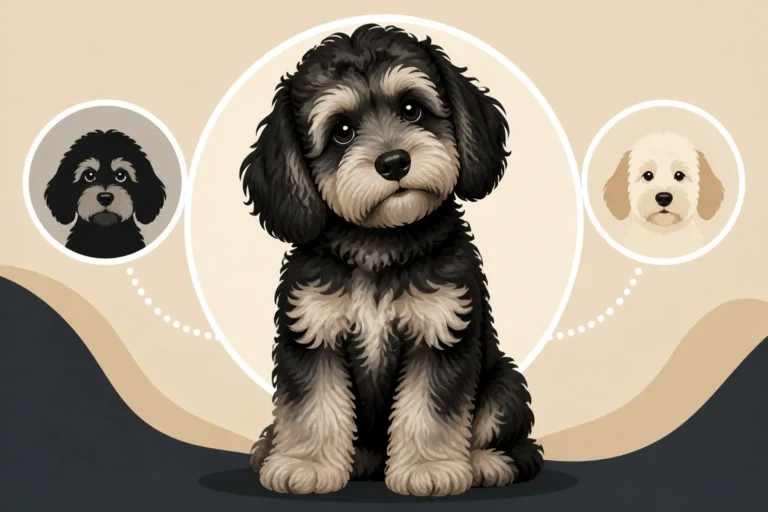
The Colors a Cockapoo Comes In
A Cockapoo puppy’s color can look quite different from the coat it has as an adult, and names like “roan,” “parti,” and “phantom” can make choosing a puppy confusing. This guide explains the colors and patterns Cockapoos may have, how coats can change with age, and what color can—and cannot—tell you about a dog’s health or future appearance.
Cockapoo colors and patterns
Cockapoos can come in many colors because they inherit coat genes from both Cocker Spaniels and Poodles. Common colors include black, chocolate, red, apricot, cream, buff, and white. Some dogs have one main color, while others have patches or a mix of shades.
There is no single color that defines a Cockapoo. Even puppies from the same litter can look quite different, and coat color alone does not tell you whether a dog will shed, what its adult coat will feel like, or what its temperament will be like.
Solid colors and mixed shades
A solid-colored Cockapoo has a coat that appears mostly one color, such as black, red, chocolate, cream, or buff. “Solid” does not always mean every strand is an identical shade. A dog may have lighter areas on its chest, chin, or feet, or a few white hairs mixed into an otherwise dark coat.
Some color names describe a range rather than one precise shade. Red, for example, can mean anything from a rich coppery tone to a softer auburn. Apricot can look warm and orange-tinted, while cream is usually paler. Lighting, coat length, and grooming can all affect how a color appears in photographs, so it is sensible to ask for pictures taken in natural light.
Chocolate and black coats can also show subtle variation as the dog grows. Sun exposure, coat texture, and changes in the adult coat may make a dark dog look lighter or more muted in places. That does not necessarily mean the coat is damaged or unhealthy. If a color change comes with itching, sores, hair loss, or a sudden change in skin condition, though, it is worth discussing with a veterinarian.
Parti, roan, phantom, and merle patterns
A parti Cockapoo has a coat with large areas of white alongside another color. The colored patches may be black, chocolate, red, or another shade. The amount and placement of white can vary, even between littermates. For a closer look at this pattern, see How Common a Parti Cockapoo Is.
Roan describes a coat with colored and white hairs mixed together, often giving the dog a flecked or softly blended appearance. A roan puppy’s pattern may be more noticeable as the coat grows, and curls can make it harder to see individual hairs. Whether a Roan Cockapoo's Pattern Shows Through the Curl explores why the pattern can look different depending on coat texture and length.
Phantom coloring usually means a dog has a darker base coat with lighter markings in particular areas, such as above the eyes, on the muzzle, chest, or legs. It is a pattern description, not a guarantee of a specific shade or marking layout. What a Phantom Cockapoo Looks Like gives more detail on how those markings are typically described.
Merle coats have irregular patches or marbling, often with lighter and darker areas of the same color. If a breeder advertises a merle Cockapoo, ask about the dog’s ancestry and the parents’ genetic testing. Merle breeding deserves particular care because breeding two merle dogs together can produce puppies at increased risk of hearing or vision problems. The pattern itself is not a substitute for health information. For background, see Where a Merle Cockapoo's Color Comes From.
| Color or pattern | What it may look like | What to keep in mind |
|---|---|---|
| Black | Mostly black, sometimes with lighter areas or scattered white hairs | The coat may look less deep or more muted as it matures |
| Chocolate | Brown shades from light to dark | The shade can vary between puppies and through adulthood |
| Red or apricot | Warm reddish, copper, or orange-tinted shades | These colors may fade or soften as the dog grows |
| Cream or buff | Pale cream through warmer beige shades | Photos and lighting can make similar shades look different |
| Parti | Large white areas alongside another color | Patch size and placement vary |
| Roan | White and colored hairs mixed together | Curls and coat length can make the pattern harder to see |
| Phantom | A darker base with lighter markings in certain areas | Markings may vary in shade and placement |
| Merle | Irregular patches or marbling | Ask about parentage and merle testing, especially if both parents have merle coats |
How a Cockapoo's color can change
It is easy to fall in love with a particular puppy color and expect it to stay exactly the same. In reality, some Cockapoos change shade as they mature. The puppy coat may be softer and lighter than the adult coat, and some colors gradually fade or become less intense.
The size of the change is unpredictable. A puppy may keep a similar overall appearance, while another may become noticeably lighter. If a precise adult shade matters to you, be cautious about promises: photographs of parents and relatives can offer clues, but they cannot guarantee a puppy’s final color.
Puppy coat changes and adult color
A Cockapoo’s coat may change as the puppy coat gives way to its adult coat. The timing and appearance vary from dog to dog. A puppy that looks deep red or dark brown may become paler, while one that looks very light may develop stronger shading or a different texture.
The coat’s length and grooming style also affect what you see. A freshly clipped dog can look like a different shade from one with a longer, sunlit coat. Dirt, dampness, and indoor lighting can change the apparent color too. When comparing photos, look for images taken in similar light and note whether the dog has recently been groomed.
Color is only one part of the adult coat. Curl, furnishings around the muzzle, and coat density can change as well. A puppy may not yet show the full texture or pattern it will have later. Whether a Cockapoo Puppy's Color Holds is useful if you are trying to understand how much confidence to place in a puppy’s early appearance.
Fading, silvering, and other shifts
Some red or apricot Cockapoos become paler with age. Black coats may also soften or develop silvery hairs, and chocolate coats can appear lighter over time. These changes are often gradual, so owners may only notice them when comparing old photographs with the dog’s current coat.
Fading does not automatically indicate a problem. It is different from sudden, patchy hair loss or a change in skin condition. If the coat changes quickly, becomes thin, or is accompanied by redness, persistent scratching, or discomfort, ask your veterinarian rather than assuming it is simply a color shift.
The way a dog is groomed can make a fade seem more dramatic. Short clipping exposes a different layer of hair than a long, fluffy trim, and the coat may look more uniform after grooming. For more on these changes, see Whether a Cockapoo's Color Fades With Age, Whether a Red Cockapoo Bleaches Out, and Whether a Black Cockapoo Silvers.
Choosing a Cockapoo by color
It is perfectly reasonable to have a color preference. The important thing is to treat color as one preference among many, not as a reliable shortcut to the right dog. A prospective puppy’s health, socialization, family background, and the breeder’s approach deserve more weight than whether the coat is a particular shade.
A responsible breeder should be willing to explain what they know and what they cannot predict. If you are choosing between puppies, ask about their parents’ coats, the colors in previous litters, and whether testing has been done where it is relevant. A clear, honest answer is more useful than a confident promise that a puppy will keep one exact color.
What a breeder can and cannot predict
A breeder may be able to describe likely coat colors based on the parents and family history. Genetic testing can also report particular coat traits, depending on the panel used. But a test result is not a crystal ball for every detail of appearance, and it does not necessarily predict the exact shade, patch placement, or final look of an individual dog.
Ask what the test actually covers before treating it as a guarantee. A coat panel may report specific traits or variants; it does not replace health testing, veterinary care, or a conversation about the dogs’ backgrounds. What a Cockapoo Coat Panel Actually Reports explains the difference between a test result and a promise about appearance.
It is also helpful to look at adult relatives, not only the puppy’s parents. Older siblings, previous puppies, or grandparents may offer a better sense of how color changes in that family. Even then, variation is normal. A breeder who says “this puppy will stay exactly this shade” may be overstating what can be known.
Color should not outweigh health and fit
A rare-sounding color is not evidence that a puppy is healthier, calmer, easier to groom, or more suitable for your household. Likewise, a particular color does not guarantee a low-shedding coat. Coat type and shedding are separate considerations, and Cockapoo coats vary widely.
When you meet a puppy, pay attention to how it responds to people and ordinary surroundings. Ask about the parents’ health history and the care the litter has received. If you are comparing two puppies, a thoughtful discussion of their needs and temperaments is more valuable than choosing solely by which one has the most unusual markings.
Be especially careful if a seller uses a color name to create urgency or charge more without explaining the dog’s health background. Before committing, make sure you understand the breeder’s practices, the puppy’s records, and the support available after the dog comes home. The coat may be the first thing you notice; it should not be the only thing you investigate.
Caring for a Cockapoo's coat and color
Color itself does not require a special grooming routine, but a Cockapoo’s coat does need regular attention. Curls and waves can hide tangles close to the skin, while longer facial hair may collect food or moisture. Brushing gently and checking for small mats helps keep the coat comfortable, whatever its shade.
Light-colored faces can show tear marks or food stains more clearly than dark coats. Dark coats may show dandruff or loose pale hairs more obviously. These are appearance differences, not reasons to scrub aggressively or use products intended for people. If staining persists or the skin looks irritated, ask your veterinarian or groomer for guidance.
Practical coat care at home
Use a suitable brush and comb, and work in small sections rather than brushing only over the top layer. A topcoat can look smooth while tangles remain underneath, especially behind the ears, under the collar, in the armpits, and around the legs. If a knot is tight or close to the skin, do not pull hard; a groomer can help prevent discomfort.
For routine face cleanup, a soft damp cloth may be enough. If you choose wipes or grooming products, check that they are made for dogs and appropriate for the area you are cleaning. Pet retailers such as Chewy carry grooming supplies, but the label and your dog’s skin needs matter more than the retailer. Avoid products near the eyes unless they are specifically intended for that use.
Keep a few dated photos in similar lighting. They can help you track ordinary coat changes and show a groomer how your Cockapoo’s color and length have shifted over time. If you shop for a comb or brush through Chewy, choose tools suited to your dog’s coat texture and ask your groomer to demonstrate how to use them without scraping the skin.
When color changes need attention
A gradual shift from red to apricot or black to a softer shade can be part of normal maturation. A sudden change accompanied by bald patches, crusting, redness, strong odor, or persistent itching deserves more attention. Those signs can point to a skin or coat issue rather than a simple change in pigment.
If staining around the eyes or mouth is new, persistent, or paired with discharge or discomfort, check with your veterinarian. Avoid trying several shampoos or stain removers at once, since products can irritate sensitive skin and make it harder to identify what is causing the problem. Chewy can be a place to find basic dog-grooming items, but a persistent skin concern is best discussed with a veterinary professional.
The simplest approach is to enjoy the color your Cockapoo has today while staying open to change. A coat may lighten, deepen, or develop more visible patterning with age. With gentle grooming and realistic expectations, those changes become part of your dog’s story rather than a surprise you were left unprepared for.
Disclaimer
This article is for general informational purposes only and does not constitute professional advice. Laws, prices and regulations vary by location and change over time. Consult a qualified professional for guidance on your specific situation.